
 русский
 عربى
عربى
 Tiếng Việt
General overhead conveyor system, electric-driven with stable power output, mainly composed of track, hanging carrier, drive device, and intelligent control system. It adopts overhead installation, sa...
See Details
Yueze Environmental Protection provides one-stop compliant industrial surface treatment solutions with professional tech and fine craftsmanship.
 Get Inquiries
2026-07-22
Content
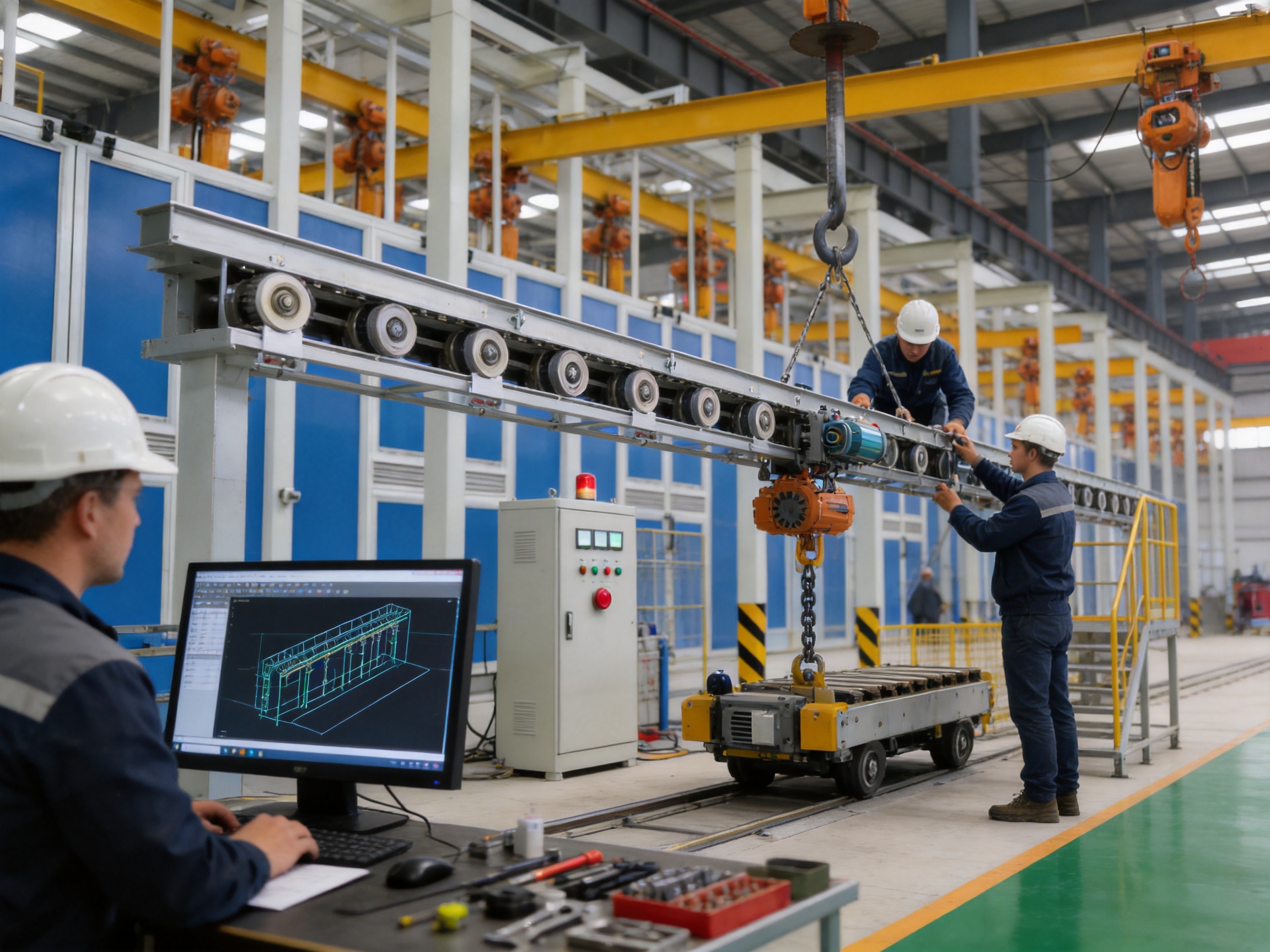
Modern manufacturing depends on reliable material movement. Workpieces must travel between loading areas, pretreatment stations, coating booths, drying ovens, inspection points, assembly zones, and unloading areas with accurate timing and minimal manual intervention. When the conveying system is poorly matched to the factory layout, production efficiency declines, labor requirements increase, and workpieces may be damaged during transfer. A self-propelled hoist conveyor system provides a flexible solution for these challenges by combining automatic movement, lifting capability, intelligent control, and customized route planning in one integrated system.
A self-propelled hoist conveyor system is an overhead automated conveying machine designed to transport workpieces through different production stages. Unlike a simple fixed conveyor, it can move independently along a designed route and perform lifting or lowering operations when required. This makes it especially suitable for powder coating lines, liquid painting lines, surface treatment systems, drying and curing processes, assembly lines, and industrial logistics applications that require flexible three-dimensional transportation.
The system generally consists of a structural track, self-propelled carriers, hoisting devices, drive units, electrical control components, safety protection devices, and an intelligent operating system. Depending on the project, it may also include loading fixtures, process-positioning equipment, automatic identification components, transfer mechanisms, and communication interfaces with other production equipment. The overall configuration is customized according to workpiece dimensions, weight, production cycle, factory height, available floor area, process requirements, and future expansion plans.
Jiangsu Yue Ze Environmental Protection Equipment Co., Ltd. provides customized automatic conveyor solutions for industrial customers. The company combines equipment research and development, mechanical manufacturing, electrical integration, installation, commissioning, and after-sales support. Its experience in powder coating production lines, environmental protection equipment, industrial painting systems, drying systems, and automated conveying equipment enables it to design a conveyor system that works as part of a complete production process rather than as an isolated machine.
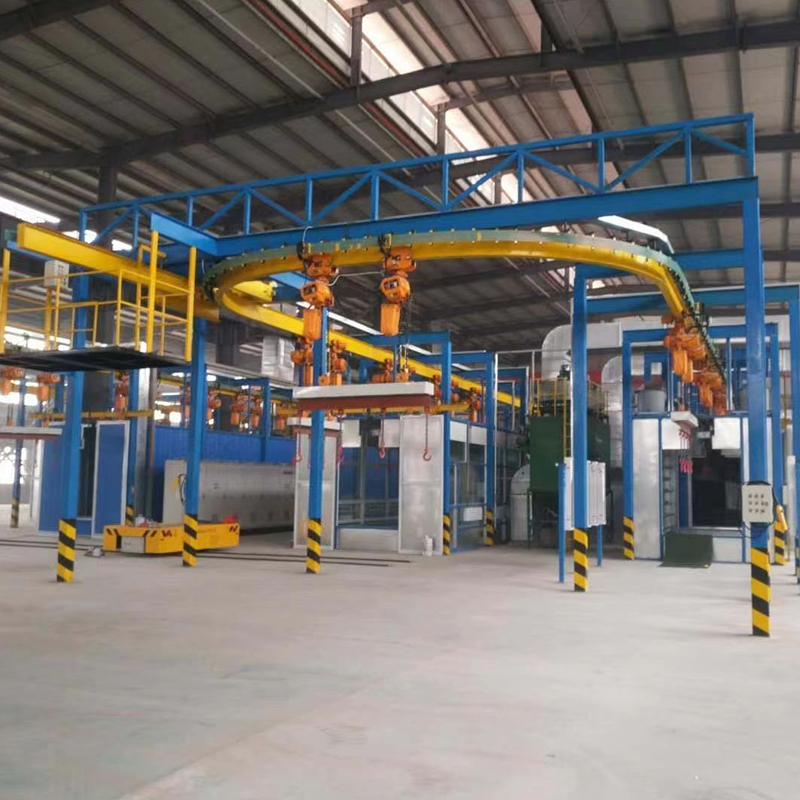
Self-Propelled Hoist Conveyor System
A self-propelled hoist conveyor system is an overhead material-handling system in which each carrier, trolley, or hoist unit has its own driving capability or operates through an independently controlled drive arrangement. The carrier transports a workpiece along an overhead track while a hoisting mechanism raises or lowers the workpiece according to the requirements of the production process.
The overhead structure helps preserve valuable floor space. Because the main conveying route is installed above the working area, production personnel, forklifts, carts, and other equipment can continue to use the floor below. The overhead layout also reduces interference from ground obstacles and allows the conveyor to cross over workstations, equipment, walkways, and storage areas.
Compared with a conventional fixed overhead chain conveyor, a self-propelled hoist conveyor can offer greater flexibility in route design and process control. A traditional conveyor usually moves at a constant speed along a continuous loop. A self-propelled system can be configured for controlled acceleration, deceleration, stopping, positioning, lifting, lowering, buffering, and process synchronization. It can also be designed to operate as a single independent unit or as part of a coordinated group of carriers.
The system is suitable for continuous and intermittent production. In continuous production, the carriers move between stations according to a planned cycle time. In intermittent production, the system can stop at defined positions for loading, coating, inspection, assembly, drying, or unloading. This flexibility is important when different workpieces require different process times or when a production line must handle multiple product models.
The track provides the route for the carrier and supports the operating loads generated during movement and lifting. Track sections may include straight sections, curves, switches, elevation changes, loading zones, unloading zones, and maintenance access points. The layout is engineered according to the factory structure, available height, workpiece dimensions, equipment arrangement, and required process sequence.
A properly designed track must provide adequate rigidity, accurate alignment, and sufficient clearance. It must also consider dynamic loads caused by starting, stopping, lifting, and lowering. In coating and painting applications, the structure may need additional protection against corrosive vapors, overspray, heat, and cleaning chemicals.
The carrier is the mobile part of the conveying system. It carries the workpiece fixture and travels along the overhead route. The carrier may be designed for a specific product family or configured with interchangeable fixtures to accommodate different workpiece shapes.
Drive wheels, guide wheels, bearings, motors, reducers, electrical components, and connection elements are selected according to the load, speed, route, operating temperature, and working environment. For heavy industrial workpieces, the carrier structure must maintain stable operation without excessive vibration or deformation. For delicate or coated parts, the carrier should provide smooth acceleration and braking to reduce collision and surface damage.
The hoisting mechanism provides vertical movement. It may lift the workpiece into a coating booth, lower it into a treatment tank, position it inside a drying area, or adjust its height for loading and unloading. The lifting stroke and operating speed are selected according to the process design.
Hoisting components commonly include lifting motors, gearboxes, wire ropes or chains, guide mechanisms, limit switches, load-supporting structures, and anti-fall protection devices. The design must provide stable lifting and lowering, accurate stopping, and secure holding during process operations.
The drive unit supplies the mechanical power needed to move the carrier. A stable drive system helps maintain consistent production rhythm and reduces unexpected shutdowns. Depending on the application, the system may use variable-frequency motor control, servo positioning, geared motors, or other drive arrangements.
Speed control is important because different processes may require different movement conditions. A carrier may travel quickly through an empty transfer section, slow down before entering a booth, stop at a precise coating position, and accelerate smoothly after the process is complete. This controlled movement improves efficiency while protecting the workpiece and the equipment.
The control system coordinates carrier movement, hoisting actions, process timing, station positioning, safety interlocks, and fault alarms. It may include a programmable logic controller, touch-screen interface, sensors, variable-frequency drives, control cabinets, photoelectric switches, proximity sensors, and communication modules.
Operators can use the control interface to set movement parameters, monitor operating status, identify faults, adjust process sequences, and manage production modes. The system can be configured for manual, semi-automatic, or fully automatic operation. For more advanced production lines, it can exchange signals with coating equipment, drying ovens, spray booths, warehouse systems, and factory management platforms.
Fixtures connect the workpiece to the hoist carrier. Their design has a direct influence on coating quality, loading efficiency, workpiece stability, and production flexibility. Fixtures may be manufactured for counterweight blocks, metal frames, automotive components, electrical cabinets, agricultural machinery parts, furniture components, or other industrial products.
For powder coating and painting applications, the fixture must expose the required surfaces while minimizing shadow areas. It should also provide reliable grounding when electrostatic coating is used. Where several workpiece models share one line, adjustable or interchangeable fixtures can reduce changeover time and improve equipment utilization.
Safety is integrated into the mechanical, electrical, and control design. Typical protection measures include emergency stop buttons, anti-fall devices, overload protection, upper and lower lifting limits, travel limits, collision prevention, access protection, safety interlocks, alarm indicators, and abnormal-position detection.
Safety devices should be selected according to the system layout and risk assessment. Regular inspection of lifting components, drive units, fasteners, sensors, emergency stops, and protective structures is also necessary. A well-designed protection system helps reduce risks to personnel, workpieces, and surrounding equipment.
The operating process begins when a workpiece is loaded onto a designed fixture. The fixture is attached to the self-propelled hoist carrier, either manually or through an automatic loading station. Sensors or operator commands confirm that the workpiece is correctly positioned and that the carrier is ready to move.
The control system then releases the carrier according to the planned sequence. The drive unit moves it along the overhead track at the programmed speed. When the carrier approaches a processing station, the system can reduce speed, stop at a defined position, or perform a lifting or lowering action.
Inside a coating or painting booth, the carrier may stop or move at a controlled speed while the workpiece receives powder, liquid paint, primer, or another surface treatment. After coating, the carrier transfers the workpiece to a drying or curing oven. The hoisting function can place the workpiece at the appropriate height or orientation for thermal processing.
After drying, curing, cooling, inspection, or assembly, the carrier continues to the next station. The control system coordinates its movement with other equipment so that doors, spray devices, oven openings, exhaust systems, and transfer mechanisms operate in the correct sequence. At the end of the route, the workpiece is unloaded and the carrier returns to the loading area or continues with another production cycle.
The workpiece is loaded and fixed securely.
The control system confirms carrier readiness and safety conditions.
The self-propelled carrier moves along the planned overhead route.
The hoisting mechanism raises or lowers the workpiece as required.
The carrier stops or travels at a controlled speed through each process station.
The workpiece is transferred to inspection, assembly, storage, or unloading.
Operating data and fault information are monitored through the control system.
A major advantage of a self-propelled hoist conveyor system is its ability to move workpieces not only horizontally but also vertically. This allows the equipment to connect production stations located at different elevations. It can pass above other equipment, lower parts into a processing area, and lift them out after treatment.
Conventional ground conveyors often require a large amount of floor space and may be restricted by columns, doors, machines, storage areas, and pedestrian routes. An overhead hoist system uses vertical space and can be adapted to complex factory conditions. This makes it valuable for plants where expanding the building footprint is difficult or expensive.
In a conventional continuous conveyor, all carriers may be tied to the same movement rhythm. If one station experiences a delay, the entire line can be affected. A self-propelled system can provide more independent control of individual carriers or carrier groups. The system can hold a workpiece in a buffer position, prioritize a specific order, or adjust the route according to the production schedule.
Precise control also supports repeatable process positioning. Stable stopping and starting reduce workpiece swinging, collision, and impact. This is especially important for large parts, long components, products with delicate surfaces, and workpieces requiring accurate positioning inside a coating booth or oven.
Overhead installation leaves the ground available for operators, inspection tables, forklifts, storage racks, and other equipment. The system can be arranged above workstations or along the perimeter of a workshop. Its compact route can reduce unnecessary transport distance and help create a more organized production environment.
Vertical lifting can also reduce the need for separate elevators, transfer tables, or manual lifting equipment. By integrating these functions into one system, manufacturers may simplify the overall production layout.
Manual transportation is time-consuming and can expose employees to heavy loads, hot surfaces, coated parts, chemical environments, and repetitive lifting operations. Automating the transfer process reduces physical labor and creates a more consistent material flow.
Reduced manual handling also helps minimize accidental contact with freshly coated surfaces. The workpiece can remain attached to the same fixture throughout several processes, reducing the possibility of scratches, dents, contamination, or incorrect routing.
The drive system, guide structure, and control logic are designed to provide stable acceleration and deceleration. Smooth movement helps protect the workpiece and reduces mechanical impact on the track and carrier. Properly selected motors, reducers, bearings, and transmission components also contribute to low-noise operation.
Compared with systems that rely on abrupt mechanical stopping or poorly controlled chain movement, a self-propelled arrangement can provide a more comfortable working environment and reduce maintenance caused by excessive vibration.
The carrier and fixture can be designed for light, medium, or heavy workpieces. The load-bearing structure, motor capacity, lifting mechanism, track support, and safety protection are selected according to the actual operating conditions rather than using a one-size-fits-all configuration.
This adaptability allows the same basic system concept to serve different industries. It may transport small metal components in batches or large industrial parts individually. The system can also be designed with different fixtures for product families, helping manufacturers respond to changing orders.
A self-propelled hoist conveyor is not limited to material transfer. It can act as the central logistics connection for a complete production line. It may interface with pretreatment equipment, powder spray booths, liquid painting booths, drying ovens, curing ovens, cooling areas, inspection stations, assembly workstations, and finished-product storage.
This integrated approach improves coordination between processes. Instead of relying on separate manual transport steps, the factory can establish a continuous and traceable flow from loading to final unloading.
The equipment may be configured for single-machine operation in a compact production area or for coordinated operation across a large production line. A cluster of carriers can be scheduled according to product type, process sequence, or production priority.
This flexibility is useful for manufacturers that expect future growth. The initial system can be designed with expansion points, reserved control capacity, or modular track sections so that additional stations or carriers can be added later.
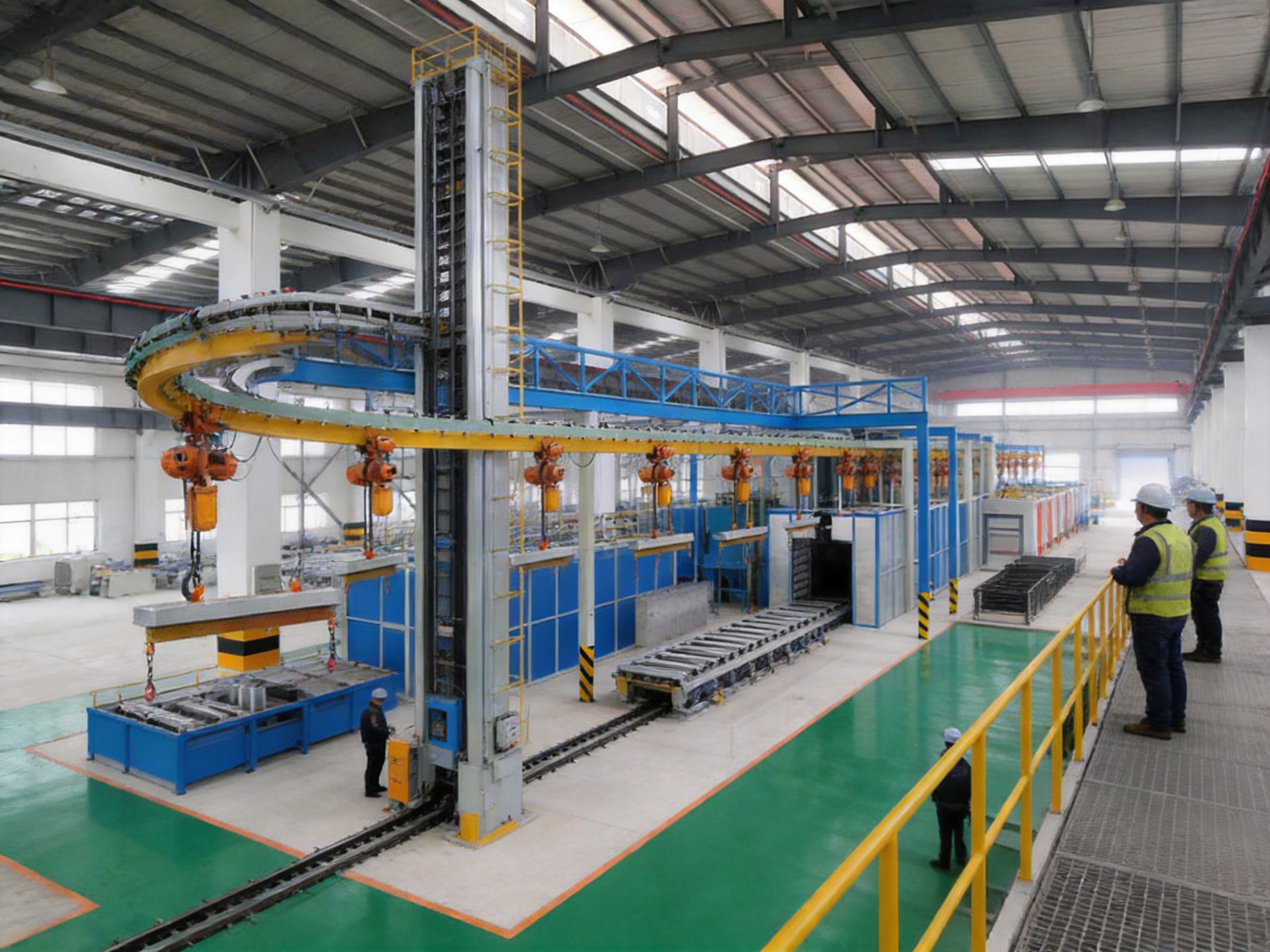
Powder coating lines require accurate transportation between surface preparation, drying, spraying, curing, cooling, and inspection. The quality of the final coating depends not only on the spray equipment but also on the stability and timing of the conveying process.
A self-propelled hoist conveyor can move the workpiece through the complete coating route while maintaining consistent spacing and process positioning. The carrier can be designed to keep parts at the required distance from spray guns, booth walls, oven surfaces, and other components. Controlled movement supports more uniform powder deposition and reduces the risk of contact with freshly coated surfaces.
For products with complex shapes, the hoisting mechanism may provide useful height adjustment. The workpiece can be lowered for loading, raised to the spray position, and moved to the curing oven without repeated manual handling. Different fixture arrangements can also support parts with irregular geometry.
In liquid painting applications, the system can connect cleaning, drying, priming, painting, flash-off, and baking processes. When the line includes multiple coating stages, the control system can manage the dwell time and route of each product. This is beneficial when different products require different coating programs.
Industrial painting systems often operate in environments containing paint mist, solvents, dust, heat, or corrosive materials. Therefore, the conveyor design should consider protective treatment, component selection, cleaning access, grounding, ventilation coordination, and maintenance requirements.
The system can transfer components into and out of drying ovens, curing ovens, infrared radiation systems, and heat-treatment equipment. The hoist function can help match the workpiece position with the oven opening and internal clearance.
For assembly operations, the conveyor can deliver components to defined workstations at a controlled height. Operators can work on products without repeatedly moving heavy parts. The system may stop each carrier at an assembly position and release it after a production signal is received.
Manufacturers can use the system to move parts between production areas, temporary storage zones, inspection rooms, and packaging stations. Its route can be designed around existing machines and building structures, reducing the need for long ground-level transport paths.
Large metal components, vehicle counterweights, machine frames, agricultural machinery parts, and fabricated structures often require multiple surface treatment stages. A self-propelled hoist conveyor can support these products with heavy-duty carriers, customized fixtures, and controlled lifting functions.
Electrical cabinets, enclosures, frames, brackets, and other fabricated metal products can be transported through pretreatment and coating processes. The fixture configuration can be optimized to expose internal and external surfaces while maintaining stable grounding and separation.
The quality of an automated conveyor system depends heavily on engineering design and manufacturing discipline. A conveyor is not simply a collection of motors, tracks, and carriers. It must operate as a coordinated mechanical, electrical, and production system. Jiangsu Yue Ze Environmental Protection Equipment Co., Ltd. approaches equipment development through integrated project planning, customized design, manufacturing, installation, and commissioning.
The company has more than 40 years of experience in environmental protection equipment and industrial surface treatment solutions. This background provides a practical understanding of the challenges found in coating workshops, painting lines, drying systems, exhaust treatment, production logistics, and factory integration.
Experience in related equipment is important because conveying performance is closely connected with the rest of the line. The carrier speed affects spray time. The lifting height affects booth and oven design. The fixture influences coating coverage. The track route affects ventilation, access, maintenance, and workshop safety. An experienced manufacturer can evaluate these relationships during the design stage.
Customized systems require more than standard catalog selection. The engineering team must analyze workpiece characteristics, process steps, production targets, environmental conditions, building structure, utility availability, and control requirements. The result is a system configuration developed around the customer’s actual production needs.
Design work may include three-dimensional layout planning, load calculations, track routing, carrier selection, lifting-stroke determination, fixture development, equipment interface planning, safety analysis, and control logic preparation. This engineering process helps reduce the risk of later modifications and improves the possibility of smooth installation.
The company operates from a facility covering approximately 35,000 square meters. A substantial manufacturing base supports the production of structural components, conveyor assemblies, environmental equipment, coating equipment, and related production-line systems.
Manufacturing activities may include material preparation, structural fabrication, welding, machining, surface treatment, assembly, electrical integration, testing, and packaging. Each stage affects the final reliability of the conveyor. Accurate fabrication improves track alignment, careful welding supports structural strength, and disciplined assembly helps maintain the correct relationship between drive components, guide wheels, hoisting mechanisms, and safety devices.
Yueze Environmental Protection is involved in powder coating lines, electric vehicle assembly lines, automotive counterweight spray lines, paint and bake booths, large-part grinding rooms, waste gas treatment equipment, infrared radiation drying systems, automated conveying systems, intelligent coating lines, and other environmental protection equipment.
This broad capability allows the company to consider the complete production process when designing a conveyor. Customers may receive a coordinated solution instead of purchasing unrelated machines from several suppliers. Integrated responsibility can simplify communication, reduce interface conflicts, and improve commissioning efficiency.
Conveyor installation requires accurate positioning of overhead supports, tracks, drive assemblies, sensors, electrical cabinets, lifting mechanisms, and safety devices. After mechanical installation, the system must be tested under no-load and load conditions. The control sequence must also be verified in connection with coating booths, ovens, doors, spray equipment, exhaust systems, and other line components.
Professional commissioning helps identify issues such as incorrect stopping positions, insufficient clearance, sensor misalignment, unstable lifting, excessive vibration, unsuitable speed settings, or interference between the conveyor and other equipment. These problems are easier and less costly to correct during commissioning than after full production begins.
Quality control should cover incoming materials, structural fabrication, component assembly, electrical wiring, control-panel installation, surface protection, load testing, safety testing, and final inspection. A documented inspection process improves consistency between different projects.
For customized equipment, quality is measured not only by whether the machine operates but also by whether it meets the specified route, capacity, speed, lifting height, positioning accuracy, safety requirements, and production rhythm. Careful inspection and testing help confirm that the finished system satisfies the agreed design.
| Design Area | Main Considerations | Production Benefit |
|---|---|---|
| Track layout | Workshop dimensions, curves, elevation changes, clearances, and maintenance access | Efficient use of space and reliable route operation |
| Carrier structure | Workpiece weight, dimensions, fixture type, speed, and dynamic loads | Stable transportation and reduced collision risk |
| Hoisting mechanism | Lifting height, cycle frequency, load security, and stopping accuracy | Flexible vertical transfer between processes |
| Control system | Sequence control, sensors, alarms, interfaces, and operating modes | Repeatable automation and easier monitoring |
| Safety protection | Emergency stops, overload limits, anti-fall devices, and interlocks | Improved protection for personnel and equipment |
| Environmental adaptation | Heat, dust, coating mist, humidity, corrosive vapors, and cleaning conditions | Longer service life and fewer operating interruptions |
| Maintenance design | Inspection points, replaceable parts, access platforms, and lubrication needs | Lower maintenance time and operating cost |
A successful self-propelled hoist conveyor project begins with a detailed understanding of the customer’s production requirements. The manufacturer must collect information about workpiece size, weight, shape, material, loading method, coating or assembly process, required output, factory dimensions, building height, available utilities, and expected future production.
The first stage is to determine what the conveyor must accomplish. Important questions include how many workpieces must be processed per hour, how long each process takes, how many carriers are needed, whether products have different routes, and whether loading and unloading are manual or automatic.
The manufacturer also evaluates whether workpieces need to remain in a fixed orientation, rotate during coating, stop at a particular height, or pass through several temperature-controlled areas. These details influence the carrier and fixture design.
The track route is planned according to the building structure and the arrangement of other equipment. The design considers columns, beams, doors, ventilation ducts, ovens, booths, inspection areas, maintenance paths, and emergency access.
A three-dimensional layout can help identify interference before fabrication begins. It also provides a clear basis for installation, utility planning, and future expansion.
Mechanical engineers select the track structure, carrier capacity, drive system, lifting mechanism, fixtures, supports, and protective components. Electrical engineers develop the control cabinet, sensors, motors, variable-frequency drives, communication signals, operating screens, alarms, and safety circuits.
Mechanical and electrical design must be coordinated. For example, the stopping position of a carrier must correspond with sensor locations and equipment openings. The lifting stroke must be compatible with the control sequence. The drive capacity must match the actual carrier load and route resistance.
After design approval, structural components and machine parts are manufactured. Track sections and supports are fabricated according to the approved drawings. Carriers, hoists, fixtures, drive assemblies, and control cabinets are assembled and inspected.
Where practical, subassemblies can be tested before shipment. Pre-assembly helps verify component fit, electrical connections, movement direction, sensor response, and control logic. It can also reduce installation time at the customer’s facility.
On-site installation includes support positioning, track connection, carrier placement, drive installation, hoist assembly, fixture mounting, control-cabinet connection, sensor installation, and safety-device setup. The system is then tested step by step.
Testing may include manual movement, automatic movement, emergency-stop response, lifting-limit verification, overload protection, route clearance, positioning accuracy, communication with other equipment, and operation under representative load conditions.
Operators should receive instruction on system startup, production-mode selection, workpiece loading, alarm handling, emergency procedures, cleaning, lubrication, daily inspection, and basic troubleshooting. Maintenance personnel should also understand the inspection schedule and replacement requirements for wear parts.
Clear documentation supports long-term operation. Important documents may include equipment drawings, electrical diagrams, operating instructions, maintenance schedules, spare-parts lists, safety information, and commissioning records.
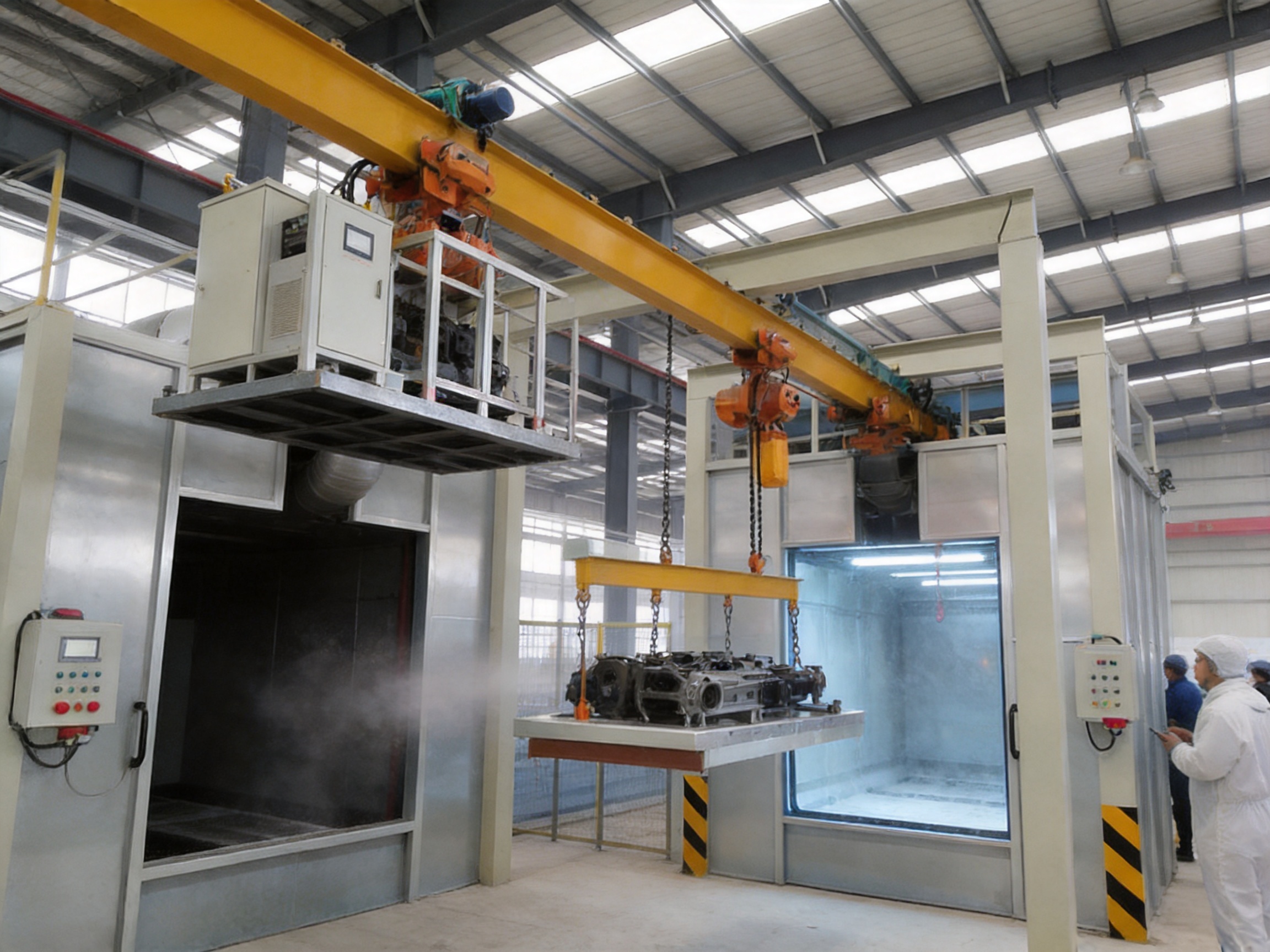
The value of a self-propelled hoist conveyor is measured by its contribution to the complete production process. Automation can reduce unnecessary handling, stabilize process timing, and improve the utilization of coating booths, ovens, assembly stations, and inspection areas.
When the carrier movement is synchronized with production equipment, waiting time can be reduced. A workpiece can enter the next station as soon as the station is ready. Buffer positions can be included when process times differ, allowing the line to continue operating without forcing every station to use the same cycle time.
Stable positioning supports consistent quality. If the workpiece arrives at the same height and location during each cycle, spray distance, drying exposure, assembly access, and inspection conditions become more repeatable. This can help reduce variation caused by manual transport.
Automation also improves production visibility. The control system can display carrier status, station occupancy, alarms, operating modes, and process progress. When connected with broader production-management systems, it may support more detailed tracking and scheduling.
Regular maintenance is necessary to preserve safe and reliable operation. The maintenance schedule should be based on operating hours, load, speed, environmental conditions, and cycle frequency.
Operators should check for unusual noise, abnormal vibration, visible damage, loose fixtures, oil leakage, sensor obstruction, incorrect carrier movement, and signs of workpiece instability. Emergency-stop devices and warning indicators should be tested according to the operating procedure.
Maintenance personnel should inspect track connections, support structures, drive wheels, guide wheels, bearings, reducers, chains or lifting components, fasteners, and fixture connections. Lubrication should be performed according to the requirements of the selected components and the operating environment.
Electrical cabinets should be kept clean and dry where appropriate. Wiring terminals, sensors, motor connections, control switches, safety circuits, and communication modules should be inspected periodically. Fault records can help identify recurring issues and guide preventive maintenance.
In powder coating or painting workshops, overspray and dust may accumulate on mechanical or electrical components. Cleaning procedures should be established to prevent buildup from affecting sensors, moving parts, grounding points, or ventilation-related equipment. If the conveyor operates near high-temperature equipment or corrosive substances, inspection frequency may need to be increased.
One advantage of a properly customized system is that maintenance access can be considered during the design stage. Inspection points, removable covers, service platforms, and component replacement paths can be included in the layout. This reduces the time required for maintenance and helps lower production shutdown losses.
A self-propelled hoist conveyor system carries moving and suspended loads, so safety must be considered from the initial design stage. The load-bearing capacity of the track, carrier, fixture, lifting mechanism, and support structure must be matched to the expected operating conditions.
Anti-fall devices provide additional protection if a lifting component or connection experiences a fault. Upper and lower limit switches help prevent overtravel. Travel limits and collision protection help control carrier movement. Emergency-stop stations allow operators to stop the system quickly when an abnormal condition occurs.
Interlocks can prevent the carrier from entering a booth, oven, or transfer area before the equipment is ready. They can also prevent a lifting operation from starting when the carrier is outside the permitted position. Warning lights, audible alarms, access protection, and clear operating procedures further support safe use.
Safety performance depends on both equipment design and operating management. Operators should not stand beneath suspended loads or enter restricted areas during automatic operation. Regular inspections, training, documented procedures, and timely replacement of damaged components are essential parts of responsible equipment use.
Standard conveyors can be effective for simple, repetitive routes, but many industrial factories have unique requirements. Workpieces may vary in size and weight. Buildings may have limited height or unusual column positions. Coating booths, ovens, treatment tanks, and assembly stations may be arranged in different sequences. A customized conveyor can address these conditions directly.
Customization also helps manufacturers avoid paying for unsuitable functions. The system can be designed with the required speed range, lifting height, carrier capacity, number of fixtures, control functions, and safety devices. At the same time, future expansion can be considered through modular track sections, reserved control capacity, or adjustable fixtures.
A customized solution may also improve energy and labor efficiency. The route can be shortened, unnecessary transfers can be removed, and carriers can be scheduled according to actual process demand. When integrated with painting and environmental equipment, the entire line can be coordinated more effectively.
When comparing self-propelled hoist conveyor suppliers, buyers should evaluate more than the initial equipment price. Important criteria include engineering ability, manufacturing capacity, component quality, safety design, control-system experience, installation support, spare-parts availability, and understanding of the customer’s production process.
The supplier should be able to explain how the carrier capacity is determined, how lifting safety is protected, how the track is supported, how workpieces are positioned, and how the conveyor communicates with other equipment. Clear technical documentation and a practical commissioning plan are also important.
Customers should request a layout that shows clearances, process stations, loading and unloading areas, maintenance access, emergency paths, and future expansion options. They should also confirm which functions are included in the quotation, such as fixtures, control cabinets, sensors, installation, testing, operator training, and after-sales service.
Jiangsu Yue Ze Environmental Protection Equipment Co., Ltd. supports customized industrial equipment projects from design through manufacturing and commissioning. Its experience in complete coating and environmental protection systems enables it to evaluate the conveyor in relation to the whole production line. This integrated perspective can be valuable for customers seeking a coordinated solution instead of a standalone handling machine.
The primary purpose is to transport workpieces automatically along an overhead route while also providing lifting and lowering functions. It connects different production stations and reduces manual handling in coating, painting, drying, assembly, storage, and industrial logistics applications.
A standard overhead conveyor often follows a fixed route and common movement rhythm. A self-propelled hoist conveyor can provide more independent carrier control, flexible stopping, variable speed, vertical lifting, and customized process positioning. Its route and control functions can be adapted to more complex production layouts.
Yes. The carrier, track, fixture, drive unit, and hoisting mechanism can be engineered according to the required load. Heavy-duty applications must be evaluated carefully so that structural capacity, dynamic loads, lifting safety, and braking performance are properly matched.
Yes. Different products can use the same basic conveyor when suitable fixtures, loading methods, and control programs are provided. Adjustable or interchangeable fixtures can help manufacturers handle different sizes and shapes while reducing changeover time.
Yes. It is suitable for transporting workpieces through pretreatment, drying, powder spraying, curing, cooling, inspection, and unloading. The carrier and fixture can be designed to support coating access, grounding, stable positioning, and protection of freshly coated surfaces.
Yes. The control system can coordinate carrier movement with booth doors, spray equipment, drying ovens, curing ovens, exhaust systems, and other process equipment. Interlocks and sensors can be used to ensure that equipment operates in the correct sequence.
Yes. The main transport route is installed above the floor, allowing the area below to remain available for workstations, storage, forklifts, walkways, and other equipment. Vertical lifting can also help connect stations located at different heights.
Important information includes workpiece length, width, height, weight, shape, material, loading method, production capacity, process sequence, required speed, lifting height, factory dimensions, building height, equipment locations, environmental conditions, and future expansion plans.
Yes. The control system may include automatic, semi-automatic, and manual operating modes. Manual mode is useful during installation, maintenance, testing, and troubleshooting, while automatic mode supports normal production.
Common safety devices include emergency stops, lifting upper and lower limits, travel limits, anti-fall protection, overload protection, collision prevention, safety interlocks, warning alarms, and abnormal-position detection. The final configuration depends on the route and application.
Maintenance costs can be controlled through correct initial design, high-quality components, accessible inspection points, regular lubrication, timely cleaning, preventive inspections, and proper operator training. Stable operation and smooth acceleration also help reduce mechanical wear.
An integrated manufacturer can consider conveying, coating, drying, exhaust treatment, environmental protection, and control requirements together. This can reduce interface problems between different machines and provide a clearer path for installation, commissioning, training, and after-sales service.
A self-propelled hoist conveyor system provides a flexible and efficient way to move workpieces through modern industrial production lines. Its combination of overhead transportation, independent movement, lifting capability, automatic control, customized fixtures, and safety protection makes it suitable for complex factory layouts and demanding production processes.
Compared with basic fixed conveyors and manual handling methods, the system can improve space utilization, reduce labor requirements, stabilize process timing, protect workpieces, and connect multiple manufacturing stages. Its value is especially clear in powder coating, painting, drying, curing, assembly, and industrial logistics applications.
The performance of the final system depends on the quality of engineering, manufacturing, installation, commissioning, and service. Jiangsu Yue Ze Environmental Protection Equipment Co., Ltd. combines more than 40 years of industrial experience with integrated design and manufacturing capabilities. Its background in powder coating lines, painting equipment, environmental protection systems, drying equipment, and automated conveying solutions supports the development of complete, customized production-line systems.
For manufacturers planning a new line, expanding an existing factory, or replacing manual transfer operations, a carefully engineered self-propelled hoist conveyor can become an important foundation for safer, more organized, and more efficient production. The best solution is one designed around the workpiece, process, building, production target, and long-term development plan of the customer.
1. Industrial conveyor system design principles and overhead material-handling practices.
2. General guidance for mechanical power transmission, lifting equipment, and industrial machine safety.
3. Powder coating process engineering: pretreatment, electrostatic application, curing, cooling, and quality control.
4. Industrial automation and programmable control system application principles.
5. Engineering practices for factory layout planning, production-line integration, and automated logistics.
6. Preventive maintenance methods for industrial conveyors, hoists, motors, gearboxes, sensors, and control cabinets.
7. Technical information supplied for the Self-Propelled Hoist Conveyor System and related customized production-line equipment.
8. Company information supplied by Jiangsu Yue Ze Environmental Protection Equipment Co., Ltd., including manufacturing capabilities, product scope, and industrial project experience.
General overhead conveyor system, electric-driven with stable power output, mainly composed of track, hanging carrier, drive device, and intelligent control system. It adopts overhead installation, sa...
See Details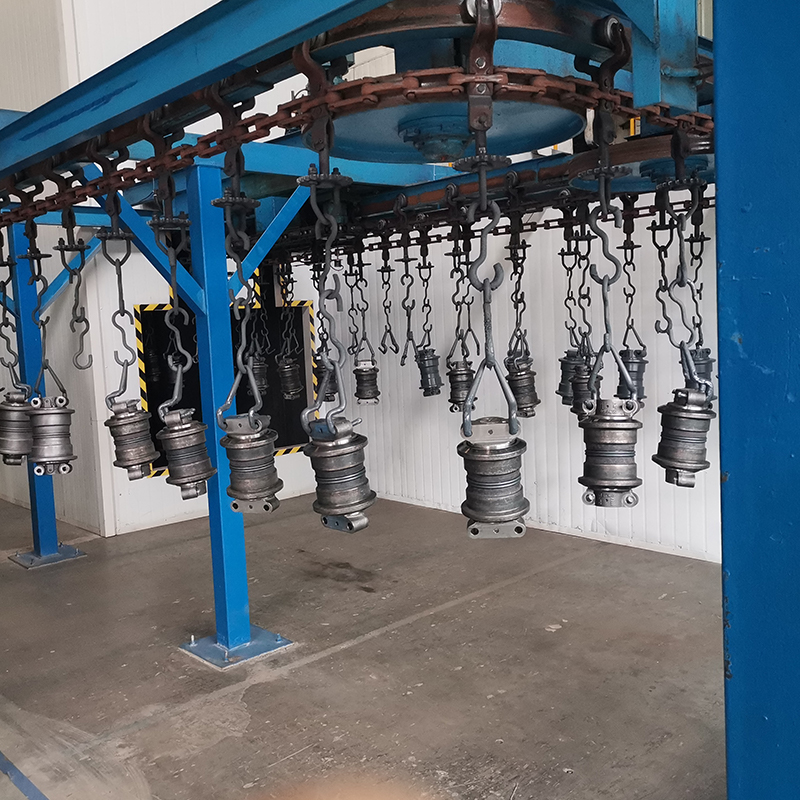
General overhead conveyor system, electric-driven with stable power output, mainly composed of track, hanging carrier, drive device, and intelligent control system. It adopts overhead installation, sa...
See Details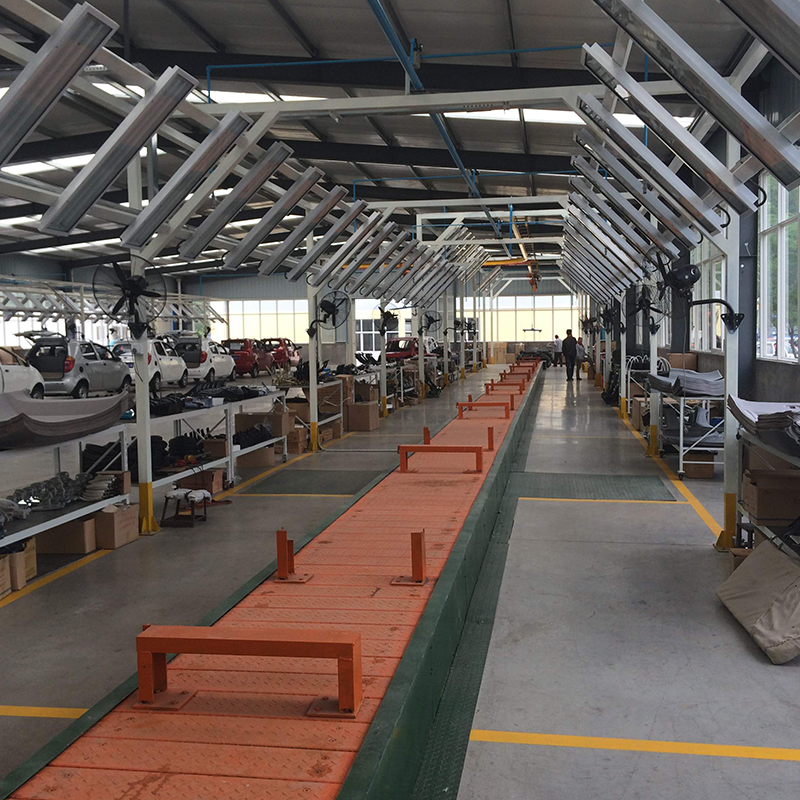
Floor-mounted automatic conveyor system, electric-driven with stable power output, with main types including belt, roller, and chain conveyor. It is designed with a floor-installed structure, space-sa...
See Details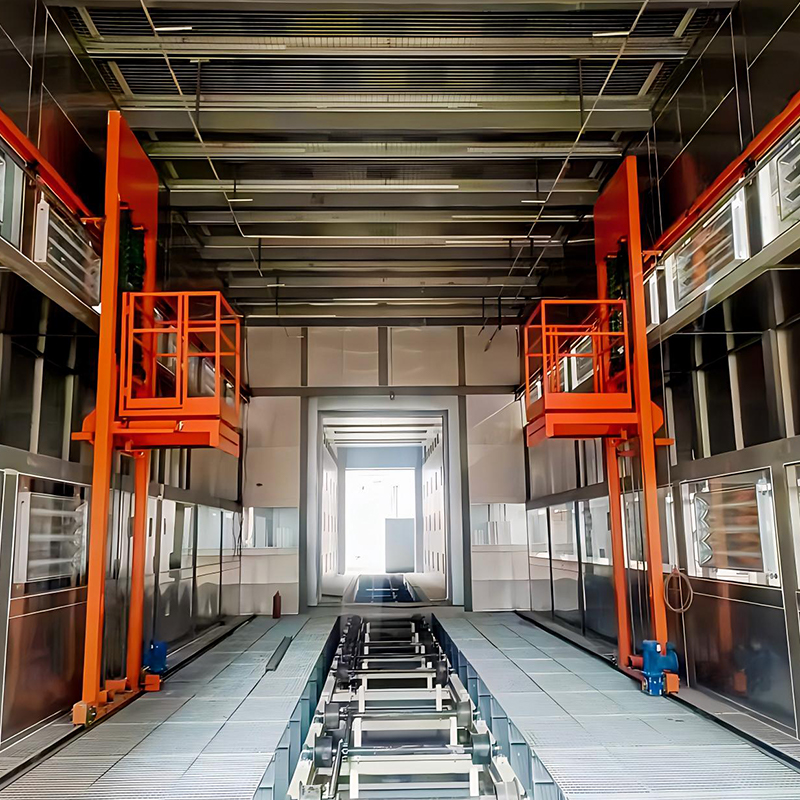
3-axis platform lifts feature three-dimensional movement of X, Y, and Z axes. Flexible positioning, stable lifting, and precise operation. Suitable for multi-angle operation and workpiece docking in i...
See Details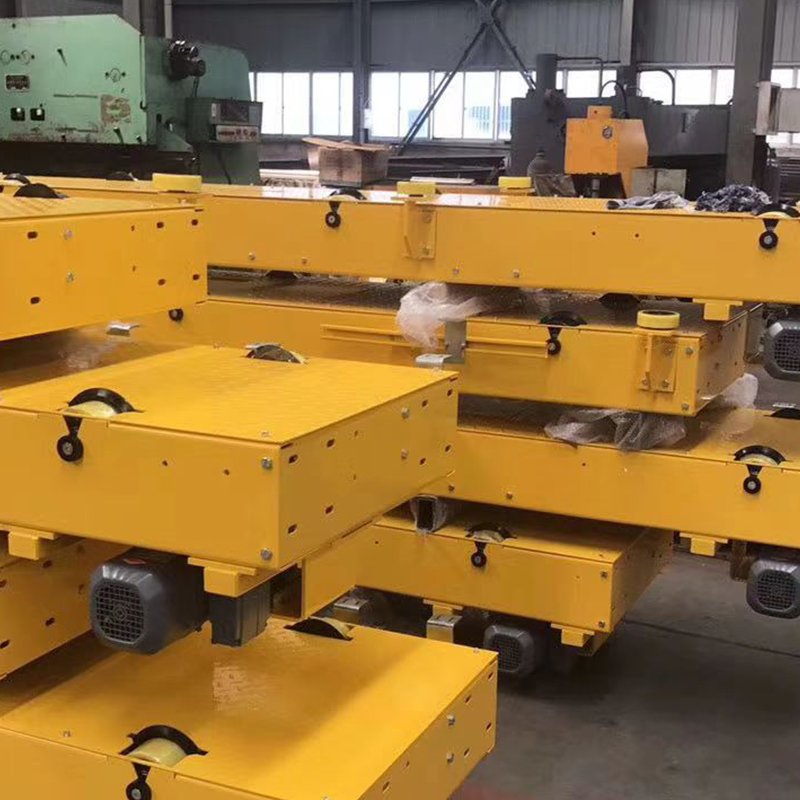
Platform Cart is a practical and efficient industrial handling equipment, widely used in factories, workshops, warehouses, logistics centers, and other places. It is composed of a sturdy load-bearing ...
See Details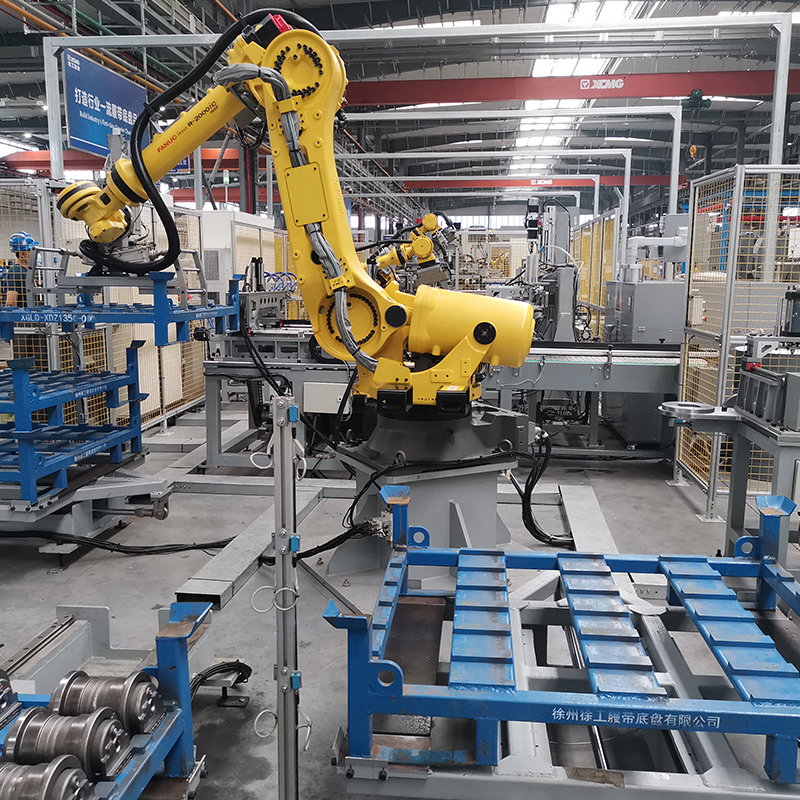
Professional production line specially designed for decorative manhole covers, applicable to various decorative manhole cover types (cast iron decorative manhole cover, stainless steel decorative manh...
See DetailsBuild Your Customized Industrial Coating System
Send us your workpiece information, production capacity, coating process, workshop layout, and environmental requirements. Yueze will help evaluate your project and develop a suitable coating, conveying, drying, and environmental treatment solution.
Main menu
Products
Contact Us
Company Address:
No. 12, Park Avenue, Shanggang Industrial Park, Jianhu, Yancheng City, Jiangsu Province
Message Us Right Now!

Follow us: