
 русский
 عربى
عربى
 Tiếng Việt
Cardboard Paint Arresto is professional equipment for capturing and filtering paint mist, mainly made of high-quality corrugated cardboard, filter cotton, and waterproof coating. It adopts a modular d...
See Details
Yueze Environmental Protection provides one-stop compliant industrial surface treatment solutions with professional tech and fine craftsmanship.
 Get Inquiries
2026-07-28
Content
Dry spray booths require dependable overspray filtration to protect exhaust ducts, fans, surrounding work areas, and downstream environmental equipment. When liquid paint is atomized, a portion of the coating does not reach the workpiece. This airborne material, commonly called paint mist or overspray, must be captured before it travels into the exhaust system. If it is not controlled, paint residue can accumulate on duct walls, reduce airflow, increase maintenance requirements, and contribute to workplace and environmental pollution.
The cardboard paint arrestor box filter for dry spray booths is a practical filtration solution developed specifically for this purpose. It uses a corrugated cardboard structure, folded internal baffles, filter cotton, and a waterproof surface treatment to intercept paint particles as contaminated air passes through the filter. Its modular construction supports fast installation, convenient replacement, flexible sizing, and adaptation to different spray booth layouts.
Unlike a simple flat filter pad, a box-style arrestor creates a longer and more controlled airflow path. The internal zig-zag passages repeatedly change the direction of the air stream. Paint particles, which have greater inertia than air, tend to strike the cardboard baffles and adhere to their surfaces, while the filtered air continues toward the exhaust fan. This design offers a useful combination of paint-holding capacity, low operating resistance, simple maintenance, and economical replacement.
For manufacturers operating automotive paint lines, industrial coating booths, furniture finishing equipment, metal fabrication facilities, agricultural machinery lines, and other liquid coating applications, the filter can serve as an important first-stage overspray capture device. It is particularly suitable for dry spray booths that do not use a water curtain or wet scrubbing system.
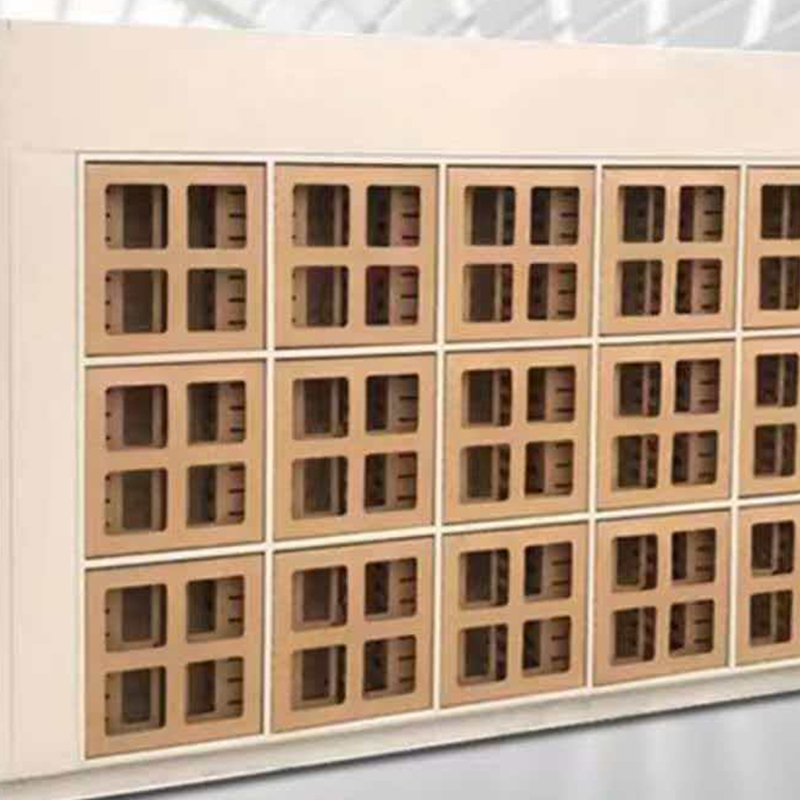
Cardboard Paint Arrestor Box Filter For Dry Spray Booth
A paint arrestor box filter is installed in the exhaust wall or filtration section of a dry spray booth. During spraying, the booth ventilation system draws paint-laden air away from the operator and the workpiece. Before this air reaches the exhaust fan or any secondary purification equipment, it passes through the box filter. The filter captures a large proportion of the liquid and semi-dried paint particles carried by the airflow.
The filter is formed from high-quality corrugated cardboard arranged into a box or panel configuration. Internal folded layers create multiple channels. These channels are not straight openings. Instead, they form a series of directional changes that encourage particles to collide with the filter surfaces. A filter cotton layer may be used as part of the filtration structure, depending on the configuration and application requirements. A waterproof coating helps the cardboard maintain its physical strength when exposed to wet paint particles and humid operating conditions.
The filtration mechanism is primarily based on inertial impaction and directional airflow. Air can change direction relatively easily because it has low mass. Paint droplets and solid residue have greater momentum. When the airflow turns sharply inside the filter, some particles cannot follow the same path. They continue forward until they contact a cardboard baffle. Once deposited, the paint residue remains on the surface and gradually builds up until the filter requires replacement.
This process is different from filtration through a very dense fiber medium. A dense medium may provide fine particle capture but can also create significant pressure loss. The cardboard box design uses geometry to increase the effective contact path without requiring a highly restrictive filter material. As a result, it can provide effective overspray capture while preserving the extraction performance of a properly designed spray booth.
The filter also acts as a protective barrier for equipment installed farther downstream. Paint buildup on exhaust fans can affect blade balance, increase vibration, and reduce fan efficiency. Accumulation inside exhaust ducts can narrow the air passage and make cleaning more difficult. If the booth includes additional purification equipment, excessive paint loading can shorten the service life of that equipment. Capturing overspray at the booth wall helps reduce these risks.
The performance of a cardboard paint arrestor box filter depends on more than the cardboard itself. The material grade, corrugation strength, folding accuracy, baffle spacing, surface treatment, and final assembly all influence filtration behavior. A properly manufactured filter must remain rigid during installation and operation while maintaining open airflow passages.
Corrugated cardboard provides the main structural framework. Its layered construction gives the filter a favorable balance of light weight and rigidity. Compared with a loose sheet of paper or an unsupported filter pad, corrugated cardboard is less likely to collapse during handling. It can maintain the intended baffle geometry over extended operating periods, provided that the filter is correctly sized and not exposed to unsuitable quantities of liquid.
The corrugated form also creates a larger effective surface area than a flat panel with the same external dimensions. Paint particles encounter multiple internal surfaces as they travel through the box. This increases the opportunity for overspray to be captured before the air reaches the exhaust opening.
Liquid coating operations expose the filter to paint droplets, solvents, humidity, and fluctuating temperatures. A waterproof or moisture-resistant coating helps protect the cardboard from premature softening. It also supports dimensional stability and makes the filter more suitable for long operating cycles in a dry spray booth.
The waterproof treatment does not mean that the filter is intended to be saturated indefinitely. Like all disposable overspray filters, it has a finite paint-holding capacity. Once the internal channels become heavily loaded, airflow resistance increases and the unit should be replaced. The coating is intended to improve serviceability and structural durability, not to eliminate the need for inspection and maintenance.
Filter cotton can be incorporated into the product to provide an additional interception layer. Depending on the design, the cardboard box may perform the main impingement function while the cotton helps retain smaller residue or prevents loose particles from moving farther downstream. The combination can be adapted to the type of coating, paint volume, booth airflow, and required filtration arrangement.
Using a composite structure allows the filter to be configured for different operating conditions instead of applying one universal design to every booth. A light-duty touch-up booth may require a different balance of airflow and capture capacity than a high-volume automotive coating line. Customization can therefore involve the filter depth, panel dimensions, baffle configuration, material combination, and installation format.
The operating principle can be divided into three primary stages: air redirection, particle impingement, and filtered air discharge.
Paint-laden air enters the filter from the spray booth side. The internal cardboard arrangement forces the air to follow a folded or zig-zag path. The path is longer than the direct distance between the inlet and outlet, giving the overspray more opportunities to contact the internal surfaces.
Correct airflow orientation is essential. The filter should be installed so that the booth-side opening receives contaminated air and the exhaust-side opening leads toward the fan or secondary purification stage. Airflow arrows, when provided, should be followed. Installing the unit backward may reduce capture performance or create unnecessary resistance.
As the air turns inside the box, paint droplets and particles tend to continue along their original direction. They strike the internal baffles and adhere to them. The exact capture rate depends on particle size, paint formulation, spray pressure, booth velocity, filter depth, baffle arrangement, and the condition of the filter.
Some overspray may be wet and sticky when it reaches the filter. Other particles may begin to dry during travel. Both conditions can support adhesion, although the filter must be selected for the coating process. The product is mainly intended for dry spray booths using liquid or solvent-based paints. Applications involving powder coating overspray, highly reactive chemicals, or unusual solvents require a separate technical evaluation.
After a significant portion of the paint mist has been captured, the remaining air exits through the downstream side of the box. The filtered air then moves toward the exhaust fan or additional treatment equipment. A clean and correctly sized filter helps the booth maintain stable ventilation, which is important for operator protection, coating quality, drying behavior, and process consistency.
When the filter becomes loaded, the open area available for airflow decreases. Pressure loss may increase, and the booth may show reduced extraction performance. For this reason, filter replacement should be based on regular visual inspection, pressure monitoring when available, and actual coating load rather than on an arbitrary calendar interval alone.
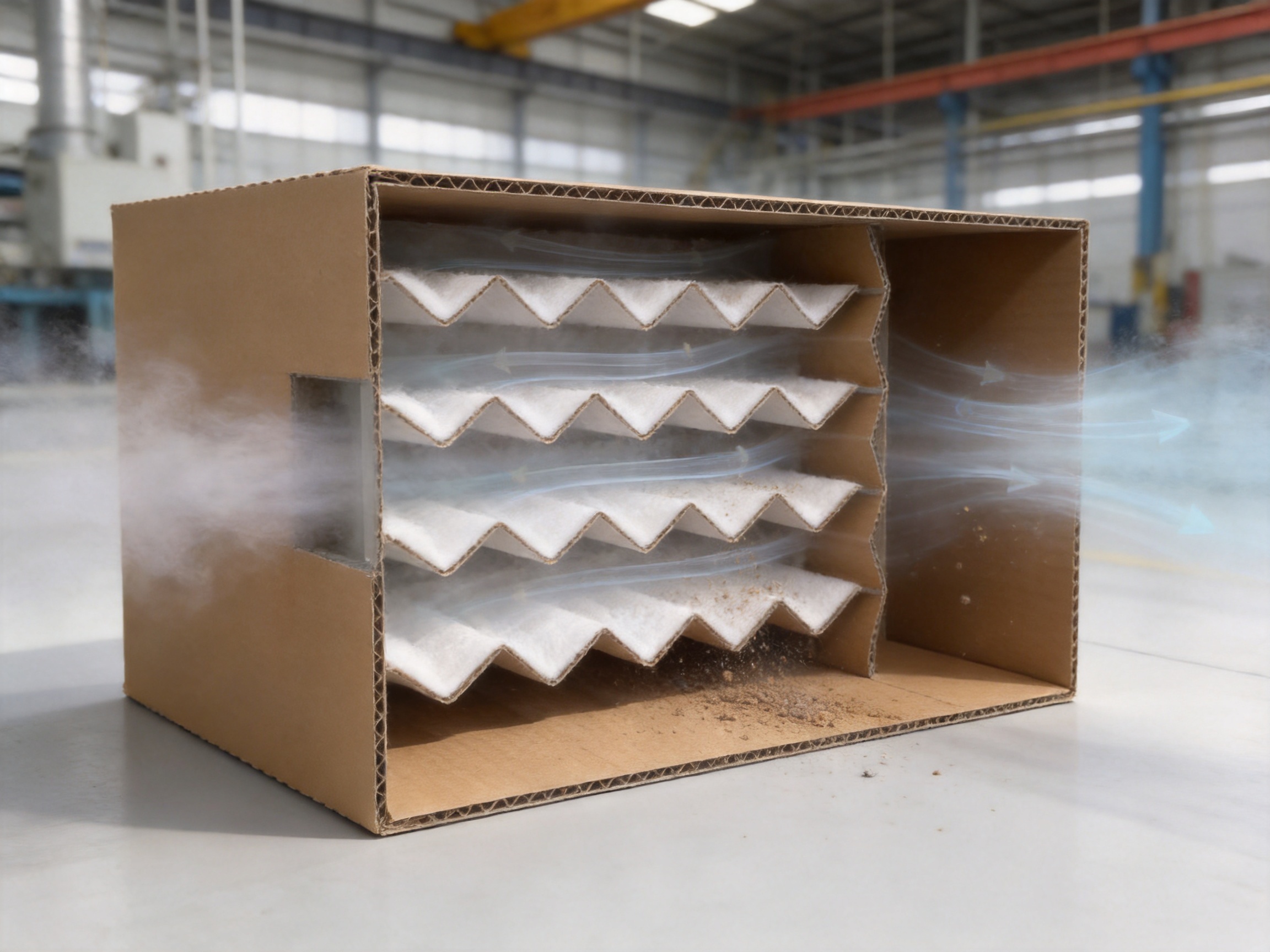
The cardboard paint arrestor box filter offers several advantages when compared with simple flat pads, loosely packed media, or poorly matched filtration products.
The multi-channel structure offers a substantial internal surface area for collecting overspray. Paint residue is distributed through the depth of the filter instead of accumulating only on the front face. This can delay visible blockage and provide a longer service interval than a thin, flat filter used under the same conditions.
High paint-holding capacity is especially valuable in production environments where the booth operates for multiple shifts or handles large workpieces. Fewer filter changes can reduce interruptions, labor requirements, and consumable handling. Actual service life remains dependent on paint consumption, transfer efficiency, booth airflow, and coating type, but the box structure is designed for demanding dry spray applications.
Ventilation performance is central to a spray booth. If a filter is excessively restrictive, the exhaust fan must work harder to maintain the required air volume. This may increase energy consumption and reduce the ability of the booth to remove paint mist from the operator’s breathing zone.
The box filter uses directional channels and an open corrugated structure rather than relying only on dense media. This design supports good air permeability and relatively low initial resistance when the filter is clean. The result is a useful balance between overspray capture and ventilation efficiency. Correct selection remains important because an undersized, overly deep, or fully loaded filter can still create excessive pressure loss.
The filter does not require circulating water, pumps, or chemical treatment. No wastewater is generated during normal filtration operation. This makes it suitable for facilities that want to avoid the water management, sludge removal, and wastewater treatment requirements associated with wet paint arresting systems.
Dry filtration can simplify the overall booth arrangement. It may reduce utility connections, maintenance points, and operating procedures. It also makes the system attractive for smaller facilities, intermittent coating operations, and applications where a wet booth would be disproportionate to the production volume.
The modular construction allows the filter to be placed into a compatible exhaust wall or supporting frame. Routine replacement generally does not require complex tools or specialized equipment. Maintenance personnel can remove the saturated unit, clean or inspect the frame, and install a new filter according to the airflow direction.
Simple replacement is not only a convenience. It reduces the amount of time that the booth is out of service. It also lowers the likelihood that workers will continue using a heavily loaded filter because replacement is perceived as difficult or time-consuming.
A first-stage cardboard arrestor captures much of the paint residue before it reaches fans, ducts, activated carbon sections, final filters, or other exhaust treatment equipment. By reducing the amount of overspray entering these components, the box filter can help extend their useful operating period and reduce cleaning frequency.
This protective function is particularly important in integrated coating systems. A downstream purification unit may be designed to treat gaseous contaminants or finer particles rather than large quantities of sticky paint residue. Preventing premature loading helps each stage perform the task for which it was designed.
Dry spray booths differ in width, height, exhaust wall arrangement, fan capacity, paint consumption, and available maintenance space. A standard filter dimension may not be suitable for every installation. The box filter can support non-standard customization according to paint mist volume, booth design, mounting requirements, and site conditions.
Customization may include external dimensions, depth, number of baffle stages, material combination, surface treatment, joining method, and packaging format. The purpose of customization is not simply to produce a filter of a different size. It is to match the filter’s pressure drop and paint-holding capacity with the booth’s actual operating parameters.
Cardboard is lightweight and comparatively easy to handle during installation and disposal. Its low mass can reduce transport and manual handling burdens compared with heavier reusable structures. Once fully saturated, the unit should be managed according to the applicable local rules for paint-contaminated waste. Disposal requirements depend on the coating material and regional regulations.
Filter depth and internal baffle arrangement have a direct effect on capture behavior, service life, and airflow resistance. The following configurations represent common application directions. They are not substitutes for a technical selection based on the actual booth and coating process.
| Approximate Box Depth | Typical Baffle Arrangement | Suggested Application | Selection Consideration |
|---|---|---|---|
| 300 mm | Single-stage baffle | Light-duty spraying and touch-up work | Lower material consumption and lower airflow demand |
| 450 mm | Double-stage baffle | Standard dry spray booths | Balanced capture capacity and pressure resistance |
| 600 mm | Multi-stage baffle | High-volume automotive and industrial coating lines | Greater holding capacity with careful fan matching |
A deeper box generally provides a longer particle travel path and more surface area. This may improve the ability to hold paint residue before replacement is necessary. However, the relationship is not unlimited. If the box is too deep for the booth’s fan, the resulting pressure loss may impair ventilation. The most effective selection is therefore the one that provides adequate capture without exceeding the available fan capacity.
Light-duty booths often benefit from a compact configuration that is easy to replace and economical for intermittent use. Medium-duty production booths may use a standard double-stage arrangement to balance operating cost and filtration performance. High-volume lines may require a deeper, multi-stage design, larger filter area, or a bank of modular units to prevent excessive face velocity and premature loading.
Automotive body panels and components generate considerable overspray during primer, color coat, and topcoat operations. A properly sized box filter can help protect the exhaust system from wet and semi-dried coating residue. In automotive environments, stable airflow is important because turbulence or poor extraction can affect finish quality and transfer paint mist toward adjacent work areas.
The filter can be used in paint and bake booth arrangements, repair facilities, component coating rooms, and larger automated production lines. The specific filter selection should account for paint type, booth dimensions, conveyor speed, spray gun technology, and daily coating consumption.
Metal cabinets, frames, agricultural machinery, construction equipment, counterweight blocks, and fabricated assemblies may require primer and topcoat application. These products can be large, irregularly shaped, or coated in batches. The overspray load may vary significantly from one production schedule to another.
Modular cardboard filters allow the exhaust wall to be arranged in sections. If the booth is expanded or the production rate changes, the filtration layout can be reviewed and adjusted. This flexibility is useful for manufacturers that handle multiple product sizes or operate a combination of manual and automatic spray stations.
Wood, composite panels, metal furniture, lighting housings, and general industrial products may be finished in dry spray booths. These operations can use water-based, solvent-based, or specialty coatings, each with different overspray characteristics. The filter must be compatible with the coating and solvent environment, and the facility should verify that the material is appropriate before production use.
Manual spray booths often experience variable loading because operators change spray distance, angle, and movement speed. Automatic booths may provide more repeatable airflow and spray patterns but can generate high continuous overspray volumes. The box filter design can be adapted to both situations, provided that the total filter area and configuration match the expected load.
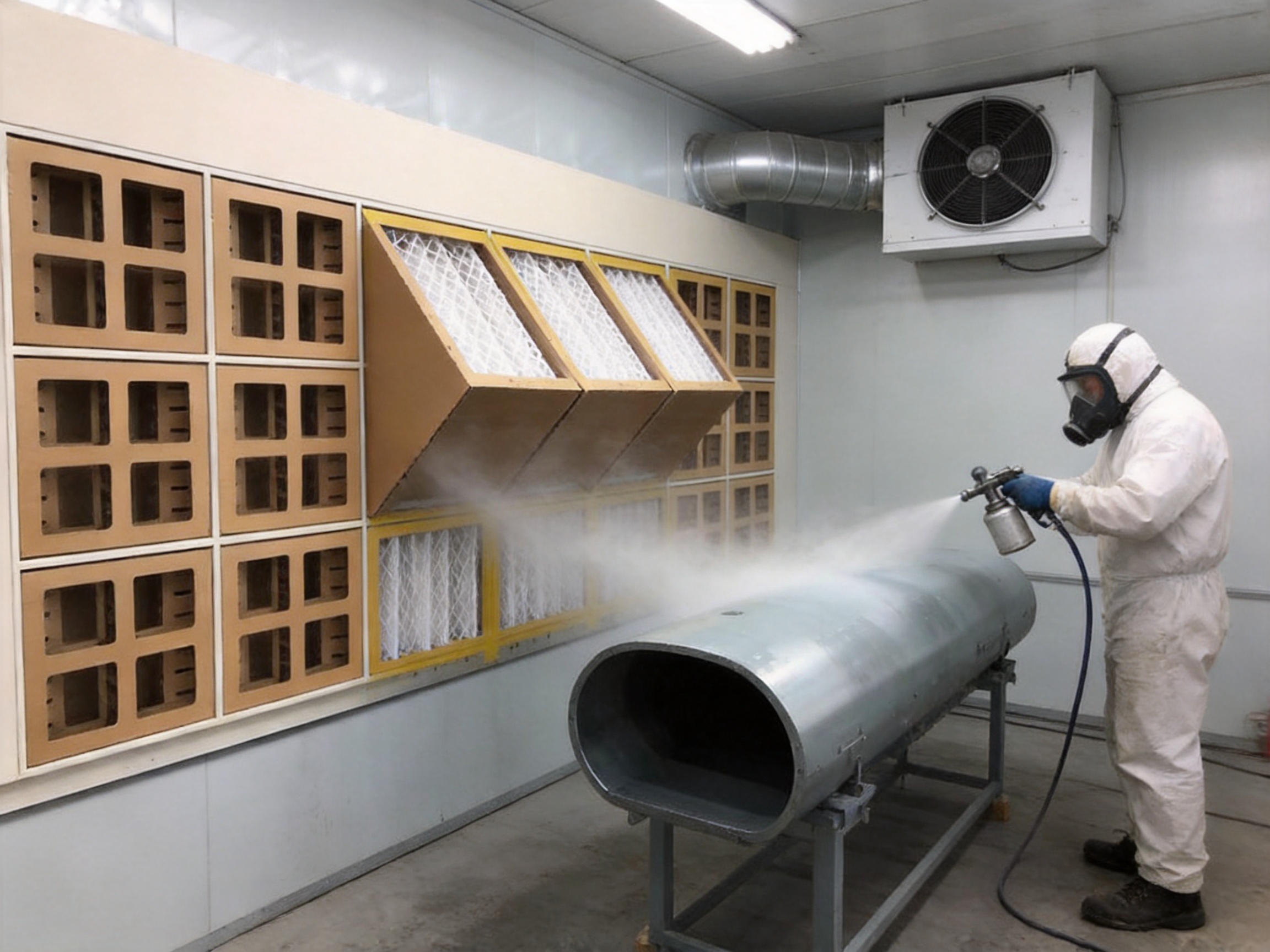
The reliability of a disposable filter is determined by the consistency of its manufacturing. A box filter with inaccurate folds, weak joints, insufficient surface treatment, or irregular dimensions may not fit the booth properly or may lose its intended airflow path. For this reason, the supplier’s engineering and production capabilities are important considerations when selecting a filtration consumable.
Jiangsu Yue Ze Environmental Protection Equipment Co., Ltd. is an industrial environmental protection and surface treatment equipment manufacturer located in Yancheng, Jiangsu, China. The company operates across an approximately 35,000-square-meter site and has registered capital of 58 million yuan. With more than 40 years of experience in coating-related equipment and environmental protection solutions, it combines filtration consumables with broader spray booth, coating line, conveying, drying, and waste gas treatment capabilities.
Experience in complete coating systems provides a practical advantage when developing consumables. A filter supplier that understands booth airflow, exhaust wall design, fan selection, conveyor layout, paint application, and downstream purification can evaluate the filter as part of the entire process rather than as an isolated cardboard product.
This system-level understanding helps with important questions. How much exhaust air must pass through the filter? What is the available fan pressure? Where is the filter mounted? How much paint is applied per shift? Is the booth manual or automatic? Does the exhaust system include a secondary treatment stage? What access is available for replacement? Answers to these questions support a more appropriate filter configuration.
Manufacturing control should include inspection of cardboard strength, corrugation quality, moisture resistance, dimensional accuracy, baffle alignment, and assembly integrity. Consistent folding ensures that airflow channels remain open and predictable. Correct dimensions help prevent bypass around the edges, which is essential because unfiltered air can otherwise travel around the filter rather than through it.
A high-quality filter should be rigid enough to withstand transportation, installation, vibration, and normal airflow. It should also be light enough for practical handling by maintenance personnel. Balancing these requirements is part of the product engineering process.
Yueze provides customized equipment and non-standard solutions for different industrial sites. For cardboard arrestor filters, customization can be based on paint mist volume, site space, exhaust wall dimensions, and required filtration stages. A customized product can be prepared for an original equipment installation, a replacement project, or an upgraded production line.
The customization process should begin with technical information rather than only a requested external size. Useful data includes booth length and height, filter frame dimensions, exhaust fan capacity, paint type, coating consumption, operating hours, target face velocity, replacement access, and any existing pressure readings. This information enables the filter structure to be matched to the actual application.
The company’s broader production capabilities include powder coating lines, electric vehicle assembly lines, automotive counterweight spray lines, paint and bake booths, large-part grinding rooms, waste gas treatment equipment, infrared radiation drying systems, automated conveying systems, intelligent coating lines, and other environmental protection equipment.
This range demonstrates an ability to coordinate multiple processes within an industrial project. A customer may require not only a replacement filter but also a complete dry spray booth, conveying system, drying section, exhaust treatment arrangement, or customized production line. Working with a supplier familiar with the entire process can simplify technical communication and reduce interface problems between separate equipment providers.
The company integrates research and development, manufacturing, installation, and customized equipment service. Such integration supports product improvement based on operating feedback. Changes in paint formulations, automation levels, production volumes, and environmental requirements can create new demands for filtration products. A manufacturer with in-house engineering capability can evaluate these demands and adjust the structure, materials, or configuration accordingly.
In 2014, the company developed a hanging automatic painting process line for casting counterweight blocks. The system covered processes from finishing and polishing through primer and topcoat application. This type of project experience is relevant to filter development because it involves the interaction of surface preparation, spray application, material handling, airflow, coating quality, and environmental control.
Even a well-made filter cannot perform properly if it is installed incorrectly. The following practices support reliable operation.
Before installation, identify the booth side and exhaust side of the filter. Install the unit in the direction specified by the product design. If the filter includes airflow markings, ensure that they point toward the exhaust system. Reversed installation can alter the intended impingement path and may increase resistance.
The filter frame or retaining structure should be clean, stable, and free from excessive paint buildup. A damaged frame may allow the filter to shift or leave gaps around the edges. Any loose supports should be repaired before the new filter is installed.
Unfiltered air must not pass around the filter. Edges should sit tightly against the supporting frame or exhaust wall. Gaps, distorted panels, missing seals, and poorly fitted adjacent modules can reduce the effective filtration performance even when the filter media itself is functioning correctly.
Cardboard filters are lightweight but should not be crushed, folded incorrectly, or exposed to excessive moisture before use. Store them in a dry, protected area. Avoid placing heavy objects on top of the filter boxes, and keep them away from direct contact with uncured paint or solvents.
After installation, observe the filter during initial operation. Check for movement, unusual vibration, air leakage, abnormal pressure change, or visible deformation. Confirm that the booth maintains suitable extraction and that the filter is receiving airflow across the intended area.
The filter is a consumable component. Its purpose is to collect paint residue, and replacement is necessary when the available airflow path becomes restricted or the unit approaches its paint-holding limit.
Visual inspection should focus on the inlet face, internal channels where visible, edge seals, and any signs of collapse or moisture damage. A filter may require replacement when paint buildup blocks a significant portion of the channels, when booth airflow becomes unstable, when pressure readings increase, or when the filter is visibly saturated.
Operators should not wait until the filter is completely blocked. A heavily loaded unit can reduce booth extraction, increase fan energy consumption, and place additional stress on the ventilation system. It may also allow paint residue to detach and move toward downstream equipment.
Replacement intervals vary widely. A low-volume touch-up booth may use one filter for a relatively long period, while a high-output automotive line may require frequent changes. Paint transfer efficiency, gun type, spray pressure, workpiece geometry, operator technique, booth velocity, and operating hours all affect service life.
When replacing a saturated filter, maintenance personnel should use appropriate protective equipment and follow the facility’s procedures for handling paint-contaminated waste. The used unit should be packaged and disposed of according to the coating material and local environmental requirements. Filters contaminated with solvent-based or hazardous coatings may require controlled waste handling.
The retaining frame and adjacent exhaust surfaces should be inspected during each replacement. Removing accumulated paint from the frame helps preserve the fit of the new filter. It also provides an opportunity to identify damaged seals, airflow imbalance, corrosion, or other problems that could affect booth performance.
A filter should be selected using operating data whenever possible. The following factors are especially important.
Water-based, solvent-based, polyurethane, epoxy, acrylic, and specialty coatings may produce different overspray behavior. Some remain tacky for longer periods, while others dry quickly and generate more brittle residue. The filter material and coating should be reviewed for compatibility with the process.
The quantity of paint used per hour or per shift provides a useful indication of the expected loading rate. Higher paint consumption generally requires greater filter area, larger capacity, more frequent replacement, or a combination of these measures.
The booth’s required air volume and available fan pressure must be considered together with the filter’s resistance. A filter that captures well but restricts airflow excessively is not a suitable choice. Conversely, a very open filter may not provide enough overspray retention for a high-load process.
The size of the exhaust wall determines how many filter modules are needed. A modular arrangement can distribute airflow more evenly than a single undersized unit. The filter bank should cover the intended exhaust area without leaving bypass openings.
Replacement should be possible without dismantling major booth components. The filter size, panel arrangement, and mounting method should reflect the available access space. In a production environment, a design that is easy to reach and remove can reduce downtime and improve maintenance compliance.
If the booth includes a secondary filter, activated carbon unit, flue gas purification section, or other treatment equipment, the cardboard arrestor should be regarded as the first stage of a complete system. The upstream filter protects later stages, while the downstream equipment may address contaminants that the cardboard structure is not designed to remove.
Dry cardboard filtration and wet paint arresting systems serve similar general goals but use different operating principles. A wet booth uses water or liquid circulation to capture overspray. It may be suitable for very high paint loads or specific process conditions, but it requires pumps, tanks, water management, sludge removal, and wastewater or residue treatment.
A dry box filter does not require a water circuit and does not generate wastewater during normal operation. Its equipment arrangement is simpler, and filter replacement can be performed as a routine consumable task. This can reduce the complexity of installation and operation, particularly for small and medium production facilities.
Wet systems may be preferable for certain high-volume or specialized processes. Dry systems may be more economical and practical for facilities that want straightforward maintenance and lower infrastructure requirements. The best choice depends on paint volume, booth design, environmental obligations, available utilities, production schedule, and required emission treatment.
The cardboard filter should not be presented as a universal replacement for every wet system. Its strength is its suitability for dry spray booths where a disposable, modular, high-capacity overspray arrestor can provide the required first-stage capture. A technical assessment should be completed for applications with unusually high solvent concentrations, extreme temperatures, corrosive chemicals, or strict final-emission requirements.
Paint mist control is one part of a broader industrial environmental management strategy. A well-designed coating line may include pretreatment, spraying, drying or baking, conveying, exhaust collection, particle filtration, volatile organic compound treatment, and waste management. Each stage has a defined role.
The cardboard paint arrestor box filter is positioned close to the source of overspray. By capturing paint residue before it travels through the exhaust system, it supports cleaner ducts and protects downstream equipment. It does not replace systems intended for gaseous pollutants or fine contaminants outside its design range. Instead, it functions as a practical primary barrier within a layered treatment arrangement.
Yueze’s experience with waste gas treatment equipment, paint and bake booths, infrared radiation drying systems, automated conveying, and intelligent coating lines allows the company to approach filtration as part of an integrated production solution. This is valuable for customers planning a new coating line or upgrading an existing plant, because filtration performance is affected by the layout and operating conditions of the complete system.
Environmental compliance also depends on correct operation. A filter must be replaced at the appropriate time, waste must be handled responsibly, and final emissions must be evaluated according to applicable regulations. Equipment selection, installation, operating procedures, monitoring, and maintenance should all be considered together.
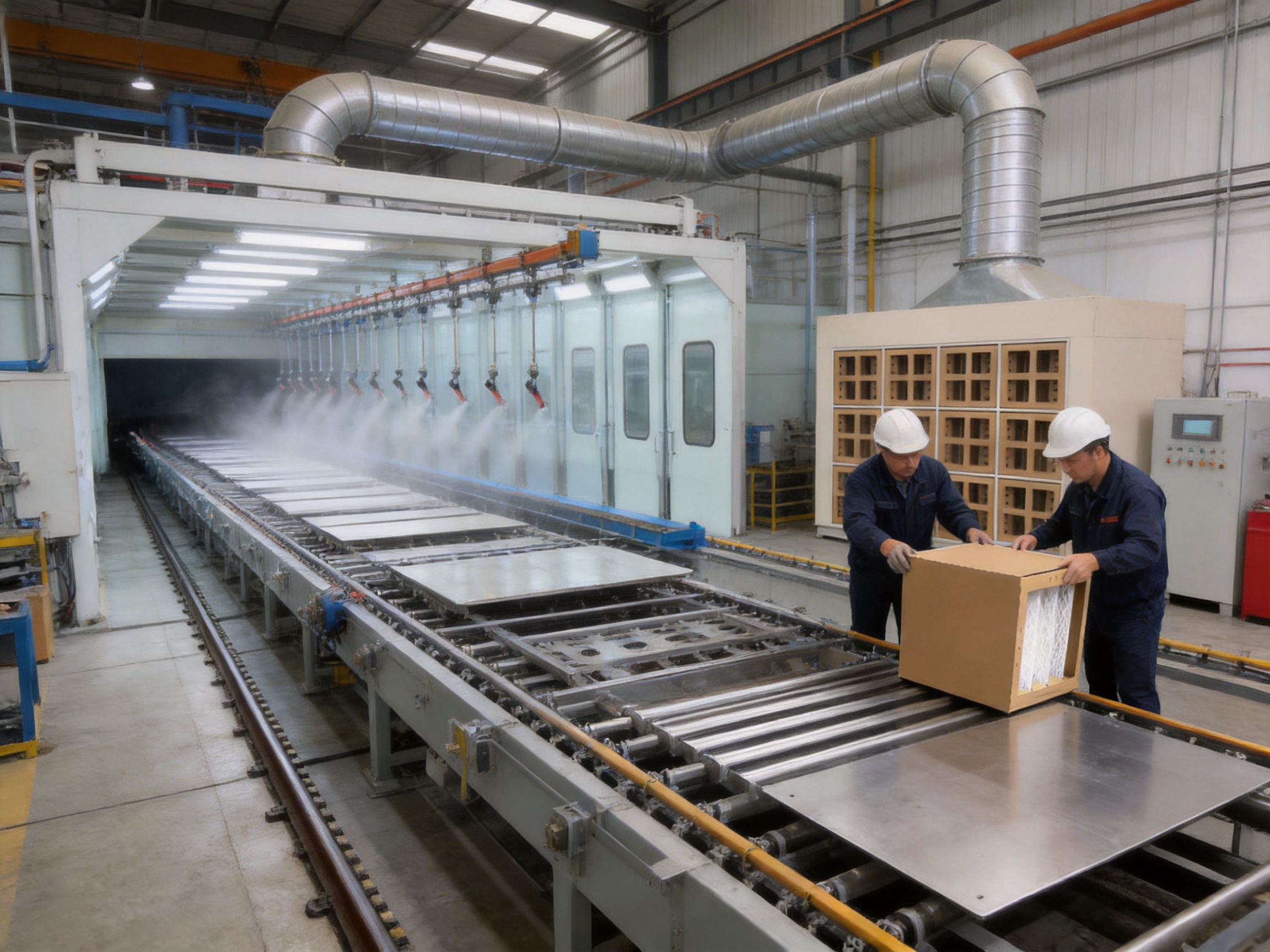
It is a dry-type overspray filtration unit made primarily from corrugated cardboard, with internal folded baffles that create a zig-zag airflow path. It is installed in the exhaust section of a dry spray booth to capture paint mist and residue before the air reaches the exhaust fan or downstream purification equipment.
Paint-laden air changes direction several times as it passes through the internal channels. Because paint droplets and particles have greater inertia than air, many of them strike the cardboard baffles and adhere to the surfaces. The remaining air continues toward the exhaust system.
It is primarily intended for dry spray booths using liquid or solvent-based paints. Compatibility depends on the paint formulation, solvent content, temperature, humidity, and spray conditions. Powder coating overspray and unusual chemical applications should be evaluated separately before use.
No. It is a dry-type filtration product and does not require a water circulation system or chemical washing process. Normal operation does not generate wastewater, although the used filter becomes paint-contaminated waste and must be handled according to applicable disposal requirements.
Service life depends on paint consumption, spray method, operating hours, paint type, booth airflow, and filter size. Replacement is generally required when the internal channels become visibly loaded, pressure loss increases, or booth extraction performance declines.
Every filter creates some pressure resistance. A correctly selected and clean box filter is designed to provide good air permeability and relatively low resistance. An undersized, incorrectly installed, or heavily loaded filter can reduce airflow and increase fan load.
Yes. Non-standard customization can be based on paint mist volume, booth dimensions, exhaust wall configuration, available installation space, filter depth, baffle arrangement, and maintenance requirements. Technical information about the booth and coating process should be provided before production.
The product is generally treated as a disposable consumable. Once paint residue has significantly loaded the channels, cleaning and reuse may not restore the original airflow path or capture performance. Reuse should not be attempted unless specifically approved for the particular design and application.
The depth and baffle arrangement influence the airflow path, paint-holding capacity, and resistance. A 300 mm configuration may suit light-duty spraying, a 450 mm configuration may suit standard dry booths, and a 600 mm multi-stage configuration may suit higher-volume operations. Final selection must also consider fan capacity and filter area.
The filter must fit tightly in the retaining frame, and adjacent modules must be aligned correctly. Gaps around the edges should be sealed or otherwise prevented according to the booth design. The frame should be inspected for distortion and excessive paint buildup during every replacement.
Yes, one of its important functions is to capture overspray before it reaches the fan and exhaust duct. This can reduce paint accumulation, cleaning requirements, vibration risks, and premature wear. It does not eliminate the need for downstream inspection and maintenance.
Useful information includes the booth opening dimensions, available filter depth, exhaust airflow, fan model or pressure data, paint type, approximate paint consumption, operating hours, spray equipment, installation orientation, replacement access, and any existing filter or frame drawings.
It can be appropriate when configured with sufficient filter area, suitable depth, and an internal baffle arrangement matched to the booth and fan. High-volume automotive operations may require deeper multi-stage units or multiple modular filters, together with a defined replacement and monitoring plan.
Jiangsu Yue Ze Environmental Protection Equipment Co., Ltd. supplies coating and environmental protection equipment, including paint and bake booths, powder coating lines, conveying systems, drying systems, waste gas treatment equipment, and customized industrial surface treatment solutions. Its broader engineering capability can support customers that require more than a standalone consumable.
Purchasing a filtration consumable from an experienced industrial equipment manufacturer provides benefits beyond the physical product. The supplier can help evaluate the filter within the context of booth airflow, paint application, equipment protection, environmental treatment, and maintenance access.
Yueze has developed its business around industrial surface treatment and environmental protection equipment. Its more than 40 years of experience contributes to practical knowledge of coating production conditions, including manual and automatic spraying, pretreatment, drying, conveying, exhaust collection, and emission control.
The company provides one-stop services covering research and development, manufacturing, installation, and customized equipment solutions. This enables cooperation on individual filters, replacement programs, complete booths, automated coating lines, or integrated factory projects. Its stated approach emphasizes quality control, advanced production technology, customer-focused service, integrity, green manufacturing, and international cooperation.
For a customer evaluating cardboard arrestor filters, this background is relevant because product performance depends on system compatibility. The correct filter must fit the frame, match the air volume, withstand the paint environment, provide adequate holding capacity, and be practical to replace. A manufacturer familiar with complete coating installations is better positioned to address these factors than a supplier focused only on generic packaging materials.
The company’s location in Yancheng, Jiangsu, provides a manufacturing base for domestic and international industrial projects. Customers can communicate their equipment drawings, site conditions, production targets, and environmental requirements for a customized assessment. The final design should be confirmed through technical review before manufacture and installation.
The cardboard paint arrestor box filter for dry spray booths is a simple but strategically important component in liquid coating operations. Its corrugated cardboard structure, folded internal baffles, optional filter cotton, and waterproof treatment work together to capture paint mist while maintaining a practical airflow path.
Its main advantages include high paint-holding capacity, good air permeability, dry operation without wastewater, straightforward installation, easy replacement, low handling weight, downstream equipment protection, and customization for different booth conditions. Compared with basic flat filters, the box design offers a longer internal path and greater effective collection surface. Compared with wet arresting systems, it provides a simpler dry filtration approach for applications where water circulation is unnecessary.
Correct selection and installation are essential. Filter depth, baffle arrangement, booth airflow, fan capacity, paint type, coating volume, and available maintenance space must be considered together. The filter should be replaced before excessive loading causes a significant decline in ventilation performance. Used units must be managed as paint-contaminated waste in accordance with local requirements.
Jiangsu Yue Ze Environmental Protection Equipment Co., Ltd. combines the product with extensive experience in coating equipment, environmental protection systems, conveying, drying, spray booths, and customized production lines. Its integrated research, manufacturing, installation, and engineering capabilities support customers seeking either a replacement consumable or a complete industrial surface treatment solution.
For dry spray booth operators seeking an economical and adaptable overspray capture method, a correctly engineered cardboard paint arrestor box filter can improve booth cleanliness, protect downstream equipment, support stable ventilation, and simplify routine maintenance.
1. Industrial Ventilation: A Manual of Recommended Practice for Design, American Conference of Governmental Industrial Hygienists.
2. National Fire Protection Association, standards and guidance for spray application using flammable or combustible materials.
3. Occupational safety guidance for industrial spray painting, ventilation, and control of airborne coating materials.
4. General technical principles for dry-type overspray arrestors, inertial impaction, and industrial exhaust filtration.
5. Manufacturer-provided technical information for cardboard paint arrestor box filters, dry spray booths, coating equipment, and environmental protection systems.
6. Manufacturer company information regarding industrial surface treatment equipment, automated coating lines, waste gas treatment systems, conveying systems, and customized equipment engineering.
Cardboard Paint Arresto is professional equipment for capturing and filtering paint mist, mainly made of high-quality corrugated cardboard, filter cotton, and waterproof coating. It adopts a modular d...
See Details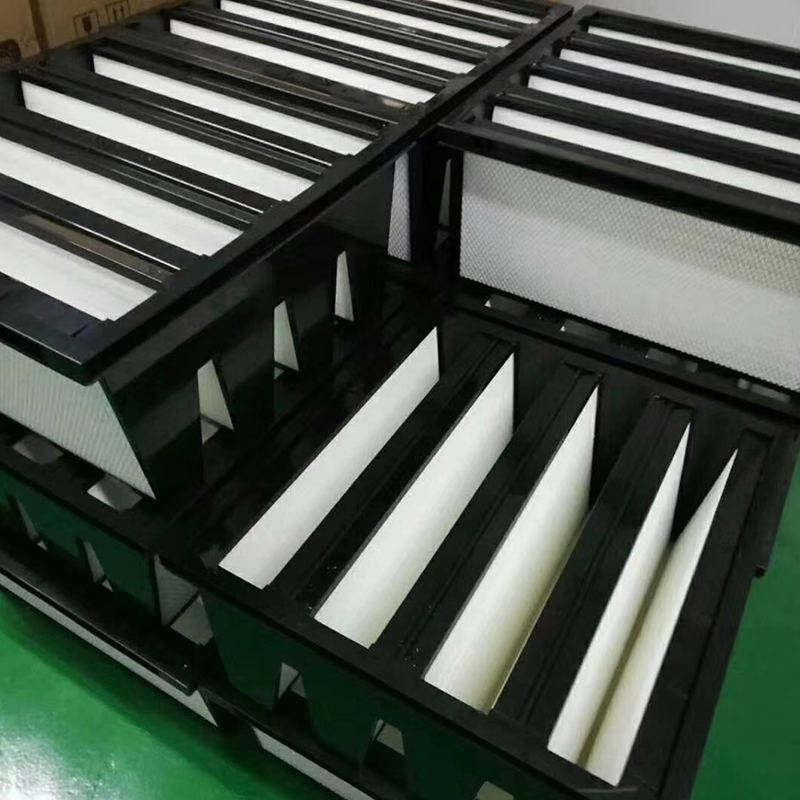
Dry-Type Paint Mist Filter is a core component for paint mist treatment, mainly made of high-quality filter materials (glass fiber, activated carbon, non-woven fabric). It has dense and uniform filter...
See Details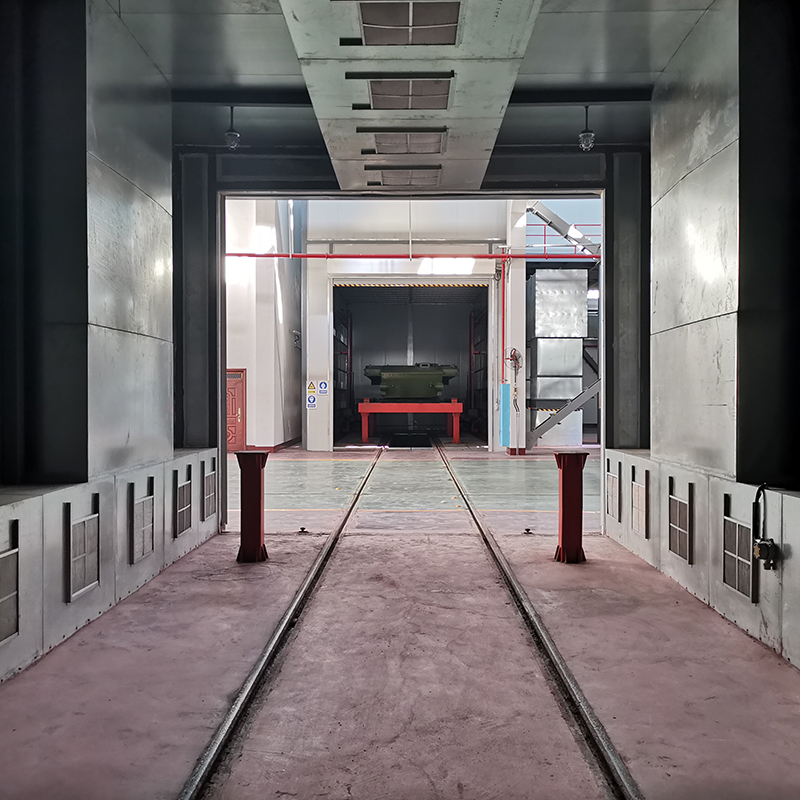
The spray paint line is a complete automated coating system, including spraying, drying, curing, and conveying processes. It features stable operation, uniform spraying effect, and good sealing perfor...
See Details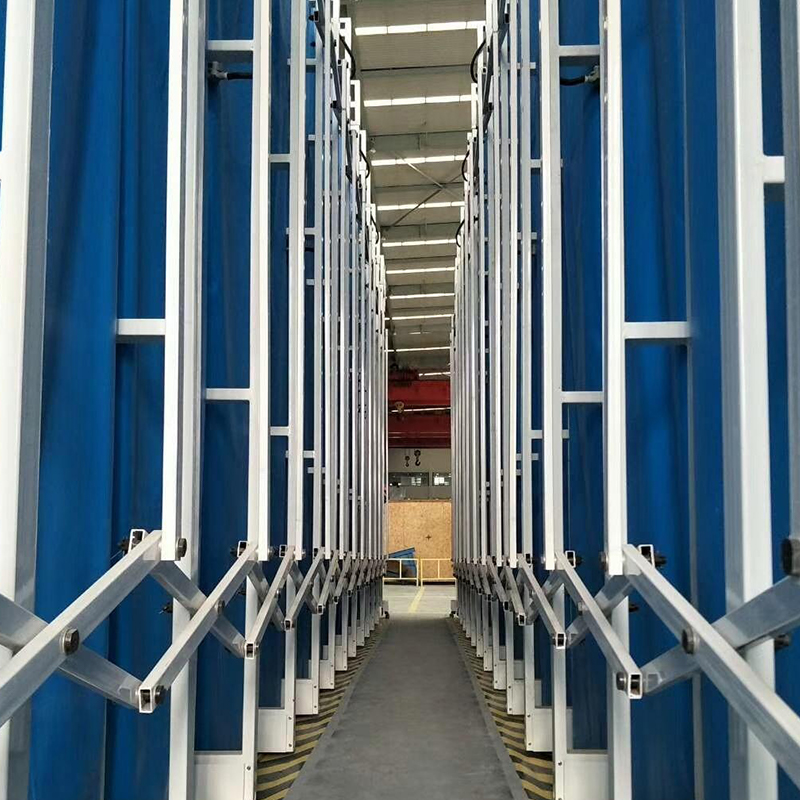
The retractable mobile spray & sanding booth is a flexible, space-saving, and multi-functional coating workstation. With a telescopic movable structure and integrated dust & paint mist filtrat...
See Details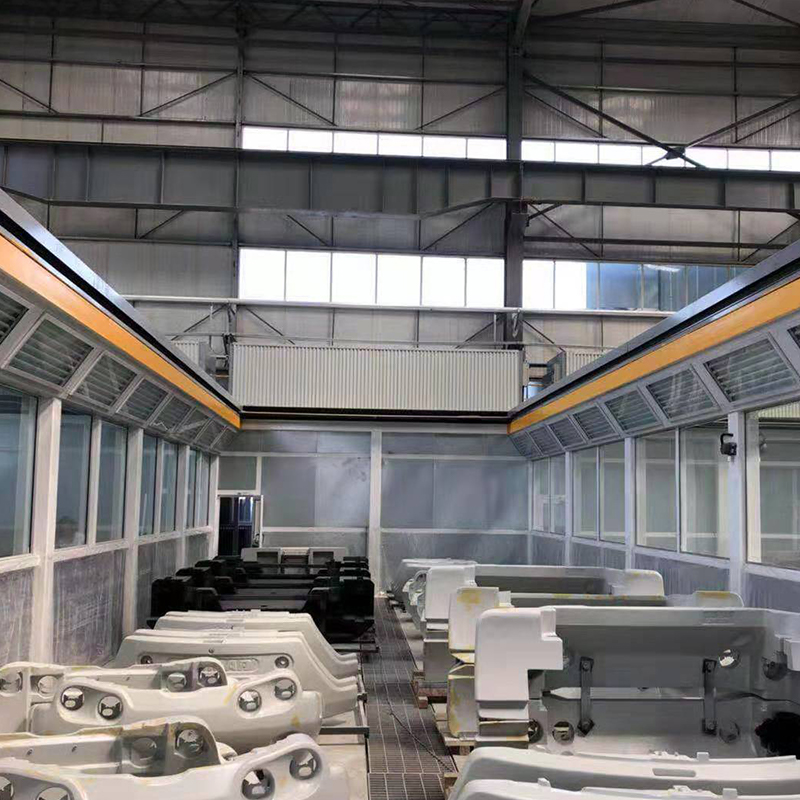
The retractable mobile spray & sanding booth is a flexible, space-saving, and multi-functional coating workstation. With a telescopic movable structure and integrated dust & paint mist filtrat...
See Details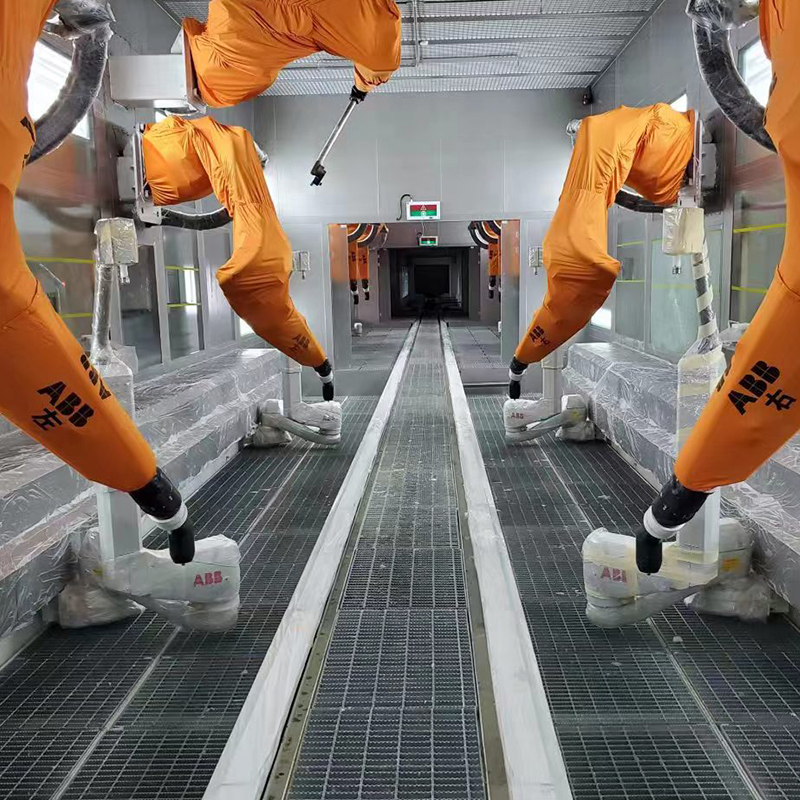
Professional spray coating line specially designed for motor casings, applicable to various motor casing types (electric vehicle motor casing, industrial motor casing, household motor casing, high-tem...
See DetailsBuild Your Customized Industrial Coating System
Send us your workpiece information, production capacity, coating process, workshop layout, and environmental requirements. Yueze will help evaluate your project and develop a suitable coating, conveying, drying, and environmental treatment solution.
Main menu
Products
Contact Us
Company Address:
No. 12, Park Avenue, Shanggang Industrial Park, Jianhu, Yancheng City, Jiangsu Province
Message Us Right Now!

Follow us: