
 русский
 عربى
 Tiếng Việt

Professional coating line specially designed for large castings and heavy truck parts, applicable to various large castings (engineering castings, mining equipment castings, industrial castings) and h...
See Details
Yueze Environmental Protection provides one-stop compliant industrial surface treatment solutions with professional tech and fine craftsmanship.
 Get Inquiries
2026-09-22
Content
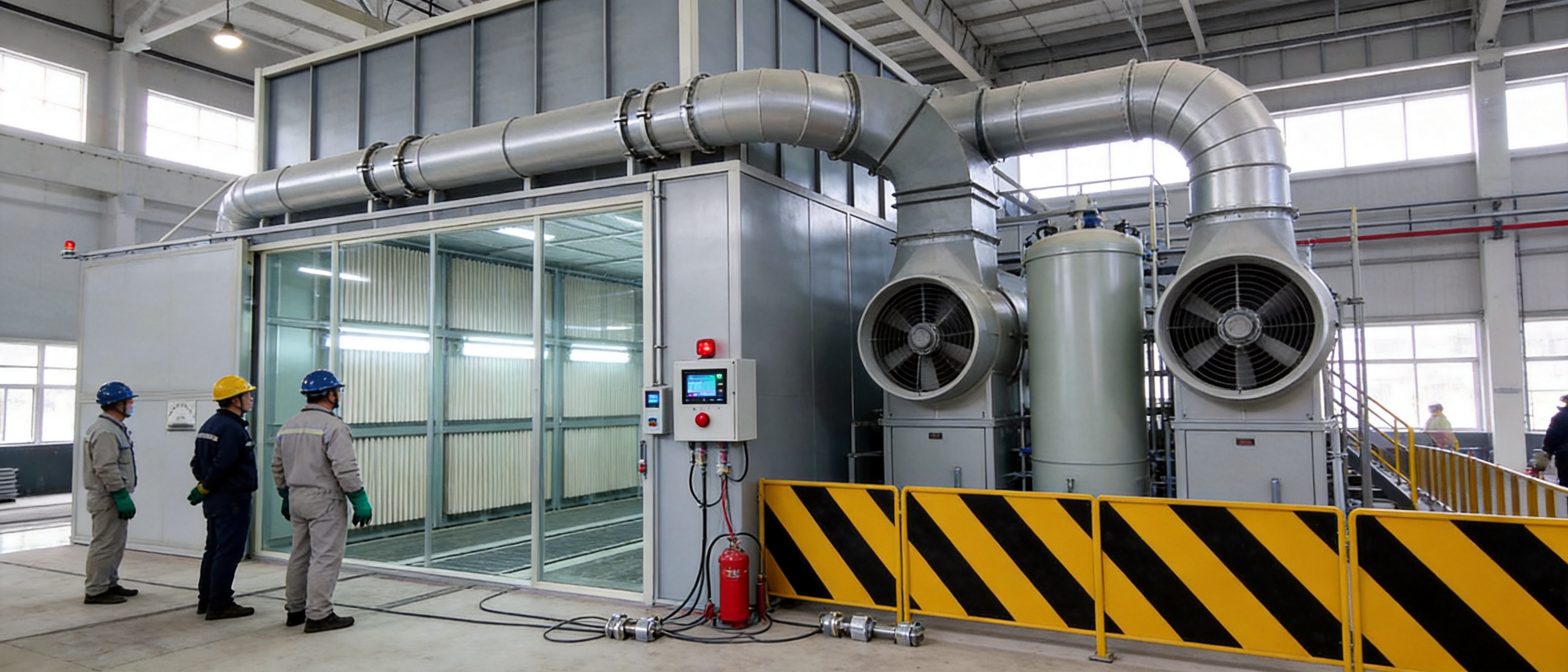
A spray paint line is a complete industrial coating system designed to move workpieces through loading, pretreatment, spraying, flashing, drying, curing, inspection, and unloading in a coordinated sequence. By integrating these stages into one production flow, the system provides a more stable alternative to disconnected spray booths and manually transferred workpieces. It is suitable for manufacturers that require repeatable coating quality, efficient production, controlled operating conditions, and effective environmental protection.
Modern coating production requires more than a spray booth and a paint gun. Manufacturers must control film thickness, surface appearance, paint consumption, drying conditions, exhaust emissions, workplace safety, production rhythm, and maintenance access. A properly engineered spray painting equipment line addresses these requirements as a complete system. It combines mechanical conveying, automated or reciprocating spraying, flash-off zones, drying or curing ovens, exhaust treatment, electrical control, and safety protection into one coordinated installation.
The spray paint line supplied by Jiangsu Yue Ze Environmental Protection Equipment Co., Ltd. is developed for customized industrial applications. The company provides integrated research and development, manufacturing, installation, commissioning, and technical service. Its experience includes automotive counterweight spray lines, automotive body spray and bake paint booths, custom coating production line equipment, automated conveying systems, drying systems, waste gas treatment equipment, and intelligent coating lines.
With a production base covering approximately 35,000 square meters and a registered capital of 58 million yuan, the company has accumulated more than 40 years of experience in environmental protection and industrial surface treatment equipment. This background allows the spray paint line to be designed not as an isolated machine, but as part of a complete manufacturing process tailored to the customer's products, coating materials, production volume, workshop layout, and environmental requirements.
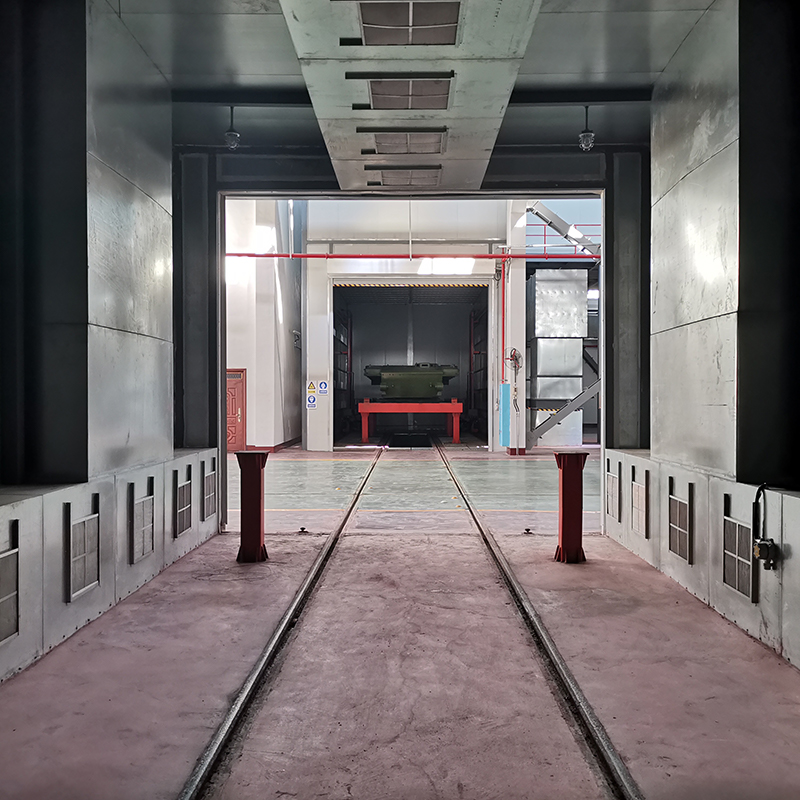
Spray Paint Line
A spray paint line is an integrated production line used to apply liquid coatings to industrial workpieces. Depending on the product and process requirements, it may include loading stations, cleaning and pretreatment equipment, drying sections, spray booths, paint supply systems, flash-off zones, curing ovens, cooling sections, inspection stations, and unloading areas.
The conveyor transports workpieces between each process stage at a controlled speed. The spraying section may use automatic reciprocators, fixed spray guns, or robotic spraying equipment. The correct configuration depends on the shape, size, weight, material, and production quantity of the workpieces. Large castings, automotive components, metal structures, appliances, furniture parts, and plastic components may require different conveyor arrangements and spray patterns.
Unlike a standalone spray booth, an integrated spray paint line controls the relationship between each stage. The conveyor speed can be matched to the spraying time and curing time. Flash-off distance can be calculated according to the coating material. Exhaust volume can be balanced between the booth and drying equipment. The control system can also coordinate interlocks, alarms, temperature monitoring, and emergency stops throughout the production process.
This integration improves production consistency. When operators move parts manually between separate stations, waiting time, handling methods, and environmental conditions may vary from batch to batch. In a continuous line, the workpiece follows a defined route under controlled process parameters. This helps reduce unnecessary handling and makes it easier to identify the cause of quality problems when they occur.
A complete spray painting line can be configured according to the required coating process. The following sequence represents a typical industrial arrangement, although the exact design is adjusted for each application.
The production process begins at the loading station. Workpieces are placed on hangers, carts, hooks, fixtures, or conveyor carriers designed for their dimensions and weight. Proper loading is important because the fixture determines the orientation of the part and the accessibility of the spray guns.
For repeat production, dedicated fixtures can be designed to hold each workpiece in a stable position. The fixture should expose the required surfaces while avoiding unnecessary shadow areas. It should also withstand repeated exposure to paint, heat, cleaning chemicals, and mechanical movement. In some applications, quick-change fixtures are used to improve product changeover efficiency.
Workpiece identification can be added to the loading process. Barcodes, production records, or programmable recipes may be used to connect a product type with a specific spraying program, conveyor speed, oven temperature, and coating sequence.
Surface preparation strongly influences coating adhesion, corrosion resistance, and final appearance. Depending on the substrate, pretreatment may include degreasing, washing, phosphating, rinsing, drying, shot blasting, grinding, or manual cleaning.
For metal products, pretreatment removes oil, dust, rust, scale, and other contaminants. For castings and heavy components, grinding or finishing may be required before the workpiece enters the coating line. Plastic parts may require cleaning, flame treatment, plasma treatment, or other methods to improve surface energy and adhesion.
The pretreatment process should be matched to the coating material and the substrate. A customized line can include separate zones for cleaning and rinsing, water circulation systems, chemical dosing, sludge removal, exhaust ventilation, and drying. Where wet pretreatment is not required, the line may use mechanical cleaning, compressed air, or a dedicated preparation room.
After wet cleaning or rinsing, the workpiece must be sufficiently dry before spraying. Residual moisture can cause blistering, poor adhesion, surface defects, or corrosion under the coating. A drying oven or heated drying tunnel can remove moisture at a controlled temperature.
Drying temperature and residence time depend on the workpiece material, wall thickness, geometry, and production speed. Heavy castings require more time to reach a stable temperature than thin sheet-metal parts. The line design must therefore consider heat distribution, airflow, insulation, burner or electric heating capacity, and conveyor speed.
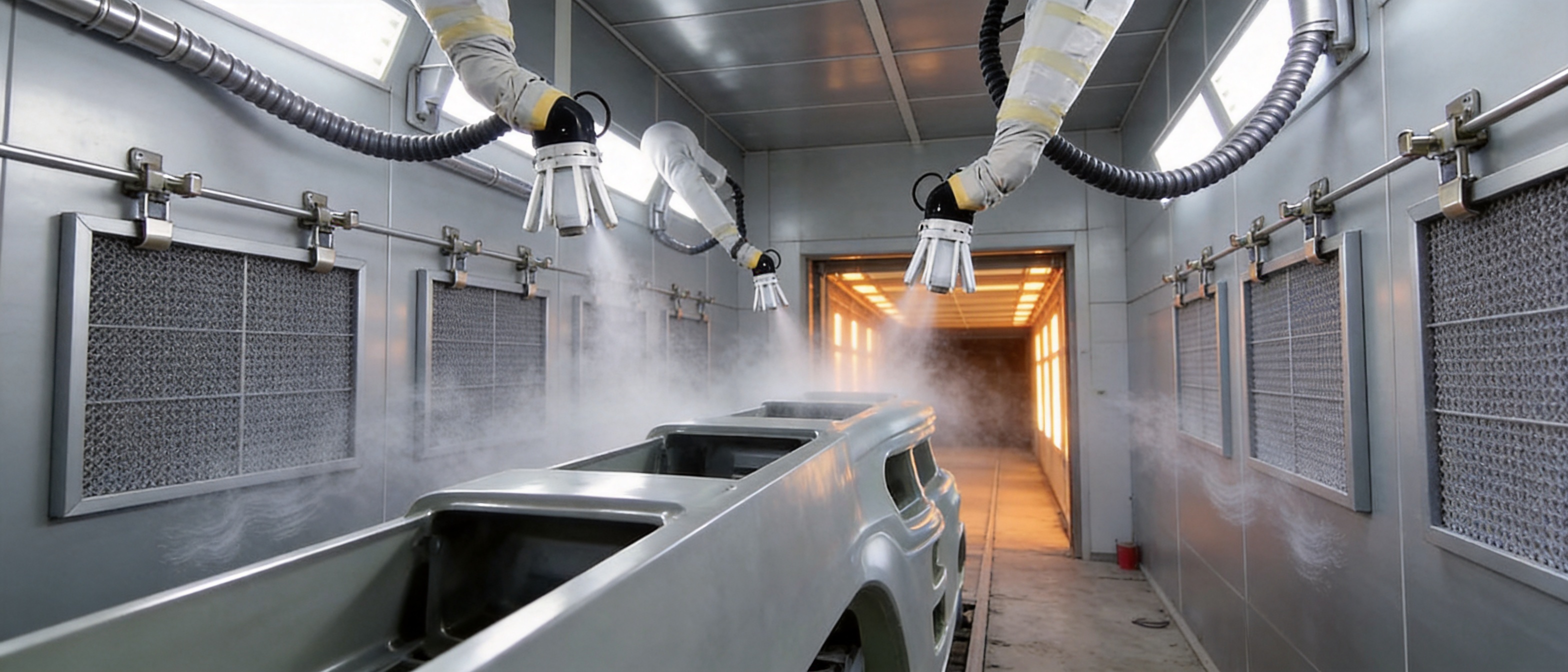
The spray booth is the core coating station. It provides a controlled space for paint application and separates the spraying process from the surrounding workshop. The booth may be equipped with reciprocators, automatic spray guns, robots, manual touch-up guns, or a combination of these devices.
During spraying, the paint supply system delivers coating material to the gun at a controlled pressure and flow rate. The gun atomizes the paint into fine droplets and applies them to the surface in a controlled pattern. Spray width, overlap, gun distance, gun angle, and conveyor speed all influence coating thickness and surface quality.
Automatic reciprocators are often suitable for products with regular shapes and repeatable production requirements. They move spray guns along programmed vertical or horizontal paths. Robotic systems provide greater flexibility for complex geometries and can change the spray angle according to the shape of the product. Manual spray stations may be included for difficult areas, special products, or final touch-up.
After spraying, the coated workpiece may pass through a flash-off zone. This area provides time for volatile components to evaporate before the workpiece enters the drying or curing oven. Proper flash-off reduces the risk of solvent entrapment, bubbling, pinholes, sagging, and other appearance defects.
The flash-off zone may use controlled airflow and temperature. Excessive airflow can disturb the wet film, while insufficient airflow can extend the process cycle. The correct design depends on the coating formulation, film thickness, booth conditions, and required finish.
The curing section hardens the coating and develops its final performance. Liquid coatings may require heated drying or baking, while some water-based coatings require controlled evaporation and subsequent curing. UV coatings may use ultraviolet curing equipment, and other specialized materials may require infrared radiation or a combination of heating technologies.
The oven must provide stable temperature distribution throughout the effective curing area. Poor temperature uniformity can result in under-cured sections, excessive discoloration, weak adhesion, or inconsistent gloss. For this reason, oven insulation, circulation fans, heating sources, exhaust systems, temperature sensors, and control logic must be designed as a coordinated system.
After curing, the workpiece may pass through a cooling section before inspection. Cooling prevents operators from handling parts that are too hot and allows the coating to stabilize before packaging or assembly. The inspection station may include visual inspection, gloss checking, color comparison, film-thickness measurement, adhesion testing, and dimensional review.
Once the coating has been approved, the workpiece is unloaded from the conveyor. For high-volume production, the unloading area can be connected to assembly, packaging, or storage operations. This arrangement reduces unnecessary intermediate handling and supports continuous manufacturing.
The primary benefit of an automated spray paint line is improved coating consistency. Automated movement and programmed spraying help maintain a stable gun-to-surface distance, spray speed, overlap rate, and application pattern. These parameters are difficult to control consistently when every part is painted manually by a different operator.
Stable process control helps produce uniform film thickness and reduces problems such as color variation, runs, sags, missed areas, excessive overspray, and uneven gloss. A consistent coating process can also improve the yield rate because fewer parts require rework or touch-up.
Uniformity is particularly important for visible components, automotive parts, appliances, furniture, and products that are assembled into large finished surfaces. Even small differences in gloss or color can become noticeable when multiple parts are installed together. An integrated line reduces these differences by keeping the spraying and curing conditions stable.
A continuous line allows workpieces to move from one station to the next without repeated manual transfer. This reduces waiting time between pretreatment, spraying, flashing, and curing. The production rhythm can be established through conveyor speed, station spacing, and process cycle time.
Compared with isolated equipment, a complete line can reduce unnecessary handling and make better use of available workshop space. Operators can focus on loading, monitoring, inspection, and maintenance rather than carrying workpieces between disconnected areas. This is especially valuable in high-volume production environments.
Automation also supports more predictable scheduling. Once the conveyor speed and process parameters are established, the manufacturer can estimate output according to working hours, product spacing, and changeover requirements. Bottlenecks can be identified at specific stations and addressed through process improvements.
Manual spraying requires considerable skill. The operator must control gun movement, overlap, pressure, distance, speed, and spray angle while responding to changes in product shape and coating behavior. Differences in operator technique can produce variations in film thickness and appearance.
An automatic spray system does not eliminate the need for skilled personnel, but it transfers repetitive application work to programmable equipment. Operators can concentrate on recipe selection, paint supply, equipment checks, inspection, and exception handling. This creates a more repeatable process and reduces the effect of operator fatigue.
High-precision spraying can improve paint utilization. Spray pattern control helps direct coating material toward the workpiece rather than the surrounding booth. Correct pressure, flow, distance, and overlap reduce excess application and overspray.
Paint savings come from several sources. Consistent film thickness reduces over-application. Stable spraying reduces the number of defective parts requiring repainting. Proper equipment selection improves transfer efficiency. A well-designed booth and filtration system also make it easier to recover or manage paint mist, depending on the coating process and environmental requirements.
Although actual savings depend on coating type, product geometry, production volume, and operating conditions, an integrated line generally provides better control of paint consumption than irregular manual spraying.
Environmental control is an essential part of modern coating production. Spray painting can generate paint mist, volatile organic compounds, dust, and other emissions. The spray paint line can be designed with enclosed booths, centralized exhaust, multi-stage filtration, and waste gas treatment equipment.
The enclosed booth limits the spread of paint mist into the workshop. Filtration systems capture particulate material before exhaust air is discharged or sent to additional treatment. Waste gas treatment can be selected according to the composition and concentration of the emissions, production volume, and applicable environmental requirements.
Better environmental control also contributes to workplace cleanliness. A clean workshop protects equipment, improves visibility, reduces contamination of wet coatings, and creates better working conditions for employees.
Spray coating involves flammable materials, electrical equipment, moving conveyors, hot ovens, and potentially hazardous vapors. The line should therefore incorporate explosion-resistant and fire-prevention measures appropriate to the coating process.
Typical safety provisions may include grounding and anti-static protection, controlled ventilation, pressure monitoring, temperature alarms, emergency stop devices, access-door interlocks, fire detection, fire suppression provisions, and safe separation between ignition sources and spraying zones.
Safety design must be adapted to the selected paint, solvent content, heating method, booth configuration, and local regulations. A professional equipment manufacturer can coordinate these requirements during the engineering stage rather than attempting to add safety features after installation.
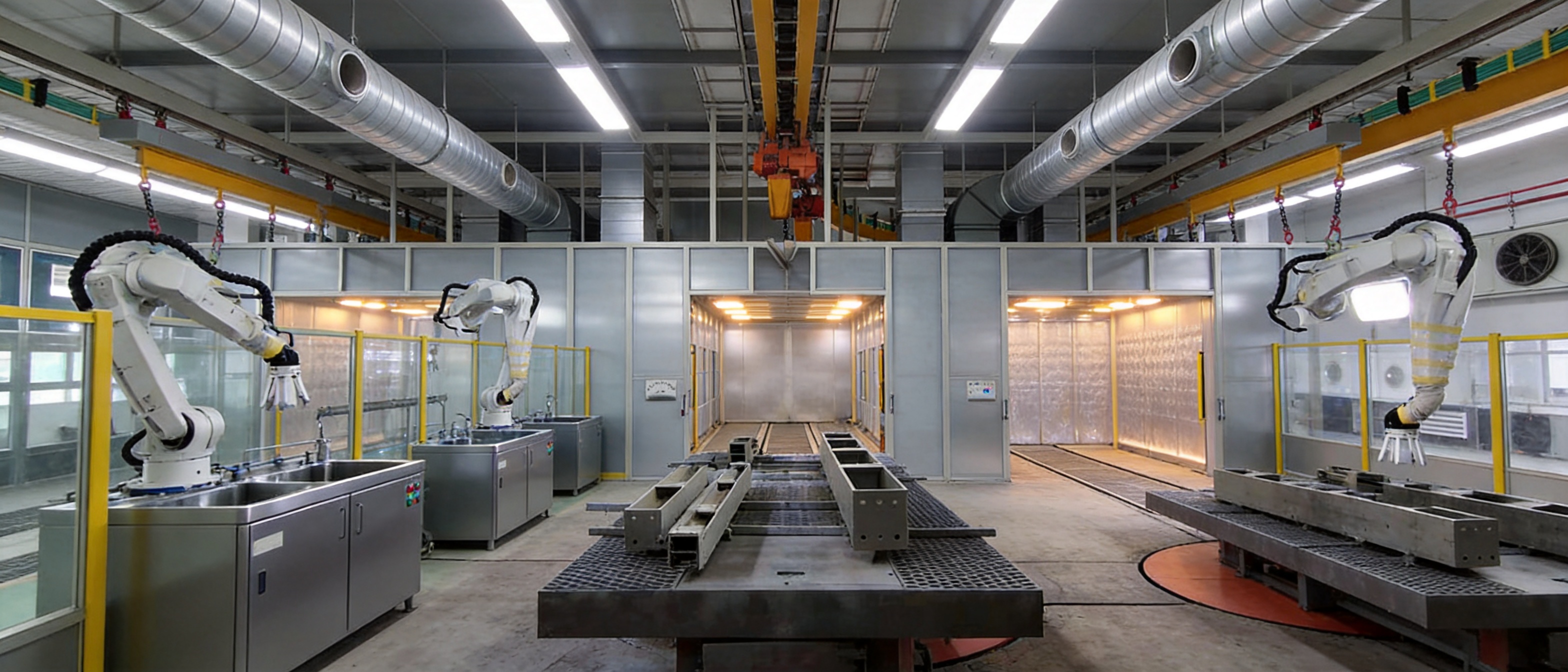
Standalone equipment can be suitable for small workshops, low-volume production, prototypes, or products with frequent changes. However, separate spray booths, manual drying areas, and independent handling operations may create inconsistent cycle times and additional labor requirements.
| Evaluation Factor | Standalone Spray Equipment | Integrated Spray Paint Line |
|---|---|---|
| Process connection | Separate stations with manual transfer | Continuous connection between major process stages |
| Coating consistency | Highly dependent on operator technique | Supported by programmed spraying and stable conveying |
| Production efficiency | Limited by manual handling and waiting time | Suitable for continuous and high-volume production |
| Process monitoring | Information may be recorded separately | Centralized control and easier process tracking |
| Paint consumption | May vary according to manual application | Better controlled through repeatable spray parameters |
| Environmental control | May require separate exhaust and treatment systems | Can integrate booth ventilation and centralized treatment |
| Changeover flexibility | High for small and varied production | Moderate and dependent on programmed recipes and fixtures |
| Best application | Small batches, prototypes, and highly varied parts | Repeat production, large output, and demanding consistency |
The choice between standalone equipment and a complete line should be based on production volume, product variety, coating specifications, available space, labor cost, environmental obligations, and future expansion plans. A custom solution may combine automatic and manual stations to balance flexibility with efficiency.
An automatic spraying line is most appropriate when the manufacturer produces repeat parts in stable volumes. Programmable equipment can repeat the same movement pattern over long production periods, making it easier to maintain coating quality across many batches.
A manual or semi-automatic line may be preferred when products vary significantly in size and geometry. Manual operators can adjust their movements immediately when a product changes. A semi-automatic configuration can retain manual spraying flexibility while using automatic conveying, flash-off, drying, curing, and exhaust treatment.
Many factories benefit from a hybrid arrangement. Automatic reciprocators can coat the main surfaces, while operators finish corners, recessed areas, or special features. This approach improves productivity without sacrificing adaptability.
Production volume is one of the most important considerations. High output generally justifies automatic spraying and continuous conveying. Low output may not provide enough utilization to justify a fully automated system.
Product geometry is also important. Simple, repeatable shapes are easy to program. Complex parts with deep cavities, hidden surfaces, or irregular profiles may require multiple spray axes, robotic programming, or manual assistance.
Coating requirements influence the equipment choice. High-appearance finishes and strict film-thickness tolerances usually benefit from a controlled automatic process. Products with less demanding appearance requirements may be suitable for a simpler configuration.
Future growth should be considered as well. A line designed only for current output may become a bottleneck when orders increase. A modular layout can provide space for additional spray guns, a second oven zone, extra loading positions, or expanded conveying capacity.
Automotive components often require durable, uniform, and visually consistent coatings. Counterweight blocks, chassis components, brackets, wheels, metal housings, and other parts may use automated spray and bake processes. The line can be designed to handle heavy workpieces, repeatable fixture positions, and demanding production cycles.
The company has particular experience in automotive counterweight spray lines and automotive body spray and bake paint booths. Its history includes the development of a hanging automatic painting process line for cast counterweight blocks in 2014. That process covered finishing and polishing through primer and topcoat application, providing practical experience with large and heavy cast components.
Hardware products such as frames, brackets, tools, handles, metal fittings, and structural components may require primer, topcoat, varnish, or protective coating. A spray line can be configured with fixtures that accommodate many similar parts and support high production volume.
Aluminum components often require careful pretreatment and coating control because surface condition strongly affects adhesion. The line can include specialized cleaning, drying, spraying, and curing conditions suitable for aluminum workpieces.
Appliance panels, housings, cabinets, and structural parts commonly require smooth and attractive finishes. Automated spraying can reduce color variation and improve consistency across large visible surfaces. Conveyor speed, spray overlap, curing temperature, and cooling time can be coordinated to support appearance and performance.
Metal furniture, office equipment, shelving, cabinets, and decorative components may require different colors and coating materials. A flexible line can include quick-change fixtures, recipe management, manual touch-up stations, and controlled changeover procedures.
Plastic parts can be coated with primers, color coats, UV coatings, or protective finishes. Because plastic substrates are sensitive to heat and surface contamination, the pretreatment, spraying, and curing sections must be carefully matched to the material. Low-temperature drying or alternative curing technology may be selected where necessary.
The spray paint line may be designed for solvent-based paints, water-based paints, primers, topcoats, varnishes, and selected UV coatings. The exact equipment configuration depends on the viscosity, flash point, drying mechanism, curing temperature, solids content, and application method of the coating.
Solvent-based coatings require careful control of ventilation, vapor concentration, grounding, and fire protection. Water-based coatings may require additional air movement and controlled drying to remove moisture efficiently. UV coatings require ultraviolet curing equipment and shielding suitable for the process.
The paint supply system should be selected according to the coating material. It may include storage tanks, pumps, filters, pressure regulators, circulation lines, agitators, heaters, or mixing systems. Stable paint delivery is essential because pressure and flow fluctuations can affect atomization and film thickness.
Each spray paint line should be engineered around the actual product and workshop rather than selected from a standard catalog. The design process may consider workpiece dimensions, weight, material, coating type, target output, conveyor arrangement, available building height, floor area, loading method, oven temperature, exhaust requirements, and future production plans.
Jiangsu Yue Ze Environmental Protection Equipment Co., Ltd. provides customized coating production line equipment and one-stop surface treatment solutions. This allows the customer to coordinate multiple subsystems through one project partner instead of combining equipment from unrelated suppliers.
Integrated research and development helps connect mechanical design, electrical control, environmental treatment, and production requirements. The company works across coating lines, paint and bake booths, large-part grinding rooms, waste gas treatment equipment, infrared radiation drying systems, automated conveyors, intelligent coating systems, and other environmental protection equipment.
This broad product range is valuable because coating quality is influenced by more than the spray gun alone. Airflow, temperature, humidity, conveying speed, oven performance, workpiece positioning, and exhaust treatment all affect the final result. A manufacturer with experience in these related systems can evaluate the complete process more effectively.
A large manufacturing facility supports the fabrication, assembly, testing, and preparation of major equipment modules. The production process may include steel structure fabrication, panel preparation, conveyor assembly, booth construction, oven manufacturing, ductwork fabrication, electrical cabinet assembly, and control-system integration.
Manufacturing quality depends on dimensional accuracy, material selection, welding quality, insulation installation, surface treatment, component compatibility, and final inspection. Attention to these details helps improve equipment stability after installation and reduces the risk of alignment or commissioning problems.
Heavy and irregular workpieces create special engineering challenges. The conveyor must support the load safely. Fixtures must prevent swinging and rotation. Spray guns must reach all required surfaces. The oven must provide sufficient heat penetration. The booth must maintain adequate airflow without disturbing the coating film.
The company's experience with automotive counterweight spray lines and large-part coating applications supports the design of equipment for demanding industrial products. This experience is especially useful when the coating line must handle heavy castings, large metal structures, or products with difficult geometry.
Waste gas treatment and ventilation can be designed together with the spray booth and oven. This reduces the risk of mismatched airflow, inadequate exhaust capacity, or inefficient treatment. The system can include paint mist filtration, exhaust ducts, fans, purification equipment, and monitoring provisions.
Environmental equipment should not be treated as an afterthought. Its capacity affects booth pressure, spray performance, workplace air quality, energy consumption, and regulatory compliance. Integrated design provides a clearer relationship between production output and treatment capacity.
Successful installation requires more than delivering equipment to the factory. The conveyor must be aligned, the booth sealed, the oven tested, the exhaust balanced, the control system programmed, and the spraying equipment calibrated. Commissioning should include trial production using the customer's actual workpieces and coating materials whenever possible.
Technical service may include layout guidance, foundation requirements, equipment installation, electrical connection, operator training, process adjustment, maintenance instruction, and after-sales support. These services help the customer reach stable production more quickly.
Conveyor speed determines the residence time of the workpiece in the spray booth, flash-off area, and curing oven. An excessively high speed may reduce film thickness or curing time. An excessively low speed may reduce output and increase energy consumption.
Variable-speed control allows the line to adapt to different products and coating recipes. The control system can store appropriate speeds for primer, topcoat, varnish, or special coating processes.
Spray pressure affects droplet size, atomization, spray pattern, and transfer efficiency. Pressure that is too high can increase overspray and create an unstable pattern. Pressure that is too low may produce poor atomization, uneven coverage, or excessive wet film.
Flow control is equally important. The paint supply system should deliver a stable volume of coating material to each gun. Filters, pumps, regulators, hoses, and circulation arrangements should be selected to maintain reliable performance throughout the shift.
Temperature and humidity influence viscosity, evaporation, drying speed, adhesion, and surface appearance. Stable environmental conditions help the line produce consistent results throughout the day and across different seasons.
Where required, the spray booth can be equipped with temperature and humidity control. The drying and curing sections can use independent temperature control to provide the correct conditions for each coating stage. Monitoring and alarm functions help operators identify deviations before they create large batches of defective products.
Airflow must remove paint mist and vapors while avoiding excessive disturbance of the wet coating. The booth design should provide a controlled flow direction and balanced exhaust volume. Filtration stages should be selected according to the type and quantity of paint mist generated.
Regular filter inspection and replacement are important for maintaining airflow. Blocked filters increase resistance, change booth pressure, reduce exhaust performance, and may affect coating quality. Maintenance access should therefore be considered during the original equipment design.
Routine maintenance helps extend equipment service life and preserve coating quality. Operators should inspect spray guns, nozzles, paint hoses, pumps, filters, regulators, conveyor chains, hangers, and fixtures according to a defined schedule.
The spray booth should be cleaned regularly to prevent accumulated paint from contaminating new workpieces or reducing airflow. Filters should be replaced or cleaned according to their condition and the manufacturer's recommendations. Ducts and exhaust fans should be checked for deposits, vibration, unusual noise, and reduced performance.
Ovens require inspection of heating elements, burners, circulation fans, temperature sensors, insulation, and safety devices. Conveyor components should be lubricated and checked for abnormal wear, misalignment, or excessive vibration. Electrical cabinets should be kept clean and dry, with connections inspected by qualified personnel.
Preventive maintenance is generally less expensive than emergency repair. A maintenance record can help identify recurring problems, estimate component life, and schedule service during planned production interruptions.
The first step is to record the dimensions, weight, material, surface condition, and geometry of the workpieces. The customer should also define daily output, working hours, product mix, batch size, and future expansion plans.
The required coating materials, number of coats, target film thickness, color-change frequency, drying method, curing temperature, and appearance standards should be confirmed before equipment selection. Test spraying may be useful when a new coating or substrate is introduced.
The layout should provide enough space for loading, unloading, maintenance, operator access, exhaust ducts, electrical cabinets, ovens, and material handling. Building height is especially important for overhead conveyors and large workpieces.
Exhaust volume, paint mist filtration, waste gas treatment, fire protection, anti-static design, explosion-resistant components, emergency access, and local compliance requirements should be included in the project specification.
Manufacturers producing several products should consider fixture changes, paint color changes, recipe management, cleaning procedures, and production scheduling. Modular equipment and reserved installation space can make future expansion easier.
For small and medium-sized manufacturers, a semi-automatic or modular spray line can reduce manual handling while preserving product flexibility. Automatic conveying, controlled drying, and centralized exhaust may provide significant improvements without requiring a fully robotic system.
For high-volume manufacturers, a fully automatic line can support continuous production, consistent quality, lower labor dependence, and better process data. Robotic or reciprocating spraying can be combined with automatic loading, recipe management, inspection, and production tracking.
For manufacturers expanding into new product categories, a custom line can be designed with adjustable fixtures, variable conveyor speeds, multiple coating programs, and adaptable spray equipment. The correct solution is not necessarily the most automated system, but the one that provides the best balance between output, flexibility, quality, investment, and operating cost.
The main purpose is to connect coating process stages into one coordinated production flow. It can include pretreatment, drying, spraying, flash-off, curing, cooling, inspection, and unloading. The integrated design improves process consistency and reduces manual transfer between stations.
It can be suitable for small-batch production when the line is designed with flexible fixtures, adjustable programs, and semi-automatic or manual spray stations. A fully automatic line is usually more economical for repeat products and larger volumes, while a modular system can support a wider product range.
The line can be designed for hardware, aluminum products, home appliances, furniture, automotive parts, cast counterweight blocks, plastic components, metal structures, and other industrial workpieces. The conveyor, fixtures, spray equipment, oven, and pretreatment system must be selected according to the product.
Yes, the line can be designed for water-based coatings when the drying and ventilation conditions are properly configured. Water-based paint may require controlled temperature, humidity, airflow, and drying time to remove moisture and achieve the required finish.
Yes, solvent-based paint can be used when the equipment includes suitable ventilation, paint mist filtration, grounding, anti-static protection, fire prevention, and safety controls. The final configuration must match the coating formulation and applicable safety requirements.
An automatic reciprocator usually moves spray guns along predetermined linear paths and is suitable for regular, repeatable products. A robot provides more movement flexibility and can follow complex paths around irregular workpieces. The best choice depends on geometry, production volume, coating requirements, and budget.
It reduces paint consumption through controlled spray pressure, stable flow, accurate gun movement, consistent film thickness, reduced overspray, and fewer defective parts requiring rework. Actual savings depend on the paint, workpiece geometry, coating thickness, and operating parameters.
Coating quality can be monitored through visual inspection, color comparison, gloss testing, film-thickness measurement, adhesion testing, curing verification, and process records. Temperature, humidity, conveyor speed, spray pressure, and oven conditions can also be monitored through the control system.
Safety features may include enclosed spray areas, ventilation, anti-static grounding, explosion-resistant components where required, temperature alarms, emergency stops, access-door interlocks, fire detection, fire protection provisions, and safe separation of heating sources from paint application areas. The final design should follow the relevant local requirements.
Yes. The spray booth and drying system can be connected to exhaust ducts, paint mist filtration, fans, and waste gas purification equipment. Treatment capacity should be calculated according to production volume, coating type, emission characteristics, and required environmental performance.
Installation time depends on the line size, equipment complexity, workshop readiness, conveyor length, oven structure, electrical work, exhaust system, and commissioning requirements. A detailed schedule can be prepared after the technical specification, layout, and site conditions are confirmed.
The customer should provide workpiece dimensions, weight, material, coating type, number of coats, required output, working hours, desired automation level, available workshop dimensions, loading method, environmental requirements, and photographs or drawings of representative products. This information helps the manufacturer develop a more accurate technical proposal.
Yes. Jiangsu Yue Ze Environmental Protection Equipment Co., Ltd. specializes in customized coating production lines and related environmental protection equipment. Its services include system design, manufacturing, installation, commissioning, training, and technical support.
Integrated experience is important because coating quality depends on the interaction of spraying, conveying, drying, curing, ventilation, filtration, temperature, humidity, and workpiece positioning. A manufacturer that understands the complete process can coordinate these systems more effectively than a supplier focused on only one machine.
A spray paint line is a long-term production asset. Its value depends not only on the initial purchase price, but also on coating quality, operating cost, maintenance requirements, energy consumption, environmental performance, production flexibility, and technical support.
A customized manufacturing partner can evaluate the complete process and identify the equipment configuration that best fits the customer's actual production. This approach helps prevent common problems such as insufficient oven capacity, unsuitable conveyor loading, poor access for maintenance, inadequate exhaust treatment, excessive paint consumption, and limited product flexibility.
Jiangsu Yue Ze Environmental Protection Equipment Co., Ltd. combines coating equipment manufacturing with environmental protection technology and automated conveying experience. Its product range includes powder coating lines, electric vehicle assembly lines, automotive counterweight spray lines, paint and bake booths, large-part grinding rooms, waste gas treatment systems, infrared radiation drying systems, automated conveying systems, and intelligent coating lines.
The company's experience in research and development, manufacturing, installation, and customization supports complete project delivery. Its approach emphasizes strict quality control, advanced production technology, customer-focused service, green manufacturing, integrity, and long-term cooperation.
A modern spray paint line provides a complete solution for manufacturers seeking stable coating quality, higher production efficiency, controlled paint consumption, improved workplace conditions, and reliable environmental performance. By connecting pretreatment, spraying, flash-off, drying, curing, cooling, inspection, and unloading, the line creates a consistent process that is difficult to achieve with disconnected equipment.
The main advantages include uniform film thickness, reduced color variation, lower rework, more efficient labor use, better process tracking, controlled exhaust, safer operation, and the ability to support continuous production. Automatic reciprocators, robotic spraying, programmable conveyors, temperature and humidity control, centralized exhaust, and waste gas treatment can be combined according to the application.
The most effective system is one designed around the customer's products, coating materials, output requirements, workshop conditions, and future plans. With more than 40 years of experience and a broad manufacturing scope, Jiangsu Yue Ze Environmental Protection Equipment Co., Ltd. provides customized coating production lines and related environmental protection equipment for industrial manufacturers in China and international markets.
For companies planning a new coating facility, upgrading manual spraying, or expanding an existing production line, a detailed technical evaluation is the appropriate starting point. Workpiece information, coating requirements, production targets, layout conditions, and environmental obligations should be reviewed together before the final system is selected.
1. Industrial coating process planning principles, including pretreatment, spray application, flash-off, drying, curing, inspection, and material handling.
2. General industrial ventilation and paint mist filtration practices for enclosed spray booths.
3. General fire prevention and anti-static design principles for liquid coating operations.
4. Equipment engineering practices for automated conveyors, reciprocating spray systems, drying ovens, curing ovens, and environmental treatment systems.
5. Manufacturer-provided technical information on customized coating production lines, automotive counterweight spray lines, paint and bake booths, waste gas treatment equipment, infrared drying systems, and automated conveying systems.
6. Manufacturer company information concerning Jiangsu Yue Ze Environmental Protection Equipment Co., Ltd., its production facility, product scope, engineering experience, and integrated project services.
7. General quality-control practices for industrial coatings, including film-thickness measurement, gloss evaluation, color comparison, adhesion testing, and curing verification.
Contact: Jiangsu Yue Ze Environmental Protection Equipment Co., Ltd.
Telephone: +86-13390670088; +86-15851062329
Email: [email protected]; [email protected]
Address: No. 12, Park Avenue, Shanggang Industrial Park, Jianhu, Yancheng City, Jiangsu Province
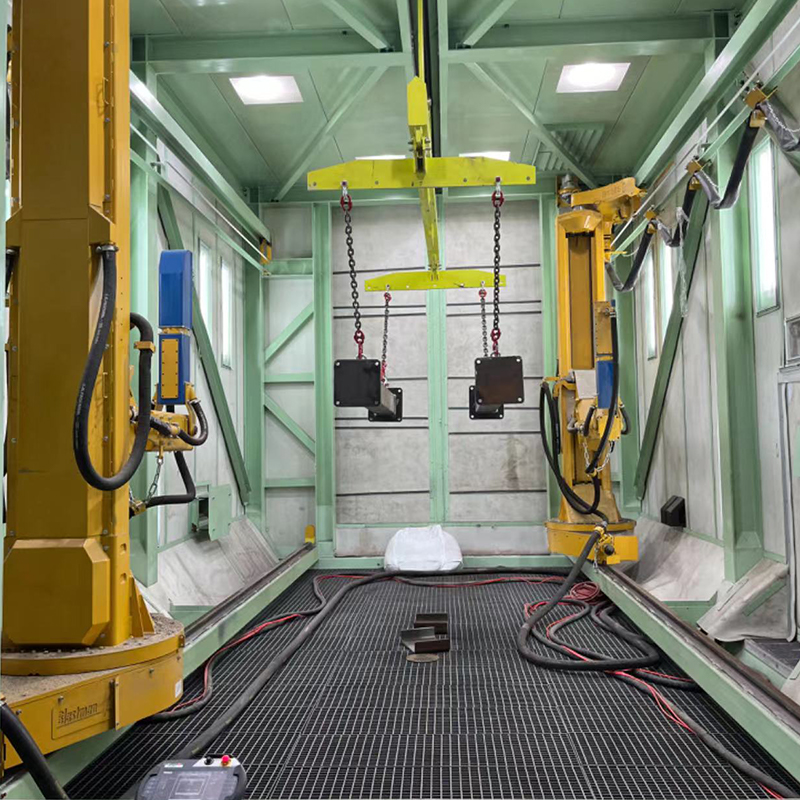
Professional coating line specially designed for large castings and heavy truck parts, applicable to various large castings (engineering castings, mining equipment castings, industrial castings) and h...
See Details
The spray paint line is a complete automated coating system, including spraying, drying, curing, and conveying processes. It features stable operation, uniform spraying effect, and good sealing perfor...
See Details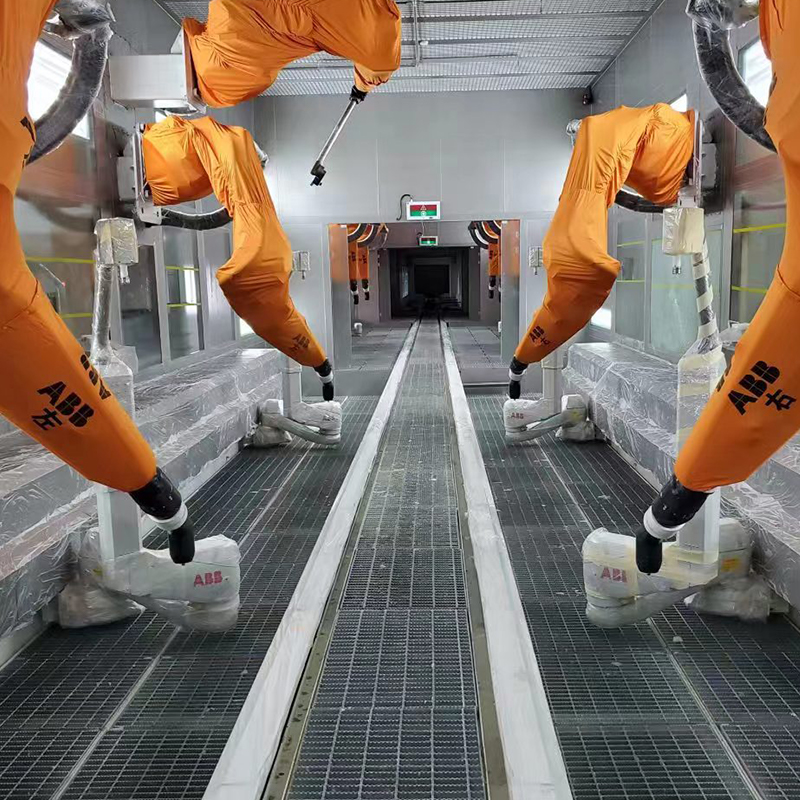
Professional spray coating line specially designed for motor casings, applicable to various motor casing types (electric vehicle motor casing, industrial motor casing, household motor casing, high-tem...
See Details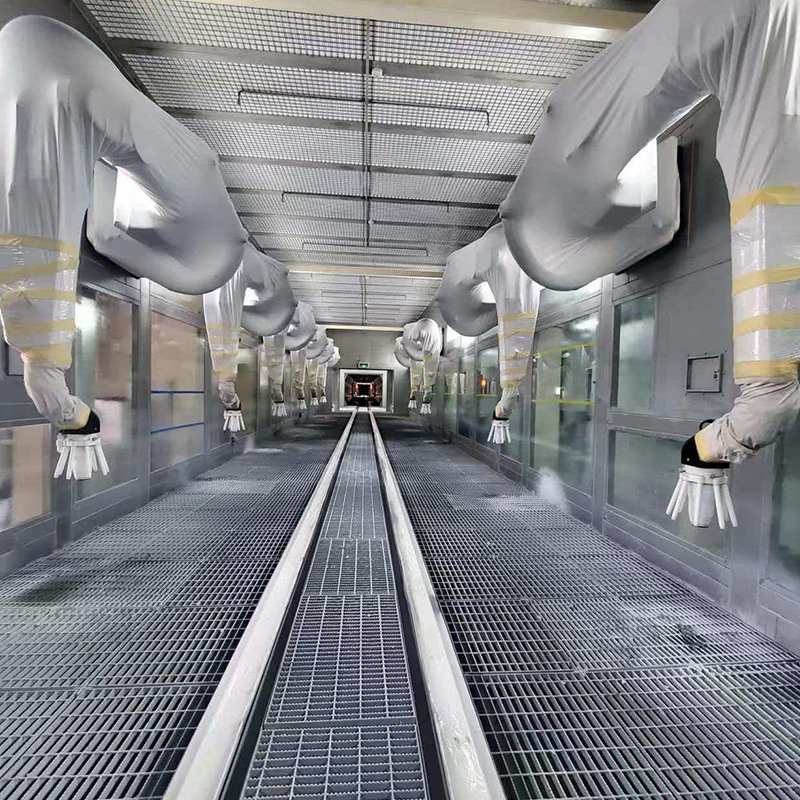
Professional spray coating line specially designed for car wheel manufacturing and refurbishment, applicable to various car wheel types (steel wheel, aluminum alloy wheel, forged wheel, cast wheel, pa...
See Details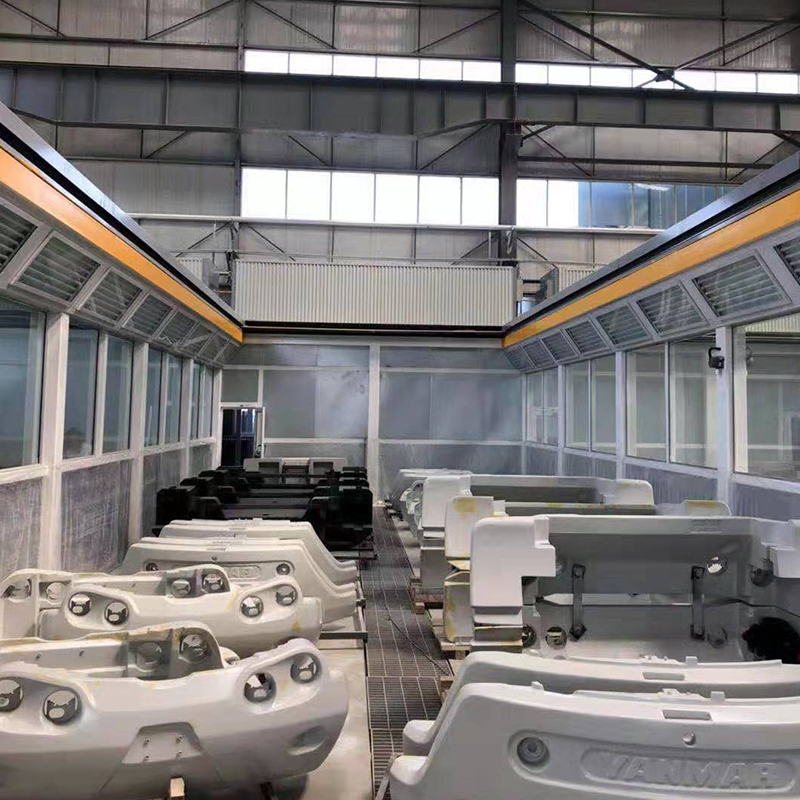
Professional spray coating line specially designed for car wheel manufacturing and refurbishment, applicable to various car wheel types (steel wheel, aluminum alloy wheel, forged wheel, cast wheel, pa...
See Details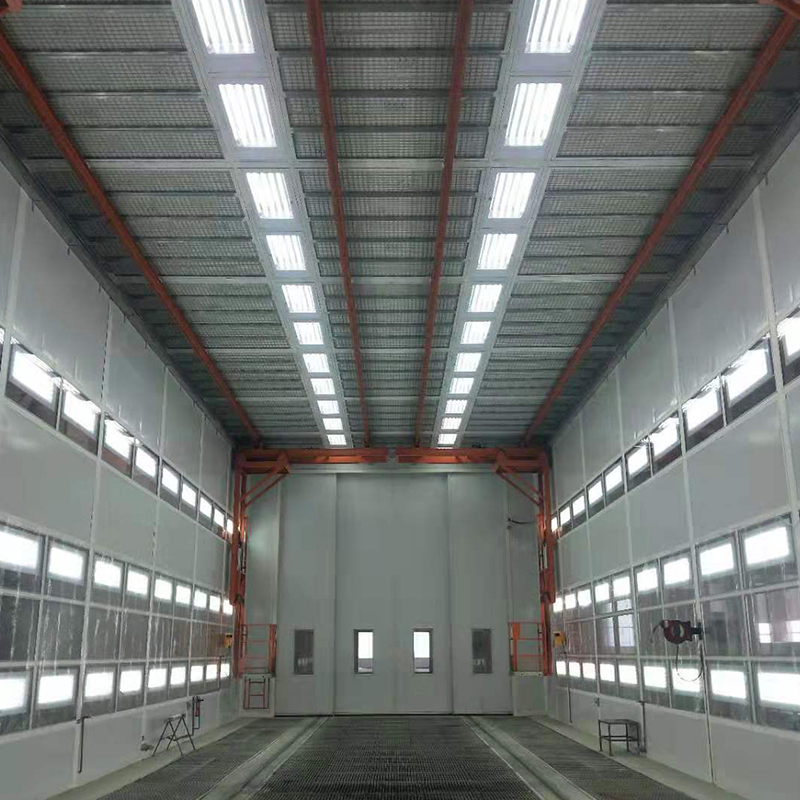
Professional painting line specially designed for grain tank truck body manufacturing and refurbishment, applicable to various grain tank truck types (grain transport tank truck, bulk grain tank truck...
See DetailsBuild Your Customized Industrial Coating System
Send us your workpiece information, production capacity, coating process, workshop layout, and environmental requirements. Yueze will help evaluate your project and develop a suitable coating, conveying, drying, and environmental treatment solution.
Main menu
Products
Contact Us
Company Address:
No. 12, Park Avenue, Shanggang Industrial Park, Jianhu, Yancheng City, Jiangsu Province
Message Us Right Now!

Follow us: