
 русский
 عربى
عربى
 Tiếng Việt

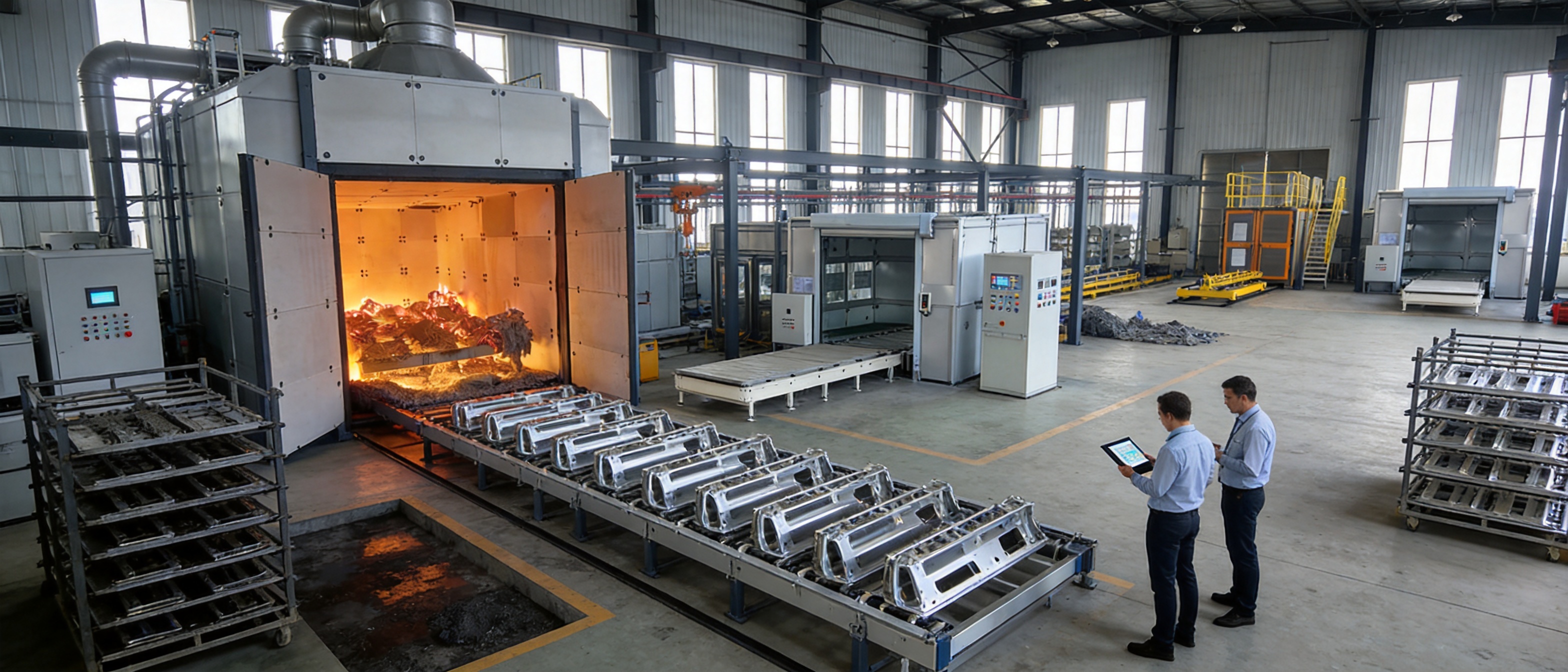
The pyrolysis furnace and cleaning booth are professional environmental protection surface treatment equipment. The pyrolysis furnace adopts high-temperature cracking technology to remove old paint, g...
See Details
Yueze Environmental Protection provides one-stop compliant industrial surface treatment solutions with professional tech and fine craftsmanship.
 Get Inquiries
2026-09-10
Content
Pyrolysis Furnace & Cleaning Booth
In modern coating factories, hooks, racks, hangers, jigs, baskets, and other production fixtures are exposed to repeated layers of paint, powder coating, resin, and carbon deposits. If these residues are not removed regularly, they can affect electrical grounding, reduce coating consistency, restrict part positioning, increase handling difficulty, and shorten the useful life of expensive fixtures. Manual scraping may require considerable labor, while chemical stripping can create hazardous liquid waste and additional treatment obligations.
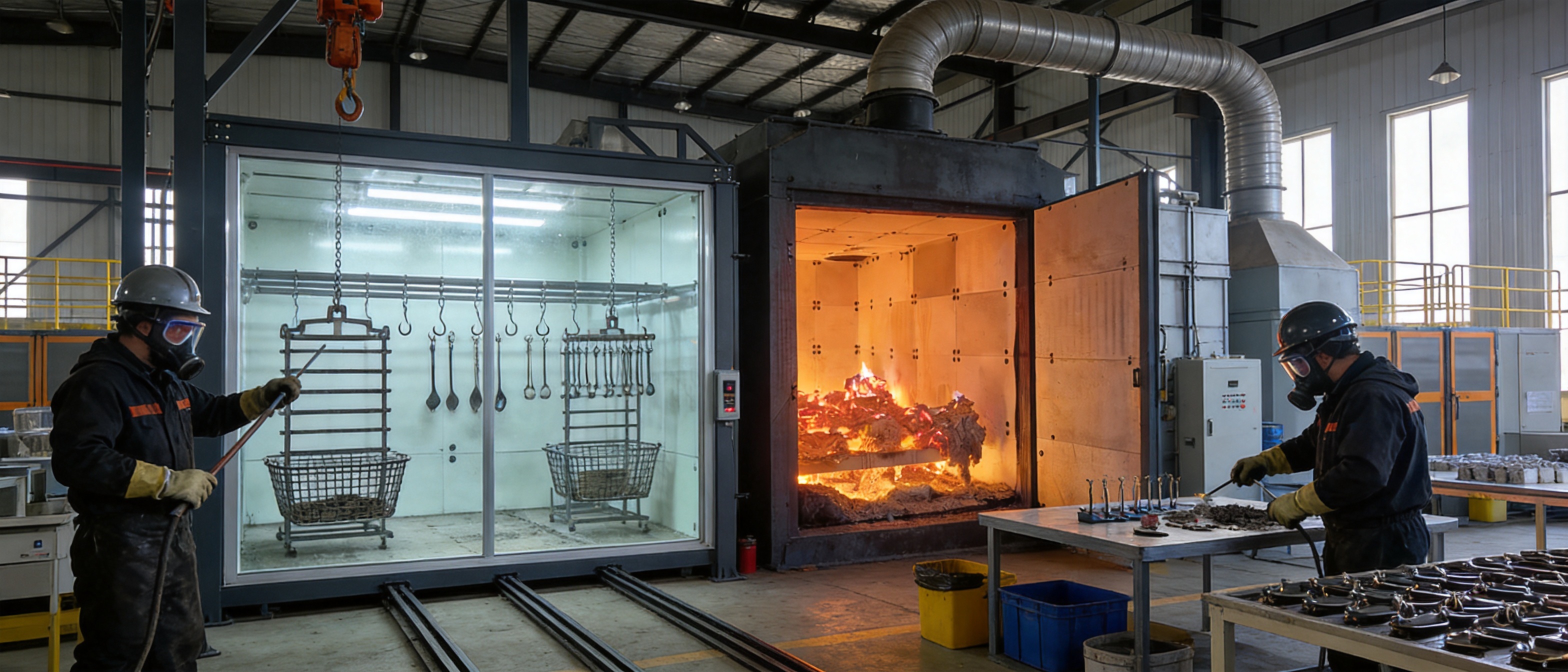
A pyrolysis furnace combined with a cleaning booth provides a professional alternative for removing accumulated organic coating residues. The furnace uses controlled high-temperature thermal decomposition to break down paint, powder coating, grease, resin, and carbon deposits inside a sealed chamber. A secondary combustion system treats the gases released during the process, while the cleaning booth provides a controlled area for cooling, dust removal, ash collection, sorting, and final surface cleaning.
This combined equipment solution is designed for coating factories, hardware manufacturers, automobile component plants, appliance producers, electrostatic spraying facilities, recycling operations, and other industrial users that need a reliable fixture maintenance process. It improves cleaning efficiency while supporting environmental control, workplace safety, production continuity, and the repeated reuse of metal fixtures.
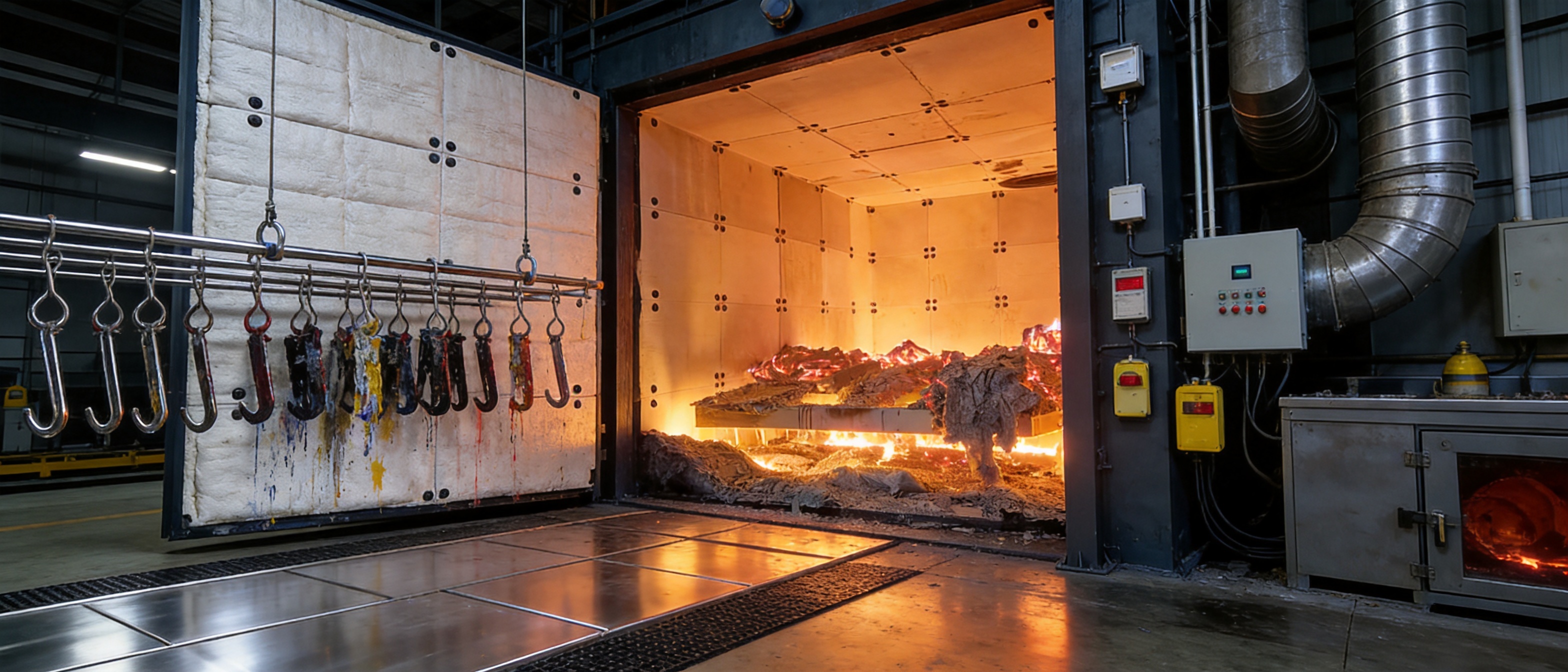
A pyrolysis furnace is an industrial thermal cleaning system that removes organic residues from metal workpieces and production fixtures through controlled heating. Inside the furnace chamber, coating materials are heated under carefully regulated conditions until they decompose. The process converts most organic residues into gases and a small quantity of ash, while the metal substrate remains available for reuse.
The furnace is normally equipped with a sealed chamber, heating system, temperature control system, combustion-support equipment, exhaust collection arrangement, secondary combustion chamber, safety interlocks, and cooling or discharge procedures. Depending on the project requirements, the furnace may be designed for batch operation, specific fixture dimensions, different loading weights, or customized production cycles.
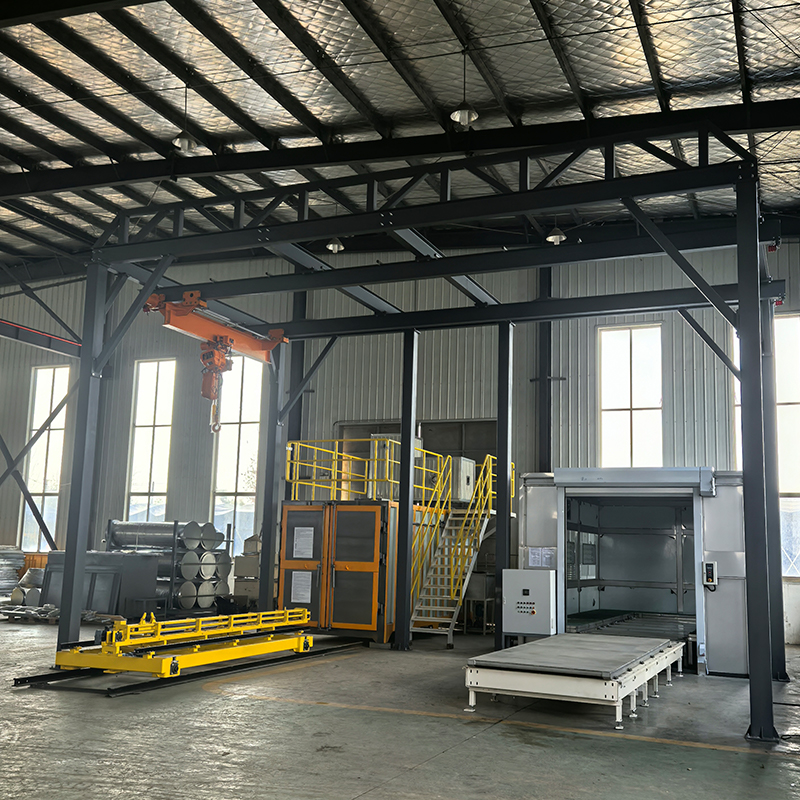
The cleaning booth works as a supporting unit. It may be installed beside the furnace or integrated into a larger fixture maintenance area. The booth can be used for pre-sorting, cooling, dust removal, ash collection, brushing, air purging, inspection, and final preparation before fixtures return to the coating line. Negative-pressure ventilation helps prevent dust and loose residue from spreading into the surrounding workshop.
When these two systems are designed as one workflow, the result is more than a standalone furnace. It becomes a fixture recovery and maintenance station that supports the complete cycle from loading and thermal cleaning to cooling, inspection, and reuse.
Fixtures are essential to the performance of a coating line. They hold workpieces in the correct position during pretreatment, spraying, curing, drying, conveying, and unloading. Over time, coating material accumulates on the fixture surface. Powder coating residue may build up in thick layers, while liquid paint can create hardened deposits around contact points, hooks, and support arms.
Excessive buildup can interfere with electrical conductivity during electrostatic spraying. A hook covered with insulating paint may not provide a dependable grounding path. Poor grounding can reduce transfer efficiency, create uneven film thickness, increase powder consumption, and lead to coating defects. In some cases, the operator may need to stop the line and replace fixtures more frequently than necessary.
Accumulated material can also change the dimensions and balance of a jig. A fixture that was originally designed to position a component accurately may become distorted by layers of residue. This can affect spray coverage, part spacing, conveyor clearance, and the stability of workpieces during curing or transport.
Without an organized cleaning method, operators may rely on hammers, scrapers, wire brushes, abrasive tools, or open-air burning. These practices can be labor-intensive, inconsistent, and difficult to control from an environmental and safety perspective. A dedicated pyrolysis furnace creates a repeatable process with defined temperature control, controlled exhaust treatment, and safer handling procedures.
Regular cleaning also extends fixture service life. Instead of discarding racks and hooks after they become heavily coated, a factory can restore them for continued use. This reduces the need to purchase replacement fixtures and supports a more efficient use of metal, labor, and storage space.
The pyrolysis cleaning process relies on controlled thermal decomposition. Organic materials such as paint binders, powder coating resins, grease, and carbon-based deposits break down when exposed to a defined temperature range for a controlled period. The objective is not uncontrolled burning. It is a managed process in which heating rate, chamber temperature, residence time, oxygen supply, and exhaust treatment are coordinated.
During a typical cycle, fixtures are first loaded into the furnace chamber. The chamber is then closed and the heating program begins. Temperature rises gradually so that the coating residue decomposes progressively rather than igniting suddenly. The furnace control system monitors the process and adjusts the heating conditions according to the programmed cycle.
As the coating decomposes, gases are produced. These gases are directed to a secondary combustion area or afterburner, where they are exposed to a higher temperature and sufficient residence time to support further oxidation. This step reduces visible smoke, odor, and unburned organic compounds before the exhaust moves to the downstream treatment or discharge system.
After the heating and combustion stages are completed, the fixtures are cooled. Cooling may take place inside the furnace under controlled conditions or in a designated cooling and cleaning area, depending on the equipment design and production requirements. Once the fixture temperature is safe for handling, remaining ash can be removed in the cleaning booth.
The success of the process depends on correct temperature management. Excessive heating or rapid temperature changes may increase the risk of deformation in thin or delicate fixtures. Insufficient heat or inadequate holding time may leave coating residue behind. For this reason, furnace design, process commissioning, fixture loading, and operating procedures are all important parts of the solution.
The furnace can remove multiple types of organic residue, including powder coating, liquid paint, resin, grease, varnish, and carbon deposits. Thermal decomposition reaches areas that may be difficult to clean manually, such as narrow gaps, corners, hook interiors, fixture joints, and recessed surfaces.
When the cycle is correctly matched to the coating material and fixture construction, the process can restore racks, hooks, hangers, molds, and jigs to a condition close to bare metal. This makes the fixtures easier to inspect and return to service. It also supports more stable grounding and more consistent part positioning on the production line.
Manual impact tools and abrasive equipment can scratch, gouge, or deform a metal fixture. Chemical stripping may attack certain metals or require additional rinsing and neutralization. A controlled pyrolysis process reduces the need for aggressive mechanical action and avoids direct exposure to strong stripping chemicals.
Temperature must still be managed carefully. The claim that a fixture can be cleaned without damage depends on the material, shape, thickness, coating type, loading arrangement, and selected process parameters. A professional system therefore uses temperature monitoring, programmable controls, over-temperature protection, and appropriate cycle development to protect the underlying metal.
Chemical stripping can generate spent solvents, acidic liquids, alkaline wastewater, contaminated containers, and sludge. These materials require collection, storage, treatment, and compliant disposal. A pyrolysis furnace does not depend on strong acid or alkaline solutions for coating removal, which can simplify waste management for many facilities.
The thermal process still produces ash and treated exhaust, so it should not be considered waste-free. However, the type and volume of byproducts are different from those associated with chemical stripping. Ash must be collected and managed appropriately, while the exhaust treatment system must be designed and operated according to applicable environmental requirements.
A furnace can process multiple racks, hooks, or fixtures in one batch. This is generally more efficient than cleaning each item manually. Batch processing also creates a predictable maintenance schedule, allowing production managers to plan fixture cleaning during shift changes, scheduled maintenance periods, or other suitable windows.
Higher batch productivity is particularly valuable for factories with large coating lines or high fixture consumption. Instead of removing a few hooks at a time for manual cleaning, the facility can collect used fixtures, load them in an organized manner, and process a larger quantity through a repeatable cycle.
The cleaning booth supports negative-pressure dust removal and helps contain loose ash and dust generated during final cleaning. This is important because open brushing, scraping, or compressed-air cleaning can spread fine particles throughout a workshop.
A properly designed booth directs contaminated air toward the filtration or exhaust system rather than allowing it to escape into nearby working areas. This supports a cleaner production environment and reduces the amount of airborne residue that may settle on equipment, products, floors, and electrical components.
Modern furnace systems can include programmable temperature control, automatic heating sequences, automatic exhaust operation, cooling management, safety interlocks, alarm functions, and fault monitoring. These features reduce dependence on constant manual adjustment and make the process more repeatable between batches.
One-key or simplified startup functions can help trained operators follow an established procedure. The control panel can display operating conditions and alarm information, helping maintenance personnel identify abnormal temperature, fan, burner, or exhaust conditions more quickly.
The cleaning booth is not merely an enclosure for manual work. It is an important part of the environmental and operational design of the fixture cleaning station. Its purpose is to separate dusty or residue-generating activities from the general workshop while maintaining controlled airflow.
One common application is post-furnace cleaning. After thermal treatment, fixtures may retain a layer of ash or loose carbonized material. Operators can place the cooled fixtures inside the booth and remove the residue using suitable tools or controlled air. The booth captures the resulting dust and directs it to the filtration system.
The booth may also be used for fixture inspection. Operators can check hooks, welds, contact points, support arms, and mounting surfaces under better working conditions. Damaged fixtures can be separated from reusable fixtures, while those requiring minor repair can be directed to a maintenance area.
Some production layouts use the booth for cooling and purging. In this arrangement, the booth is positioned between the furnace and the storage or production area. The workflow may include furnace discharge, controlled cooling, ash removal, surface inspection, and fixture staging. This reduces unnecessary movement and helps maintain a clear material flow.
Negative pressure is a key design principle. Air should move from the cleaner surrounding area into the booth and then toward the dust collection system. The exact airflow volume, filtration method, duct arrangement, lighting, access door design, and worktable configuration should be selected according to the expected dust load and fixture size.
Factories generally choose among manual cleaning, chemical stripping, abrasive treatment, open thermal burning, or controlled pyrolysis. Each method has different implications for labor, quality, waste, safety, and production efficiency.
| Cleaning Method | Cleaning Performance | Labor Requirement | Typical Waste or Byproduct | Production Suitability |
|---|---|---|---|---|
| Manual scraping and hammering | Partial to moderate; depends on operator skill | High | Solid coating chips and dust | Small quantities or occasional maintenance |
| Chemical stripping | Moderate to high, depending on coating and chemical | Moderate | Spent chemical liquid, sludge, and contaminated containers | Applications requiring chemical treatment and wastewater controls |
| Abrasive blasting | Good on accessible surfaces | Moderate to high | Spent abrasive media and coating dust | Selected fixtures and surface preparation tasks |
| Open burning | Variable and difficult to control | Moderate | Smoke, odor, ash, and uncontrolled emissions | Not recommended for controlled industrial production |
| Controlled pyrolysis furnace | High for suitable organic coating residues | Low to moderate after loading | Ash and treated exhaust | Batch fixture cleaning and regular coating-line maintenance |
The main advantage of a controlled pyrolysis furnace is the combination of thorough thermal cleaning and organized emission management. It is not simply a hotter version of open burning. The sealed chamber, controlled heating cycle, secondary combustion stage, exhaust handling, and safety system are essential differences.
Chemical stripping may be appropriate in certain specialized applications, particularly where the workpiece cannot tolerate heat. However, factories must consider chemical storage, worker exposure, wastewater treatment, corrosion, and waste disposal. For many metal fixtures carrying organic coating residue, pyrolysis provides a more practical long-term solution.
Environmental protection is a central consideration in the design of a pyrolysis furnace. The decomposition of paint and coating residues creates gases that must be collected and treated. A professional system uses a closed process and a secondary high-temperature combustion stage to reduce smoke, odor, and unburned compounds.
The afterburner or secondary combustion chamber provides additional temperature and residence time for oxidation. The system may also be connected to other flue gas purification equipment depending on the coating chemistry, local emission requirements, furnace capacity, and project design. Possible downstream equipment can include cooling sections, filtration units, adsorption devices, or other treatment components selected during engineering.
The cleaning booth has a separate but related environmental function. Dust generated during ash removal and manual finishing should be captured at the source. Negative-pressure ventilation and suitable filtration reduce the escape of particles into the workshop. The design should account for access doors, operator position, fixture movement, filter maintenance, and collection container handling.
Environmental performance depends on more than equipment selection. Correct loading, appropriate cycle settings, regular burner and fan maintenance, filter replacement, ash management, and compliance monitoring are all necessary. Operators should follow the equipment manual and local regulations rather than treating the furnace as a universal solution for every type of waste.
Before a project is finalized, the customer and equipment manufacturer should review the coating composition, expected residue load, fixture material, batch weight, operating frequency, exhaust requirements, and applicable standards. This information supports a more accurate selection of furnace size and treatment equipment.
Thermal cleaning equipment operates at high temperatures and should be designed with multiple layers of protection. The furnace chamber must be structurally suitable for the operating temperature and pressure conditions. Doors should be securely closed during operation, and access should be controlled when the interior is hot.
Typical safety functions include over-temperature protection, burner flame monitoring, abnormal fan alarms, door interlocks, emergency stop controls, exhaust monitoring, automatic shutdown procedures, and fault indication. The exact configuration depends on the furnace type and the applicable design requirements.
Temperature sensors should be positioned and maintained correctly. A sensor that is damaged, incorrectly placed, or poorly calibrated may provide misleading information. Regular inspection and calibration are therefore important parts of the maintenance program.
Operators should be trained in loading patterns, maximum batch weight, prohibited materials, emergency procedures, ash handling, cooling requirements, and personal protective equipment. Fixtures should not be loaded in a way that blocks airflow, overloads the chamber, or causes unstable movement during loading and unloading.
The cleaning booth also requires safe operating procedures. Operators should use suitable gloves, eye protection, protective clothing, and respiratory protection when required by the dust characteristics and risk assessment. Dust collectors and filters should be inspected and serviced at defined intervals.
A well-designed system combines mechanical protection, automatic control, process training, and preventive maintenance. Safety is strongest when these measures work together rather than relying on a single alarm or interlock.
The performance of a pyrolysis furnace and cleaning booth depends heavily on the manufacturer's engineering capability. A standard catalog unit may not be suitable for every facility because fixture dimensions, coating chemistry, batch capacity, production schedule, workshop layout, and emission requirements vary considerably.
Jiangsu Yue Ze Environmental Protection Equipment Co., Ltd. is based in Yancheng, Jiangsu, China, and operates across approximately 35,000 square meters. With registered capital of 58 million yuan and more than 40 years of experience in environmental protection equipment and surface treatment systems, the company provides integrated engineering support for industrial customers.
The company's capabilities include research and development, equipment manufacturing, installation, commissioning, and customized production-line design. This broader scope is valuable because a pyrolysis furnace is often connected to coating fixtures, conveying equipment, paint booths, drying systems, waste gas treatment equipment, and other production units.
Rather than treating the furnace as an isolated machine, an experienced engineering team can review the customer's complete workflow. This may include the distance between the coating line and maintenance area, fixture accumulation rate, operator routes, loading equipment, cooling space, ash collection, exhaust routing, and future production expansion.
The company also specializes in powder coating lines, intelligent coating lines, automatic conveying systems, paint and bake booths, large-part grinding rooms, infrared radiation drying systems, waste gas treatment equipment, electric vehicle assembly lines, and automotive counterweight spray lines. This range of experience supports better coordination between fixture cleaning equipment and the wider surface treatment process.
Customization begins with the characteristics of the fixtures. Engineers need to understand the length, width, height, shape, material, wall thickness, loading method, and total batch weight. Fixtures with long arms or enclosed cavities may require different loading arrangements from simple hooks or flat racks.
The coating residue is also important. Powder coatings, liquid paints, epoxy resins, grease, plastics, and composite deposits may decompose at different rates and produce different exhaust characteristics. A customer should provide representative samples or process information whenever possible so that the cleaning cycle and treatment system can be evaluated accurately.
Capacity is another major factor. A small maintenance workshop may require a compact batch furnace, while a large coating line may need a higher-capacity chamber, multiple loading baskets, lifting equipment, or a more organized fixture storage system. The correct capacity should reflect current production and reasonable future demand without creating unnecessary energy consumption.
Layout integration can include loading platforms, transfer carts, overhead cranes, cooling zones, cleaning booths, dust collectors, ductwork, control cabinets, and access paths. The equipment should allow operators to work safely and maintenance personnel to reach burners, fans, filters, sensors, and inspection points.
Control requirements can also be customized. Some users need a simple semi-automatic cycle, while others require programmable recipes for different coating materials or fixture categories. A suitable control system can provide temperature curves, cycle records, alarm information, and operating status display.
Manufacturing quality begins with engineering review and continues through material selection, fabrication, assembly, testing, installation, and commissioning. Furnace construction requires attention to chamber structure, insulation, burner arrangement, door sealing, thermal expansion, exhaust routing, and access for maintenance.
Insulation quality affects both energy performance and surface temperature. The chamber should be designed to retain heat while reducing unnecessary heat loss to the workshop. The insulation system must be selected for the intended operating conditions and installed carefully to avoid gaps, damage, or premature deterioration.
Fabrication accuracy is important for door alignment, duct connections, support frames, and chamber components. Poor alignment can lead to leakage, operating difficulty, vibration, or additional maintenance. Welding quality and surface treatment should be controlled according to the construction requirements of the equipment.
Burner and combustion-system integration requires careful consideration of fuel supply, ignition, flame monitoring, combustion air, exhaust volume, and control response. The secondary combustion system must be coordinated with the primary chamber so that gases are handled in a stable and controlled manner.
Electrical and control assembly should include clear labeling, organized wiring, suitable protection, accessible components, and functional testing. Sensors, switches, motors, fans, valves, and alarms should be checked before delivery and again during commissioning at the customer's site.
Quality control should also include verification of the actual customer workflow. A furnace that operates correctly in isolation may still create difficulties if the loading area is too small, the cleaning booth is poorly positioned, or the discharge route interferes with production traffic. Practical layout review is therefore an important part of advanced manufacturing and project delivery.
A coating line normally includes pretreatment, drying, conveying, spraying, curing, cooling, inspection, and packaging. Fixtures move through many of these stages repeatedly. A fixture cleaning system can be integrated into the plant's maintenance plan so that used hooks and racks are removed from circulation at a defined interval.
For high-volume facilities, a fixture tracking process can identify which racks need cleaning, repair, or replacement. Clean fixtures can be stored near the loading area, while contaminated fixtures are moved to a designated collection point. This separation improves organization and helps prevent cleaned fixtures from becoming mixed with heavily coated ones.
The furnace may also connect conceptually with an automatic conveyor system. Although fixture cleaning is usually a batch process, transfer carts, lifting devices, or dedicated conveying arrangements can reduce manual handling. The selected solution should reflect the factory's available equipment and the weight of the fixtures.
Integration with waste gas purification equipment can be especially important for customers operating several environmental systems. A coordinated design helps reduce conflicting airflow conditions and allows the exhaust route, fan capacity, filtration, and monitoring points to be considered as one engineering system.
Because the same manufacturer may provide powder coating lines, painting lines, conveying systems, booths, and environmental equipment, customers can obtain more consistent technical communication across different parts of the project. This can reduce interface problems during installation and improve the ability to expand or modify the plant later.
Used fixtures are collected from the coating line and sorted according to size, material, coating type, and cleaning priority. Extremely damaged fixtures should be separated before loading. Any components that are sensitive to heat or unsuitable for the furnace should be removed or treated through another approved method.
Fixtures are arranged to maintain sufficient circulation around the load. Overloading can reduce cleaning effectiveness and interfere with temperature uniformity. The loading method should also prevent fixtures from falling, blocking the door, or contacting sensitive furnace components.
The furnace program raises the temperature according to the selected recipe. Sensors monitor the chamber, and the control system manages the burner or heating elements. Gradual heating helps reduce thermal shock and supports more consistent decomposition.
Gases released from the coating residue move through the secondary combustion stage. The afterburner treats these gases before they proceed to the downstream exhaust system. Stable airflow and adequate combustion conditions are important for reducing smoke and odor.
After the thermal cycle, fixtures must cool to a safe handling temperature. Cooling procedures depend on the furnace design, fixture material, production schedule, and safety requirements. Premature opening or handling can expose operators to heat and may create unnecessary thermal stress.
Cooled fixtures are transferred to the cleaning booth, where ash and loose residue are removed. The booth's negative-pressure system captures dust generated during this work. Operators can also inspect contact points, hooks, welds, and mounting surfaces.
Fixtures that meet the required condition are returned to storage or the coating line. Damaged fixtures are repaired, while those that cannot be safely reused are removed from service. This final inspection helps ensure that the furnace improves production quality rather than simply removing visible coating.
Operating cost depends on furnace volume, batch weight, residue quantity, target temperature, heating method, cycle duration, fuel or electricity price, exhaust treatment demand, labor, and maintenance. A correctly sized furnace is generally more economical than a unit that is significantly oversized for the actual workload.
Batch planning can improve energy efficiency. Processing a reasonable number of fixtures per cycle helps use the available chamber volume and reduces the number of heating cycles. However, the chamber should not be packed so tightly that the process becomes uneven or incomplete.
Good insulation reduces heat loss and improves working conditions around the furnace. Efficient burner adjustment, fan selection, sealing, control logic, and regular maintenance also contribute to lower operating costs. When the furnace is integrated into a complete fixture management program, the factory may also save money by reducing replacement fixture purchases and manual cleaning hours.
The total economic benefit should be evaluated over the equipment's service life rather than by purchase price alone. Important factors include cleaning capacity, labor reduction, waste handling, fixture reuse, production downtime, environmental compliance, maintenance accessibility, and after-sales support.
Installation begins with confirmation of the site conditions. The foundation, workshop height, door access, lifting capacity, fuel or electrical supply, ventilation, exhaust outlet, drainage requirements, and available maintenance space should be checked before delivery.
During commissioning, the manufacturer should verify chamber operation, heating response, temperature measurement, burner ignition, exhaust flow, secondary combustion, alarm functions, safety interlocks, booth airflow, and dust collection. Representative fixtures and coating residues should be used where practical to confirm the process settings.
Operator training should cover startup, loading, cycle selection, cooling, booth operation, ash handling, emergency stops, alarm response, and daily inspection. Maintenance training should cover sensor checks, burner cleaning, fan and motor inspection, filter replacement, door seal condition, and control-system troubleshooting.
After installation, service support remains important. Wear components, filters, burners, fans, sensors, seals, and electrical parts require periodic inspection. A supplier with experience in coating lines and environmental equipment can help customers plan preventive maintenance and respond to process changes.
The equipment is suitable for powder coating factories that need to clean hooks, racks, hanging bars, and fixtures carrying repeated layers of cured powder coating.
It can also serve liquid painting operations where racks and jigs accumulate solvent-based or water-based paint residues that are suitable for controlled thermal treatment.
Hardware manufacturers can use the system to maintain fixtures used for metal components, tools, structural parts, and fabricated products.
Automotive component and electric vehicle manufacturers may apply the equipment to fixture maintenance in body-part, counterweight, chassis, battery-related, or component coating operations, subject to material and residue evaluation.
Home appliance factories can use pyrolysis cleaning to recover racks and hanging fixtures used for refrigerator, washing machine, air-conditioning, and other appliance components.
Electrophoresis and electrostatic coating plants can benefit from regular hook cleaning because reliable grounding is essential for stable coating performance.
Recycling and surface treatment facilities may also use the system for suitable metal parts and fixtures requiring the removal of old organic coatings. Each application should be evaluated individually to confirm that the materials and residues are appropriate for the selected thermal process.
A pyrolysis furnace is primarily intended for organic residues such as powder coating, paint, resin, grease, varnish, and carbon deposits. The exact suitability depends on the material composition, quantity, fixture substrate, and required exhaust treatment. Customers should provide residue information before equipment selection.
A properly designed and correctly operated furnace is intended to remove organic coating without damaging suitable metal fixtures. Temperature rise, holding time, loading pattern, and cooling must be controlled. Thin, delicate, galvanized, coated, or heat-sensitive parts require special evaluation before processing.
No. A professional pyrolysis furnace uses a sealed or controlled chamber, programmed heating, exhaust collection, secondary combustion, safety controls, and environmental treatment. Open burning does not provide the same level of process control or emission management.
The cleaning booth provides a controlled area for cooling, ash removal, dust cleaning, inspection, and fixture preparation. Negative-pressure ventilation helps prevent dust from spreading through the workshop and supports a cleaner working environment.
Yes. Batch processing is one of the major advantages of the system. The quantity depends on chamber dimensions, fixture size, total weight, residue thickness, and required cycle conditions. Fixtures should be arranged to allow sufficient heat circulation.
The ideal frequency depends on coating thickness, production volume, grounding requirements, fixture design, and observed coating quality. Some factories use a fixed number of production cycles, while others clean fixtures when residue reaches a defined thickness or when grounding performance begins to decline.
No. The process reduces the need for chemical stripping waste but still produces ash and treated exhaust. Ash must be collected and managed according to its characteristics and local requirements. Exhaust treatment and maintenance are also necessary for responsible operation.
In many cases, a cleaning booth can be added near an existing furnace if the available space, airflow, dust collection, fixture flow, and electrical requirements are suitable. An engineering review is recommended before installation to ensure that the booth works safely with the existing equipment.
Useful information includes fixture dimensions, material, maximum batch weight, coating type, residue thickness, desired capacity, operating frequency, fuel or power availability, workshop dimensions, emission requirements, and photographs or drawings of the existing production area.
Yes. The furnace and booth can be considered alongside powder coating lines, painting lines, conveying systems, drying equipment, spray booths, waste gas treatment, and fixture storage. Integrated planning helps improve material flow and reduce layout conflicts.
A pyrolysis furnace and cleaning booth affect production, environmental control, safety, maintenance, and factory layout at the same time. Selecting equipment only by chamber size or initial price may overlook important operating requirements.
An experienced supplier can evaluate the complete process, recommend an appropriate cleaning cycle, coordinate the combustion and exhaust systems, and design the booth around actual operator tasks. The supplier can also help connect the equipment with the customer's existing coating line and future expansion plans.
Jiangsu Yue Ze Environmental Protection Equipment Co., Ltd. combines environmental equipment manufacturing with complete coating-line engineering. Its experience includes powder coating production lines, custom painting systems, automatic conveying, drying, waste gas purification, paint and bake booths, grinding rooms, and intelligent surface treatment equipment.
The company's history includes the development of an automatic hanging painting process line for casting counterweight blocks in 2014. The process covered finishing and polishing through primer and topcoat application, demonstrating the company's ability to consider surface treatment as a complete production flow rather than a collection of unrelated machines.
With in-house research and development, manufacturing, installation, and customized solution capabilities, the company can support customers from initial process evaluation through final commissioning. Its stated focus on quality control, advanced production technology, green manufacturing, customer service, and global cooperation provides a foundation for industrial projects requiring long-term equipment reliability.
A pyrolysis furnace and cleaning booth provide an efficient, controlled, and environmentally responsible method for maintaining coating fixtures. The furnace removes paint, powder coating, resin, grease, and carbon deposits through controlled thermal decomposition, while the cleaning booth supports dust-free finishing, cooling, inspection, and reuse.
Compared with manual scraping, chemical stripping, and uncontrolled burning, the combined system offers important advantages in batch productivity, fixture recovery, labor reduction, process consistency, waste management, and workshop cleanliness. Its performance depends on correct equipment sizing, process control, exhaust treatment, loading practices, safety systems, and regular maintenance.
For factories operating powder coating lines, painting lines, electrophoresis systems, automotive component production, appliance manufacturing, hardware processing, or other surface treatment operations, fixture cleaning should be considered part of the overall production strategy. Clean fixtures help maintain grounding, positioning accuracy, coating quality, and stable production output.
Through customized engineering, advanced manufacturing, integrated environmental protection, and complete coating-line experience, Jiangsu Yue Ze Environmental Protection Equipment Co., Ltd. supports customers seeking a dependable fixture maintenance solution. The company can design equipment around actual production conditions, connect the furnace and cleaning booth with existing systems, and provide a practical path toward cleaner, more efficient, and more sustainable surface treatment operations.
1. Industrial Thermal Treatment Principles for Organic Coating Removal.
2. Guidance on Environmental Control for Industrial Combustion and Thermal Cleaning Equipment.
3. Best Practices for Powder Coating Fixture Maintenance and Grounding Performance.
4. Industrial Ventilation and Negative-Pressure Dust Collection Principles.
5. Surface Treatment Production Line Design and Automated Conveying Engineering Practices.
6. Manufacturer-provided technical information for pyrolysis furnaces, cleaning booths, coating production lines, and waste gas purification systems.
7. Jiangsu Yue Ze Environmental Protection Equipment Co., Ltd. company and product information supplied for industrial equipment evaluation.
The pyrolysis furnace and cleaning booth are professional environmental protection surface treatment equipment. The pyrolysis furnace adopts high-temperature cracking technology to remove old paint, g...
See Details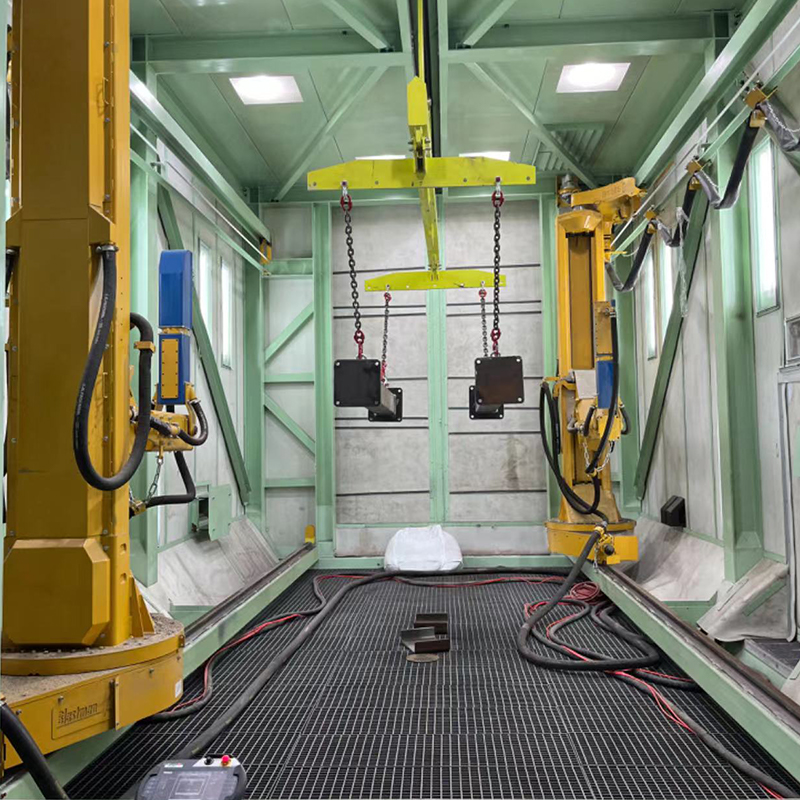
Professional coating line specially designed for large castings and heavy truck parts, applicable to various large castings (engineering castings, mining equipment castings, industrial castings) and h...
See Details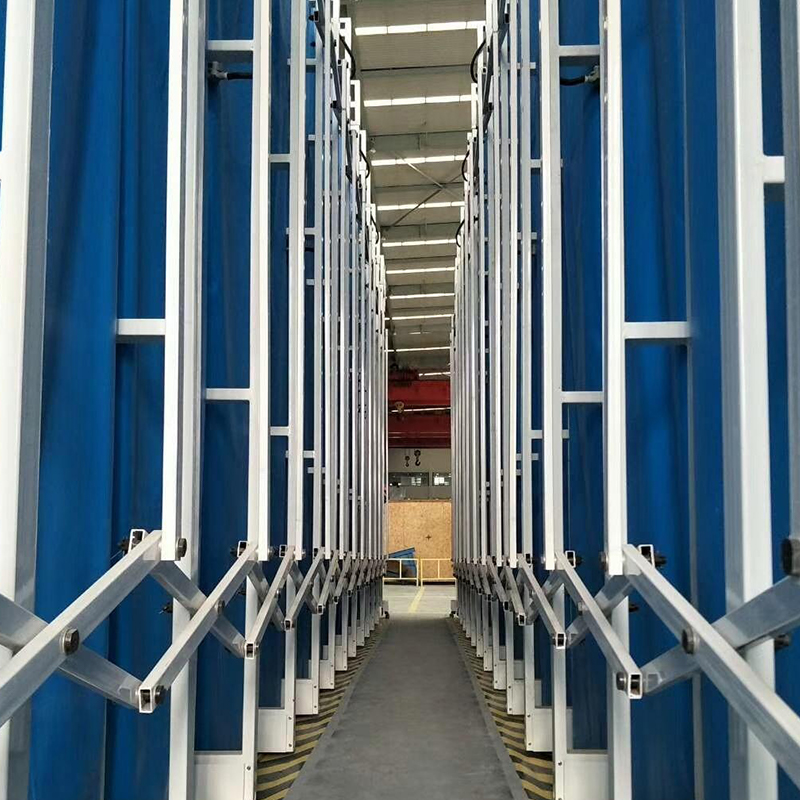
The retractable mobile spray & sanding booth is a flexible, space-saving, and multi-functional coating workstation. With a telescopic movable structure and integrated dust & paint mist filtrat...
See Details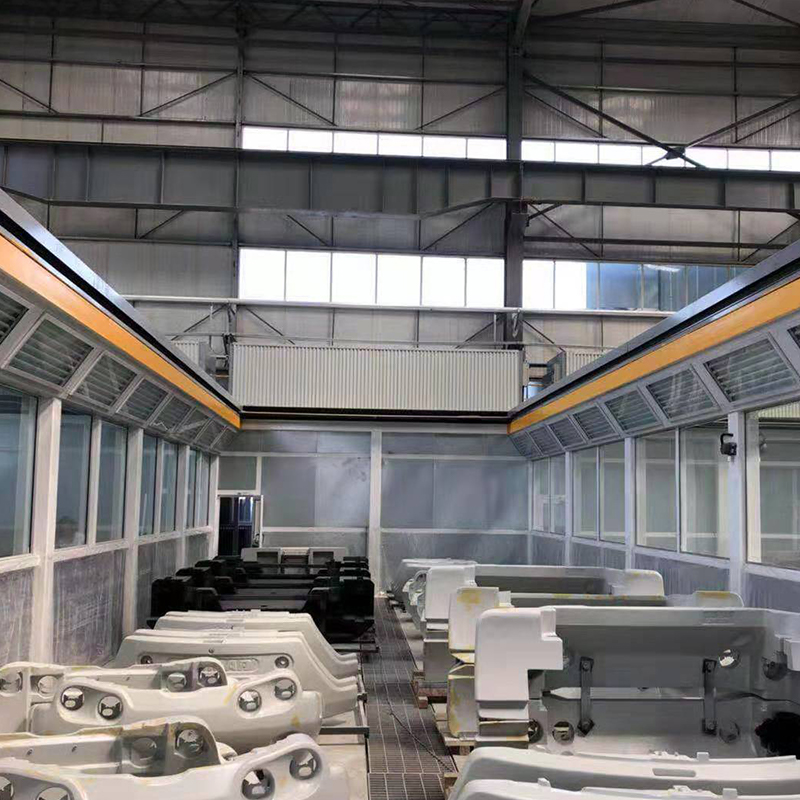
The retractable mobile spray & sanding booth is a flexible, space-saving, and multi-functional coating workstation. With a telescopic movable structure and integrated dust & paint mist filtrat...
See Details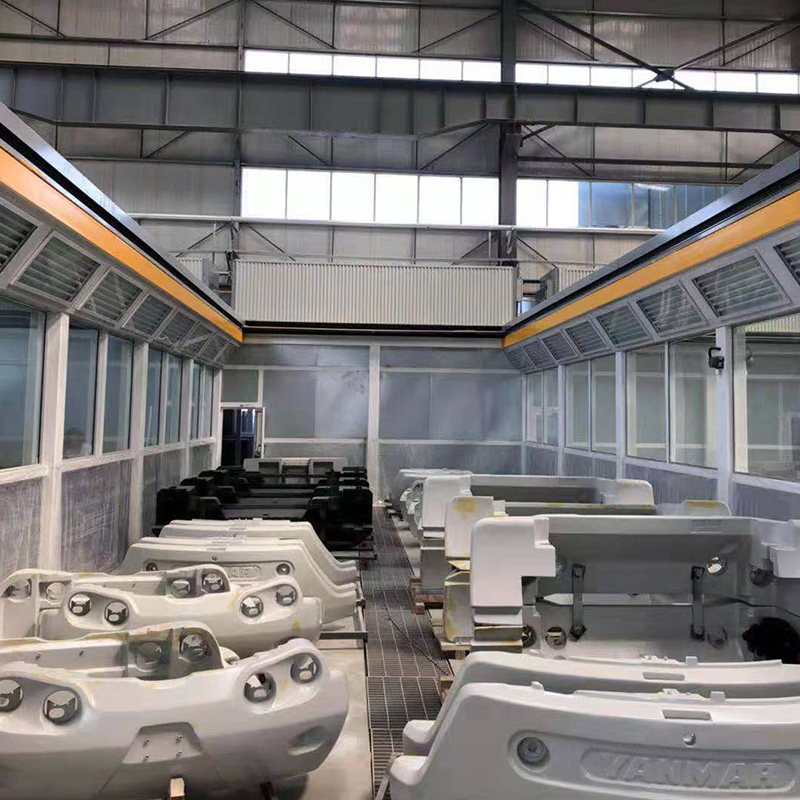
Professional spray coating line specially designed for car wheel manufacturing and refurbishment, applicable to various car wheel types (steel wheel, aluminum alloy wheel, forged wheel, cast wheel, pa...
See Details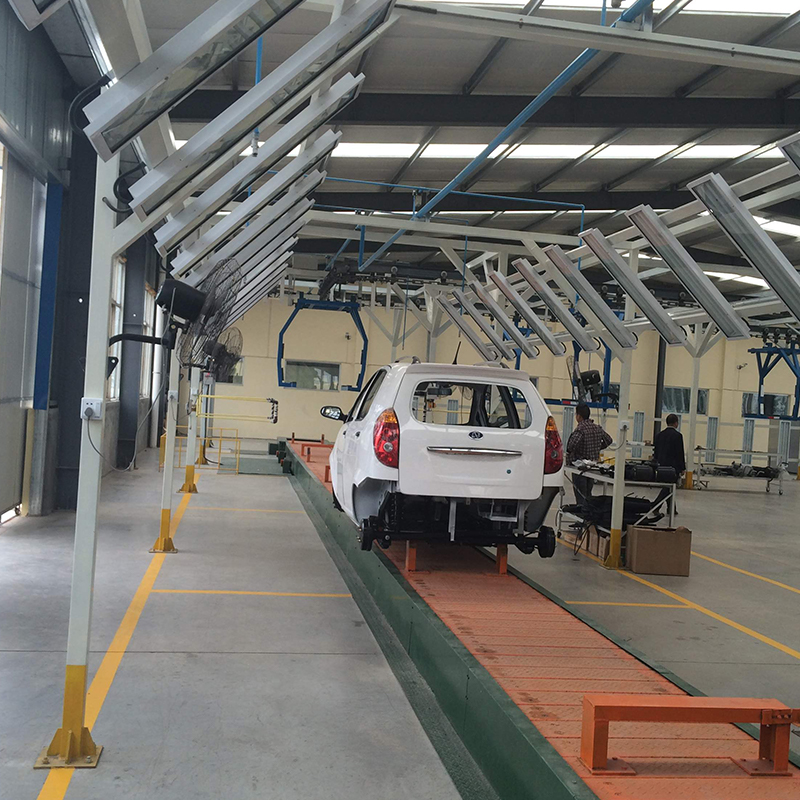
Professional electrophoresis coating line specially designed for electric vehicles (EVs), applicable to various EV types (passenger EV, commercial EV, new energy logistics vehicle) and EV components. ...
See DetailsBuild Your Customized Industrial Coating System
Send us your workpiece information, production capacity, coating process, workshop layout, and environmental requirements. Yueze will help evaluate your project and develop a suitable coating, conveying, drying, and environmental treatment solution.
Main menu
Products
Contact Us
Company Address:
No. 12, Park Avenue, Shanggang Industrial Park, Jianhu, Yancheng City, Jiangsu Province
Message Us Right Now!

Follow us: