
 русский
 عربى
عربى
 Tiếng Việt
Waste Gas Treatment Equipment, electric-driven with stable power output, mainly composed of a gas collection hood, purification filter, fan, control system, and waste gas discharge device. It adopts o...
See Details
Yueze Environmental Protection provides one-stop compliant industrial surface treatment solutions with professional tech and fine craftsmanship.
 Get Inquiries
2026-08-01
Content
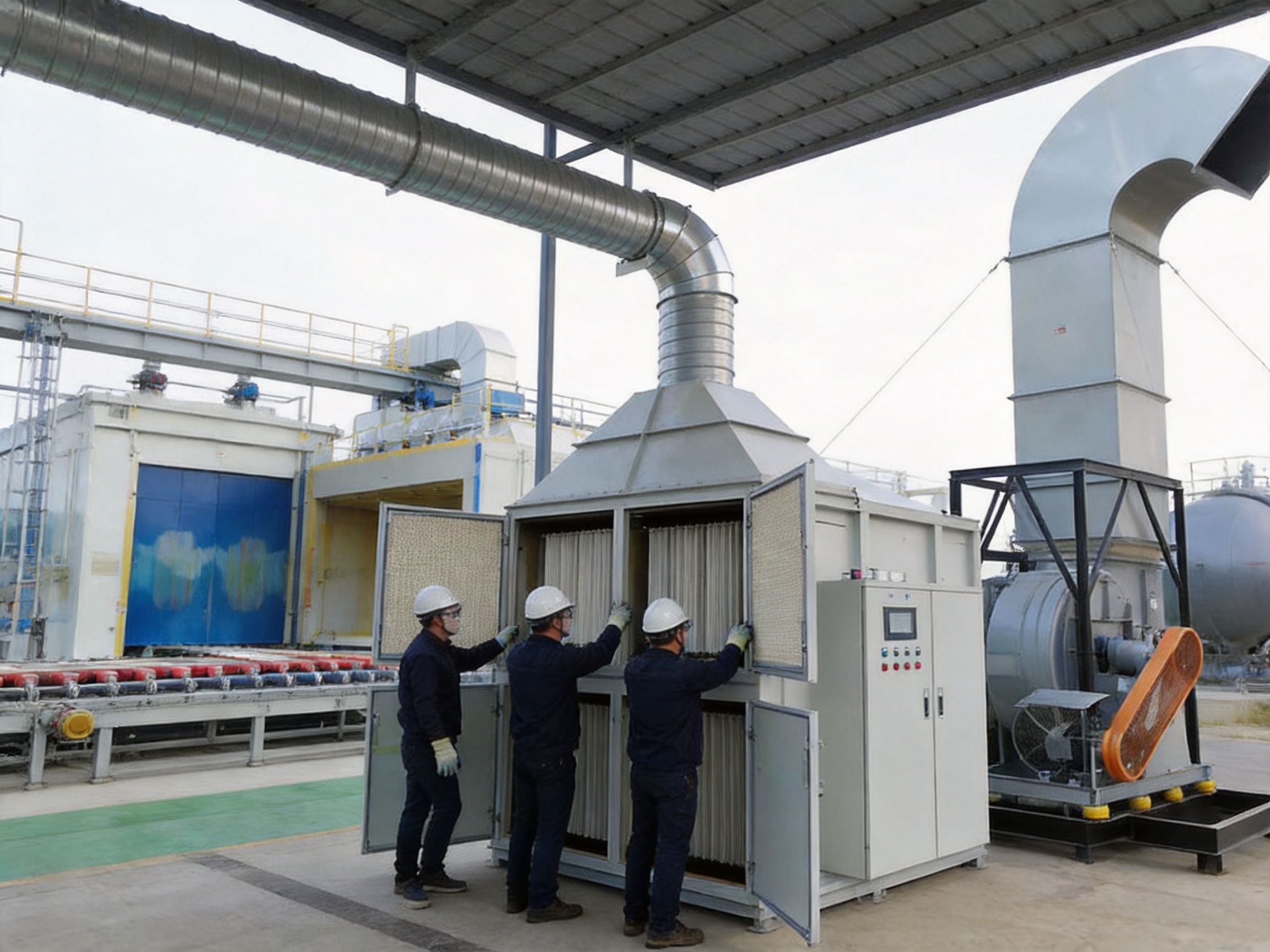
Industrial production processes often generate exhaust gases, odors, airborne particles, volatile compounds, and other pollutants. Without an effective collection and purification system, these emissions can affect workplace conditions, increase environmental risks, and make it difficult for a factory to meet its production and environmental management objectives. Waste Gas Treatment Equipment provides a systematic solution by capturing polluted air at its source, transferring it through suitable purification stages, and discharging treated gas in a controlled manner.
Designed for industrial applications such as casting, machining, painting, coating, drying, curing, chemical processing, and surface treatment, this equipment integrates a gas collection hood, purification filter, fan, control system, and waste gas discharge device. Depending on the factory layout and process requirements, the equipment can be installed overhead or on the floor. Its modular structure also makes it suitable for both new production lines and the renovation of existing workshops.
Jiangsu Yue Ze Environmental Protection Equipment Co., Ltd. supplies customized waste gas treatment solutions for industrial customers. The company combines environmental protection equipment manufacturing with experience in powder coating lines, painting systems, automated conveying equipment, drying systems, and complete surface treatment production lines. This combined capability enables the waste gas treatment system to be designed as part of an integrated production solution rather than as an isolated piece of equipment.
Waste Gas Treatment Equipment is an industrial environmental protection system used to collect and purify exhaust gas produced during manufacturing. The system is connected to emission sources such as spray booths, paint booths, drying ovens, curing areas, grinding rooms, production machines, chemical process stations, or other locations where contaminated air is generated.
The equipment normally consists of several coordinated parts. A gas collection hood or extraction duct captures waste gas close to its source. A fan creates the airflow required to transport the gas. Filtration or purification components remove particles, odors, droplets, and other pollutants. A control system manages the fan, operating sequence, safety functions, and alarms. Finally, the discharge device directs the treated gas away from the workshop in a controlled manner.
The exact configuration depends on the nature of the waste gas. For example, a painting process may produce paint mist, solvent vapor, and odors, while a grinding operation may produce dust and fine particles. A drying or curing process may release heated air, volatile organic compounds, or process odors. Consequently, a suitable system must be selected according to gas composition, concentration, temperature, airflow, operating hours, workshop dimensions, and the required treatment result.
Rather than applying one standard configuration to every factory, a professional manufacturer evaluates the complete process before designing the equipment. This approach helps avoid insufficient treatment capacity, excessive energy consumption, unsuitable filter media, difficult maintenance, and poor integration with existing production equipment.
Waste gas management is an important part of modern industrial production. Polluted air released inside a workshop may create uncomfortable working conditions, reduce visibility, cause unpleasant odors, and expose operators to unnecessary airborne contaminants. If emissions are discharged directly outdoors, they may also affect the surrounding environment and create difficulties for a factory’s environmental management program.
Effective waste gas treatment begins with source collection. Capturing polluted air close to the point where it is generated is usually more effective than attempting to clean the entire workshop atmosphere. Local collection can reduce the amount of air that must be processed and can help prevent contaminants from spreading to other production areas.
A properly engineered system can also support cleaner production by stabilizing the workshop environment. When extraction airflow is balanced, production areas may experience better ventilation and more consistent operating conditions. This is especially useful in painting, coating, drying, and surface treatment workshops where temperature, airflow, and cleanliness can influence product quality.
Waste gas treatment is not only an environmental measure. It can also support productivity, equipment protection, maintenance planning, and long-term factory development. A system with adjustable airflow and automatic control can respond to changing production conditions, while a modular design can make it easier to expand or modify the production line in the future.
The gas collection hood is the first point of contact between the production process and the treatment system. It may be installed above a process area, beside a machine, around a spray booth, at the entrance or exit of a drying oven, or in another position selected according to the emission source.
Good hood design is essential because the hood must capture polluted air without interfering with production operations. Its shape, position, opening size, and connection to the ductwork influence collection efficiency. In a coating line, for example, the collection structure must be coordinated with the spray booth, workpiece movement, operator access, and conveyor arrangement.
The extraction duct transports waste gas from the collection point to the purification unit. Duct diameter, length, bends, material, sealing, and support structure are selected according to the required airflow and installation environment. A well-planned duct system can reduce pressure loss, noise, leakage, and unnecessary fan energy consumption.
The purification section is selected according to the pollutants contained in the gas. Filtration may be used to remove airborne particles, paint mist, dust, and other solid or liquid contaminants. Additional purification methods may be incorporated when the gas contains odors, vapors, or other harmful components.
For industrial applications, the treatment unit may include one or more stages. A preliminary filter can intercept larger particles and protect downstream components. A finer filtration stage can capture smaller particles. Depending on the process, adsorption, chemical treatment, or another purification method may be considered. The purpose of staged treatment is to match each purification step with a particular pollutant characteristic.
The filter arrangement must also account for maintenance. Consumable components should be accessible for inspection and replacement. A practical design prevents maintenance personnel from needing to dismantle large sections of the system merely to replace a filter. Easy access helps reduce downtime and supports regular maintenance.
The fan supplies the airflow that moves waste gas through the collection and purification system. Its capacity must be matched with the system resistance, duct design, treatment unit, and required operating airflow. An undersized fan may fail to capture emissions effectively, while an oversized fan may consume unnecessary energy and create excessive noise.
The fan can be selected according to the temperature, humidity, corrosiveness, particle content, and operating conditions of the waste gas. The installation may include vibration reduction, flexible connections, protective guards, and other features that support stable operation.
Stable fan performance is especially important in automatic production lines. If the extraction airflow fluctuates significantly, the treatment effect and workshop conditions may become inconsistent. The system can therefore be designed with adjustable operating parameters so that airflow is suitable for different production stages.
The control system coordinates the operation of the fan, purification unit, alarms, and related equipment. It may support automatic start and stop functions, operating status display, emergency shutdown, fault indication, and interlocking with a production line.
For example, the extraction fan can be configured to start before a spray or drying process begins and continue operating for a defined period after the process stops. This sequence can help remove residual gas from the treatment area. Interlocking can also help prevent certain production operations from continuing when the exhaust system is not operating correctly.
Automatic control reduces the need for frequent manual intervention. It also helps operators monitor the system more consistently. Depending on customer requirements, the control cabinet can be designed for a standalone treatment system or integrated with an automated coating line, conveyor system, spray booth, or factory management arrangement.
After purification, treated gas is conveyed to a controlled discharge point. The discharge device may include an exhaust duct, discharge stack, supporting structure, and related connection components. The position and height of the discharge arrangement should be planned in relation to the factory building, surrounding structures, maintenance access, and applicable environmental requirements.
The discharge system must be securely supported and properly sealed. Its design should prevent leakage and reduce the risk of treated gas returning to the workshop. For projects with limited space, the discharge arrangement can be adapted to the available building structure and installation conditions.
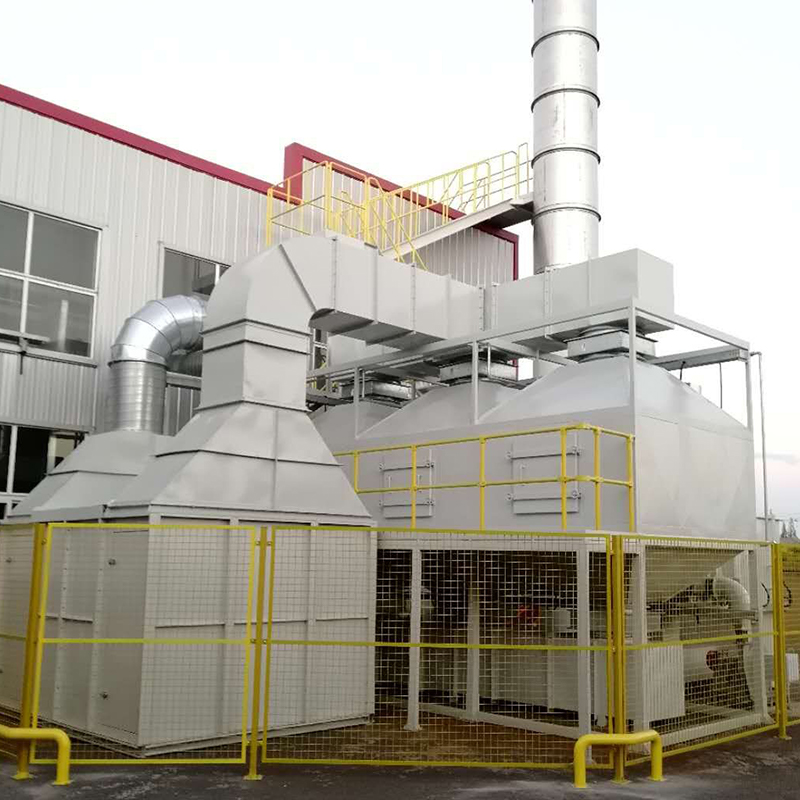
Waste Gas Treatment Equipment
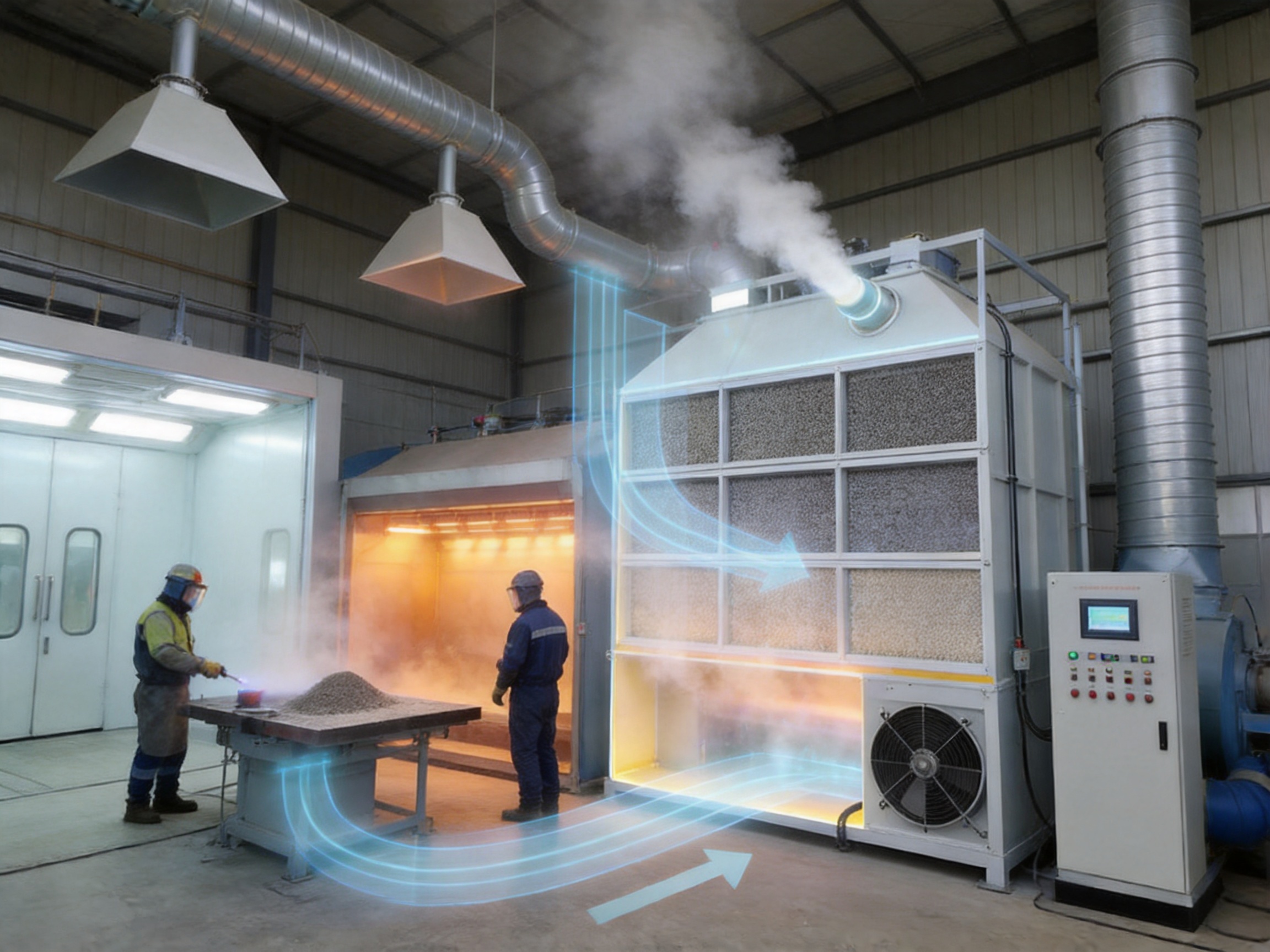
The operating principle of Waste Gas Treatment Equipment is based on controlled collection, transport, purification, and discharge. Although the purification method may vary, the overall process follows a clear sequence.
Waste gas is generated during spraying, painting, drying, curing, grinding, casting, machining, or another industrial operation.
The collection hood or extraction opening captures the polluted air near the emission source.
The fan creates negative pressure and moves the gas through the extraction duct.
The gas enters the purification unit, where particles, droplets, odors, vapors, or other pollutants are removed or reduced according to the selected treatment method.
The control system monitors and regulates the operation of the fan and related components.
Treated gas is transferred through the discharge system and released in a controlled manner.
The effectiveness of the complete system depends on the coordination of every stage. A high-efficiency filter cannot compensate for poor source collection. Similarly, a well-designed hood may not deliver the expected result if the fan capacity, duct arrangement, or filter selection is unsuitable. This is why engineering analysis and system integration are important parts of the manufacturing process.
Painting and powder coating operations may produce paint mist, powder particles, solvent-related vapors, odors, and heated exhaust. Waste gas treatment equipment can be connected to spray booths, powder coating areas, curing ovens, drying chambers, and other process stations.
In a powder coating line, the extraction system may work together with powder recovery equipment and booth ventilation. In a liquid painting line, the collection and filtration system may be designed around spray operations and drying processes. The treatment system can be configured to match conveyor speed, workpiece size, booth dimensions, process temperature, and production capacity.
Drying ovens and curing ovens may release hot air, process odors, vapor, and volatile components. The extraction system must consider gas temperature and the possibility of thermal expansion. Heat-resistant materials and suitable fan arrangements may be required for high-temperature applications.
Controlled extraction can also help maintain the intended airflow pattern in the oven or drying chamber. This may support stable heating conditions and reduce the spread of process emissions into the workshop.
Casting, grinding, polishing, cutting, and machining can generate dust, smoke, oil mist, and other airborne pollutants. Local collection hoods can be installed near furnaces, workstations, grinding areas, or processing machines. The filtration section can then be selected according to particle size, temperature, moisture, and oil content.
For large-part manufacturing, extraction points may need to accommodate variable workpiece sizes and operator movement. A customized arrangement can provide coverage while preserving access to cranes, conveyors, loading areas, and maintenance zones.
Surface treatment and chemical processes may generate vapors, odors, and corrosive components. In such cases, equipment materials, sealing arrangements, filter media, and protective measures should be chosen with the gas characteristics in mind.
The treatment system can be designed with corrosion-resistant and aging-resistant components where the application requires them. The final configuration should be determined by process data and an evaluation of the actual gas composition rather than by general assumptions.
Large workpieces often require dedicated grinding rooms or enclosed preparation areas. These spaces may generate considerable quantities of dust and fine particles. A centralized extraction system can collect dust from several working positions while keeping the workshop layout organized.
Where large-part handling equipment is used, the hood and duct arrangement must not obstruct lifting, positioning, or movement. Floor-mounted or overhead installation can be selected according to the structure of the building and the workflow of the customer’s plant.
The equipment is designed to capture waste gas close to its source and process it through suitable purification stages. This source-oriented approach can reduce the spread of pollutants and improve the overall treatment result. The actual efficiency depends on the gas composition, operating conditions, filter selection, and correct system commissioning.
Different industries produce different types of emissions. A universal system may not provide the best balance between treatment efficiency, operating cost, maintenance, and installation requirements. Customized equipment can be designed for painting, coating, chemical processing, casting, machining, drying, curing, and other applications.
Production conditions may change during different operating stages. The required airflow for a small workpiece may differ from that for a large workpiece, and a production line may operate at different speeds during normal production and peak periods. Adjustable airflow allows the treatment system to respond to these conditions more effectively.
Automatic operation reduces dependence on frequent manual adjustment. The control system can coordinate extraction, purification, alarms, and shutdown functions. This can lower labor requirements and help operators focus on production and routine inspection.
Noise is an important consideration in industrial workshops. Fan selection, duct design, vibration control, equipment arrangement, and operating parameters all influence the sound level. A properly designed system can provide stable extraction while limiting unnecessary noise.
Energy consumption is influenced by fan efficiency, pressure loss, system resistance, operating schedule, and control strategy. By calculating airflow requirements and optimizing the duct arrangement, the equipment can avoid excessive fan operation. Automatic control and adjustable airflow can further support energy-conscious operation.
Factories often have limited floor space because of production machinery, storage areas, conveyors, lifting equipment, and worker access routes. Overhead installation can preserve valuable floor area, while a compact floor-mounted arrangement may simplify access and maintenance. The installation type can be selected according to the site conditions.
Reliable operation requires more than strong individual components. The hood, ductwork, purification unit, fan, control system, and discharge device must work as one coordinated system. Careful fabrication, inspection, assembly, and commissioning help support continuous operation and reduce avoidable failures.
Filters and other consumables gradually collect pollutants and must be inspected or replaced. An accessible design makes maintenance more efficient. Clear inspection points, practical access doors, replaceable filter arrangements, and organized electrical controls can reduce service time and help control operating costs.
Some industrial gases contain moisture, chemicals, solvents, or other substances that may affect equipment materials. The design can incorporate suitable materials and protective measures according to the application. This helps the system remain reliable in demanding workshop environments.
Some factories use simple exhaust fans or basic ductwork as an initial response to waste gas problems. Although these arrangements may move air, they do not necessarily provide effective purification. They may transfer pollutants from the workshop to the outdoor environment without adequately treating them.
Another limitation of basic systems is the lack of source-specific collection. If the hood is too far from the emission point or if the airflow is not balanced, contaminated air can escape into the workshop. A complete treatment system evaluates the source, capture distance, airflow, duct resistance, purification process, and discharge arrangement together.
Low-cost systems may also use unsuitable filters that become blocked quickly or fail to remove the main pollutants. Choosing a treatment method only by price can lead to higher long-term costs because of frequent replacement, high energy consumption, production interruptions, and poor treatment performance.
The advantage of a customized system is that it is developed around the customer’s production process. Jiangsu Yue Ze Environmental Protection Equipment Co., Ltd. can coordinate waste gas treatment with painting equipment, powder coating lines, conveying systems, drying equipment, and other industrial machinery. This integrated approach can simplify project management and help ensure that the environmental equipment supports rather than interferes with production.
| Item | Basic Exhaust Arrangement | Customized Waste Gas Treatment Equipment |
|---|---|---|
| Collection method | General ventilation or distant extraction | Source-oriented collection designed around the process |
| Purification | May be limited or absent | Selected filtration and purification stages |
| Airflow control | Usually fixed and difficult to adjust | Adjustable according to operating conditions |
| Automation | Limited manual operation | Automatic control, alarms, and optional interlocking |
| Integration | Often independent from production equipment | Can connect with booths, ovens, conveyors, and production lines |
| Maintenance | May be inconvenient or unplanned | Designed for inspection and consumable replacement |
| Long-term value | Lower initial complexity but uncertain treatment performance | More systematic control and better suitability for continuous production |
Jiangsu Yue Ze Environmental Protection Equipment Co., Ltd. is located in Yancheng, Jiangsu, China, and operates on a site covering approximately 35,000 square meters. With more than 40 years of experience, the company has developed capabilities in environmental protection equipment, industrial coating systems, automated production lines, conveying equipment, drying systems, painting booths, and related machinery.
This broad product experience is valuable when designing waste gas treatment equipment because emissions are closely connected with the production process. A manufacturer that understands spray booths, curing ovens, conveyors, grinding rooms, and coating operations can better evaluate where waste gas is generated and how the treatment system should be integrated.
The company provides one-stop solutions covering research and development, engineering design, manufacturing, installation, commissioning, and customized service. Customers can therefore discuss the production line and environmental protection requirements within one project framework. This can reduce communication gaps between different equipment suppliers and make it easier to coordinate dimensions, interfaces, control signals, and installation schedules.
The company’s manufacturing experience also includes a hanging automatic painting process line for casting counterweight blocks, pioneered in 2014. This process covered finishing and polishing through primer and topcoat application. Experience with such complete process systems provides practical knowledge of material handling, automatic conveying, surface preparation, spraying, drying, curing, and emission collection.
For customers requiring an environmental system connected to a complete industrial line, this process knowledge is an important advantage. The treatment equipment can be planned in relation to the production rhythm, workpiece movement, equipment positioning, operator access, and future maintenance requirements.
Waste gas treatment requirements vary significantly from one factory to another. Research and development work is therefore needed to adapt equipment structures, airflow arrangements, control functions, materials, and purification stages to actual applications.
The company can analyze customer requirements and develop non-standard solutions according to waste gas treatment capacity and on-site space. This includes considering the source of the gas, the production process, the required airflow, the available installation area, and the connection points with existing equipment.
Fabrication quality influences the sealing, strength, alignment, and operating stability of the treatment system. Ducts, hoods, filter housings, support structures, access doors, and other components must be manufactured according to the design requirements.
Accurate fabrication helps reduce leakage and simplifies installation. It also supports better alignment between the treatment system and production equipment. For large industrial projects, consistent dimensions are particularly important because the equipment may need to be installed across multiple workshop areas.
Quality control should cover raw materials, component fabrication, welding, surface treatment, assembly, electrical installation, and final inspection. Each stage contributes to the reliability of the finished system.
Inspection may include checking component dimensions, duct connections, filter installation, fan rotation, control cabinet wiring, safety functions, and equipment operation. Before shipment or site installation, the system should be reviewed against the project requirements to reduce the risk of installation problems.
Installation is not complete when the equipment is simply placed in the workshop. The system must be connected correctly, balanced, tested, and adjusted. Fan operation, airflow distribution, control sequences, access for maintenance, and communication with other equipment should be verified during commissioning.
For a production line project, commissioning may also involve testing the extraction system while the spray booth, conveyor, drying oven, or other process equipment is running. This helps confirm that the treatment system performs under real operating conditions rather than only during an isolated equipment test.
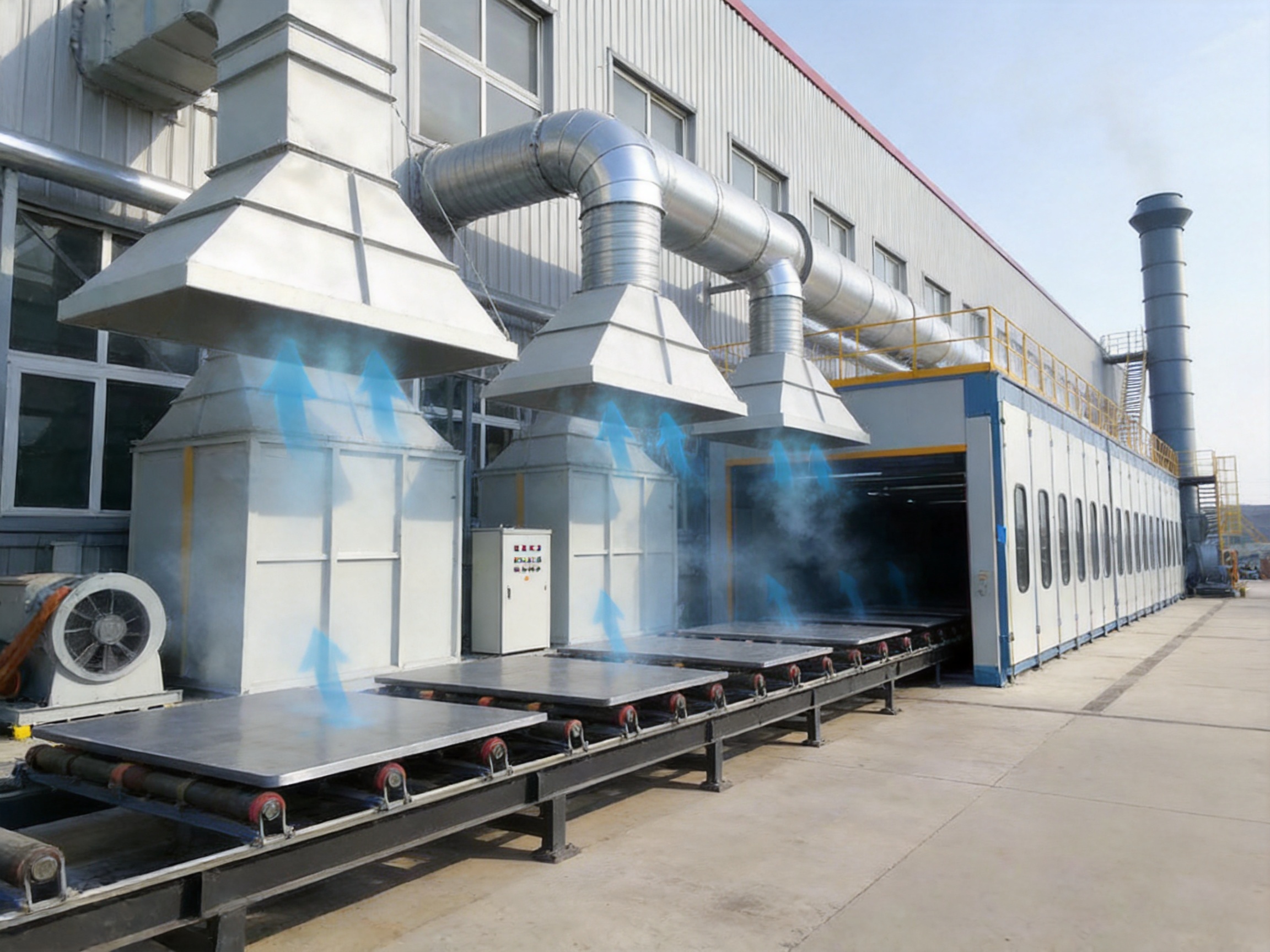
The first step is to understand the customer’s production process. Important information includes the type of operation, materials used, workpiece size, production capacity, operating schedule, temperature, moisture, and the location of emission sources.
The manufacturer should also understand whether the waste gas is continuous or intermittent. A continuous drying process may require a different extraction arrangement from a batch painting operation. Similarly, a grinding room may require a high level of particle collection, while a chemical process may require greater attention to corrosion resistance and vapor treatment.
The gas characteristics affect the selection of purification components. Relevant factors may include particle size, concentration, temperature, humidity, odor, chemical composition, corrosiveness, and possible flammability. If necessary, the customer may provide testing data or process information for engineering evaluation.
Accurate characterization helps prevent inappropriate equipment selection. The treatment system should be designed for the actual pollutants and operating conditions rather than based solely on the name of the industry.
The required airflow is calculated from the number and size of collection points, the desired capture velocity, the duct arrangement, and the operating conditions. The purification equipment must have sufficient capacity for the expected airflow and pollutant load.
Future expansion should also be considered. If a customer plans to add another spray booth, extend a conveyor, or increase production capacity, the system may be designed with an appropriate margin or modular expansion capability.
Site planning considers the factory building, ceiling height, floor area, columns, doors, cranes, conveyors, storage areas, maintenance routes, and discharge location. Overhead installation may be selected when floor space is limited. Floor-mounted installation may be more practical when convenient access and simplified maintenance are priorities.
The layout should allow safe operation and convenient inspection. Filter doors, control cabinets, fan assemblies, and access platforms should not be blocked by other equipment. Duct routes should be as direct as practical while remaining compatible with the production process.
The purification method is selected according to the waste gas characteristics and treatment objectives. Filtration is commonly used for particles and paint mist. Additional treatment stages may be included for odors, vapors, or other harmful components. The manufacturer evaluates the overall process to determine whether a single stage or a multi-stage arrangement is more appropriate.
In some applications, pre-filtration is important because it protects later stages from excessive particle loading. In other applications, a specific filter material or corrosion-resistant construction may be needed. The selection should also consider replacement frequency, availability of consumables, pressure loss, and operating cost.
The control system is designed according to the number of fans, purification units, production connections, and required safety functions. The customer may require local control, remote monitoring, automatic scheduling, or interlocking with painting and conveying equipment.
Interlocking can help coordinate production and exhaust operation. For example, the spray process may be prevented from starting if the required extraction fan is not running. Alarm functions can notify operators of equipment faults, abnormal operating conditions, or maintenance requirements.
After the design is confirmed, the equipment is manufactured according to the approved technical specifications. Structural parts, housings, ducts, hoods, supports, fans, control cabinets, and purification components are prepared and assembled.
Inspection is carried out throughout the manufacturing process. The objective is to ensure that the finished equipment corresponds to the design and can be installed efficiently at the customer’s site.
At the installation site, the equipment is positioned, connected, and tested. Airflow, fan operation, control sequences, and safety functions are adjusted. Operators can receive guidance on normal operation, filter inspection, consumable replacement, troubleshooting, and routine maintenance.
This final stage is important because even well-manufactured equipment must be commissioned correctly to achieve the intended performance. The operating parameters should be recorded so that future maintenance personnel can identify changes in system performance.
Overhead installation is suitable for factories where floor space is limited or where the production area must remain clear for workpiece handling and material transport. Ducts and treatment components can be arranged above the production line, provided that the building structure can support the equipment.
This arrangement can help preserve floor space and may be particularly useful for automated conveyor systems. However, the design must include safe access for inspection, filter replacement, and component servicing.
Floor-mounted installation can simplify access to filters, fans, control cabinets, and other components. It may be preferred when the factory has sufficient floor area or when maintenance convenience is a major consideration.
The floor layout must reserve space for service activities and should not interfere with forklift routes, workpiece movement, emergency passages, or other production operations. A compact structure can help reduce the footprint of the system.
Some projects benefit from a combined arrangement in which collection ducts are installed overhead while the purification unit and fan are positioned on the floor. This can balance space utilization, access, duct length, and installation cost.
The best arrangement depends on the customer’s building and process. A professional site assessment helps determine the most practical configuration.
Regular operation and maintenance are necessary to preserve treatment performance. Operators should inspect the equipment according to the operating schedule and the manufacturer’s recommendations.
Check whether the fan starts, stops, and runs normally.
Observe unusual vibration, noise, odor, temperature, or airflow changes.
Inspect filters and replace or clean them when required by the equipment design.
Check duct connections, access doors, and housing seals for leakage.
Keep the area around the equipment clear for safe maintenance.
Review electrical controls, indicator lights, alarms, and interlocking functions.
Record maintenance activities and any changes in operating performance.
Filter replacement intervals depend on pollutant concentration, operating hours, gas temperature, humidity, and the selected filter type. Waiting until a filter is completely blocked may increase fan energy consumption and reduce airflow. A planned maintenance schedule is therefore preferable to emergency replacement.
Consumables should be stored in a clean, dry location and replaced with compatible components. Using an unsuitable filter may reduce purification efficiency or create excessive pressure loss. Maintenance personnel should follow the equipment documentation and confirm that the system is safely isolated before opening inspection doors or performing repairs.
Energy-saving performance begins with correct system sizing. A fan that is too large may consume more electricity than necessary, while an undersized fan may run continuously without achieving effective capture. Airflow calculations, duct optimization, and purification unit selection can help create a more balanced system.
Automatic control can reduce unnecessary operating time. The fan may be linked to the production schedule or controlled according to the operating status of the relevant process. Adjustable airflow can also help match extraction volume to actual production needs.
Low pressure loss is another important consideration. Duct bends, narrow passages, blocked filters, and poorly matched components increase resistance and force the fan to work harder. Regular maintenance and an efficient layout can help maintain the designed operating condition.
Energy saving should not be achieved by reducing the required extraction airflow below a safe and effective level. The objective is to optimize the complete system while maintaining reliable pollutant collection and purification.
Waste gas treatment equipment affects production, environmental management, maintenance, and factory layout. Selecting an experienced manufacturer can reduce design risks and improve coordination across these areas.
Jiangsu Yue Ze Environmental Protection Equipment Co., Ltd. has more than four decades of experience in industrial equipment and environmental protection solutions. Its product range includes powder coating production lines, electric vehicle assembly lines, automotive counterweight spray lines, paint and bake booths, large-part grinding rooms, infrared radiation drying systems, automated conveying systems, intelligent coating lines, and waste gas treatment equipment.
This product range allows the company to understand the relationship between process equipment and emission control. A waste gas system may need to connect with an automatic conveyor, coordinate with a spray booth, extract air from a drying oven, or operate together with a complete coating line. Experience across these product categories helps support more practical and integrated designs.
The company emphasizes research and development, manufacturing, installation, customization, quality control, customer-focused service, integrity, green manufacturing, and global cooperation. For international customers, the ability to communicate about technical specifications, project scope, installation conditions, and production objectives is an important part of equipment supply.
With a registered capital of 58 million yuan and a large manufacturing site in Jiangsu, the company is positioned to undertake customized industrial equipment projects. Its one-stop capability can help customers manage design, production, delivery, installation, and commissioning through a coordinated supplier relationship.
Customers seeking a quotation or preliminary design should provide as much process information as possible. More complete information helps the manufacturer recommend a suitable system and avoid unnecessary design changes.
Type of production process generating waste gas.
Number and location of emission sources.
Waste gas composition or available testing data.
Estimated airflow, gas temperature, humidity, and pollutant concentration.
Operating hours, production schedule, and expected future capacity.
Workshop dimensions, ceiling height, floor plan, and available installation space.
Existing booths, ovens, conveyors, machines, or ventilation systems.
Required control functions and connection requirements.
Maintenance preferences and consumable replacement expectations.
Applicable environmental and workplace requirements.
Photographs, layout drawings, process flow diagrams, and equipment lists can also help the engineering team understand the project. When a site visit is possible, on-site measurement can further improve the accuracy of the design.
Waste Gas Treatment Equipment is used to collect and purify exhaust gas generated during industrial production. It can help reduce workshop pollution, control odors and airborne particles, improve working conditions, and support environmental management requirements.
The equipment can be used in painting, powder coating, casting, machining, grinding, drying, curing, surface treatment, chemical processing, and other industries where waste gas is generated. The configuration is selected according to the process and gas characteristics.
Yes. The system can be customized according to waste gas treatment capacity, pollutant type, airflow, workshop space, installation height, production equipment, and control requirements. Overhead, floor-mounted, and combined installation options are available according to the site.
The purification method is selected according to the composition, concentration, temperature, humidity, and particle content of the waste gas. Filtration may be suitable for dust, paint mist, and particles, while additional treatment stages may be considered for odors, vapors, or other harmful components.
Yes. The equipment can be designed to work with spray booths, powder coating booths, drying ovens, curing ovens, conveyors, and other production line components. The control system may also be configured for automatic operation and interlocking.
Yes. Automatic start and stop, fan control, alarm indication, fault monitoring, and production equipment interlocking can be included according to the project requirements. Automatic functions reduce the need for frequent manual intervention.
Yes. Routine inspection is necessary to maintain stable performance. Operators should check the fan, ductwork, seals, control system, and purification components. Filters and other consumables should be cleaned or replaced according to their condition and the manufacturer’s recommendations.
Energy consumption can be managed through appropriate fan sizing, efficient duct design, adjustable airflow, automatic operation, and regular filter maintenance. The system should be optimized without reducing the airflow required for effective waste gas capture.
Yes. The equipment can be designed with a compact structure and may be installed overhead, on the floor, or in a combined arrangement. The final design depends on building height, structural conditions, maintenance access, and the location of existing production equipment.
An integrated supplier understands how environmental equipment connects with production machinery. This can simplify technical communication and help coordinate the waste gas system with coating lines, painting booths, drying systems, conveying equipment, and factory layouts.
Yes. Non-standard customization is available for applications with special airflow, temperature, pollutant, space, or integration requirements. Engineering analysis is needed to determine the appropriate materials, purification stages, control functions, and installation arrangement.
Customers should provide information about the production process, emission sources, gas characteristics, airflow, operating schedule, workshop layout, existing equipment, installation space, and treatment objectives. Drawings, photographs, and testing reports are useful when available.
No single system should be assumed to remove every pollutant under every condition. Treatment performance depends on the waste gas characteristics, equipment configuration, operating parameters, maintenance, and commissioning. The system should be engineered for the specific pollutants and treatment objectives of the application.
The company provides integrated project services that can include design, manufacturing, installation, commissioning, and customized technical support. The service scope should be confirmed according to the project requirements and supply contract.
Customers can contact Jiangsu Yue Ze Environmental Protection Equipment Co., Ltd. to discuss process conditions, site requirements, technical specifications, and customized equipment solutions. The company’s sales contact information includes the telephone numbers +86-13390670088 and +86-15851062329, and the email address [email protected].
Waste Gas Treatment Equipment is an important part of responsible industrial production. By collecting polluted air at its source, transferring it through suitable purification stages, and discharging treated gas in a controlled manner, the system can help factories improve workshop conditions and manage industrial emissions more effectively.
The main advantages of a customized system include efficient source collection, adjustable airflow, automatic operation, low-noise performance, energy-conscious design, compact installation, convenient maintenance, and compatibility with different industrial processes. These advantages are most valuable when the equipment is designed around the actual production process rather than selected as a generic standalone product.
Jiangsu Yue Ze Environmental Protection Equipment Co., Ltd. combines environmental protection equipment manufacturing with extensive experience in coating lines, painting systems, drying equipment, conveying systems, grinding rooms, and complete industrial production solutions. Its engineering, manufacturing, installation, and customization capabilities allow the company to provide coordinated waste gas treatment equipment for factories with different capacities and layouts.
For customers planning a new production line, upgrading an existing workshop, or improving emission control, a detailed process assessment is the best starting point. By considering waste gas characteristics, airflow, production equipment, installation space, maintenance access, and future expansion, the treatment system can be designed to deliver reliable long-term value.
1. Industrial Ventilation: A Manual of Recommended Practice for Design, American Conference of Governmental Industrial Hygienists.
2. Air Pollution Control Engineering, environmental engineering reference text concerning industrial emission collection and treatment.
3. Industrial Waste Gas Treatment Equipment Design and Operation Principles, technical reference for source capture, filtration, airflow, and maintenance.
4. Principles of Environmental Engineering and Science, reference material concerning industrial pollution prevention and control.
5. Manufacturer technical documentation for customized waste gas treatment systems, industrial coating lines, ventilation equipment, and environmental protection machinery.
Waste Gas Treatment Equipment, electric-driven with stable power output, mainly composed of a gas collection hood, purification filter, fan, control system, and waste gas discharge device. It adopts o...
See Details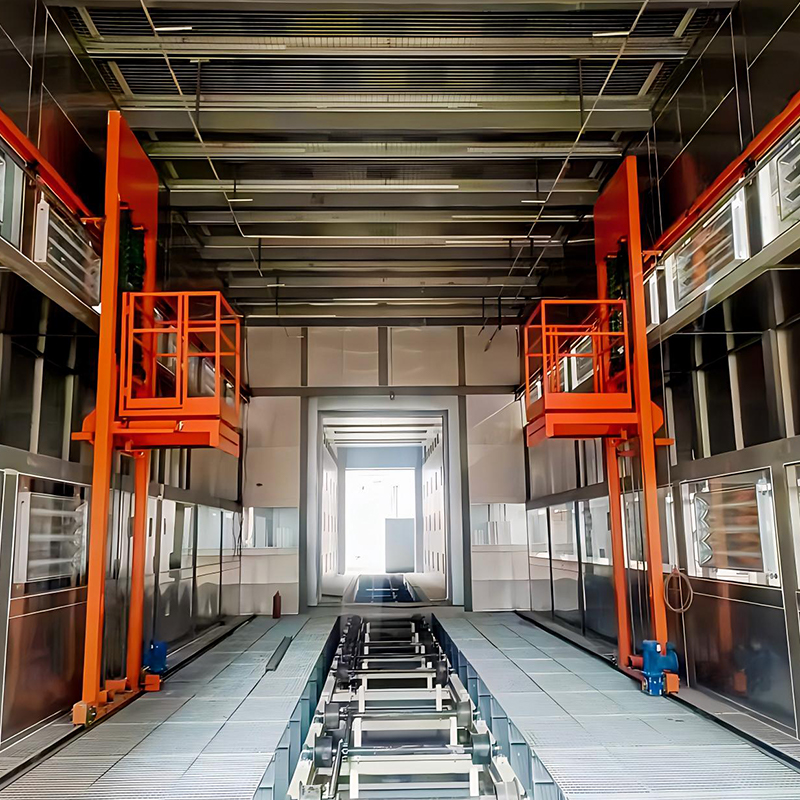
3-axis platform lifts feature three-dimensional movement of X, Y, and Z axes. Flexible positioning, stable lifting, and precise operation. Suitable for multi-angle operation and workpiece docking in i...
See Details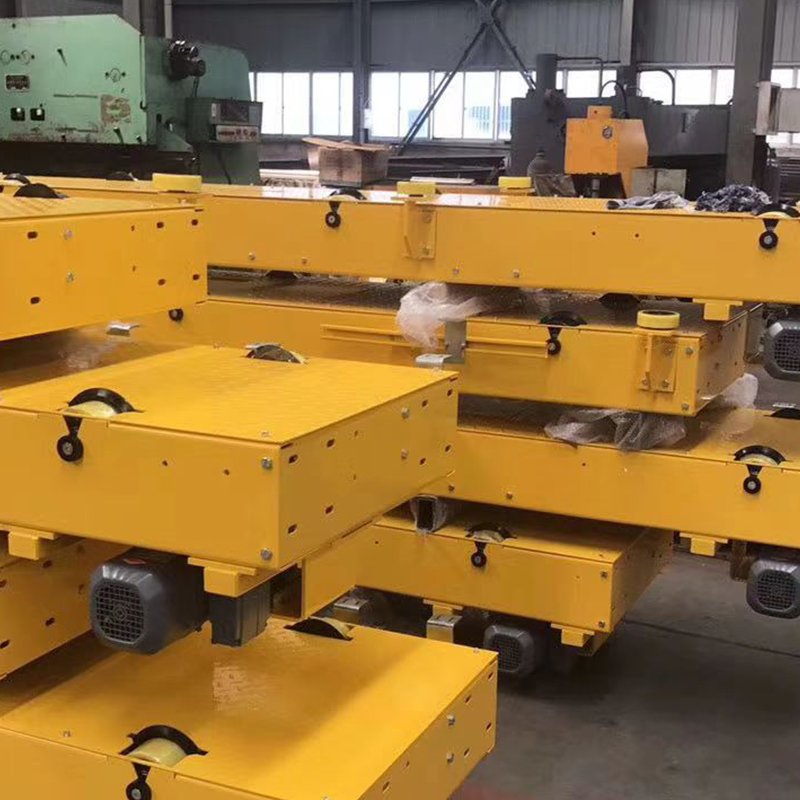
Platform Cart is a practical and efficient industrial handling equipment, widely used in factories, workshops, warehouses, logistics centers, and other places. It is composed of a sturdy load-bearing ...
See Details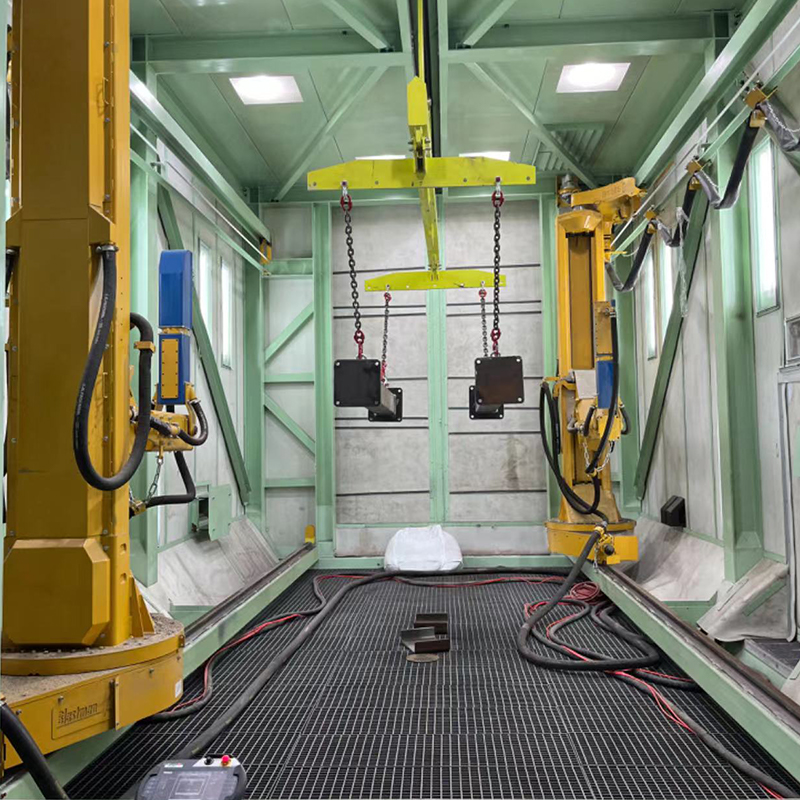
Professional coating line specially designed for large castings and heavy truck parts, applicable to various large castings (engineering castings, mining equipment castings, industrial castings) and h...
See Details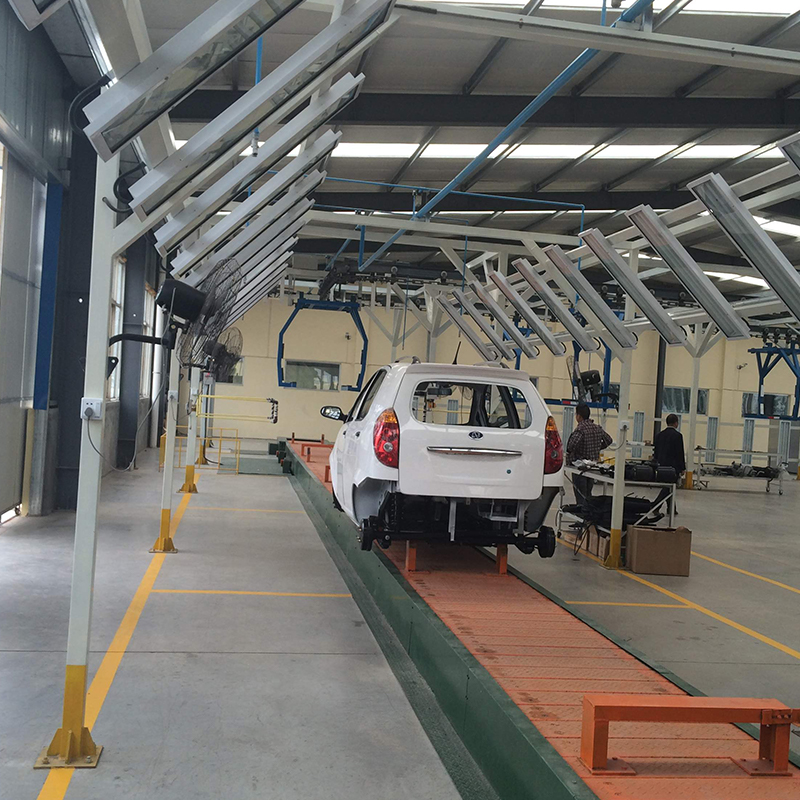
Professional electrophoresis coating line specially designed for electric vehicles (EVs), applicable to various EV types (passenger EV, commercial EV, new energy logistics vehicle) and EV components. ...
See Details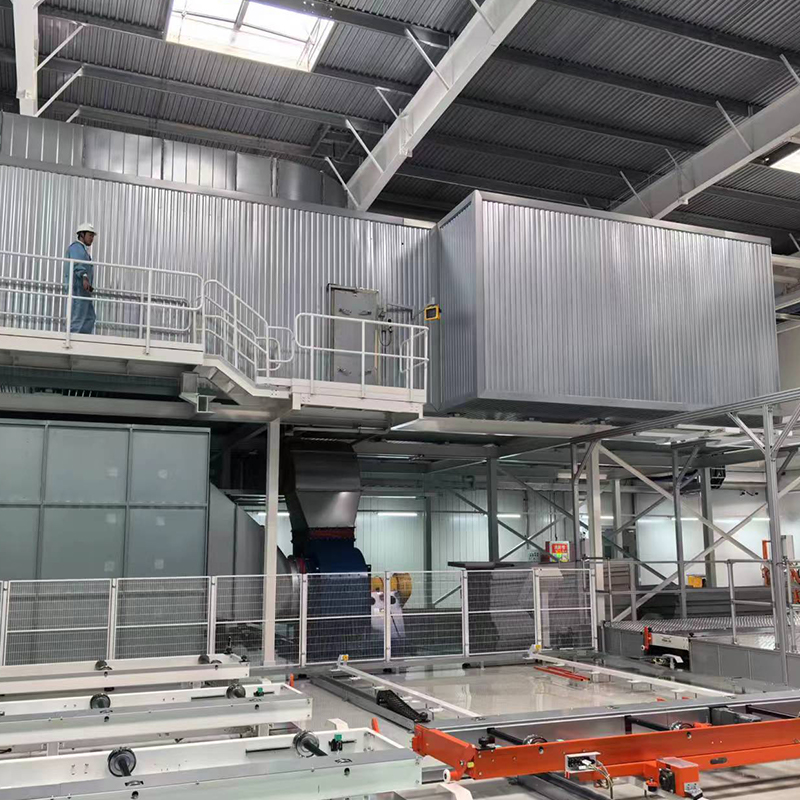
Professional electrophoresis line specially designed for truck cab manufacturing and refurbishment, applicable to various truck cab types (heavy-duty truck cab, light-duty truck cab, pickup cab, comme...
See DetailsBuild Your Customized Industrial Coating System
Send us your workpiece information, production capacity, coating process, workshop layout, and environmental requirements. Yueze will help evaluate your project and develop a suitable coating, conveying, drying, and environmental treatment solution.
Main menu
Products
Contact Us
Company Address:
No. 12, Park Avenue, Shanggang Industrial Park, Jianhu, Yancheng City, Jiangsu Province
Message Us Right Now!

Follow us: