
 русский
 عربى
عربى
 Tiếng Việt
Professional coating line dedicated to truck body manufacturing and refurbishment, applicable to various truck types (heavy-duty truck, light-duty truck, pickup truck, van, commercial truck). Main typ...
See Details
Yueze Environmental Protection provides one-stop compliant industrial surface treatment solutions with professional tech and fine craftsmanship.
 Get Inquiries
2026-08-05
Content
Truck body manufacturing requires a coating system that can handle large dimensions, substantial component weight, complex geometries, and demanding appearance standards. A truck body coating line is an integrated industrial production system designed to clean, pretreat, prime, paint, dry, cure, inspect, and convey truck bodies or related large metal assemblies through a controlled finishing process.
Unlike a small-part powder coating line or a passenger-car paint line, a truck body coating line must be engineered around oversized workpieces. Cargo boxes, truck cab shells, commercial vehicle panels, pickup bodies, van bodies, drawer-type bus bodies, and chassis-mounted structures may all require different handling clearances, spray distances, curing times, and coating methods. The line must therefore combine mechanical strength, accurate process control, flexible configuration, environmental protection, and reliable production efficiency.
Modern truck body coating lines are used for both original equipment manufacturing and refurbishment. They can be configured as fully automatic systems, semi-automatic systems, or customized production lines with different levels of manual intervention. Depending on the product and coating specification, the process may include pretreatment, electrophoretic or liquid primer application, powder coating, liquid topcoat spraying, infrared drying, hot-air curing, cooling, waste gas purification, and final quality inspection.
A truck body coating line is a coordinated production system for applying protective and decorative coatings to large truck-related metal structures. The equipment normally includes loading stations, conveyors, pretreatment equipment, drying units, paint booths, curing ovens, cooling zones, environmental treatment equipment, electrical control systems, and inspection areas.
The main objective is to create a complete and uniform coating film over the workpiece. The coating must protect steel or other substrates against corrosion, moisture, road salt, chemicals, abrasion, ultraviolet exposure, and temperature changes. At the same time, it must provide a smooth appearance, consistent color, stable gloss, and strong adhesion.
Truck bodies often include wide flat panels, folded sections, welded joints, reinforcement structures, corners, recessed areas, and difficult-to-reach interior surfaces. These features make manual spraying slow and inconsistent when used as the only production method. A dedicated coating line allows the manufacturer to control workpiece movement, spray parameters, booth airflow, curing temperature, and process timing more accurately.
The line may be designed for one truck body model or for multiple product families. A flexible system can accommodate heavy-duty trucks, light-duty trucks, pickup trucks, vans, commercial vehicles, cargo boxes, cab shells, and selected bus body structures. The final design depends on maximum workpiece length, width, height, weight, coating materials, required output, available factory space, and local environmental regulations.
Truck body coating lines serve a broad range of industrial applications. They may be used for the complete coating of newly manufactured truck bodies or for repainting and restoring bodies during vehicle refurbishment.
Some customers require a complete turnkey line, while others need only one section, such as a large spray booth, infrared drying system, waste gas treatment unit, or automated conveying system. Modular construction allows the equipment supplier to provide a complete production line or integrate new equipment into an existing factory.
A coating line designed for small metal parts cannot automatically deliver the same performance when used for truck bodies. The difference is not limited to booth size. Every major subsystem must be adapted to the physical characteristics of the workpiece.
Truck bodies are heavier than many standard industrial components. The conveyor must support the static load and also withstand repeated acceleration, deceleration, stopping, and positioning. Hangers, carriers, rails, drive units, and transfer mechanisms must be selected according to the actual load distribution.
The workpiece envelope is also much larger. A cargo box may require substantial booth width and height, while a long truck body may require a longer spray and curing chamber. Door openings, maintenance access, ventilation ducts, filters, lamps, spray guns, and safety barriers must all be positioned without creating clearance problems.
Large flat panels create another challenge. Minor variations in atomization, gun distance, airflow, or coating thickness can become clearly visible after curing. Uneven gloss, streaking, orange peel, sagging, dry spray, and thin edges may reduce the visual quality of the finished vehicle. A dedicated truck body coating line uses carefully designed airflow and spray coverage to improve consistency across the complete surface.
| Design Area | Truck Body Requirement | Production Benefit |
|---|---|---|
| Conveyor capacity | High load capacity and stable movement | Safe transport of large and heavy bodies |
| Booth dimensions | Wide, high, and long internal working space | Prevents collisions and improves spray access |
| Airflow control | Stable distribution over large surfaces | Reduces streaking and uneven film thickness |
| Curing equipment | High-capacity hot-air or infrared heating | Shortens curing time and improves film performance |
| Waste gas treatment | Designed for a higher volume of paint emissions | Supports cleaner and more compliant operation |
| Process flexibility | Adjustable clearances and spray parameters | Allows multiple truck body models on one line |
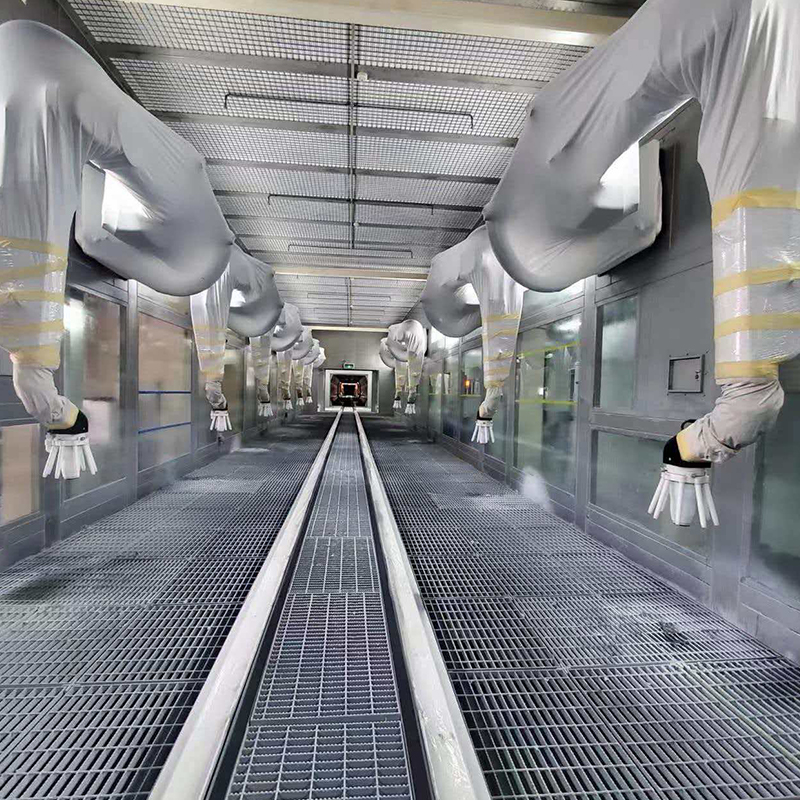
Truck Body Coating Line
A complete truck body coating line normally consists of several connected process stages. The exact sequence varies according to the substrate, coating material, corrosion-resistance requirement, and production target. However, the following structure is widely used for large commercial vehicle bodies.
The workpiece is loaded onto a conveyor carrier, fixture, or floor-mounted transfer system. Before entering the main process, operators check dimensions, weight, surface condition, weld quality, oil contamination, sharp edges, and areas that require masking.
Correct loading is important because poor positioning can affect spray access and create unsafe movement. Fixtures should hold the body securely while leaving the maximum possible surface area exposed. For products with different dimensions, adjustable fixtures or model-specific carriers may be used.
Pretreatment removes oil, dust, welding residue, oxide, and other contaminants that could reduce coating adhesion. Depending on the material and required corrosion resistance, the process may include degreasing, water rinsing, surface conditioning, phosphating, passivation, or other chemical treatment.
For large truck bodies, pretreatment equipment must provide adequate spray pressure, solution coverage, drainage, and chemical circulation. Drainage is particularly important around folded panels and structural joints. If liquid remains trapped in corners, it can contaminate subsequent stages or contribute to corrosion.
A well-designed pretreatment system includes tanks, pumps, filters, heating equipment, spray headers, nozzles, circulation pipes, liquid-level controls, and maintenance access. Chemical concentration and bath temperature should be monitored according to the coating supplier’s process requirements.
After rinsing, the truck body enters a drying zone. Moisture must be removed before primer or powder coating is applied. The drying system may use heated air, circulation fans, and controlled exhaust. Air distribution should reach cavities and structural areas without producing excessive turbulence or energy loss.
The drying temperature and time depend on the workpiece material, geometry, residual water volume, and line speed. Large assemblies require sufficient drying capacity because water may remain inside seams, channels, or folded sections after external surfaces appear dry.
Primer improves corrosion protection, adhesion, and the performance of the subsequent topcoat. It may be applied by automatic liquid spraying, manual spraying, powder coating, or another compatible method.
Automatic spray equipment can be installed on reciprocating machines, fixed gun frames, robotic arms, or a combination of automatic and manual stations. Automatic equipment provides repeatable movement and coating distribution, while manual touch-up stations allow operators to address complex areas that are difficult to reach with fixed spray patterns.
For large flat truck body panels, gun distance, overlap, atomizing pressure, paint flow, and movement speed must be coordinated. Excessive film thickness may cause sagging or extended curing time, while insufficient thickness can reduce corrosion resistance.
After primer application, the body moves into a drying or curing section. Infrared radiation drying is particularly useful for large flat surfaces because it transfers energy directly to the coated workpiece. It can provide rapid heating and reduce the time required for intermediate drying.
Hot-air circulation may be used independently or together with infrared radiation. The selection depends on the coating formulation, production takt time, workpiece material, energy strategy, and required temperature uniformity. A combined system can provide fast surface heating while maintaining stable overall curing conditions.
Some coating specifications require sanding between layers. Sanding removes minor defects, smooths rough areas, and improves the surface for the next coating layer. Large-part sanding rooms should provide effective dust collection, suitable lighting, operator access, and safe working conditions.
Dust extraction is essential because sanding residue can settle on the truck body and compromise the final finish. The sanding area may be designed as a separate room or integrated with a preparation zone, depending on the factory layout and production volume.
The topcoat provides the final color, gloss, weather resistance, and visual appearance. It may be a liquid coating, powder coating, or a multi-layer system specified by the vehicle manufacturer.
The spray booth is one of the most important parts of the line. It must maintain controlled airflow, suitable filtration, stable pressure, adequate lighting, and safe access. A clean booth environment reduces dust defects and supports uniform film formation.
For oversized truck bodies, the booth should be designed to provide sufficient spray distance from every major surface. Door clearance, operator walkways, maintenance openings, and exhaust duct capacity must be considered during the engineering stage.
The final curing stage develops the coating’s required hardness, adhesion, chemical resistance, and durability. The curing method depends on the paint system. Powder coatings generally require a carefully controlled oven temperature and residence time, while liquid coatings may require flash-off, heated drying, or ambient curing.
Temperature sensors should monitor the process at appropriate locations. The air temperature inside the oven does not always equal the actual metal temperature of the truck body. For demanding applications, the process may be validated by measuring workpiece temperature and comparing it with the coating manufacturer’s curing window.
After curing, the body should cool to a suitable handling and inspection temperature. Cooling may occur naturally or through a controlled air circulation section. Rapid but uncontrolled cooling can create process instability, especially when the coating system is sensitive to temperature gradients.
Final inspection normally includes visual appearance, color, gloss, film thickness, adhesion, surface defects, cured condition, and coverage of difficult areas. The inspection method should reflect the customer’s quality standard and the intended service environment of the truck.
The conveyor connects the process stages and determines the movement rhythm of the complete line. Common arrangements include overhead conveyors, floor conveyors, chain conveyors, roller transfer systems, and customized lifting or shuttle systems.
For truck bodies, the conveying system must provide reliable load support, accurate positioning, and smooth operation. Sudden vibration can affect wet paint and cause movement-related defects. The system should also include safety stops, overload protection, emergency controls, inspection platforms, and suitable maintenance access.
When several truck body models are produced on one line, the conveyor may use adjustable fixtures or standardized carriers. The design should allow quick loading and unloading while preventing interference between neighboring workpieces.
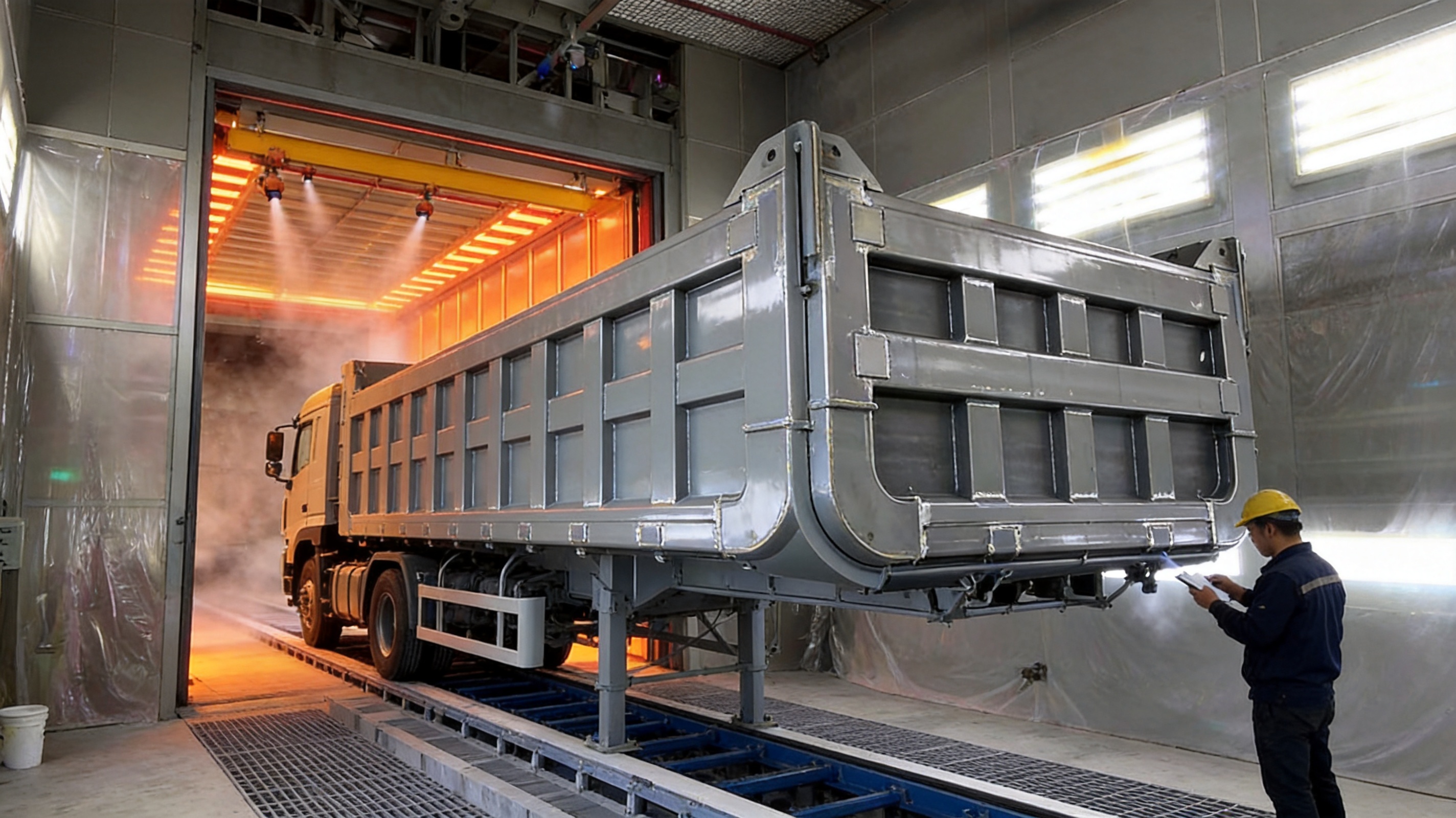
A truck body paint booth creates a controlled environment for spraying. Its structure commonly includes insulated panels, supply air equipment, exhaust fans, filtration units, lighting, access doors, control instruments, and fire-safety provisions.
Airflow should be designed according to the booth size, coating material, spray method, and worker position. Poor airflow can cause paint mist to remain suspended, settle on wet surfaces, or move toward unintended areas. Excessive airflow can create dry spray, increase paint consumption, and place unnecessary demand on the exhaust system.
Filter selection and maintenance also influence coating quality. Dirty filters increase resistance and change airflow distribution. A pressure monitoring system can help operators identify when filters require cleaning or replacement.
Infrared radiation drying systems use radiant energy to heat the coating and substrate. They are suitable for applications where rapid heating, compact equipment, or targeted energy delivery is important.
Infrared equipment can be arranged above, beside, or around the workpiece. The layout must account for the reflective properties, distance, shape, and material of the truck body. Large flat panels may receive energy efficiently, while recessed sections may require additional hot-air circulation or carefully positioned emitters.
A hot-air oven circulates heated air around the truck body. It is commonly used for powder coating and other systems that require a stable curing temperature over a specified period.
The oven should provide uniform temperature distribution, efficient insulation, safe burner or electrical heating controls, exhaust management, and access for cleaning and maintenance. Proper insulation reduces heat loss and helps control operating costs.
Spraying and curing can generate paint mist, volatile organic compounds, combustion gases, and other emissions. A waste gas purification system captures and treats these emissions before discharge.
The treatment method depends on the coating material, emission concentration, airflow volume, and applicable regulations. Possible configurations include dry filtration, activated carbon adsorption, catalytic oxidation, thermal oxidation, water-washing systems, or combinations of several technologies.
For large truck bodies, the ventilation volume may be higher than that of a small-part line. The purification system must therefore be selected according to actual operating conditions rather than simply scaled from a standard catalog design.
The control system coordinates conveyor movement, booth fans, pumps, heaters, spray equipment, infrared units, safety interlocks, and alarms. A programmable logic controller can manage automatic sequences and store process parameters for different truck body models.
Automation improves repeatability and reduces dependence on individual operator technique. It also allows the line to record production information, identify alarms, and simplify troubleshooting. Human operators remain important for loading, inspection, masking, touch-up, and process supervision, but automated control reduces unnecessary variation in routine operations.
The line is designed around the actual shape of the truck body. Spray angles, fixture positions, booth dimensions, and operator access can be arranged to cover broad panels, corners, seams, and structural sections. This supports full-surface protection and reduces untreated areas.
Controlled spraying, stable airflow, consistent workpiece movement, and repeatable curing help produce a more uniform coating film. This is especially valuable for flat truck panels, where differences in appearance are easy to see.
Effective cleaning, pretreatment, primer application, and curing create a multi-layer protective system. The result is improved resistance to moisture, salt, chemicals, abrasion, and outdoor exposure. Strong corrosion protection can extend the useful service life of truck bodies and reduce repainting frequency.
An automated production line reduces repeated manual transportation between separate work areas. The conveyor continuously transfers bodies through predefined stages, while automatic spray and heating systems reduce process variation and support a predictable production rhythm.
A customized line can be designed for multiple truck body specifications. Adjustable booth settings, programmable conveyor positions, flexible fixtures, movable spray equipment, and recipe-based control make it easier to switch between models.
Enclosed booths, ventilation systems, filtration equipment, and waste gas purification reduce the release of paint mist and other contaminants into the workshop. A controlled environment can improve worker comfort, protect nearby equipment, and support environmental management.
Accurate spray control can reduce overspray and improve paint utilization. Efficient insulation, optimized airflow, infrared heating, heat recovery options, and intelligent operating controls can help reduce energy consumption. The most suitable energy-saving strategy depends on production volume and coating chemistry.
When cleaning, spraying, drying, curing, and inspection are standardized, the process becomes easier to monitor and improve. Stable conditions reduce rework, rejected products, and unpredictable delivery times.
The main advantage of a purpose-built truck body coating line is that it is engineered for large and heavy workpieces from the beginning. General-purpose equipment may appear less expensive at the initial purchase stage, but it can create hidden costs when the booth is too narrow, the conveyor is overloaded, or the curing system cannot maintain the required temperature.
A dedicated system also provides better coordination between the mechanical, thermal, ventilation, coating, and environmental sections. When equipment is purchased from unrelated suppliers without system-level engineering, mismatched capacities can occur. For example, a large spray booth may be connected to an undersized exhaust system, or a high-capacity conveyor may feed a curing oven with insufficient heating power.
Customized engineering addresses the entire process rather than one individual machine. This includes production flow, plant layout, body dimensions, loading method, coating materials, exhaust volume, safety requirements, maintenance access, and future expansion.
| Consideration | Dedicated Truck Body Line | Adapted General-Purpose Equipment |
|---|---|---|
| Workpiece clearance | Designed around maximum truck body dimensions | May require compromises or additional handling |
| Load handling | Selected for heavy and uneven loads | May experience capacity limitations |
| Spray coverage | Configured for large panels and complex structures | May leave difficult areas or require more manual work |
| Curing performance | Matched to the coating and body mass | May cause long cycles or uneven curing |
| Future expansion | Modular design supports upgrades | Expansion may require major reconstruction |
| Environmental control | Ventilation and purification sized for actual emissions | Potential mismatch between airflow and treatment capacity |
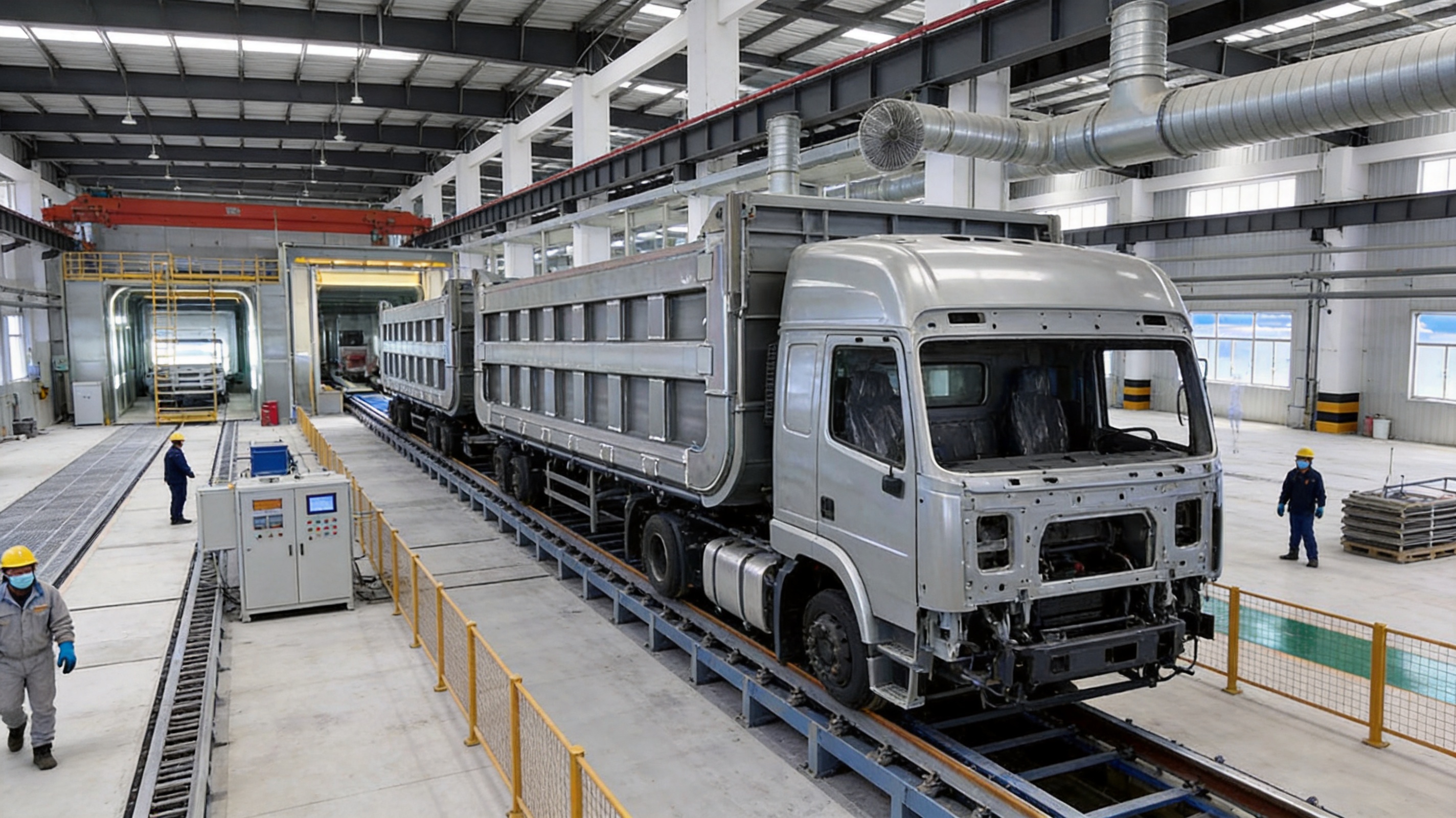
Jiangsu Yue Ze Environmental Protection Equipment Co., Ltd. is located in Yancheng, Jiangsu Province, China. The company operates a facility covering approximately 35,000 square meters and has a registered capital of 58 million yuan. Its experience covers industrial coating, environmental protection, automated conveying, drying, waste gas treatment, and customized production equipment.
The company reports more than 40 years of combined experience in areas including powder coating lines, drawer-type bus production lines, automotive body spray and bake booths, counterweight coating lines, large-part grinding rooms, and environmental treatment equipment. This background is relevant to truck body coating because large commercial vehicle finishing requires knowledge of both coating technology and oversized equipment engineering.
Yueze provides integrated research and development, manufacturing, installation, commissioning, and customized equipment services. An integrated approach can improve communication between design and production teams. It also helps ensure that the final equipment reflects the customer’s real production flow rather than a generic equipment template.
Truck body projects often include non-standard dimensions, unusual loading methods, complex factory structures, and different production targets. The equipment can therefore be designed around the customer’s workpiece drawings, process requirements, available floor area, utility conditions, and future capacity plans.
Customization may cover conveyor capacity, booth width, oven length, spray gun arrangement, fixture design, infrared emitter layout, ventilation volume, filtration configuration, control logic, and inspection stations. This flexibility is valuable for manufacturers that produce several body models or expect product changes over time.
The company specializes not only in coating lines but also in environmental protection equipment. This makes it possible to coordinate the spray booth, curing oven, exhaust ducts, waste gas purification equipment, and workshop ventilation as one system.
Integrated environmental engineering helps avoid common problems such as insufficient exhaust capacity, unstable booth pressure, excessive energy consumption, filter overload, or inconvenient maintenance access. The purification equipment can be selected according to the actual emission source and operating conditions of the line.
Manufacturing quality has a direct effect on equipment reliability. Structural frames, booth panels, conveyor components, ducts, tanks, heating modules, and control cabinets should be produced according to approved drawings and checked before assembly.
Important inspection points include dimensional accuracy, welding quality, surface treatment, fan rotation, electrical wiring, temperature control, conveyor operation, safety interlocks, leakage prevention, and airflow performance. Factory pre-assembly and testing can help identify problems before shipment and reduce installation delays at the customer’s site.
Experience with powder coating lines, vehicle body spray booths, bus body production lines, and automotive counterweight coating systems provides a practical foundation for large-part finishing projects. Each application has different requirements, but the underlying engineering principles are related: stable handling, controlled coating conditions, effective curing, emission management, and maintainable equipment.
In 2014, the company pioneered a hanging automatic painting process line for casting counterweight blocks. The line covered processes from finishing and polishing through primer and topcoat application. This type of project demonstrates the company’s ability to coordinate material handling, surface preparation, automated painting, and production control in a continuous system.
Equipment alone cannot guarantee a good coating result. The production team must also control the process parameters that affect adhesion, appearance, and durability.
Oil, dust, welding smoke, rust, and moisture can all cause coating defects. Pretreatment chemistry, rinsing quality, drying effectiveness, and operator handling should be monitored consistently.
Liquid coatings must be mixed and adjusted according to the coating supplier’s specification. Incorrect viscosity can produce poor atomization, runs, dry spray, or insufficient coverage. Pot life and temperature should also be considered for two-component coatings.
Gun distance, spray angle, overlap, paint flow, atomizing air, reciprocator speed, and line speed all influence film thickness. Automatic recipes can help maintain consistent settings when different truck body models are processed.
Booth pressure and airflow should remain stable during production. Filters, fans, dampers, and exhaust paths require regular inspection. A change in airflow can alter the spray pattern and influence the movement of paint mist across large panels.
The coating must receive the correct thermal profile. Under-curing may reduce hardness and adhesion, while over-curing may discolor the coating or waste energy. Temperature records and periodic validation support reliable quality control.
Film thickness should be checked at representative positions, including broad panels, edges, corners, and difficult-to-reach areas. Visual inspection should evaluate color consistency, gloss, orange peel, sagging, pinholes, contamination, and overspray.
Modular automatic production line design allows the coating system to develop with the factory. A customer may begin with semi-automatic loading and manual touch-up, then add automatic spraying, robotic handling, barcode identification, or production data collection later.
Programmable control systems can store separate process recipes for different body types. The recipe may define conveyor speed, spray sequence, fan operation, oven temperature, infrared power, and curing time. This reduces setup errors during model changes.
Automation can also improve traceability. Production data may include workpiece identification, process start and finish time, alarm history, temperature trends, and maintenance records. These records help managers analyze defects and identify equipment conditions before they cause major downtime.
Future upgrades may include automatic color change systems, robotic spray arms, automatic film-thickness measurement, energy monitoring, remote diagnostic functions, heat recovery, and more advanced waste gas purification. A modular equipment structure makes such improvements easier to implement than a rigid, one-piece system.
Energy consumption is a major operating consideration for large coating lines because ovens, infrared systems, fans, pumps, and ventilation equipment may run for many hours each day. Energy-saving design should begin with process analysis rather than relying only on lower-power components.
Effective oven insulation reduces heat loss. Variable-frequency drives can adjust fan and conveyor operation according to production demand. Infrared heating can deliver energy directly to the workpiece and may reduce heating time for suitable coating systems. Efficient burner control or electrical heating management can improve temperature stability.
Paint utilization can be improved through proper spray gun selection, automatic movement, correct overlap, and recycling systems where compatible with the coating material. Lower overspray reduces material consumption and decreases the load on filters and waste gas treatment equipment.
Environmental protection also depends on correct maintenance. Blocked filters, leaking ducts, worn seals, and poorly adjusted fans can increase emissions and energy consumption. A scheduled maintenance program should cover filter replacement, fan inspection, duct cleaning, pump servicing, burner checks, electrical testing, and safety-device verification.
Before ordering equipment, the buyer should prepare accurate technical information. The supplier needs more than the product name to design a reliable system.
Provide the maximum and minimum length, width, height, weight, material, surface condition, and loading orientation. Drawings or three-dimensional models are useful, especially when the body includes unusual projections or internal structures.
Define daily output, working hours, desired takt time, number of shifts, product mix, and expected future growth. A line designed only for current production may become a bottleneck when demand increases.
Specify the primer, topcoat, powder or liquid material, number of layers, target film thickness, color-change frequency, curing requirements, and quality standard. The coating system determines the design of spray equipment, ovens, drying areas, and environmental treatment.
Provide the available floor area, building height, column locations, utility capacity, gas or electricity availability, ventilation restrictions, drainage conditions, and fire-safety requirements. A well-planned layout minimizes unnecessary transfer distances and leaves enough room for maintenance.
Decide which operations should be automatic, semi-automatic, or manual. Full automation may be appropriate for high-volume standardized production, while flexible mixed-model manufacturing may benefit from a combination of automatic spraying and manual finishing.
Confirm the availability of spare parts, operator training, commissioning support, technical documentation, remote assistance, and periodic maintenance services. Easy access to filters, pumps, fans, burners, electrical cabinets, and spray equipment can significantly affect long-term operating costs.
Installation begins with site preparation, foundation verification, equipment positioning, structural assembly, duct connection, electrical wiring, utility connection, and safety inspection. Large lines should be installed according to an approved sequence to avoid interference between mechanical and electrical work.
After assembly, the supplier should test the conveyor without a load and then with representative workpieces. Booth airflow, fan rotation, filter installation, lighting, spray equipment, oven temperature, infrared output, and waste gas treatment should be checked individually and as an integrated system.
Commissioning should use the customer’s actual workpieces and coating materials whenever possible. This allows the technical team to adjust spray parameters, curing time, conveyor speed, and airflow based on real production conditions.
Operator training should cover normal operation, recipe selection, loading procedures, emergency stops, filter checks, cleaning, basic troubleshooting, and safe handling of coating materials. Maintenance personnel should receive additional training on pumps, fans, heaters, sensors, conveyors, control systems, and environmental equipment.
Routine maintenance protects coating quality and reduces unexpected downtime. The maintenance schedule should include daily, weekly, monthly, and annual tasks.
Preventive maintenance is generally less expensive than repairing a major failure during production. It also helps preserve coating consistency because airflow, temperature, and conveying accuracy remain within the intended operating range.
A properly designed line can process heavy-duty truck bodies, light-duty truck bodies, pickup bodies, vans, commercial vehicle panels, truck cab shells, cargo boxes, and selected bus body structures. The final range depends on the maximum workpiece dimensions, weight, shape, conveyor capacity, booth clearance, and spray configuration.
Yes. A line can be designed for mixed-model production by using adjustable fixtures, suitable booth dimensions, programmable process recipes, flexible spray equipment, and adequate conveyor clearance. The buyer should provide the full range of body sizes before design begins.
Some systems can be configured for powder coating, liquid painting, or separate powder and liquid process sections. The equipment must be selected according to the coating material, curing temperature, overspray characteristics, color-change requirements, and environmental controls. Powder and liquid systems should not be combined without careful process engineering.
Large flat panels make variations in spray distribution highly visible. Unstable airflow can move paint mist unevenly, cause streaking, create differences in gloss, or deposit overspray on wet surfaces. Proper booth pressure, balanced supply air, effective exhaust, and clean filters support a more consistent finish.
There is no single best method for every project. Infrared radiation is useful for rapid, targeted heating and large flat panels. Hot-air circulation provides uniform heating around the workpiece and is commonly used for powder curing. The correct choice depends on coating chemistry, body construction, production volume, energy costs, and required cycle time.
Quality improves when the surface is properly cleaned, coating materials are correctly prepared, spray parameters are controlled, booth airflow is stable, curing temperature is verified, and equipment is maintained. Regular checks of film thickness, adhesion, color, gloss, and visual appearance should be included in the quality program.
The required equipment depends on the coating process and local regulations. Typical systems may include booth filters, exhaust fans, dry filtration, activated carbon adsorption, catalytic or thermal oxidation, water-washing equipment, and curing-oven exhaust treatment. Emission volume and pollutant concentration should be assessed before selecting the purification method.
A modular line can normally be upgraded more easily than a fixed, non-expandable system. Possible upgrades include additional spray guns, robotic spraying, automatic loading, expanded curing capacity, improved waste gas treatment, energy monitoring, and digital production tracking. Future requirements should be considered during the original layout and control-system design.
The buyer should provide workpiece drawings, maximum dimensions, weight, material, coating type, number of layers, target output, working hours, available factory space, preferred automation level, energy source, environmental requirements, and expected future production. Clear information allows the supplier to prepare a more accurate technical proposal.
An experienced integrated supplier can coordinate the conveyor, pretreatment, booth, drying, curing, ventilation, purification, controls, installation, and commissioning. This reduces the risk of capacity mismatches between individual machines and provides a single technical partner for the complete production system.
A truck body coating line is more than a large spray booth. It is a complete production system in which material handling, surface preparation, coating application, drying, curing, environmental treatment, automation, and quality inspection must operate together.
The strongest solutions are designed around the customer’s actual truck body dimensions, weight, coating specification, production volume, and factory conditions. Wide-span conveyors, large-format booths, controlled airflow, infrared radiation drying, efficient curing, waste gas purification, and flexible automation provide important advantages over general-purpose equipment.
Jiangsu Yue Ze Environmental Protection Equipment Co., Ltd. combines customized coating-line engineering with manufacturing, installation, commissioning, and environmental equipment capability. Its experience in powder coating lines, automotive body spray and bake booths, bus body production lines, counterweight coating systems, infrared drying equipment, automated conveyors, and waste gas treatment supports the development of integrated solutions for demanding large-part finishing applications.
For manufacturers seeking better corrosion resistance, consistent appearance, higher productivity, flexible model switching, and improved environmental performance, a dedicated truck body coating line can provide a practical foundation for long-term production growth.
1. Industrial Surface Treatment Process Planning Principles, technical reference for cleaning, pretreatment, coating, drying, and curing operations.
2. Powder Coating Application and Curing Guidelines, reference material for film formation, oven temperature control, and coating performance.
3. Spray Booth Ventilation and Filtration Engineering Practices, reference material for airflow balance, pressure control, filtration, and paint mist management.
4. Large-Part Conveyor Design and Material Handling Practices, reference material for load capacity, fixture design, positioning, and maintenance.
5. Industrial Waste Gas Treatment Technology, reference material for paint mist filtration, volatile organic compound control, adsorption, and oxidation systems.
6. Vehicle Body Corrosion Protection and Coating Quality Control Principles, reference material for pretreatment, primer selection, film thickness, adhesion, and durability evaluation.
7. Manufacturer information supplied for the design and application of customized truck body coating lines, automated production lines, environmental protection equipment, and industrial coating systems.
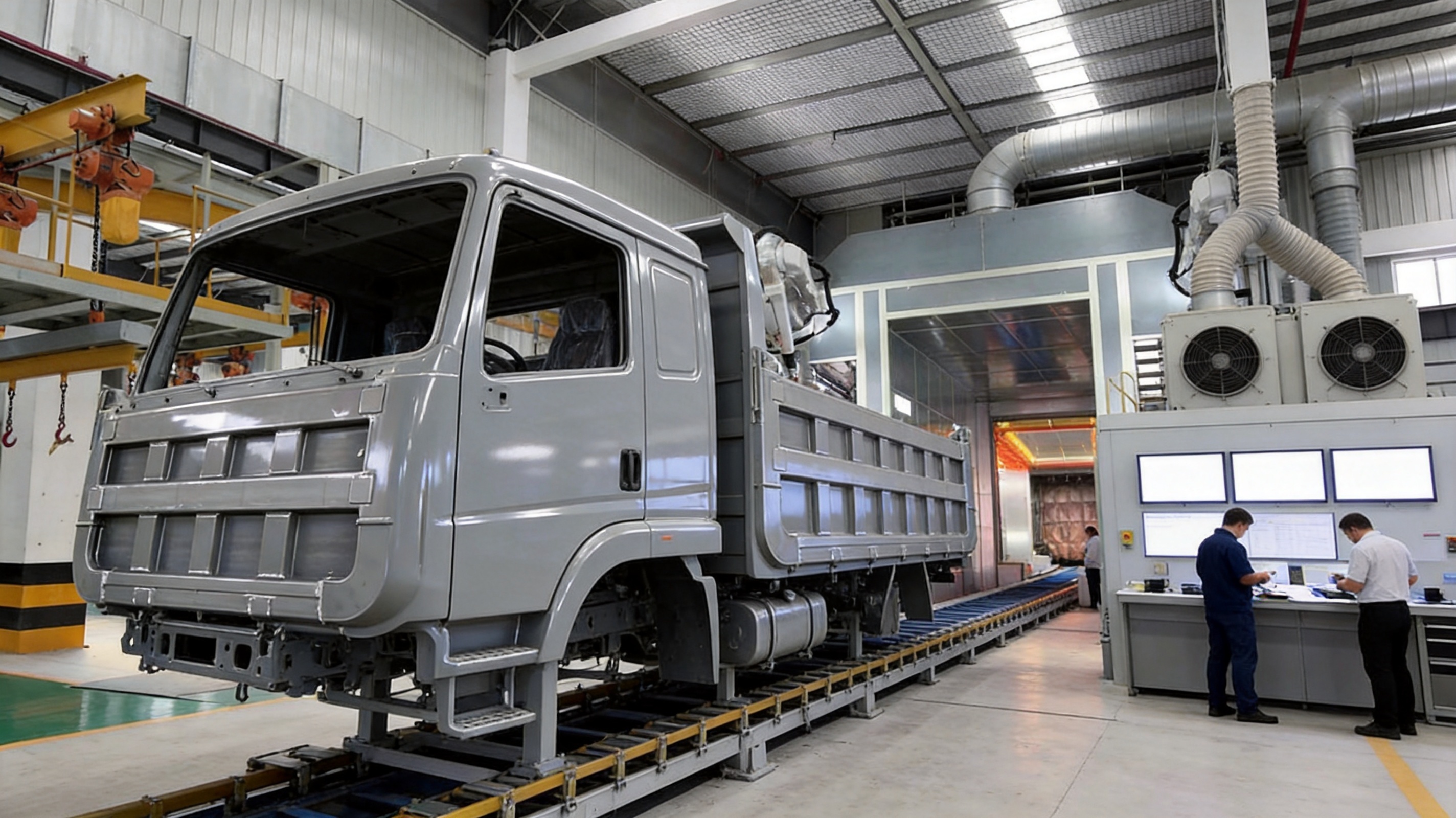
Professional coating line dedicated to truck body manufacturing and refurbishment, applicable to various truck types (heavy-duty truck, light-duty truck, pickup truck, van, commercial truck). Main typ...
See Details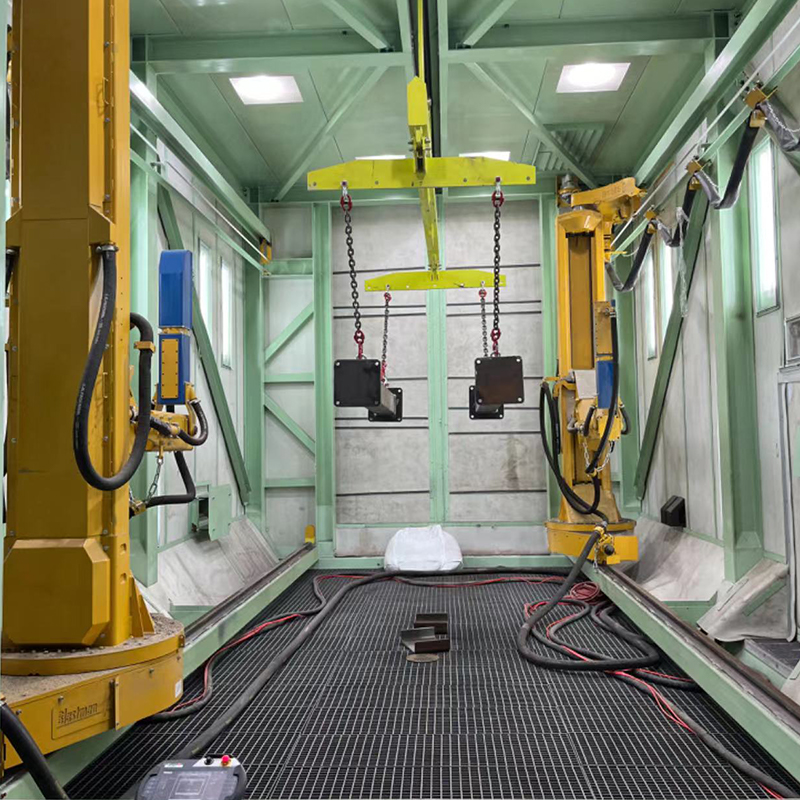
Professional coating line specially designed for large castings and heavy truck parts, applicable to various large castings (engineering castings, mining equipment castings, industrial castings) and h...
See Details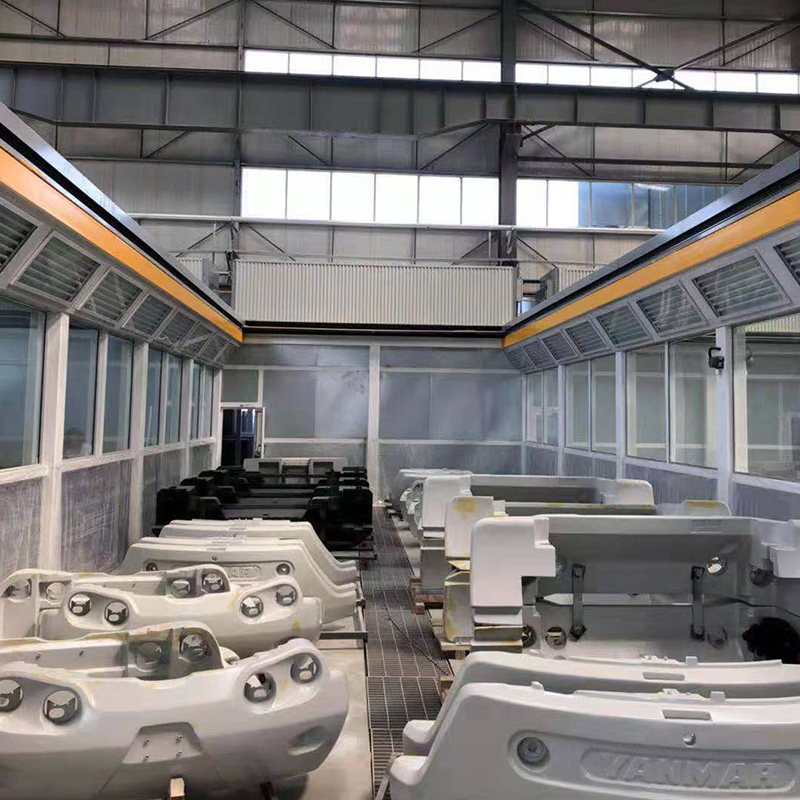
Professional spray coating line specially designed for car wheel manufacturing and refurbishment, applicable to various car wheel types (steel wheel, aluminum alloy wheel, forged wheel, cast wheel, pa...
See Details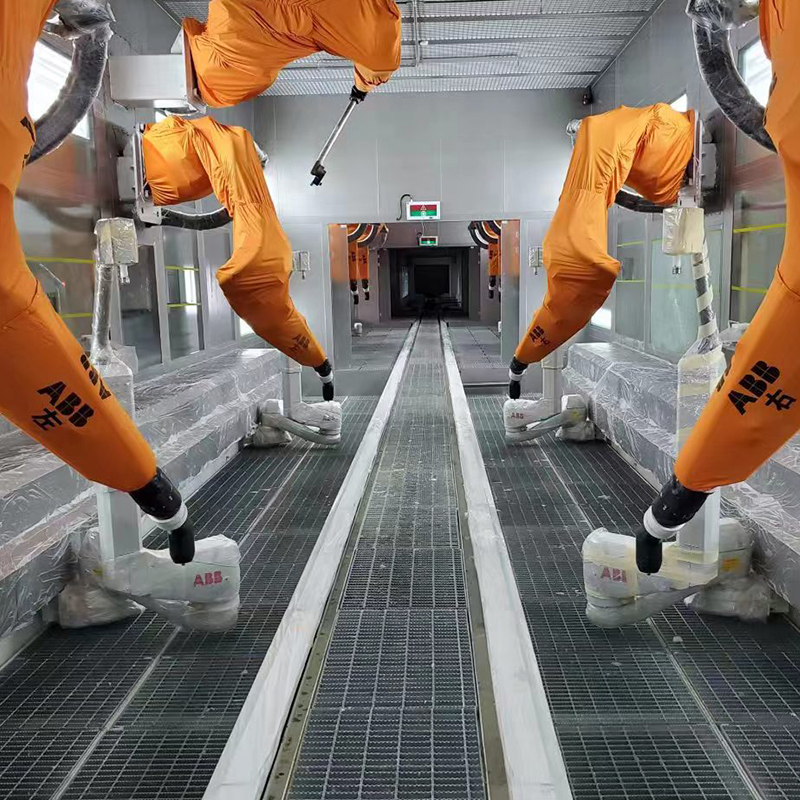
Professional spray coating line specially designed for motor casings, applicable to various motor casing types (electric vehicle motor casing, industrial motor casing, household motor casing, high-tem...
See Details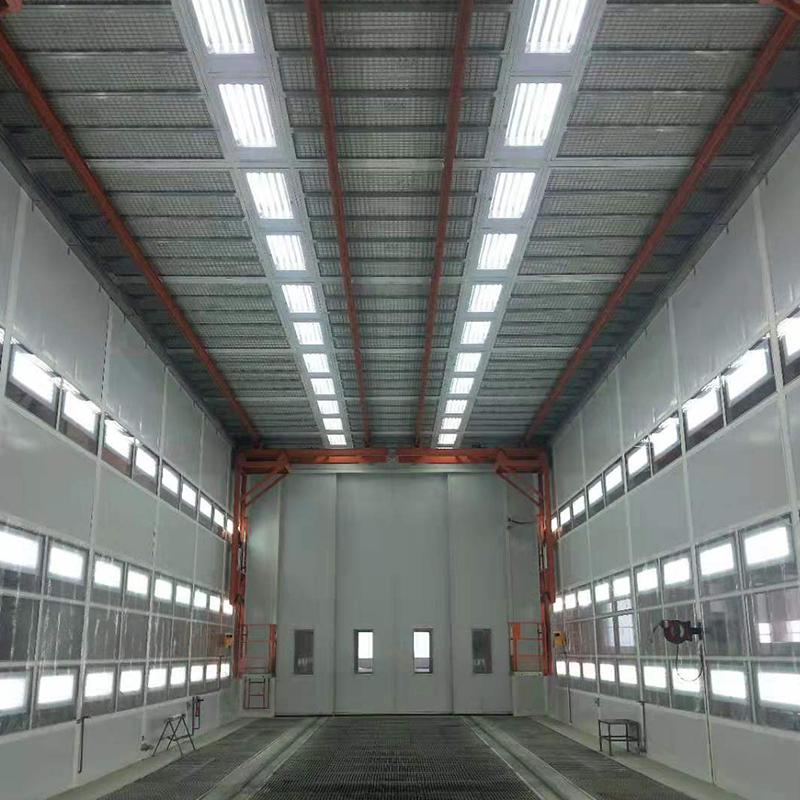
Professional painting line specially designed for grain tank truck body manufacturing and refurbishment, applicable to various grain tank truck types (grain transport tank truck, bulk grain tank truck...
See Details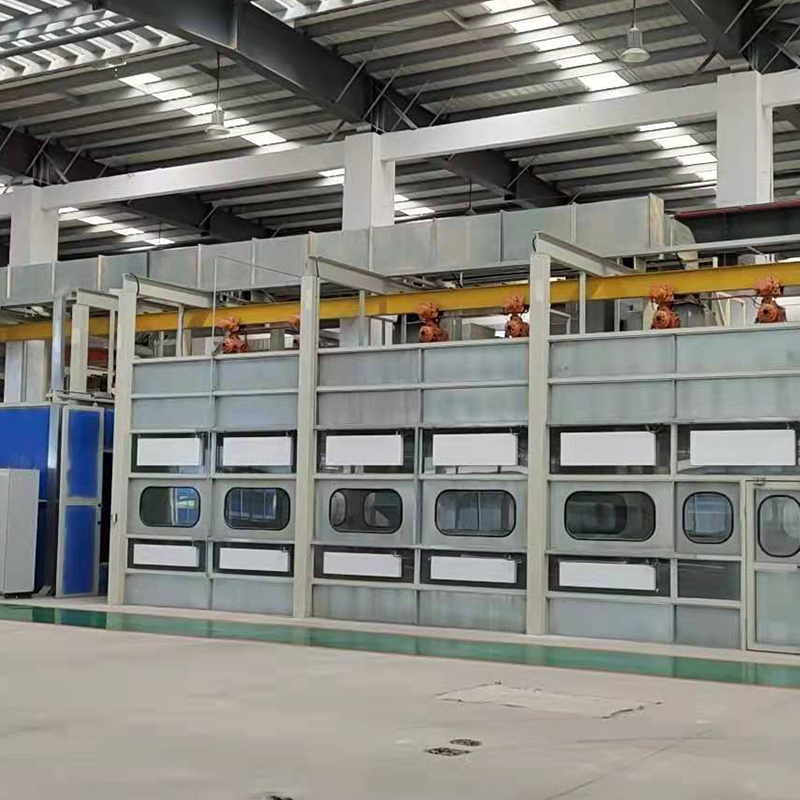
Professional spray coating line designed for engine manufacturing and maintenance, applicable to various engine types (gasoline engine, diesel engine, electric vehicle engine). Main types: engine bloc...
See DetailsBuild Your Customized Industrial Coating System
Send us your workpiece information, production capacity, coating process, workshop layout, and environmental requirements. Yueze will help evaluate your project and develop a suitable coating, conveying, drying, and environmental treatment solution.
Main menu
Products
Contact Us
Company Address:
No. 12, Park Avenue, Shanggang Industrial Park, Jianhu, Yancheng City, Jiangsu Province
Message Us Right Now!

Follow us: