
 русский
 عربى
عربى
 Tiếng Việt
Roller table automation line, electric-driven with stable power output, mainly composed of high-quality steel rollers, drive motor, and intelligent control system. It adopts floor-mounted installation...
See Details
Yueze Environmental Protection provides one-stop compliant industrial surface treatment solutions with professional tech and fine craftsmanship.
 Get Inquiries
2026-08-09
Content
A roller table automation line is a powered conveying system designed to move parts, packages, assemblies, and heavy workpieces smoothly between production stages. By supporting materials from below on a series of driven steel rollers, the system provides a stable alternative to manual handling, forklift transfer, and overhead hanging conveyors. It is particularly suitable for manufacturing environments where products are large, heavy, irregularly shaped, or difficult to suspend safely.
Modern production facilities increasingly require reliable material flow between grinding rooms, coating areas, drying booths, assembly stations, inspection zones, packaging areas, and storage locations. If workpieces are moved manually, production speed depends heavily on labor availability and operator coordination. Forklift handling can create traffic congestion, increase transfer time, and introduce collision or product-damage risks. A conventional overhead conveyor may not be suitable for parts with unusual dimensions, high center-of-gravity positions, or excessive weight.
A powered roller table addresses these issues by combining load-bearing mechanical construction, electric drive technology, sensors, adjustable speed control, and an intelligent control system. The result is an automatic conveyor solution that can be configured for the actual dimensions, weight, process sequence, and available space of a workshop.
The equipment described in this article is manufactured and customized by Jiangsu Yue Ze Environmental Protection Equipment Co., Ltd., a China-based industrial equipment manufacturer specializing in powder coating lines, painting systems, environmental protection equipment, automated conveying systems, grinding rooms, drying systems, and integrated surface-treatment solutions. The company provides design, manufacturing, installation, and customization services for industrial production applications.
This article explains the structure, operating principle, advantages, applications, customization factors, manufacturing capabilities, maintenance requirements, and purchasing considerations associated with a roller table automation line.
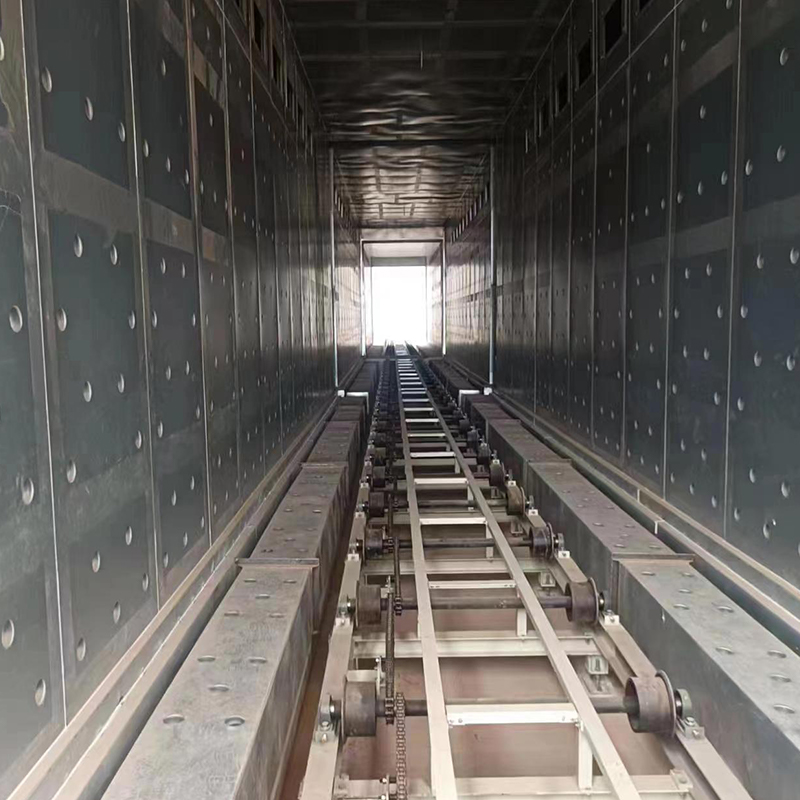
Roller Table Automation Line
A roller table automation line is a floor-mounted conveyor system that uses a series of cylindrical rollers to transport materials horizontally. In a powered configuration, one or more drive motors transmit torque to the rollers through a chain, belt, gearbox, or other mechanical transmission arrangement. The rollers then move workpieces along a defined path according to the programmed production sequence.
The system commonly includes the following primary components:
1. Steel rollers: High-quality rollers form the load-bearing and conveying surface. Their diameter, spacing, material, surface finish, and load rating are selected according to the workpiece characteristics.
2. Drive motor: The electric motor supplies the energy required to move the rollers and the conveyed load. Motor capacity is matched to the total load, conveying speed, starting frequency, and line configuration.
3. Transmission mechanism: Chains, sprockets, belts, gearboxes, or other drive components distribute power from the motor to the roller sections.
4. Supporting frame: A rigid steel frame supports the rollers and maintains alignment during operation. The frame may include adjustable feet, guard structures, access sections, and connection points for other equipment.
5. Intelligent control system: The control system coordinates motors, sensors, speed settings, stopping points, accumulation areas, and safety devices. It can be integrated with upstream and downstream production equipment.
6. Sensors and detection devices: Photoelectric sensors, proximity sensors, limit switches, and position-detection devices help identify the presence and location of workpieces.
7. Safety equipment: Emergency-stop switches, protective guards, limit devices, warning elements, and control interlocks help protect personnel and equipment.
8. Transfer and positioning accessories: Depending on the project, the system may include stops, positioning devices, lifting sections, side guides, turntables, transfer cars, or interface structures.
Unlike a free-roller conveyor, a powered roller table does not depend on operators pushing the material or on gravity alone. The motorized system maintains controlled movement, supports repeatable transfer, and allows the production line to coordinate conveying with processing cycles.
The main difference between a roller table and an overhead conveyor is the direction from which the workpiece is supported. An overhead conveyor carries a product from above through hooks, hangers, carriers, or fixtures. A roller table supports the product from below across multiple roller contact points.
Bottom support is valuable when the workpiece is heavy, wide, top-heavy, asymmetrical, or difficult to suspend. Large castings, counterweight blocks, machined housings, fabricated frames, containers, and assemblies can rest directly on a stable conveying surface. The load does not need to be attached to a hanging fixture, and the production team does not need to design a suspension point for every product shape.
Multiple rollers distribute the workpiece load over a series of contact points. This can reduce concentrated loading compared with a small number of wheels or lifting points. Correct roller spacing remains essential, because the workpiece must always be supported by a sufficient number of rollers during transfer. The final design should therefore consider the smallest product footprint, the location of its center of gravity, the maximum weight, and the possibility of uneven loading.
For production lines that handle different products, the frame width, roller spacing, guide arrangement, and control logic can be customized. This flexibility makes the roller table suitable for mixed-model production, provided that the product range is defined during the engineering stage.
The roller table automation line offers a combination of mechanical strength, process flexibility, operational stability, and integration capability. These advantages make it suitable for factories that want to reduce manual transfer while maintaining reliable control over heavy-part movement.
Powered rollers allow workpieces to move continuously from one process stage to another. The line can be arranged to match the factory’s production rhythm, reducing repeated manual loading, pushing, lifting, and repositioning operations.
Continuous conveying is particularly beneficial in mass production. When each workpiece follows a defined route, operators can focus on processing, inspection, setup, and quality control instead of spending a large portion of their time transporting materials. Consistent movement also makes it easier to organize production schedules and identify delays.
The steel roller structure and supporting frame are designed according to the required load. Unlike light-duty material-handling equipment intended mainly for cartons or small packages, a properly engineered heavy-duty roller table can handle substantial industrial workpieces.
Load-bearing performance depends on several factors, including roller diameter, wall thickness, shaft strength, bearing selection, frame design, support spacing, drive torque, and floor conditions. A professional manufacturer evaluates these factors together rather than selecting rollers based only on the nominal product weight.
Correct alignment, balanced rollers, appropriate bearing selection, and controlled motor operation help provide smooth conveying. Stable movement reduces sudden impacts on the workpiece and lowers the possibility of jamming at connection points.
Low-noise operation is also valuable in a workshop. A quieter material flow can improve the working environment and make it easier for operators to communicate near the line. Noise performance depends on the mechanical design, the condition of bearings and chains, the motor and gearbox arrangement, the workpiece surface, and the installation foundation.
Different production stages may require different transfer speeds. A coating line may need a controlled movement rate to coordinate with loading and unloading, while an inspection or packaging area may require intermittent positioning. The roller table can be configured with adjustable speed control so that the conveying rate matches the process requirements.
Variable speed control helps reduce unnecessary waiting and prevents the conveyor from moving faster than the receiving station can handle. It can also support gentle handling for unstable or easily damaged products.
Accumulation zones allow workpieces to wait temporarily when a downstream station is occupied or unavailable. Instead of stopping the entire line whenever a single process experiences a short delay, the control system can hold workpieces in designated sections.
Buffering improves overall line utilization. For example, a part leaving a grinding operation can wait safely before entering a coating booth if the booth is completing another cycle. Similarly, coated parts can accumulate before inspection or packaging without requiring manual forklift movement.
The floor-mounted design is easy to arrange within a workshop. Straight sections can be connected with transfer devices, positioning mechanisms, or customized interfaces. The layout may be designed around columns, walls, process equipment, access aisles, ventilation systems, and existing production lines.
Because the conveyor is installed at floor level, it can be more practical than an overhead system in workshops with limited roof height or heavy structural restrictions. It can also simplify loading from a workbench, pallet position, grinding station, or paint booth exit.
Replacing repeated manual lifting and forklift travel can reduce several common material-handling hazards. The control system can coordinate movement, while emergency-stop devices allow operators to halt the line quickly when necessary.
Safety design must be adapted to the actual workplace. Guarding should be provided around accessible pinch points, moving chains, sprockets, and drive components. Emergency stops should be positioned where operators can reach them. Warning signs and operating procedures should be established before commissioning.
The roller table can be connected with painting, coating, drying, assembly, inspection, packaging, and storage processes. Its control system may exchange signals with other equipment to coordinate loading, unloading, access doors, booth operation, or process completion.
In a surface-treatment facility, a roller table may transfer large parts from a grinding room to a paint and bake booth. After coating, it may move the parts to a cooling, inspection, or storage area. This arrangement creates a more complete flow from preparation to finishing.
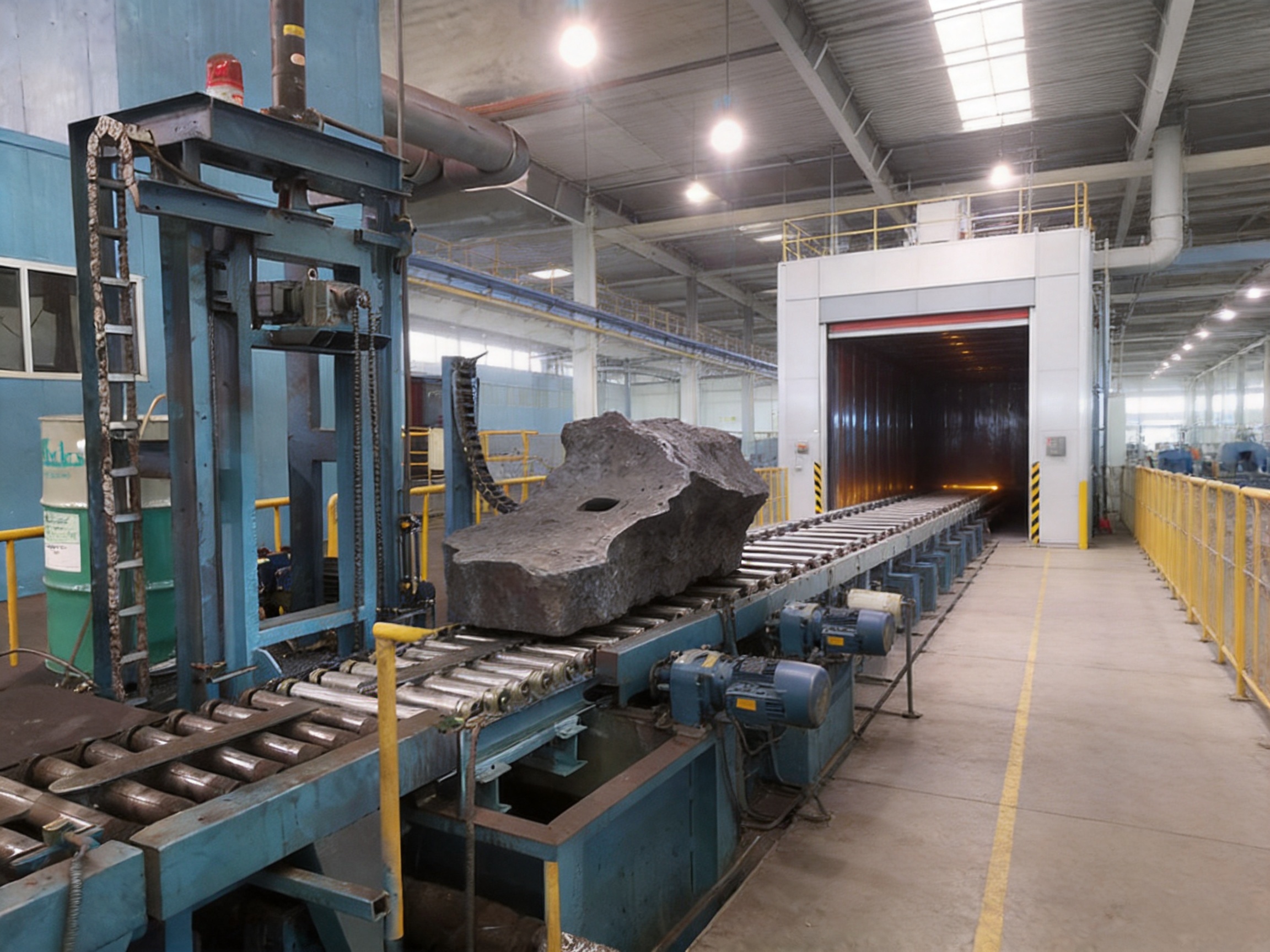
The operating sequence depends on the project design, but most automated roller table systems follow a similar logic. A workpiece is placed on the loading section, detected by a sensor, transported through one or more roller zones, and released to the next stage when the receiving area is ready.
The workpiece may arrive from a manual loading point, a lifting device, a previous conveyor, a grinding station, a pallet area, or a coating booth. The loading interface must be designed so that the product enters the roller surface safely and remains within the intended conveying width.
Side guides, loading stops, or alignment devices may be used to keep the product centered. For irregular workpieces, the loading position may be defined by a locating fixture or a specially designed support frame.
Sensors detect the presence of a product and send a signal to the control system. Detection can be used to start the rollers, stop the rollers, activate a positioning device, or confirm that the downstream section is ready.
Sensor selection depends on product size, surface color, reflectivity, environmental conditions, dust, overspray, and the required detection distance. In grinding and coating environments, sensors may need suitable protection against dust or process residues.
Once the control conditions are satisfied, the drive motor operates the relevant roller sections. The workpiece moves at the selected speed while the system maintains communication with other line components.
Different zones may operate independently. This zoning arrangement allows the line to provide accumulation, release one product at a time, or stop a section without stopping every other section. The exact logic is configured according to production capacity and process requirements.
Some processes require the workpiece to stop at an accurate location. Positioning may be controlled through sensors, end stops, mechanical stoppers, variable speed deceleration, or dedicated locating devices.
Precise positioning is useful when a part must align with a spray area, inspection point, lifting table, assembly station, or packaging fixture. It also helps ensure that the same product enters each process stage in a repeatable orientation.
If the next station is not ready, the workpiece can remain in an accumulation zone. The control system prevents collisions by controlling spacing and release conditions. Depending on the product and layout, the conveyor may allow contact accumulation or maintain a controlled gap between workpieces.
For heavy or easily damaged parts, non-contact accumulation is often preferable. For simpler products, contact accumulation may be acceptable if the product surfaces and process requirements allow it.
When the receiving station is available, the control system activates the appropriate roller section and transfers the workpiece forward. The discharge point may connect to another roller conveyor, a lifting device, a work platform, an inspection station, a storage rack, or a packaging area.
The transition between conveyors must be designed carefully. Differences in roller height, speed, width, or direction can cause unstable movement. The engineering team should confirm the interface dimensions and product behavior before final fabrication.
Large castings and fabricated parts often require surface preparation before painting or powder coating. A roller table can connect a grinding room with a coating or paint and bake booth, reducing forklift movement through the workshop.
After grinding, the part can be placed on the conveyor and transported to the coating area at a controlled speed. The system may include a waiting zone so that parts can queue without obstructing the grinding area or coating booth entrance.
Counterweight blocks and similar cast products can be heavy, dense, and irregularly shaped. A floor-mounted roller table provides stable bottom support and can be designed with a load rating appropriate for the product range.
In a counterweight production environment, conveying may be required after finishing, before primer application, between coating stages, or after final inspection. The roller table can be integrated with other automated conveying sections to create a connected logistics route.
Automotive components, machinery housings, frames, metal structures, and fabricated assemblies can be moved between machining, cleaning, coating, assembly, and inspection areas. The conveyor can be configured for repetitive transfer or mixed product handling.
When the production line contains several process stations, accumulation zones can help balance cycle times. A slower inspection process, for example, does not necessarily need to stop upstream machining or coating if sufficient buffer space is available.
Roller tables can supply workpieces to assembly stations in a defined sequence. Operators can receive parts at a convenient working height and use the conveyor for finished-assembly discharge.
For assembly work, the conveyor may be combined with stops, fixtures, worktables, tools, and operator controls. The design should consider the ergonomic height, access clearance, product orientation, and required dwell time at each station.
After coating or assembly, products may require visual inspection, dimensional verification, weighing, labeling, or packaging. A roller table provides a stable route through these operations and can help establish a clear separation between finished and unfinished products.
At the packaging end, the system may connect with pallets, containers, lifting equipment, or manual packing areas. The control sequence can be configured to stop each workpiece at a defined location for inspection or packing.
In-plant logistics frequently involves moving materials between production areas and temporary storage. A roller table can reduce forklift traffic and create a predictable path for heavy products.
The system may be designed as a permanent production conveyor or as part of a larger material-handling network. The best arrangement depends on the frequency of movement, product dimensions, storage layout, and required flexibility.
No single conveyor type is suitable for every production environment. The appropriate choice depends on product weight, geometry, surface condition, required direction of travel, available space, and process sequence. A roller table has specific advantages when the product must be supported from below and transported horizontally.
| Conveying Method | Typical Strength | Potential Limitation | Suitability of a Roller Table |
|---|---|---|---|
| Manual handling | Simple for occasional movement | Labor-intensive, inconsistent, and less suitable for heavy products | Provides automatic, repeatable transfer |
| Forklift transfer | Flexible for changing routes | Requires operators, creates traffic, and may cause impact or congestion | Offers a dedicated route for repetitive movement |
| Belt conveyor | Suitable for many small or packaged products | May be less suitable for very heavy, hot, sharp, or irregular loads | Uses load-rated rollers for heavy workpieces |
| Overhead hanging conveyor | Efficient for suspended parts and floor-level clearance | Requires hanging fixtures and may not suit top-heavy products | Supports heavy or irregular products from below |
| Free-roller conveyor | Simple and economical for gravity movement | Limited control and may require manual pushing or slope | Powered movement and programmable control improve consistency |
| Automated guided vehicle | Flexible routing between locations | Requires navigation space, charging, and fleet coordination | Provides a fixed, high-throughput route between stations |
The comparison does not mean that a roller table should replace every other material-handling method. In some factories, the best solution combines several technologies. For example, an automated roller line may connect fixed production stations, while forklifts handle occasional delivery to remote storage areas.
A roller table should be designed around the actual workpiece and production process rather than selected only from a standard catalog. Customization helps ensure that the system has adequate strength, correct positioning, suitable speed, and reliable connection with existing equipment.
The maximum gross weight is one of the most important design inputs. The calculation should include the heaviest product, pallets or fixtures, possible uneven loading, and any temporary impact caused by loading. A safety margin is normally considered during mechanical design.
It is also important to identify whether the product weight is evenly distributed. A narrow, dense component may create higher local loading than a wide product of the same total weight.
The length, width, height, and bottom-contact geometry determine the conveyor width and roller spacing. The smallest product must remain stable, while the largest product must pass through all stations and clear nearby structures.
If the product has a curved, uneven, or fragile bottom surface, the roller arrangement may require special attention. Additional support rollers, customized fixtures, or protective surfaces may be considered when necessary.
Required speed is determined by production capacity, station cycle time, product stability, process dwell time, and operator access. A single fixed speed may be adequate for simple transfer, while variable speed control is more useful when the conveyor serves multiple process stages.
Acceleration and deceleration should also be considered. Sudden starts may cause unstable products to shift, while abrupt stops may create impact loads. Controlled acceleration can improve product stability and reduce mechanical stress.
Roller spacing must provide continuous support for the smallest workpiece. Roller diameter and shaft strength must be suitable for the maximum load and operating conditions. The choice of roller surface may depend on whether the product requires high friction, low marking, corrosion resistance, or heat resistance.
Where coated or finished surfaces must be protected, the roller material and surface condition should be reviewed carefully. In some applications, protective coverings or special contact surfaces may be used, provided that they meet the load and environmental requirements.
The available floor space, floor level, access routes, columns, doors, booth dimensions, and maintenance aisles all affect the design. A site survey helps identify obstacles and confirms the installation elevation.
The foundation must be capable of supporting the conveyor and the dynamic loads generated during operation. Floor flatness and anchoring points should be checked before installation. If the line crosses an access route, suitable transfer arrangements or safety barriers may be required.
Grinding dust, paint overspray, humidity, heat, cleaning chemicals, and outdoor exposure can influence component selection. Motors, sensors, bearings, control cabinets, and electrical connections should be specified for the actual environment.
When the roller table is located near a paint booth or drying system, the design should consider temperature, ventilation, coating residues, and access for cleaning. Environmental compatibility can reduce premature wear and improve service life.
The intelligent control system should reflect the required operating sequence. Basic systems may use start, stop, forward, reverse, sensor, and emergency-stop functions. More advanced systems may include zoned accumulation, production counting, fault indication, recipe settings, positioning logic, and communication with a wider factory control system.
Control interfaces should be understandable to operators and maintenance personnel. Clear status indicators and fault messages can reduce troubleshooting time. The system may also be designed with manual, semi-automatic, and automatic operating modes for commissioning and maintenance.
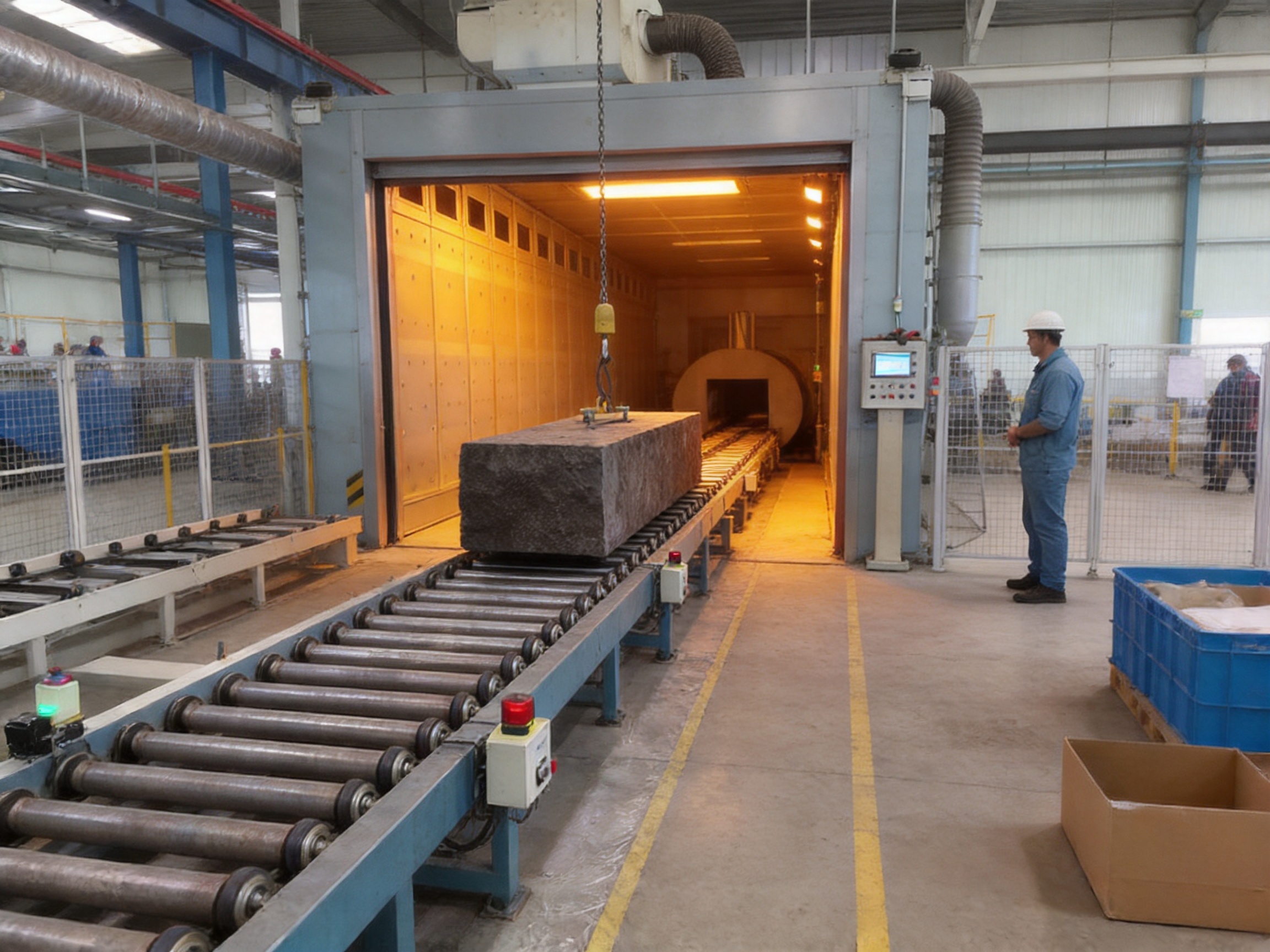
The quality of a roller table automation line depends not only on the visible rollers and frame but also on the manufacturer’s engineering process, fabrication standards, assembly accuracy, electrical integration, testing procedures, and project-management capability.
Jiangsu Yue Ze Environmental Protection Equipment Co., Ltd. is located in Yancheng, Jiangsu, China, and operates a facility covering approximately 35,000 square meters. The company has a registered capital of 58 million yuan and reports more than 40 years of combined experience in industrial coating lines, large-part grinding rooms, automated conveying systems, and related environmental equipment.
This broad equipment background is significant because many roller table projects are not isolated conveyor purchases. They are part of a complete production system involving surface preparation, coating, drying, curing, inspection, exhaust treatment, and internal logistics. A manufacturer familiar with these connected processes can better understand the interface requirements between conveying and production equipment.
An integrated engineering approach begins with collecting information about products, process steps, available space, production capacity, and safety requirements. The manufacturer can then develop a layout, determine conveyor dimensions, select drive components, plan the control sequence, and identify interfaces with existing equipment.
When the roller line is integrated with a paint booth, grinding room, or drying system, the design must account for door opening, ventilation clearance, temperature, process timing, and product positioning. Coordination at the planning stage can prevent expensive modifications during installation.
The conveyor frame must remain stable under static and dynamic loads. Fabrication quality affects roller alignment, operating noise, product stability, and long-term maintenance requirements.
Manufacturing may include material preparation, cutting, welding, drilling, surface treatment, component assembly, and dimensional inspection. Proper fabrication procedures help maintain consistent frame geometry and ensure that drive and support components can be installed accurately.
A complete automation line requires more than mechanical fabrication. Motors, gearboxes, sensors, control cabinets, wiring, emergency stops, and control software must work together as a coordinated system.
Mechanical and electrical integration allows the equipment to be tested as a complete line before delivery or final commissioning. This can help identify sensor alignment problems, drive synchronization issues, control-sequence errors, and interface conflicts at an earlier stage.
Yueze provides customized equipment solutions rather than limiting projects to one standard conveyor dimension. Customization may include line length, roller width, roller spacing, conveying direction, speed range, load capacity, accumulation zones, control functions, safety devices, and connection with other production equipment.
Customization is especially important for heavy industrial products because their dimensions and handling requirements vary considerably. A line designed for small packages cannot automatically be assumed to be suitable for large castings or counterweight blocks.
The company’s product scope includes powder coating lines, electric vehicle assembly lines, automotive counterweight spray lines, paint and bake booths, large-part grinding rooms, waste gas treatment equipment, infrared radiation drying systems, automated conveying systems, and intelligent coating lines.
This range supports the development of complete surface-treatment and production-line solutions. A customer may require the roller table to function as one section of a larger automated line rather than as an independent conveyor. Experience with related equipment helps the manufacturer consider the entire process flow.
Industrial equipment projects often require coordination among design, fabrication, installation, commissioning, and operator training. A manufacturer that provides these stages as an integrated service can help reduce communication gaps between separate suppliers.
Project support may include technical discussions, layout confirmation, equipment manufacturing, installation guidance, commissioning, control adjustment, and after-sales assistance. The exact scope should be confirmed in the commercial and technical proposal.
A disciplined manufacturing process helps convert a customer’s production requirements into a reliable conveying system. Although specific procedures vary by project, a typical workflow includes the following stages.
The manufacturer first reviews the workpiece information, including weight, dimensions, bottom shape, surface condition, quantity, production rhythm, and handling restrictions. The intended route, loading method, discharge method, and connection with other equipment are also examined.
At this stage, the customer should provide drawings, photographs, sample dimensions, process descriptions, and site information whenever possible. Accurate input improves the quality of the preliminary design.
The engineering team develops a layout showing the roller sections, drive units, control zones, accumulation areas, access aisles, safety clearances, and connections to surrounding equipment.
The layout should allow operators and maintenance personnel to reach important components. It should also preserve access for cleaning, inspection, lubrication, repair, and emergency response.
Mechanical calculations are used to determine roller dimensions, support spacing, frame strength, drive torque, motor power, and transmission requirements. The calculation should account for starting conditions, stopping conditions, the heaviest load, and the intended operating frequency.
The drive system must provide sufficient power without unnecessary oversizing. An appropriately selected motor and gearbox can support stable operation while helping control energy use and mechanical stress.
Steel materials, rollers, bearings, motors, gearboxes, sensors, control components, electrical cabinets, and safety devices are selected according to the approved technical design. Component quality and compatibility influence the performance of the completed line.
Components exposed to dust, heat, moisture, or coating residues should be selected with the operating environment in mind. Standardized and serviceable components can also simplify future maintenance.
The frame is cut, welded, drilled, and assembled according to the engineering drawings. Dimensional control is important because small alignment errors can lead to uneven loading, abnormal noise, or increased wear.
Welded structures should be checked for deformation and corrected where necessary. Mounting surfaces and connection points should be prepared to support accurate installation of rollers and drive components.
Rollers, shafts, bearings, sprockets, chains, belts, motors, and gearboxes are assembled into the conveyor sections. The drive arrangement should provide consistent rotation and avoid excessive tension or misalignment.
Guards are installed around accessible moving parts. Where the conveyor includes multiple zones, each zone is checked for independent operation and correct signal response.
The control cabinet, sensors, emergency-stop devices, motors, and field wiring are connected according to the control design. The intelligent control system is programmed with the required start, stop, accumulation, positioning, and fault-response logic.
Control panels should be located where operators can use them safely and where maintenance personnel can inspect them conveniently. Cable routing should protect wiring from mechanical damage, heat, moisture, and process contamination.
Before delivery, the equipment may undergo no-load testing, load testing, sensor testing, emergency-stop testing, speed verification, positioning checks, and control-sequence verification. Testing helps confirm that the system operates as intended before installation at the customer’s site.
For a customized line, testing should include representative workpieces whenever practical. A sample product can reveal stability, clearance, alignment, and transfer behavior that may not be visible during no-load operation.
Correct installation is necessary to obtain the expected performance from a roller table automation line. The floor should be prepared according to the layout, anchoring requirements, and equipment elevation. Conveyor sections must be aligned carefully so that product transfer is smooth from one section to the next.
After mechanical installation, the electrical system is connected and checked. Sensors are positioned and adjusted, safety devices are tested, and the control program is verified under manual and automatic modes.
Commissioning should begin at low speed and with no load or a light test load. The team can then verify roller rotation, motor direction, sensor response, emergency-stop operation, product tracking, and transfer behavior. Load testing can follow after the basic functions have been confirmed.
Operators should receive instruction on normal operation, emergency stopping, product loading, fault response, cleaning, and daily inspection. Maintenance personnel should also understand lubrication points, wear components, electrical isolation procedures, and replacement methods.
A roller table is designed for long-term industrial service, but its service life depends on proper operation and maintenance. A solid, wear-resistant structure helps reduce damage from impact and repeated loading, while regular inspection prevents small problems from becoming major failures.
Operators should check for abnormal noise, vibration, roller hesitation, product deviation, loose guards, sensor contamination, and emergency-stop status. Any visible oil leakage, damaged wiring, or unusual smell should be reported promptly.
Rollers should rotate freely and remain aligned. Bearings may require lubrication or replacement according to the operating conditions and manufacturer’s recommendations. A damaged bearing can increase motor load and create noise or heat.
Chains, sprockets, belts, gearboxes, and couplings should be checked for wear, slack, misalignment, and abnormal temperature. Proper tension and lubrication help maintain efficient power transmission.
Anchors, bolts, support feet, guards, and frame connections should be inspected periodically. Heavy impact during loading can loosen fasteners or affect alignment. Any deformation should be evaluated before continued operation.
Sensors should be kept clean and correctly aligned. Dust, overspray, oil, or product obstruction can cause false signals or failure to detect a workpiece. Electrical cabinets should be inspected for loose terminals, excessive dust, heat buildup, and fault indications.
Accumulated dust, coating residue, metal particles, and packaging debris can interfere with rollers and sensors. Cleaning frequency depends on the workshop environment. In grinding and coating areas, regular cleaning is especially important.
Customers should identify critical spare parts such as sensors, bearings, chains, sprockets, switches, and selected electrical components. Maintaining appropriate spares can reduce downtime when a replacement is required.
The economic value of a roller table extends beyond the conveyor itself. By improving material flow, the system can reduce unnecessary handling, shorten transfer time, improve production visibility, and lower the risk of damage caused by manual movement.
Automatic conveying can also reduce dependence on forklift movements within busy production areas. This may help improve traffic organization and free forklifts for tasks that genuinely require mobile handling.
When accumulation zones are correctly sized, downstream delays can be absorbed without stopping every process stage. This improves the utilization of upstream equipment and gives production planners greater flexibility.
Precise positioning can support repeatable coating, assembly, inspection, and packaging operations. Consistent product location may reduce operator adjustment time and help standardize process conditions.
Lower failure rates and easier maintenance can reduce production shutdown losses. However, performance depends on suitable design, correct installation, proper loading, and regular maintenance. The expected return on investment should be evaluated using actual production data, including labor, forklift use, transfer time, product damage, downtime, and future capacity requirements.
Safety should be included in the design from the beginning. Moving rollers and drive mechanisms create pinch, entanglement, and impact hazards. The line should be equipped with appropriate guards and emergency-stop devices, and operators should be trained in safe working procedures.
Limit switches can help prevent travel beyond a designated position. Emergency-stop buttons or pull-cord devices can allow rapid shutdown along accessible sections. Interlocks may prevent operation when a door, guard, or connected process unit is not in the correct condition.
Operators should never stand on the roller surface, reach into moving rollers, remove a stuck workpiece while the system is energized, or bypass a safety device. Lockout and isolation procedures should be followed during maintenance and cleaning.
Workpieces should be loaded within the specified weight and dimension limits. Products with unstable centers of gravity may require fixtures, side guides, or special positioning devices. The final safety arrangement should be assessed against the customer’s site regulations and applicable industrial standards.
Purchasing a standard conveyor can appear simple, but heavy industrial applications often involve requirements that cannot be solved by a basic off-the-shelf unit. The line may need to fit between existing booths, match a particular product range, communicate with another control system, or operate in a dusty and high-temperature environment.
A customized manufacturer can evaluate the complete process and recommend a configuration based on actual operating conditions. This can include the number of roller zones, roller dimensions, speed control, accumulation logic, discharge height, safety equipment, and installation method.
Jiangsu Yue Ze Environmental Protection Equipment Co., Ltd. focuses on custom industrial equipment and provides integrated solutions for surface treatment and production automation. Its experience across coating, grinding, drying, environmental protection, and conveying equipment supports projects where several systems must operate together.
The company’s service model includes research and development, manufacturing, installation, and customized equipment solutions. Its stated business approach emphasizes quality control, production technology, customer-focused service, integrity, green manufacturing, and cooperation with customers in domestic and export markets.
For customers planning a complete coating or finishing line, working with a manufacturer that understands both conveying and environmental equipment can simplify technical coordination. The roller table can be designed as part of the production process rather than added as an isolated material-handling device.
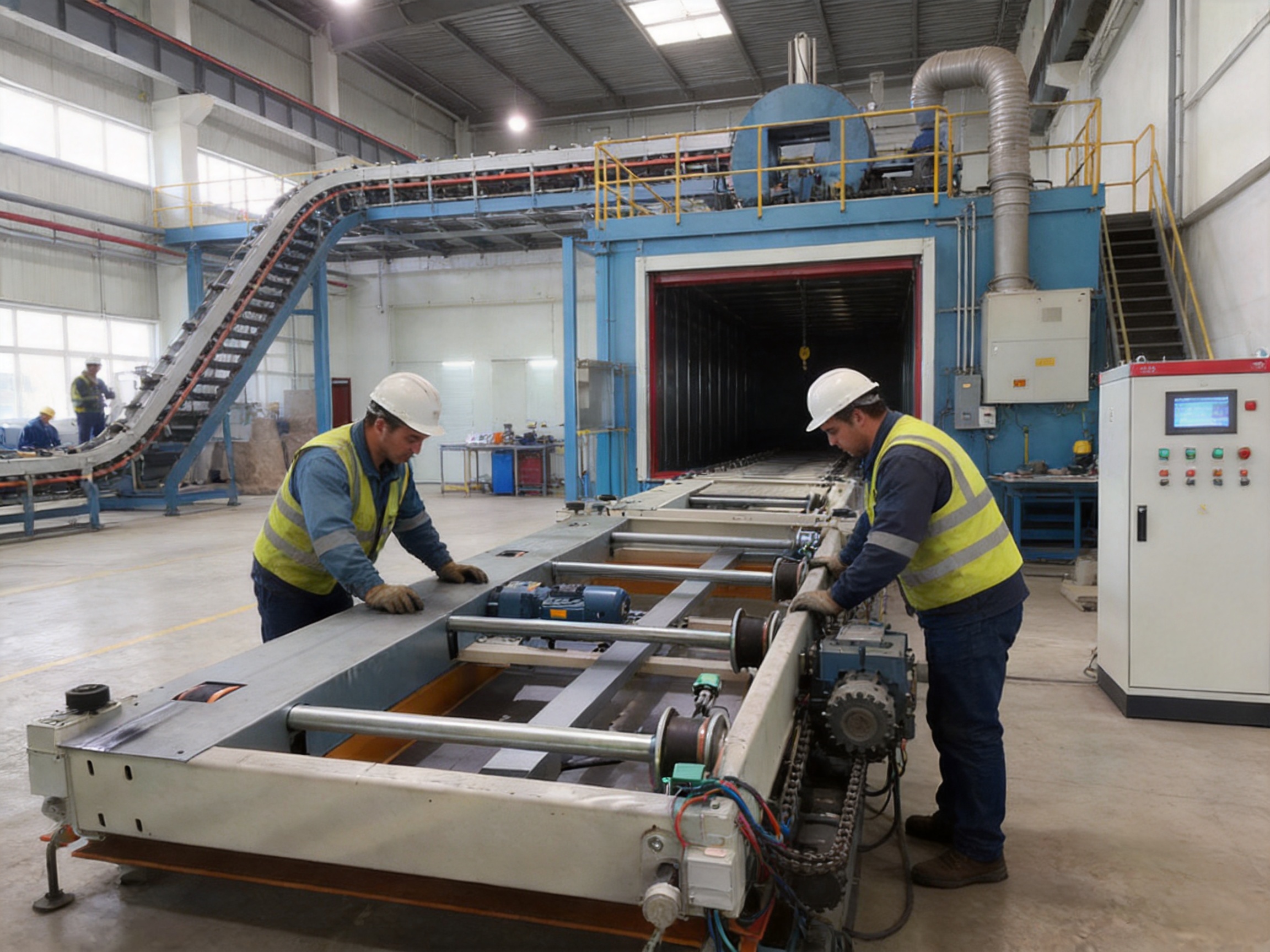
A roller table can convey parts, packages, pallets, assemblies, castings, counterweight blocks, machined housings, fabricated frames, and other products with a suitable bottom-support surface. The exact material range depends on the product weight, dimensions, shape, surface condition, and required conveying speed.
Yes. A roller table is often selected for heavy workpieces because its rollers and frame can be designed for high load-bearing performance. The manufacturer must receive accurate information about maximum weight, load distribution, product footprint, and loading impact before confirming the design.
A powered roller table uses electric motors and a transmission system to move products automatically. A free-roller table relies on gravity, manual pushing, or external force. The powered version provides greater control over speed, direction, accumulation, positioning, and production coordination.
Yes, a customized line can be designed for a defined range of product sizes. Roller spacing, conveyor width, load rating, side guides, positioning devices, and control logic should be selected according to the smallest and largest products expected on the line.
The control system can stop the relevant roller zone and hold the workpiece in an accumulation area. When the downstream station signals that it is ready, the workpiece is released. This buffering function helps prevent a temporary delay from stopping the entire production line.
Yes. Roller tables are commonly used to connect grinding, coating, drying, inspection, assembly, and storage areas. The layout and control system must be coordinated with booth doors, ventilation, temperature, process timing, and product positioning requirements.
Yes. The line can be configured with adjustable speed control to match production rhythm, station cycle times, product stability, and process requirements. Acceleration and deceleration settings may also be adjusted to reduce product movement during starting and stopping.
Typical safety devices include emergency-stop switches, limit switches, guards around moving components, warning signs, control interlocks, and sensor-based stopping functions. The final safety design depends on the layout, operating environment, access points, and applicable site requirements.
The buyer should provide maximum and minimum product weight, product dimensions, bottom-contact shape, required conveying speed, production capacity, loading and unloading methods, line length, available floor space, environmental conditions, connection equipment, and the desired level of automation.
Installation and commissioning arrangements should be confirmed in the technical and commercial proposal. A complete industrial equipment project may include layout confirmation, equipment fabrication, installation guidance, commissioning, control adjustment, and operator training.
Downtime can be reduced through correct initial design, proper installation, preventive maintenance, regular cleaning, timely replacement of wear components, and operator training. Keeping suitable spare parts and monitoring abnormal noise, vibration, and sensor faults can also improve response time.
Expansion may be possible if future production requirements are considered during the original design. Additional roller sections, accumulation zones, transfer devices, or process interfaces can sometimes be added, but the frame, drive capacity, control system, floor space, and safety arrangement should be reviewed in advance.
Before ordering a roller table automation line, the buyer should confirm the following technical points:
1. Maximum product weight and whether the load is evenly distributed.
2. Minimum and maximum product dimensions.
3. Product bottom shape and contact condition.
4. Required conveying direction and total line length.
5. Required conveying speed and speed-adjustment range.
6. Required production capacity and station cycle times.
7. Whether accumulation zones are needed.
8. Loading and unloading methods.
9. Required positioning accuracy.
10. Workshop floor condition, access routes, and installation elevation.
11. Environmental conditions such as dust, heat, moisture, and coating residues.
12. Control-system requirements and communication with existing equipment.
13. Emergency-stop, guarding, interlock, and operator-access requirements.
14. Installation, commissioning, training, warranty, and after-sales service scope.
15. Recommended spare parts and maintenance schedule.
Clear technical information helps the manufacturer prepare a more accurate layout, load calculation, quotation, and delivery plan. It also reduces the likelihood of modifications after fabrication.
A roller table automation line provides a practical and robust method for moving heavy, bulky, and irregular workpieces through industrial production processes. Its floor-mounted arrangement, steel rollers, electric drive, adjustable speed, intelligent control, accumulation capability, and safety functions make it suitable for continuous conveying between grinding, coating, drying, assembly, inspection, packaging, and storage stations.
Compared with manual handling, forklift transfer, and unsuitable lightweight conveyors, a properly designed roller table can improve process consistency, reduce unnecessary labor, support heavier products, simplify material flow, and connect multiple production stages. Its greatest advantage is flexibility: the roller spacing, load capacity, speed, layout, control logic, and interfaces can be customized to the customer’s actual production requirements.
The performance of the equipment depends on more than the conveyor frame. Engineering analysis, quality steel fabrication, accurate roller alignment, suitable drive selection, electrical integration, control testing, safe installation, and regular maintenance all contribute to long-term reliability.
Jiangsu Yue Ze Environmental Protection Equipment Co., Ltd. combines automated conveying expertise with experience in powder coating lines, paint and bake booths, grinding rooms, drying systems, environmental protection equipment, and integrated surface-treatment production lines. This capability enables the company to provide customized roller table solutions and coordinate the conveyor with broader industrial processes.
For a project involving heavy-part transfer or a complete automated coating and production line, customers can contact the company to discuss product dimensions, load requirements, production rhythm, workshop layout, process connections, control functions, installation conditions, and customization needs.
1. Industrial Conveyor Design Principles: Roller Conveyors, Load Capacity, and Material Flow.
2. Principles of Automated Material Handling in Manufacturing Facilities.
3. Guidance on Conveyor Safety, Emergency Stops, Guarding, and Lockout Procedures.
4. Engineering Considerations for Powered Roller Conveyor Selection and Layout.
5. Surface Treatment Production Line Planning: Grinding, Coating, Drying, Inspection, and Internal Logistics.
6. Manufacturer-provided technical information for customized roller table automation systems.
7. Manufacturer-provided company information regarding industrial coating equipment, automated conveying systems, environmental equipment, and integrated production-line solutions.
Roller table automation line, electric-driven with stable power output, mainly composed of high-quality steel rollers, drive motor, and intelligent control system. It adopts floor-mounted installation...
See Details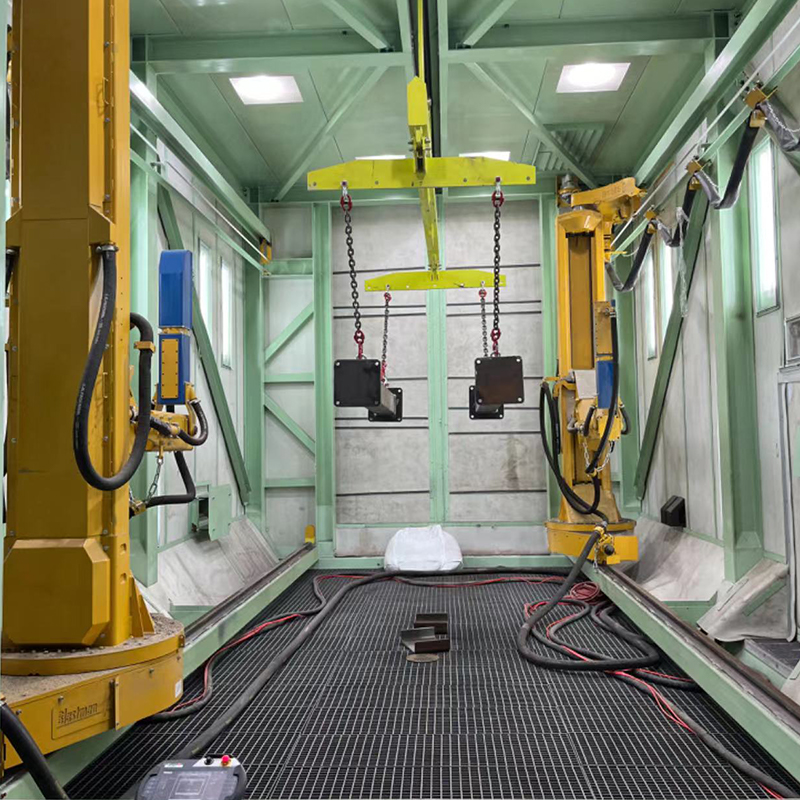
Professional coating line specially designed for large castings and heavy truck parts, applicable to various large castings (engineering castings, mining equipment castings, industrial castings) and h...
See Details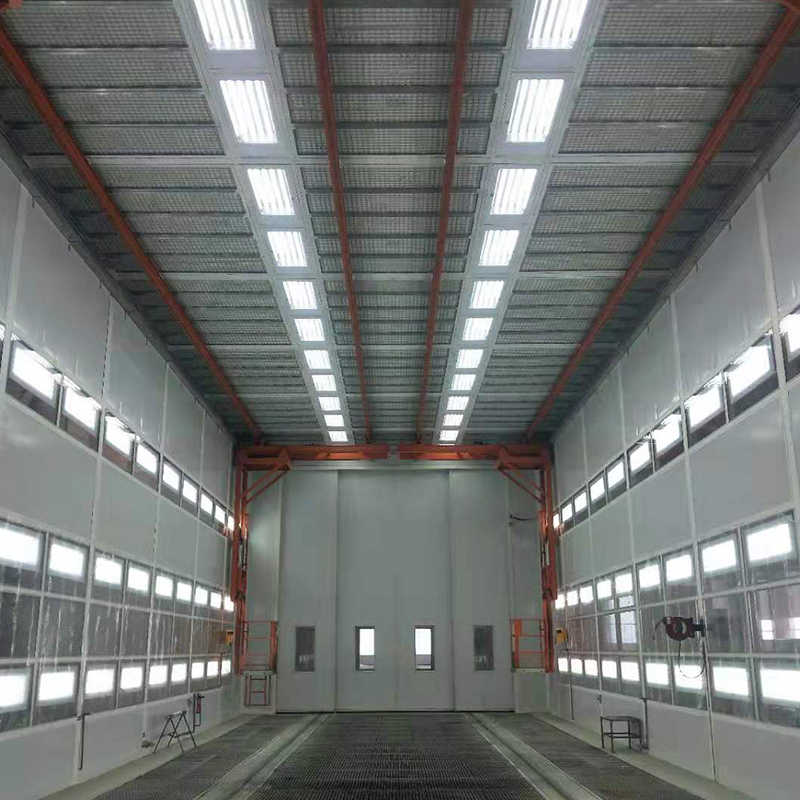
Heavy vehicle spray booth is a large-scale professional coating workshop, specially designed for oversize and heavy equipment. With powerful air circulation, heating system, and multi-stage exhaust fi...
See Details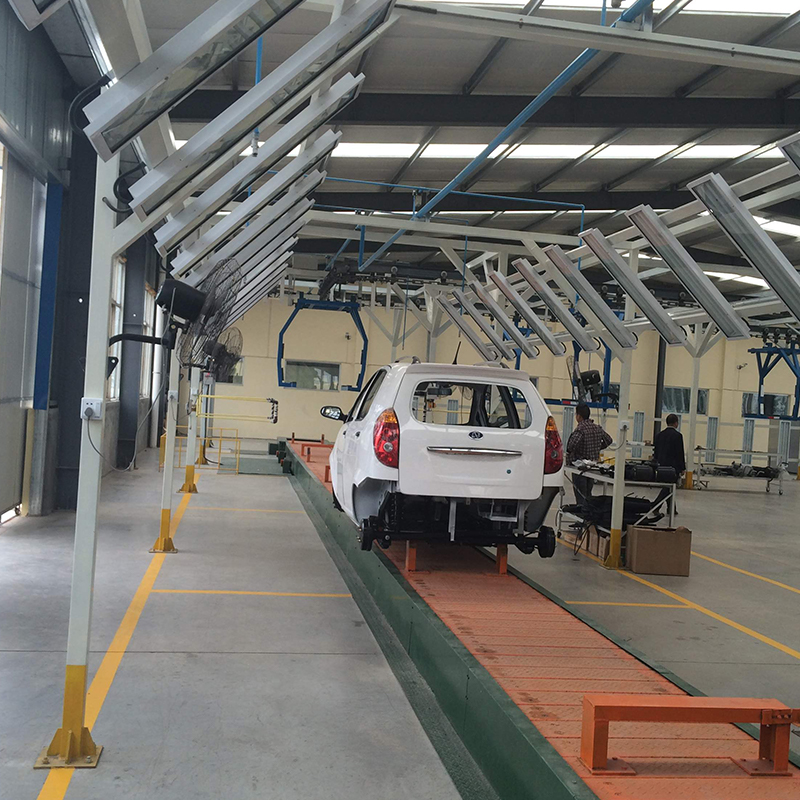
Professional electrophoresis coating line specially designed for electric vehicles (EVs), applicable to various EV types (passenger EV, commercial EV, new energy logistics vehicle) and EV components. ...
See Details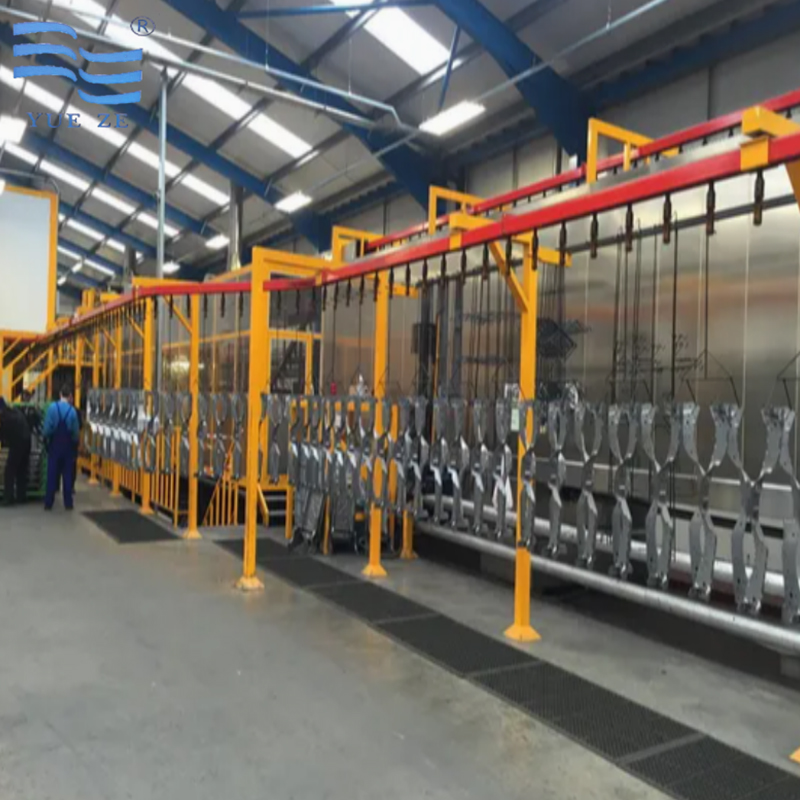
An electrophoretic coating line is a complete automatic surface treatment system. Through electrophoretic deposition, a uniform, dense, and anti-corrosion coating is formed on the metal surface. The w...
See Details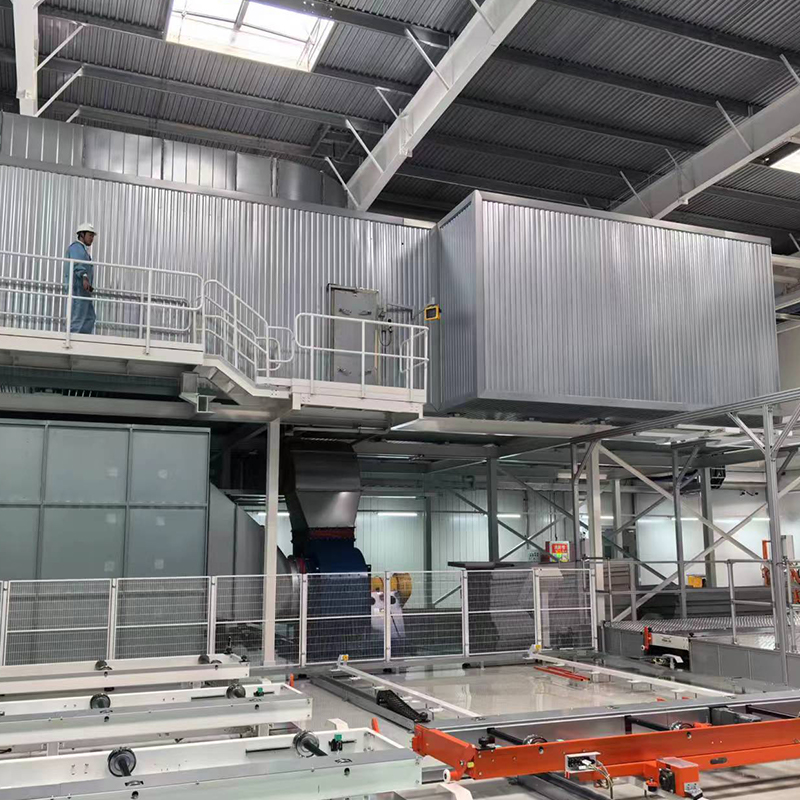
Professional electrophoresis line specially designed for truck cab manufacturing and refurbishment, applicable to various truck cab types (heavy-duty truck cab, light-duty truck cab, pickup cab, comme...
See DetailsBuild Your Customized Industrial Coating System
Send us your workpiece information, production capacity, coating process, workshop layout, and environmental requirements. Yueze will help evaluate your project and develop a suitable coating, conveying, drying, and environmental treatment solution.
Main menu
Products
Contact Us
Company Address:
No. 12, Park Avenue, Shanggang Industrial Park, Jianhu, Yancheng City, Jiangsu Province
Message Us Right Now!

Follow us: