
 русский
 عربى
عربى
 Tiếng Việt
An automatic robotic spray booth is an intelligent, unmanned coating system. Equipped with a robot spraying system, constant temperature air circulation, and a high-efficiency exhaust filtration syste...
See Details
Yueze Environmental Protection provides one-stop compliant industrial surface treatment solutions with professional tech and fine craftsmanship.
 Get Inquiries
2026-07-20
Content
In modern industrial finishing, coating quality is no longer judged only by appearance. Manufacturers now need stable film thickness, repeatable color performance, reduced rework, efficient material use, safer working conditions, and production data that can support long-term process improvement. An Automatic Robotic Spray Booth is designed for exactly this environment. It combines a programmable multi-axis robot, controlled spray delivery, enclosed booth airflow, temperature-stable circulation, exhaust filtration, and optional recovery systems into one intelligent coating cell. Instead of depending on the skill and endurance of individual operators, the system applies coating according to a repeatable program that can be optimized, stored, and reused whenever the same workpiece returns to production.
This type of booth is especially valuable for large workpieces, mechanical components, automotive parts, municipal facilities, art manhole covers, standardized metal products, and high-volume production lines. It can be used in powder coating and liquid painting applications depending on the configured spray equipment, booth structure, pretreatment arrangement, curing method, and environmental control requirements. Its core purpose is to turn coating from a variable manual operation into a stable, measurable, and scalable manufacturing process.
The Automatic Robotic Spray Booth described here is not merely a robot installed inside a chamber. It is a complete engineered system. The booth must maintain proper airflow, negative pressure, and filtration performance. The robot must move smoothly around surfaces, edges, recesses, corners, and cavities. The spray gun must deliver controlled output. The workpiece handling system must position products accurately. The control system must allow program storage, quick model switching, and future integration with conveyors, curing ovens, pretreatment systems, and digital production management platforms. When all of these elements are designed together, the result is a coating solution that offers strong advantages over conventional manual spray rooms and many less integrated robotic alternatives.
Manual spraying has supported industrial coating for decades, and experienced painters can produce impressive results on individual parts. However, manual work naturally varies from person to person, shift to shift, and day to day. Spray distance may change, hand speed may slow as the operator becomes tired, overlap may not remain constant, and the coating thickness on complex surfaces may fluctuate. These variations can lead to color inconsistency, poor edge coverage, sagging, pinholes, missing areas, or excessive film build. Each defect increases inspection pressure, rework cost, material loss, and delivery risk.
An Automatic Robotic Spray Booth addresses these problems by replacing variable human motion with programmable motion. The robot can maintain a fixed spray distance, stable gun angle, controlled travel speed, and repeatable overlap. Once the process is validated, the same path can be repeated across hundreds or thousands of parts. This repeatability is especially important for manufacturers that produce standardized components in batches. Even when the product geometry is more complicated, a multi-axis robot can be programmed to reach deep cavities, inner surfaces, special-shaped structures, sharp edges, and areas that are difficult for manual painters to cover consistently.
Another reason robotic booths have become important is the rising expectation for safer and cleaner factories. Coating operations can involve powder dust, paint mist, solvent vapor, overspray, and exhaust air treatment requirements. A fully enclosed booth with negative pressure design helps prevent powder or mist from escaping into the workshop. Operators can supervise the process from outside the direct spray zone, which reduces occupational exposure and supports compliance with environmental, safety, and explosion-proof requirements. In many facilities, the safety improvement alone is a strong reason to move away from open or semi-open manual spraying methods.
For manufacturers competing in cost-sensitive markets, robotic spraying also provides long-term economic value. Although the initial investment is higher than a basic manual booth, the system can reduce labor dependence, lower the rework rate, improve first-pass yield, reduce coating waste, and support continuous production. In appropriate high-volume applications, cost recovery can often be achieved within one to two years, depending on labor cost, material price, utilization rate, product value, and current defect levels.
A complete Automatic Robotic Spray Booth generally includes the robotic arm, spray application system, booth body, air circulation and exhaust filtration system, workpiece positioning device, conveyor connection, recovery equipment when required, electrical control cabinet, safety protection system, and production program management interface. Each component plays a direct role in the final coating result.
The robotic arm is normally a six-axis or multi-axis unit. This allows flexible movement around complex parts and supports trajectories that would be difficult or physically exhausting for a human painter. The robot does not simply move from left to right. It can rotate, tilt, approach, withdraw, and follow three-dimensional curves based on workpiece geometry. For parts with recesses, holes, inner cavities, ribs, brackets, or irregular surfaces, the ability to program the gun path in detail is essential.
The spray application system controls powder or paint delivery. For powder coating, the system may include electrostatic powder guns, powder supply equipment, quantitative output control, electrostatic voltage adjustment, and recovery connection. For liquid coating, it may include pump units, atomization air control, flow regulation, pressure control, and color change devices. In both cases, the purpose is to keep the spray output stable while the robot moves according to the program.
The booth body provides a controlled environment. It should be designed to prevent overspray from spreading into the workshop, support proper airflow distribution, protect coating quality, and allow maintenance access. A negative pressure structure helps keep powder or mist inside the booth. The exhaust filtration system captures airborne particles and protects downstream equipment and the surrounding environment. In powder applications, cyclone and filter cartridge recovery systems can help achieve powder utilization rates above 98 percent under suitable process conditions, reducing material cost and waste.
The workpiece positioning system is another important element. Some parts can be coated while suspended from an overhead conveyor. Others need indexing tables, rotating platforms, or customized fixtures to expose all surfaces to the spray path. Good fixture design ensures repeatable positioning, minimizes shadow areas, and improves the robot’s ability to coat the same surface consistently on every cycle.
Finally, the control system connects the entire booth. It stores product programs, manages robot motion, coordinates spray output, links with conveying equipment, and can be prepared for connection with pretreatment, curing ovens, and manufacturing execution systems. This gives the booth flexibility for both single-product high-volume lines and mixed-product production.
The first advantage is unmanned or minimally attended production. A programmed robotic spraying cycle can operate continuously, including long shifts or 24-hour production schedules where the surrounding line is designed for it. This reduces dependence on manual spraying skill and makes the production plan less vulnerable to labor shortages, operator fatigue, or inconsistent technique. For factories facing difficulty recruiting experienced sprayers, automation becomes a practical solution rather than only a technological upgrade.
The second advantage is consistent coating quality. The robot repeats its path with high positioning accuracy. Spray distance, powder or paint output, gun angle, electrostatic parameters, and travel speed can be kept stable. As a result, coating thickness becomes more uniform, color difference is reduced, missed spraying is less likely, and finished product qualification rates improve. In high-volume production, small quality improvements can generate significant savings because defects are multiplied across many parts.
The third advantage is full coverage on complex workpieces. Manual painters may have difficulty reaching deep cavities, inside corners, undersides, and areas with awkward access. A properly programmed multi-axis robot can follow dedicated trajectories for these zones. The spray gun can be guided into better positions, and the path can be repeated exactly once optimized. This is particularly useful for mechanical parts, municipal castings, automotive components, counterweight blocks, and other products with heavy, irregular, or three-dimensional shapes.
The fourth advantage is high production efficiency. Robots do not suffer from fatigue, and their movement cycle can be calculated and optimized. Fixed cycle time makes production scheduling easier. Adjustable spraying speed allows the process to balance film build, coverage, and throughput. Compared with manual spraying, the booth can greatly increase capacity on standardized batches while reducing downtime caused by operator rest periods or inconsistent workflow.
The fifth advantage is material utilization. In manual spraying, excess powder or paint is often applied to compensate for uncertainty. Robotic spraying can be more precise. When combined with proper recovery equipment, powder coating applications can reach very high material reuse levels. A cyclone and filter cartridge recovery arrangement can help collect overspray and return suitable powder to the process, lowering total consumption. Better control also reduces over-thick coating, which saves material without sacrificing protection.
The sixth advantage is environmental and occupational safety. A fully enclosed booth with designed airflow and negative pressure prevents powder or mist leakage. Operators no longer need to remain inside the most polluted zone during spraying. This reduces health risk and helps companies meet stricter environmental and workplace safety expectations. Filtration and purification also support cleaner plant operation and better relations with customers and regulators.
The seventh advantage is flexible production. The system can store multiple product programs, and model switching can be completed by selecting the required program. This is helpful for factories producing several varieties on the same line. Instead of relying on a painter to remember different techniques for each part, the process knowledge is stored digitally in the equipment. This also makes training easier and preserves process stability when personnel change.
The eighth advantage is compatibility with intelligent manufacturing. The robotic booth can be linked with an overhead conveyor, pretreatment equipment, drying or curing ovens, exhaust purification systems, and MES platforms. Such integration turns the booth into one part of a complete automatic coating line. Production data, process parameters, alarms, and quality information can be collected and used for continuous improvement.
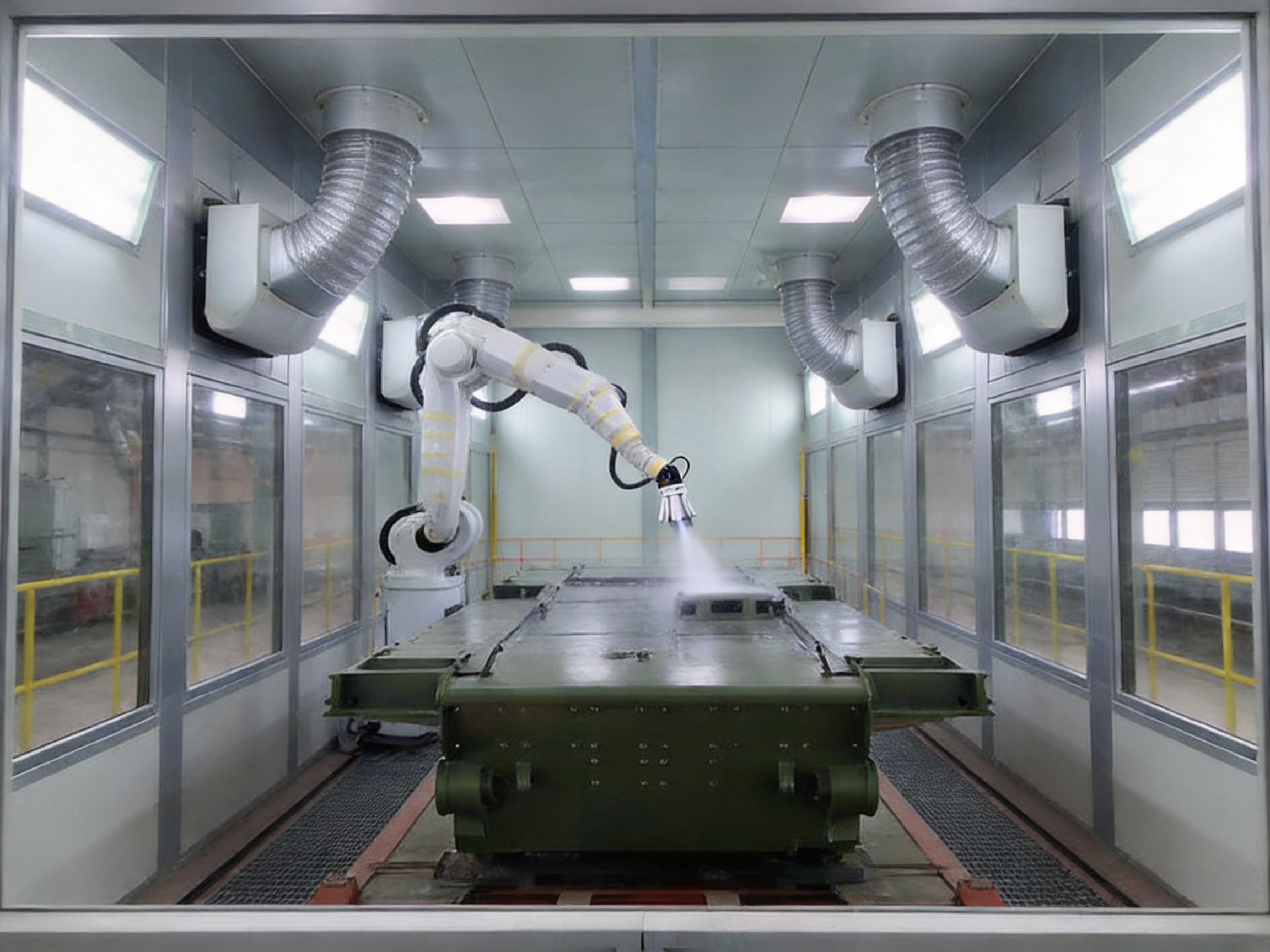
In a typical automated coating line, workpieces first pass through surface preparation or pretreatment. This may include cleaning, degreasing, phosphating, blasting, grinding, or other preparation steps depending on substrate and coating requirements. Proper surface preparation is critical because even the best spray booth cannot compensate for contamination, rust, oil, or poor adhesion conditions.
After pretreatment, the workpieces are conveyed or transferred to the Automatic Robotic Spray Booth. The positioning system confirms that the product is in the correct location. The control system identifies the part type manually or automatically, selects the corresponding robot program, and prepares the spray equipment. The booth ventilation begins or maintains the required operating condition, creating airflow that captures overspray and protects the coating environment.
During spraying, the robot follows the programmed path around the part. For a flat or simple component, the path may be relatively straightforward. For a complex part, the robot may perform several passes from different angles, adjust gun distance, move around corners, and coordinate with a rotating fixture. Powder output, electrostatic voltage, or paint flow may be adjusted according to the part zone. Areas requiring thicker protection can receive additional coverage, while areas sensitive to over-application can be controlled more carefully.
Overspray is captured by booth airflow. In powder applications, the recovery system separates reusable powder from air. A cyclone can recover most overspray, while filter cartridges capture fine residual powder. Proper maintenance of these systems is essential to sustain airflow, recovery efficiency, and coating quality. In liquid painting, filtration captures paint mist and helps treat exhaust air before discharge or further purification.
After coating, the workpieces move to flash-off, drying, or curing stages depending on the coating type. Powder-coated products typically enter a curing oven where the powder melts, flows, and crosslinks into a durable film. Liquid coatings may require flash-off and baking depending on chemistry. When the booth is integrated with curing equipment and conveyor control, the entire line can run with coordinated timing and stable throughput.
The Automatic Robotic Spray Booth is suitable for industries that require repeatable coating on medium to large batches of workpieces. In automotive component production, it can be used for structural parts, brackets, covers, frames, and other parts that require uniform film thickness and stable appearance. Robotic control helps maintain consistency across repeated batches and supports traceable process management.
In machinery manufacturing, many components have irregular geometry, heavy mass, deep edges, and functional surfaces that need corrosion protection. Manual coating may leave weak spots at corners or inside cavities. Robotic programming can be optimized to improve coverage in these zones and reduce premature corrosion caused by thin coating.
Municipal facilities and art manhole covers are another important application. These products may have decorative textures, raised patterns, lettering, grooves, and recessed areas. Uniform coating is needed not only for corrosion resistance but also for visual quality. A robot can follow repeatable paths across patterned surfaces and reduce the risk of missed recesses.
Large workpieces and standardized industrial products benefit from the booth’s stable cycle time. When the same product is produced in volume, a validated program can be reused for long production runs. This allows factories to achieve high throughput and predictable delivery schedules while reducing reliance on manual painter availability.
The booth can also support customized coating production lines. Some customers may need a complete line including pretreatment, drying, spraying, curing, conveying, cooling, and waste gas treatment. Others may need a robotic booth added to an existing line. Because the system can be engineered around part size, output requirement, coating type, and factory layout, it is suitable for both new plants and automation upgrades.
| Production Scenario | Recommended Configuration | Primary Benefit | Key Design Consideration |
|---|---|---|---|
| High-volume single product | One or more robots with fixed validated programs | Maximum consistency and high throughput | Optimize cycle time, conveyor speed, and curing capacity |
| Mixed product batches | Multi-program robot control with quick model selection | Fast changeover and stable quality across product types | Reliable part identification and accurate fixture positioning |
| Complex geometry components | Six-axis or multi-axis robot with customized spray paths | Improved coverage of cavities, edges, and hidden areas | Detailed path programming and fixture accessibility |
| Powder coating with high material cost | Robotic powder guns with cyclone and filter cartridge recovery | Higher powder utilization and lower waste | Recovery airflow, color change procedure, and filter maintenance |
| Fully automated coating line | Booth integrated with pretreatment, conveyor, oven, and control platform | Continuous production and digital management | Line balancing, safety interlocks, and data interface planning |
A high-quality robotic spray booth depends not only on purchased robot hardware, but also on engineering capability, manufacturing precision, installation experience, and process understanding. Jiangsu Yue Ze Environmental Protection Equipment Co., Ltd. is located in Yancheng, Jiangsu, China, and operates from a production base covering 35,000 square meters with a registered capital of 58 million yuan. With more than 40 years of industry experience, the company has developed integrated capabilities in powder coating lines, paint and bake booths, large-part grinding rooms, waste gas treatment equipment, infrared radiation drying systems, automated conveying systems, intelligent coating lines, and environmental protection equipment.
This background is important because a robotic booth must match the entire coating process. If the booth airflow is poorly designed, the robot cannot guarantee surface quality. If the conveyor speed is not coordinated with spray time and oven capacity, the line becomes unstable. If the fixture does not hold the product accurately, the robot path may not match the surface location. If the recovery system is undersized, powder savings will not meet expectations. Yue Ze’s experience across complete coating lines helps prevent these mismatches.
The company’s manufacturing approach emphasizes customized engineering rather than one-size-fits-all equipment. During project planning, workpiece dimensions, weight, production volume, coating material, required film thickness, workshop layout, environmental requirements, and future expansion needs are evaluated. Based on this information, the booth structure, robot arrangement, conveyor connection, exhaust air volume, filtration system, recovery system, and control interface can be designed as a coordinated solution.
Advanced fabrication of the booth body is also essential. The booth must be strong, sealed, easy to clean, and suitable for safe long-term operation. Sheet metal cutting, forming, welding, assembly, surface treatment, and equipment integration all influence final performance. Clean internal surfaces reduce powder accumulation. Accurate assembly supports stable airflow. Proper access doors and maintenance platforms improve service efficiency. Electrical cabinets and control wiring must be organized for reliability and troubleshooting.
Quality control is another strength. Robotic coating equipment contains mechanical, electrical, pneumatic, ventilation, filtration, and software elements. Each subsystem must be inspected and tested. Fan operation, airflow balance, filter sealing, robot movement, gun triggering, emergency stop circuits, safety interlocks, grounding, powder delivery stability, and control logic should be checked before delivery and during commissioning. This reduces startup risk and helps customers reach stable production faster.
In 2014, Yue Ze developed one of the industry’s early hanging automatic painting process lines for casting counterweight blocks, covering finishing and polishing, primer application, and topcoat application. This project experience reflects the company’s ability to solve demanding coating challenges involving heavy castings, automated handling, and multi-stage process coordination. Such experience is directly relevant to robotic booth projects, where practical engineering knowledge is as important as theoretical automation design.
Many suppliers can provide a basic booth or sell a robotic arm, but the value of an Automatic Robotic Spray Booth is proven in daily production. A strong system should reduce defects, simplify operation, withstand industrial use, support maintenance, and adapt to future production changes. Compared with less integrated competitors, a complete engineered booth offers several practical advantages.
First, it provides better process matching. Some competitor systems focus mainly on the robot, leaving customers to solve airflow, filtration, recovery, conveying, and curing coordination separately. This can result in unstable quality or repeated on-site modifications. A system designed by a manufacturer with full coating line experience can coordinate these elements from the beginning, reducing project risk.
Second, it supports stronger customization. Standard booth dimensions may not suit large municipal products, heavy mechanical parts, or irregular castings. Customized booth size, robot placement, fixture design, and conveyor interface help ensure the robot can reach all required surfaces. This is especially important for products with deep cavities or complex structures where generic paths are insufficient.
Third, it offers lower long-term operating cost. The initial purchase price is only one part of total cost. Material waste, energy use, filter replacement, labor, downtime, maintenance difficulty, and rework must also be considered. A booth with accurate robotic spraying, efficient recovery, stable filtration, and convenient maintenance can reduce total lifetime cost compared with a cheaper but poorly optimized system.
Fourth, it improves safety and compliance. Fully enclosed negative pressure design, proper dust collection, filtration, grounding, interlocks, and explosion-protection considerations are critical for powder and paint applications. Competitor systems that treat safety as an accessory may create hidden risks. An experienced environmental protection equipment manufacturer can combine production efficiency with safer air handling and exhaust management.
Fifth, it preserves production knowledge. In manual painting, quality often depends on individual operators. When skilled painters leave, the process may change. In robotic spraying, optimized parameters and paths are stored as programs. This turns operator experience into repeatable digital process data. The factory can maintain more consistent quality even as personnel change.
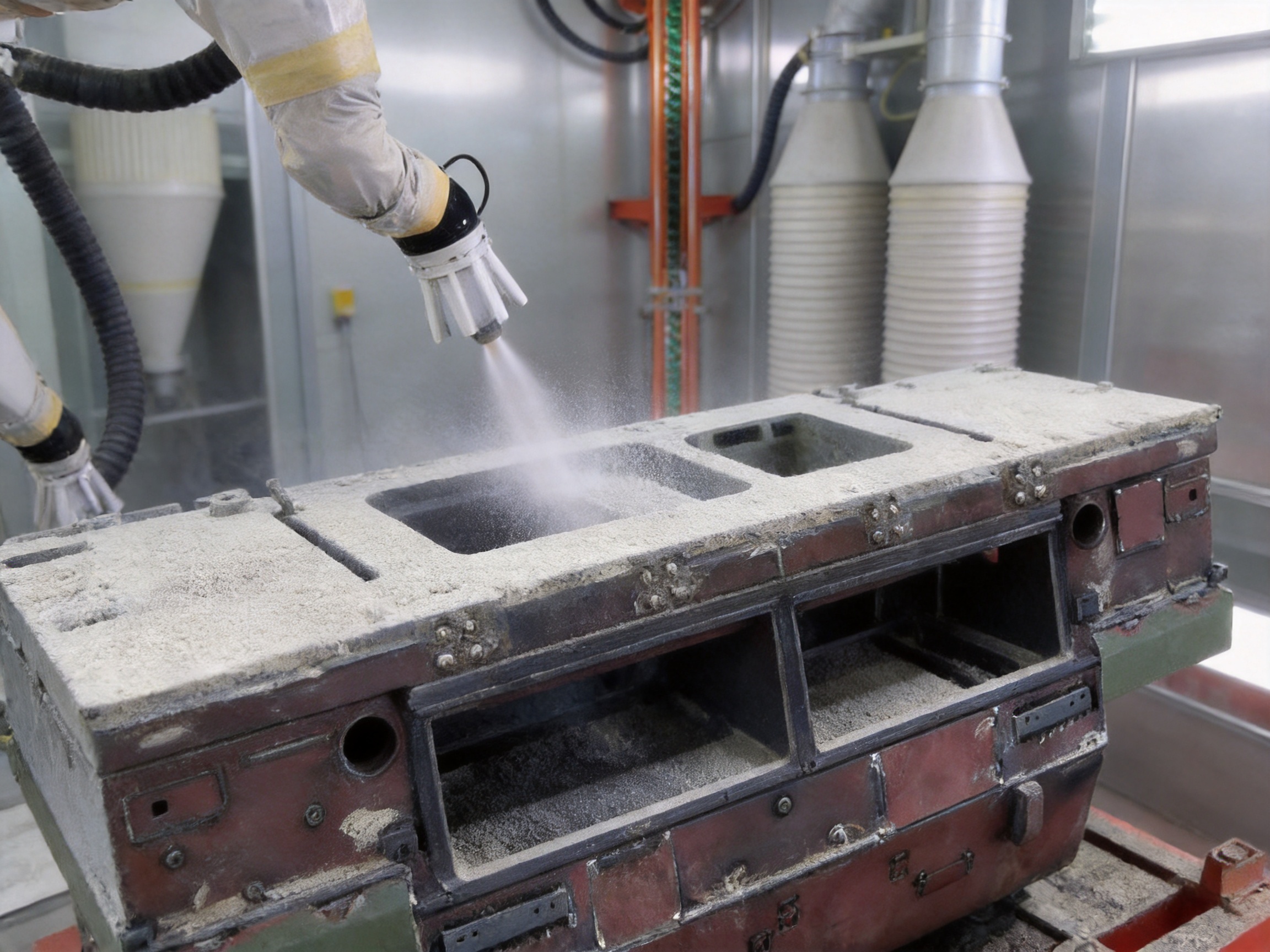
Robot accuracy is important, but coating quality depends on many factors working together. One of the most important is spray distance. If the gun is too close, the coating may become uneven or too thick. If it is too far, transfer efficiency decreases and overspray increases. A robot can maintain the correct distance as long as the path is properly programmed and the part is accurately positioned.
Gun angle also matters. Spraying perpendicular to the surface usually improves transfer efficiency and uniformity. However, complex shapes may require angle changes to reach corners and recesses. Multi-axis motion allows the gun to approach the surface from different directions. This is one of the reasons robotic spraying can outperform simple reciprocator systems on three-dimensional parts.
Overlap control affects film thickness. Each spray pass should overlap the previous pass by a controlled amount. Too little overlap creates thin stripes, while too much overlap wastes coating and may create heavy areas. Robot programming makes overlap measurable and repeatable. During commissioning, sample parts can be tested and the path adjusted until thickness distribution meets requirements.
Airflow inside the booth is equally critical. If airflow is too weak, overspray may float and settle on the workpiece, causing defects. If airflow is too strong or poorly distributed, it may disturb the spray pattern and reduce transfer efficiency. The booth must capture overspray without interfering with coating formation. This balance requires experience in ventilation design and practical coating behavior.
Temperature and humidity may also influence coating results, especially for certain liquid coatings and powder behavior. A constant temperature air circulation design can help create a more stable spraying environment. Stable environmental conditions reduce process variation and make robot programs more reliable across different seasons and shifts.
Finally, grounding and electrostatic control are essential for powder coating. Poor grounding reduces powder attraction and can cause uneven deposition or safety risks. Proper fixture design, clean contact points, regular inspection, and correct electrostatic voltage settings help maintain high transfer efficiency and stable coating quality.
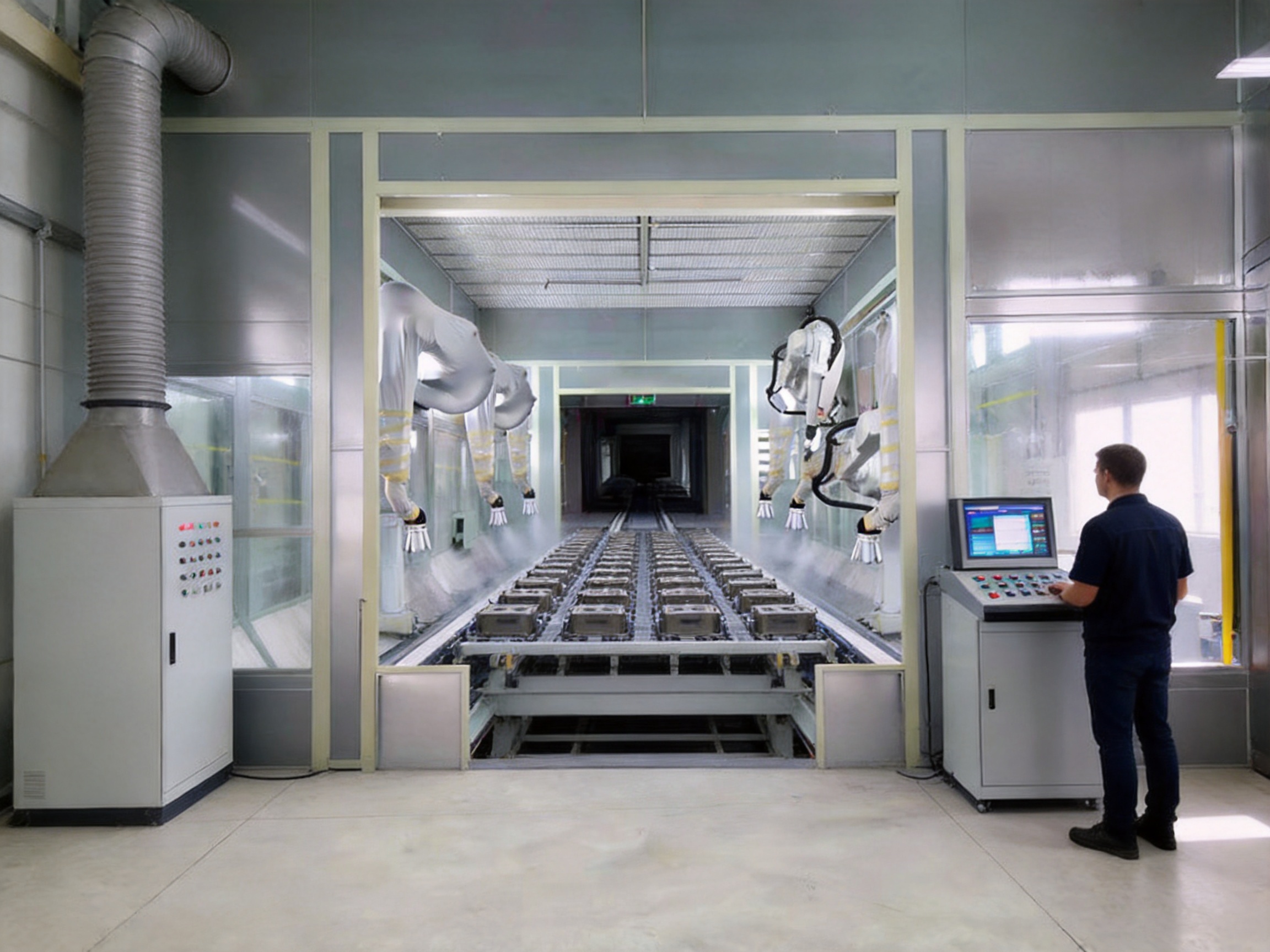
An Automatic Robotic Spray Booth delivers maximum value when it is integrated into a complete line. An overhead conveyor can move workpieces continuously or step-by-step through pretreatment, drying, spraying, curing, and cooling. The conveyor system must be designed according to workpiece weight, spacing, line speed, booth length, oven residence time, and loading method. If the conveyor is too fast, the robot may not have enough time to complete the program. If it is too slow, production capacity is wasted. Proper line balancing is therefore essential.
Integration with curing ovens is particularly important for powder coating. The oven must provide enough time and temperature for the coating to cure fully. If the spray booth produces more parts than the oven can process, the line will bottleneck. If the oven is oversized without good energy management, operating cost rises. A coordinated engineering approach helps match booth output with curing capacity.
Digital management is becoming more common in coating lines. A robotic booth can store program data, operating parameters, alarms, and production counts. With proper interface planning, this information can be connected to a manufacturing execution system. Managers can monitor product models, batch quantities, fault history, and process trends. This supports traceability, preventive maintenance, and continuous improvement.
Remote diagnosis and software support may also be considered depending on project requirements. When alarms occur, clear fault information helps maintenance personnel identify whether the issue is related to robot motion, spray equipment, airflow, powder supply, filter condition, or safety interlock status. Better diagnostics reduce downtime and make the line easier to manage.
The investment in an Automatic Robotic Spray Booth should be evaluated through total economic benefit rather than equipment price alone. The most visible saving is labor reduction. A robot can perform repetitive spraying tasks for long periods, while operators focus on loading, unloading, inspection, program selection, material preparation, and maintenance. This reduces the number of skilled manual painters required and helps stabilize production when labor availability is limited.
Material savings can be significant. Robotic spraying reduces unnecessary over-application. In powder coating, efficient recovery systems can greatly improve powder utilization. Less rework also means fewer parts need to be stripped, sanded, recoated, or scrapped. For expensive coatings or high-volume parts, these savings accumulate quickly.
Quality improvement creates another financial return. Uniform film thickness reduces customer complaints, warranty risk, and inspection burden. Stable appearance supports brand reputation for the end product manufacturer. When first-pass yield improves, production planning becomes more reliable and delivery delays decrease.
Safety and environmental improvements also have economic value. Reduced operator exposure can lower health risks and improve workplace satisfaction. Better filtration and negative pressure design support compliance and reduce the chance of environmental penalties or forced shutdowns. Cleaner workshops also protect surrounding equipment from powder or paint contamination.
In many suitable applications, the investment recovery period can be one to two years. Actual payback depends on production volume, labor cost, coating price, defect rate, product value, and utilization hours. Before purchasing, factories should compare current manual process costs with projected robotic process savings. An experienced equipment supplier can help calculate realistic capacity, labor reduction, material utilization, and energy requirements.
To maintain stable performance, the booth requires regular maintenance. Filters must be inspected and replaced or cleaned according to operating conditions. Reduced filtration efficiency can affect airflow and coating quality. Powder recovery equipment should be cleaned during color changes and checked for leakage or blockage. Fans, ducts, and seals should be inspected to maintain proper negative pressure.
The robot requires preventive maintenance according to manufacturer recommendations. This may include checking cables, lubrication, axis movement, calibration, protective covers, and teach pendant condition. Spray guns and nozzles must be cleaned and inspected to prevent pattern distortion or inconsistent output. Powder hoses, pumps, and injectors should be monitored for wear. Liquid paint systems require attention to pumps, filters, lines, and color change devices.
Fixtures and grounding points are often overlooked but are critical. If fixtures wear or become coated with thick buildup, part positioning may shift and grounding may weaken. Regular cleaning and inspection help preserve repeatability. Conveyor hooks should also be maintained so workpieces remain stable during spraying.
A well-designed booth makes maintenance easier. Large access doors, smooth interior panels, organized filter sections, clear electrical labeling, and logical equipment layout reduce service time. This is another advantage of working with a manufacturer that understands daily factory operation rather than only equipment appearance.
A successful project begins with requirement analysis. The manufacturer and customer should review the workpiece drawings or samples, production volume, coating type, target film thickness, color change frequency, factory layout, available utilities, environmental requirements, and budget expectations. This information determines whether a single robot is enough or whether multiple robots, rotating fixtures, special conveyors, or additional booths are required.
The next stage is process design. Engineers define the booth dimensions, airflow concept, robot reach, spray gun arrangement, conveyor route, recovery method, exhaust treatment, oven connection, and safety system. The design should also consider maintenance space, operator access, loading and unloading convenience, and future capacity expansion. A good design prevents costly changes after installation.
Manufacturing follows the approved design. Booth panels, structural frames, ductwork, filtration sections, control cabinets, and mechanical assemblies are fabricated and inspected. Key purchased components such as robots, fans, filters, spray guns, sensors, and electrical parts are integrated into the system. Factory testing may include mechanical movement checks, control simulation, airflow inspection, and safety interlock verification.
On-site installation connects the booth with the customer’s workshop foundation, power supply, compressed air, exhaust ducts, conveyor system, and related equipment. Commissioning then verifies robot paths, spray output, airflow, recovery performance, safety functions, and product coating results. Trial production is used to adjust parameters and confirm that the booth meets quality and capacity goals.
Training is also important. Operators need to understand program selection, daily startup and shutdown, powder or paint supply, basic troubleshooting, cleaning, filter maintenance, and safety precautions. Maintenance personnel need deeper knowledge of mechanical, electrical, pneumatic, and control systems. Proper training helps the customer achieve stable production after handover.
It improves consistency by using a programmed robot path with controlled spray distance, gun angle, travel speed, overlap, and coating output. Unlike manual spraying, the robot does not become tired or change technique between shifts. Once the program is optimized, the same motion and parameters can be repeated on every qualified workpiece, reducing film thickness variation, color difference, missed areas, and rework.
Yes. The control system can store multiple spray programs for different workpiece shapes. When production changes, the operator can call the correct program, provided that the part is positioned accurately and the booth is configured for the required size range. This makes the system suitable for mixed production as well as high-volume standardized production.
Yes, complex parts are one of the main reasons to use multi-axis robotic spraying. The robot can be programmed to approach surfaces from different angles and to add dedicated passes for recesses, inner cavities, sharp edges, and special-shaped structures. Proper fixture design and path programming are essential for full coverage.
A robotic spray booth is a complete coating environment, while a simple spray robot is only one component. The booth includes ventilation, filtration, overspray capture, safety protection, workpiece positioning, spray delivery, recovery options, and control integration. Without proper booth design, even a high-quality robot may not deliver stable coating results.
The robot applies powder more accurately and avoids excessive coating thickness. In addition, a cyclone and filter cartridge recovery system can collect overspray and return usable powder to the process under suitable conditions. This combination can greatly improve powder utilization and reduce material waste.
A factory should evaluate production volume, product variety, workpiece size, coating type, current labor cost, defect rate, rework cost, material price, workshop layout, environmental requirements, and expected future capacity. The greatest benefits are usually achieved where production is repetitive, quality requirements are high, and coating material or labor costs are significant.
In suitable high-volume applications, investment recovery can often be achieved within one to two years. Actual payback depends on labor savings, material savings, quality improvement, operating hours, energy cost, and maintenance cost. A detailed comparison between the current manual process and the proposed robotic process is recommended.
Supplier experience is important because coating automation requires coordination of robots, booths, airflow, filtration, conveyors, ovens, safety systems, and environmental treatment. A supplier with complete line engineering experience can design a more balanced system, reduce commissioning risk, and provide practical solutions for real factory conditions.
An Automatic Robotic Spray Booth is a strategic upgrade for manufacturers that need stable coating quality, higher efficiency, safer working conditions, and lower long-term operating cost. By combining a programmable multi-axis robot with a controlled booth environment, precise spray delivery, efficient exhaust filtration, and optional powder recovery, the system transforms coating from a labor-dependent craft into a repeatable industrial process.
Its advantages over manual and conventional spray booths are clear: unmanned or minimally attended operation, consistent film thickness, better coverage of complex geometries, higher throughput, improved powder utilization, cleaner working conditions, fast program-based changeover, and compatibility with intelligent production lines. These benefits are especially strong for large workpieces, mechanical parts, automotive components, municipal facilities, art manhole covers, and standardized batch production.
The success of such a system depends on more than the robot itself. Booth airflow, filtration, recovery, fixture design, conveyor coordination, curing capacity, safety control, and maintenance access must all be engineered as one complete solution. Jiangsu Yue Ze Environmental Protection Equipment Co., Ltd. brings decades of coating equipment experience, integrated R&D and manufacturing capability, customized engineering, and full-line process knowledge to support this requirement. For factories seeking higher quality, reduced labor dependence, and future-ready automated coating production, the Automatic Robotic Spray Booth offers a practical and highly competitive path forward.
1. Industrial Coating Application Engineering Handbook, Surface Finishing Process Edition.
2. Powder Coating Technology and Process Control, Manufacturing Coatings Reference Series.
3. Robotic Automation in Industrial Finishing, Production Engineering Review.
4. Ventilation and Filtration Design for Spray Booths, Environmental Equipment Technical Guide.
5. Safety Practices for Powder Coating and Paint Spray Operations, Industrial Safety Management Manual.
6. Automated Conveyor and Curing System Integration for Coating Lines, Factory Automation Reference.
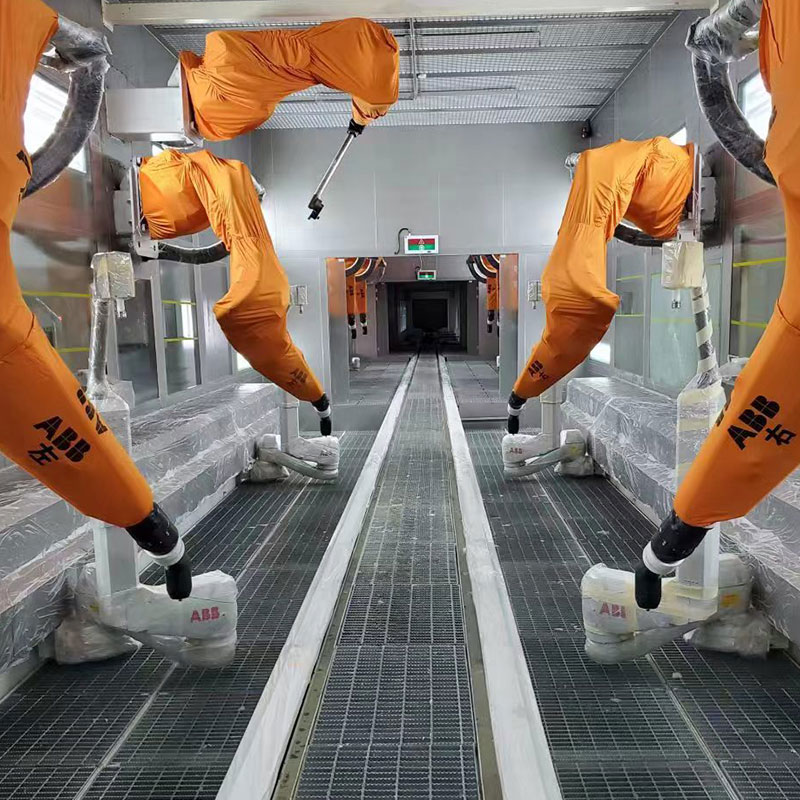
An automatic robotic spray booth is an intelligent, unmanned coating system. Equipped with a robot spraying system, constant temperature air circulation, and a high-efficiency exhaust filtration syste...
See Details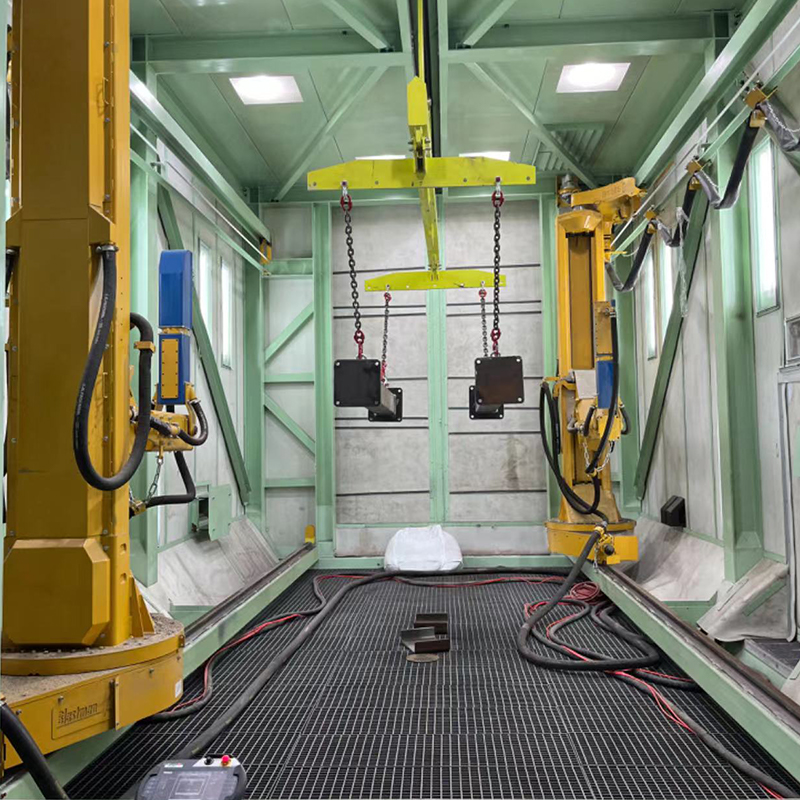
Professional coating line specially designed for large castings and heavy truck parts, applicable to various large castings (engineering castings, mining equipment castings, industrial castings) and h...
See Details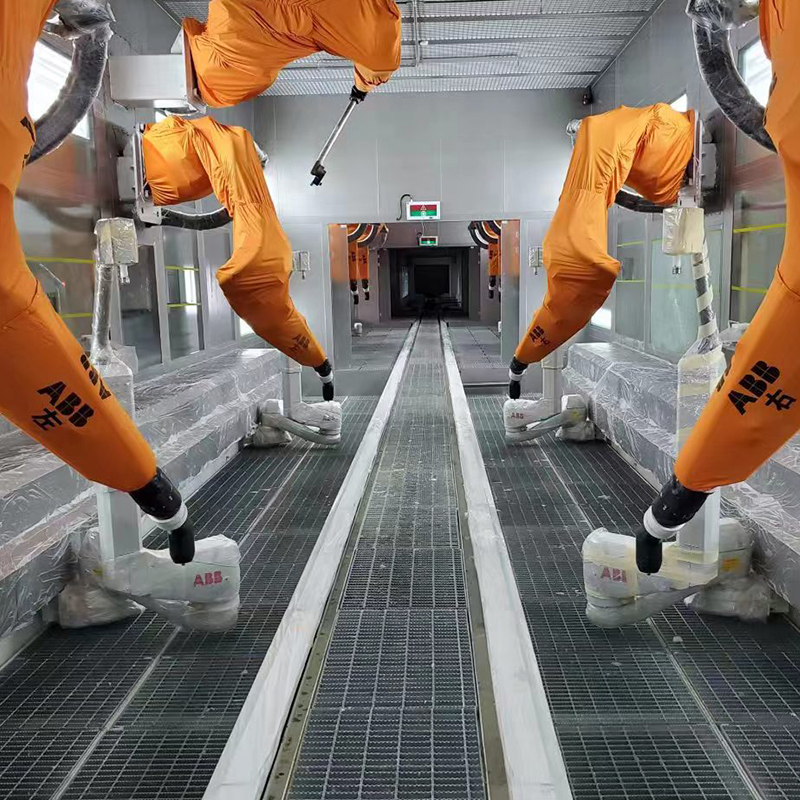
Professional spray coating line specially designed for motor casings, applicable to various motor casing types (electric vehicle motor casing, industrial motor casing, household motor casing, high-tem...
See Details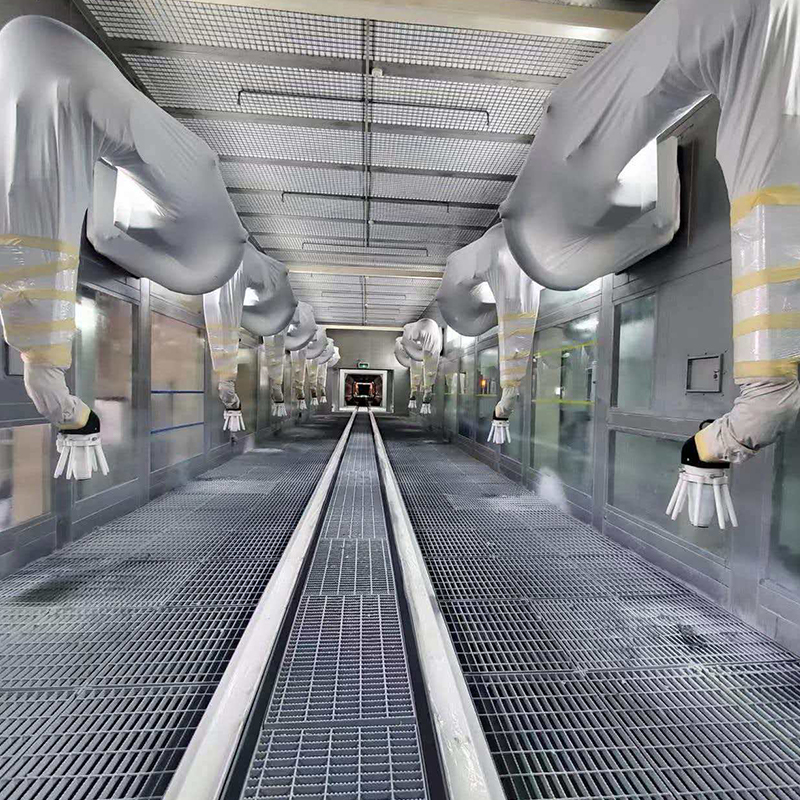
Professional spray coating line specially designed for car wheel manufacturing and refurbishment, applicable to various car wheel types (steel wheel, aluminum alloy wheel, forged wheel, cast wheel, pa...
See Details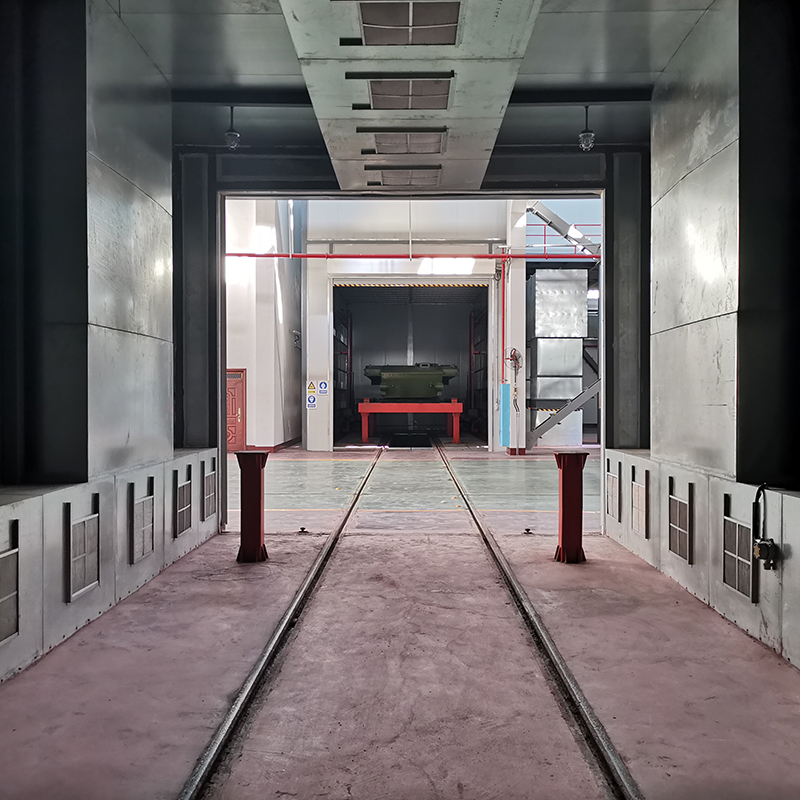
The spray paint line is a complete automated coating system, including spraying, drying, curing, and conveying processes. It features stable operation, uniform spraying effect, and good sealing perfor...
See Details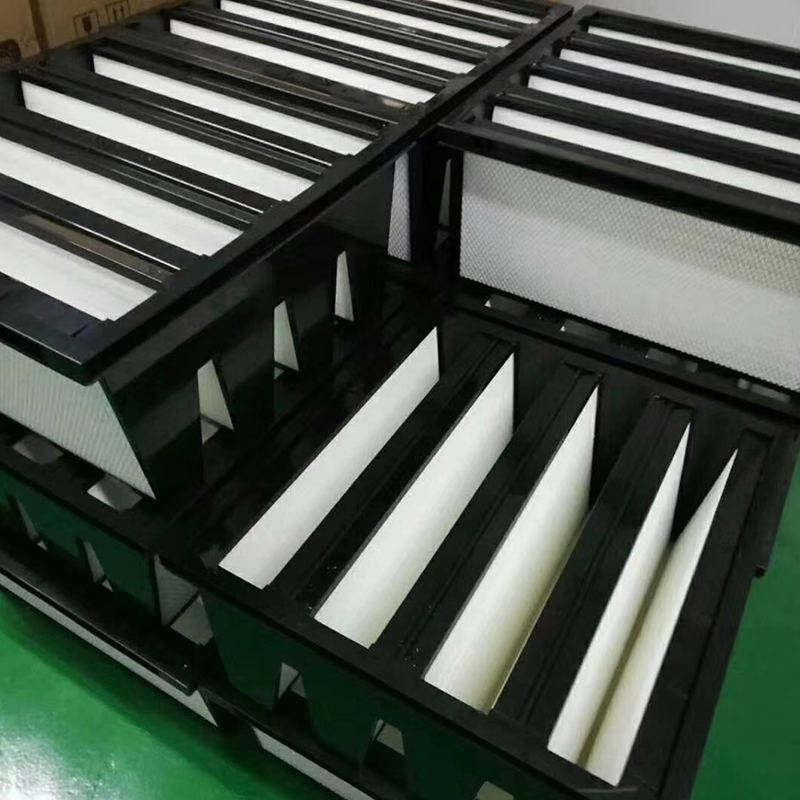
Dry-Type Paint Mist Filter is a core component for paint mist treatment, mainly made of high-quality filter materials (glass fiber, activated carbon, non-woven fabric). It has dense and uniform filter...
See DetailsBuild Your Customized Industrial Coating System
Send us your workpiece information, production capacity, coating process, workshop layout, and environmental requirements. Yueze will help evaluate your project and develop a suitable coating, conveying, drying, and environmental treatment solution.
Main menu
Products
Contact Us
Company Address:
No. 12, Park Avenue, Shanggang Industrial Park, Jianhu, Yancheng City, Jiangsu Province
Message Us Right Now!

Follow us: