
 русский
 عربى
 Tiếng Việt

Widely used in metal workpieces such as hardware, auto parts, engineering machinery, metal furniture, art manhole covers, municipal facilities, and precision components, suitable for mass and standard...
See Details
Yueze Environmental Protection provides one-stop compliant industrial surface treatment solutions with professional tech and fine craftsmanship.
 Get Inquiries
2026-10-30
Content
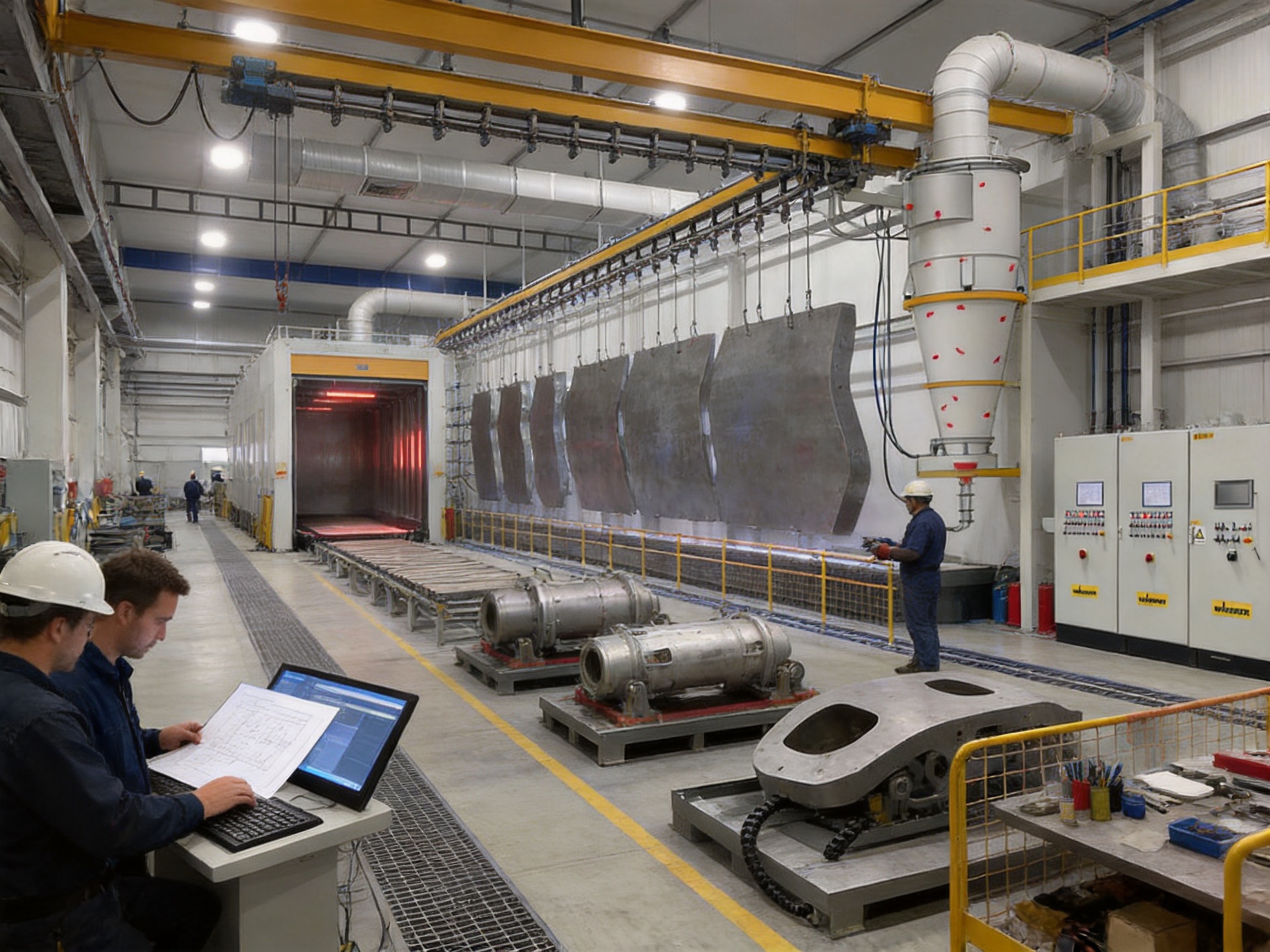
A powder coating line is an integrated industrial finishing system designed to clean, prepare, coat, cure, cool, inspect, and transfer metal workpieces through a controlled production process. Unlike a simple spray booth or an independent curing oven, a complete powder coating production line connects multiple operations into one coordinated workflow. This integration helps manufacturers improve coating consistency, reduce manual handling, increase production capacity, and achieve a durable decorative or protective finish.
Powder coating lines are widely used for hardware, automobile components, engineering machinery, metal furniture, artistic manhole covers, municipal facilities, precision components, electric vehicle parts, LPG cylinders, agricultural machinery, and many other metal products. The equipment can be configured for small-batch production, mass manufacturing, large workpieces, irregular components, or highly automated continuous processing.
A properly engineered line may include pretreatment tanks, spray chambers, drying ovens, powder spray booths, powder recovery systems, curing ovens, cooling sections, overhead conveyors, ground-rail conveyors, electrical control cabinets, environmental treatment equipment, and inspection stations. The exact arrangement depends on the workpiece material, dimensions, required coating performance, daily output, plant layout, available energy sources, and the desired level of automation.
Jiangsu Yue Ze Environmental Protection Equipment Co., Ltd. provides customized coating equipment and complete industrial surface-treatment solutions from its manufacturing base in Yancheng, Jiangsu, China. The company combines engineering design, equipment manufacturing, installation, commissioning, and after-sales support to deliver powder coating lines adapted to individual production requirements.
A powder coating line is a sequence of connected machines that applies a dry powder coating to metal surfaces and permanently fuses it through heat. The process normally begins with surface cleaning and preparation. After drying, the workpiece enters a spray booth where electrostatic spray guns apply charged powder particles. The coated workpiece then passes through a curing oven, where the powder melts, flows, and chemically cross-links to form a continuous film.
In a manual system, operators may load workpieces, control spray guns, and move parts between process areas. In a semi-automatic system, conveyors and programmed equipment handle some of these operations while workers perform loading, unloading, inspection, or touch-up work. In a fully automatic production line, the conveyor, pretreatment process, spray guns, powder recovery system, ovens, and control system operate in a coordinated cycle.
The most important elements of a complete line include:
Loading and unloading areas for safe and efficient workpiece handling.
Surface pretreatment equipment for degreasing, rinsing, phosphating, or other chemical preparation.
Drying equipment to remove moisture before powder application.
Powder spray booths fitted with manual or automatic electrostatic spray guns.
Powder recovery and filtration equipment for collecting reusable overspray.
Curing ovens that provide stable and uniform heating.
Overhead or ground-rail conveyors for continuous material movement.
Electrical control systems using sensors, programmable logic controllers, and operator interfaces.
Cooling, inspection, packaging, and finished-product transfer sections.
The line can also be combined with environmental protection equipment, waste gas treatment systems, infrared radiation drying systems, paint booths, sanding rooms, and other supporting equipment. This allows manufacturers to establish a more complete and compliant surface-treatment workshop instead of purchasing unrelated machines from different suppliers.
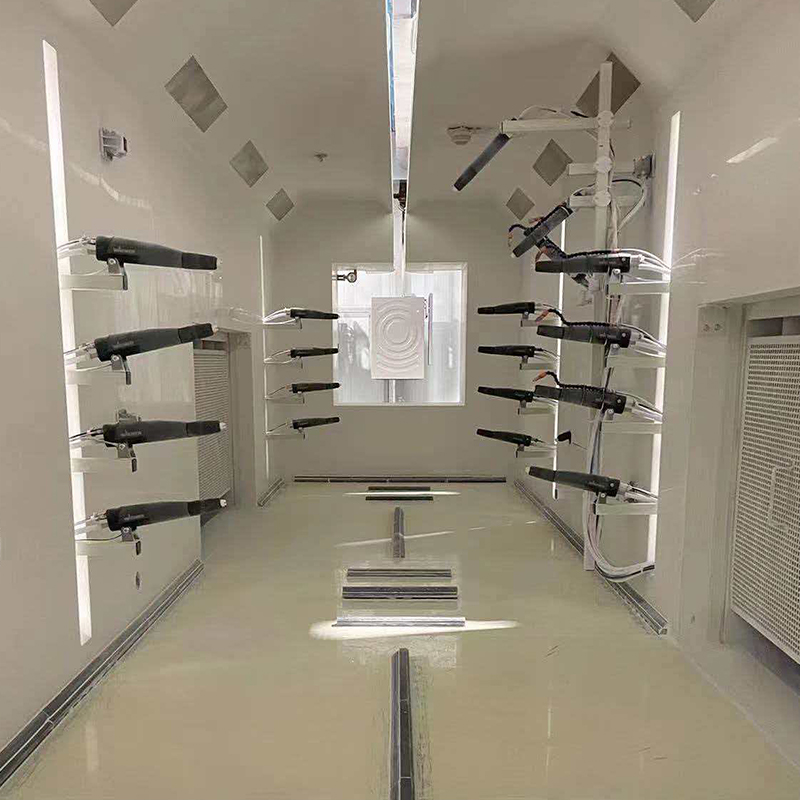
Powder Coating Line
Powder coating is suitable for a wide range of conductive metal products. Its durable film, attractive appearance, and efficient material utilization make it valuable in both general manufacturing and specialized industrial applications.
Automotive counterweights, brackets, chassis components, protective frames, wheels, suspension parts, and other engineering components require coatings that resist impact, abrasion, oil contamination, moisture, and outdoor exposure. A powder coating line can be configured with pretreatment and curing conditions suited to the size and material of these parts.
For large castings or heavy counterweight blocks, the conveyor must provide sufficient load capacity and stable movement. The spray booth may require extended working space, multiple spray guns, or a combination of automatic and manual application. Careful control of oven temperature and heating time is particularly important because large metal masses heat more slowly than thin sheet-metal parts.
Metal furniture, shelving, cabinets, appliance housings, lighting components, and office equipment often require a smooth and attractive coating in a wide range of colors and gloss levels. Powder coating provides options including matte, high-gloss, satin, metallic, and textured finishes.
For furniture production, a conveyorized line helps maintain consistent spacing and cycle time. Automatic spray guns can cover broad surfaces efficiently, while manual stations can be added for corners, recesses, complicated frames, or product changeovers. A quick-color-change powder booth can be considered where several colors are produced in the same shift.
Manhole covers, guardrails, street furniture, lighting poles, traffic equipment, park facilities, and other municipal products are frequently exposed to rain, ultraviolet radiation, road salt, dirt, and temperature changes. A correctly selected powder system can provide strong corrosion resistance and a stable decorative finish.
Outdoor products may require more extensive pretreatment than indoor products. The line design should consider substrate condition, surface contamination, coating thickness, curing requirements, and the expected environmental exposure. For critical applications, the manufacturer can integrate inspection points for coating thickness, adhesion, appearance, and curing quality.
Small hardware products and precision components often require controlled coating thickness and reliable coverage around edges, holes, and recessed areas. A suitable line may use specialized hanging fixtures, compact spray chambers, multiple gun arrangements, and precise conveyor speed control.
Because small components can be processed in high quantities, the line must also address loading efficiency and product separation. Well-designed fixtures reduce contact marks and improve powder access to difficult surfaces. Automated handling can further reduce variation caused by inconsistent manual placement.
LPG cylinders and other cylindrical products have curved surfaces, recessed areas, valve openings, and specific safety requirements. A powder coating line for these products may include specialized rotating fixtures, dedicated spray-gun positioning, controlled pretreatment, and an oven sized to achieve uniform heating.
Special-shaped workpieces benefit from a customized conveyor path and adjustable spray configuration. The engineering process should consider the center of gravity, hanging position, clearance between products, coating shadow areas, and access for maintenance. A standard line may not provide satisfactory results unless these variables are evaluated during the design stage.
Production begins when operators place workpieces on fixtures or conveyor hangers. The loading method affects line capacity, coating access, and product safety. Fixtures should hold the workpiece securely while exposing the largest possible surface area to pretreatment chemicals, powder spray, and oven heat.
Different products may require dedicated fixtures or adjustable hanging systems. For a mixed-production environment, modular fixtures can reduce changeover time and make it easier to process products with different shapes. The design should also provide reliable electrical grounding because electrostatic powder application depends on a suitable conductive path between the workpiece and the grounding system.
Pretreatment removes oil, grease, dust, rust, scale, and other contaminants from the metal surface. Depending on the material and coating specification, the process may include degreasing, water rinsing, surface conditioning, phosphating, passivation, or other chemical preparation stages.
Effective pretreatment is one of the most important factors affecting adhesion and corrosion resistance. Even high-quality powder cannot compensate for a surface that contains oil, moisture, loose scale, or chemical residue. Pretreatment equipment should therefore be designed around the workpiece material, contamination level, production speed, chemical system, and required environmental controls.
Spray pretreatment systems are suitable for many continuous production lines, while dip tanks may be selected for complex or large workpieces that require full immersion. The system may include liquid circulation, filtration, heating, chemical dosing, overflow control, and wastewater management. These functions help maintain stable process conditions during continuous operation.
After pretreatment, workpieces must be dried before entering the powder spray booth. Residual water can interfere with electrostatic deposition, cause surface defects, reduce adhesion, or create steam during curing. The drying oven should provide adequate temperature, airflow, and residence time for the largest and most moisture-retaining parts.
Drying equipment can be designed with hot-air circulation, energy-efficient insulation, or infrared radiation technology. Infrared systems can provide rapid heating and may be useful where production requires shorter drying cycles or compact equipment. The most appropriate system depends on the workpiece geometry, material thickness, moisture level, and plant energy conditions.
In the spray booth, electrostatic guns charge powder particles and direct them toward the grounded workpiece. The charged particles adhere to the surface and form a dry powder layer. Operators or automatic reciprocators adjust the spray pattern, gun distance, powder output, and voltage to achieve appropriate coverage.
Automatic powder application improves repeatability by maintaining consistent gun movement and spray parameters. Manual guns remain valuable for product changes, small production runs, complex geometries, and areas that require additional attention. Many manufacturers select a combined system with automatic guns for primary coverage and manual guns for correction or difficult surfaces.
Powder selection must match the intended service environment and appearance requirements. Common coating families include epoxy, polyester, epoxy-polyester hybrid, and specialized formulations. The selected powder should be compatible with the substrate, pretreatment, curing temperature, impact requirements, chemical exposure, and outdoor durability expectations.
Not all sprayed powder settles on the workpiece. Overspray is captured by the booth extraction and filtration system. A recovery unit separates powder from air and may return suitable material to the application system for reuse.
A recovery rate above 95 percent may be achievable under appropriate operating conditions, although the actual result depends on product geometry, powder type, color changes, booth configuration, operator practices, and filtration performance. Reusing recoverable powder reduces material waste and lowers consumable costs compared with processes in which liquid overspray becomes difficult-to-reclaim hazardous waste.
Recovery systems must be designed and maintained carefully. Filters, cyclone separators, ducts, grounding connections, and collection containers should be inspected regularly. Proper housekeeping is also essential because accumulated powder dust can affect product quality and create avoidable safety risks.
The curing oven heats the powder film until it melts, flows, and cross-links into a durable coating. Oven temperature, air circulation, conveyor speed, and effective curing time must be controlled according to the powder manufacturer’s specifications and the workpiece’s thermal characteristics.
Uniform heating is essential. If one part of a workpiece is under-cured, the coating may have weak adhesion, poor chemical resistance, or insufficient hardness. If the coating is overexposed to heat, color changes, gloss variation, yellowing, or other defects may occur. A well-designed oven therefore uses stable temperature control, suitable airflow distribution, effective insulation, and accessible maintenance points.
Large workpieces require special attention because their mass and geometry can delay heat penetration. Oven length and conveyor speed should be calculated based on the time needed for the metal itself to reach the required curing temperature, not only the air temperature inside the oven.
After curing, coated workpieces should cool sufficiently before handling, stacking, packaging, or further assembly. Premature contact can cause marks, dents, or blocking between parts. Cooling sections may rely on ambient air circulation or controlled ventilation depending on product size and production speed.
Inspection normally includes visual appearance, coating coverage, color, gloss, film thickness, adhesion, hardness, and curing performance. The exact inspection method depends on customer specifications and product application. Inspection results should be recorded to support process improvement and quality traceability.
| Process Stage | Main Function | Primary Quality Objective |
|---|---|---|
| Loading and fixturing | Position and secure workpieces | Stable handling and complete surface access |
| Pretreatment | Clean and chemically prepare the substrate | Strong adhesion and corrosion resistance |
| Drying | Remove residual water | Prevent bubbling, pinholes, and adhesion problems |
| Powder application | Deposit charged powder on the workpiece | Uniform coverage and controlled film thickness |
| Powder recovery | Collect reusable overspray | Lower material loss and cleaner operation |
| Curing | Fuse and cross-link the powder film | Durability, appearance, and coating performance |
| Cooling | Reduce workpiece temperature | Safe handling without surface damage |
| Inspection | Verify finished-product quality | Consistent conformity with specifications |
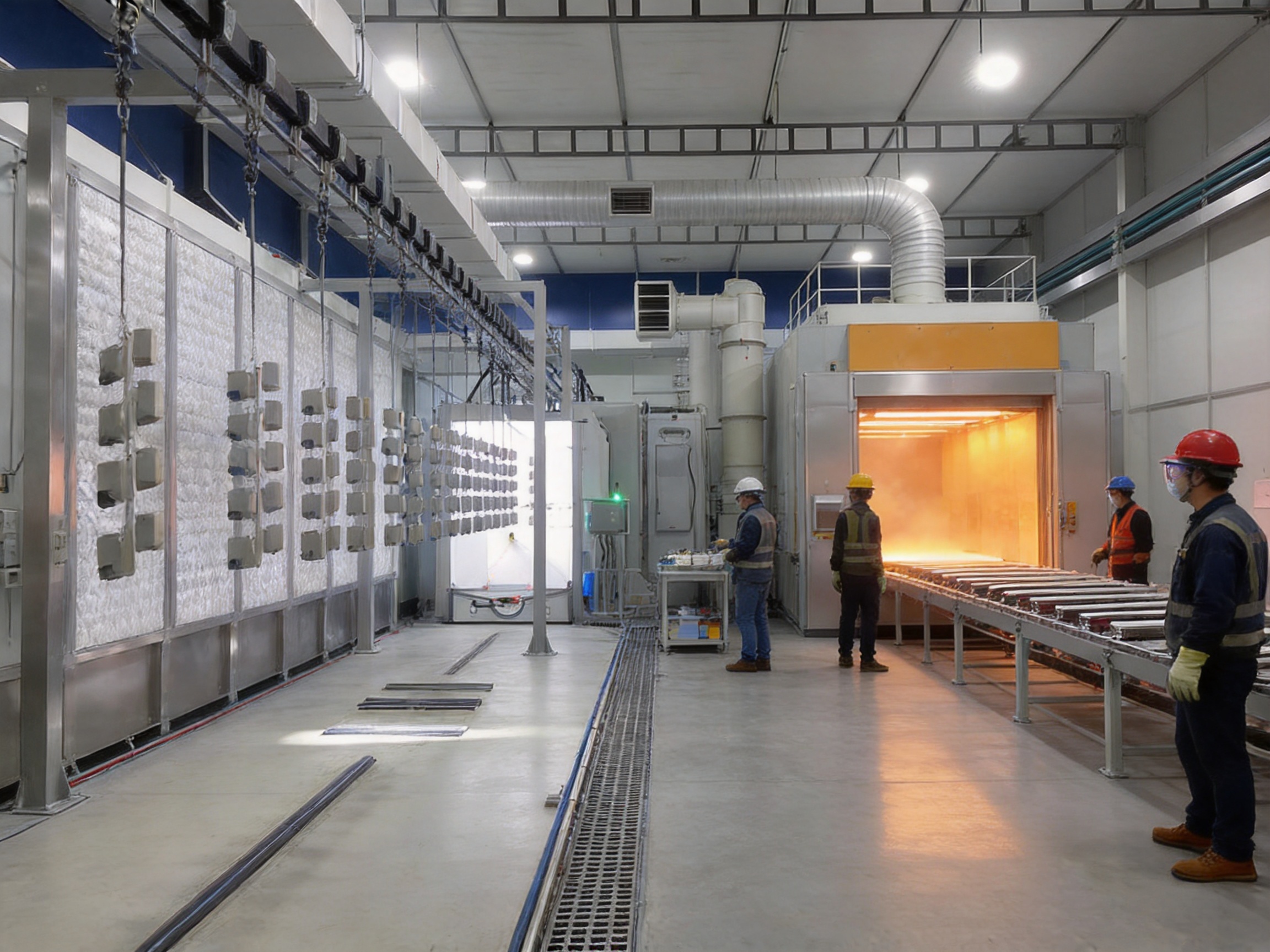
Powder coating is a solvent-free process. Unlike many conventional liquid paints that use solvents as carriers, powder coatings are applied as dry particles and do not normally release the same level of solvent-related VOC emissions during application. This supports cleaner production and can simplify environmental management.
Although a powder coating line still requires appropriate ventilation, dust control, fire prevention, and environmental safeguards, its emissions profile can be more favorable than that of solvent-based liquid painting. The final environmental performance depends on the powder formulation, pretreatment chemicals, heating fuel, filtration system, and operating practices.
Overspray powder can often be collected and reused, allowing a high proportion of the coating material to remain in the production cycle. This improves material utilization and can reduce the overall cost of consumables. In contrast, liquid paint overspray may require solvent-based cleaning, sludge handling, or other waste treatment procedures.
Powder recovery performance depends on appropriate equipment configuration and powder management. Color changes should be handled carefully to prevent contamination, and reclaimed powder may need to be blended or controlled according to the coating supplier’s recommendations.
Powder coatings can provide strong resistance to impact, abrasion, corrosion, moisture, and weathering when the coating system is properly selected and applied. A cured powder film is continuous and does not contain the same solvent-evaporation mechanism associated with liquid paint drying.
Durability is not automatic. It depends on pretreatment quality, film thickness, curing conditions, substrate preparation, powder formulation, and service environment. A complete line gives manufacturers better control over these factors by integrating them into one coordinated process.
In a disconnected workshop, operators may move workpieces manually between cleaning, drying, spraying, curing, and inspection areas. Each transfer introduces the possibility of contamination, damage, inconsistent timing, and labor-intensive handling.
An integrated conveyor system reduces unnecessary movement and helps maintain a predictable process sequence. This is especially valuable for large, heavy, or high-volume products. Automated transport also allows the production team to focus on loading, inspection, maintenance, and process control rather than repetitive internal logistics.
Stable pretreatment, controlled spray parameters, uniform oven temperature, and consistent conveyor speed all contribute to a more repeatable finish. Automated reciprocators and programmable controls can reduce variation between operators and between production shifts.
Manufacturers can also create standardized recipes for different products, colors, powder types, and curing requirements. This improves repeatability and assists production managers in identifying the cause of coating defects.
A major advantage of working with an experienced complete-line supplier is the ability to coordinate the design of every major subsystem. Pretreatment, drying, powder application, curing, conveying, electrical control, and environmental treatment must operate as one system. If these units are designed independently, their speeds, dimensions, and operating conditions may not match.
Jiangsu Yue Ze Environmental Protection Equipment Co., Ltd. provides integrated research and development, manufacturing, installation, commissioning, and customized engineering services. This one-stop model helps reduce coordination problems between multiple equipment vendors and allows the final line to be evaluated as a complete production process.
With more than 40 years of experience in coating and environmental protection equipment, the company has developed practical knowledge of industrial surface treatment, process integration, equipment fabrication, and production-line installation. This experience is valuable when a project involves unusual workpiece dimensions, mixed product types, limited factory space, or demanding capacity targets.
In 2014, the company developed a hanging automatic painting process line for cast counterweight blocks. The line covered the process from finishing and polishing to primer and topcoat application. Experience with heavy cast components and complete coating sequences supports the design of systems for automotive parts, engineering machinery, metal structures, and other demanding applications.
The company is located in Yancheng, Jiangsu, China, and covers approximately 35,000 square meters. Its registered capital is reported as 58 million yuan. A substantial production base provides space for equipment fabrication, assembly, testing, storage, project preparation, and technical coordination.
Large equipment projects require more than individual machine fabrication. The supplier must manage steel structures, chambers, ovens, conveyors, electrical systems, ducts, filtration units, control components, and installation accessories. Adequate manufacturing space helps support the assembly and inspection of these interconnected systems before delivery.
Every powder coating project has different requirements. A line for small brackets is not designed in the same way as a line for large counterweights, LPG cylinders, metal cabinets, or municipal structures. The workpiece length, width, height, weight, material, daily output, color schedule, coating thickness, and available factory space all influence the design.
Customization may involve:
Conveyor type, load capacity, speed, and layout.
Manual, semi-automatic, or fully automatic powder spraying.
Number and position of automatic spray guns.
Booth size and powder recovery method.
Drying and curing oven dimensions.
Heating method, such as gas, electricity, or infrared radiation.
Color-change requirements and powder-management procedures.
Pretreatment chemistry and wastewater-control requirements.
Workshop height, column positions, access routes, and maintenance space.
Production capacity, shift schedule, and future expansion plans.
Environmental compliance is an important part of modern coating-line design. A powder coating system may reduce solvent emissions, but the complete workshop still requires appropriate control of powder dust, pretreatment wastewater, oven exhaust, cleaning residues, and other emissions.
The company specializes not only in powder coating equipment but also in waste gas treatment equipment, paint and bake booths, large-part grinding rooms, solid-waste incineration furnace series, and other environmental protection systems. This broader capability allows environmental-control equipment to be considered during the initial process design rather than added as an afterthought.
Drying and curing represent a significant portion of the energy consumption of a coating line. Efficient thermal design can improve production stability and reduce operating costs. The company provides new high-infrared-radiation drying series and related heating solutions for applications requiring fast or controlled heat transfer.
Heating selection should be based on the part’s thermal mass, geometry, coating formulation, line speed, and available utilities. Infrared heating may provide rapid surface response, while hot-air circulation can support more uniform heating of complex parts. In many projects, a combination of technologies may be considered to meet process requirements.
Conveyor systems connect every stage of the production line. An overhead conveyor is often suitable for hanging products and allows the floor area to remain relatively open. Ground-rail systems may be preferred for heavy, oversized, or specially supported workpieces. The correct choice depends on load, product geometry, plant structure, and maintenance requirements.
Programmable logic controllers coordinate conveyor movement, pretreatment timing, spray operation, oven settings, alarms, and safety interlocks. Operator interfaces allow production personnel to monitor process status and adjust authorized parameters. Sensors can detect temperature, position, pressure, airflow, and other conditions needed for safe and reliable operation.
Powder coating equipment must be designed with attention to dust control, electrical safety, grounding, fire prevention, and safe maintenance. Powder particles can become combustible when suspended in air at certain concentrations. For this reason, the spray booth, recovery system, ductwork, filters, and electrical components must be selected and installed according to applicable safety requirements and project standards.
Important safety considerations include:
Reliable grounding of workpieces, fixtures, conveyors, and spray equipment.
Control of powder dust accumulation inside and around the booth.
Appropriate ventilation and air balance.
Explosion-prevention or explosion-relief measures where required.
Interlocks that stop spraying under abnormal conditions.
Temperature monitoring and over-temperature protection in ovens.
Emergency-stop devices at accessible locations.
Safe access to filters, fans, burners, heating elements, and inspection points.
Clear operating procedures and regular maintenance schedules.
Reliability also depends on the mechanical quality of the equipment. Conveyor chains, drive systems, oven panels, insulation, spray booth structures, fan assemblies, filtration units, and electrical cabinets should be designed for continuous industrial use. Stable fabrication tolerances and proper installation reduce vibration, leakage, uneven heating, and unplanned downtime.
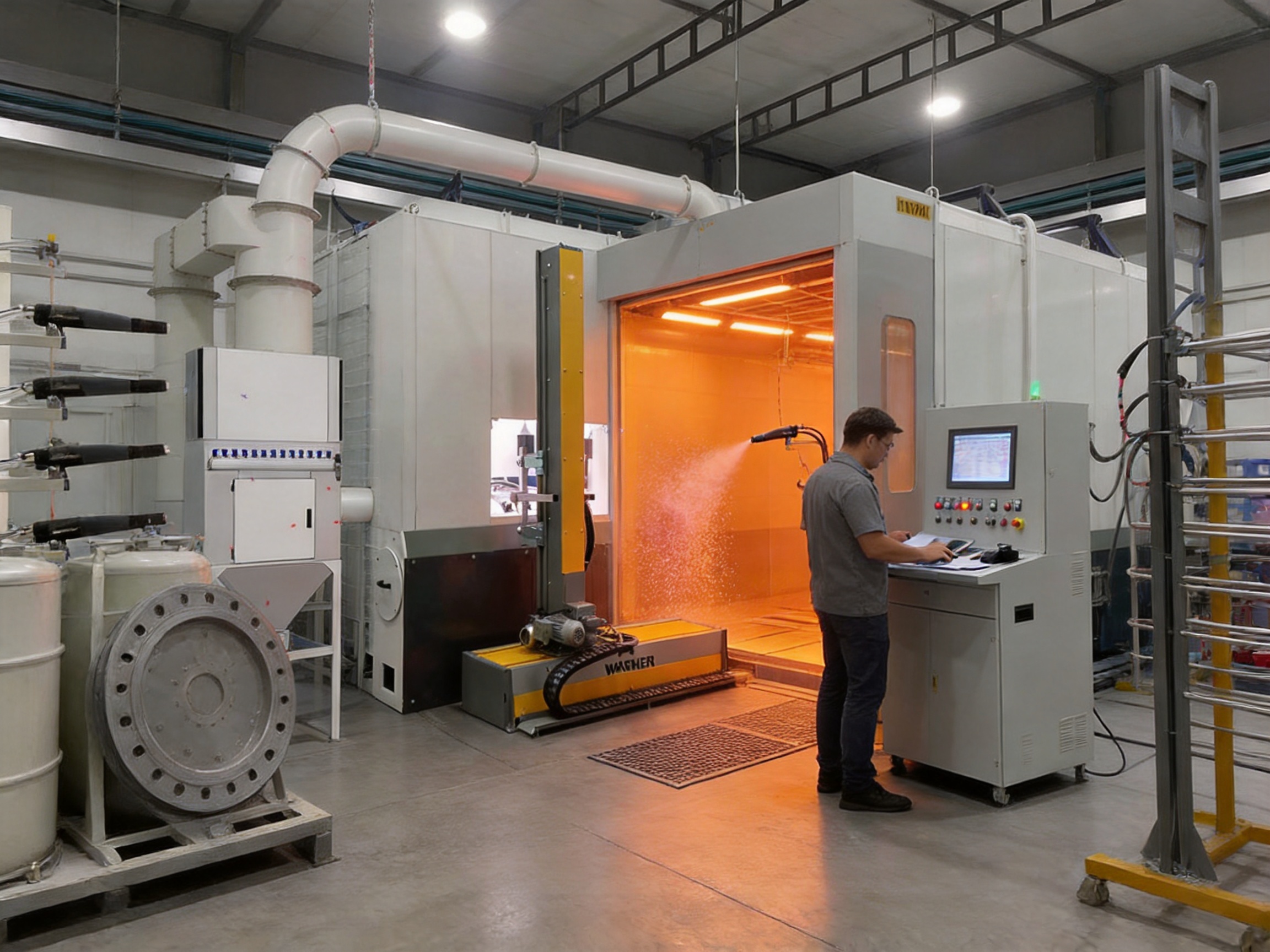
A manual powder coating line is suitable for small and medium production volumes, frequent product changes, prototypes, and workpieces with complicated shapes. Operators use handheld spray guns and may manually transfer parts between stations or load them onto a simple conveyor.
The initial investment is generally lower than that of a fully automatic system. Manual operation also provides flexibility when product dimensions or colors change frequently. However, labor requirements are higher, and coating consistency may depend more heavily on operator skill.
A semi-automatic line combines automated conveying, drying, curing, or powder recovery with manual spraying and loading. This arrangement is often a practical choice for manufacturers that need improved consistency without the full investment of a high-speed automatic system.
It can also serve as a transitional solution. The line may be designed with modular space, electrical capacity, and conveyor provisions for future installation of automatic guns, reciprocators, or robotic handling equipment.
A fully automatic powder coating line uses programmed equipment to coordinate material movement, powder application, recovery, curing, and process monitoring. It is suitable for stable, high-volume production where repeatability and labor efficiency are priorities.
Automatic systems can reduce operator exposure to powder and repetitive tasks. They can also produce consistent gun movement, coating thickness, and cycle timing. The main requirements are accurate initial engineering, appropriate fixtures, stable product specifications, regular maintenance, and trained technical personnel.
Purchasing a coating line should begin with a detailed process study rather than a simple comparison of machine prices. The lowest initial quotation may not provide the required output, coating quality, energy efficiency, or future flexibility.
Record the maximum and minimum length, width, height, weight, wall thickness, and surface area of the products. Include protruding sections, recessed areas, holes, and special handling requirements. These values determine booth dimensions, oven size, conveyor capacity, fixture design, and spray-gun arrangement.
Capacity should be expressed in terms of workpieces per hour, surface area per hour, or total weight per shift. The calculation should include loading time, curing time, color changes, maintenance, inspection, and expected production losses. A line that appears sufficient under ideal conditions may not meet the target when real operating interruptions are considered.
Define the desired color, gloss, texture, film thickness, corrosion resistance, impact resistance, weatherability, and curing temperature. If products are exported or used in regulated industries, applicable testing standards should be identified before equipment selection.
Frequent color changes affect booth design, recovery equipment, cleaning procedures, and labor requirements. A manufacturer producing a single color continuously may benefit from a dedicated recovery system. A multi-color factory may need fast-cleaning booth surfaces, separate powder circuits, or a planned procedure for minimizing cross-contamination.
Available gas, electricity, compressed air, ventilation, water, drainage, and wastewater treatment capacity must be evaluated. The line design should consider regional energy costs and the factory’s existing infrastructure. Proper oven insulation and heat management can reduce long-term operating expenses.
The available building height, floor area, column spacing, loading doors, crane access, fire exits, maintenance aisles, and utility routes must be measured accurately. A line that fits on paper may be difficult to install or maintain if access space is not included.
Production demand may increase after installation. A modular design can reserve space and connection points for additional spray guns, larger ovens, expanded pretreatment, upgraded conveyors, or automated loading. Planning for expansion at the beginning is usually more economical than rebuilding the line later.
Consistent powder coating quality requires control of the complete process rather than attention to the spray booth alone. Quality personnel should establish operating parameters for pretreatment concentration, bath temperature, rinsing, drying, powder output, gun voltage, conveyor speed, oven temperature, curing time, and cooling.
Common defects and possible causes include:
Uneven film thickness caused by inconsistent gun distance, incorrect powder output, poor grounding, or unsuitable spray settings.
Pinholes or bubbling caused by moisture, contamination, trapped gas, inadequate pretreatment, or excessive film thickness.
Poor adhesion caused by oil, rust, inadequate chemical preparation, or incomplete curing.
Color variation caused by contaminated powder, inconsistent curing, incorrect powder mixing, or different film thickness.
Orange peel caused by incorrect powder flow, unsuitable curing conditions, surface contamination, or excessive film thickness.
Thin coverage in recessed areas caused by electrostatic shielding or unsuitable gun positioning.
Gloss variation caused by unstable oven temperature, inconsistent residence time, or incorrect powder selection.
Process records help identify whether a defect is isolated or recurring. Preventive maintenance should include cleaning spray guns, checking filters, inspecting conveyor bearings, verifying grounding, calibrating temperature sensors, examining oven seals, and removing powder deposits from relevant surfaces.
Complete-line installation requires coordination among mechanical, electrical, environmental, and production teams. Before delivery, the supplier should confirm the site dimensions, foundation conditions, utilities, equipment access, and installation sequence.
Commissioning normally includes mechanical inspection, electrical testing, conveyor trial operation, oven temperature testing, spray-gun adjustment, powder recovery verification, safety-interlock testing, and sample-product evaluation. Production personnel should receive training in operation, cleaning, troubleshooting, maintenance, and safety procedures.
Technical support remains important after commissioning. A reliable supplier should be able to provide replacement parts, process recommendations, equipment upgrades, remote assistance, and on-site service when required. Long-term support is particularly valuable for customized lines because the equipment may contain project-specific fixtures, controls, and process sequences.
A customized integrated powder coating line offers advantages over purchasing isolated standard machines. The entire line can be developed around the customer’s products and workshop rather than forcing the factory to adapt to equipment designed for another application.
The main benefits include:
Better coordination between pretreatment, spraying, curing, and conveying.
More efficient use of factory space.
Improved suitability for unusual or oversized workpieces.
Reduced manual transfer and handling time.
More consistent production cycle times.
Greater potential for powder recovery and material savings.
More practical environmental and exhaust-treatment arrangements.
Improved readiness for future automation and capacity expansion.
Single-source responsibility for design, manufacturing, installation, and commissioning.
Jiangsu Yue Ze Environmental Protection Equipment Co., Ltd. focuses on this type of integrated approach. Its product scope includes intelligent coating lines, powder coating lines, automated conveying systems, paint and bake booths, grinding rooms, infrared drying equipment, waste gas treatment equipment, and other environmental protection systems. This range enables the company to consider surface preparation, coating, thermal processing, material transfer, and environmental management together.
Powder coating lines can process many conductive metal products, including hardware, automotive parts, engineering machinery components, metal furniture, cabinets, municipal facilities, manhole covers, precision components, LPG cylinders, and outdoor equipment. The line must be customized according to the product dimensions, weight, geometry, material, coating specification, and production volume.
Yes. A manual or semi-automatic powder coating line can be suitable for small and medium production volumes, frequent product changes, and specialized workpieces. A fully automatic line is normally selected when production is stable and the required output justifies a higher level of automation.
Powder coating uses dry powder rather than a liquid solvent-based paint carrier. It can reduce VOC emissions, enable overspray recovery, and provide a durable finish with strong impact and corrosion resistance. Liquid painting may still be suitable for certain substrates, appearance requirements, or temperature-sensitive products, so the best process depends on the application.
The powder spray booth and recovery system collect a substantial portion of overspray. Suitable recovered powder can often be reused according to the coating supplier’s recommendations. Good grounding, correct spray settings, stable gun movement, and proper booth airflow further improve material utilization.
Poor adhesion may result from oil or rust remaining on the substrate, inadequate pretreatment, residual moisture, incorrect powder selection, insufficient curing, excessive coating thickness, or contamination during handling. A complete line helps control these factors, but operators must still maintain the prescribed process parameters.
The curing oven is critical because the powder must reach the correct temperature for the required time to melt and cross-link properly. Uneven heating or insufficient curing can reduce adhesion, hardness, chemical resistance, and appearance. Oven design should account for product size, metal thickness, conveyor speed, and powder formulation.
Yes, but color changes require suitable booth design, cleaning procedures, powder recovery arrangements, and production planning. Manufacturers with frequent color changes may choose a quick-cleaning booth, separate recovery systems, or other configurations to reduce contamination and changeover time.
Neither system is universally better. Overhead conveyors are commonly used for hanging workpieces and can save floor space. Ground-rail conveyors may be more suitable for heavy, oversized, or specially supported products. The choice depends on load capacity, product geometry, factory structure, access requirements, and maintenance preferences.
A modular line can often be expanded with additional spray guns, larger recovery capacity, upgraded controls, extra pretreatment stages, or automated loading and unloading. Future expansion should be considered during the initial design so that space, power, ventilation, and conveyor capacity are not limiting factors.
Customers should provide product drawings or photographs, workpiece dimensions and weight, material type, coating requirements, expected output, working hours, color-change frequency, factory dimensions, available utilities, and preferred automation level. Samples are also helpful for evaluating pretreatment, fixture design, spray coverage, and curing requirements.
An integrated equipment supplier can provide engineering design, manufacturing, installation, commissioning, operator training, and technical support. The exact scope should be confirmed in the project agreement, including site preparation, utility connection, trial production, documentation, spare parts, and warranty service.
Operating costs can be controlled through high powder recovery, efficient oven insulation, appropriate conveyor speed, correct spray settings, preventive maintenance, reduced rework, and proper production scheduling. Selecting the correct automation level also helps avoid paying for capacity or complexity that the factory does not need.
A powder coating line provides a complete and efficient method for applying durable protective and decorative finishes to metal workpieces. By integrating pretreatment, drying, electrostatic spraying, powder recovery, curing, cooling, conveying, inspection, and environmental control, the system offers more consistent production than disconnected manual operations.
Its principal advantages include low solvent emissions, high material utilization, strong coating durability, reduced manual handling, repeatable appearance, and suitability for both standard and specialized products. The most effective results come from a line designed around the customer’s workpieces, capacity, plant layout, coating requirements, energy conditions, and future development plans.
With more than 40 years of industry experience, a 35,000-square-meter manufacturing base, integrated engineering capabilities, and a product range covering coating, drying, conveying, and environmental protection equipment, Jiangsu Yue Ze Environmental Protection Equipment Co., Ltd. is positioned to provide customized powder coating production solutions. Its combination of design, manufacturing, installation, commissioning, and technical service supports manufacturers seeking a reliable transition from individual coating machines to a coordinated and scalable production line.
1. Powder Coating Institute, Powder Coating Process and Application Principles.
2. International Organization for Standardization, Paints and Varnishes—Corrosion Protection of Steel Structures by Protective Paint Systems.
3. ASTM International, Standard Test Methods for Coating Thickness, Adhesion, and Performance Evaluation.
4. International Electrotechnical Commission, Industrial Electrical Equipment Safety and Control Principles.
5. Occupational Safety and Health guidance concerning combustible dust, industrial ventilation, and powder-handling safety.
6. Technical data sheets and curing recommendations supplied by powder-coating material manufacturers.
7. Industrial surface-treatment engineering practices for pretreatment, powder application, thermal curing, and environmental control.
Widely used in metal workpieces such as hardware, auto parts, engineering machinery, metal furniture, art manhole covers, municipal facilities, and precision components, suitable for mass and standard...
See Details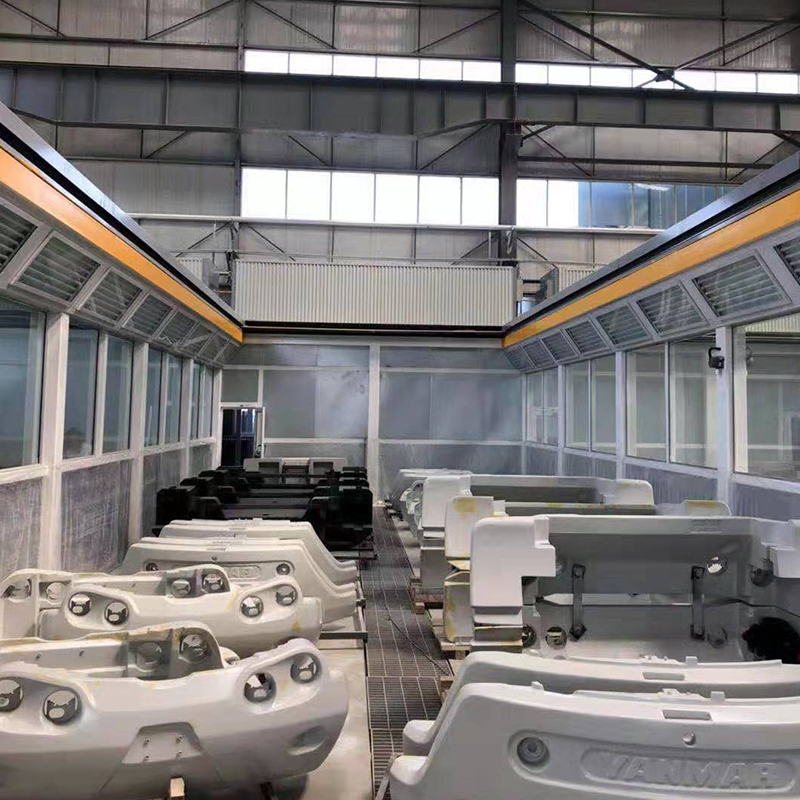
Professional spray coating line specially designed for car wheel manufacturing and refurbishment, applicable to various car wheel types (steel wheel, aluminum alloy wheel, forged wheel, cast wheel, pa...
See Details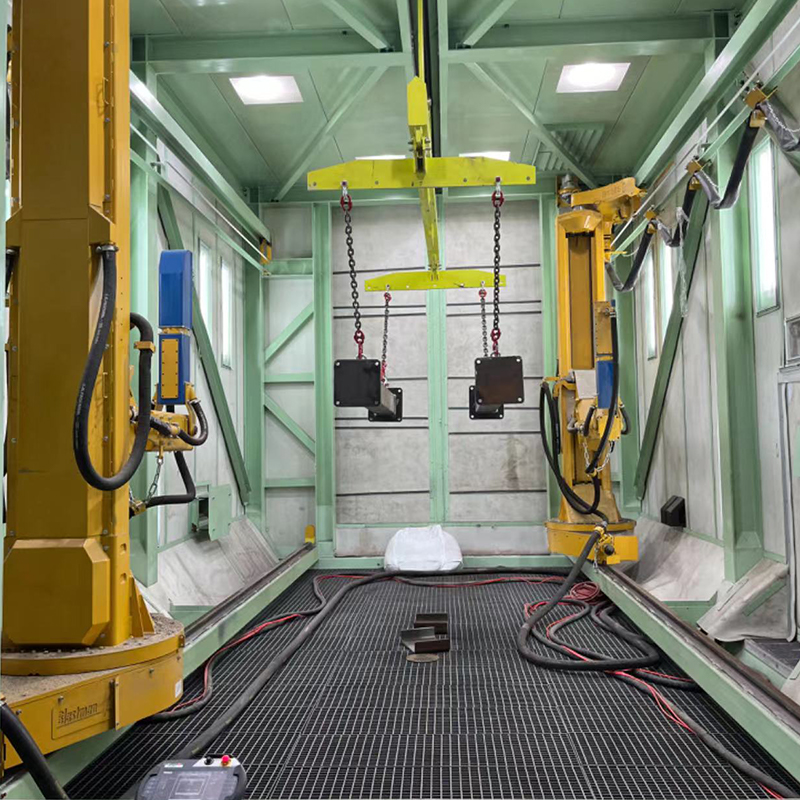
Professional coating line specially designed for large castings and heavy truck parts, applicable to various large castings (engineering castings, mining equipment castings, industrial castings) and h...
See Details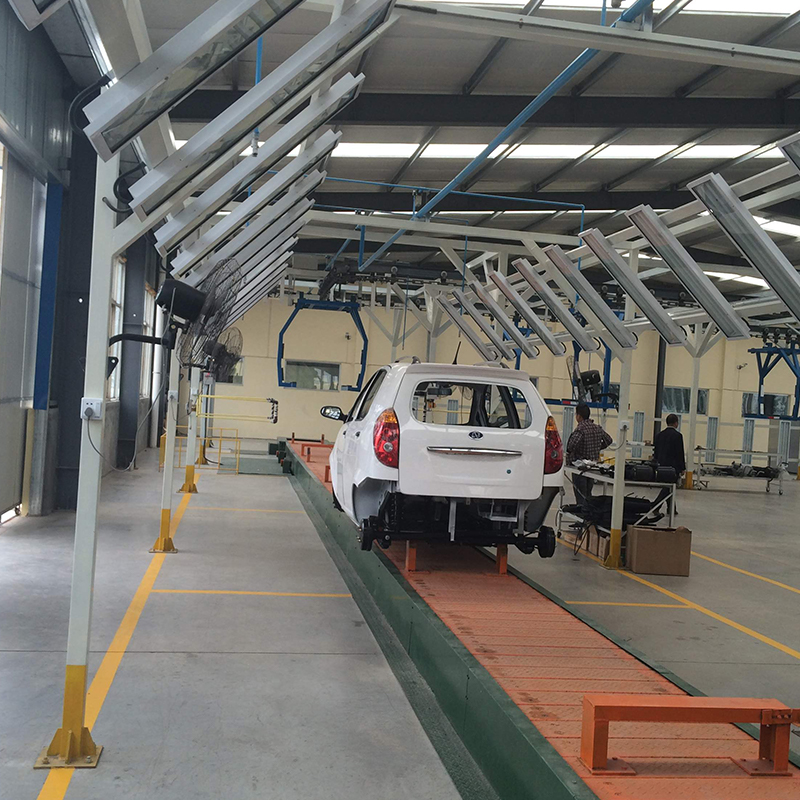
Professional electrophoresis coating line specially designed for electric vehicles (EVs), applicable to various EV types (passenger EV, commercial EV, new energy logistics vehicle) and EV components. ...
See Details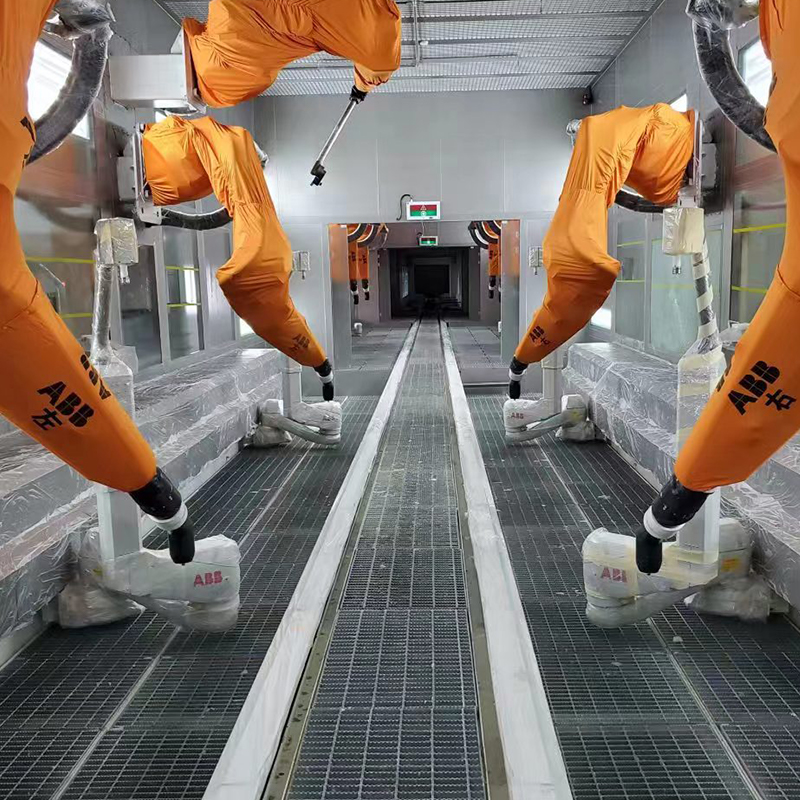
Professional spray coating line specially designed for motor casings, applicable to various motor casing types (electric vehicle motor casing, industrial motor casing, household motor casing, high-tem...
See Details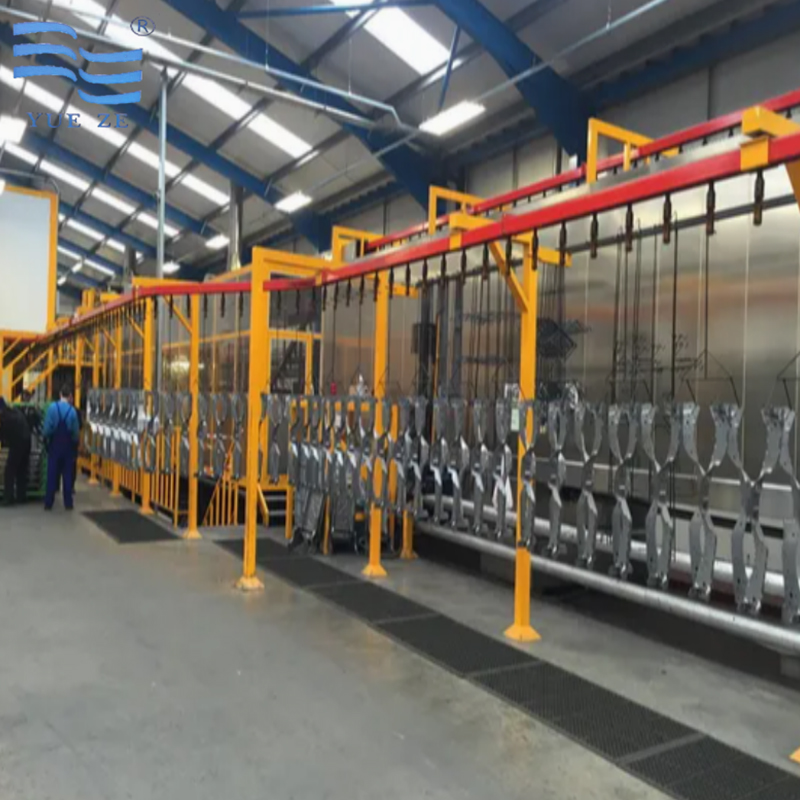
An electrophoretic coating line is a complete automatic surface treatment system. Through electrophoretic deposition, a uniform, dense, and anti-corrosion coating is formed on the metal surface. The w...
See DetailsBuild Your Customized Industrial Coating System
Send us your workpiece information, production capacity, coating process, workshop layout, and environmental requirements. Yueze will help evaluate your project and develop a suitable coating, conveying, drying, and environmental treatment solution.
Main menu
Products
Contact Us
Company Address:
No. 12, Park Avenue, Shanggang Industrial Park, Jianhu, Yancheng City, Jiangsu Province
Message Us Right Now!

Follow us: