
 русский
 عربى
 Tiếng Việt

The retractable mobile spray & sanding booth is a flexible, space-saving, and multi-functional coating workstation. With a telescopic movable structure and integrated dust & paint mist filtrat...
See Details
Yueze Environmental Protection provides one-stop compliant industrial surface treatment solutions with professional tech and fine craftsmanship.
 Get Inquiries
2026-10-28
Content
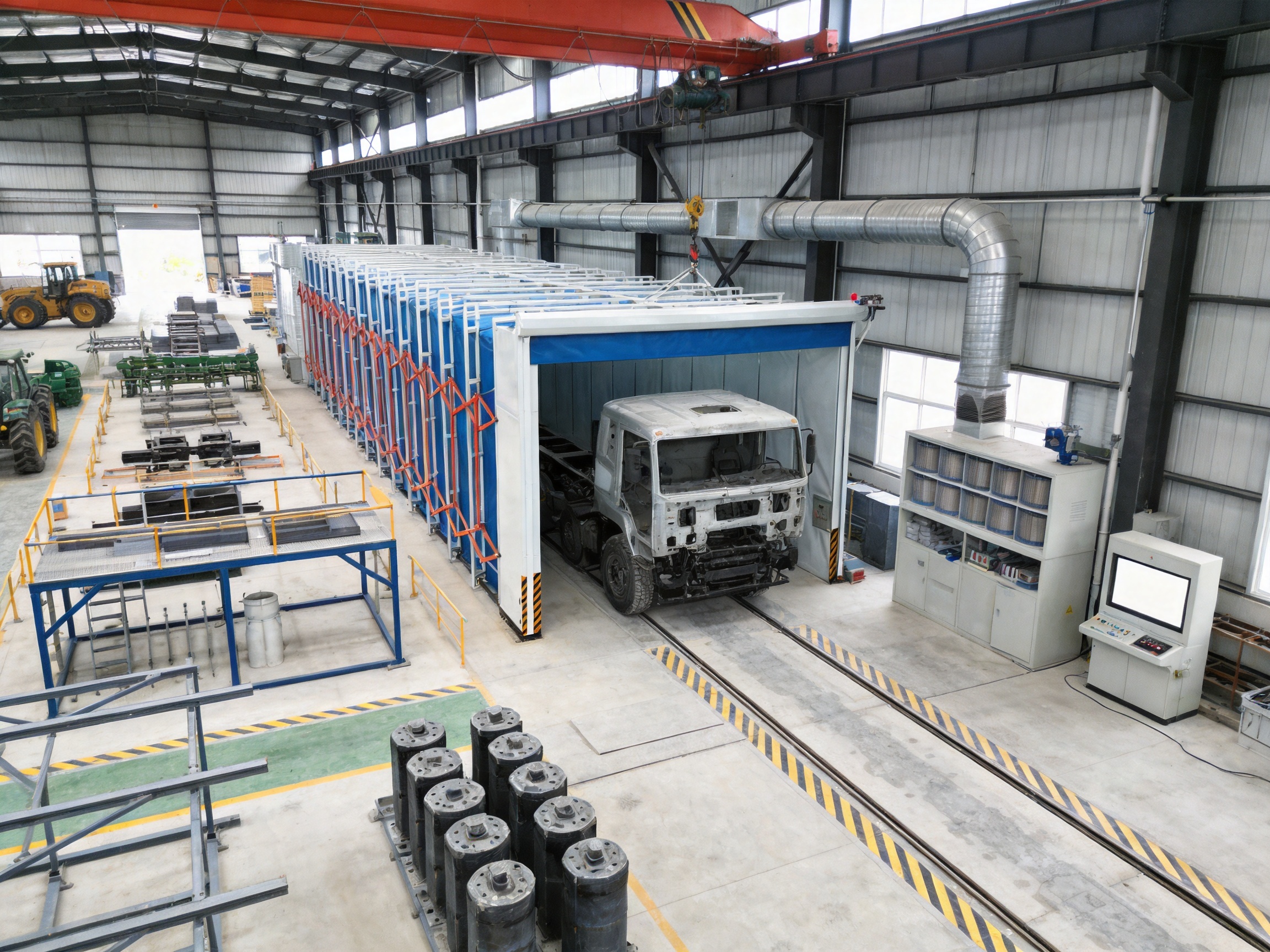
Modern industrial workshops increasingly need coating equipment that can support several production activities without occupying a permanent and oversized footprint. Large components, construction machinery, truck bodies, steel structures, agricultural equipment, and fabricated metal products often require surface preparation, sanding, spraying, drying, and inspection. Traditionally, these operations were assigned to separate fixed rooms or dedicated booths. Although fixed installations can be effective in high-volume production, they may consume valuable floor space, require substantial civil construction, and limit the flexibility of the workshop layout.
The retractable mobile spray and sanding booth provides a practical alternative for manufacturers that need a flexible coating workstation. Its telescopic enclosure can be expanded when spraying or sanding is required and retracted when the working area must be used for another purpose. A mobile base, integrated ventilation, filtration equipment, lighting, safety components, and optional heating systems allow one booth to serve multiple production needs.
This configuration is designed around the principle of adaptable manufacturing. Instead of moving every large workpiece to a permanent room, the booth can be positioned close to the component or production station. Instead of maintaining two separate enclosures for sanding and spraying, the same system can support both processes when correctly configured and operated. The result is a coating solution that combines space efficiency, operational flexibility, environmental control, and lower installation complexity.
Jiangsu Yue Ze Environmental Protection Equipment Co., Ltd. develops and manufactures industrial coating and environmental protection equipment in Yancheng, Jiangsu, China. With a production area of approximately 35,000 square meters, registered capital of 58 million yuan, and more than 40 years of experience in related equipment, the company provides design, manufacturing, installation, and customized engineering services for surface treatment applications.
This article explains the structure, operating principle, advantages, safety features, manufacturing strengths, customization possibilities, and application value of the retractable mobile spray and sanding booth.
A retractable mobile spray and sanding booth is an enclosed or semi-enclosed industrial workstation with a movable telescopic structure. The booth can be extended along rails or a guided mobility system to create a controlled working chamber. When the coating or sanding operation is completed, the enclosure can be contracted to reduce its occupied area or allow access to the surrounding workshop.
The system normally integrates several functional sections. These may include retractable wall and roof panels, a structural frame, a mobile rail or wheel base, air supply and exhaust equipment, paint mist filtration, sanding dust collection, explosion-proof lighting, an electrical control cabinet, safety interlocks, and optional heating equipment. The exact configuration is selected according to the workpiece dimensions, coating materials, production capacity, environmental requirements, and available workshop space.
During sanding, the booth helps contain airborne dust and direct contaminated air toward the filtration system. During spraying, the enclosure creates a controlled area where paint mist can be captured and exhausted through suitable filtration stages. The booth is generally operated under negative pressure so that air moves into the enclosure rather than allowing dust, mist, or odor to escape into the workshop.
Unlike a conventional fixed spray booth, the retractable design does not permanently occupy its full operating footprint. Unlike a small portable booth intended mainly for light-duty or temporary work, an industrial retractable mobile booth can be engineered for large components and demanding workshop environments. This places it between fixed industrial rooms and lightweight portable enclosures, combining substantial working capacity with improved layout flexibility.
Industrial production areas rarely remain unchanged. Product dimensions may vary from one order to another, production lines may be rearranged, and several departments may need access to the same floor area. A fixed booth can become a bottleneck when large products cannot be moved efficiently or when the booth is located far from the preparation, assembly, or inspection area.
Large workpieces create a special challenge. Moving a truck carriage, steel frame, counterweight, construction-machine component, or fabricated structure through a workshop can require cranes, forklifts, additional operators, and clear travel routes. Every movement increases handling time and may create risks of collision or surface damage. A mobile booth reduces this problem by allowing the controlled coating area to be positioned closer to the workpiece.
Space utilization is another major consideration. A fixed booth requires a permanent area even when no painting is taking place. In a workshop with variable production schedules, that area may remain unused for long periods. A retractable booth can be expanded during active operations and contracted when the space is needed for assembly, storage, maintenance, or other processes.
The dual-function concept also helps reduce equipment duplication. Sanding and spraying are related but distinct stages of surface treatment. If each process requires a separate fixed room, the total investment, maintenance requirement, and floor-space demand can increase significantly. A properly designed retractable unit allows one workstation to support preparation and coating, subject to appropriate cleaning, process separation, and operating procedures.
The telescopic enclosure is the defining feature of the booth. It is formed from connected structural sections that move along a guided path. Depending on the design, the enclosure may use folding panels, sliding sections, articulated frames, or a combination of these mechanisms. When extended, the sections create a working volume around the component. When contracted, they gather into a compact arrangement.
The enclosure materials are selected for strength, durability, cleanability, and resistance to the operating environment. Wall and roof panels may be manufactured from coated steel, insulated panels, flame-retardant materials, or other engineered materials suitable for the coating process. Seals and overlapping joints help limit uncontrolled air leakage while allowing the structure to move repeatedly.
The telescopic structure must remain stable during expansion and contraction. For this reason, the design includes guided movement, load-bearing supports, alignment components, and mechanical stops. The movement system is engineered to reduce binding, uneven travel, and excessive vibration. Depending on the booth size and customer requirements, movement may be manual, motor-driven, or controlled through an integrated electrical system.
The mobility system allows the booth to be repositioned in the workshop. Some installations use floor rails, while others may use a wheel-based structure or a guided combination of rails and rollers. The selection depends on the booth dimensions, floor conditions, movement frequency, load requirements, and available layout.
A rail-guided design can provide accurate movement and repeatable positioning. It is particularly useful when the booth must travel between defined workstations. A wheel-based design may offer greater layout flexibility when the floor is suitable and the booth must be moved less frequently. In both cases, positioning stability is important because the booth must remain aligned with ventilation connections, power supplies, access points, and the workpiece.
Safety features may include mechanical locking devices, travel limits, emergency stop controls, anti-collision arrangements, and warning signals. These features help prevent unintended movement during spraying or sanding. The final mobility design should always be evaluated in relation to the workshop floor, nearby equipment, overhead obstructions, operator routes, and emergency access.
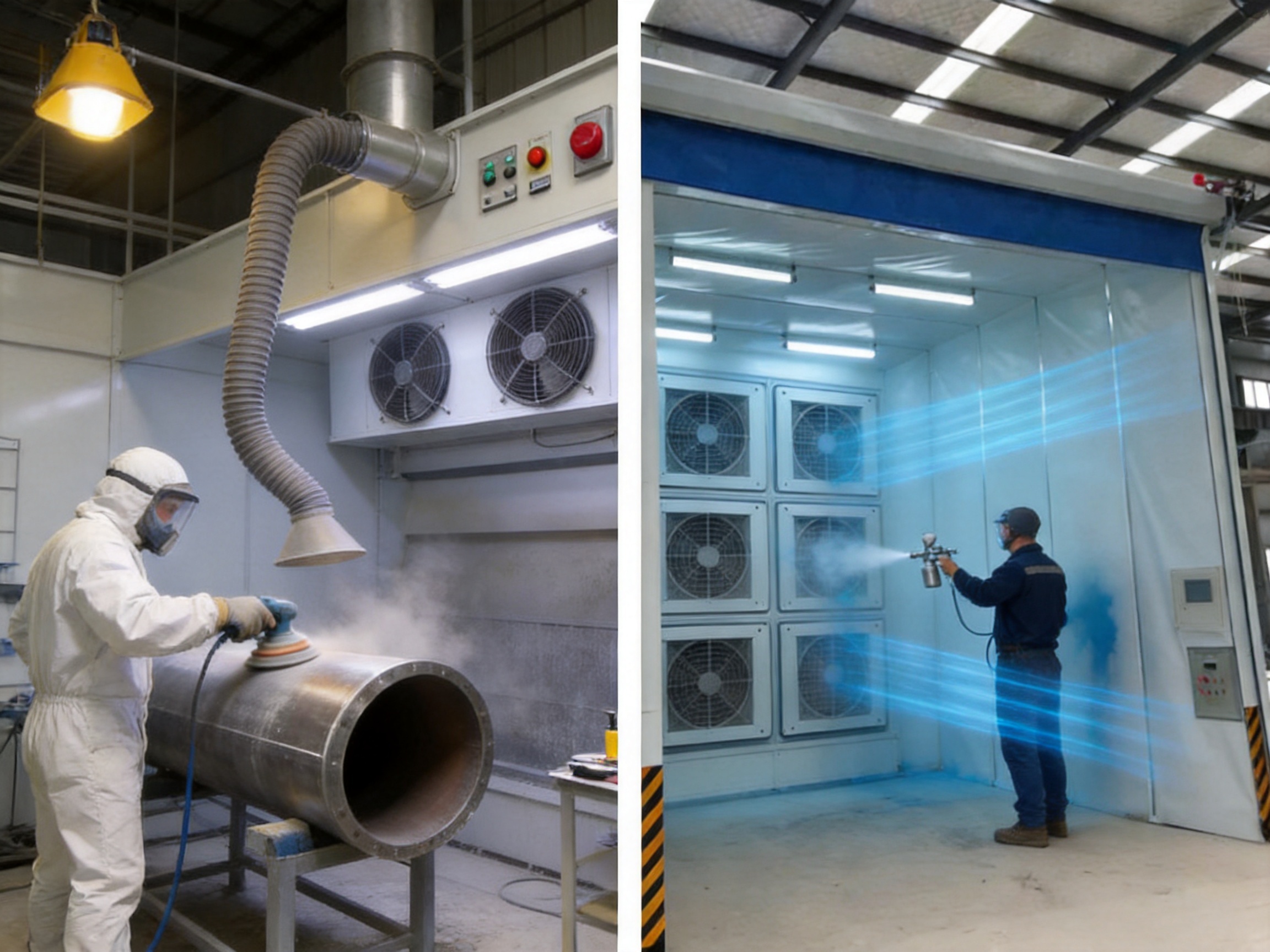
Ventilation is central to both coating quality and worker protection. The booth uses forced air supply, exhaust extraction, or a balanced combination of both to control the direction and velocity of air. In spraying mode, the airflow carries paint mist away from the operator and toward the filtration area. In sanding mode, the airflow helps capture dust at its source and reduces the possibility of dust spreading through the workshop.
Negative pressure is an important operating principle. When the exhaust volume is appropriately coordinated with the air supply and the enclosure is properly sealed, the pressure inside the booth remains lower than the surrounding workshop. Air therefore tends to enter the booth through controlled openings rather than escape outward. This helps contain pollutants and supports a cleaner production environment.
Airflow design must account for the booth volume, workpiece shape, operator location, spray method, filter resistance, fan performance, and exhaust duct arrangement. Poorly designed airflow may create dead zones, turbulence, uneven drying, or overspray deposition. An experienced manufacturer evaluates these factors during equipment design rather than treating the fan and filter as isolated components.
The filtration system is configured according to the type of contaminant generated. Sanding produces particulate dust, while spraying produces paint mist and potentially volatile substances. A single filter type may not be suitable for all conditions, so the booth can use staged filtration or separate operating modes.
Typical filtration arrangements may include pre-filters for larger particles, paint arrestor media for overspray, dust filters for sanding particles, and final filtration stages where required by the process or local environmental rules. Filters should be accessible for inspection and replacement. Differential pressure monitoring can help operators identify when a filter is becoming loaded and airflow is beginning to decline.
Correct filter selection affects more than environmental performance. It also influences fan energy consumption, booth pressure, coating quality, maintenance frequency, and the service life of downstream equipment. The filter media must be compatible with the coating materials and the expected loading conditions.
Good visibility is necessary for surface preparation, color application, defect inspection, and final quality control. The booth can be equipped with industrial lighting positioned to reduce shadows on large or irregular workpieces. Explosion-proof lighting is used where the operating environment may contain flammable paint mist or vapor.
Lighting protection should be easy to clean because overspray and dust can gradually reduce illumination. The layout must also avoid creating unnecessary reflections or glare that interfere with visual inspection. A well-planned lighting system supports more consistent coating thickness and helps operators identify runs, dry spray, missed areas, contamination, and surface defects.
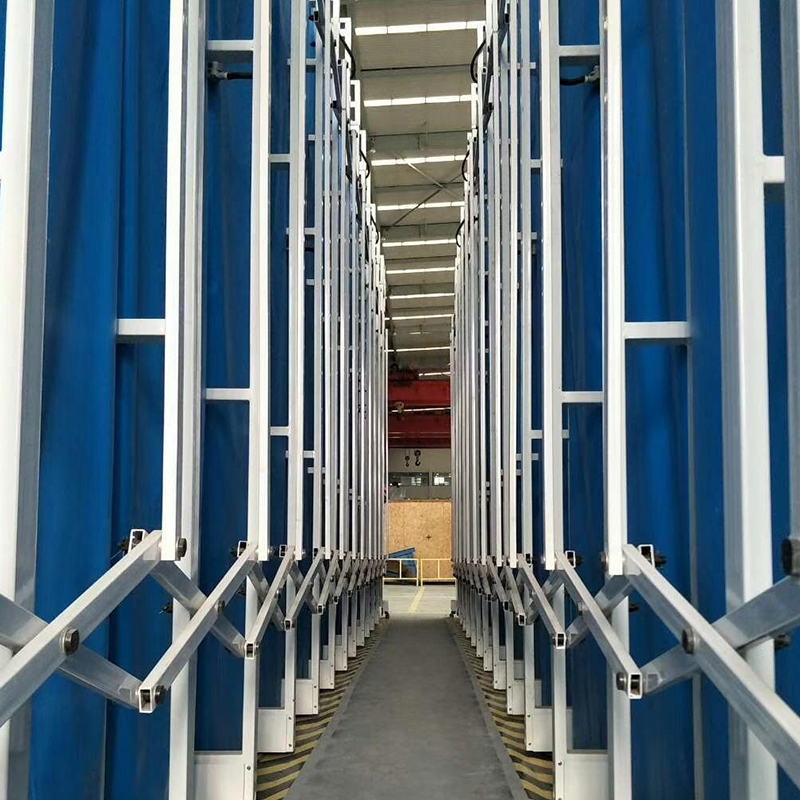
Retractable Mobile Spray and Sanding Booth
The ability to support both sanding and spraying is one of the most valuable features of the retractable mobile booth. Surface treatment quality depends heavily on preparation. Dust, rust, weld spatter, old coating, oil, and uneven edges can affect adhesion and appearance. A booth that supports sanding close to the final coating location can simplify the workflow and reduce unnecessary handling.
In sanding mode, the booth provides a controlled space for grinding, polishing, deburring, or other preparation activities. The extraction system draws dust away from the work area and sends it to the dust filtration section. This helps reduce dust deposits on nearby equipment and limits the amount of airborne particulate matter in the workshop.
Sanding mode is especially useful for large metal parts that are difficult to move. The booth can be positioned around the component, extended to create a work zone, and operated with suitable dust collection. After preparation, the operator can clean the surface and change the booth configuration or process mode according to the production procedure.
Although the same enclosure can support sanding and spraying, proper housekeeping remains essential. Dust must be removed before spraying begins. Filters, floors, wall surfaces, tools, and workpiece surfaces should be inspected to prevent sanding residue from contaminating wet paint. The changeover procedure may include cleaning, filter checks, ventilation purging, and confirmation that the booth is ready for coating.
In spraying mode, the booth is extended and sealed as required to create a controlled coating chamber. The exhaust system captures paint mist, while the air supply maintains suitable airflow through the work area. Operators can apply primers, topcoats, protective coatings, or other suitable materials according to the product requirements.
The enclosure assists in separating the spraying operation from the rest of the workshop. This can reduce contamination from general workshop dust and limit the spread of paint mist. Stable airflow also helps improve transfer efficiency and reduce uncontrolled deposition on walls, equipment, or adjacent workpieces.
The booth is not a substitute for correct paint application practice. No enclosure can compensate for unsuitable spray pressure, incorrect nozzle selection, excessive coating thickness, poor surface preparation, or improper material handling. However, a well-designed booth provides the controlled environmental conditions needed for operators and coating systems to perform more consistently.
The changeover sequence should be defined according to the coating materials, dust generation level, filter arrangement, and workplace safety rules. A typical sequence may include completing the sanding operation, removing tools and waste, cleaning visible dust, checking the workpiece, inspecting filters, and operating the ventilation system for an appropriate purge period.
When switching from spraying to sanding, residual vapors and paint deposits must be considered. The enclosure may require ventilation and cleaning before abrasive work begins. Operators should also verify that all flammable materials, paint containers, contaminated wipes, and waste products are handled correctly.
This dual-purpose design delivers the greatest value when the customer establishes clear standard operating procedures. The equipment manufacturer can assist by defining the ventilation layout, access arrangement, control logic, filter zones, and cleaning points needed for efficient mode changes.
A fixed booth occupies a permanent footprint. Even when it is idle, the structure, access zone, ventilation equipment, and surrounding clearance remain dedicated to that installation. The retractable booth reduces this limitation by contracting when full enclosure is not needed.
For workshops with limited floor area, this difference can be significant. Reclaimed space may be used for component assembly, temporary storage, maintenance, material staging, or additional production stations. The business can obtain the functional benefits of an enclosed coating area without committing its entire layout to a single permanent room.
Moving a large component to a fixed booth may be expensive and time-consuming. It may require lifting equipment and may interrupt other production activities. A mobile booth can travel to the work area, allowing the component to remain in position during preparation and coating.
This approach may reduce handling damage and simplify production planning. It is particularly valuable for construction machinery, truck bodies, steel assemblies, fabricated frames, large castings, agricultural implements, and other components that are difficult to transport inside a workshop.
Many fixed paint rooms require foundations, permanent walls, dedicated duct routes, structural modifications, and extensive installation work. A retractable mobile system can often be assembled with less complex civil construction. The exact requirements still depend on the size and design, but the modular nature generally supports faster installation and easier adaptation.
Reduced construction complexity can help shorten the time between purchase and production launch. It may also be useful for existing factories where major structural modifications are undesirable or where the production layout may change in the future.
Maintaining separate sanding and spraying areas can increase capital costs and maintenance responsibilities. A dual-function booth combines these related operations in one adaptable workstation. This does not eliminate the need for correct process control, but it can reduce duplication of enclosures, fans, lighting, and control systems.
The combined configuration is particularly attractive to job shops, low- and medium-volume manufacturers, repair facilities, and companies producing several product types. It allows the coating area to be used according to the production schedule rather than leaving a fixed room underutilized.
When the booth can be positioned close to the workpiece, the distance between preparation and coating may be reduced. Fewer transfers can mean less waiting, less lifting, and fewer opportunities for the prepared surface to collect dust or suffer damage before painting.
For customized or varied production, this flexibility may be more valuable than maximum line speed. The equipment can support a practical workflow that changes according to part dimensions and order requirements.
Negative-pressure operation and filtration help contain sanding dust and paint mist. By directing contaminated air through appropriate treatment equipment, the booth supports cleaner workshop conditions and more controlled exhaust management.
The environmental result depends on correct design, operation, maintenance, and compliance with applicable regulations. Filter replacement, fan inspection, duct cleaning, waste handling, and exhaust monitoring are all essential. The advantage of the booth is that these functions are integrated into a purpose-designed workstation instead of being left to general workshop ventilation.
Small portable spray booths are useful for limited-size components, temporary work, and low-demand applications. However, they may not provide the structural strength, airflow capacity, working height, or filtration area needed for large industrial parts. Their mobility may also be based on simple wheels that are not suitable for repeated positioning in a heavy production environment.
The retractable mobile booth is designed for a more demanding category of use. Its structure can be engineered around large dimensions, industrial ventilation, guided movement, explosion-proof components, and continuous workshop operation. It can provide a more stable and controlled environment while retaining the ability to move or contract.
Another difference is customization. Industrial retractable booths can be designed around the customer's actual workpiece size, workshop arrangement, coating materials, exhaust route, and production capacity. This engineering approach is more suitable when a standard portable enclosure cannot meet the required operating conditions.
Spraying may create flammable mist or vapor depending on the coating material and application method. For this reason, industrial spray booths require suitable electrical and ventilation components. The configuration may include explosion-proof fans, explosion-proof lighting, protected electrical connections, flame-retardant materials, and appropriate grounding.
Equipment selection must be based on the actual hazardous area classification, coating materials, operating temperature, and local requirements. Operators should never replace approved components with ordinary fans, lights, switches, or portable electrical devices that are not suitable for the booth environment.
Static electricity can present a risk when flammable materials, airborne particles, and moving equipment are present. The booth, workpiece, spray equipment, and related conductive components should be grounded according to the electrical design and applicable regulations.
Grounding continuity should be checked as part of routine maintenance. Paint buildup, damaged cables, loose connections, or unauthorized modifications may reduce grounding effectiveness. A complete safety program combines equipment grounding with correct material storage, housekeeping, ventilation, and operator training.
Maintaining negative pressure helps prevent contaminated air from escaping into the workshop. The performance of this system depends on enclosure integrity, fan capacity, filter condition, access-door operation, and correct balance between supply and exhaust air.
Operators should keep access openings closed as far as practical during spraying. Filters should be replaced before excessive loading causes airflow reduction. A booth that is technically equipped for negative pressure may not perform correctly if maintenance is neglected or if the enclosure is operated with damaged panels and open gaps.
Fans, motors, airflow, sanding tools, and workpiece handling can create significant noise. Sound-insulated wall panels and suitable fan selection help reduce the acoustic burden on operators and nearby personnel. Lower noise can improve comfort and make communication easier, although hearing protection may still be required depending on measured noise levels.
The booth is an engineering control, not the only safety measure. Operators must use appropriate respirators, protective clothing, gloves, eye protection, hearing protection, and other personal protective equipment specified for the coating and sanding process. Safety training should cover filter maintenance, emergency stops, fire response, waste handling, and the correct procedure for changing between operating modes.
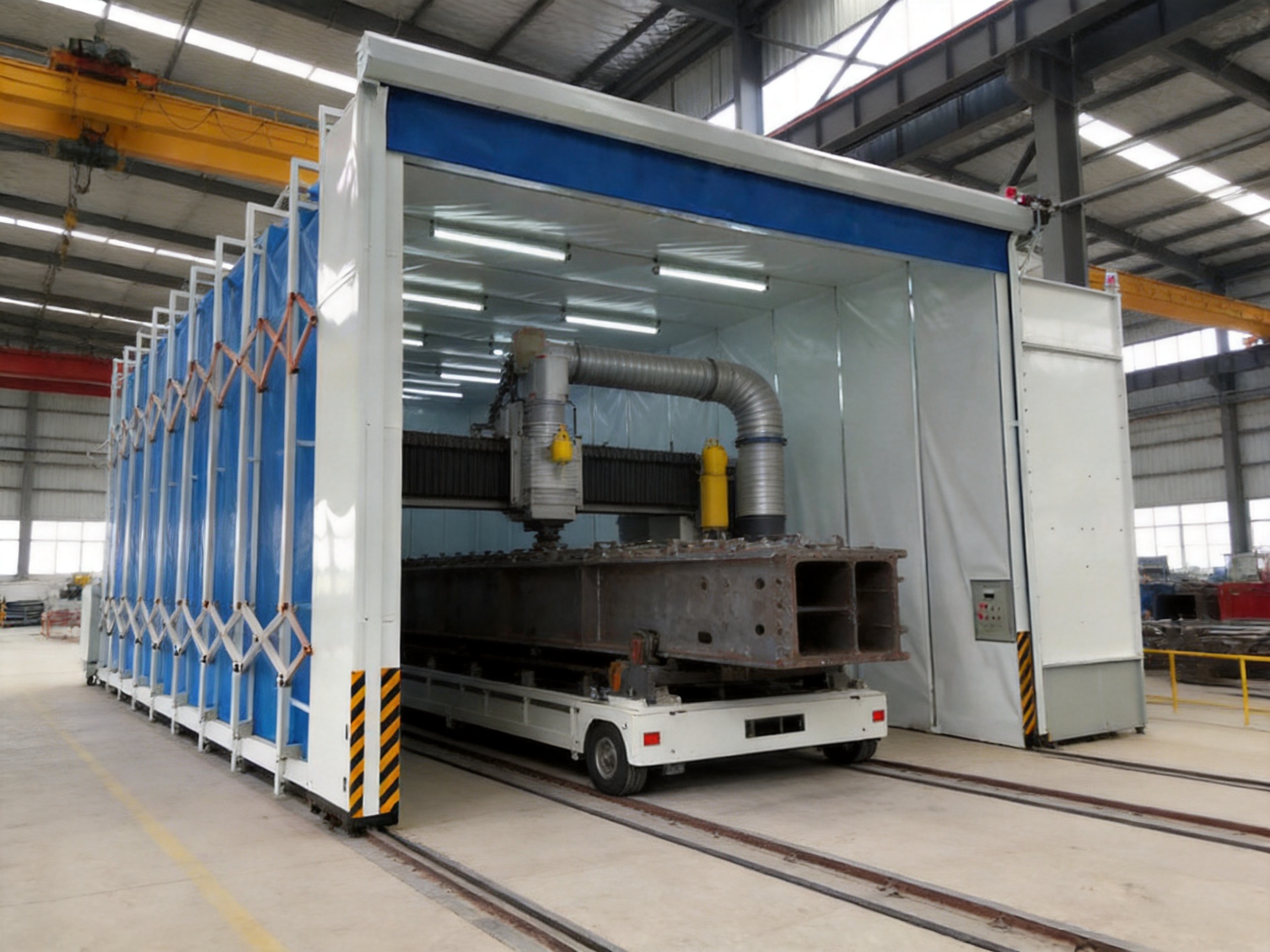
Coating quality is influenced by temperature, humidity, airflow, substrate condition, and flash-off time. In cold seasons, an optional heating system can help maintain a more stable working temperature. Forced air supply and exhaust distribute air through the booth and reduce stagnant zones.
A constant-temperature arrangement may be useful when coating materials require a defined application range or when seasonal temperature changes would otherwise affect viscosity and curing. Heating equipment must be selected for compatibility with the coating environment and installed with suitable safety controls. The design should prevent excessive temperature, ignition risk, and uneven heating.
Heating does not replace correct curing requirements. Some coatings require a specific time-temperature profile, while others depend on chemical reaction, evaporation, or ambient conditions. The booth configuration should therefore be matched to the coating supplier's technical data and the customer's production process.
Ventilation during spraying and drying must also be managed carefully. High airflow may help remove solvents but can affect surface appearance if it causes excessive evaporation or dust movement. The manufacturer can configure the fan, duct, heating, and control system to support the intended process, while final operating parameters should be validated during commissioning.
The performance of a retractable mobile booth depends on more than the appearance of its panels. Structural alignment, airflow calculation, filtration selection, electrical safety, mobility, sealing, control logic, and installation quality all influence long-term value. A supplier with experience across multiple types of coating equipment is better positioned to coordinate these factors.
Jiangsu Yue Ze Environmental Protection Equipment Co., Ltd. has developed industrial surface-treatment solutions for more than four decades. Its product scope includes powder coating lines, electric vehicle assembly lines, automotive counterweight spray lines, paint and bake booths, large-part grinding rooms, waste gas treatment equipment, infrared radiation drying systems, automated conveying systems, intelligent coating lines, and other environmental protection equipment.
This broad manufacturing scope supports system-level engineering. A retractable booth may need to connect with a conveyor, preparation station, drying area, exhaust treatment system, or factory control network. Experience with related equipment allows the design team to consider the complete production flow rather than treating the booth as an isolated enclosure.
Integrated research and development enables the equipment to be adapted to different workpiece dimensions and operating conditions. The manufacturer can evaluate the booth structure, ventilation arrangement, filter configuration, mobility mechanism, lighting, control system, and optional heating as one coordinated design.
Manufacturing control is important for moving parts, rails, panels, fans, ductwork, electrical cabinets, and safety devices. Dimensional accuracy affects smooth movement. Panel quality affects sealing and durability. Fan and filter matching affects airflow. Electrical assembly affects safe operation and maintenance. Consistent production methods help reduce installation problems and support reliable commissioning.
Large-part coating creates requirements that differ from those of small-product painting. The booth must provide adequate internal clearance, operator access, lighting coverage, air distribution, and structural stability. The customer may also require crane access, wide openings, reinforced floor areas, or compatibility with existing material-handling equipment.
Experience with large-sized parts grinding rooms and industrial paint and bake booths gives the manufacturer a practical foundation for addressing these conditions. The design can focus on real workshop constraints such as uneven production schedules, oversized components, crane travel, restricted floor space, and the need to minimize repeated handling.
Standardized components can improve manufacturing efficiency, but industrial coating projects rarely have identical requirements. Customization may involve booth length, width, height, retraction direction, travel distance, rail arrangement, fan capacity, filter type, lighting layout, access doors, heating, control logic, and exhaust treatment.
The engineering process generally begins with information about the workpiece, coating material, production capacity, workshop dimensions, available utilities, environmental requirements, and desired workflow. Based on this information, the supplier can develop a suitable configuration and identify any civil, electrical, or ventilation requirements before installation.
Installation quality directly affects booth performance. The rail system must be aligned, panels must be correctly assembled, ducts must be sealed, fans must rotate in the correct direction, filters must be installed properly, and safety devices must be tested. Commissioning may include airflow checks, pressure verification, lighting inspection, movement tests, emergency stop tests, grounding checks, and control-system validation.
A manufacturer that provides installation and technical support can help shorten the start-up period. Training should explain normal operation, filter replacement, lubrication, cleaning, inspection, emergency procedures, and the correct changeover process between sanding and spraying.
Construction machinery components are often large, heavy, and irregularly shaped. A mobile booth can be positioned around excavator parts, loaders, frames, buckets, structural assemblies, or other equipment components. The operator does not need to transport every large item to a distant permanent room.
Truck bodies, trailer sections, and vehicle carriages require broad coating surfaces and careful control of overspray. A retractable booth can be designed with suitable length and height for the component while allowing the structure to contract when not in use.
Fabricated steel columns, beams, platforms, frames, and support structures may vary considerably in size. A flexible enclosure supports project-based manufacturing, where the product mix changes frequently and a permanent booth may be difficult to utilize efficiently.
Metal furniture, industrial cabinets, frames, racks, and fabricated products often require sanding, primer application, and finishing. The booth can help separate dust-producing preparation from the rest of the workshop and create a cleaner spray environment.
Repair facilities may receive products of different sizes and may not have the production volume to justify multiple fixed rooms. The ability to move and contract the booth provides a practical solution for maintenance, refurbishment, and customized repainting work.
Large cast components may require finishing, polishing, primer, and topcoat operations. The manufacturer has experience with automated painting processes for casting counterweight blocks, including process integration from finishing and polishing through primer and topcoat application. This background is relevant to customers seeking coordinated surface-treatment solutions for heavy industrial parts.
| Customization Area | Typical Design Considerations | Customer Benefit |
|---|---|---|
| Booth dimensions | Workpiece length, width, height, operator clearance, and access space | Suitable working volume for current and future products |
| Movement system | Rails, rollers, wheels, travel distance, locking, and positioning | Flexible placement and repeatable operation |
| Ventilation | Air volume, pressure, fan arrangement, supply path, and exhaust route | Controlled airflow and improved contaminant capture |
| Filtration | Dust filters, paint arrestors, final filters, and maintenance access | Cleaner exhaust and manageable maintenance |
| Lighting | Explosion-proof fixtures, brightness, position, and cleanability | Better visibility and coating inspection |
| Heating | Required temperature range, heating method, controls, and safety devices | More stable coating and drying conditions |
| Controls | Fan control, mode selection, alarms, interlocks, and emergency stops | Improved usability and operational safety |
| Environmental treatment | Exhaust ducting and additional gas or mist treatment where required | Support for applicable emission-management objectives |
Customization should be based on measured production requirements rather than only on the largest possible workpiece. Oversizing the booth may increase investment, airflow demand, heating cost, and maintenance. Undersizing may restrict operator movement, reduce coating quality, and make future production changes difficult. A professional design review balances current needs with reasonable expansion potential.
Energy consumption is influenced by fan power, heating demand, operating hours, filter resistance, booth volume, and the frequency of extension and retraction. A compact retracted position can reduce the space that must be conditioned when the booth is idle. Efficient fans and correctly sized motors can reduce unnecessary electrical consumption.
Filter maintenance also affects operating cost. As filters load with dust or paint mist, resistance increases and the fan may need to work harder to maintain airflow. Replacing filters at the appropriate point can improve airflow and prevent excessive energy use. However, replacement should be based on inspection, pressure readings, process conditions, and manufacturer recommendations rather than a fixed assumption alone.
Heating efficiency depends on enclosure sealing, insulation, air leakage, outdoor temperature, and the required process temperature. If the booth is used mainly for ambient-temperature spraying, heating capacity may be limited or optional. If controlled drying is required, the system should be engineered as part of a complete paint and bake process.
Productivity gains may also contribute to the economic value of the booth. Reduced workpiece movement, shorter preparation-to-coating transfer time, lower contamination risk, and improved space utilization can reduce indirect operating costs. A complete investment evaluation should consider these factors in addition to the purchase price.
Before installation, the customer should confirm the available workshop area, floor load capacity, rail route, crane path, door dimensions, emergency exits, power supply, exhaust route, and access for maintenance. The booth must have adequate clearance for extension, operator movement, filter replacement, fan service, and safe evacuation.
The floor should be sufficiently level and strong for the selected mobility system. If rails are used, their alignment and anchoring must be carefully planned. The exhaust duct should be routed to minimize unnecessary bends and pressure losses while complying with local requirements. Electrical power, grounding, control wiring, and emergency-stop locations should be defined before equipment delivery.
It is also useful to plan the surrounding workflow. Raw components should have a clear route into the preparation area. Finished parts should be able to leave without passing through contaminated zones. Paint, abrasive materials, filters, and waste containers should be stored in appropriate locations. Good layout planning improves the value of the booth and reduces interference with other production activities.
Regular maintenance keeps the booth safe and efficient. Daily checks may include visible filter condition, abnormal noise, fan operation, lighting, enclosure damage, grounding connections, and the cleanliness of the working area. Operators should report vibration, unusual odors, reduced airflow, difficult movement, or control-system alarms immediately.
Filters should be inspected and replaced according to their condition and the manufacturer's recommendations. Used filters may contain paint residues or hazardous substances and must be disposed of according to applicable waste-management requirements. The filter housing and surrounding duct areas should be cleaned to prevent accumulated deposits.
Rails, rollers, wheels, hinges, seals, and moving joints should be inspected for wear and contamination. Lubrication should be performed using materials compatible with the equipment and operating environment. The enclosure should move smoothly without excessive force, jerking, or misalignment.
Fans and motors require inspection for bearing condition, belt tension where applicable, electrical connections, vibration, and dust accumulation. Lighting fixtures should be cleaned and checked for damage. Safety interlocks, emergency stops, alarms, and pressure indicators should be tested regularly rather than only after a fault occurs.
A controlled coating environment can improve repeatability. When airflow is stable, lighting is adequate, dust is contained, and the workpiece is handled less frequently, operators have better conditions for applying consistent coatings. The booth also helps separate the coating operation from general workshop contamination.
For customers supplying products to demanding industrial sectors, consistent surface appearance and corrosion protection are important. The retractable booth supports the process by creating an appropriate working environment, but quality control should still include substrate preparation checks, coating-thickness measurement, adhesion testing where required, visual inspection, curing verification, and documentation.
The booth may also support standardized work instructions. The customer can define extension positions, ventilation settings, sanding procedures, cleaning requirements, spray sequences, filter checks, and inspection steps. Standardization is particularly useful when several operators or product categories use the same workstation.
The main advantage is that it combines an enclosed coating and preparation area with flexible use of workshop space. It can be extended for spraying or sanding, moved closer to large workpieces, and contracted when the full footprint is no longer required.
Yes. The booth can be configured for dual-function operation. Sanding requires effective dust extraction, while spraying requires suitable paint-mist capture and controlled airflow. The customer must follow a defined cleaning and ventilation procedure when changing between modes.
Yes. The dimensions, mobility system, ventilation capacity, access openings, and structural design can be customized for large components such as construction machinery parts, truck bodies, steel structures, castings, and fabricated metal assemblies.
Movement may be provided by floor rails, rollers, wheels, or a guided combination of these systems. The selection depends on the booth size, floor conditions, travel frequency, and positioning requirements. Locking and travel-limit systems can be included to improve stability and safety.
The exact foundation and floor requirements depend on the design and site conditions. Compared with a conventional fixed building or permanent paint room, the modular retractable system generally requires less complex civil construction. The installation plan should still confirm floor strength, levelness, rail anchoring, drainage, electrical supply, and exhaust arrangements.
During spraying, the booth uses controlled airflow and filtration to draw paint mist away from the operator and toward the exhaust treatment section. Filter type and capacity are selected according to the coating material, spray method, workpiece size, and applicable environmental requirements.
In sanding mode, the extraction system draws dust into the filtration system. Effective dust control also depends on tool connection, operator technique, filter condition, enclosure sealing, and regular cleaning. Dust should be removed before switching to spraying.
Yes. An optional heating system can be integrated when the coating or drying process requires more stable temperature control. Heating capacity, safety devices, airflow, and control logic should be designed according to the coating specifications and site conditions.
Depending on the project, the booth may include explosion-proof fans, explosion-proof lighting, anti-static grounding, flame-retardant materials, emergency stops, travel limits, alarms, safety interlocks, and suitable electrical protection. The final configuration must correspond to the hazardous-area assessment and local regulations.
Yes. It can be coordinated with preparation stations, conveyors, drying systems, exhaust treatment equipment, factory utilities, and production-control systems. The connection points should be considered during the layout and engineering stage.
Replacement frequency depends on dust and paint loading, operating hours, coating materials, airflow requirements, and filter type. Filters should be inspected regularly and replaced when pressure loss, visible loading, reduced airflow, or process performance indicates that service is required.
Useful information includes workpiece dimensions and weight, coating materials, sanding tools, desired production capacity, workshop dimensions, available movement routes, required booth modes, ventilation preferences, heating requirements, local environmental conditions, power supply, and exhaust-discharge arrangements.
A retractable booth combines mechanical movement, ventilation, filtration, electrical safety, environmental control, and installation requirements. A supplier with experience in coating lines, grinding rooms, drying systems, conveying equipment, and waste-gas treatment can better coordinate the complete process and reduce the risk of mismatched components.
The retractable mobile spray and sanding booth is a flexible solution for industrial workshops that need effective surface preparation and coating without dedicating a large permanent area to a single process. Its telescopic enclosure, mobile base, negative-pressure ventilation, filtration system, lighting, safety equipment, and optional heating allow it to support a wide range of manufacturing and refurbishment applications.
Compared with fixed booths, it offers improved space utilization, easier adaptation to changing production layouts, and reduced need to move oversized workpieces. Compared with lightweight portable booths, it provides a more substantial industrial structure, greater customization potential, and stronger integration with ventilation, filtration, safety, and production systems.
The greatest value comes from a complete engineering approach. Correct dimensions, airflow, filtration, mobility, electrical protection, mode-change procedures, maintenance access, and installation planning must work together. Jiangsu Yue Ze Environmental Protection Equipment Co., Ltd. combines manufacturing capability, surface-treatment experience, customized design, installation support, and environmental equipment expertise to provide integrated coating solutions for customers with varied workshop conditions.
For manufacturers handling large or irregular components, changing product mixes, limited floor space, or combined sanding and spraying requirements, this equipment can provide a practical path toward cleaner operations, more efficient production flow, improved space utilization, and controlled surface-treatment quality.
1. Industrial Ventilation: A Manual of Recommended Practice for Design, ventilation principles and industrial air-contaminant control.
2. Occupational Safety and Health guidance on spray finishing operations, flammable materials, ventilation, and personal protective equipment.
3. International recommendations for explosion-protected electrical equipment used in hazardous industrial atmospheres.
4. Industrial coating-process manuals covering surface preparation, paint application, drying, curing, and coating inspection.
5. Technical guidance on dust collection, filtration maintenance, pressure monitoring, and industrial housekeeping.
6. Manufacturer engineering information for industrial paint booths, grinding rooms, automated coating lines, drying systems, and environmental protection equipment.
The retractable mobile spray & sanding booth is a flexible, space-saving, and multi-functional coating workstation. With a telescopic movable structure and integrated dust & paint mist filtrat...
See Details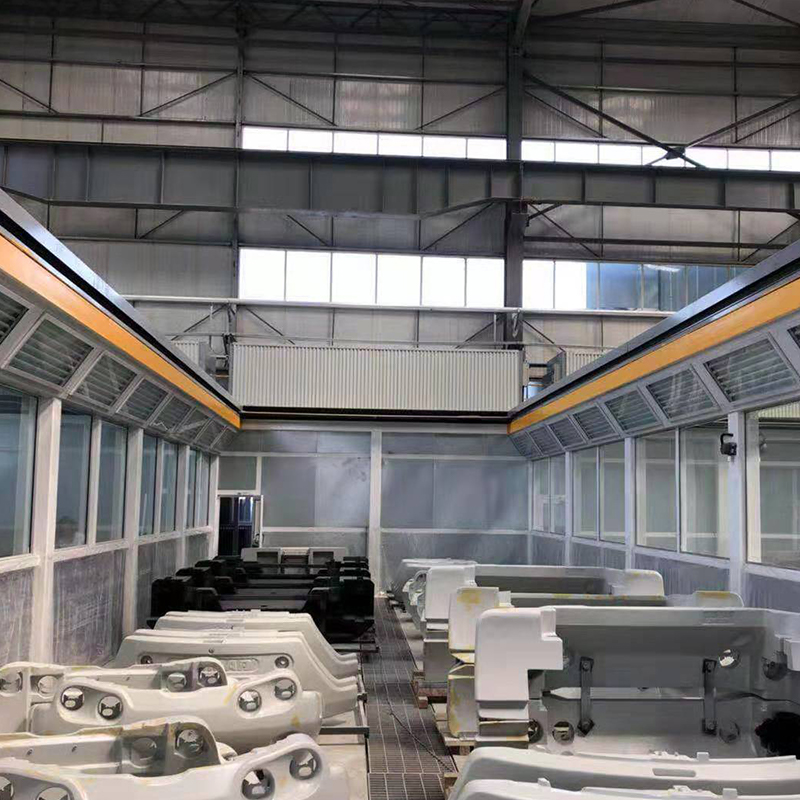
The retractable mobile spray & sanding booth is a flexible, space-saving, and multi-functional coating workstation. With a telescopic movable structure and integrated dust & paint mist filtrat...
See Details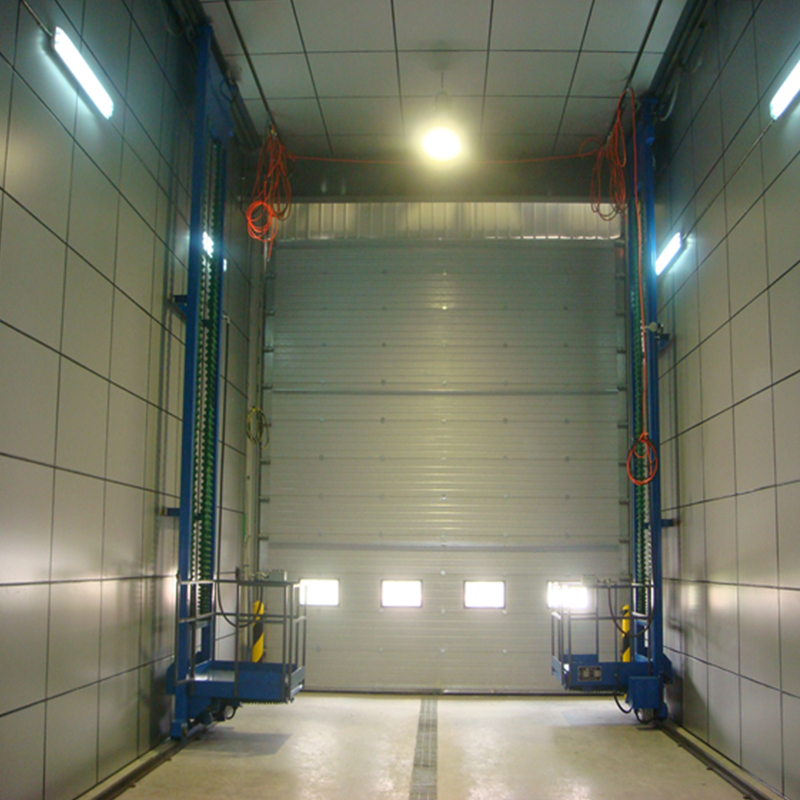
We supply high-quality blasting room and automatic shot blasting machines. The equipment adopts mature surface treatment technology, realizing rust removal, oxide layer cleaning and surface roughening...
See Details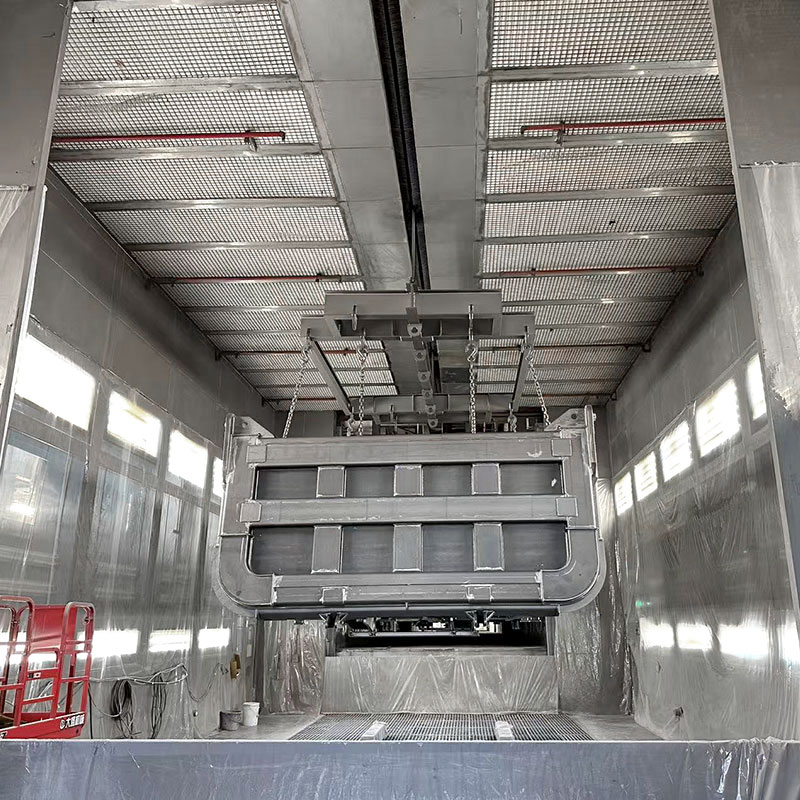
Manual spray booth is a small & economical painting workstation, designed for manual spraying operation. Equipped with efficient paint mist filtration and exhaust system, it ensures clean air and ...
See Details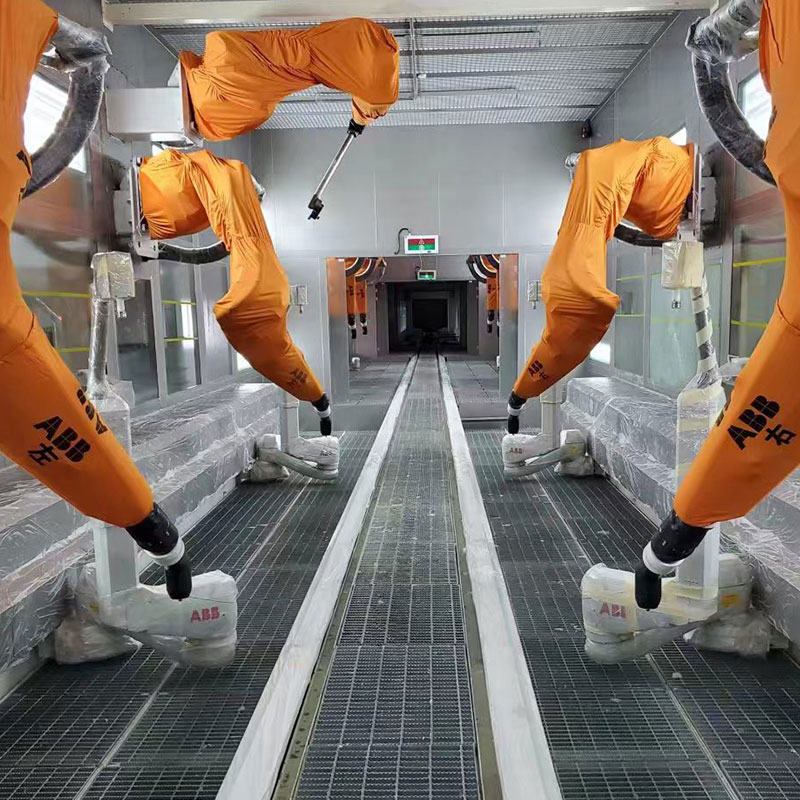
An automatic robotic spray booth is an intelligent, unmanned coating system. Equipped with a robot spraying system, constant temperature air circulation, and a high-efficiency exhaust filtration syste...
See Details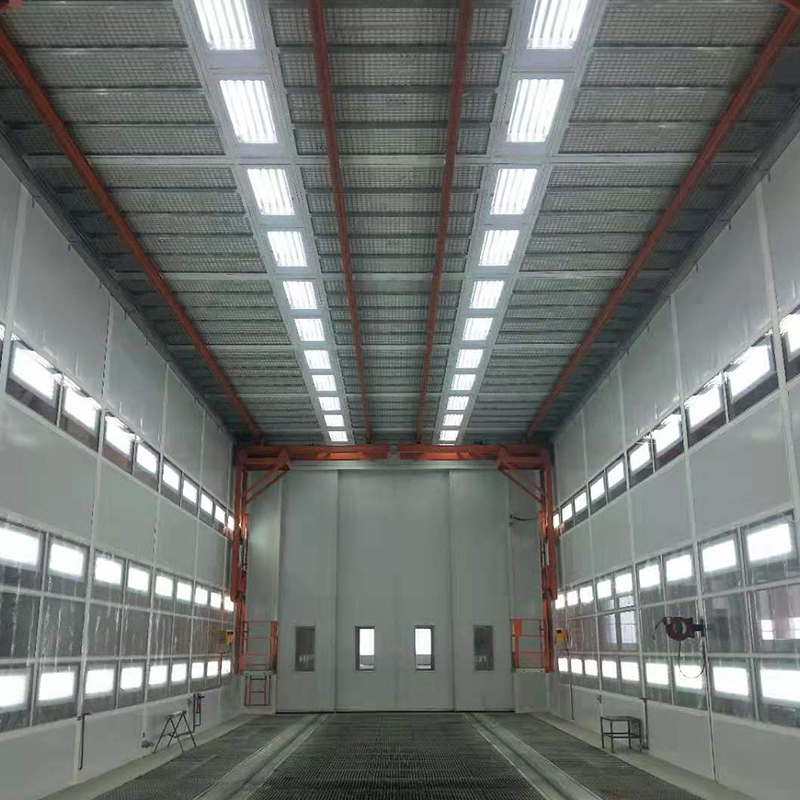
Heavy vehicle spray booth is a large-scale professional coating workshop, specially designed for oversize and heavy equipment. With powerful air circulation, heating system, and multi-stage exhaust fi...
See DetailsBuild Your Customized Industrial Coating System
Send us your workpiece information, production capacity, coating process, workshop layout, and environmental requirements. Yueze will help evaluate your project and develop a suitable coating, conveying, drying, and environmental treatment solution.
Main menu
Products
Contact Us
Company Address:
No. 12, Park Avenue, Shanggang Industrial Park, Jianhu, Yancheng City, Jiangsu Province
Message Us Right Now!

Follow us: