
 русский
 عربى
 Tiếng Việt

Cardboard Paint Arresto is professional equipment for capturing and filtering paint mist, mainly made of high-quality corrugated cardboard, filter cotton, and waterproof coating. It adopts a modular d...
See Details
Yueze Environmental Protection provides one-stop compliant industrial surface treatment solutions with professional tech and fine craftsmanship.
 Get Inquiries
2026-10-04
Content
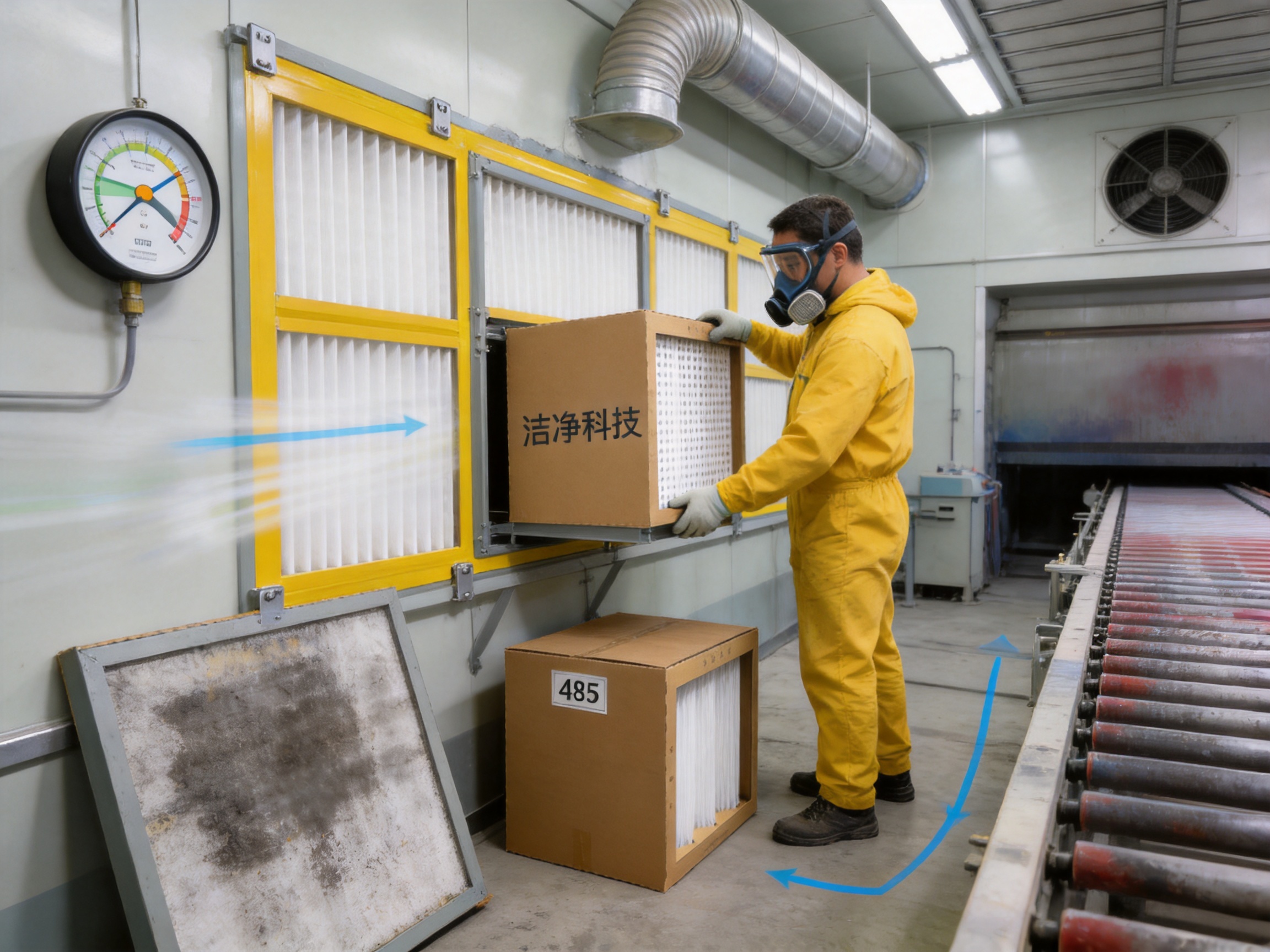
Dry spray booths require dependable overspray capture to protect exhaust ducts, fans, surrounding equipment, workers, and the wider workshop environment. Among the most practical filtration solutions for liquid-paint applications is the cardboard paint arrestor box filter. Designed with folded corrugated cardboard baffles, filter cotton, and a protective coating, this dry-type filter captures paint mist before it reaches the booth exhaust system.
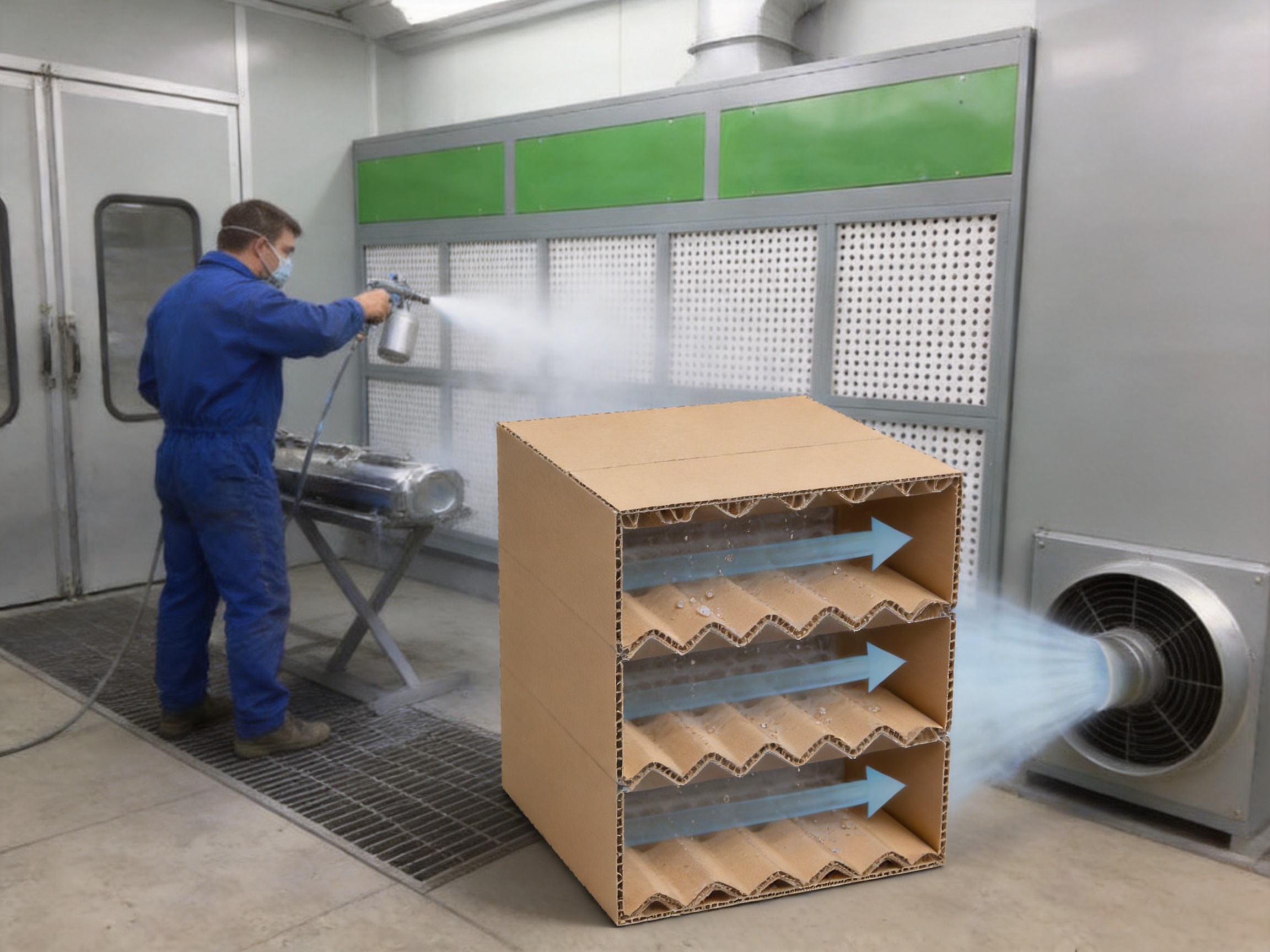
The cardboard paint arrestor box filter for dry spray booths combines a high paint-holding capacity with low operating complexity. It does not require water, pumps, circulating tanks, chemical dosing, or wastewater treatment. Instead, paint-laden air passes through a carefully arranged series of directional channels. As the airflow changes direction, paint particles lose momentum, collide with the internal baffles, and adhere to the filter surfaces.
This article explains the structure, operating principle, advantages, configuration options, installation requirements, maintenance practices, and industrial applications of cardboard paint arrestor box filters. It also examines how Jiangsu Yue Ze Environmental Protection Equipment Co., Ltd. supports this product with customized engineering, integrated manufacturing, quality control, and experience in complete coating and environmental protection systems.
Liquid paint application produces more than the coating that reaches the workpiece. Depending on the spray gun, coating material, transfer efficiency, operator technique, workpiece geometry, and booth airflow, a proportion of the atomized paint becomes overspray. These fine droplets and partially dried particles are carried away from the spraying area by the booth extraction system.
Without an effective capture device, overspray can accumulate on exhaust grilles, duct walls, fans, dampers, and treatment equipment. This buildup may reduce the effective cross-sectional area of the ventilation system, increase pressure loss, create maintenance difficulties, and affect the stability of the spraying environment. Accumulated coating residue can also increase cleaning frequency and, in certain applications, create an avoidable fire or contamination risk.
A suitable filter performs several functions at the same time. It captures paint particles, helps preserve the cleanliness of downstream equipment, supports stable airflow, simplifies routine maintenance, and reduces the release of visible paint mist into the surrounding environment. The filter must also be matched to the booth dimensions, exhaust volume, coating material, production rate, and available fan pressure.
Cardboard paint arrestor box filters are particularly suitable when a facility needs a dry filtration method that is simple to install and replace. They are commonly used in general industrial painting, metal component coating, automotive parts finishing, agricultural machinery production, furniture finishing, fabricated steel products, and other applications where liquid paint is sprayed inside a dry booth.
A cardboard paint arrestor box filter is a replaceable dry-type filtration unit made primarily from high-quality corrugated cardboard. The cardboard is folded or formed into an internal baffle arrangement that creates multiple airflow passages. Depending on the design, the filter may also include filter cotton, a waterproof or moisture-resistant coating, reinforcing components, and a frame or mounting arrangement for connection to the booth exhaust wall.
The box-shaped structure provides greater depth than a flat filter panel. This additional depth creates a longer airflow path and more opportunities for overspray particles to contact a solid surface. The design can therefore provide substantial paint-holding capacity while maintaining a relatively open airflow path compared with dense fiber media.
Unlike a conventional flat filter, the box filter does not rely only on a single layer of filtration material. Its internal geometry is central to its performance. The folded baffles redirect air through a zig-zag or accordion-style route. Paint particles, which have greater mass and inertia than the moving air, are less able to follow each change in direction. They strike the cardboard surfaces and remain attached to the filter.
The filter is normally installed in the exhaust section of a dry spray booth. Depending on the booth design, it may be installed across a rear wall, side wall, or dedicated filter bank. Multiple units can be arranged in rows to cover a large exhaust opening. This modular arrangement makes it possible to replace saturated units individually or in planned groups rather than dismantling an entire filtration system.
Because the filter is a consumable, its service life depends on the amount and type of paint being sprayed. A filter used for occasional touch-up work may remain serviceable for a relatively long period, while a filter installed on a high-volume automotive or industrial production line may require more frequent replacement. Monitoring pressure, visual loading, and airflow is therefore important.
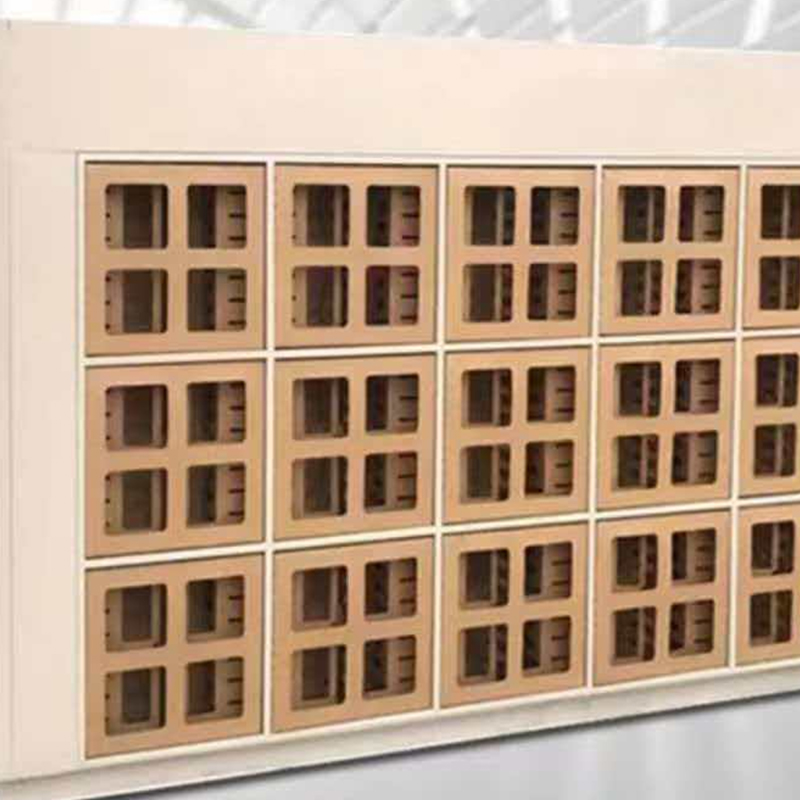
Cardboard Paint Arrestor Box Filter For Dry Spray Booth
The operating principle is based mainly on inertial impaction, airflow redirection, adhesion, and progressive loading. The filter is not simply a screen that blocks every particle. Instead, it uses the relationship between airflow and particle motion to separate paint overspray from the exhaust stream.
Paint-laden air leaves the spraying zone and enters the filter bank. The filter should be installed so that the airflow direction corresponds with the design orientation indicated by the manufacturer. Correct orientation ensures that the air encounters the intended baffle sequence and that the filter uses its available depth effectively.
Before the air enters the internal passages, the booth design should distribute the exhaust flow as evenly as possible across the filter surface. Uneven airflow can overload certain sections while leaving other areas underused. Proper booth balancing, correctly sized exhaust openings, and secure filter installation are therefore essential parts of the overall system.
Inside the box, the corrugated cardboard baffles create a series of changes in direction. Air can follow these turns because it is relatively light and responsive to pressure differences. Larger and heavier paint droplets have greater inertia. When the airflow changes direction, many of the droplets continue along their original path and impact the cardboard baffle.
Fine particles may be captured through a combination of impaction, surface adhesion, interception, and contact with secondary filter material. The exact efficiency depends on particle size, paint viscosity, spray pressure, airflow speed, filter geometry, and the condition of the filter. The filter should therefore be selected as part of a properly engineered booth ventilation system rather than treated as an independent guarantee of every emission requirement.
Once a paint particle contacts the cardboard surface, it adheres to the baffle. As spraying continues, residue accumulates in the internal passages. The three-dimensional box construction gives the filter a large effective collection area in a compact installation depth. This is one reason the product can hold considerably more paint than a simple flat panel of similar face dimensions.
The filter material and surface treatment are selected to maintain structural stability during use. Corrugated cardboard provides a favorable balance between stiffness, low weight, formability, and cost. A protective coating can help the filter tolerate the operating environment and retain its shape during handling and service.
After passing through the internal baffles, the air continues toward the exhaust fan or downstream treatment equipment. A properly selected and clean filter allows the booth to maintain the designed extraction pattern. As paint loading increases, airflow resistance usually rises. For this reason, the filter must be inspected and replaced before excessive buildup causes a significant reduction in booth performance.
One of the most important advantages of a box filter is its large internal collection area. The folded baffles create substantially more usable surface than a flat sheet installed over the same wall opening. This allows the filter to retain a significant amount of paint residue before replacement becomes necessary.
High paint-holding capacity can reduce replacement frequency in suitable applications. Fewer replacement operations may lower labor requirements, reduce production interruptions, and simplify consumables management. Actual service life still depends on coating volume and operating conditions, so the filter should be selected using real production data rather than capacity claims alone.
The internal passages are designed to provide repeated particle-contact opportunities without completely obstructing the airflow. Compared with dense media that rapidly becomes blocked by sticky overspray, the open baffle structure can offer favorable ventilation performance during the early and middle stages of service.
Low resistance is beneficial because the exhaust fan can continue to provide the airflow required for effective booth capture. It may also help reduce unnecessary energy consumption and prevent excessive strain on the fan motor. However, every filter adds some pressure loss, and the final selection must consider the fan curve, filter face velocity, booth size, and number of installed units.
Cardboard paint arrestor box filters operate without water circulation. This eliminates the need for water tanks, pumps, spray nozzles, sludge removal systems, and wastewater treatment associated with many wet collection arrangements. Facilities that prefer a simpler dry process can benefit from reduced equipment complexity and fewer utility connections.
The dry design also avoids the generation of paint-contaminated wastewater. This can simplify waste management, although saturated filters and collected paint residue must still be handled according to the applicable local requirements for industrial waste, hazardous waste, combustible materials, or coating residues.
The lightweight construction makes the filter easier for maintenance personnel to handle than heavy metal or liquid-filled collection systems. Modular units can be placed into a filter wall, support frame, or mounting rail without requiring complicated specialist tools. Correct sealing around the perimeter remains essential, because gaps can allow unfiltered air to bypass the filter.
When the filter reaches the end of its useful service life, the saturated unit can be removed and replaced with a new one. This approach reduces the time spent washing or rebuilding permanent filtration components and allows maintenance teams to plan consumable changes around production schedules.
Capturing overspray before it reaches the exhaust duct and fan helps reduce the accumulation of paint on downstream surfaces. Cleaner ducts and fan components can support more stable operation, reduce cleaning work, and extend the practical service life of equipment installed after the booth.
In systems that include additional purification equipment, the box filter acts as a preliminary protection stage. It can reduce the load on subsequent filtration, adsorption, thermal treatment, or other environmental protection equipment. The filter does not replace a required final treatment system, but it can improve the operating conditions of the complete process.
Cardboard box filters can be produced in different sizes, depths, baffle arrangements, and mounting formats. This makes them suitable for small manual booths, medium-size industrial booths, and large production line exhaust walls. Non-standard customization is useful where the booth has an unusual opening, restricted installation depth, special frame spacing, or a specific exhaust volume.
| Configuration | Typical Structural Feature | Common Application | Selection Consideration |
|---|---|---|---|
| Compact box | Shorter airflow path and basic baffle arrangement | Light-duty spraying and touch-up work | Suitable for lower overspray loads and limited installation depth |
| Standard box | Medium-depth folded baffles | General industrial dry spray booths | Balanced capacity, airflow resistance, and installation space |
| Deep box | Longer path with multiple baffle stages | High-volume production and automotive component coating | Requires adequate fan pressure and sufficient booth clearance |
| Customized unit | Dimensions and mounting details adapted to the booth | Non-standard exhaust walls and integrated production lines | Must be matched to airflow, frame structure, and operating conditions |
The table provides general selection guidance rather than a universal specification. A deeper filter may offer greater holding capacity, but it can also increase pressure loss, weight, and installation depth. The best design is the one that provides the required capture performance while remaining compatible with the booth fan and maintenance plan.
The performance of a cardboard paint arrestor box filter begins with its materials. Corrugated cardboard is used because it is lightweight, sufficiently rigid, easy to shape, and economical for a replaceable consumable. The fluted structure also contributes to mechanical strength and helps the finished box retain its geometry during transport and installation.
High-quality cardboard must be selected with consideration for thickness, compression resistance, dimensional stability, surface behavior, and compatibility with the intended workshop environment. If the material is too weak, the baffles may deform and create irregular airflow passages. If the structure is excessively dense, airflow resistance may become unnecessarily high.
A waterproof or moisture-resistant coating can help protect the cardboard from incidental humidity and improve surface durability. The coating is not intended to make the filter suitable for immersion or to convert a dry filter into a wet collection system. Its purpose is to support structural integrity and service reliability in the normal operating environment of a dry spray booth.
Filter cotton or supplementary media may be incorporated into certain designs to improve the capture of smaller residues or to provide an additional filtration stage. The media arrangement should be selected carefully. Too much dense material may cause rapid pressure increase, while too little may not provide the desired final capture performance.
Edges, seams, folds, and mounting surfaces must be manufactured consistently. Small dimensional differences may create gaps between adjacent units or cause bypass around the perimeter. For this reason, production control is just as important as the basic material specification.
Jiangsu Yue Ze Environmental Protection Equipment Co., Ltd. is located in Yancheng, Jiangsu, China, and covers approximately 35,000 square meters. The company has a registered capital of 58 million yuan and more than 40 years of experience in coating equipment, environmental protection systems, and industrial surface treatment solutions.
The company’s experience extends beyond the manufacture of a single consumable. Its product and engineering scope includes powder coating lines, paint and bake booths, electric vehicle assembly lines, automotive counterweight spray lines, large-part grinding rooms, waste gas treatment equipment, infrared radiation drying systems, automated conveying systems, intelligent coating lines, and other industrial environmental protection equipment.
This broader capability is valuable when specifying a paint arrestor box filter because the filter is part of a larger airflow and coating process. A supplier that understands spray booth layout, conveyor movement, exhaust design, curing requirements, and pollution control can better evaluate how the consumable should function within the complete system.
Integrated research and development allows product design to consider the actual conditions of industrial use. For a box filter, this may include the filter depth, baffle geometry, cardboard grade, coating treatment, mounting arrangement, replacement method, and compatibility with the booth’s exhaust volume.
Customization can be based on paint mist generation, workpiece size, production rhythm, booth opening dimensions, available fan capacity, and on-site maintenance practices. The goal is not simply to produce a larger or deeper box, but to create a balanced filtration component that operates correctly within the customer’s process.
Consistent forming and assembly are important for maintaining repeatable airflow. Manufacturing controls may include dimensional checks, visual inspection, material verification, fold and seam inspection, and packaging checks. Finished units should be protected during storage and transportation so that the baffles do not become crushed, wet, or distorted before installation.
Quality control also involves communication between product design, production, and installation teams. If a filter is customized for a specific exhaust wall, the dimensions and orientation must be confirmed before manufacturing. Clear identification of airflow direction, replacement position, and installation requirements can reduce errors at the customer’s site.
Yueze has experience in the development and manufacture of complete coating-related systems. Its stated business scope includes design, production, installation, and customized equipment solutions. This one-stop capability can be useful for customers planning a new spray booth, upgrading an existing line, or integrating filtration consumables into a broader automated production system.
In 2014, the company pioneered a hanging automatic painting process line for casting counterweight blocks. The process covered stages from finishing and polishing through primer and topcoat application. Such experience demonstrates an understanding of how coating quality, material handling, production automation, and environmental control must work together in an industrial line.
For customers purchasing filters as replacement consumables, the same engineering background can support more informed recommendations. The supplier can consider whether the existing booth has adequate exhaust balance, whether the filter dimensions suit the current frame, and whether an additional treatment stage is required for the coating materials being used.
Automotive components often require repeatable coating quality and stable booth conditions. Brackets, wheels, structural parts, counterweight blocks, metal panels, and other components may be sprayed in manual or automated booths. Box filters can capture overspray generated during primer, color coat, or protective coating operations, provided that the filter is selected for the paint type and production volume.
Fabricated steel products, machinery housings, agricultural equipment, construction components, and general metal products frequently use dry spray booths. These operations may involve changing workpiece dimensions and variable coating schedules. A modular filter bank allows the exhaust wall to be maintained without extensive changes to the booth structure.
Furniture and component finishing can generate paint, lacquer, varnish, or other coating overspray. The filter should be selected with attention to solvent compatibility, flammability, dust loading, and the specific environmental requirements of the finishing area. Where wood dust is also present, the booth and filtration arrangement must be designed to address the combined fire and housekeeping risks.
Maintenance departments and repair facilities may use dry spray booths intermittently rather than continuously. In these situations, easy filter replacement and long storage stability can be important. The filter must be protected from moisture and physical damage during periods of non-use, and the booth should be cleaned according to the coating material supplier’s recommendations.
Large workpieces may require spacious booths with substantial exhaust openings. Multiple box filters can be arranged across the rear or side wall to create a scalable capture area. The layout should account for workpiece movement, operator access, filter replacement space, and the need to maintain uniform extraction around the part.
Correct installation is essential to achieving the expected performance of a cardboard paint arrestor box filter. Even a well-designed filter can perform poorly if it is installed backward, left unsecured, or surrounded by bypass gaps.
Before installation, identify the direction of airflow through the booth. The filter should be positioned according to the manufacturer’s orientation markings or installation instructions. If the internal baffles are used in the wrong direction, the intended impaction effect may be reduced and pressure loss may increase.
Check the new filter for crushed corners, torn cardboard, moisture damage, or deformation. Inspect the support frame, retaining clips, gaskets, rails, and adjacent panels. Damaged frame components should be repaired before a new filter is installed.
The filter should fit tightly against the mounting frame. Any open space around the edges can become a bypass route through which paint-laden air avoids the baffles. Depending on the booth design, sealing may be achieved with a gasket, compression fit, retaining strip, or properly designed frame connection.
Filters should be held firmly enough to prevent movement caused by vibration or airflow. At the same time, the mounting arrangement should allow maintenance staff to remove the filter safely when it becomes saturated. The installation should not crush the box or block the intended internal passages.
After installation, inspect the filter bank while the exhaust system is operating. Look for air leakage, unusual vibration, collapsed sections, or uneven loading. If the booth includes pressure measurement, record the clean-filter pressure as a reference for future maintenance decisions.
Cardboard paint arrestor box filters are designed for replacement rather than washing or rebuilding. A planned maintenance program helps prevent sudden airflow loss and ensures that filters are changed before excessive paint buildup affects the booth.
Visual inspection should be performed at regular intervals. Maintenance personnel should look for heavy paint accumulation, blocked passages, damaged baffles, moisture exposure, filter movement, and coating residue escaping toward the exhaust duct. The inspection frequency should reflect the production schedule and overspray loading.
Pressure monitoring is another useful method. As the filter loads with paint, its resistance generally increases. A rising pressure difference across the filter bank can indicate that replacement is approaching. The facility should establish an operating limit based on the booth design, fan capacity, coating process, and environmental requirements.
Reduced booth capture, visible mist, unstable airflow, excessive fan noise, or a noticeable change in spray behavior may indicate that the filter is clogged, damaged, incorrectly installed, or incorrectly sized. The cause should be investigated rather than assuming that replacement alone will solve every problem.
When replacing a saturated unit, workers should use suitable personal protective equipment and follow the site’s procedures for handling paint-contaminated materials. The removed filter should be placed in an appropriate container or designated waste area. Disposal must comply with local regulations and the safety data information for the coating materials.
Unused filters should be stored in a dry, clean location away from direct rain, excessive humidity, ignition sources, and mechanical impact. Stacking should not crush the baffles. Proper storage protects the product’s geometry and reduces the possibility of installing a filter that has already been damaged before service.
Selection should begin with the booth’s technical conditions rather than only the nominal filter dimensions. Important data includes booth width and height, exhaust volume, fan pressure, filter wall area, paint type, spray rate, operating hours, workpiece size, and expected replacement interval.
The coating material is also important. Cardboard arrestor filters are primarily intended for liquid-paint overspray in dry spray booths. They are not automatically suitable for every powder, solvent, chemical, or process dust. Powder coating operations may require a dedicated powder recovery and filtration arrangement, especially where reclaiming powder or controlling combustible dust is necessary.
Paint viscosity, solids content, drying behavior, and tackiness affect how residue accumulates on the baffles. A sticky coating may adhere effectively but can also block passages more quickly. A rapidly drying coating may produce brittle particles that behave differently in the airflow. The supplier should receive accurate information about the coating process before recommending the filter configuration.
Filter depth must be balanced against available space and fan capacity. A deep, multi-stage box may provide greater holding capacity, but the booth must have enough installation depth and the exhaust fan must be able to overcome the associated pressure loss. A smaller filter may be more appropriate for a low-volume booth or a compact touch-up area.
The number of filters required depends on the exhaust wall area and the desired face velocity. Installing too few units can overload each filter and increase pressure loss. Installing an appropriate number of units spreads the airflow and paint loading across the filter bank, helping to improve service life and maintain more uniform performance.
Flat fiberglass or synthetic fiber pads are widely used for basic overspray capture. They can be economical and easy to replace, but their usable collection area is limited by their flat geometry. They may also load quickly when exposed to high overspray volumes, causing a rapid increase in pressure loss.
Pleated filters provide a larger surface area than flat pads and may offer improved fine-particle capture. However, the pleated media can become blocked by sticky paint, and the filter construction may be more expensive or less suitable for heavy overspray loading. Their use depends on the coating process and the required final filtration stage.
Wet paint arrestor systems use water or liquid circulation to capture overspray. They can be appropriate for certain high-volume or specialized applications, but they require pumps, tanks, water management, sludge handling, and wastewater control. A dry cardboard box filter is generally simpler where the process and regulatory conditions permit dry filtration.
Metal mist eliminators or permanent collection panels may offer durability and reusability. At the same time, they often require regular washing, scraping, or specialized cleaning. Their initial cost, weight, maintenance requirements, and pressure characteristics may not suit every workshop.
The cardboard box filter is competitive because it combines a three-dimensional collection path, large paint-holding capacity, low weight, easy replacement, and dry operation. Its main limitation is that it is a consumable and must be disposed of after loading. The correct choice depends on total operating cost, maintenance resources, coating characteristics, and environmental requirements rather than on purchase price alone.
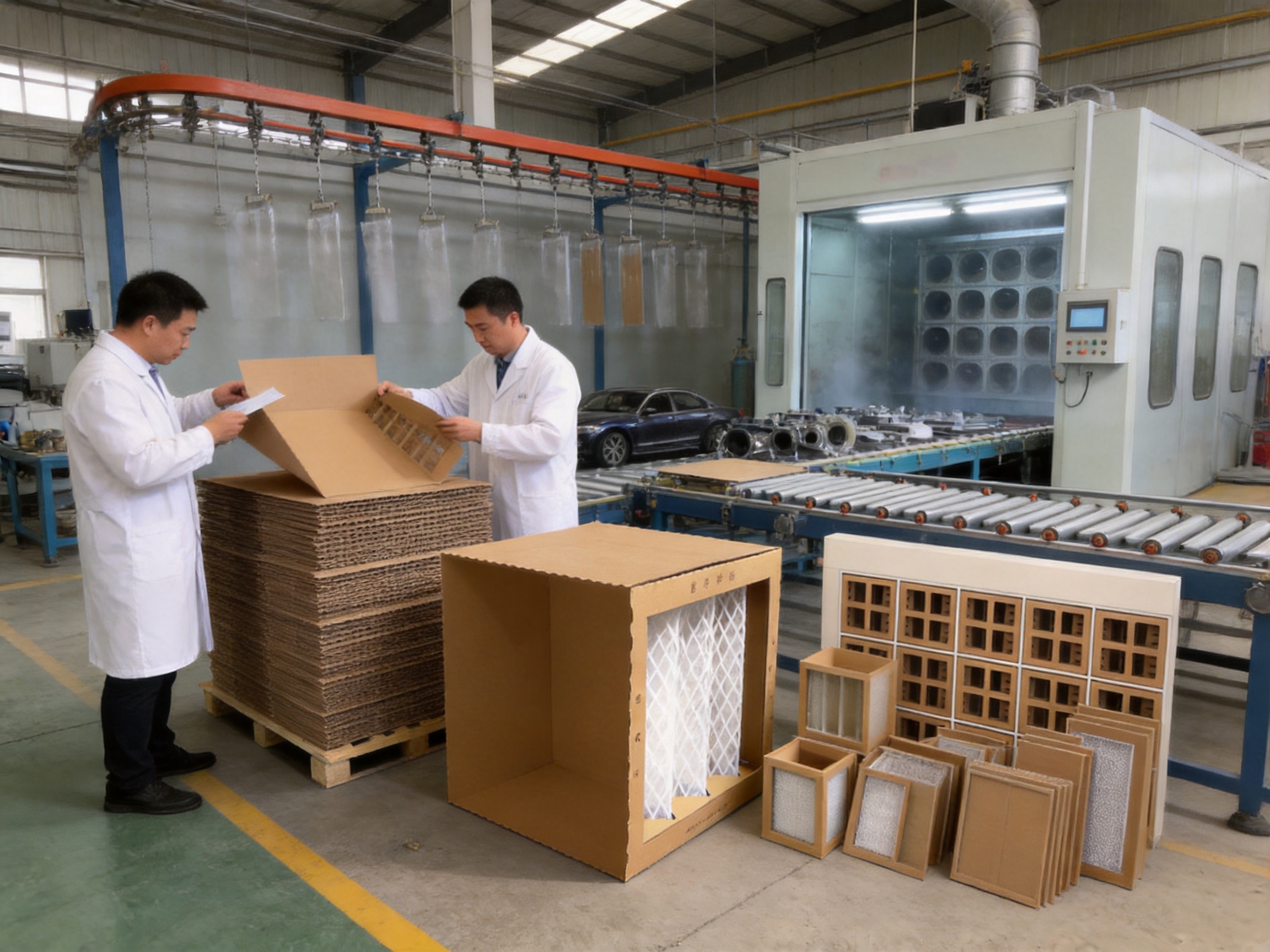
Dry filtration can reduce the number of auxiliary systems required for overspray control. The absence of circulating water helps reduce water consumption and avoids the production of paint-contaminated wastewater. Lightweight cardboard also reduces handling difficulty during replacement.
Environmental performance depends on the entire coating system. The box filter captures overspray, but it may not remove every gaseous solvent, odor, or very fine emission. If regulations require additional treatment, the booth may need activated carbon, thermal oxidation, high-efficiency final filtration, or another suitable downstream system. The box filter can serve as a protective prefiltration stage for such equipment.
Spent filters must be treated responsibly. Paint residue, solvent content, and local regulations determine whether the material is classified as ordinary industrial waste or controlled waste. Facilities should consult their environmental department, waste contractor, coating supplier, and applicable authorities before establishing a disposal method.
Fire prevention is also important. Many liquid paints, solvents, and dried coating residues are combustible. The booth should be designed and operated according to applicable fire, ventilation, electrical, and occupational safety requirements. Ignition sources must be controlled, and saturated filters should not be stored near heat, sparks, open flames, or incompatible chemicals.
A paint arrestor box filter is only one component of a complete coating process. Coating quality also depends on surface preparation, pretreatment, spray equipment, booth airflow, conveying, flash-off, drying or baking, and inspection. If the booth extraction is unstable, operators may experience inconsistent atomization, uneven coating distribution, excessive overspray, or longer cleaning intervals.
Yueze’s broader equipment portfolio includes automated conveying systems, intelligent coating lines, powder coating production lines, paint and bake booths, infrared radiation drying systems, and waste gas treatment equipment. This gives the company a system-level perspective when helping customers plan a new line or improve an existing installation.
For an automated production line, filter replacement access must be included in the layout from the beginning. The design should provide enough clearance for workers to remove saturated boxes without interfering with conveyors, spray guns, robots, workpieces, or safety barriers. Filter monitoring can also be integrated into the maintenance plan through pressure gauges, differential pressure transmitters, or scheduled inspections.
For a manual booth, simplicity and accessibility may be the primary priorities. A modular filter arrangement can allow one section to be replaced without removing the complete exhaust wall. For a high-volume line, the design may focus on uniform airflow, large filter area, coordinated replacement scheduling, and protection of downstream equipment.
The main purpose is to capture liquid-paint overspray from the exhaust airflow of a dry spray booth. Its folded cardboard baffles force the air through multiple direction changes, allowing paint particles to impact and adhere to the internal surfaces before the air reaches the exhaust duct and fan.
The filter is primarily intended for liquid-paint and solvent-based coating overspray in dry spray booths. Suitability depends on the coating chemistry, solids content, drying behavior, spray rate, and safety requirements. The coating material should be disclosed to the supplier before selection. Powder coating dust and specialized chemical processes may require different filtration equipment.
No. The filter operates as a dry filtration product and does not require water circulation, pumps, or wastewater treatment. This simplifies operation and reduces water-related maintenance. Spent filters still require proper disposal according to local environmental and waste-handling requirements.
There is no single replacement interval for every application. Service life depends on paint consumption, spray hours, coating type, airflow, booth size, and filter configuration. Replacement is generally appropriate when the baffles become heavily loaded, airflow resistance rises significantly, booth capture deteriorates, or the filter is damaged.
It is designed primarily as a replaceable consumable. Attempting to wash or clean the cardboard baffles may damage the structure, spread paint residue, or create a waste stream. Replacing the saturated unit is normally more practical and reliable than rebuilding it.
Not necessarily. A deeper filter with more baffle stages may provide greater holding capacity and more particle-contact opportunities, but it can also require more installation space and create greater pressure loss. The filter depth should match the booth fan, exhaust volume, paint loading, and available mounting area.
Yes, it can reduce the amount of paint overspray reaching the exhaust duct and fan. This may help reduce paint buildup and maintenance requirements. Protection depends on correct sizing, installation, sealing, and timely replacement. A damaged or overloaded filter cannot provide the same level of protection.
The primary function of the box filter is to capture paint particles and overspray. It should not be assumed to remove all solvent vapor, gaseous pollutants, or odors. Where required, additional treatment equipment must be selected according to the coating chemistry and applicable emission standards.
Yes. Multiple modular units can be arranged across a larger exhaust wall. The filter bank should be designed to distribute airflow evenly and should include suitable support, sealing, and access for replacement. The total filter area must be compatible with the booth exhaust volume and fan capacity.
Useful information includes the booth opening dimensions, existing frame details, airflow volume, fan pressure, filter depth limitations, coating type, paint consumption, spraying hours, workpiece dimensions, and expected replacement interval. Photographs or drawings of the existing filter wall can also help confirm the required mounting arrangement.
Its main competitive advantages are the three-dimensional baffle structure, large paint-holding capacity, low weight, dry operation, simple replacement, adaptability to different booth sizes, and ability to protect downstream equipment. Its overall value is strongest in applications where heavy overspray loading and straightforward maintenance are important.
Jiangsu Yue Ze Environmental Protection Equipment Co., Ltd. provides integrated research and development, manufacturing, installation, and customized equipment services. Its experience with powder coating lines, paint and bake booths, conveying systems, drying systems, waste gas treatment, and other industrial equipment supports system-level consultation rather than isolated product supply.
The cardboard paint arrestor box filter is a practical and adaptable overspray control solution for dry spray booths. Its corrugated cardboard baffles create a deep, multi-directional airflow path that captures paint particles through inertial impaction and adhesion. Compared with simple flat pads, the box structure can provide greater paint-holding capacity in a compact footprint. Compared with wet collection equipment, it offers dry operation without water circulation or wastewater generation.
The product is especially valuable where facilities need easy installation, low maintenance complexity, lightweight replacement units, and protection for exhaust ducts and fans. Its performance depends on correct sizing, airflow direction, sealing, booth balance, and timely replacement. It should also be understood as one part of a complete environmental control system rather than a universal substitute for all forms of gas or particle treatment.
With more than 40 years of experience and a manufacturing base in Yancheng, Jiangsu, Jiangsu Yue Ze Environmental Protection Equipment Co., Ltd. offers engineering knowledge that extends from filtration consumables to complete coating and environmental protection lines. Its capabilities in customized design, production, installation, quality control, automated conveying, spray booth construction, drying systems, and waste gas treatment provide a strong foundation for supporting different industrial coating requirements.
For customers planning a new booth, upgrading an existing exhaust wall, or establishing a replacement consumables program, the most effective approach is to evaluate the complete process. By matching filter geometry and material construction with airflow, coating characteristics, production volume, maintenance access, and environmental obligations, a cardboard paint arrestor box filter can contribute to cleaner workshop conditions, more stable booth operation, and better protection of downstream equipment.
1. Industrial ventilation and local exhaust principles for spray finishing operations.
2. General practices for dry spray booth design, airflow balancing, and overspray capture.
3. Technical guidance on inertial impaction and particle collection in directional airflow systems.
4. Occupational safety guidance for liquid paint spraying, solvent handling, and contaminated filter replacement.
5. Environmental management principles for paint overspray, spent filtration media, and industrial waste disposal.
6. Manufacturer information on cardboard paint arrestor box filters, dry spray booths, coating lines, and environmental protection equipment.
7. Product and company materials supplied for Jiangsu Yue Ze Environmental Protection Equipment Co., Ltd.
Cardboard Paint Arresto is professional equipment for capturing and filtering paint mist, mainly made of high-quality corrugated cardboard, filter cotton, and waterproof coating. It adopts a modular d...
See Details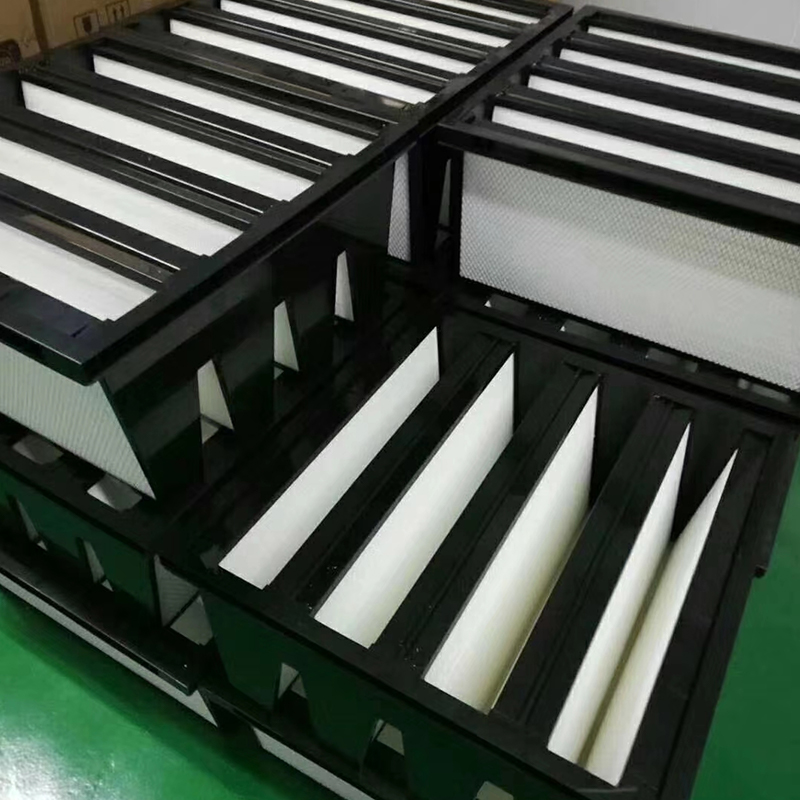
Dry-Type Paint Mist Filter is a core component for paint mist treatment, mainly made of high-quality filter materials (glass fiber, activated carbon, non-woven fabric). It has dense and uniform filter...
See Details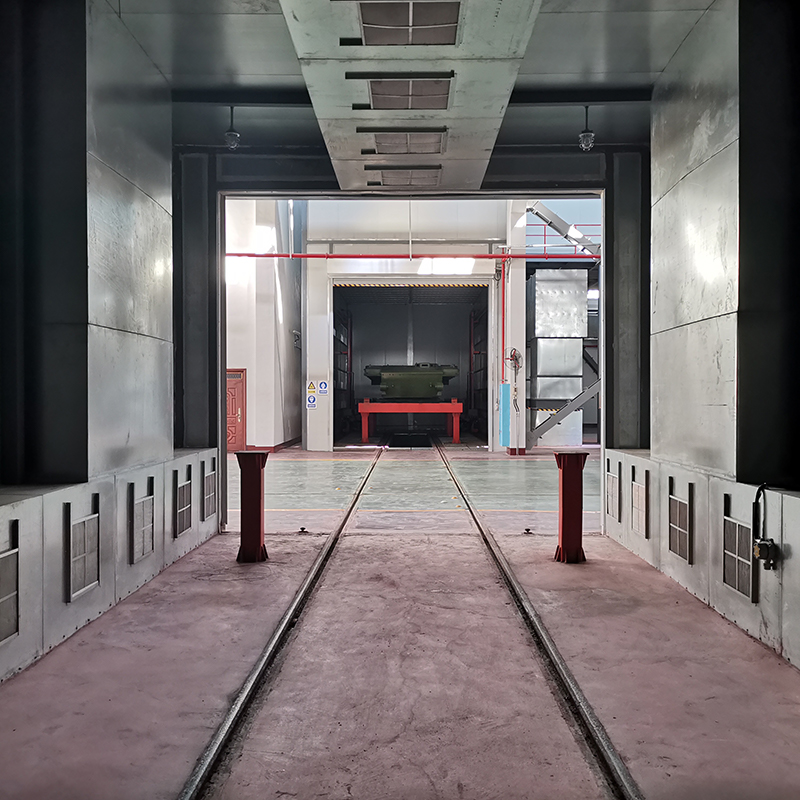
The spray paint line is a complete automated coating system, including spraying, drying, curing, and conveying processes. It features stable operation, uniform spraying effect, and good sealing perfor...
See Details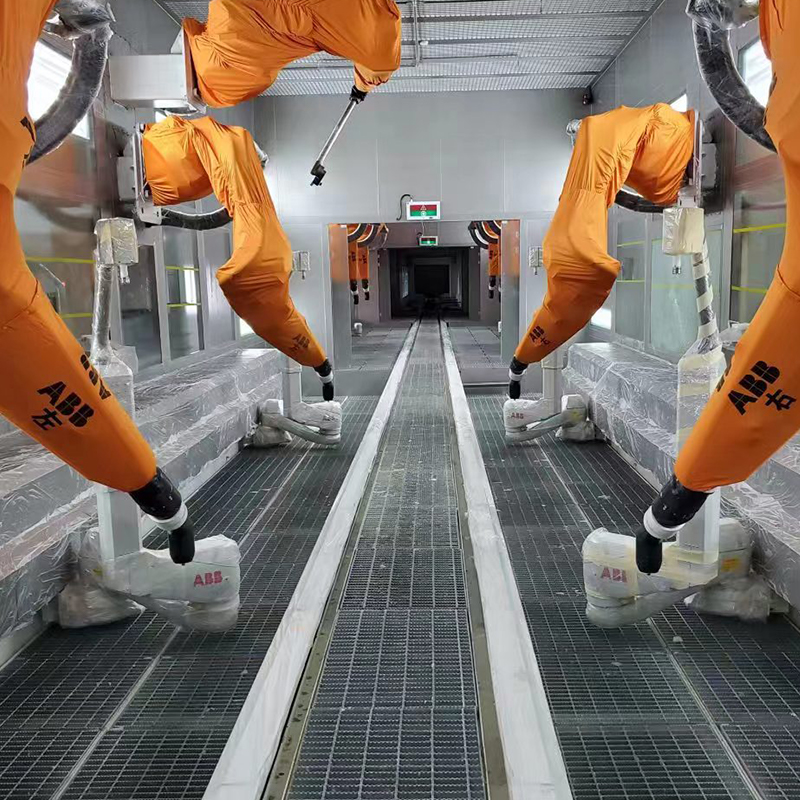
Professional spray coating line specially designed for motor casings, applicable to various motor casing types (electric vehicle motor casing, industrial motor casing, household motor casing, high-tem...
See Details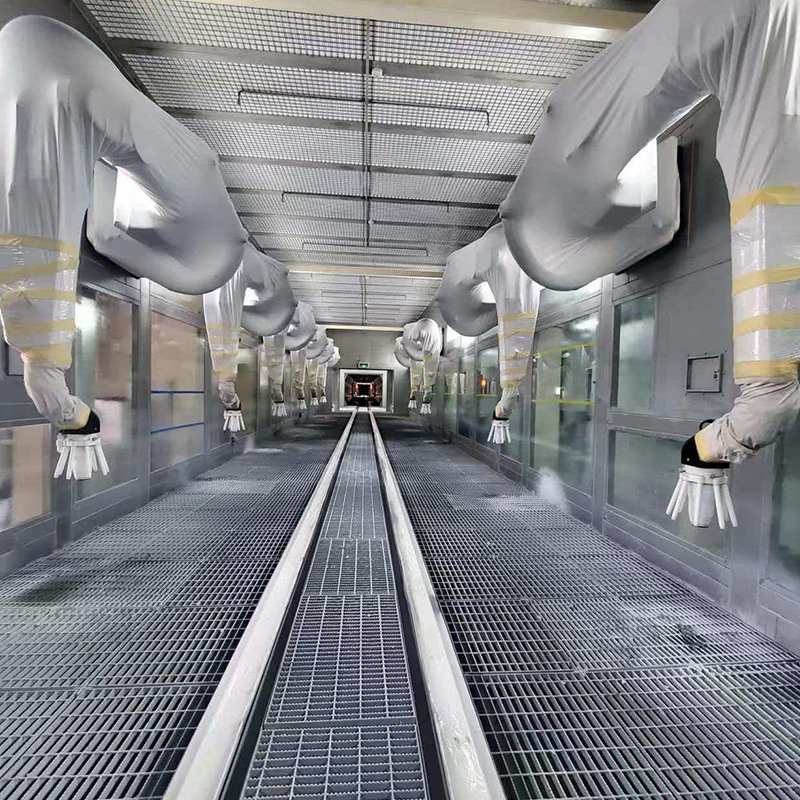
Professional spray coating line specially designed for car wheel manufacturing and refurbishment, applicable to various car wheel types (steel wheel, aluminum alloy wheel, forged wheel, cast wheel, pa...
See Details
Professional painting line specially designed for grain tank truck body manufacturing and refurbishment, applicable to various grain tank truck types (grain transport tank truck, bulk grain tank truck...
See DetailsBuild Your Customized Industrial Coating System
Send us your workpiece information, production capacity, coating process, workshop layout, and environmental requirements. Yueze will help evaluate your project and develop a suitable coating, conveying, drying, and environmental treatment solution.
Main menu
Products
Contact Us
Company Address:
No. 12, Park Avenue, Shanggang Industrial Park, Jianhu, Yancheng City, Jiangsu Province
Message Us Right Now!

Follow us: