
 русский
 عربى
 Tiếng Việt

Professional coating line dedicated to truck body manufacturing and refurbishment, applicable to various truck types (heavy-duty truck, light-duty truck, pickup truck, van, commercial truck). Main typ...
See Details
Yueze Environmental Protection provides one-stop compliant industrial surface treatment solutions with professional tech and fine craftsmanship.
 Get Inquiries
2026-10-06
Content
A truck body coating line is a specialized industrial production system designed to clean, pretreat, prime, paint, dry, cure, inspect, and transfer large truck body components through a controlled manufacturing process. It is suitable for heavy-duty trucks, light-duty trucks, pickup trucks, vans, commercial vehicles, cargo boxes, cab shells, drawer-type bus bodies, and other large vehicle structures.
Unlike a small-part painting system or a passenger-car coating line, a truck body coating line must accommodate greater dimensions, heavier workpieces, wider panels, deeper cavities, and more demanding coating requirements. The equipment must provide sufficient conveying capacity, spray clearance, ventilation, filtration, temperature control, humidity control, curing performance, and environmental protection for large metal assemblies.
A properly engineered line can combine pretreatment, spray booths, drying equipment, curing systems, automated conveyors, waste gas purification, paint mist recovery, inspection stations, and intelligent control into one coordinated production solution. This integrated approach helps manufacturers obtain consistent coating quality while improving production efficiency, operator safety, energy management, and environmental compliance.
For truck manufacturers and refurbishment companies, the coating line is not merely a collection of booths and conveyors. It is a complete process platform that determines the appearance, corrosion resistance, service life, production rhythm, labor requirements, and operating cost of the finished truck body.
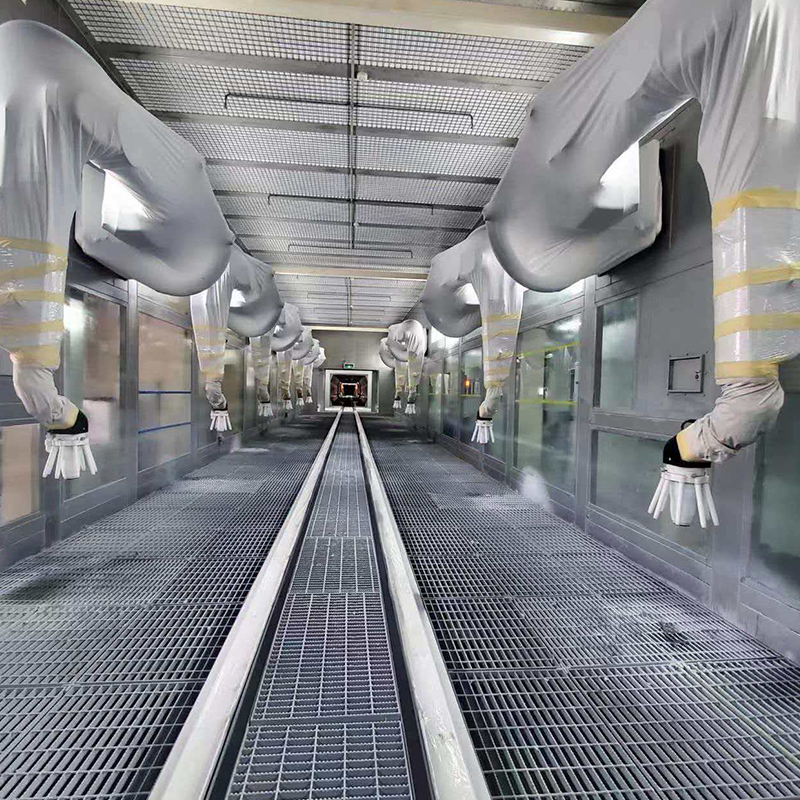
Truck Body Coating Line
A truck body coating line is an automated or semi-automated production line used to apply protective and decorative coatings to truck bodies and related large vehicle components. Depending on the product and required finish, the line may include degreasing, washing, phosphating or other pretreatment, drying, primer application, flash-off, infrared drying, topcoat application, final curing, cooling, inspection, and packaging or assembly transfer.
The line can be configured for new truck body manufacturing, vehicle refurbishment, component production, or contract coating services. Some users require a fully automatic system for high-volume production, while others need a flexible line that allows manual loading, manual touch-up, and frequent switching between different truck models.
Typical workpieces include:
The system can be designed for liquid paint, powder coating, or a combination of coating technologies. The appropriate solution depends on the substrate, coating material, production volume, appearance standard, curing temperature, workpiece dimensions, and environmental requirements.
For large truck components, the equipment must be designed around actual product dimensions rather than adapted from a smaller coating system. This is one of the most important differences between a general painting booth and a dedicated truck body coating line.
Truck bodies have several characteristics that create special challenges during surface treatment and painting. Their panels are often large and relatively flat, making uneven film thickness, overspray, streaking, sagging, and gloss variation easy to see. Welded corners, reinforcements, cavities, hinges, brackets, and mounting points can also create areas that are difficult to reach with standard spray equipment.
The weight and size of the workpiece influence every major part of the production line. The conveyor must safely carry the load without excessive vibration. The booth must provide enough width, height, length, and door clearance. The air-handling system must produce stable airflow throughout a large spray space. The curing equipment must deliver even heat to both broad panels and complex structural areas.
A truck body may also require different coating systems on different surfaces. Exterior panels may need a high-quality decorative topcoat, while hidden areas may require a durable anti-corrosion primer. Chassis-related components may require a heavy-duty protective coating resistant to moisture, road salt, stone impact, and industrial chemicals.
In addition, production facilities often process several truck models on the same line. A cargo box, cab shell, and bus body may differ substantially in length, width, height, geometry, and weight. A flexible line therefore needs adjustable parameters, suitable clearance, practical loading arrangements, and a control system that supports model changes without unnecessary downtime.
A dedicated line offers important advantages over manually operated painting areas, undersized booths, and coating lines designed for smaller vehicle parts. Its main benefit is that every process stage is designed around the physical and technical requirements of large truck bodies.
| System Feature | Production Benefit | Quality or Operational Result |
|---|---|---|
| High-load conveying system | Transfers heavy body assemblies safely and continuously | Fewer handling interruptions and reduced risk of workpiece damage |
| Large-format spray booth | Provides sufficient clearance for wide and tall bodies | More uniform spray distance and improved coating consistency |
| Controlled airflow and filtration | Removes overspray and controls booth pressure | Reduced dust, streaking, contamination, and uneven gloss |
| Infrared or hot-air drying | Accelerates primer and topcoat drying | Shorter production cycles and better film performance |
| Automated process control | Coordinates conveyor speed, spray parameters, temperature, and timing | Repeatable production quality and easier process management |
| Waste gas purification | Treats volatile organic compounds, paint mist, and process emissions | Improved workplace conditions and environmental performance |
| Flexible line layout | Supports different truck models and future upgrades | Better investment protection and easier capacity expansion |
Compared with a conventional open painting area, a dedicated line provides a more stable environment. Temperature, humidity, airflow, filtration, and lighting can be managed systematically. This improves coating application and makes production results less dependent on individual operator technique.
Compared with a coating line designed for passenger cars or small components, the truck body solution provides stronger structural support, larger working dimensions, higher air volume, and more suitable curing capacity. These differences help prevent bottlenecks caused by restricted openings, insufficient conveyor load capacity, or poor airflow distribution.
The exact process depends on the substrate, paint system, customer quality requirements, and production volume. However, a typical truck body coating line follows a coordinated sequence from preparation to final inspection.
The truck body or body component is loaded onto a fixture, trolley, skid, or hanging conveyor carrier. The loading system must support the workpiece securely while leaving enough surface area exposed for pretreatment and spraying.
Fixtures are designed to minimize masking requirements and avoid contact marks on visible surfaces. For lines handling several product models, adjustable supports or interchangeable fixtures can be used. Workpiece identification may be completed through production orders, barcodes, RFID tags, or control-system recipes.
Before coating, the surface must be free from oil, dust, welding residue, oxidation, grease, and other contaminants. Pretreatment may include manual cleaning, alkaline degreasing, rinsing, phosphating, passivation, abrasive preparation, or another process selected for the substrate and coating system.
Effective pretreatment improves coating adhesion and helps prevent blistering, peeling, underfilm corrosion, and premature coating failure. For truck bodies exposed to rain, road salt, humidity, and mechanical impact, pretreatment quality is directly related to long-term service performance.
Large truck body components require sufficient tank size, spray coverage, drainage, and access. If immersion pretreatment is used, the tank length and lifting equipment must match the workpiece dimensions. If spray pretreatment is used, nozzle arrangement and pump capacity must be designed to reach broad panels, corners, undersides, and structural recesses.
Residual water must be removed before primer or paint application. A drying chamber may use heated air, circulation fans, exhaust systems, or a combination of technologies. Air distribution should be balanced so that water does not remain in seams, folded edges, brackets, or concealed areas.
Drying temperature and time must be selected according to the substrate, pretreatment chemistry, and production speed. Excessive heat may affect certain materials or increase energy consumption, while insufficient drying can reduce adhesion and cause surface defects.
Primer provides corrosion protection and forms a stable foundation for subsequent coating layers. It may be applied manually, by reciprocating spray equipment, by automatic spray guns, or through a hybrid arrangement.
The spray booth must maintain stable airflow and appropriate filtration. The distance between the spray equipment and the truck body should remain consistent where possible. Large flat panels require careful control of spray overlap, atomization, gun speed, and coating volume to avoid dry spray, runs, pinholes, and uneven film thickness.
After primer application, the workpiece may enter a flash-off zone, infrared drying chamber, hot-air oven, or combined drying system. Infrared radiation is particularly useful for large flat surfaces because it transfers energy directly to the coated panel and can reduce drying time when correctly selected and controlled.
The drying method must be compatible with the coating chemistry. Water-based coatings, solvent-based coatings, powder coatings, and specialized industrial finishes each have different requirements for evaporation, heating, curing, and cooling.
The topcoat provides the desired color, gloss, texture, weather resistance, and final appearance. Truck bodies often require a finish that remains attractive under outdoor exposure and frequent cleaning. Commercial vehicle customers may also require specific corporate colors, fleet identification colors, or multi-color designs.
For consistent appearance, the booth should provide clean filtered air, controlled pressure, appropriate illumination, and stable temperature and humidity. The airflow must carry overspray toward the filtration system without creating turbulence that disturbs the wet film.
Depending on the coating system, final curing may use hot air, infrared radiation, natural drying, or a combination of methods. The curing chamber must provide sufficient residence time and temperature uniformity. Large panels can heat differently from reinforced sections, so the process should be validated using representative workpieces.
Correct curing improves hardness, adhesion, chemical resistance, gloss stability, and long-term durability. Under-curing can result in soft films, poor resistance, and premature damage, while over-curing may cause discoloration, brittleness, excessive energy use, or damage to sensitive components.
After curing, the truck body may pass through a cooling section before inspection. Inspectors typically check color, gloss, film thickness, adhesion, surface smoothness, coverage, dust inclusion, orange peel, runs, pinholes, and uncoated areas.
Once approved, the body is transferred to assembly, storage, delivery, or the next manufacturing stage. Data from the process can be recorded for quality traceability and continuous improvement.
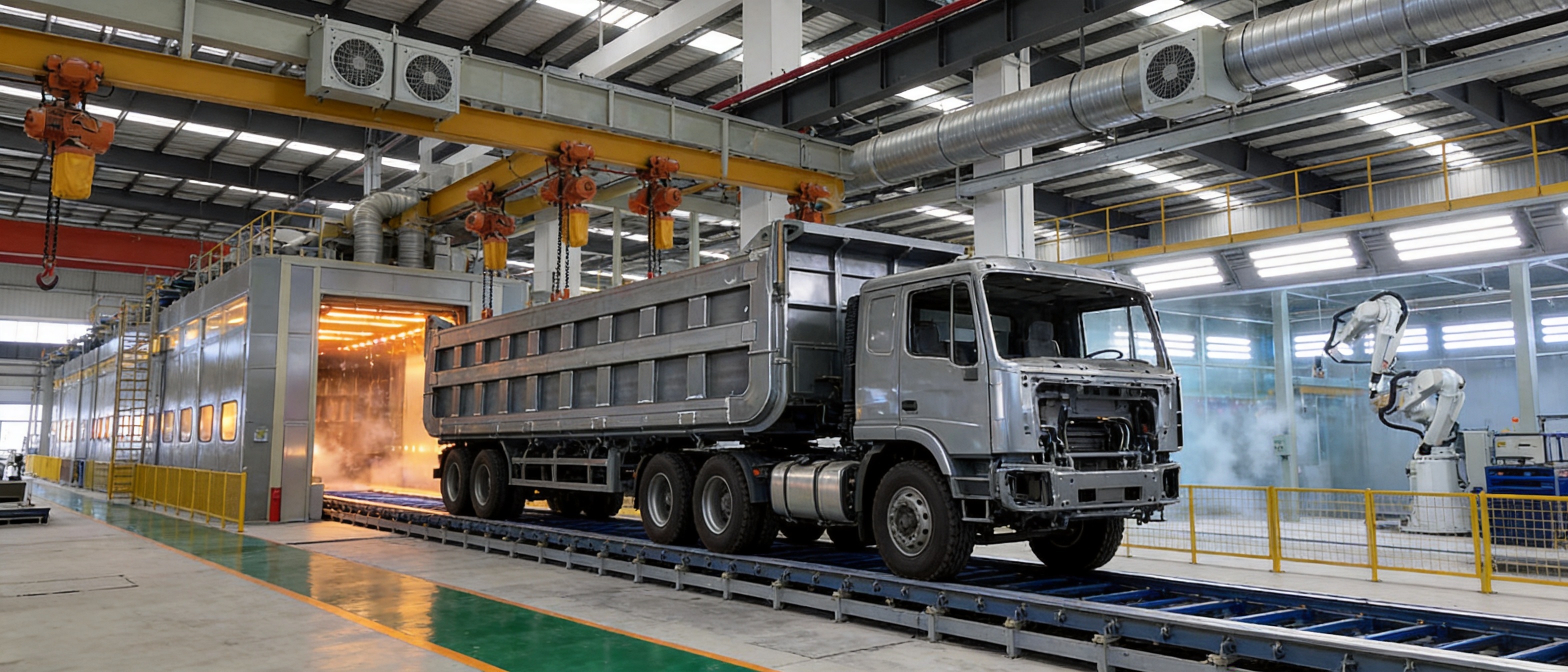
A truck body coating line may contain several integrated equipment sections. The final configuration is determined through technical discussions concerning workpiece dimensions, weight, output, coating type, plant conditions, utilities, environmental standards, and automation level.
The conveyor is the circulation backbone of the line. It must be capable of handling the maximum workpiece weight while maintaining stable movement through pretreatment, spraying, drying, curing, inspection, and transfer areas.
Possible conveyor arrangements include overhead conveyors, floor conveyors, power-and-free conveyors, shuttle systems, roller systems, and customized trolley arrangements. The selection depends on the body structure, fixture design, available factory space, loading method, and required production rhythm.
For truck body applications, the conveyor layout should consider turning radius, maintenance access, emergency stop locations, drainage, cleaning, and safe operator movement. A well-designed system reduces manual lifting and makes the process more predictable.
The paint and bake booth is designed to provide a controlled environment for spraying and drying. Its size must accommodate the largest expected body while allowing appropriate spray clearance and airflow space.
The booth structure can include insulated panels, access doors, observation windows, lighting, air supply plenums, exhaust ducts, filter sections, heating units, and control instruments. The internal surfaces should be easy to clean and maintain. Lighting should allow operators and inspectors to identify surface defects and coverage problems.
A large-format booth is superior to an undersized booth because it reduces the risk of workpiece contact, paint accumulation, poor spray angles, and unstable airflow. It also provides greater flexibility when the customer introduces a longer or taller truck body in the future.
Air management is one of the most important factors in truck body coating. The air supply system should distribute clean, filtered air across the spray zone. The exhaust system should remove paint mist, solvent vapor, and contaminated air without creating excessive turbulence.
Stable booth pressure helps prevent outside dust from entering the painting area. Filter condition must be monitored because blocked filters can change airflow, increase fan load, and affect coating quality. Regular maintenance of fans, ducts, filters, dampers, and sensors is essential.
Large flat truck panels make airflow defects particularly visible. If the airflow is uneven, wet paint may be disturbed or overspray may settle on nearby surfaces. Correct booth design, commissioning, and routine filter management help maintain consistent results.
Infrared drying systems transfer heat directly to the coated surface. They can be used for primer drying, intermediate drying, or final curing depending on the coating material and process design.
Infrared equipment can be valuable for truck body lines because large flat panels absorb radiation efficiently. The system can be divided into heating zones so that temperature and power are adjusted according to workpiece geometry and coating requirements.
Infrared radiation may be combined with hot-air circulation. Infrared heating accelerates surface and film heating, while hot air supports solvent or moisture removal and helps equalize temperature in recessed areas. The combined approach should be selected through process testing rather than applied without validation.
Painting and curing processes may generate paint mist, volatile organic compounds, solvent vapors, dust, and thermal exhaust. A waste gas purification system is therefore an important part of a modern coating line.
Depending on the emission characteristics, the system may use dry filtration, activated carbon adsorption, catalytic oxidation, thermal treatment, or other suitable purification technologies. The selection should consider pollutant concentration, airflow volume, operating temperature, paint type, maintenance requirements, and applicable environmental rules.
Integrating purification equipment with the coating line allows exhaust collection, treatment, monitoring, and maintenance to be planned as one system. This is more effective than adding unrelated environmental equipment after the main line has already been installed.
Truck body coating lines can be designed for several coating technologies. The correct choice depends on the product, corrosion requirement, appearance target, production scale, and available curing conditions.
Liquid paint systems are widely used when customers require a broad color range, special gloss, metallic effects, multi-layer finishing, or flexible repair capability. Liquid painting can be applied manually or automatically, and it is suitable for both small-batch customized production and larger-scale manufacturing.
Liquid coating lines require careful management of paint viscosity, atomization, booth ventilation, flash-off time, solvent emissions, and paint mist collection. A stable environment is particularly important for high-gloss finishes and large visible truck panels.
Powder coating provides a durable finish and can offer high material utilization when overspray is recovered correctly. It is often suitable for metal components, frames, brackets, structural parts, and selected truck body applications.
Powder coating requires proper surface preparation, electrostatic application, powder recovery, and oven curing. The curing oven must accommodate the largest workpiece and deliver stable temperature distribution. Powder systems may be combined with liquid painting areas when a truck body includes both powder-coated structural parts and liquid-painted exterior panels.
Truck bodies often operate in rain, snow, mud, road salt, industrial environments, and high-humidity conditions. An anti-corrosion coating system may include pretreatment, corrosion-resistant primer, intermediate coating, seam treatment, cavity protection, and durable topcoat.
The coating line can be configured to improve coverage around welds, edges, joints, brackets, and lower body areas that are particularly vulnerable to corrosion. The final system should be selected according to the expected service environment and customer durability requirements.
A major strength of a custom truck body coating line is its ability to handle different product families. The line should be designed after collecting accurate information about the smallest and largest workpieces, including overall length, width, height, weight, support points, and surface geometry.
Cargo boxes usually contain broad, flat panels. They require a wide booth opening, consistent spray distance, high-quality filtration, and sufficient curing capacity. Since large flat panels make film irregularities easy to detect, the spray pattern and airflow should be carefully balanced.
Cab shells have curved surfaces, window openings, welded seams, roof sections, doors, and mounting areas. They require multiple spray angles and careful masking around glass, trim, hinges, and electrical connection points.
Pickup bodies may be smaller than heavy-duty truck boxes but often require high appearance quality. The line may use adjustable fixtures and recipe-based process settings to switch efficiently between pickup beds, doors, hoods, and other components.
Vans and commercial vehicle bodies may have long side panels and enclosed sections. Airflow, access, and coating coverage inside door frames and structural openings should be considered. Flexible conveyor spacing is useful when multiple vehicle sizes are produced.
Drawer-type bus bodies and similar large assemblies may require multi-angle spraying and a wider process envelope. The line should provide sufficient clearance for loading, turning, spraying, curing, and inspection without restricting operator access.
Automation improves repeatability and production efficiency while reducing dependence on manual handling. A truck body coating line can include automatic conveyor control, recipe management, spray-gun movement, temperature control, airflow monitoring, curing-zone control, alarm management, and production data recording.
Automatic conveyor control coordinates the movement of workpieces through each process. The system can adjust speed according to the required residence time and synchronize loading with spraying and curing operations.
Recipe management allows different truck body models to use separate process parameters. A recipe may include conveyor speed, spray sequence, paint volume, booth temperature, infrared power, oven temperature, and curing time. This makes model switching more systematic and helps reduce setup errors.
Sensor systems can monitor temperature, pressure, airflow, filter status, equipment position, door status, and other operating conditions. Alarms can notify operators when a parameter moves outside the defined range. With suitable data collection, manufacturers can identify recurring defects, energy losses, and maintenance trends.
Automation does not eliminate the need for skilled personnel. Instead, it allows operators to focus on loading, process supervision, inspection, maintenance, and quality improvement rather than repetitive material handling and constant manual adjustment.
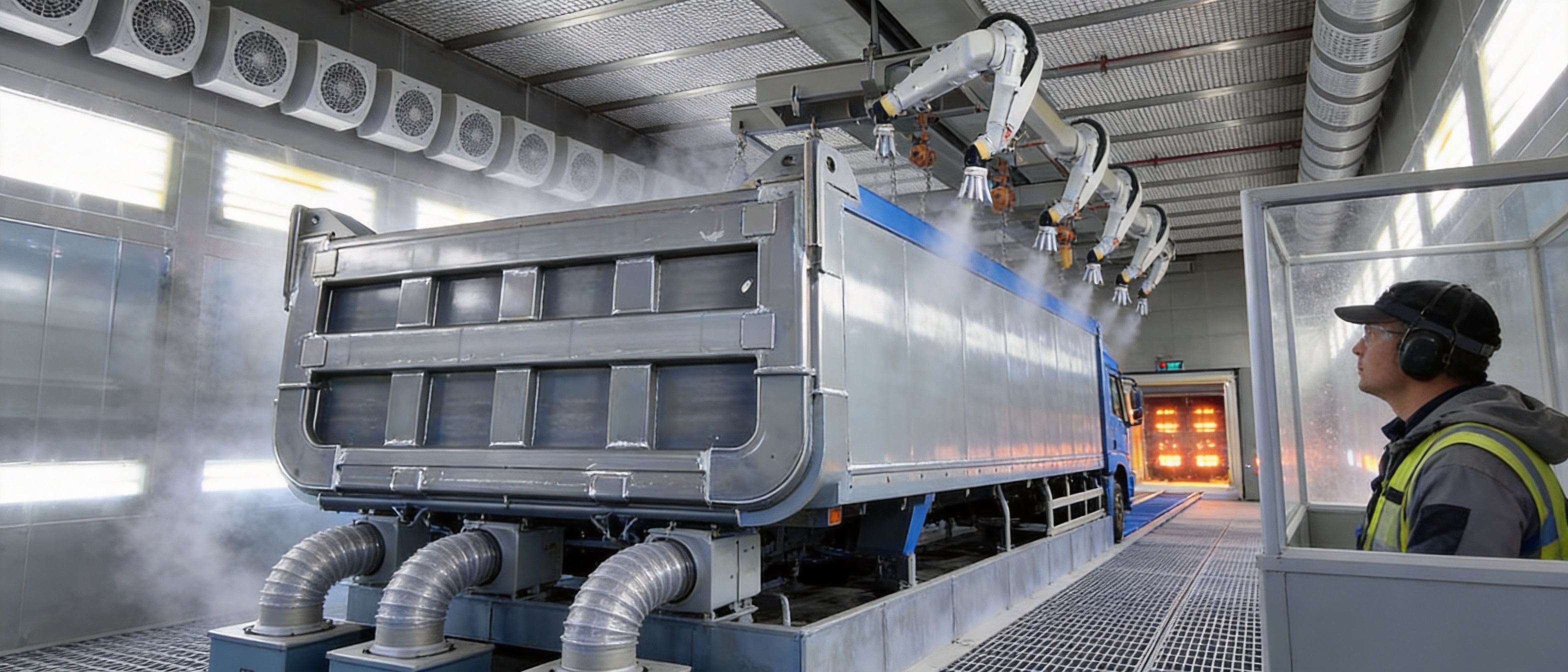
Jiangsu Yue Ze Environmental Protection Equipment Co., Ltd. is located in Yancheng, Jiangsu, China, and operates a manufacturing facility covering approximately 35,000 square meters. The company reports registered capital of 58 million yuan and more than 40 years of combined experience in industrial coating, painting, drying, conveying, and environmental protection equipment.
This manufacturing background supports the development of complete coating solutions rather than isolated equipment units. The company’s product range includes powder coating lines, electric vehicle assembly lines, automotive counterweight spray lines, paint and bake booths, large-part grinding rooms, waste gas treatment equipment, infrared radiation drying systems, automated conveying systems, intelligent coating lines, and related environmental protection equipment.
The company’s experience with large and complex industrial projects is relevant to truck body applications. Large vehicle components require coordinated engineering across mechanical structures, airflow, heating, conveying, automation, environmental treatment, and factory layout. A supplier with capabilities in these areas can evaluate the entire process instead of focusing only on the spray booth.
The company also describes an integrated model covering research and development, manufacturing, installation, commissioning, and customized equipment solutions. This approach can simplify communication for customers who need one responsible partner for the complete line.
A custom truck body coating line normally begins with technical data collection. Engineers review workpiece dimensions, weight, material, coating type, target output, production schedule, factory space, utility conditions, and environmental requirements.
The next step is process planning. The supplier determines the treatment sequence, equipment arrangement, conveyor route, booth dimensions, drying method, curing method, exhaust capacity, filtration method, and control strategy. Layout drawings and technical specifications are then developed for review.
After design confirmation, the main structures and equipment are manufactured. This may include booth panels, tanks, platforms, conveyor components, heating chambers, air-handling assemblies, electrical cabinets, ducts, purification units, fixtures, and control systems.
Manufacturing quality depends on material selection, dimensional accuracy, welding quality, surface treatment, component inspection, electrical assembly, and functional testing. Equipment should be checked before shipment to identify installation or control problems at an early stage.
At the customer site, the supplier may support installation, wiring, mechanical adjustment, control-system commissioning, trial production, operator training, and process optimization. The objective is not simply to complete physical installation, but to achieve stable operation with representative truck body workpieces.
A complete line involves many interfaces. The conveyor must match the fixture. The fixture must support the body without obstructing coating access. The booth must match the conveyor height and workpiece envelope. The drying chamber must provide the required residence time. The exhaust system must match the booth air volume. The control system must coordinate all major operations.
When these interfaces are handled by different suppliers without central coordination, commissioning can become difficult. An integrated supplier can reduce interface problems by coordinating mechanical, electrical, thermal, ventilation, automation, and environmental systems during the design stage.
The most important competitive advantage of a well-engineered truck body coating line is process integration. A supplier that provides only a standard booth may not address conveyor loading, curing uniformity, waste gas treatment, or future product changes. A complete solution can be engineered around the customer’s actual production conditions.
Another advantage is scalability. The line can be designed with flexible booth dimensions, adjustable fixtures, modular process sections, and control recipes. This gives the customer more freedom to introduce additional truck models or upgrade the automation level later.
Large-part coating also benefits from specialized airflow design. Standard booths for smaller products may not provide the air volume, opening size, or exhaust arrangement needed for a truck body. A dedicated system is better able to maintain stable pressure and remove overspray across a larger working space.
Energy management is another point of comparison. Modern drying and curing equipment can combine infrared radiation with controlled hot air, zone-based heating, insulation, heat recovery possibilities, and optimized production timing. These measures may reduce unnecessary heating and improve overall energy efficiency compared with older systems.
Environmental protection is integrated into the line rather than treated as an afterthought. Waste gas collection, filtration, purification, paint mist recovery, and safe exhaust discharge can be planned together. This helps manufacturers improve workplace conditions and meet applicable environmental obligations.
Finally, a customized line can provide better service continuity. A supplier involved in design, manufacturing, installation, and commissioning is more familiar with the equipment configuration. This can make troubleshooting, spare-parts selection, technical support, and future modifications more efficient.
Quality control should be implemented at both equipment-manufacturing and coating-process stages. Before delivery, the supplier should check structural dimensions, welds, fan operation, electrical connections, control logic, heating performance, safety interlocks, conveyor movement, and instrumentation.
During commissioning, the system should be tested under conditions that resemble actual production. Representative truck bodies should pass through the complete process. Engineers should verify coating coverage, film thickness, drying time, curing temperature, conveyor speed, airflow, booth pressure, and exhaust performance.
Coating quality may be evaluated through visual inspection, color comparison, gloss measurement, dry-film thickness measurement, adhesion testing, hardness testing, and corrosion-related testing when required by the customer or applicable standard.
Process records should be maintained for important parameters. If a quality problem occurs, the production team can review the relevant recipe, temperature history, conveyor speed, filter condition, paint batch, and operator actions. This improves traceability and supports corrective action.
Environmental performance is a central consideration in modern coating production. A truck body coating line may consume substantial energy because of its large booth volume, high exhaust flow, and curing requirements. Careful design can help control these demands.
Insulated booth and oven panels reduce heat loss. Variable-frequency drives can adjust fan and pump output according to process requirements. Zone heating can limit energy use in areas where full power is unnecessary. Infrared systems can provide targeted heating rather than heating the entire booth volume to the same level.
Efficient filtration reduces paint mist carryover and helps protect exhaust equipment. Paint recovery systems can improve material utilization where compatible with the coating process. Proper booth maintenance also contributes to efficiency because blocked filters, leaking ducts, and poorly adjusted dampers increase fan energy and reduce process stability.
Waste gas purification must be selected according to the actual emission profile. A technically suitable system is more likely to provide effective treatment without excessive operating cost. Routine inspection of adsorption media, catalysts, filters, fans, ducts, and monitoring equipment is necessary to maintain performance.
Environmental protection also includes safe chemical storage, controlled drainage, noise management, fire prevention, operator protection, and correct handling of coating waste. These factors should be incorporated into the complete project plan.
Regular maintenance helps preserve coating quality and equipment reliability. The maintenance schedule should cover conveyors, fixtures, spray equipment, booth walls, filters, fans, heating systems, infrared emitters, sensors, electrical cabinets, exhaust ducts, and purification equipment.
Filters should be inspected and replaced according to pressure drop, visual condition, and process requirements. Booth walls and floors should be cleaned to prevent accumulated paint from becoming a contamination source or fire risk. Spray guns and fluid lines should be cleaned and calibrated to maintain consistent atomization.
Conveyor chains, bearings, drive units, trolley wheels, and safety devices should be checked regularly. Lubrication must follow equipment requirements because excessive or unsuitable lubricant can create contamination problems.
Temperature sensors and pressure instruments should be calibrated periodically. Infrared emitters should be inspected for damage, contamination, and output reduction. Heating chambers should be checked for hot spots and airflow imbalance.
Maintenance records should identify the date, equipment section, observed condition, action taken, replacement parts, and responsible personnel. This makes it easier to predict failures and plan scheduled downtime.
Before ordering a line, buyers should prepare accurate technical information. The following points are especially important:
Buyers should also ask whether the supplier has experience with large workpieces, whether the conveyor has been designed for the actual load, how airflow will be verified, what curing method will be used, how emissions will be treated, and what commissioning support is included.
It is also useful to request a clear division of responsibilities. The contract should identify equipment supply boundaries, civil construction requirements, utility connection points, installation scope, testing standards, training arrangements, spare parts, warranty conditions, and after-sales service.
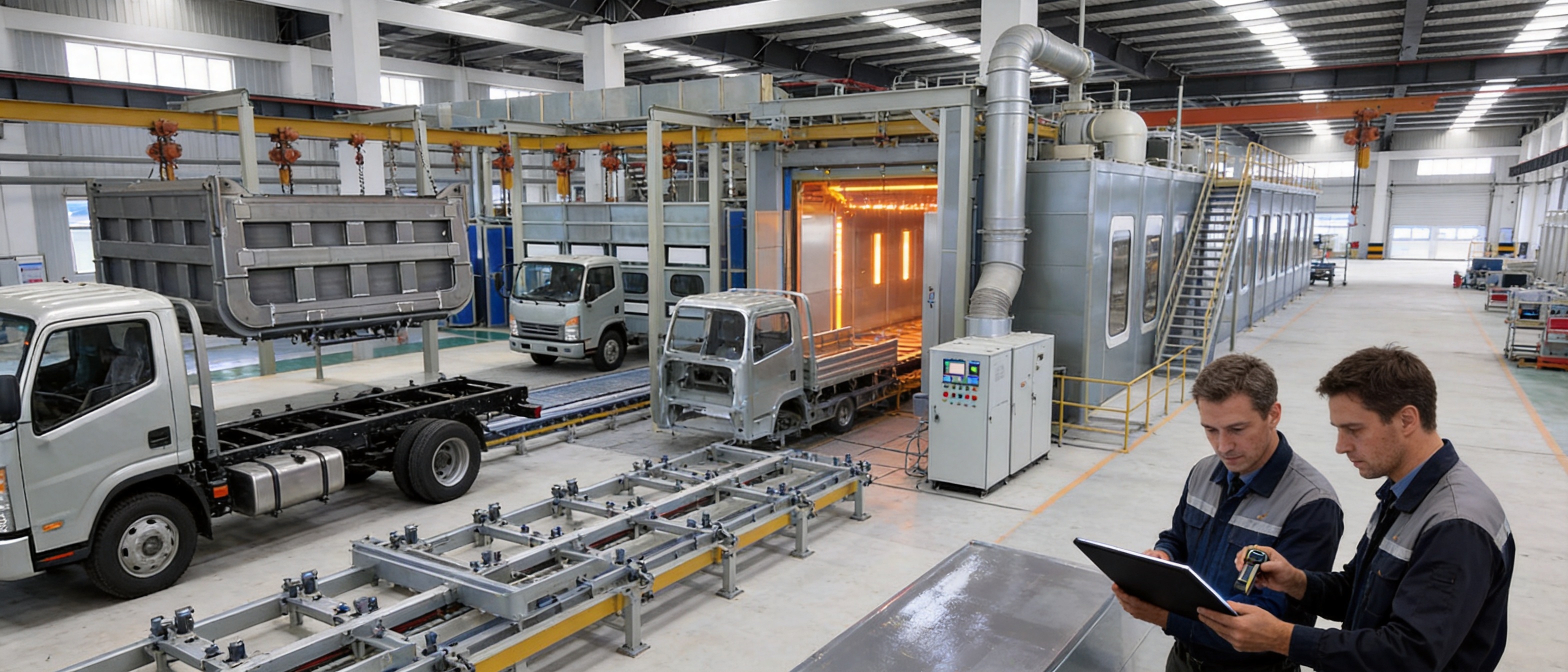
The line can be configured for heavy-duty trucks, light-duty trucks, pickups, vans, commercial vehicles, cargo boxes, cab shells, drawer-type bus bodies, and other large vehicle structures. The conveyor, booth, fixtures, and curing equipment must be sized according to the largest workpiece.
Yes. A flexible line can use adjustable fixtures, suitable conveyor clearance, multiple process recipes, and customized spray arrangements. The customer should provide the full product range during the design stage so that the largest and smallest workpieces can be handled safely.
Truck bodies often contain large flat panels where streaking, uneven gloss, dry spray, and film variation are easy to see. Stable airflow and booth pressure help control overspray, reduce dust contamination, and support more uniform coating application.
Infrared radiation transfers heat directly to the coated surface and can shorten drying or curing time. It is especially useful for broad metal panels, although the final selection must consider coating chemistry, workpiece structure, required temperature, and production speed.
A complete factory solution may include separate or coordinated liquid-paint and powder-coating sections. Whether both technologies can be integrated into one project depends on the workpiece, coating requirements, contamination control, curing temperatures, and plant layout.
It provides controlled cleaning, pretreatment, primer application, drying, and topcoat curing. These stages improve adhesion and coverage, especially around welded areas, edges, joints, and structural sections. The coating specification should still be selected according to the vehicle’s service environment.
Typical equipment may include paint mist filters, exhaust fans, ducts, waste gas purification units, powder recovery systems, and monitoring instruments. The exact solution depends on the coating material, emission characteristics, local regulations, and plant conditions.
Buyers should compare more than the initial equipment price. Important factors include engineering capability, workpiece experience, conveyor load capacity, airflow design, curing uniformity, environmental treatment, automation, installation support, documentation, maintenance requirements, spare parts, and evidence of completed projects.
Not necessarily. High-volume manufacturers may benefit from extensive automation, while small-batch or highly customized producers may prefer a hybrid line with automatic conveying and controlled manual spraying. The appropriate automation level should match production volume, labor availability, product variation, and investment plans.
The supplier normally needs product drawings or dimensions, maximum weight, coating specifications, target output, process sequence, factory layout, utility conditions, environmental requirements, preferred loading method, and future expansion plans. Accurate information leads to a more reliable line design and quotation.
Service life depends on structural quality, operating hours, maintenance, coating chemicals, environmental conditions, and the availability of replacement parts. A robust design, regular cleaning, scheduled maintenance, and timely replacement of wear components can support long-term operation.
A complete project may include installation guidance or on-site installation, commissioning, operator training, maintenance instruction, process adjustment, and technical documentation. These details should be confirmed before the order is finalized.
A truck body coating line is a strategic production investment for manufacturers and refurbishment companies that need reliable, efficient, and repeatable finishing of large vehicle structures. Its performance depends on the coordination of pretreatment, conveying, spraying, airflow, drying, curing, inspection, automation, and environmental protection.
The main advantages of a dedicated system include full workpiece coverage, more uniform film thickness, improved appearance, stronger corrosion resistance, higher production efficiency, safer material handling, better process repeatability, and greater flexibility for future model changes.
Compared with undersized or disconnected equipment, a customized integrated line is better suited to the dimensions and weight of truck bodies. It can be designed with high-load conveying, large-format spray and bake booths, infrared drying, intelligent control, waste gas purification, paint mist recovery, and modular expansion capability.
Jiangsu Yue Ze Environmental Protection Equipment Co., Ltd. combines industrial coating equipment manufacturing with environmental protection, conveying, drying, automation, and project integration capabilities. Its reported 35,000-square-meter facility, long industry experience, custom engineering approach, and one-stop service model provide a foundation for developing truck body coating solutions adapted to different products and production environments.
For buyers, the best result comes from defining the workpiece range, coating process, production target, environmental requirements, and future expansion plans before equipment design begins. When these factors are evaluated together, the coating line can become a dependable manufacturing platform that supports product quality, operational efficiency, environmental responsibility, and long-term production growth.
1. Industrial Coating Process Planning and Equipment Design Principles.
2. Vehicle Body Surface Preparation, Priming, Painting, and Curing Practices.
3. Industrial Spray Booth Ventilation, Filtration, and Airflow Control Guidelines.
4. Powder Coating Application, Recovery, and Curing Technology References.
5. Industrial Waste Gas Collection and Purification Engineering Practices.
6. Infrared Radiation Heating and Drying Technology for Metal Components.
7. Automated Conveyor System Design and Material Handling Principles.
8. Industrial Surface Treatment Quality Control and Coating Inspection Methods.
9. Jiangsu Yue Ze Environmental Protection Equipment Co., Ltd. Product and Company Information.
Professional coating line dedicated to truck body manufacturing and refurbishment, applicable to various truck types (heavy-duty truck, light-duty truck, pickup truck, van, commercial truck). Main typ...
See Details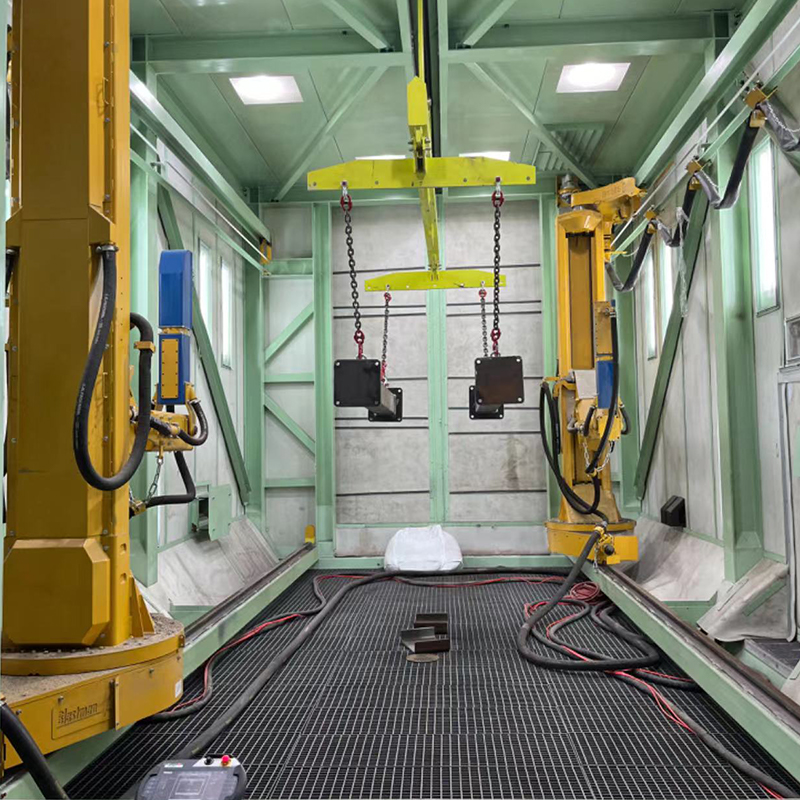
Professional coating line specially designed for large castings and heavy truck parts, applicable to various large castings (engineering castings, mining equipment castings, industrial castings) and h...
See Details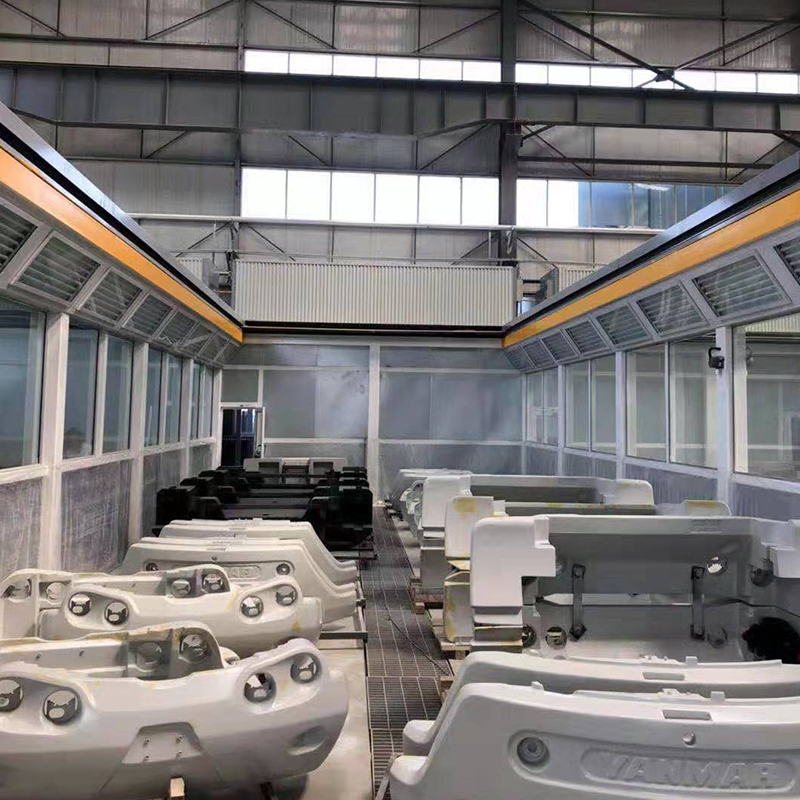
Professional spray coating line specially designed for car wheel manufacturing and refurbishment, applicable to various car wheel types (steel wheel, aluminum alloy wheel, forged wheel, cast wheel, pa...
See Details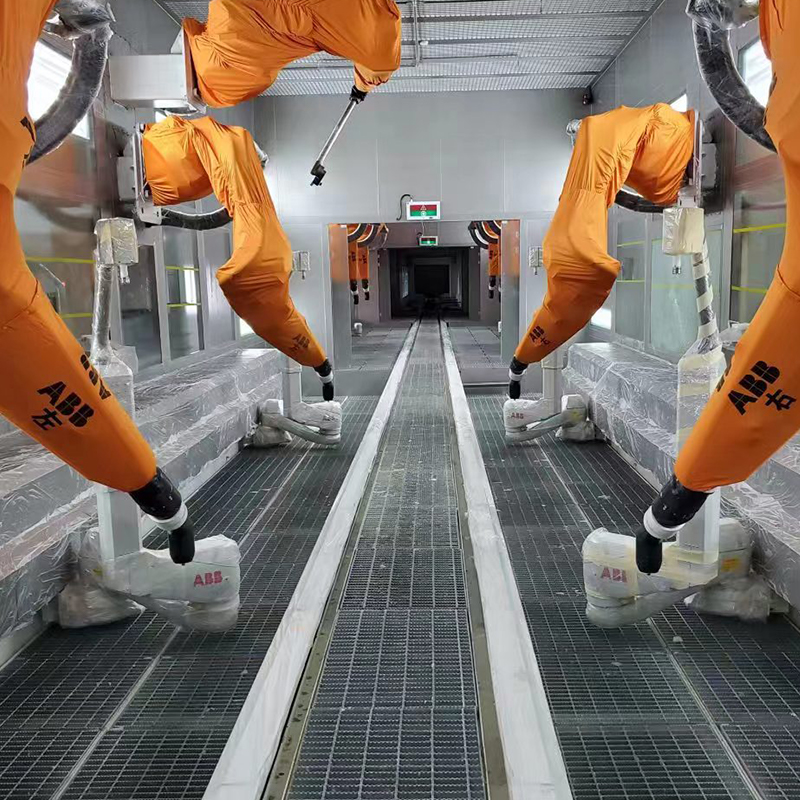
Professional spray coating line specially designed for motor casings, applicable to various motor casing types (electric vehicle motor casing, industrial motor casing, household motor casing, high-tem...
See Details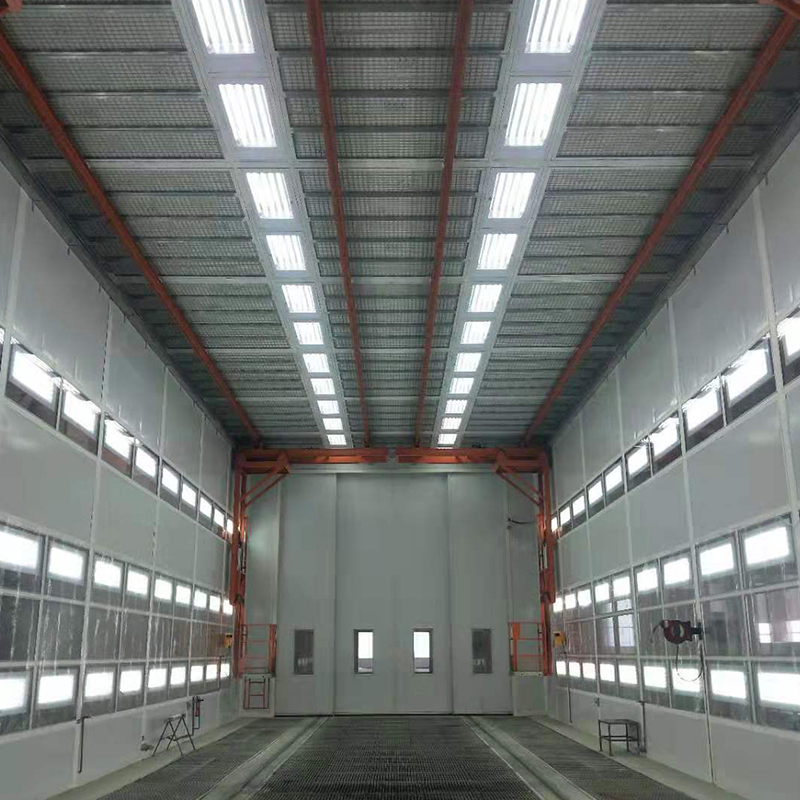
Professional painting line specially designed for grain tank truck body manufacturing and refurbishment, applicable to various grain tank truck types (grain transport tank truck, bulk grain tank truck...
See Details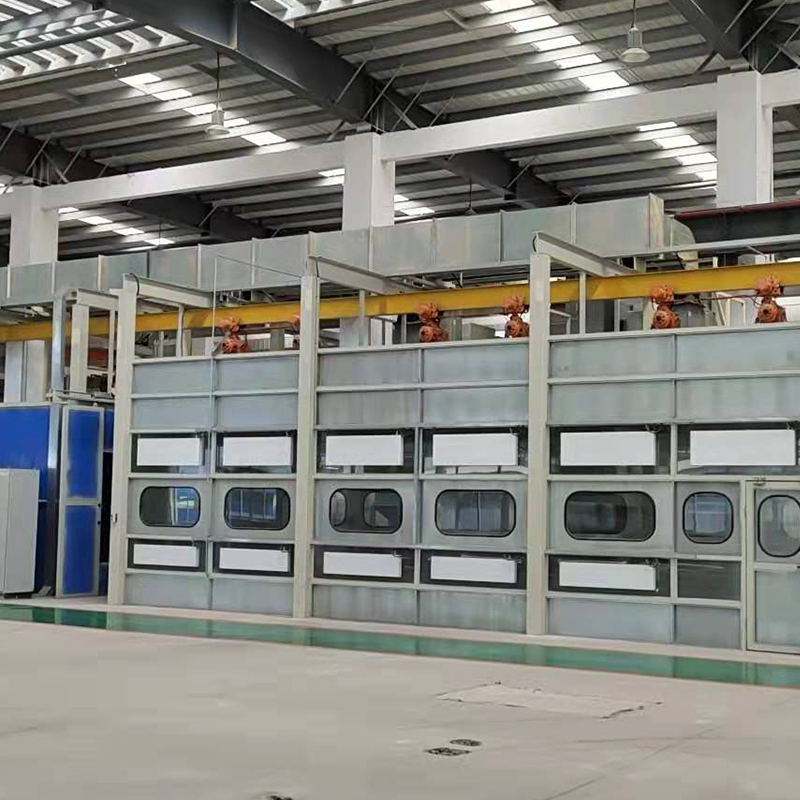
Professional spray coating line designed for engine manufacturing and maintenance, applicable to various engine types (gasoline engine, diesel engine, electric vehicle engine). Main types: engine bloc...
See DetailsBuild Your Customized Industrial Coating System
Send us your workpiece information, production capacity, coating process, workshop layout, and environmental requirements. Yueze will help evaluate your project and develop a suitable coating, conveying, drying, and environmental treatment solution.
Main menu
Products
Contact Us
Company Address:
No. 12, Park Avenue, Shanggang Industrial Park, Jianhu, Yancheng City, Jiangsu Province
Message Us Right Now!

Follow us: