
 русский
 عربى
 Tiếng Việt

Professional coating line specially designed for large castings and heavy truck parts, applicable to various large castings (engineering castings, mining equipment castings, industrial castings) and h...
See Details
Yueze Environmental Protection provides one-stop compliant industrial surface treatment solutions with professional tech and fine craftsmanship.
 Get Inquiries
2026-10-08
Content
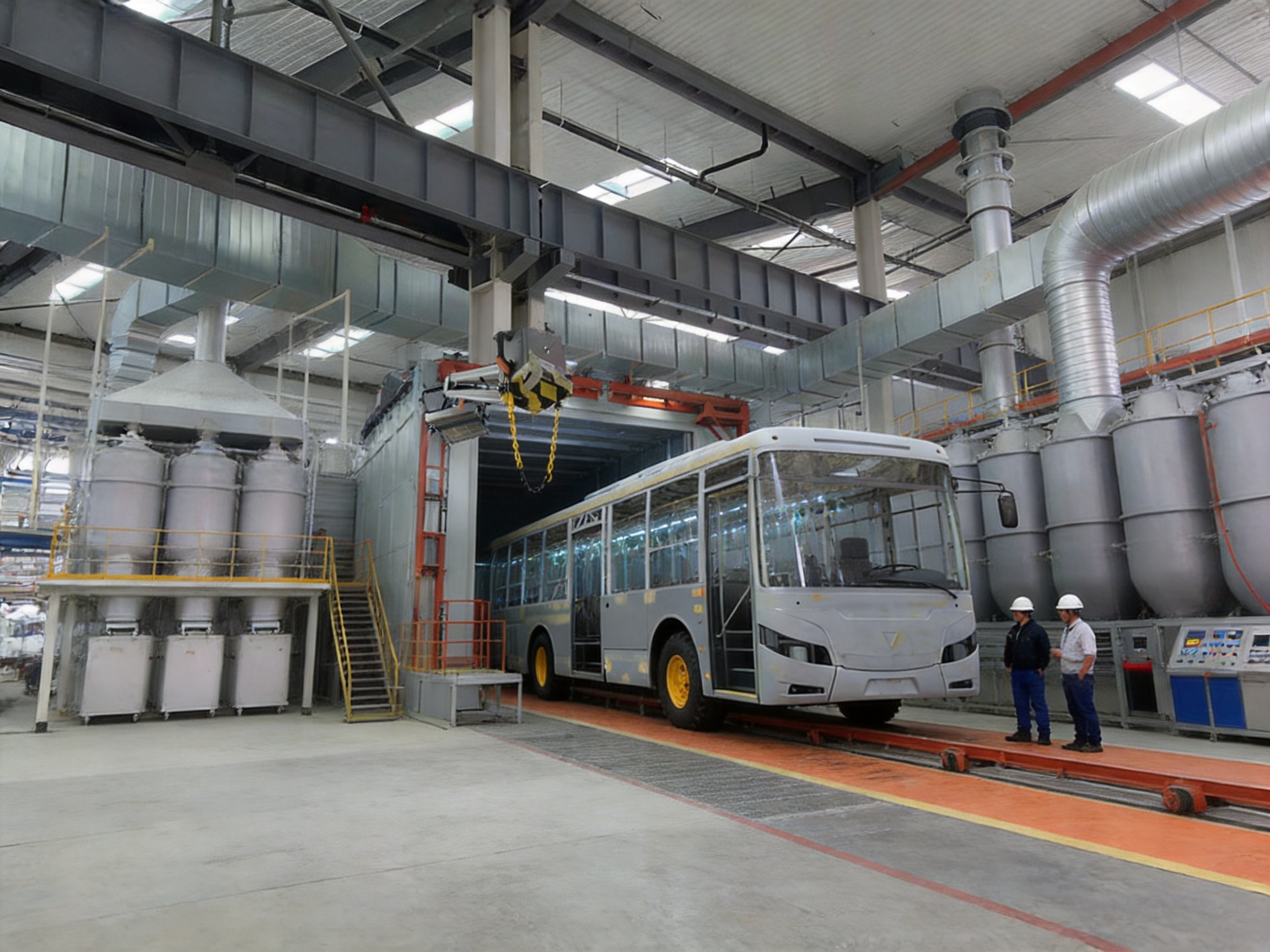
Heavy vehicles require a coating environment that is fundamentally different from the space used for passenger cars. Trucks, buses, trailers, loaders, excavators, engineering machinery, and other large industrial equipment have greater dimensions, more complex surfaces, heavier components, and longer coating cycles. A standard automotive spray booth may not provide enough internal clearance, airflow capacity, heating performance, structural strength, or exhaust treatment for these demanding applications. A properly engineered heavy vehicle spray booth is therefore an essential production asset for companies seeking consistent coating quality, efficient operation, worker safety, and environmental compliance.
The Heavy Vehicle Spray Booth developed by Jiangsu Yue Ze Environmental Protection Equipment Co., Ltd. is designed as a large-scale professional coating workshop for oversized vehicles and industrial components. It combines a spacious chamber, controlled airflow, multi-stage filtration, optional heating systems, explosion-proof electrical equipment, and a reinforced structure. The booth can perform spraying, flash drying, and curing in one integrated space, helping users reduce material handling, save workshop area, and improve the repeatability of the finishing process.
Unlike a basic car spray booth adapted for larger objects, this equipment is designed from the beginning around the special requirements of heavy-duty coating work. Its configuration can be customized according to vehicle dimensions, coating materials, production volume, heating fuel, airflow direction, environmental regulations, and available workshop space. This approach allows the equipment to serve body repair centers, bus manufacturers, truck refurbishment facilities, construction machinery producers, industrial coating plants, and other users that need reliable large-format finishing capabilities.
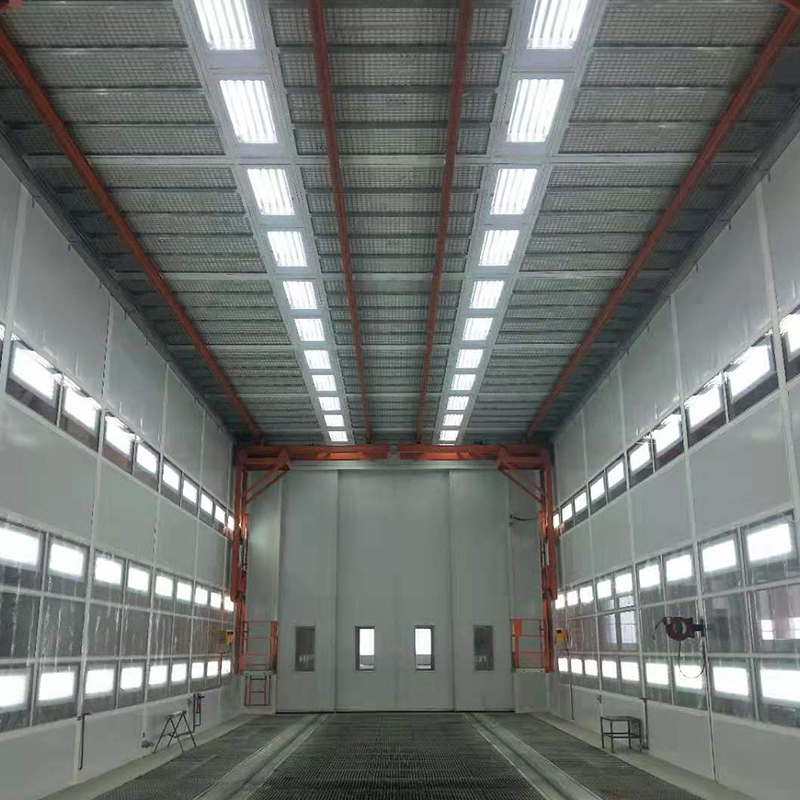
Heavy Vehicle Spray Booth
A heavy vehicle spray booth is an enclosed or semi-enclosed industrial coating chamber used to apply primer, base coat, topcoat, clear coat, protective coating, and other finishing materials to oversized vehicles or large assemblies. During operation, the booth controls the movement of fresh air, removes overspray and vapors, maintains suitable temperature conditions, and supports the curing or baking stage after paint application.
The equipment is suitable for whole-vehicle refinishing as well as the coating of large parts. Typical applications include heavy trucks, buses, trailers, tankers, agricultural machinery, road rollers, forklifts, loaders, excavators, cranes, engineering vehicles, railway components, large steel structures, and other industrial products. The internal dimensions can be enlarged to accommodate unusual vehicle heights, extended bodies, roof-mounted equipment, or detachable assemblies.
Large vehicles often contain deep recesses, vertical panels, curved surfaces, underbody structures, and multiple material types. These characteristics make it difficult to obtain a uniform finish in an ordinary open workshop. Dust, uncontrolled air movement, uneven temperature, and poor exhaust management can create defects such as orange peel, dry spray, runs, sagging, pinholes, contamination, and uneven gloss. A dedicated booth establishes a more stable working environment and gives operators better control over each stage of the coating process.
The booth also separates the coating process from other manufacturing activities. Grinding, welding, assembly, vehicle washing, and material handling can release dust or other contaminants. By placing the painting operation in a controlled chamber, the facility can reduce cross-contamination and improve the working conditions for both operators and nearby production teams.
The most obvious difference between a heavy vehicle spray booth and a standard automotive booth is size. However, the design challenge involves much more than simply increasing the length and height of the chamber. A larger booth must process a greater volume of air, remove more overspray, distribute heat across a longer distance, withstand larger doors and structural spans, and maintain safe operating conditions around more substantial paint loads.
Passenger vehicles generally have relatively compact bodies and similar dimensions from one production cycle to another. Heavy vehicles can vary considerably. A city bus, mining truck, agricultural harvester, and excavator may all require different clearances and access arrangements. The booth must therefore be designed around the largest vehicle and the most demanding coating procedure expected at the facility.
Airflow is another critical factor. If the airflow volume is too low for the chamber size, overspray may remain suspended in the work area or settle back onto the wet surface. If airflow is poorly distributed, some areas of a vehicle may receive excessive air movement while other areas experience stagnant zones. A well-designed heavy vehicle booth uses carefully selected fans, filters, air supply sections, and exhaust arrangements to achieve stable and balanced ventilation throughout the chamber.
Heating requirements also increase with booth size. A long vehicle body may contain large metal surfaces that absorb heat at different rates. Without adequate heating capacity and air circulation, the front and rear sections of the vehicle may reach different temperatures. This can extend curing time and produce differences in hardness, gloss, adhesion, or film performance. A properly engineered system distributes heated air evenly and maintains the selected temperature for the required curing period.
The booth can be customized with extra-large internal dimensions to accommodate heavy trucks, engineering machinery, buses, trailers, loaders, excavators, and large assemblies. The chamber layout can be configured for whole-vehicle entry, large-part coating, or mixed production requirements.
Large internal space improves operator access and reduces the need to reposition a vehicle during the coating process. Fewer interruptions can help maintain a wet-edge painting technique and improve the continuity of the finish. Sufficient clearance also allows operators to work safely around mirrors, chassis frames, wheels, roof equipment, hydraulic components, and other irregular structures.
For facilities processing multiple vehicle types, the booth can be designed around a flexible operating range. This is more practical than purchasing several small booths or attempting to carry out large-vehicle painting in an unsuitable workshop. The final dimensions, door position, side access, maintenance space, and internal platform arrangement can be developed according to the user's site and production requirements.
The equipment can combine spraying, flash drying, and baking in one room. After the coating stage, the vehicle does not necessarily need to be moved to a separate curing chamber. This integrated arrangement reduces handling time and limits the risk of dust contamination during transfer.
Using one room for multiple process stages can also reduce the required workshop footprint. A separate spray room and bake room may require additional doors, ventilation equipment, control systems, and vehicle transfer space. An integrated booth simplifies the process flow and can lower the initial investment associated with building several independent rooms.
The operating sequence can be managed through a control system that changes the booth from spray mode to baking mode. Depending on the selected configuration, the system can regulate fan operation, heating output, exhaust conditions, and temperature settings for each process stage. This supports a repeatable process rather than relying entirely on manual adjustment.
The booth can use down-draft or semi-down-draft airflow designs. In a down-draft configuration, filtered air enters from the upper part of the chamber and moves downward toward the floor or exhaust area. This movement carries overspray away from the painted surface and helps reduce the possibility of paint mist circulating around the vehicle.
Uniform ventilation is particularly important when painting large flat panels. A stagnant area may allow overspray to accumulate, while excessively turbulent air can disturb the spray pattern and create dry areas or uneven film thickness. The airflow system is therefore selected according to chamber volume, vehicle size, spray materials, fan performance, filter resistance, and exhaust requirements.
Compared with a simple open workshop, controlled airflow can improve surface cleanliness and reduce the chance of dust particles settling on wet paint. It also contributes to operator comfort by removing solvent vapors and airborne coating particles from the working zone. Air velocity, pressure balance, and filter condition should be checked regularly to maintain the intended performance.
Coating quality depends strongly on environmental conditions. Temperature affects viscosity, atomization, flash-off, drying speed, curing reaction, and final film properties. Excessive humidity can influence solvent evaporation, surface appearance, adhesion, and the risk of moisture-related defects. The booth can be equipped with intelligent temperature control and optional humidity adjustment functions to provide a more stable application environment.
Stable conditions are especially valuable during winter operations, rainy seasons, and production in regions with significant changes in temperature and humidity. By reducing environmental variation, the system helps operators use more consistent coating parameters and reduces the need to compensate for changing workshop conditions.
Temperature control should be matched to the selected coating system. Water-based coatings, solvent-based coatings, primers, topcoats, and specialty industrial finishes may require different operating conditions. The final control strategy can be developed according to the paint manufacturer's technical data sheets and the user's required production cycle.
The Heavy Vehicle Spray Booth can be equipped with diesel, gas, electric, or heat pump heating systems. The appropriate option depends on local energy prices, fuel availability, environmental requirements, workshop infrastructure, operating hours, and desired temperature rise.
Diesel and gas heating systems may provide rapid temperature increase for large chambers, while electric heating can offer clean operation and straightforward control where sufficient electrical capacity is available. Heat pump systems may be considered for facilities seeking energy-efficient operation under suitable climate conditions. Each option should be evaluated according to the total operating cost rather than only the initial purchase price.
A correctly sized heating system raises the booth to the target temperature efficiently and maintains even heat distribution. Proper insulation in the wall and roof panels helps reduce heat loss and contributes to lower energy consumption. The design may also include temperature sensors at selected positions to monitor whether the chamber is heating consistently from front to rear and from floor level to roof level.
Painting generates overspray, fine particles, vapors, and other emissions that must be managed before exhaust air is released. The booth uses multi-stage filtration for intake and exhaust air. Intake filtration helps prevent dust from entering the spray chamber, while exhaust filtration captures paint mist and reduces the release of coating contaminants.
Depending on the coating materials and local requirements, the exhaust treatment arrangement may include paint mist filters, high-efficiency filter sections, activated carbon or other adsorption components, and additional waste gas treatment equipment. The final configuration should be selected after reviewing the coating formulation, spray volume, operating schedule, and applicable environmental standards.
Environmental protection is not limited to installing filters. The booth should also be operated with correct airflow, maintained at suitable pressure, and inspected regularly. Filters must be replaced before excessive loading causes airflow reduction or increases fan energy consumption. A planned maintenance program helps preserve both coating performance and emission control.
Yueze's broader engineering capability includes waste gas treatment equipment and environmental protection systems. This allows the company to consider the booth and its exhaust treatment as part of a complete surface-treatment solution rather than as isolated equipment. Such integration can simplify project coordination and improve compatibility between the spray chamber, exhaust system, and factory environmental infrastructure.
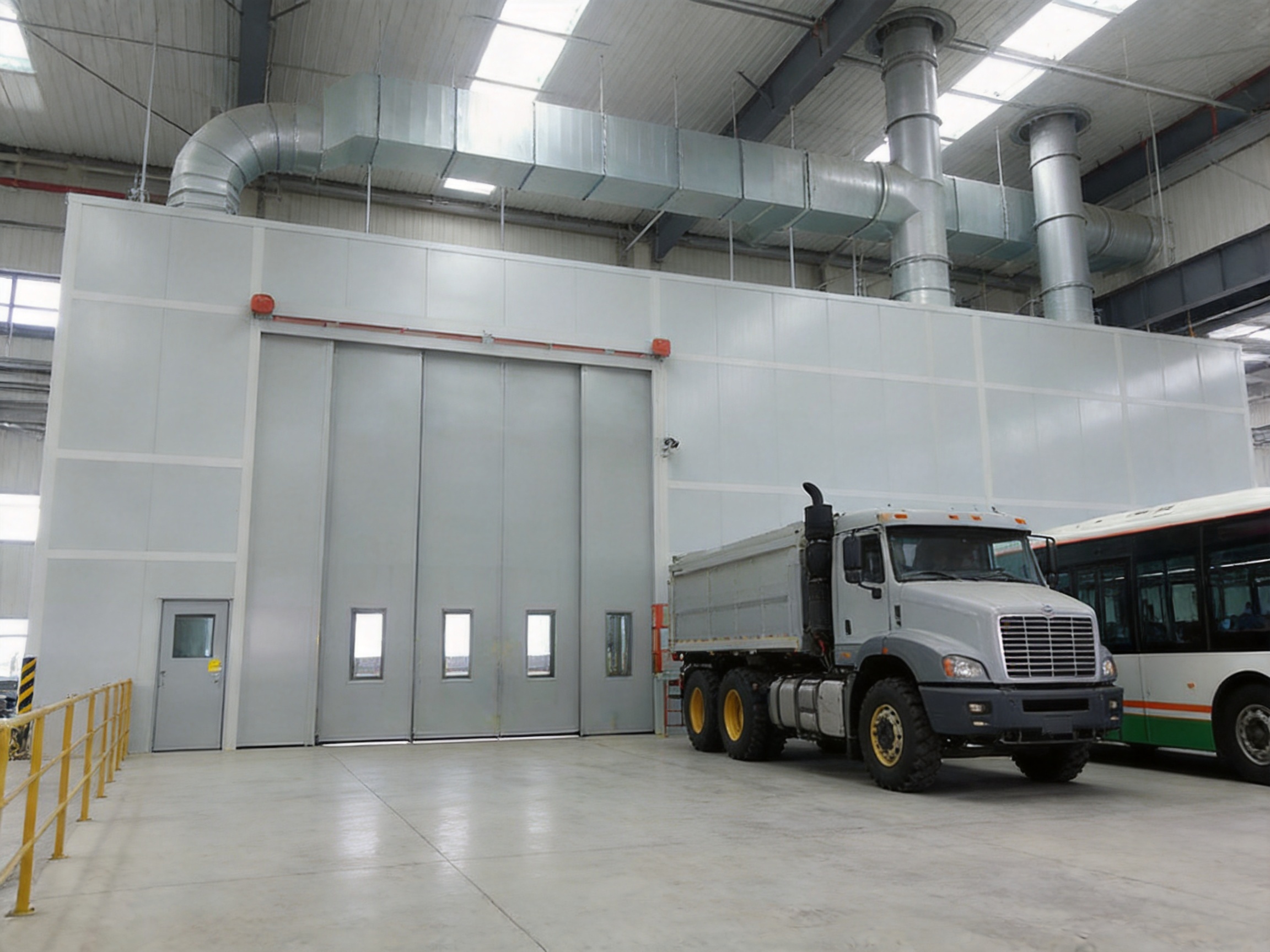
A heavy vehicle booth must withstand larger doors, greater internal spans, stronger air-handling equipment, and continuous industrial use. The equipment uses a reinforced steel frame and thickened sandwich wall panels to provide strength, wind resistance, thermal insulation, and deformation resistance.
Structural durability is important because any movement or deformation can affect door sealing, panel alignment, airflow performance, and long-term maintenance. Heavy-duty construction is especially valuable in facilities where the booth operates for extended shifts or processes large vehicles every day.
The wall and roof system can be selected according to the required insulation level, fire-safety considerations, local climate, and project budget. Proper panel installation supports a stable internal environment and helps protect the surrounding workshop from excessive noise, heat, and coating odors.
Paint application may involve flammable solvents, combustible vapors, and electrically powered equipment. The booth can be configured with explosion-proof fans, explosion-proof lighting, anti-static measures, smoke detection, and fire-protection devices. These systems are intended to reduce ignition risks and support compliance with applicable industrial safety requirements.
Explosion-proof lighting improves visibility without introducing unsuitable electrical equipment into the spray environment. Adequate illumination helps operators identify coverage defects, runs, dry spray, uneven gloss, and contamination during application. Lighting placement can be planned for side panels, roof sections, chassis areas, and other difficult-to-see surfaces.
Anti-static design is also important because static electricity can attract dust or create an ignition hazard in certain environments. The booth should be properly grounded, and operators should follow the coating supplier's safety instructions for mixing, storage, spraying, and waste handling.
Safety performance depends on both equipment and operating discipline. Personnel should receive training in paint handling, ventilation checks, emergency response, filter replacement, fire prevention, and the use of personal protective equipment. The booth provides the technical foundation, while the operating procedures ensure that the system is used correctly.
A large electric sliding door allows heavy vehicles to enter and exit efficiently. The door dimensions can be adapted to the height and width of the largest vehicle. A personnel side door provides a separate access route for operators and maintenance workers, reducing the need to open the main vehicle door during routine movement.
Observation windows allow supervisors and operators to inspect the process without unnecessarily interrupting booth operation. Internal maintenance platforms can help personnel reach upper sections, lighting units, air supply components, and filter assemblies safely. These details are particularly important in a tall booth where ordinary ladders may be inconvenient or unsafe.
Humanized design also includes accessible control panels, clear operating modes, emergency stop functions, inspection points, and maintenance access. Good ergonomics can reduce operator fatigue and help minimize process errors during long coating cycles.
Before a vehicle enters the booth, the surface should be cleaned, degreased, dried, and inspected. Existing loose coating, rust, dust, and repair residues should be removed according to the coating specification. Masking should be completed for windows, tires, lights, identification plates, electrical connectors, hydraulic components, and other areas that must remain uncoated.
The operator should also check the booth condition. Filters, lights, floor areas, doors, ventilation controls, temperature sensors, and emergency devices should be in normal condition. The paint, thinner, hardener, and other materials should be prepared according to the coating manufacturer's mixing ratios and safety instructions.
When the booth enters spray mode, fresh air is drawn through the intake filtration system. The filters capture airborne dust before the air reaches the coating area. Clean intake air helps protect the wet surface from contamination and supports stable spray conditions.
Airflow should be checked before spraying begins. Unusual noise, abnormal pressure, damaged filters, or inadequate air movement may indicate a maintenance problem. Early inspection prevents avoidable defects and protects the operator from working in unsuitable conditions.
Primer is applied to provide adhesion, corrosion protection, filling performance, or substrate isolation, depending on the system. After the required flash-off period, the base coat or color coat can be applied. Operators should maintain consistent spray distance, gun speed, overlap, and atomization pressure.
The large internal space allows operators to maintain a comfortable working position around tall and extended surfaces. Stable airflow helps carry excess paint mist away from the vehicle while preserving a controlled spray pattern. The operator should avoid excessive coating thickness, particularly in corners, deep recesses, and lower panels where runs may develop.
After spraying, the coating may require a flash-off stage before baking. During this period, solvents or water can evaporate under controlled ventilation. The exact duration depends on the coating formulation, temperature, humidity, film thickness, and recommendations of the paint supplier.
Operators can inspect the surface through observation windows or after entering the booth under the required safety procedure. Visible defects should be corrected before the coating proceeds to the final curing stage whenever possible.
When the coating is ready, the booth changes to baking mode. The heating system raises the internal temperature to the selected setting, and the circulation system distributes heated air through the chamber. Sensors monitor temperature to support a stable curing profile.
The vehicle should remain in the booth for the required time rather than being removed as soon as the air reaches the target temperature. Metal temperature and coating temperature may differ, particularly on thick or heavy components. Following the coating supplier's curing schedule helps achieve the required hardness, adhesion, gloss, and chemical resistance.
After curing, the booth enters a cooling or exhaust stage. The vehicle can gradually return to a suitable handling temperature while fumes and residual heat are removed. Controlled cooling helps reduce thermal shock and allows operators to inspect the finish safely.
Final inspection may include color consistency, gloss, film thickness, adhesion, edge coverage, surface smoothness, and the absence of runs, pinholes, dust particles, or dry spray. Process records can be maintained for quality control and future troubleshooting.
A standard car spraying booth is normally designed around passenger cars. It may provide excellent results for compact vehicles, but its internal clearance and air-handling capacity may be insufficient for buses, trucks, or construction machinery. Attempting to use a small booth for oversized equipment can create access problems, increase collision risks, reduce ventilation quality, and extend the coating cycle.
A heavy vehicle spray booth offers several advantages over simply enlarging a standard car booth after installation. The structural frame, fan capacity, heating system, door arrangement, filter area, exhaust ducting, and control system are considered together during the original design. This integrated approach helps maintain system balance and reduces the risk of one component becoming a bottleneck.
| Vehicle or Product Type | Recommended Booth Category | Primary Design Requirement | Typical Benefit |
|---|---|---|---|
| Passenger cars | Standard car spraying booth | Compact chamber and short cycle time | Efficient finishing for smaller vehicle bodies |
| Light trucks and vans | Extended-length automotive spray booth | Increased chamber length and door clearance | Improved access to longer bodies |
| Buses and heavy trucks | Heavy Vehicle Spray Booth | High-volume airflow and reinforced structure | Stable coating conditions for large surfaces |
| Loaders and excavators | Customized industrial spray booth | High height, irregular geometry, and heavy access doors | Suitable for complex machinery components |
| Large industrial parts | Large-part coating booth | Flexible internal layout and strong exhaust treatment | Adaptable processing for oversized assemblies |
Customization is one of the most important factors when selecting a large-vehicle coating system. A booth should not be specified only by its external appearance or nominal size. The design should begin with the largest workpiece, the coating material, the required production output, the curing temperature, the available utilities, and the site's environmental conditions.
Internal length and height can be adjusted to suit buses, trailers, articulated vehicles, or machinery with elevated components. Door dimensions can be increased for unusual vehicle profiles. Side doors, observation windows, maintenance platforms, ramps, and vehicle positioning systems can be incorporated into the layout.
Airflow design can be selected as down-draft, semi-down-draft, or another suitable arrangement according to the project requirements. Fan capacity and filter surface area should be calculated for the actual chamber volume and expected spray load. Heating can be based on diesel, gas, electricity, heat pump technology, or a combination of equipment where appropriate.
The booth can also be integrated with automatic conveyor systems, production lines, drying equipment, waste gas treatment units, and other workshop equipment. For a facility with multiple coating stages, the booth may form part of a complete automated or semi-automated production line rather than functioning as an independent room.
Jiangsu Yue Ze Environmental Protection Equipment Co., Ltd. is located in Yancheng, Jiangsu, China, and covers approximately 35,000 square meters. With registered capital of 58 million yuan and more than 40 years of experience, the company provides integrated design, manufacturing, installation, commissioning, and customized equipment services for industrial surface treatment.
The company's product scope includes powder coating lines, automotive counterweight spray lines, paint and bake booths, large-part grinding rooms, waste gas treatment equipment, infrared radiation drying systems, automated conveying systems, intelligent coating lines, and other environmental protection equipment. This broad range of products gives the engineering team experience in coordinating coating, drying, conveying, ventilation, and emission-control processes.
One example of the company's process innovation is its development of a hanging automatic painting line for casting counterweight blocks. The process covers finishing and polishing, primer application, and topcoat application. Experience gained from such integrated lines supports the design of coating systems in which material movement, surface preparation, spraying, drying, and environmental control are treated as connected operations.
For heavy vehicle projects, this integrated engineering perspective is valuable. A booth is only one part of the production system. Vehicle positioning, loading, unloading, paint preparation, ventilation, heating, inspection, maintenance, and waste management all influence the final result. A supplier that understands these relationships can provide a more practical solution than a company that only supplies an isolated chamber.
The project development process can begin with a review of vehicle dimensions, coating types, daily output, working hours, workshop layout, local climate, energy supply, and environmental requirements. Engineering personnel can then recommend chamber dimensions, airflow direction, heating method, filtration stages, door arrangement, control functions, and maintenance access.
Site information is important because a booth must fit not only the vehicle but also the building. Ceiling height, foundation conditions, ventilation routes, electrical capacity, fuel storage, exhaust stack location, fire access, and vehicle traffic paths should all be considered before manufacturing begins.
Manufacturing quality affects the booth's service life and operating stability. Steel components should be processed accurately, assembled securely, and protected against corrosion. Wall and roof panels should be installed with suitable sealing and insulation. Fans, motors, burners, control cabinets, lights, sensors, filters, and safety devices should be selected according to the system design.
Quality control should include dimensional inspection, structural checks, electrical verification, airflow testing, temperature testing, door operation checks, and safety-function verification. A systematic inspection process helps reduce commissioning issues and supports reliable operation after installation.
Professional installation is essential for a large coating booth. The foundation, frame, panels, doors, ventilation ducts, heating equipment, electrical system, and exhaust treatment equipment must be coordinated carefully. After assembly, the system should be commissioned under operating conditions.
Commissioning may include checking airflow direction, pressure balance, filter installation, fan rotation, heating response, temperature uniformity, door sealing, lighting, emergency stops, smoke detection, and control logic. The customer should also receive instructions for operation, cleaning, filter replacement, routine inspection, and emergency procedures.
Energy efficiency depends on the booth's insulation, fan selection, heating system, operating schedule, filter condition, and control strategy. A booth with good thermal insulation can reduce heat loss through walls, roof, doors, and exhaust air. Correctly sized fans can deliver the required airflow without unnecessary electrical consumption.
Filters should be monitored because a loaded filter increases resistance. When resistance rises, the fan may consume more energy while delivering less effective airflow. Replacing filters at the correct interval helps maintain coating quality and control energy use.
The heating method should be selected by considering the complete life-cycle cost. Diesel and gas systems may offer rapid heating, while electric or heat pump systems may be preferred where clean operation, automation, or local energy conditions are important. The most suitable option depends on local prices, production hours, required temperature, climate, and maintenance resources.
Operating practices also influence energy consumption. The booth should not be heated unnecessarily when no vehicle is present. Spray and bake modes should use suitable airflow settings rather than operating every fan at maximum output during all stages. Door opening should be minimized during heating and curing, and maintenance problems should be corrected promptly.
A controlled coating booth provides benefits beyond surface appearance. It helps collect overspray, guide fumes toward the exhaust treatment system, reduce uncontrolled emissions, and separate hazardous coating activities from other workshop operations. This supports a cleaner production environment and helps the facility work toward applicable environmental requirements.
Workers also benefit from controlled ventilation and improved visibility. The booth can reduce the accumulation of paint mist and solvent vapor in the operator's breathing zone when correctly designed and operated. However, ventilation does not replace personal protective equipment. Respirators, protective clothing, gloves, eye protection, and other safety equipment must be selected according to the coating materials and workplace risk assessment.
Environmental performance requires continuous management. Filters must be handled as industrial waste when removed, paint residues must be stored correctly, and waste solvent containers must remain closed and properly labeled. The booth is part of an environmental management system that includes material storage, operator training, waste handling, maintenance, and emission monitoring.
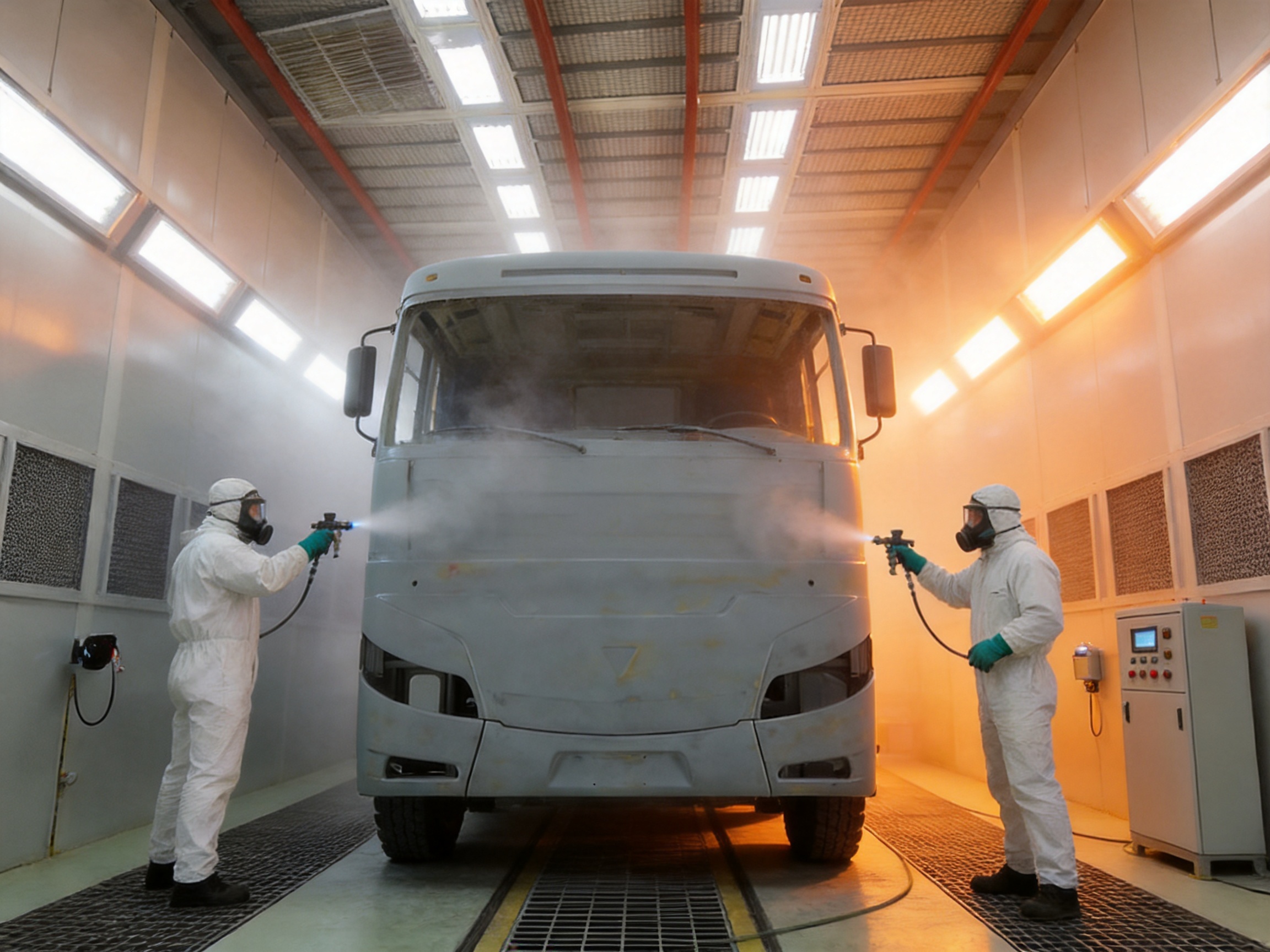
Operators should inspect the booth before each shift. The check should include lighting, door movement, emergency stop functions, fan operation, visible filter condition, control-panel alarms, and the cleanliness of the floor and work area. Paint residue should not be allowed to accumulate on surfaces where it may affect airflow or create a fire risk.
Intake and exhaust filters should be inspected according to the operating schedule and replaced when loaded or damaged. The replacement interval depends on the coating volume, paint type, working hours, and local dust conditions. Filters should be installed correctly to prevent bypass leakage.
Fans, motors, belts, bearings, burners, heating elements, temperature sensors, and control components should be inspected periodically. Abnormal vibration, noise, temperature, or airflow may indicate wear or blockage. Early maintenance can prevent production delays and protect the quality of the coating process.
Explosion-proof equipment, grounding, smoke detection, fire-protection devices, emergency stops, door interlocks, and alarms should be tested according to the facility's safety plan. Records should be kept for inspections and corrective actions. Any defective safety device should be repaired before normal operation resumes.
Buyers should begin by identifying the largest vehicle or component that the booth must accommodate. The internal chamber should provide sufficient clearance on all sides for safe operator movement and effective spray application. The largest door opening should be checked against actual vehicle dimensions, including mirrors, roof equipment, attachments, and temporary fixtures.
The second consideration is production volume. A repair center with several vehicles per week may require a different system from a bus manufacturer operating multiple shifts. Cycle time, heat-up time, cooling time, filter replacement frequency, and vehicle movement all affect production capacity.
The coating system should also be defined. Water-based paint, solvent-based paint, primers, topcoats, industrial protective coatings, and specialty finishes may have different airflow, filtration, temperature, and curing requirements. The booth supplier should review the paint technical data sheets before final equipment selection.
Environmental requirements should be confirmed early. The exhaust treatment design may depend on local emission limits, the quantity of paint used, volatile organic compound content, and the location of the exhaust outlet. A complete solution should address both the booth and the treatment of discharged air.
Finally, buyers should evaluate the supplier's engineering, manufacturing, installation, and after-sales capabilities. A supplier with experience in coating lines, drying systems, environmental equipment, and automatic conveying can often provide better coordination for a complete project. Documentation, commissioning support, spare parts, training, and maintenance services should be included in the purchasing discussion.
A Heavy Vehicle Spray Booth is a large industrial coating chamber designed for trucks, buses, trailers, construction machinery, agricultural equipment, and other oversized vehicles or components. It controls airflow, filtration, heating, exhaust, and operating safety during spraying and curing.
It has a larger internal chamber, higher airflow capacity, reinforced structural components, larger doors, stronger heating capability, and filtration systems suitable for greater coating loads. It is designed specifically for heavy and oversized workpieces rather than being a simple enlarged passenger-car booth.
Yes. The integrated configuration can support spraying, flash drying, and curing in one room. This can reduce vehicle transfers, save workshop space, and limit the risk of contamination between process stages.
Optional heating systems include diesel, gas, electric, and heat pump configurations. The correct choice depends on local energy availability, operating cost, environmental requirements, desired heating speed, and the customer's production conditions.
Yes. The dimensions, doors, airflow capacity, heating output, filtration, maintenance platforms, control system, and internal layout can be customized for buses, excavators, loaders, trucks, trailers, and other large equipment.
It can be configured for water-based paint, solvent-based paint, primer, topcoat, clear coat, and other coating systems. The final airflow, temperature, humidity, filtration, and curing arrangement should be determined according to the coating manufacturer's technical requirements.
Filtered intake air helps reduce dust contamination, while multi-stage exhaust filtration captures paint mist and reduces the uncontrolled release of coating pollutants. Additional waste gas treatment equipment can be integrated when required by the coating materials and local regulations.
A suitable configuration may include explosion-proof fans, explosion-proof lighting, anti-static grounding, smoke detection, fire-protection devices, emergency stops, and safety alarms. Operators must also use appropriate personal protective equipment and follow documented operating procedures.
Maintenance includes checking filters, fans, heating equipment, lights, sensors, doors, grounding, emergency devices, and exhaust components. Filters should be replaced when loaded, and safety systems should be tested regularly. Maintenance records should be kept for quality and compliance management.
Customers should provide the largest vehicle dimensions, vehicle types, daily output, coating materials, required curing temperature, working hours, available energy sources, workshop dimensions, local environmental requirements, and desired automation level. This information enables the supplier to prepare a more accurate technical proposal.
Yes. It can be coordinated with automated conveying systems, drying equipment, surface preparation areas, waste gas treatment systems, inspection stations, and other coating-line equipment. The final arrangement depends on the factory layout and production process.
Large coating projects involve structure, airflow, heating, filtration, electrical control, safety, environmental protection, and installation. A supplier with experience across these fields can coordinate the different systems more effectively and provide a solution that is better matched to actual production needs.
A Heavy Vehicle Spray Booth is a specialized industrial solution for coating trucks, buses, trailers, construction machinery, and large components. Its value comes from the coordinated performance of several systems: extra-large working space, stable airflow, controlled temperature and humidity, efficient heating, multi-stage filtration, reinforced construction, explosion-proof safety equipment, and convenient operator access.
Compared with a standard passenger-car spray booth, the heavy-duty configuration provides the capacity and structural strength required for oversized workpieces. The integrated spray-and-cure function can reduce handling and workshop investment, while customized dimensions and utilities allow the system to fit different vehicles, coating materials, production volumes, and environmental requirements.
Jiangsu Yue Ze Environmental Protection Equipment Co., Ltd. combines more than 40 years of experience with capabilities in coating lines, paint and bake booths, conveying systems, drying equipment, waste gas treatment, and intelligent surface-treatment solutions. Its large manufacturing base, integrated engineering approach, and ability to design, manufacture, install, and commission customized equipment make it a suitable partner for companies seeking a complete heavy-vehicle coating system.
For the best result, purchasers should evaluate the booth as part of the entire production process. Correct sizing, suitable airflow, reliable heating, efficient filtration, safe operation, planned maintenance, and professional commissioning all contribute to coating quality and long-term operating value. With the right design, a heavy vehicle spray booth can improve finish consistency, increase production flexibility, support environmental management, and create a safer and more efficient coating workshop.
1. Industrial spray booth design principles for airflow control, filtration, heating, and coating quality.
2. General technical guidance for automotive and industrial paint application environments.
3. Coating manufacturer technical data sheets for primer, base coat, topcoat, clear coat, and curing conditions.
4. General industrial practices for explosion-proof electrical equipment, anti-static protection, and fire prevention in coating areas.
5. Environmental management principles for paint mist filtration, waste gas treatment, filter replacement, and industrial coating waste handling.
6. Manufacturer-provided technical information for heavy vehicle spray booths, automated coating lines, drying systems, conveying systems, and environmental protection equipment.
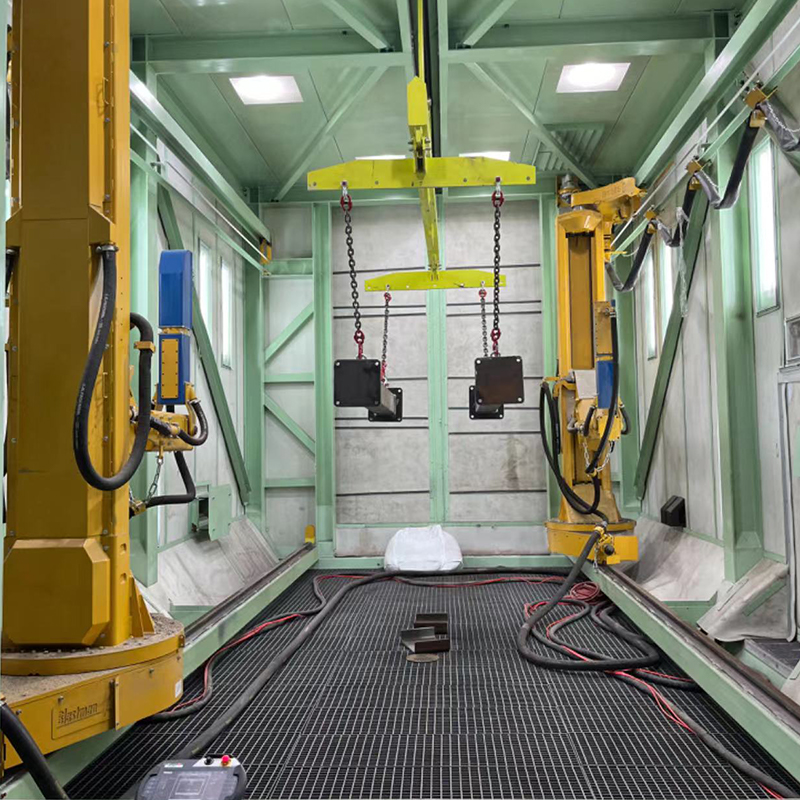
Professional coating line specially designed for large castings and heavy truck parts, applicable to various large castings (engineering castings, mining equipment castings, industrial castings) and h...
See Details
Heavy vehicle spray booth is a large-scale professional coating workshop, specially designed for oversize and heavy equipment. With powerful air circulation, heating system, and multi-stage exhaust fi...
See Details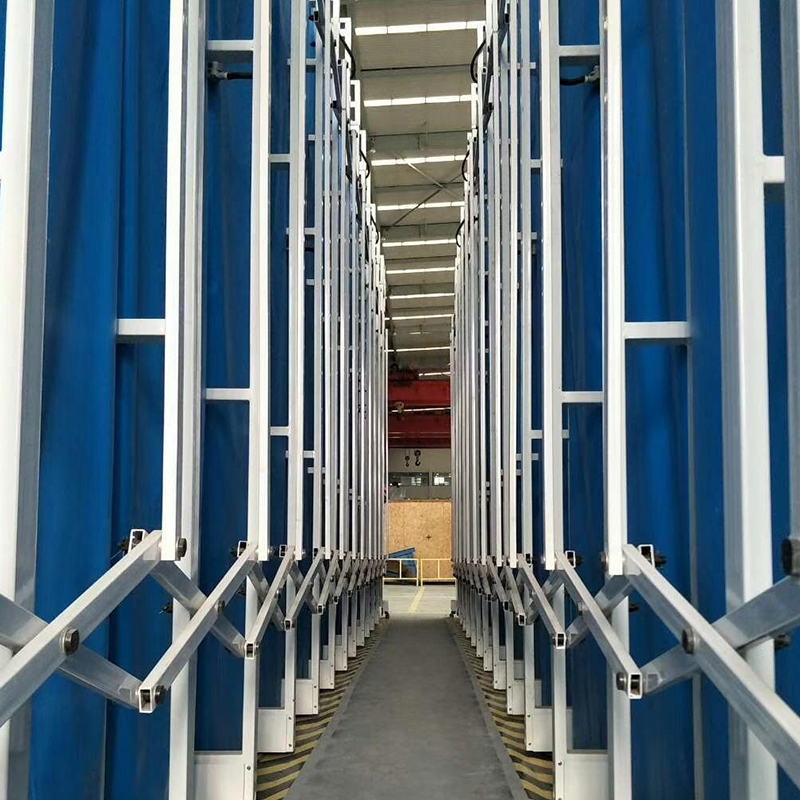
The retractable mobile spray & sanding booth is a flexible, space-saving, and multi-functional coating workstation. With a telescopic movable structure and integrated dust & paint mist filtrat...
See Details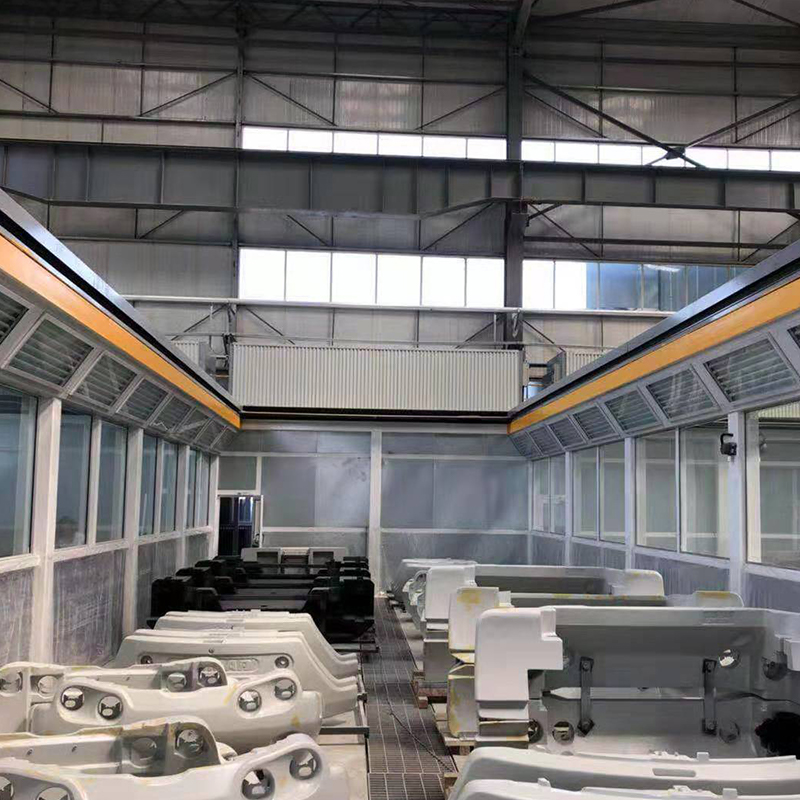
The retractable mobile spray & sanding booth is a flexible, space-saving, and multi-functional coating workstation. With a telescopic movable structure and integrated dust & paint mist filtrat...
See Details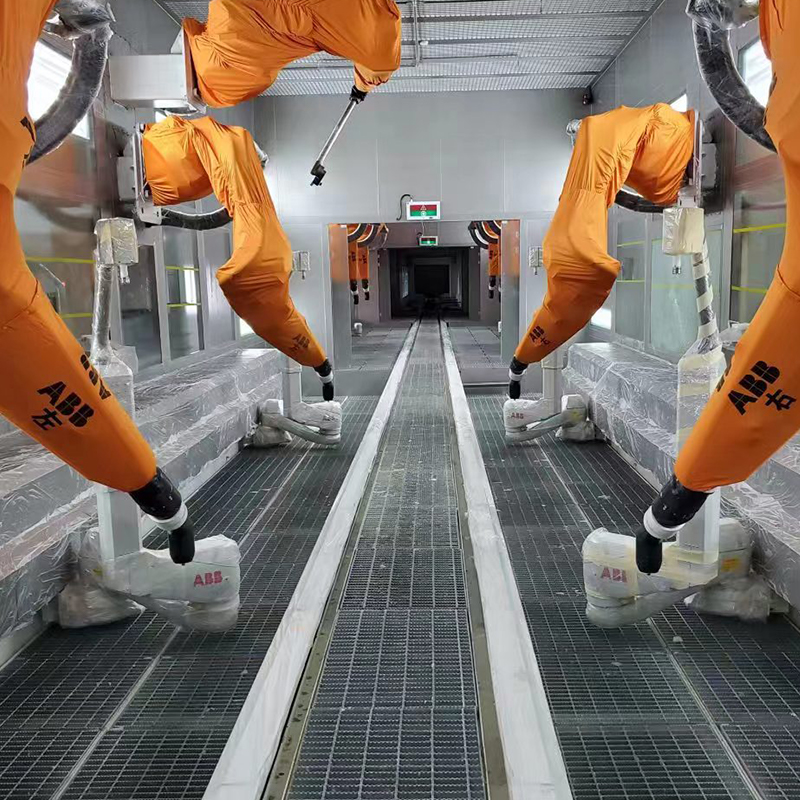
Professional spray coating line specially designed for motor casings, applicable to various motor casing types (electric vehicle motor casing, industrial motor casing, household motor casing, high-tem...
See Details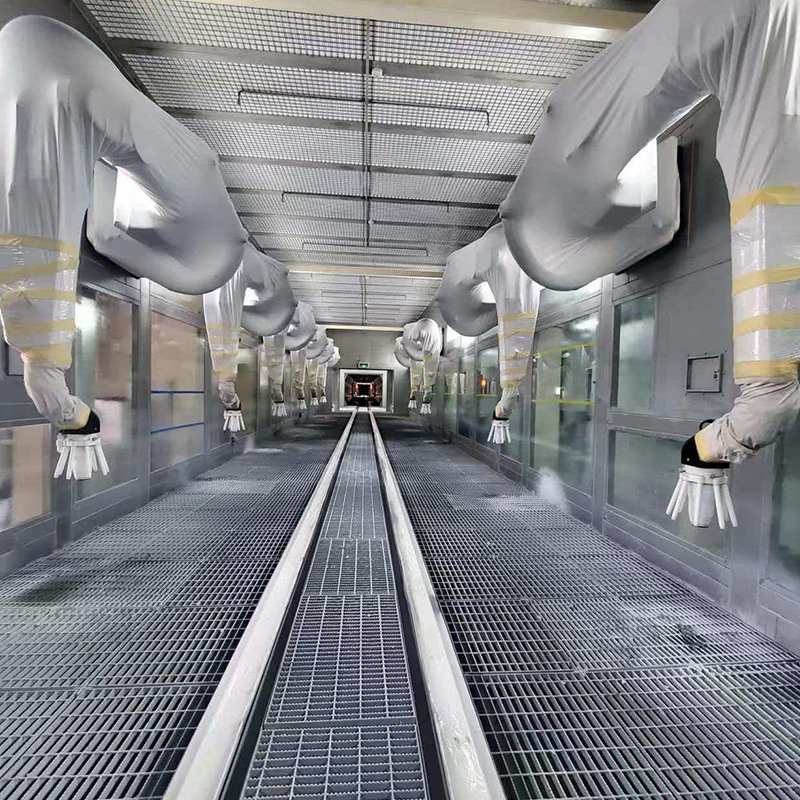
Professional spray coating line specially designed for car wheel manufacturing and refurbishment, applicable to various car wheel types (steel wheel, aluminum alloy wheel, forged wheel, cast wheel, pa...
See DetailsBuild Your Customized Industrial Coating System
Send us your workpiece information, production capacity, coating process, workshop layout, and environmental requirements. Yueze will help evaluate your project and develop a suitable coating, conveying, drying, and environmental treatment solution.
Main menu
Products
Contact Us
Company Address:
No. 12, Park Avenue, Shanggang Industrial Park, Jianhu, Yancheng City, Jiangsu Province
Message Us Right Now!

Follow us: