
 русский
 عربى
عربى
 Tiếng Việt
General overhead conveyor system, electric-driven with stable power output, mainly composed of track, hanging carrier, drive device, and intelligent control system. It adopts overhead installation, sa...
See Details
Yueze Environmental Protection provides one-stop compliant industrial surface treatment solutions with professional tech and fine craftsmanship.
 Get Inquiries
2026-07-24
Content
A General Overhead Conveyor System is an automated material-handling solution designed to transport workpieces, components, packages, and other industrial materials above the production floor. By using an elevated track, hanging carriers, a drive device, and an intelligent control system, the conveyor creates a stable and continuous flow between loading, processing, inspection, drying, assembly, and unloading stations.
Unlike conventional floor conveyors, an overhead conveyor uses vertical factory space instead of occupying valuable working areas. This design helps manufacturers reduce floor congestion, improve workshop organization, and create a more efficient production route. It is particularly suitable for coating lines, powder coating production lines, surface treatment facilities, metal component manufacturing, automotive parts production, assembly operations, and other industrial processes requiring repetitive and reliable transportation.
The General Overhead Conveyor System supplied by Jiangsu Yue Ze Environmental Protection Equipment Co., Ltd. is developed as a flexible, project-oriented solution rather than a standard conveyor with limited adjustment options. Track configuration, carrier design, drive capacity, conveying speed, control functions, safety protection, and connection points can be designed according to the customer’s workpieces, process requirements, building structure, and future production plans.
For manufacturers comparing different conveyor suppliers, the main consideration is not only whether the conveyor can move a product from one point to another. A dependable system must also maintain consistent operation, tolerate industrial environments, integrate with other equipment, minimize maintenance, protect operators, and support long-term production expansion. These requirements make engineering experience, manufacturing control, and after-sales project support just as important as the basic conveyor mechanism.
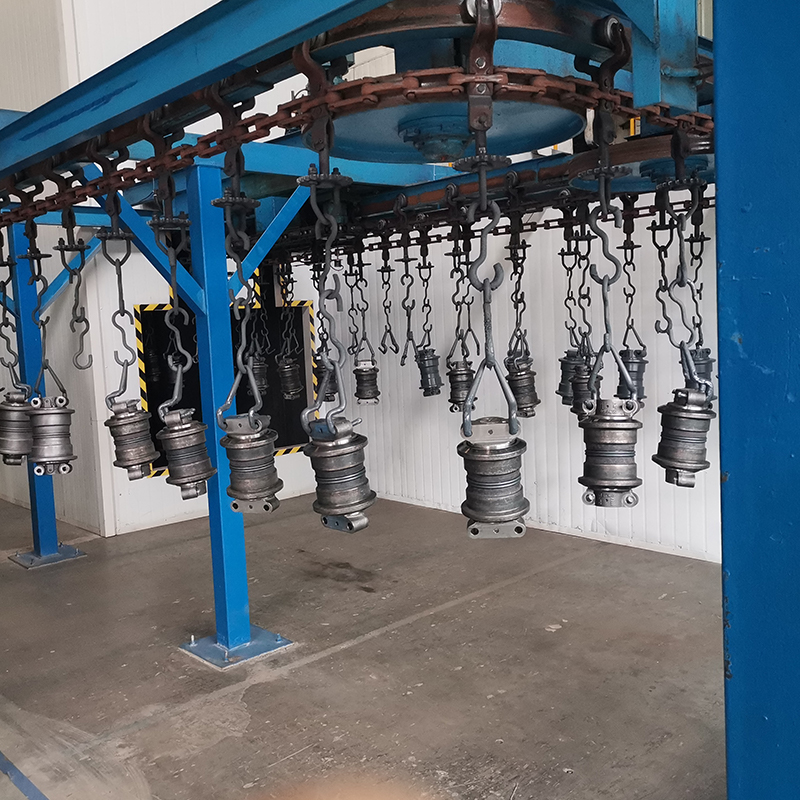
General Overhead Conveyor System
A General Overhead Conveyor System is a mechanical and electrical transportation system installed above the production area. It normally consists of an overhead track, conveyor chain or traction mechanism, hanging carriers, drive units, tensioning components, loading and unloading stations, electrical control equipment, and safety devices.
Workpieces are attached to or placed on carriers that move along a predefined route. The route may include straight sections, curves, inclines, declines, loading zones, processing stations, inspection areas, temporary storage sections, and unloading points. Depending on the production process, the conveyor can operate continuously or use controlled stopping positions.
The system receives power from an electric drive device. The drive unit transfers torque to the conveyor chain or traction mechanism, which moves the carriers along the track. An intelligent control system can regulate speed, coordinate process timing, monitor operating conditions, and communicate with related production equipment.
In a coating application, for example, components can be loaded onto carriers before pretreatment. The conveyor then transports them through cleaning, drying, powder coating, curing, cooling, inspection, and unloading stations. The workpieces remain organized throughout the process, reducing manual movement and helping ensure that each item follows the intended production sequence.
In an assembly application, carriers can move parts between workstations while keeping product orientation and spacing consistent. In a packaging or logistics application, the conveyor can transfer packages above working areas and release them at designated sorting or dispatch points. This flexibility is why overhead conveyors are used across many industries rather than being limited to one type of production line.
The overhead track provides the route and structural support for the carriers. It may be arranged as a straight line, a rectangular loop, a U-shaped route, a serpentine path, or a multi-level configuration. Track design must consider the weight of the workpieces, the carrier spacing, turning radius, elevation changes, building columns, equipment positions, access passages, and maintenance requirements.
A properly engineered track reduces unnecessary resistance and helps the carriers move smoothly. The selection of track materials and connection methods also affects service life, dimensional stability, noise, and maintenance frequency. For applications involving humidity, dust, chemicals, or elevated temperatures, material selection and surface protection are especially important.
Hanging carriers connect the workpieces to the conveyor. Their structure may include hooks, frames, baskets, racks, clamps, fixtures, or customized supports. Carrier design is directly related to product dimensions, weight distribution, loading method, coating requirements, and the need to expose specific surfaces during processing.
For coating lines, the carrier must hold each workpiece securely while allowing paint or powder to reach the required surfaces. It should also minimize shadow areas and support effective draining, drying, and curing. For irregular or heavy components, reinforced fixtures may be required to maintain stability during acceleration, curves, and elevation changes.
Because the carrier is one of the most frequently used working parts of the system, its design has a major influence on productivity. Yue Ze can develop carrier structures according to the actual workpiece rather than forcing different products to use one unsuitable standard fixture.
The drive device provides the force required to move the chain and carriers. It generally includes an electric motor, transmission components, sprockets, a drive frame, and related protective structures. The drive capacity must be selected according to the total conveying load, route length, number of carriers, track resistance, operating speed, and environmental conditions.
A stable drive system helps prevent sudden acceleration, slipping, excessive vibration, and uneven movement. In a well-designed system, power output remains reliable during continuous operation and under changing production loads. Proper drive selection also reduces energy waste and supports longer service intervals.
The control system manages conveyor start-up, shutdown, speed regulation, emergency stopping, process coordination, and operating status. Depending on the project, it may include a control cabinet, programmable logic controller, frequency converter, sensors, limit switches, operator controls, indicator lights, and communication interfaces.
Adjustable speed is valuable because different production stages may require different conveying times. A coating process may need a controlled residence time in a spray or curing area, while a loading area may benefit from slower movement for safer manual handling. Variable-speed control allows the conveyor to match the rhythm of the entire production line.
Safety equipment may include emergency-stop switches, limit protection, overload protection, protective covers, anti-drop components, access guards, warning indicators, and interlocking functions. These devices help protect operators and equipment during normal operation, maintenance, and unexpected conditions.
Safety design should be considered from the beginning of the engineering process. It is more effective to integrate protection into the track, drive, loading, and control design than to add isolated safety components after installation.
The operating principle is straightforward, but reliable performance depends on the accuracy of the complete system. First, workpieces are loaded onto designated carriers at the loading station. The carrier must be correctly positioned and securely attached before entering the conveying route.
When the system starts, the drive device moves the chain or traction mechanism. The carriers travel along the overhead track, maintaining a planned distance from one another. The distance between carriers is determined by product size, process capacity, line speed, loading requirements, and the required spacing between workpieces.
As the carriers move through the production line, they may pass through pretreatment equipment, spray booths, drying chambers, curing ovens, assembly stations, inspection zones, or temporary holding areas. The control system can coordinate the conveyor with these machines so that the workpieces arrive at the correct time and position.
At the unloading area, finished products are removed manually or transferred to another handling system. Empty carriers can then continue through the return route and arrive back at the loading station. In a looped system, the same carrier can be used repeatedly, reducing the need for separate transport devices at each station.
For intermittent processes, the conveyor can stop or reduce speed at specific positions. Sensors and limit devices may be used to confirm carrier position and coordinate the operation of doors, spray equipment, ovens, inspection equipment, and transfer mechanisms. This creates a connected production flow instead of a series of independent machines.
The most visible advantage of an overhead conveyor is its ability to preserve floor space. Conventional floor conveyors occupy areas that could otherwise be used for operators, equipment, storage, inspection, or material access. An overhead system leaves the main floor more open and makes it easier to organize workstations around the production route.
This advantage is particularly important in workshops with limited floor area. Instead of extending the production line horizontally, manufacturers can use the vertical space above the working area. A carefully planned route can pass over equipment, between stations, and along building structures without disrupting ground-level operations.
Manual transport interrupts production and creates dependence on labor availability. Workers must move parts between processes, often using carts, forklifts, or temporary storage areas. These activities consume time and may introduce handling damage, product confusion, or inconsistent process timing.
An overhead conveyor provides continuous automated movement. Once the workpiece is loaded, it can pass through multiple stations without repeated manual transfer. This supports higher throughput and helps maintain a stable production rhythm, especially in mass production environments.
Reducing manual handling can improve both productivity and workplace safety. Operators do not need to repeatedly lift, carry, or push heavy workpieces across the workshop. They can focus on loading, processing, inspection, assembly, or other value-added tasks.
For heavy or awkward components, this advantage is even more significant. A correctly selected carrier and drive system can transport the workpiece along the route while reducing the risk of dropping, collision, and ergonomic injury.
Manual transportation often varies according to operator experience, workload, and production pressure. An automated conveyor follows a predetermined route and maintains a controlled speed. This creates more consistent transportation times and helps coordinate upstream and downstream operations.
Stable conveying is especially useful when the product must remain in a coating booth, drying chamber, or curing oven for a defined period. Consistent movement supports repeatable surface treatment and reduces process variation.
Different factories have different structures. Some require a straight conveyor, while others need curves, elevation changes, loops, branches, or several connected process sections. A customized overhead system can be designed around columns, doors, ventilation equipment, ovens, booths, and existing machines.
This flexibility gives overhead conveyors an advantage over rigid standard systems. The conveyor can be adapted to current production conditions and designed with consideration for future expansion. Additional stations, carrier positions, control functions, or route sections may be incorporated when the production plan changes.
A properly manufactured and installed conveyor should operate smoothly, with controlled movement and limited vibration. Low noise helps create a more comfortable workplace and reduces the disturbance caused by constant mechanical transportation.
Noise performance is influenced by track alignment, chain quality, lubrication, drive selection, carrier balance, installation accuracy, and maintenance. Yue Ze’s integrated engineering approach considers these factors together rather than treating the conveyor as a collection of unrelated components.
The conveyor can be connected with coating booths, drying ovens, curing chambers, assembly workstations, testing areas, storage zones, and unloading equipment. This makes it a practical foundation for an automated production line.
For a powder coating line, the conveyor may serve as the central transportation structure connecting pretreatment, drying, powder application, curing, cooling, inspection, and packing. For a paint line, it can be integrated with spray booths, flash-off areas, baking chambers, and environmental treatment systems.
A durable conveyor reduces the costs associated with repeated repairs, emergency shutdowns, manual movement, and production interruptions. Although the initial investment must be evaluated carefully, the total cost of ownership is often more important than the purchase price alone.
Reliable components, accessible maintenance points, appropriate drive selection, and a well-planned route help reduce operating expenses. An efficient conveyor also minimizes unnecessary handling equipment and may reduce the labor required for internal transportation.
| Evaluation Factor | General Overhead Conveyor System | Manual or Floor-Based Transportation |
|---|---|---|
| Use of floor space | Preserves most ground-level working space | Requires floor area for carts, vehicles, or conveyor structures |
| Transportation consistency | Controlled route and adjustable speed | Depends on manual operation and traffic conditions |
| Labor requirement | Reduces repeated handling work | Requires frequent loading, pushing, carrying, or driving |
| Process connection | Can connect several stations automatically | Often requires separate transfer operations |
| Layout flexibility | Supports straight, curved, elevated, and looped routes | Limited by floor obstacles and access paths |
| Production expansion | Can be customized for future process changes | May require major relocation or additional floor space |
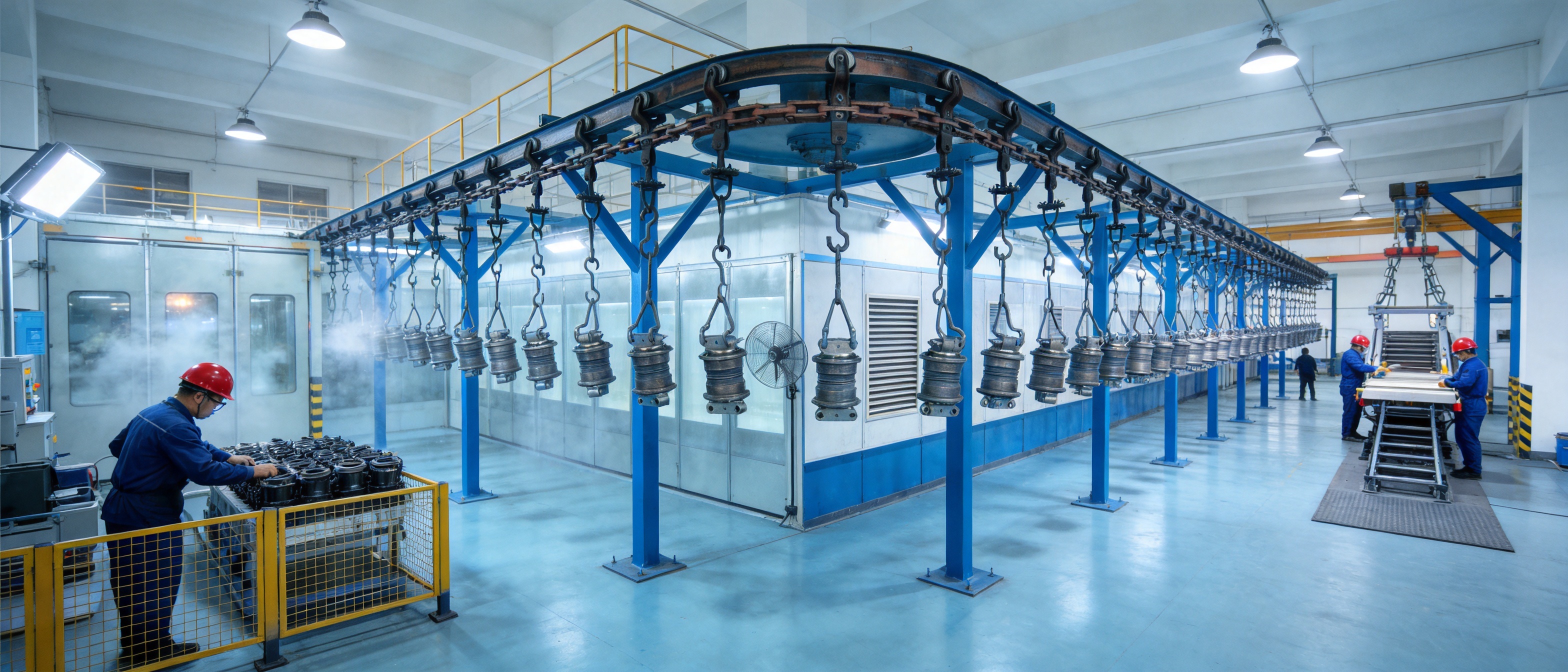
Powder coating lines require coordinated transportation between pretreatment, drying, powder spraying, curing, cooling, inspection, and unloading. The General Overhead Conveyor System is suitable for this environment because it can move metal workpieces continuously while keeping them suspended above the floor.
The carrier design can be adapted to the shape of the product and the required coating orientation. Workpieces may be arranged to expose multiple surfaces to the spray guns. After coating, the conveyor carries them through the curing oven at a controlled speed, supporting the required temperature exposure time.
After curing, the parts can pass through a cooling section before inspection and unloading. This arrangement reduces manual transfers and helps keep coated surfaces away from floor contamination, accidental contact, and unnecessary handling.
Liquid paint production lines commonly include cleaning, drying, masking, primer application, flash-off, topcoat application, baking, and inspection. An overhead conveyor can connect these stages while maintaining a controlled flow of parts.
Because paint quality can be affected by dust, contact, and inconsistent process time, a suspended conveying method can provide practical advantages. The workpiece remains on its carrier during several stages, reducing the chance of damage caused by repeated repositioning.
Automotive components often vary in size and weight. Counterweight blocks, chassis components, brackets, frames, wheels, and other metal parts may require robust carriers and carefully selected drive equipment. An overhead system can be designed for high loading capacity and continuous operation.
For large or heavy parts, structural analysis and load calculation are essential. The system must account for the workpiece weight, carrier weight, accumulated load, track span, curve resistance, and acceleration forces. A customized design helps ensure that the conveyor remains stable during long-term use.
Metal fabrication workshops often require transportation between grinding, cleaning, phosphating, coating, drying, and inspection. An overhead conveyor can help create a clear sequence and reduce the use of forklifts or manual carts inside the process area.
When the production environment includes dust, moisture, or chemicals, the conveyor must be selected and protected according to the operating conditions. Corrosion-resistant components, suitable coatings, protective covers, and regular maintenance planning can extend the working life of the equipment.
In assembly operations, the conveyor can deliver components or partially assembled products to workstations in a planned order. Carriers can be designed to maintain product position and provide operators with convenient access.
At testing stations, the conveyor may stop temporarily to allow visual inspection, dimensional measurement, electrical testing, or functional verification. Signals from sensors or control equipment can be used to coordinate the stopping and restarting sequence.
Overhead conveyors can transport cartons, bags, containers, and packaged products between production areas and dispatch stations. They are useful when the factory floor is already occupied by machines, storage racks, or personnel access routes.
For logistics applications, the carrier configuration and loading method should reflect the product size, package stability, required throughput, and destination arrangement. A modular route can support sorting, temporary holding, and delivery to different work areas.
A major strength of a professional conveyor manufacturer is the ability to convert site conditions into a practical engineering design. A conveyor should not be selected solely by its nominal length or motor power. The complete route must be evaluated together with the production process, product characteristics, workshop dimensions, and operating environment.
Workpiece weight affects carrier strength, chain selection, track loading, drive capacity, support spacing, and safety protection. Product dimensions influence the distance between carriers, the width of process equipment, the turning radius, and the available clearance from building structures.
Irregular workpieces may require specially shaped hooks or fixtures. Long components may need multiple support points to prevent swinging. Flat products may require orientation control to ensure consistent coating or drying. A carrier designed for one product type may not be appropriate for another, which is why customized fixture development is important.
Required output determines the relationship between conveyor speed, carrier spacing, process time, and station capacity. A high-output line may require close carrier spacing and continuous movement, while a line with longer curing or drying requirements may need a longer route or slower speed.
Adjustable speed allows the equipment to respond to changes in product type and process requirements. Frequency control can provide smooth speed adjustment and reduce mechanical shock during start-up and stopping.
The design team must examine ceiling height, roof structure, columns, beams, doors, ventilation ducts, lighting, fire-protection equipment, and maintenance access. The overhead route must maintain sufficient clearance from people, vehicles, machines, and building components.
Accurate site measurement helps prevent installation conflicts. When a line is designed from incomplete information, later modifications can increase cost and delay commissioning. Professional project planning therefore begins with technical communication, layout review, and confirmation of key dimensions.
The conveyor route must match the process sequence. For coating lines, the track should connect logically with pretreatment tanks, drying chambers, spray booths, curing ovens, cooling sections, and inspection areas. The carrier material and structure must also be suitable for temperature, chemicals, overspray, and cleaning conditions.
For assembly lines, the route should provide convenient operator access. For heavy-part handling, loading and unloading stations require appropriate lifting assistance or ergonomic support. For automatic production, the conveyor control system must exchange signals with related equipment.
Manufacturers often increase capacity or introduce new product models after the original line begins operation. A flexible overhead conveyor can be designed with expansion points, spare control capacity, adjustable carrier spacing, or reserved installation areas.
Planning for future development does not mean oversizing every component. It means identifying likely changes and creating a practical balance between present investment and future adaptability.
The performance of an overhead conveyor depends heavily on manufacturing accuracy. A system may appear simple from the outside, but reliable operation requires precise fabrication, consistent component quality, careful assembly, and effective commissioning.
Jiangsu Yue Ze Environmental Protection Equipment Co., Ltd. has more than 40 years of experience in industrial surface treatment equipment, production lines, environmental protection systems, and automated conveying solutions. This background allows the company to evaluate the conveyor as part of a complete production process rather than as an isolated mechanical product.
The engineering process begins with understanding the customer’s product, output target, process sequence, workshop layout, environmental conditions, and automation expectations. The design team can then develop the route, carrier arrangement, drive system, control method, and equipment interfaces.
Important design information includes workpiece weight, dimensions, loading quantity, desired production capacity, process temperature, surface treatment method, route length, elevation changes, available power, and local installation conditions. Clear technical communication at this stage helps reduce changes during manufacturing and installation.
Customized mechanical design covers the track, supports, carrier fixtures, drive assembly, tensioning arrangement, loading station, unloading station, and maintenance access. The objective is to create a system that is strong enough for the application while remaining practical to manufacture, install, operate, and maintain.
The company can develop solutions for straight, curved, multi-station, and looped routes. Carrier design may be adjusted for light parts, heavy components, large workpieces, irregular shapes, or products requiring a specific orientation during coating and drying.
Manufacturing quality begins with material preparation and component control. Structural parts must be cut, formed, welded, drilled, and finished according to the approved drawings. Dimensional accuracy is important because misalignment can increase friction, noise, vibration, and wear.
Welded frames and support structures should be inspected for strength, alignment, and dimensional consistency. Drive components, chain assemblies, bearings, fasteners, electrical parts, and safety devices must be selected according to the system requirements rather than based only on initial cost.
Appropriate surface treatment can improve resistance to wear, moisture, chemicals, and industrial contamination. The final selection depends on the operating environment and the location of each component within the production line.
Yue Ze operates from a production base covering approximately 35,000 square meters and has a registered capital of 58 million yuan. Its manufacturing scope includes powder coating lines, electric vehicle assembly lines, automotive counterweight spray lines, paint and bake booths, large-part grinding rooms, waste gas treatment equipment, infrared radiation drying systems, automated conveying systems, intelligent coating lines, and related environmental protection equipment.
This range of capabilities is valuable when the overhead conveyor must be integrated with other equipment. Instead of coordinating several unrelated suppliers for the conveyor, coating booth, drying system, and environmental equipment, customers can work with one engineering partner for a more unified project solution.
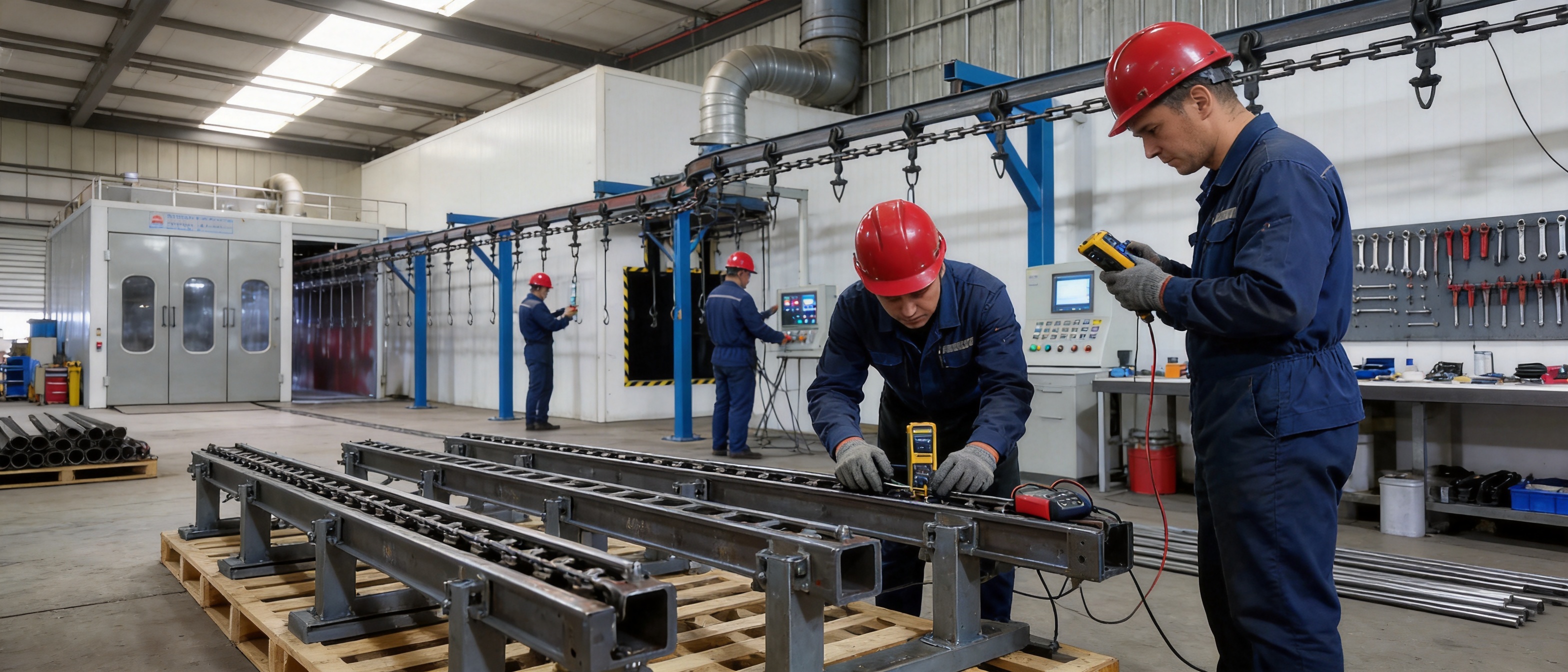
Before delivery, major conveyor assemblies can be checked for fit, movement, drive response, control function, and safety operation. Factory assembly and testing help identify installation issues before the equipment reaches the customer’s site.
Testing may include carrier movement, emergency-stop operation, limit protection, speed adjustment, motor rotation, control sequence, sensor response, and interface signals. The exact testing program depends on the project scope and the level of automation required.
A production line is not complete when the equipment arrives at the factory. Track alignment, support positioning, chain tension, carrier installation, electrical connection, control programming, and interface coordination all influence final performance.
Yue Ze provides project-oriented support covering design, manufacturing, installation, and customized equipment implementation. This integrated approach helps customers move from technical planning to production operation with fewer communication gaps.
Strict quality control is important because a conveyor often operates for long periods and may affect the performance of several connected machines. Attention to structural strength, component compatibility, electrical safety, and commissioning records contributes to more reliable production.
Continuous improvement can be based on installation feedback, operating data, maintenance experience, and customer requirements. As production lines become more automated, conveyor systems must also develop better monitoring, control integration, energy efficiency, and adaptability.
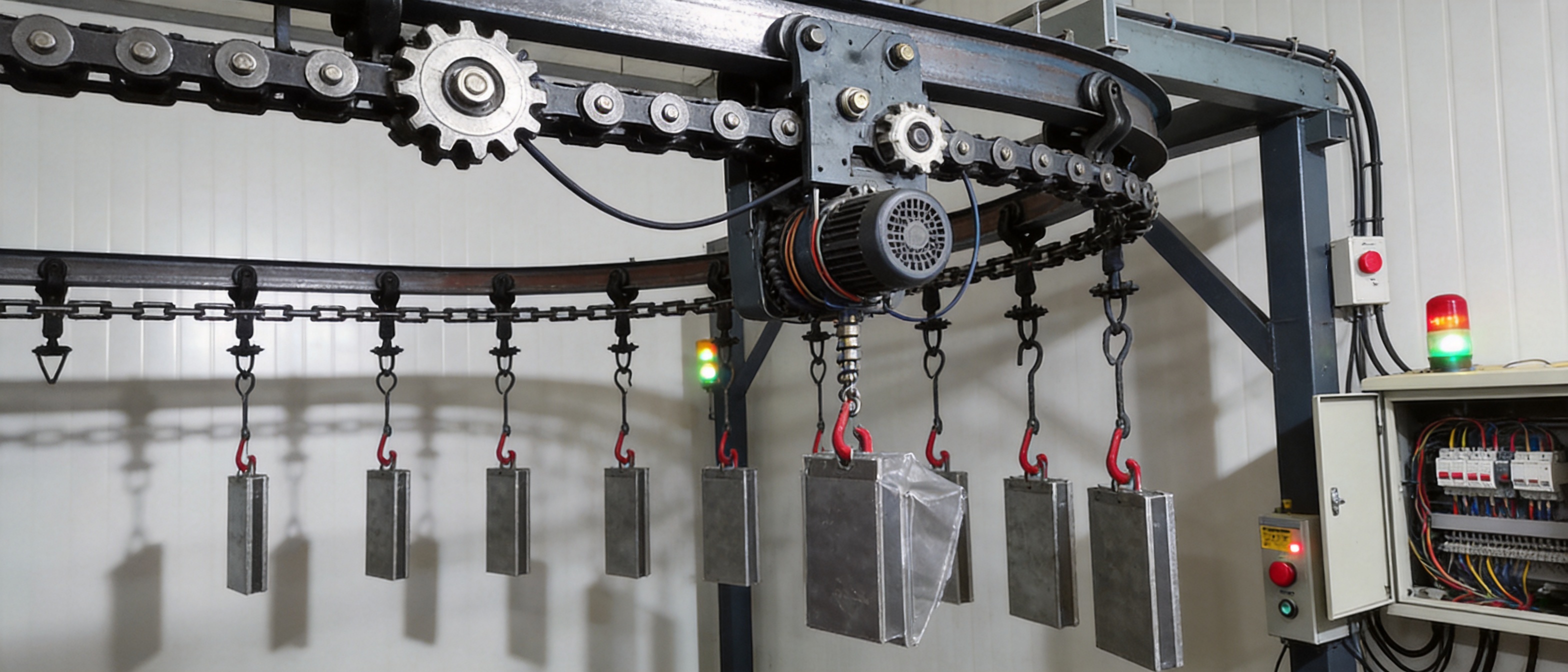
Standard conveyors can be suitable for simple transportation tasks with predictable products and uncomplicated routes. However, many industrial factories have unique workpieces, limited space, high-temperature processes, special coating requirements, or multiple connected stations. In these situations, a standard conveyor may require compromises that reduce efficiency.
A customized system allows the carrier to match the workpiece. It allows the track to match the building. It allows the speed to match the process. It allows the control system to match the automation level. These adjustments can improve both production performance and operator convenience.
Customization also makes it possible to integrate safety and maintenance features during the initial design. Access points, inspection locations, lubrication areas, emergency stops, protective covers, and spare capacity can be positioned according to the actual workshop layout.
The best customization is not unnecessary complexity. It is the careful selection of features that solve actual production problems. An experienced manufacturer should be able to distinguish essential requirements from optional functions and recommend a solution that balances performance, investment, and long-term value.
Regular maintenance helps preserve the performance of a General Overhead Conveyor System. Operators should observe abnormal noise, vibration, chain movement, carrier stability, motor temperature, and changes in conveying speed. Early identification of problems can prevent larger failures.
Routine maintenance may include inspection of the drive unit, chain, track joints, bearings, carrier fixtures, fasteners, sensors, electrical cabinets, emergency stops, and protective covers. Lubrication should be carried out according to the component type and operating environment. Excessive or unsuitable lubricant may attract dust or affect coating processes, so maintenance procedures should be clearly defined.
Carrier fixtures should be checked for deformation, wear, loose connections, and contamination. In powder coating applications, accumulated coating material may affect electrical grounding, product positioning, or carrier movement. Cleaning and replacement schedules should therefore be included in the production line maintenance plan.
The track should be inspected for alignment and abnormal wear. If the system operates in a corrosive or high-temperature environment, the inspection frequency may need to increase. Drive chains and tensioning components should be adjusted according to actual operating conditions rather than simply tightened as much as possible.
Operators should receive training on loading methods, maximum workpiece weight, emergency procedures, safe access, and basic fault identification. Clear operating procedures reduce misuse and help the system achieve its expected service life.
Energy efficiency is influenced by motor selection, route design, conveying speed, carrier weight, friction, control strategy, and operating schedule. A properly engineered system avoids unnecessary route length, excessive acceleration, and oversized drive capacity.
Variable-speed operation can reduce energy consumption when full production speed is not required. Automatic start-stop functions may also reduce idle running during breaks, material changes, or process interruptions. Smooth movement lowers mechanical losses and may reduce wear on the drive system.
When the conveyor is used in a coating line, it should be considered together with the environmental control system. Spray booths, drying equipment, curing ovens, and exhaust treatment systems must be coordinated to create a safe and compliant production environment.
Jiangsu Yue Ze Environmental Protection Equipment Co., Ltd. specializes not only in conveying systems but also in waste gas treatment equipment, solid waste incineration furnace series, paint booths, sanding rooms, drying systems, and other environmental protection equipment. This broader capability supports the development of integrated surface treatment projects that consider production efficiency and environmental responsibility together.
The first stage is to confirm the customer’s products, production target, process route, workshop dimensions, operating conditions, and automation expectations. Accurate information at this stage provides the foundation for equipment selection and layout planning.
The engineering team develops the track route, carrier arrangement, drive locations, support structure, loading and unloading positions, equipment interfaces, safety areas, and maintenance access. The proposed design should be reviewed against the actual building and process requirements.
After technical approval, structural members, track sections, carriers, drive assemblies, control cabinets, and related components are manufactured. Quality checks are performed during fabrication to confirm dimensions, weld quality, component compatibility, and assembly accuracy.
Major assemblies and control functions are inspected before shipment. Where practical, components are preassembled to verify fit and reduce installation difficulty. Documentation may include equipment drawings, electrical diagrams, operating instructions, maintenance recommendations, and inspection records.
At the customer’s site, the track and supports are installed according to the approved layout. The chain, carriers, drive system, control equipment, safety devices, and process interfaces are then connected and adjusted.
Commissioning verifies empty-load movement first, followed by loaded operation. Speed, stopping positions, carrier stability, safety functions, and coordination with related equipment are checked before production approval.
Operators and maintenance personnel should be trained in daily operation, loading, emergency stopping, inspection, cleaning, lubrication, and basic troubleshooting. Ongoing technical support helps customers maintain stable operation and respond efficiently to future production changes.
The General Overhead Conveyor System has several advantages over low-cost, non-customized alternatives. Its overhead structure improves space utilization, while adjustable speed and intelligent control support different production rhythms. Customized carriers can improve product stability and process consistency. Robust construction, safety devices, and maintenance accessibility contribute to dependable long-term operation.
The supplier’s advantage comes from combining conveyor manufacturing with extensive experience in complete industrial production lines. A company that understands coating, drying, painting, environmental treatment, and automation can design the conveyor according to the entire process instead of focusing only on chain movement.
More than 40 years of industry experience also provides practical knowledge of different factory environments, product types, installation challenges, and production requirements. This experience can help identify problems before manufacturing, such as insufficient clearance, unsuitable carrier orientation, inadequate process spacing, or difficult maintenance access.
The company’s integrated capabilities in research and development, manufacturing, installation, and customized project execution provide a single source of technical coordination. This can reduce the risk of incompatible equipment and simplify communication during a complex production line project.
Its experience includes a hanging automatic painting process line for casting counterweight blocks, developed in 2014. The process covered finishing and polishing through primer and topcoat application. Such project experience demonstrates the practical value of combining overhead conveying with surface treatment and automated painting operations.
Customer-focused service, integrity, green manufacturing, strict quality control, and global cooperation are also important factors when selecting a long-term equipment partner. A conveyor is a production asset that may remain in service for many years, so the supplier’s ability to provide technical support is an important part of the purchasing decision.
Customers can improve design efficiency by preparing basic technical information before requesting a quotation. This information should include the type of workpieces, maximum and minimum weight, dimensions, material, loading method, required capacity, desired conveying speed, process sequence, and expected operating hours.
Workshop information should include floor dimensions, ceiling height, roof or beam conditions, column positions, available power, access doors, existing equipment, ventilation systems, fire-protection facilities, and restrictions on suspended loads.
Process information should identify whether the conveyor will pass through spray booths, drying ovens, curing ovens, chemical pretreatment areas, cooling sections, assembly stations, or inspection zones. Temperature, humidity, corrosive substances, overspray, dust, and cleaning methods should also be considered.
Customers should explain future plans when possible. A line intended for one product today may need to handle several product models later. Early planning can make it easier to reserve capacity, modify carriers, add control functions, or extend the route.
The main purpose is to transport workpieces, components, packages, or materials automatically above the production floor. It reduces manual handling, saves floor space, and connects multiple production stations in a continuous or controlled sequence.
The system can transport light or heavy workpieces, metal components, coated parts, packages, assemblies, and other products suitable for suspension or carrier support. The carrier structure must be designed according to the product’s weight, shape, dimensions, and process requirements.
Yes. It is suitable for powder coating lines and can connect pretreatment, drying, powder spraying, curing, cooling, inspection, and unloading stations. Carrier orientation and conveying speed can be designed to support coating quality and curing requirements.
Yes. The track can be designed as a straight, curved, looped, elevated, multi-station, or other layout according to the workshop structure and production route. Building columns, equipment locations, access passages, and future expansion should be considered during design.
Conveying speed can be controlled through the drive and electrical control system. Depending on the project, frequency control, sensors, programmable logic control, stopping functions, and communication with related equipment may be included.
Drive capacity depends on the total route length, number and weight of carriers, workpiece load, track configuration, curves, elevation changes, operating speed, acceleration requirements, and environmental conditions. Accurate load calculation is necessary for reliable selection.
Heavy workpieces require reinforced carriers, suitable support spacing, appropriate track strength, correctly selected drive equipment, stable loading methods, and safety protection. The maximum load should be confirmed during technical design and should not be exceeded during operation.
It can be designed for applications involving drying or curing equipment, provided that components, carrier materials, clearances, lubrication, and control devices are selected for the actual temperature conditions. High-temperature sections require particular attention to material and maintenance planning.
The amount depends on the original factory layout and the transportation route. Because the track is installed above the production floor, it can reduce the area needed for carts, forklifts, and floor conveyors. A project-specific layout is required to calculate the actual space benefit.
Yes. Regular inspection of the track, chain, drive, carriers, bearings, sensors, fasteners, control equipment, and safety devices is recommended. Cleaning, lubrication, tension adjustment, and replacement of worn parts help maintain safe and stable operation.
Yes. The control system can be designed to exchange signals with spray booths, ovens, drying equipment, inspection stations, transfer units, and other machines. The integration method depends on the production line design and the required automation level.
An experienced manufacturer can evaluate the conveyor together with the complete production process, building conditions, environmental requirements, safety needs, and future expansion plans. This reduces design conflicts and helps create a more reliable and maintainable system.
The company provides customized industrial equipment solutions covering research and development, engineering design, manufacturing, installation, commissioning, and project support. Its product scope includes automated conveyors, powder coating lines, painting lines, drying systems, spray booths, grinding rooms, exhaust treatment equipment, and other environmental protection equipment.
Useful information includes workpiece drawings or photographs, weight and dimensions, production capacity, process sequence, workshop layout, ceiling height, available utilities, required speed, operating temperature, loading method, and desired automation functions. This information allows the design team to prepare a more accurate technical solution.
The General Overhead Conveyor System is a practical foundation for efficient industrial transportation. Its elevated structure saves floor space, reduces manual handling, supports continuous production, and allows workpieces to move smoothly between multiple process stations. Adjustable speed, customized carriers, flexible track layouts, intelligent controls, and complete safety protection make it suitable for a wide range of manufacturing environments.
Its greatest value appears when the conveyor is designed as part of a complete production line. In powder coating, painting, surface treatment, assembly, drying, testing, and packaging applications, the system can improve process connection and production consistency while reducing unnecessary movement and operating losses.
Jiangsu Yue Ze Environmental Protection Equipment Co., Ltd. combines more than 40 years of industrial experience with integrated capabilities in engineering design, manufacturing, installation, and environmental equipment. Its experience with automated coating lines, conveying systems, drying equipment, spray booths, waste gas treatment, and other production equipment supports the development of coordinated and customized solutions.
For manufacturers seeking a dependable conveyor partner, the correct evaluation should include more than purchase price. Track design, carrier quality, drive reliability, control integration, safety, maintenance, installation support, and future adaptability all influence the final return on investment. A professionally designed General Overhead Conveyor System can provide the stable material flow required for modern production while creating a more organized, efficient, and scalable factory.
1. Industrial Conveyor Design Principles, material-handling engineering reference literature.
2. Automated Production Line Planning and Factory Layout Guidelines, manufacturing systems engineering references.
3. Mechanical Power Transmission and Conveyor Drive Selection, industrial machinery design references.
4. Surface Treatment and Powder Coating Production Technology, coating process engineering references.
5. Industrial Machine Safety and Emergency-Stop Design Principles, machinery safety reference materials.
6. Preventive Maintenance Practices for Industrial Conveyors, equipment reliability management references.
7. Environmental Protection Equipment and Industrial Exhaust Treatment Practices, environmental engineering references.
8. Jiangsu Yue Ze Environmental Protection Equipment Co., Ltd. product information and project experience materials supplied for this article.
General overhead conveyor system, electric-driven with stable power output, mainly composed of track, hanging carrier, drive device, and intelligent control system. It adopts overhead installation, sa...
See Details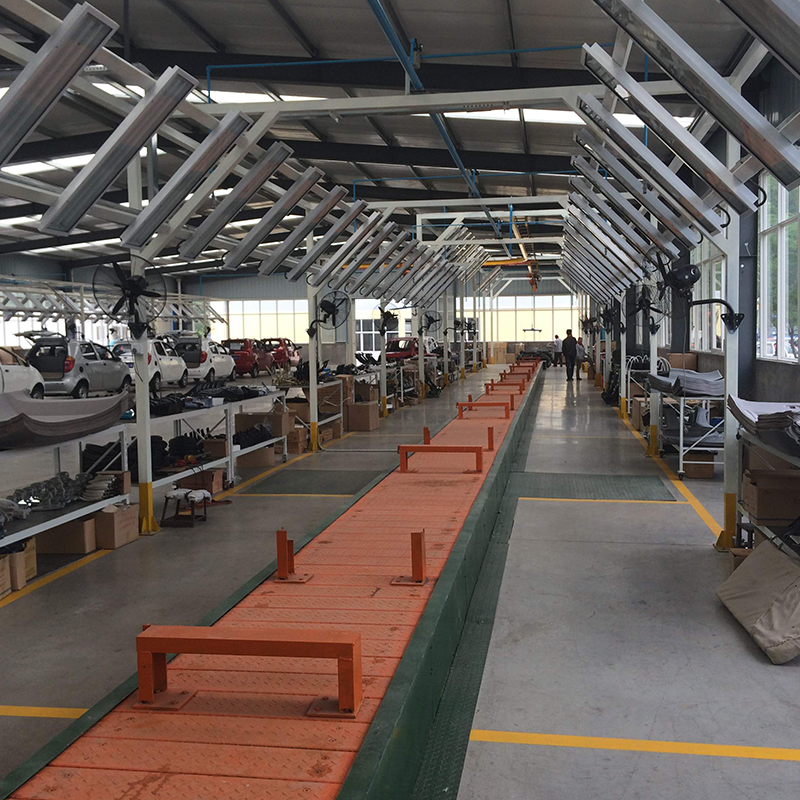
Floor-mounted automatic conveyor system, electric-driven with stable power output, with main types including belt, roller, and chain conveyor. It is designed with a floor-installed structure, space-sa...
See Details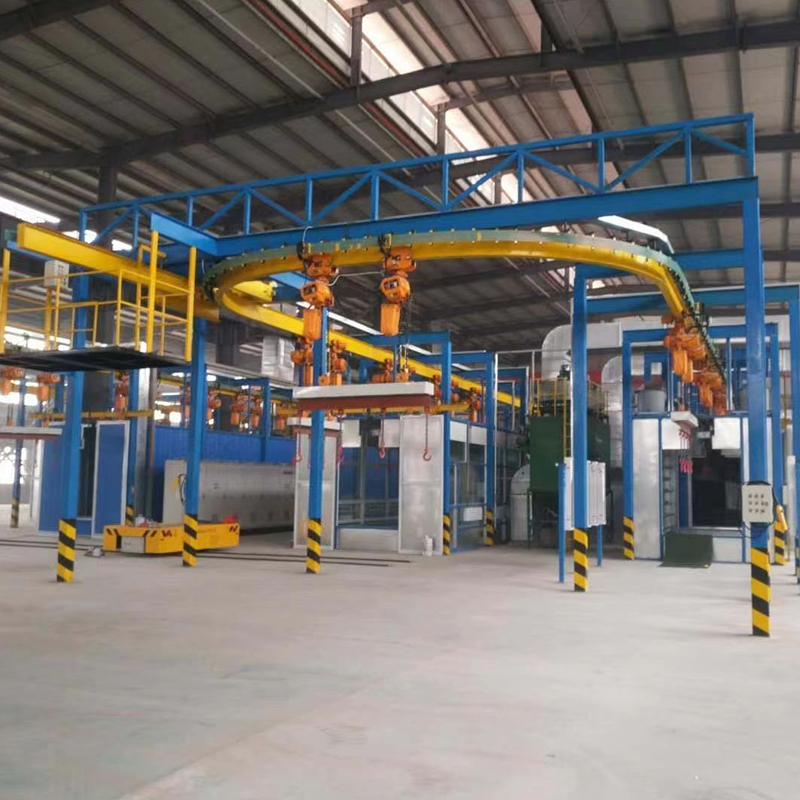
General overhead conveyor system, electric-driven with stable power output, mainly composed of track, hanging carrier, drive device, and intelligent control system. It adopts overhead installation, sa...
See Details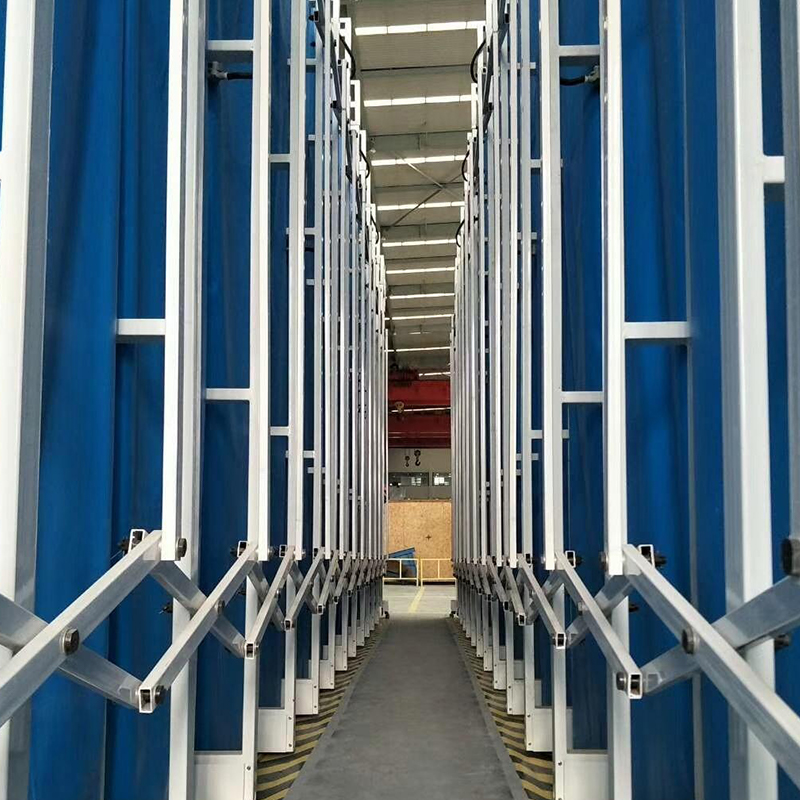
The retractable mobile spray & sanding booth is a flexible, space-saving, and multi-functional coating workstation. With a telescopic movable structure and integrated dust & paint mist filtrat...
See Details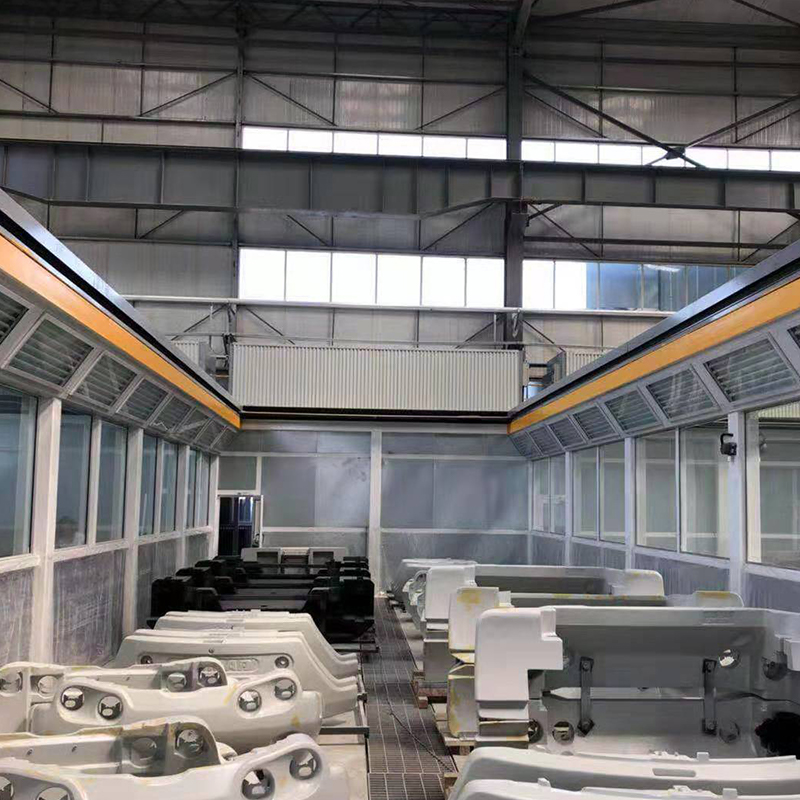
The retractable mobile spray & sanding booth is a flexible, space-saving, and multi-functional coating workstation. With a telescopic movable structure and integrated dust & paint mist filtrat...
See Details
We supply high-quality blasting room and automatic shot blasting machines. The equipment adopts mature surface treatment technology, realizing rust removal, oxide layer cleaning and surface roughening...
See DetailsBuild Your Customized Industrial Coating System
Send us your workpiece information, production capacity, coating process, workshop layout, and environmental requirements. Yueze will help evaluate your project and develop a suitable coating, conveying, drying, and environmental treatment solution.
Main menu
Products
Contact Us
Company Address:
No. 12, Park Avenue, Shanggang Industrial Park, Jianhu, Yancheng City, Jiangsu Province
Message Us Right Now!

Follow us: