
 русский
 عربى
عربى
 Tiếng Việt
Professional spray coating line designed for engine manufacturing and maintenance, applicable to various engine types (gasoline engine, diesel engine, electric vehicle engine). Main types: engine bloc...
See Details
Yueze Environmental Protection provides one-stop compliant industrial surface treatment solutions with professional tech and fine craftsmanship.
 Get Inquiries
2026-08-03
Content
Engine components operate under demanding conditions. Cylinder blocks, cylinder heads, valve covers, intake manifolds, brackets, housings, and related powertrain parts are exposed to elevated temperatures, engine oil, coolant, cleaning chemicals, vibration, humidity, and repeated thermal cycling. Their surfaces also contain cooling fins, cavities, bolt bosses, mounting flanges, threaded holes, and machined sealing areas that make uniform coating difficult. A conventional paint booth may apply color, but it does not necessarily provide the process control, masking protection, curing performance, and production consistency required for engine manufacturing.
An engine spray coating line is a dedicated industrial production system developed to clean, prepare, mask, spray, cure, inspect, and transfer engine components through a controlled surface-treatment process. It combines material-handling equipment, pretreatment units, spray booths, automatic or semi-automatic spray guns, curing ovens, exhaust treatment systems, conveyors, electrical controls, and quality-inspection stations into one coordinated solution.
The line can be configured for gasoline engines, diesel engines, electric vehicle powertrain components, commercial vehicle engines, agricultural machinery engines, construction equipment engines, marine engines, and replacement or remanufacturing parts. Depending on production requirements, it may process engine blocks, cylinder heads, valve covers, transmission housings, motor housings, brackets, covers, and other metal components.
Compared with general-purpose coating equipment, a dedicated engine spray coating line provides better control over film thickness, coating adhesion, overspray, curing temperature, operator safety, exhaust emissions, and production rhythm. It also gives manufacturers the flexibility to combine manual loading and unloading with automated spraying, robotic handling, automatic conveying, or fully integrated pretreatment and curing operations.
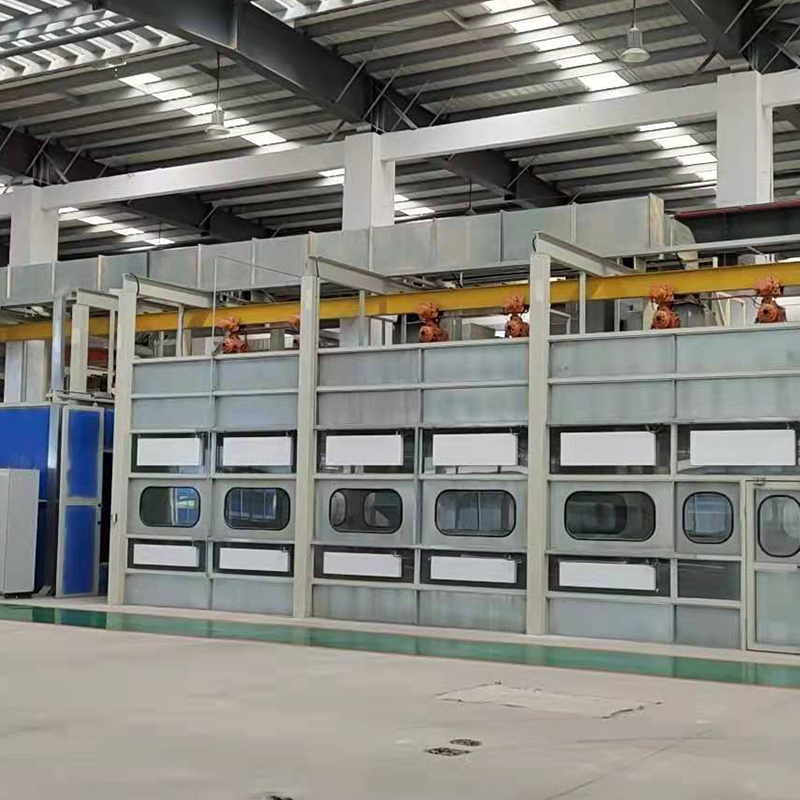
Engine Spray Coating Line
An engine spray coating line is a purpose-built production line for applying protective, decorative, heat-resistant, or corrosion-resistant coatings to engine and powertrain components. The system is designed around the geometry and processing needs of engine parts rather than the relatively flat surfaces of automotive body panels.
During operation, components are loaded onto fixtures, pallets, hooks, or special carriers. The parts then pass through cleaning, degreasing, rinsing, drying, masking, spraying, flash-off, curing, cooling, demasking, inspection, and unloading stages. The exact process sequence is selected according to the substrate, coating formulation, part dimensions, required production capacity, and final performance specifications.
Some engine parts are made from cast iron, while others are manufactured from aluminum alloys, steel, ductile iron, or engineered metal combinations. These materials differ in surface roughness, thermal expansion, corrosion behavior, and coating adhesion. A properly designed line therefore needs adjustable pretreatment and coating parameters instead of a single fixed process.
Engine coatings may serve several functions. A coating can protect a component against corrosion, improve its appearance, provide resistance to heat and oil, reduce contamination, support brand identification, or help preserve the component during storage and transportation. In certain applications, a coating may also help seal porous cast surfaces or provide a specific level of chemical resistance.
Engine components are more difficult to coat than many standard fabricated parts. Their surfaces often include deep recesses, narrow grooves, sharp edges, fins, ribs, cavities, and irregular cast profiles. These features can produce shadow areas during spraying. If spray angle, gun distance, air pressure, or part rotation is not properly controlled, one area may receive excessive paint while another remains insufficiently covered.
Machined areas create another challenge. Gasket faces, bearing seats, threaded holes, locating bores, sealing grooves, and mounting surfaces may need to remain free of coating. Even a small amount of paint on these areas can interfere with assembly tolerances, cause leakage, obstruct fasteners, or reduce electrical and thermal contact.
Engine operating conditions also place high demands on coating performance. The finished coating may need to withstand sustained heat, rapid temperature changes, oil splash, fuel contact, coolant exposure, detergents, road salt, humidity, and mechanical vibration. A coating selected only for appearance may crack, blister, discolor, soften, or lose adhesion when exposed to these conditions.
A dedicated line addresses these issues through controlled part positioning, component-specific masking fixtures, programmed spray paths, suitable pretreatment, consistent curing, and effective exhaust management. The result is a more repeatable process than manual spraying in a general workshop environment.
The equipment can be designed for many engine and powertrain applications. A cylinder block spray coating line may include heavy-duty loading systems, rotating fixtures, reinforced conveyors, high-capacity spray booths, and curing equipment sized for large castings.
A cylinder head spraying line normally requires accurate coverage around combustion chambers, cooling channels, valve areas, mounting faces, and machined surfaces. The fixture must hold the head securely while allowing access to the required surfaces.
An engine parts anti-corrosion coating line may be used for brackets, housings, covers, support structures, pulleys, and other components that require corrosion protection during service or storage.
A full-automatic engine spray production line can integrate automatic loading, identification, conveyor movement, robotic spraying, oven control, cooling, inspection, and unloading. Such a solution is appropriate for customers seeking high output, consistent quality, and reduced operator involvement.
An integrated pretreatment, spraying, and curing line combines the main surface-treatment stages in one coordinated system. This configuration is useful when the customer requires a controlled process from dirty casting to finished coated component and wishes to minimize manual transfer between separate workstations.
Electric vehicle powertrain parts can also be processed on a customized line. These parts may include motor housings, reduction gearbox housings, battery-related structural components, and aluminum castings. The equipment can be configured for specific masking, cleaning, coating, and curing requirements while maintaining compatibility with modern automated assembly operations.
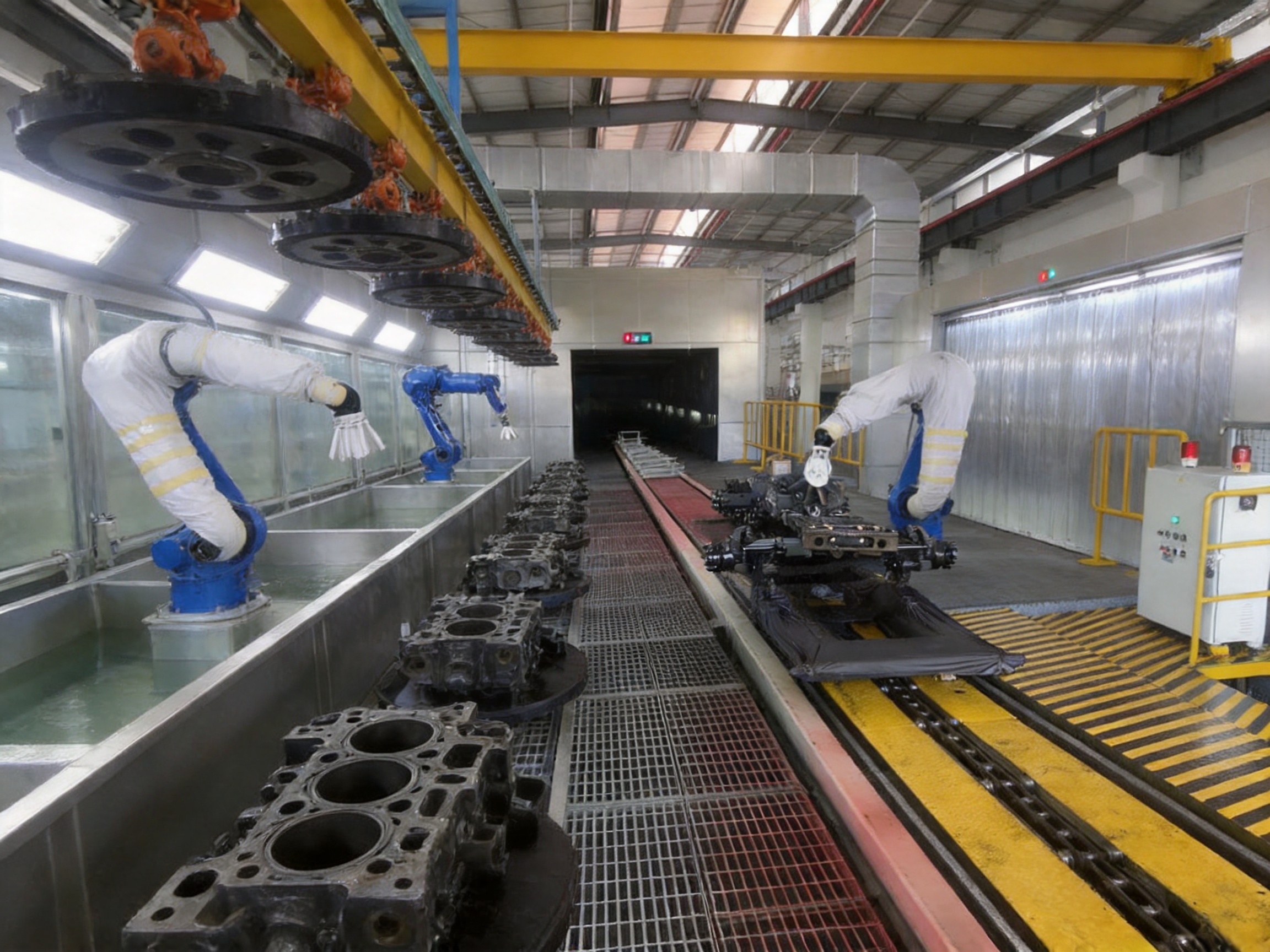
Automation creates a stable relationship between part movement, spray position, coating quantity, and curing time. Conveyor systems can transfer workpieces at a controlled speed, while sensors and programmable controls monitor the movement of carriers through each station.
Automatic spray guns or robotic systems can repeat programmed paths with consistent speed and distance. This reduces the variation commonly associated with manual spraying, especially when parts contain repeated fins, ribs, recesses, and curved surfaces.
Automation does not require every operation to be fully robotic. The line can be configured as semi-automatic, with operators responsible for loading, masking, inspection, or unloading while the spraying, conveying, curing, and exhaust systems operate automatically. This allows the equipment to match the customer’s investment plan and workforce structure.
Uniform coating begins with proper surface preparation. Cleaning and degreasing remove oil, dust, casting residue, and other contaminants that can weaken adhesion. Depending on the substrate and coating specification, the line may include chemical pretreatment, rinsing, drying, shot blasting, or other surface-conditioning stages.
Spray booths are designed to maintain a controlled airflow and provide a suitable working environment for spray application. Automatic spray guns can be arranged to cover different angles, while rotating fixtures expose complex areas to the spray pattern. This helps improve film distribution on fins, cavities, sidewalls, and curved cast surfaces.
Strong adhesion also depends on correct curing. The curing oven maintains a controlled temperature profile so that the coating reaches the required physical and chemical properties. Proper curing improves hardness, durability, resistance to chemicals, and long-term adhesion.
Engine manufacturers often produce several models on the same site. The dimensions, weight, orientation, masking requirements, and coating areas may vary from one component to another. A rigid line designed for only one workpiece can create production bottlenecks and require expensive modifications when a new model is introduced.
A customized line can support different fixtures, adjustable carriers, variable spray programs, quick-change masking tools, and recipe-based control. Operators can select the appropriate program according to the workpiece model. This makes the equipment more suitable for mixed production and future product upgrades.
Part identification can be added through barcodes, radio-frequency identification, sensors, or operator selection. The control system can then associate the part with its spray recipe, curing parameters, conveyor speed, and inspection requirements.
Energy consumption is a major operating cost for coating factories. The line can reduce energy use through insulated oven panels, optimized air circulation, efficient heating systems, variable-frequency drives, controlled booth airflow, and production scheduling.
Heat recovery may be considered where process conditions allow it. Exhaust air can be managed through filtration, adsorption, combustion, or other treatment methods selected according to the coating material and local environmental requirements. Effective exhaust treatment reduces the release of paint mist, volatile substances, dust, and other pollutants.
Low-emission design benefits both the factory and the surrounding environment. It also helps the customer work toward environmental compliance, safer operating conditions, and more sustainable manufacturing objectives.
A stable coating process reduces rework, scrap, touch-up labor, and customer complaints. The line provides repeatable control of pretreatment time, spray pressure, coating flow, conveyor speed, oven temperature, and curing duration.
Process stability is particularly important for engine components because defects may be difficult to detect on complicated cast surfaces. Insufficient coverage inside a cavity or around a fin may not be obvious during a quick visual inspection. Consistent equipment settings and defined inspection procedures improve the probability that defects will be identified before assembly.
Quality records can be connected with production batches, workpiece models, coating materials, operator actions, oven temperature, and alarm history. This creates useful traceability for internal quality management and customer audits.
Factories have different building dimensions, column positions, ceiling heights, material flows, and safety zones. A modular line can be arranged in a straight layout, U-shaped layout, L-shaped layout, or other configuration according to the available space.
Modular construction also supports phased expansion. A customer may begin with manual loading and semi-automatic spraying, then add robotic spraying, automatic inspection, additional curing capacity, or a new conveyor branch as output increases.
Maintenance access is considered during equipment design. Filters, pumps, spray guns, burners, heating elements, motors, sensors, and electrical cabinets should be accessible for inspection and replacement. Clear maintenance zones reduce downtime and make routine servicing safer.
Spraying conditions affect coating atomization, leveling, drying, adhesion, and final appearance. Excessive humidity may cause condensation, surface defects, or corrosion on untreated metal. Incorrect temperature can change coating viscosity and affect film formation.
A controlled spray environment helps maintain suitable temperature, humidity, airflow, and cleanliness. The exact parameters depend on the coating supplier’s technical data and the characteristics of the workpiece. The line can include sensors and control devices to monitor environmental conditions and warn operators when values move outside the defined range.
Manual spraying requires skilled labor and can produce variation between operators. Fatigue, changes in spray angle, inconsistent gun distance, and irregular movement may affect coating quality. Automated systems reduce the number of repetitive operations and allow workers to focus on loading, masking, inspection, maintenance, and process supervision.
Lower rework rates, better material utilization, reduced labor intensity, and shorter production cycles can improve the total cost of ownership. The greatest savings are often achieved not through one component alone but through the combined effect of stable production, reduced waste, reliable curing, and fewer quality failures.
The process sequence is customized according to the part and coating system, but a typical engine coating line follows the stages below.
Engine components are loaded onto dedicated fixtures or carriers. The fixture must support the weight of the casting, prevent movement during spraying, and expose the required surfaces. It should also protect vulnerable machined areas and allow quick loading and unloading.
At this stage, the workpiece may be inspected for visible casting defects, excessive oil, burrs, or damage. Identification information can be recorded manually or automatically so that the correct process recipe is selected.
Castings and machined components may contain cutting oil, grease, dust, release agents, metal particles, and casting residue. These contaminants can prevent the coating from wetting the substrate properly. Cleaning and degreasing are therefore essential for reliable adhesion.
The equipment may use spray cleaning, immersion cleaning, heated alkaline solutions, solvent-compatible systems, or a combination of methods. Process temperature, chemical concentration, spray pressure, and treatment time should be controlled according to the material and contamination level.
Pretreatment improves surface cleanliness and may create a more favorable surface for the coating. Depending on the specification, the process can include conversion coating, phosphating, passivation, or another approved treatment.
Rinsing removes residual chemicals and prevents contamination from being carried into the spray booth. Water quality and drainage design are important considerations. The system should also provide appropriate wastewater collection and treatment where required.
After cleaning and rinsing, moisture must be removed before spraying. A drying oven or forced-air drying section can be used. The drying stage should reach all relevant cavities and recessed areas without overheating the component or creating unnecessary energy consumption.
Masking protects areas that must remain free of paint. Common examples include gasket faces, bolt holes, threaded sections, bearing seats, electrical contact points, locating bores, and precision-machined surfaces.
Masking may use silicone plugs, caps, tapes, custom metal shields, reusable fixtures, or disposable materials. For high-volume production, dedicated masking tools can reduce labor time and improve repeatability. The design must provide reliable coverage without damaging the part or causing difficult removal after curing.
The coating is applied in a controlled spray booth using air spray, airless spray, electrostatic spray, automatic reciprocating guns, rotary atomizers, or robotic equipment. The preferred method depends on the coating material, part geometry, production speed, and required finish.
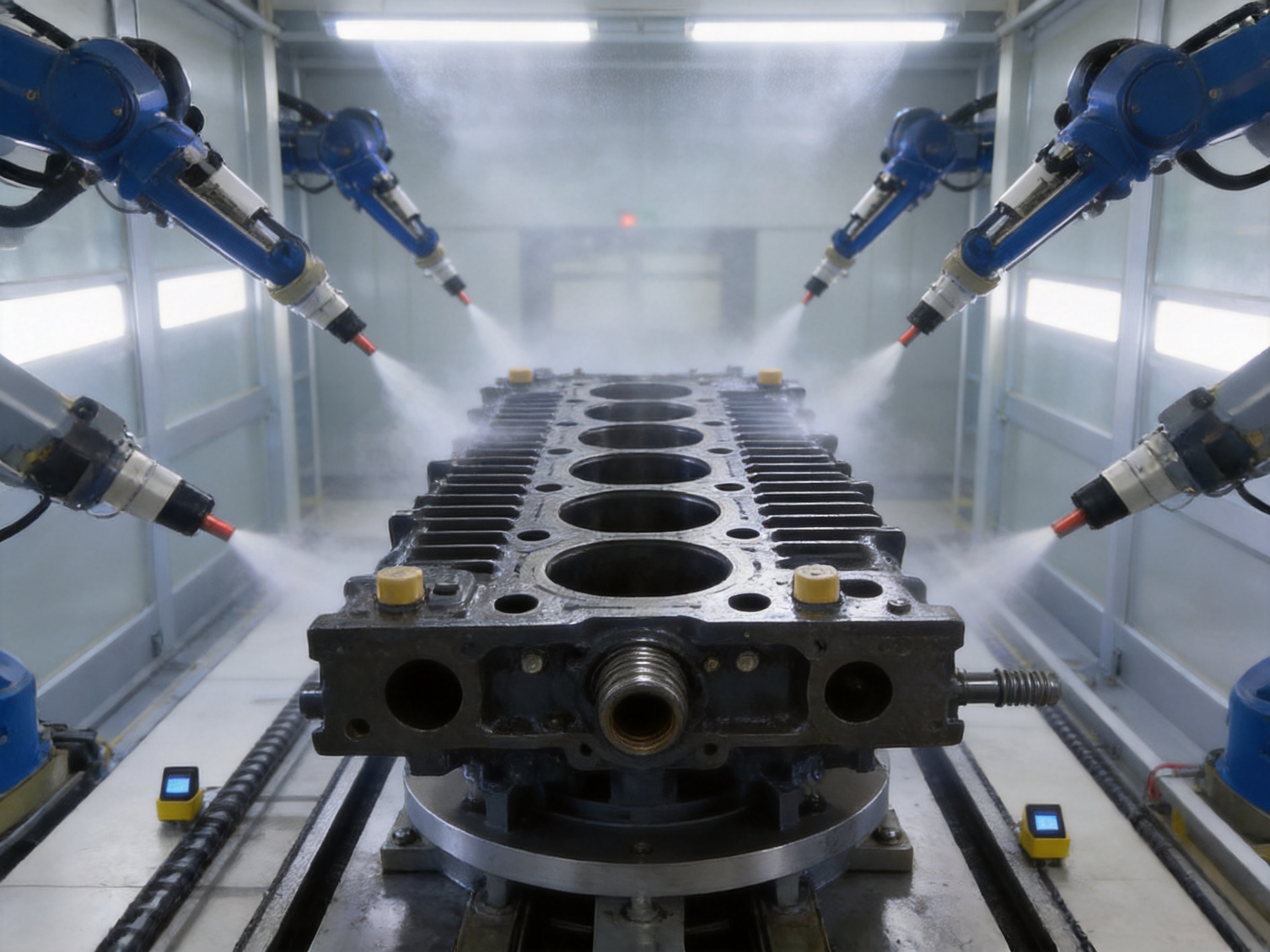
For engine blocks and cylinder heads, spraying from multiple directions may be necessary. Rotating fixtures can improve access to sidewalls and underside surfaces. Spray parameters such as fluid flow, atomizing air, fan pattern, gun speed, stand-off distance, and overlap are adjusted to achieve the required film thickness.
Automatic spraying is especially valuable on repeated fins and ribs. A programmed system can follow a consistent path and apply a controlled amount of coating to each workpiece. Operators can still perform touch-up on difficult areas when the product specification requires it.
Depending on the coating system, a flash-off stage may be required before the part enters the curing oven. This allows solvents or volatile components to evaporate under controlled conditions and reduces the risk of bubbling, sagging, solvent popping, or other defects.
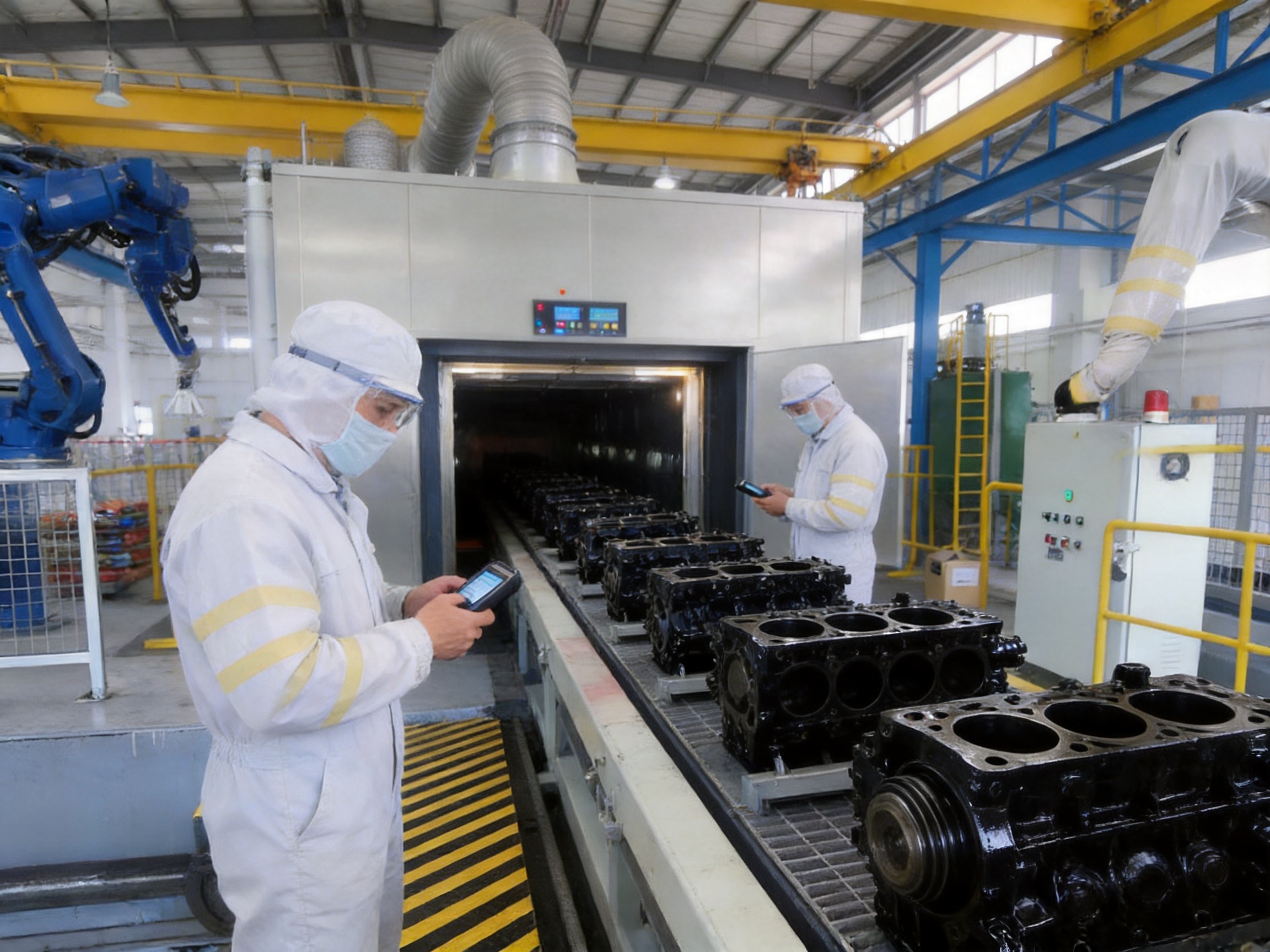
The curing oven then applies the temperature and time specified for the coating. A typical oven may use gas heating, electric heating, infrared radiation, hot-air circulation, or a combination of technologies. The selection depends on the part mass, coating type, production rate, available utilities, and factory conditions.
Uniform heat distribution is essential. A large casting can absorb heat slowly, and the surface temperature may not immediately represent the actual temperature of the coating. Oven design should therefore consider airflow, temperature zones, circulation patterns, insulation, exhaust, and dwell time.
After curing, parts may require controlled cooling before demasking or inspection. Cooling sections protect operators, prevent handling damage, and reduce the possibility of thermal shock. Forced air can be used when a shorter cycle is required.
Masking materials are removed after the coating has reached the appropriate condition. Inspectors check appearance, coverage, color, gloss, adhesion, film thickness, edge quality, and the cleanliness of machined surfaces.
Inspection methods may include visual examination, dry-film thickness measurement, adhesion testing, surface-temperature verification, gloss measurement, and dimensional checks. The chosen inspection plan should reflect the customer’s quality standards and the function of the component.
Finished parts are removed from the carriers and transferred to assembly, storage, or packaging. Contact points should be designed to avoid scratching or damaging the new coating. Protective separators may be used when parts are stacked or transported over long distances.
Coating selection should consider service temperature, chemical exposure, substrate, appearance, film thickness, curing method, and production cost. No single coating is suitable for every engine component.
| Component | Common Coating Direction | Main Performance Considerations | Important Process Controls |
|---|---|---|---|
| Cylinder blocks | High-temperature enamel, heat-resistant liquid coating, or ceramic-based system | Heat resistance, oil resistance, adhesion, fin coverage | Cleaning, masking, spray angle, curing temperature |
| Cylinder heads | Heat-resistant protective coating | Thermal cycling, chemical resistance, coverage around complex geometry | Fixture stability, cavity access, film thickness |
| Valve covers | Decorative powder or liquid coating | Appearance, moderate heat resistance, corrosion protection | Surface preparation, color control, oven profile |
| Intake manifolds | Decorative or functional heat-resistant coating | Appearance, temperature resistance, adhesion to cast surfaces | Degreasing, grounding, spray uniformity |
| Brackets and housings | Corrosion-resistant primer and topcoat | Salt resistance, impact resistance, dimensional control | Pretreatment, edge coverage, curing time |
| Electric motor housings | Protective powder or liquid coating | Corrosion protection, electrical and dimensional requirements | Masking, grounding, oven temperature, inspection |
Before ordering equipment, the customer should obtain technical data from the coating supplier. The data should include recommended pretreatment, viscosity, application method, wet or dry film thickness, flash-off requirements, curing temperature, curing time, storage conditions, and chemical-resistance expectations.
Fixtures are among the most important components of an engine coating line. They hold heavy and irregular parts securely while presenting the coating surfaces to the spray guns. A good fixture design minimizes shadow areas, protects machined zones, simplifies masking, and supports quick changeover.
For mixed production, the line may use several interchangeable fixtures. Each fixture can be identified and associated with a particular process recipe. The carrier design should also consider cleaning, paint accumulation, grounding, balance, and long-term durability.
Automatic conveyors establish the production rhythm. Depending on the part weight and layout, the line may use overhead conveyors, floor conveyors, power-and-free conveyors, chain conveyors, roller conveyors, or customized transfer systems.
Power-and-free conveyors are useful when parts require accumulation, variable spacing, stopping inside a station, or different movement speeds. Floor-based systems may be appropriate for very heavy components. The conveyor should be sized for the maximum workpiece weight, fixture weight, acceleration, stopping frequency, and operating environment.
The spray booth provides a controlled enclosure for coating application. It manages airflow, captures overspray, supports operator safety, and helps maintain a cleaner working environment. Booth construction, lighting, filtration, access doors, and exhaust capacity should match the coating process.
For automatic spraying, the booth must provide enough space for gun movement, part rotation, maintenance access, and safe separation from operators. Overspray collection equipment should be selected according to the coating type and expected production volume.
Automatic spray systems can use reciprocating machines, fixed gun arrays, multi-axis robots, rotary atomizers, or combinations of these technologies. The best arrangement depends on part geometry and the number of models being processed.
Robots provide flexible movement and can change paths between product recipes. Reciprocators may offer a cost-effective solution for repeated shapes and stable high-volume production. Fixed gun arrays can cover specific surfaces efficiently when part orientation is consistent.
The curing oven is designed around the coating specification and workpiece mass. Important design factors include heating method, usable chamber dimensions, temperature uniformity, conveyor speed, insulation, exhaust, access doors, burner safety, and maintenance requirements.
Infrared radiation systems can provide rapid surface heating and may be useful for certain coating materials and part geometries. Hot-air circulation is widely used when uniform heating of complex metal components is required. The final selection should be based on actual trials and coating-supplier recommendations.
Spray coating and curing can generate paint mist, volatile organic compounds, combustion gases, dust, and thermal exhaust. A complete line should include a suitable exhaust and purification strategy. Equipment may include dry filters, wet collectors, activated-carbon units, catalytic systems, thermal oxidation, or other treatment technologies.
The appropriate solution depends on the coating formulation, exhaust concentration, airflow, local regulations, operating schedule, and required emission limits. Proper duct design is important because insufficient airflow can reduce capture efficiency, while excessive airflow can increase energy consumption and disturb the spray pattern.
A programmable control system coordinates conveyors, spray equipment, heating, fans, pumps, sensors, alarms, and safety interlocks. Touchscreen interfaces allow operators to select recipes, monitor operating status, review alarms, and adjust approved parameters.
More advanced systems may record temperature curves, conveyor speed, spray status, filter pressure, equipment faults, and production counts. Data collection supports preventive maintenance, process improvement, and traceability.
The quality of a coating line depends not only on the individual machines but also on the engineering, fabrication, integration, installation, and service capabilities of the equipment manufacturer. Jiangsu Yue Ze Environmental Protection Equipment Co., Ltd. provides customized industrial surface-treatment solutions from its facility in Yancheng, Jiangsu, China.
The company operates a manufacturing site covering approximately 35,000 square meters and reports registered capital of 58 million yuan. With more than 40 years of combined experience in powder coating lines, paint and bake booths, large-part grinding rooms, conveying systems, waste-gas treatment equipment, and related environmental technologies, the company has developed experience across complete production-line projects.
Its manufacturing approach combines process planning, mechanical design, equipment fabrication, electrical control, environmental engineering, installation, commissioning, and after-sales support. This integrated capability is valuable for customers who prefer one project partner instead of coordinating multiple independent suppliers.
Custom engineering is particularly important for engine coating applications. Engine components differ in weight, dimensions, casting texture, masking requirements, coating materials, and curing conditions. The equipment must be developed around the customer’s actual workpieces rather than copied from a standard general-purpose line.
Yueze has experience producing powder coating lines, intelligent coating lines, automotive counterweight spray lines, electric vehicle assembly lines, paint and bake booths, automated conveying systems, infrared radiation drying systems, large-part grinding rooms, waste-gas purification equipment, and other environmental protection equipment.
In 2014, the company pioneered a hanging automatic painting process line for casting counterweight blocks. The process covered finishing and polishing, primer application, topcoat application, conveying, and related operations. This type of project demonstrates the company’s ability to connect surface preparation, coating, automation, and material handling into a unified industrial process.
The company emphasizes research and development, manufacturing quality, installation coordination, customer-focused service, green production, integrity, and long-term cooperation. For an engine coating project, these strengths can help reduce the technical risks associated with workpiece handling, coating uniformity, oven performance, exhaust treatment, and future expansion.
Manual coating in an ordinary booth may appear inexpensive at the beginning, but it often creates hidden costs. Operators must repeatedly adjust their position and spray method for each component. The result may vary according to experience, fatigue, environmental conditions, and the complexity of the part.
A dedicated automated line reduces these variations. The spray path, conveying speed, curing time, and environmental parameters can be defined and repeated. This is especially valuable when customers require consistent appearance across large production batches.
A general-purpose booth may also lack appropriate masking tools, heavy-duty fixtures, part rotation, curing capacity, or exhaust purification. These missing functions may force the manufacturer to create separate manual workstations, transfer parts between areas, or depend on external ovens. Each additional transfer increases handling time and the possibility of damage or contamination.
A dedicated line improves process continuity. Cleaning, drying, spraying, curing, inspection, and material transfer can be connected in one flow. The factory can organize personnel more efficiently, reduce work-in-process inventory, and monitor the performance of each stage.
Compared with a low-cost line assembled from unrelated equipment, a fully engineered system provides better compatibility among the conveyor, spray booth, oven, exhaust, control system, and fixtures. Integrated design helps avoid problems such as mismatched conveyor speed, insufficient oven dwell time, unstable airflow, inadequate electrical capacity, or poor maintenance access.
Environmental performance is now an important part of industrial equipment selection. A modern engine spray coating line should capture overspray effectively, control exhaust, limit unnecessary energy use, and provide safe access for operators and maintenance personnel.
Enclosed spraying reduces the spread of paint mist into the workshop. Filtration and exhaust treatment help control particulate matter and volatile substances. Proper ventilation also improves visibility and reduces the accumulation of hazardous substances in the working area.
Oven insulation prevents excessive heat from entering the factory. Automated transfer reduces manual handling of heavy castings. Safety doors, emergency stops, access interlocks, temperature protection, overload protection, and alarm systems help reduce operational risks.
The final environmental design must be based on the actual coating material and applicable regulations. Water-based, solvent-based, powder, and high-solid coatings have different emission and process characteristics. The equipment manufacturer should work with the customer to define the required exhaust volume, filtration system, purification method, and monitoring arrangement.
Production volume is one of the first factors to define. A low-volume repair or remanufacturing operation may need a flexible semi-automatic line with manual loading, adjustable fixtures, and a compact curing oven. A high-volume engine factory may require multiple spray stations, automatic robots, high-speed conveying, automatic model recognition, and continuous curing.
Cycle time should be calculated from the complete process rather than only the spray time. Cleaning, masking, loading, curing, cooling, demasking, inspection, and fixture return all affect output. If one station is slower than the others, it becomes the line bottleneck.
Part mix also affects the design. A line processing one stable model can use optimized fixtures and fixed spray paths. A line processing many models needs flexible carriers, recipe management, changeover tools, and adjustable spray equipment.
Future expansion should be considered during the initial layout. Space for another spray booth, a larger oven, additional fixtures, or a second conveyor branch can reduce the cost of later upgrades. Electrical cabinets, exhaust ducts, and utilities may also be designed with additional capacity where economically justified.
Quality control begins before the line is manufactured. The customer and equipment supplier should define the workpiece drawings, coating specifications, target output, film-thickness range, permissible defect level, curing requirements, and environmental conditions.
Factory acceptance testing can verify conveyor operation, fixture stability, spray movement, oven temperature uniformity, exhaust performance, interlocks, alarm functions, and control-system operation. Production trials using real workpieces and the intended coating are strongly recommended.
After installation, site acceptance testing can confirm that the line reaches the planned cycle time and produces acceptable coating results under actual factory conditions. Operators should receive training in loading, masking, recipe selection, cleaning, inspection, emergency procedures, and routine maintenance.
Common coating defects include insufficient coverage, excessive film thickness, runs, sags, pinholes, craters, orange peel, poor adhesion, discoloration, blistering, and contamination. Root causes may involve improper cleaning, incorrect viscosity, unstable air pressure, excessive spray distance, poor grounding, unsuitable curing, dirty filters, or incorrect masking.
Preventive maintenance reduces the risk of unexpected downtime. Filters should be replaced according to pressure drop and process requirements. Spray guns, pumps, hoses, burners, fans, sensors, conveyor chains, and heating elements should be inspected regularly. Oven temperature calibration and exhaust-system checks should be included in the maintenance plan.
Before ordering an engine spray coating line, the buyer should prepare representative workpieces and detailed technical information. The equipment supplier needs to understand the part material, dimensions, weight, surface condition, coating type, masking areas, required appearance, production quantity, and expected future models.
The buyer should confirm whether the line will process one component or several product families. The maximum and minimum part sizes should be defined, along with fixture changeover requirements. The customer should also identify whether parts must rotate during spraying and whether internal cavities require special treatment.
Coating information should include the product name, technical data sheet, application method, curing temperature, curing time, film thickness, flash-off time, solvent content, and environmental restrictions. If the coating has not yet been selected, equipment design should remain flexible enough to support the final material.
Utility requirements should be reviewed in advance. These may include electricity, natural gas, compressed air, water, drainage, ventilation, exhaust discharge, fire protection, and factory-floor loading capacity. Building height and access routes are also important when installing large ovens or heavy equipment.
The commercial evaluation should include initial investment, installation, training, spare parts, energy consumption, coating-material utilization, maintenance, and expected production capacity. A lower purchase price does not always produce a lower operating cost if the line creates high rework, unstable quality, or excessive energy use.
Many body-panel coatings are designed for different temperature, chemical, and mechanical conditions. Engine parts may experience sustained heat, thermal cycling, oil, coolant, cleaning chemicals, and vibration. A coating that works well on a body panel may discolor, soften, crack, or lose adhesion on an engine component. The coating must be selected according to the actual service environment.
The line can be designed for cylinder blocks, cylinder heads, valve covers, intake manifolds, transmission housings, motor housings, brackets, covers, and other metal powertrain components. The final scope depends on part size, weight, coating specification, fixture design, and required production capacity.
Automatic spraying is not mandatory for every application. A semi-automatic line may be more economical for low-volume or frequently changing production. However, automatic spray guns or robots are highly beneficial when the customer needs stable coverage, repeatable film thickness, high output, and reduced dependence on manual operator technique.
Machined areas are protected with plugs, caps, tapes, shields, reusable masking fixtures, or customized tools. The appropriate method depends on the shape, tolerance, temperature, coating, and production volume. Masking is applied before spraying and removed after curing or cooling.
Most heat-resistant coatings require a controlled curing stage. The oven may be integrated into the conveyor line or installed as a separate process module. Its temperature and dwell time must match the coating supplier’s technical specification and the thermal characteristics of the workpiece.
Yes. A customized line can use interchangeable fixtures, adjustable carriers, model-specific spray programs, quick-change masking tools, and recipe-based controls. The customer should provide the full range of workpiece dimensions and weights during the design stage.
Common causes include oil or grease remaining on the surface, inadequate pretreatment, excessive moisture, incorrect coating viscosity, unsuitable substrate temperature, insufficient curing, contamination, or excessive coating thickness. A controlled cleaning and curing process is essential for reliable adhesion.
The required environmental equipment depends on the coating and local regulations. Typical systems may include spray-booth filtration, exhaust fans, ductwork, paint-mist collection, volatile-substance purification, oven exhaust, wastewater treatment, and dust collection. The system should be designed from actual emission data rather than a generic assumption.
Modular design allows future upgrades such as additional fixtures, automatic loading, robotic spraying, model recognition, extra curing capacity, improved inspection, data recording, or expanded exhaust treatment. Expansion is easier when the initial layout reserves sufficient space and utility capacity.
The customer should provide workpiece drawings or samples, material, dimensions, weight, surface condition, coating type, coating color, target film thickness, curing requirements, production volume, working hours, required automation level, available factory space, and local environmental requirements. These details allow the supplier to develop a more accurate technical and commercial proposal.
An engine spray coating line is more than a collection of spray booths and ovens. It is an integrated production system designed around the demanding geometry, service environment, quality requirements, and production rhythm of engine components. Through controlled pretreatment, accurate masking, automated or semi-automated spraying, stable curing, effective exhaust treatment, and reliable conveying, the line helps manufacturers achieve stronger adhesion, better appearance, improved consistency, and lower long-term production costs.
Its advantages over conventional manual coating methods include repeatable spray coverage, improved protection of machined surfaces, better handling of complex castings, compatibility with multiple models, controlled temperature and humidity, reduced operator dependence, and improved environmental performance.
Jiangsu Yue Ze Environmental Protection Equipment Co., Ltd. supports customized industrial surface-treatment projects through integrated research and development, manufacturing, installation, commissioning, and service. Its manufacturing base, broad equipment experience, environmental engineering capabilities, and history of developing automated coating and conveying systems provide a strong foundation for engine coating applications.
Manufacturers considering a new line should evaluate the complete process rather than selecting a booth in isolation. The best solution begins with real workpieces, verified coating requirements, realistic production targets, proper environmental planning, and a clear strategy for maintenance and future expansion.
1. Manufacturer-provided technical information for engine spray coating line applications.
2. Manufacturer-provided company information concerning industrial surface-treatment equipment, automated coating lines, conveying systems, and environmental protection equipment.
3. Coating supplier technical data sheets for heat-resistant enamel, ceramic-based coatings, powder coatings, and corrosion-resistant primers.
4. General industrial guidance on spray-booth ventilation, coating application, curing-oven operation, and paint-mist control.
5. General manufacturing practice for masking machined surfaces, controlling dry-film thickness, and verifying coating adhesion.
6. General engineering principles for automated conveyor systems, industrial process control, energy-efficient curing, and exhaust purification.
Professional spray coating line designed for engine manufacturing and maintenance, applicable to various engine types (gasoline engine, diesel engine, electric vehicle engine). Main types: engine bloc...
See Details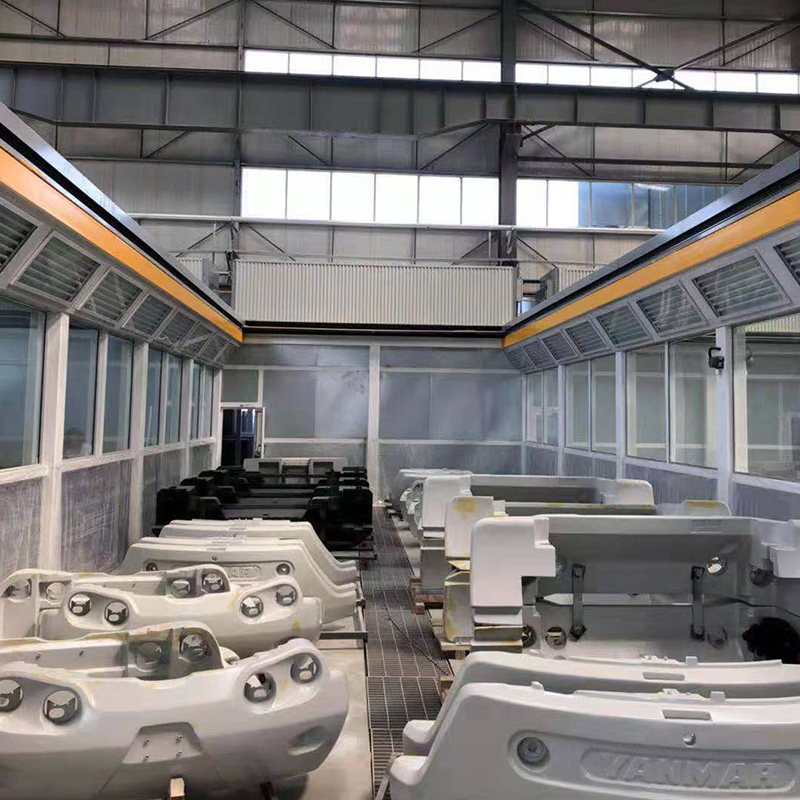
Professional spray coating line specially designed for car wheel manufacturing and refurbishment, applicable to various car wheel types (steel wheel, aluminum alloy wheel, forged wheel, cast wheel, pa...
See Details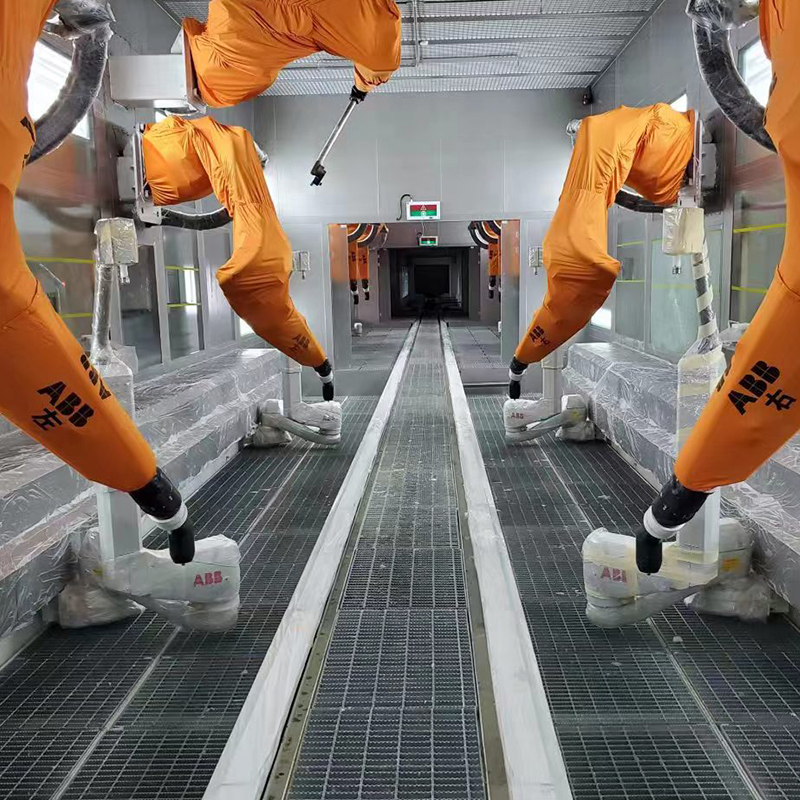
Professional spray coating line specially designed for motor casings, applicable to various motor casing types (electric vehicle motor casing, industrial motor casing, household motor casing, high-tem...
See Details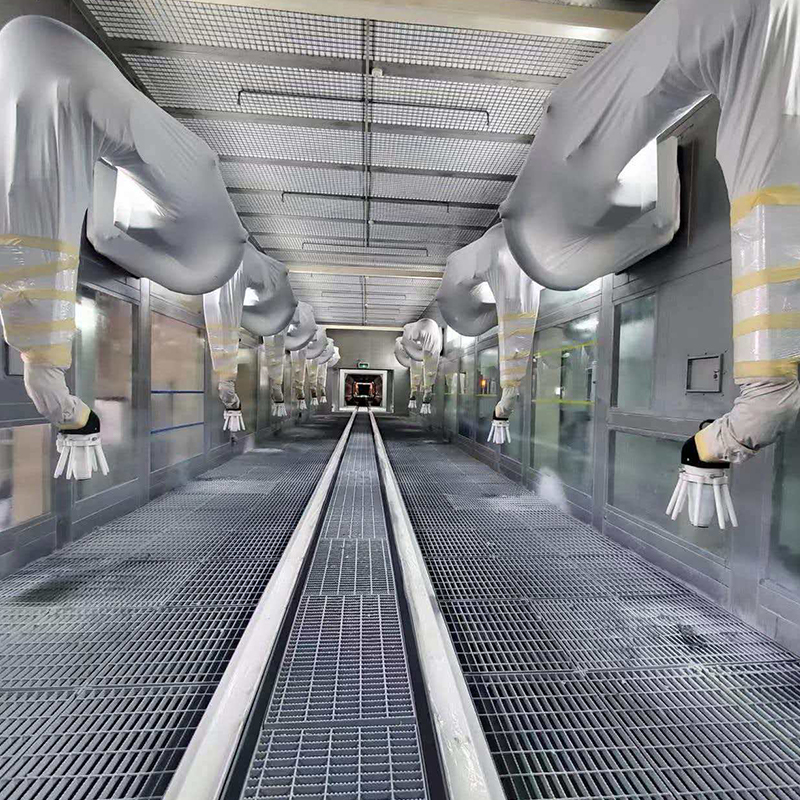
Professional spray coating line specially designed for car wheel manufacturing and refurbishment, applicable to various car wheel types (steel wheel, aluminum alloy wheel, forged wheel, cast wheel, pa...
See Details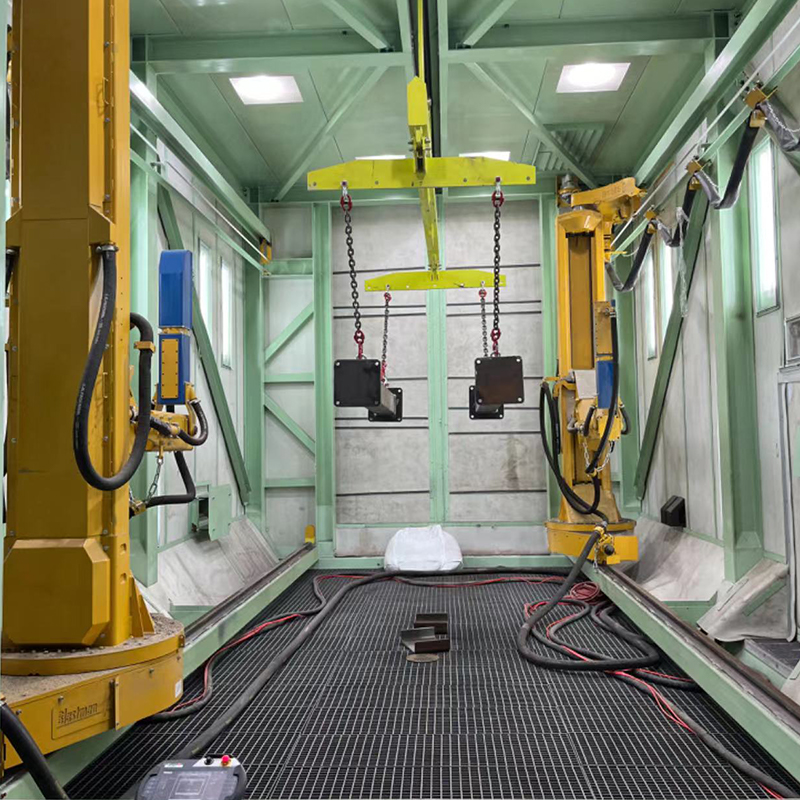
Professional coating line specially designed for large castings and heavy truck parts, applicable to various large castings (engineering castings, mining equipment castings, industrial castings) and h...
See Details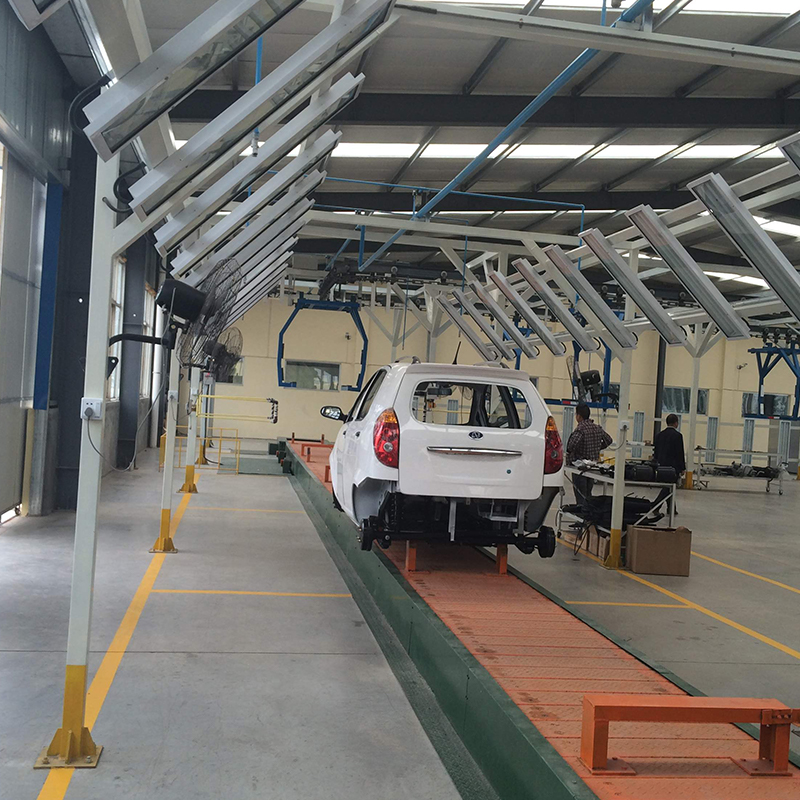
Professional electrophoresis coating line specially designed for electric vehicles (EVs), applicable to various EV types (passenger EV, commercial EV, new energy logistics vehicle) and EV components. ...
See DetailsBuild Your Customized Industrial Coating System
Send us your workpiece information, production capacity, coating process, workshop layout, and environmental requirements. Yueze will help evaluate your project and develop a suitable coating, conveying, drying, and environmental treatment solution.
Main menu
Products
Contact Us
Company Address:
No. 12, Park Avenue, Shanggang Industrial Park, Jianhu, Yancheng City, Jiangsu Province
Message Us Right Now!

Follow us: