
 русский
 عربى
عربى
 Tiếng Việt

Professional maintenance line specially designed for carriages and tankers, applicable to various types of carriages and tankers (railway boxcar, gondola car, flatcar, oil tanker, chemical tanker, LNG...
See Details
Yueze Environmental Protection provides one-stop compliant industrial surface treatment solutions with professional tech and fine craftsmanship.
 Get Inquiries
2026-08-19
Content
Carriages and tankers operate under demanding conditions. Railway boxcars, gondola cars, flatcars, oil tankers, chemical tankers, LNG and LPG tankers, and viscous oil tankers are exposed to weather, vibration, cargo abrasion, humidity, corrosive substances, temperature changes, and repeated loading and unloading operations. Over time, these conditions can damage protective coatings, create corrosion, reduce structural reliability, and increase the cost of fleet maintenance.
A dedicated carriage and tanker maintenance line provides a coordinated solution for inspection, old coating removal, surface preparation, repair, painting, curing, leak detection, and final quality control. Instead of depending on separate workshops and manually transferred equipment, operators can use an integrated production system designed around the size, weight, geometry, and safety requirements of large transport equipment.
The maintenance line described in this article is a modular automatic production solution for railway and industrial transport vehicles. It can be configured for different carriage and tanker categories, production capacities, site conditions, and levels of automation. Its design combines large-body handling equipment, surface treatment technology, coating equipment, environmental protection systems, intelligent controls, and safety devices in one coordinated workflow.
With more than 40 years of experience in industrial coating equipment, large-part treatment systems, paint and bake booths, grinding rooms, conveying equipment, and environmental protection machinery, Jiangsu Yue Ze Environmental Protection Equipment Co., Ltd. develops customized equipment for customers requiring reliable and compliant surface treatment solutions. The company operates from a 35,000-square-meter manufacturing base and integrates research and development, production, installation, commissioning, and after-sales support.
The result is more than a paint workshop. It is a complete maintenance platform intended to improve fleet availability, coating consistency, operator safety, environmental performance, and long-term equipment value.
Carriage & Tanker Maintenance Line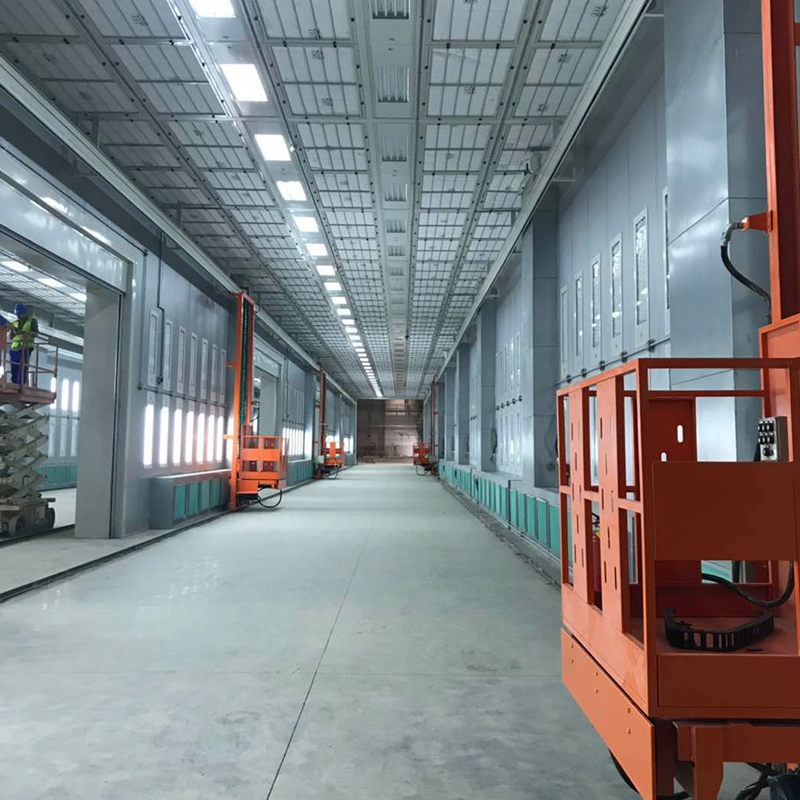
A carriage and tanker maintenance line is an integrated production system used to restore, protect, inspect, and prepare large railway carriages and tank bodies for continued service. Depending on the selected configuration, the line may include vehicle positioning, lifting, dismantling, cleaning, blasting, grinding, welding, coating, drying, curing, leak detection, testing, and material handling functions.
The system is suitable for several major maintenance applications:
The line can be designed as a basic semi-automatic workshop or as a highly integrated smart maintenance line. A basic version may focus on positioning, blasting, painting, and curing. A more advanced system can include automatic lifting, programmable conveying, centralized process control, environmental treatment, automatic fault diagnosis, and dedicated tanker leak detection.
This flexibility is important because no two maintenance facilities have exactly the same requirements. A railway operator may need a long continuous line for frequent boxcar refurbishment. A chemical transportation company may require enclosed cleaning, explosion-proof electrical equipment, anti-static protection, and strict waste-gas treatment. A repair contractor may prefer modular stations that can be expanded as its customer base grows.
Large carriages and tankers cannot be efficiently maintained using equipment designed for passenger cars, small trucks, or ordinary industrial components. Their dimensions, mass, surface area, and internal structures create engineering challenges that require purpose-built solutions.
First, the vehicle body may be very long and tall. Operators must reach roofs, sidewalls, undercarriages, end sections, door assemblies, welds, fittings, and other difficult areas. If the equipment does not provide stable access and suitable positioning, workers may spend excessive time moving ladders, scaffolding, or temporary platforms. This increases labor requirements and may create avoidable safety risks.
Second, the body structure may contain deep corners, reinforcing ribs, brackets, seams, welds, valves, pipes, and irregular surfaces. These areas often retain dirt, old coating, corrosion products, and chemical residue. A maintenance process that only treats easily accessible flat surfaces can leave weak points where corrosion returns quickly.
Third, tankers require additional safety and inspection measures. Residual cargo, flammable vapors, toxic substances, or chemical deposits may remain inside a tank even after unloading. Cleaning, ventilation, gas testing, internal inspection, leak detection, and explosion-proof operation must therefore be considered in the line design.
Finally, large transport equipment often returns to service under strict operational requirements. Coating thickness, surface cleanliness, curing quality, weld integrity, leakage performance, and overall appearance must be controlled consistently. A dedicated maintenance line helps standardize these processes across an entire fleet.
One of the most important advantages of the maintenance line is its broad category adaptation. The system can be configured for both carriage and tanker applications without requiring an entirely separate workshop for every vehicle type.
Boxcars usually have large enclosed bodies with broad side panels, doors, roof sections, and underframe components. Their maintenance commonly includes old coating removal, corrosion treatment, structural repair, door adjustment, primer application, top coating, and curing. Adjustable positioning equipment allows operators to work with different lengths, heights, and body configurations.
Gondola cars and flatcars may have open structures, reinforced frames, exposed floors, sidewalls, and loading components. Their maintenance needs can include heavy-duty cleaning, rust removal, welding repair, component replacement, and protective coating of both large flat surfaces and structural members. A modular line can provide different treatment stations according to the condition of the fleet.
Oil tankers and fuel tankers require careful cleaning, surface preparation, corrosion control, and leak inspection. Internal and external maintenance operations may need to be separated to protect workers and prevent cross-contamination. Explosion-proof and anti-static provisions are particularly important where combustible residues or vapors may be present.
Chemical tankers can experience highly aggressive corrosion depending on the transported medium. Maintenance may include residue removal, internal cleaning, neutralization, inspection of welds and fittings, localized repair, and application of compatible protective coatings. The equipment configuration should be selected according to the chemical history of the tank and the required safety procedures.
LNG and LPG tankers require especially strict control of cleaning, inspection, access, ventilation, and ignition-source prevention. The line can be designed with explosion-proof electrical components, gas detection, anti-static measures, controlled ventilation, and dedicated testing stations. Actual operating procedures should always be determined according to applicable safety regulations and the properties of the transported gas.
Insulated tanks and viscous oil tankers may contain special insulation structures, heating arrangements, residue deposits, and difficult-to-clean materials. These vehicles benefit from a maintenance line that provides adaptable cleaning, inspection, coating, and handling functions rather than a fixed process intended for only one tanker type.
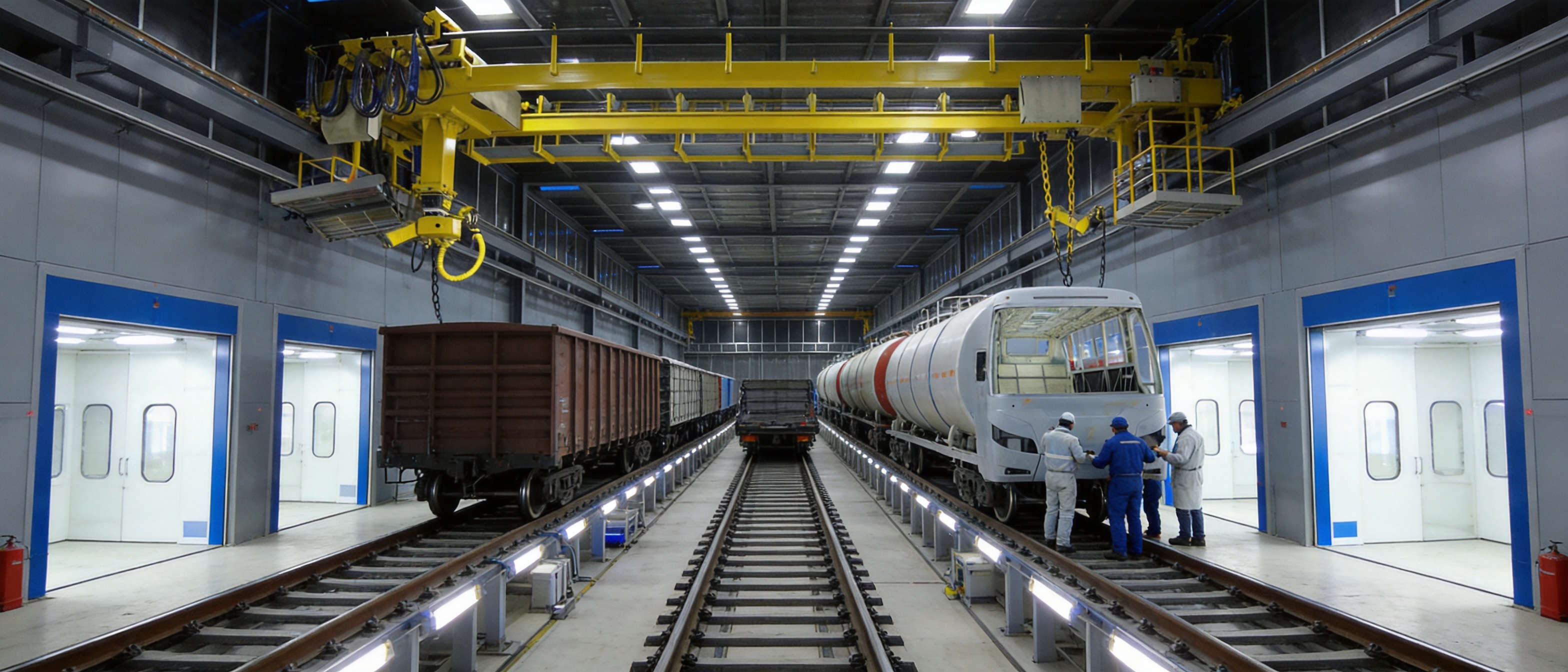
A well-planned maintenance line connects each stage into a logical sequence. The exact process depends on the vehicle type, coating specification, contamination level, repair requirements, and regulatory conditions, but a typical workflow includes the following steps.
Before treatment begins, the carriage or tanker is inspected to determine its maintenance condition. Operators may record corrosion, coating failure, deformation, cracks, damaged welds, leakage indications, missing components, and contamination. The vehicle is then assigned to the appropriate maintenance route.
Digital process records can be used to identify the vehicle, record inspection results, issue work instructions, and track completed operations. Standardized classification helps prevent unnecessary treatment and allows serious defects to be identified before coating work begins.
Loose dirt, grease, cargo residue, dust, and other contaminants must be removed before blasting or painting. Tanker cleaning may require specialized washing, ventilation, draining, or neutralization procedures. The cleaning method should be selected according to the transported material and the condition of the tank.
Good cleaning improves the efficiency of later surface preparation and reduces the risk of coating failure. It also protects blasting media, spray equipment, filters, and curing equipment from premature contamination.
Deteriorated coating can be removed through abrasive blasting, mechanical grinding, scraping, or a combination of methods. The selected process depends on coating thickness, corrosion severity, substrate material, access conditions, and environmental requirements.
For large transport bodies, enclosed blasting or grinding areas are valuable because they contain dust and abrasive materials. A properly designed room can improve visibility, protect nearby equipment, reduce cleanup time, and support more consistent surface treatment.
Surface preparation creates the profile required for strong coating adhesion. It removes rust, mill scale, loose material, and residual coating while producing a suitable roughness on the metal surface. Corners, seams, welds, reinforcing ribs, and lower sections require particular attention because these areas are often more vulnerable to corrosion.
Automatic or assisted blasting systems help reduce variation between operators. Adjustable nozzles, positioning devices, and controlled media flow can improve coverage across large surfaces. Manual finishing may still be required in complex areas, but the overall workload is reduced.
After surface preparation, the vehicle body can be examined more accurately. Damaged panels, cracked welds, deformed supports, worn fittings, and other defects can be repaired before coating. For carriages, welding and shaping may restore structural alignment. For tankers, repair work may focus on shell integrity, manholes, valves, pipe connections, support structures, and weld seams.
Completing structural work before painting avoids the need to damage a newly applied coating. It also ensures that the final coating protects a sound and properly prepared substrate.
The primer provides the first protective barrier after surface preparation. It improves corrosion resistance and creates a stable foundation for subsequent coats. The correct primer must be selected according to the substrate, operating environment, transported material, topcoat system, and required service life.
Controlled spray equipment supports more uniform film distribution and reduces excessive overspray. Depending on the design, spray booths may include air circulation, filtration, lighting, pressure control, and paint mist collection systems.
The topcoat restores the external protective and visual properties of the vehicle. It may provide resistance to moisture, ultraviolet radiation, abrasion, chemicals, temperature variation, or repeated washing. Uniform coating application is especially important on long sidewalls and large roof areas, where color variation and thickness differences can become visible.
Automatic conveying, adjustable platforms, and coordinated spray stations can help operators maintain a stable distance and spray angle. This improves appearance and reduces material waste compared with uncontrolled manual application.
Drying or curing equipment is used to bring the coating to the required performance condition. Depending on the coating system, this may involve heated air, infrared radiation, natural ventilation, or a combination of methods. Energy-saving heating systems can reduce operating costs while maintaining a suitable curing environment.
Temperature distribution, air movement, curing time, and exhaust treatment should be monitored to prevent incomplete curing, surface defects, solvent accumulation, or excessive energy consumption.
Tankers require dedicated leak detection and inspection procedures. Testing may be applied to tank shells, welds, valves, pipe joints, manholes, and other connection points. The selected test method depends on the tank design and the applicable industry requirements.
A specialized leak detection system helps identify potential leakage points before the tanker returns to service. Early detection reduces safety risks, prevents cargo loss, and supports more reliable maintenance records.
The completed vehicle is inspected for coating thickness, adhesion, color, gloss, surface defects, missed areas, curing condition, and cleanliness. Structural repairs, safety devices, access components, and tanker fittings may also be checked. Only after the final inspection is completed should the vehicle be released for service or transferred to the next maintenance stage.
Conventional workshops often rely on fixed equipment designed for one body size or one maintenance category. When a different carriage or tanker arrives, operators may need to move equipment, build temporary access platforms, or perform work manually. These changes consume time and can reduce quality.
The modular maintenance line uses adaptable positioning, lifting, conveying, and processing stations. It can be configured for different lengths, widths, heights, and tonnages. This broad adaptability allows one facility to support a wider range of fleet assets.
Manual handling is one of the largest sources of inefficiency in large-body maintenance. When operators repeatedly move vehicles between separate rooms and manually coordinate blasting, painting, drying, and inspection, the process becomes difficult to standardize.
An integrated line connects major operations and uses automatic or assisted modules for lifting, conveying, blasting, derusting, spraying, curing, and inspection. According to the supplied equipment specification, automation can improve maintenance efficiency by more than 30 percent compared with less integrated processes. Actual performance depends on vehicle type, line layout, production volume, coating system, operator training, and maintenance condition.
The intelligent control system can provide one-key starting, process coordination, status monitoring, alarm management, and fault self-inspection. This reduces the dependence on highly specialized operators for routine production tasks while allowing trained personnel to intervene when unusual conditions occur.
Coating failure often begins with inadequate surface preparation. Residual rust, dust, grease, or old coating can weaken adhesion and create premature corrosion. A dedicated blasting and grinding system provides a more stable process than scattered manual work.
Controlled abrasive flow, enclosed treatment areas, suitable lighting, adjustable access equipment, and repeatable operating parameters help produce more uniform results. Better surface preparation improves primer adhesion and supports a longer service life for the complete coating system.
Large vehicle bodies are difficult to coat evenly when operators work from temporary platforms or use equipment with inadequate reach. A specialized line provides better access and more suitable spray conditions. The result can include more consistent film thickness, fewer missed areas, improved appearance, and reduced rework.
Coordinated drying and curing further reduce the risk of defects caused by incorrect temperature, excessive humidity, inadequate ventilation, or insufficient curing time.
Blasting dust, paint mist, volatile organic compounds, and coating waste must be controlled in a responsible maintenance facility. The line can integrate enclosed treatment rooms, multi-stage filtration, exhaust systems, paint mist collection, and waste management equipment.
Closed-loop or controlled treatment of dust and exhaust reduces the risk of uncontrolled emissions inside or outside the workshop. Energy-saving heating and spraying equipment can also reduce resource consumption and operating costs. The final environmental configuration should be selected according to the coating materials, local regulations, environmental assessment requirements, and site conditions.
Carriage and tanker maintenance involves heavy components, elevated work areas, abrasive media, pressurized equipment, paint vapors, electrical systems, and potentially hazardous cargo residues. The maintenance line can incorporate explosion-proof equipment, anti-static measures, fall protection, emergency stops, ventilation, access controls, and safety interlocks.
These features are especially important for tanker maintenance. The line design can separate hazardous cleaning or testing operations from ordinary coating areas, helping reduce cross-contamination and prevent inappropriate equipment use.
A fixed workshop may become unsuitable when maintenance volumes increase or when a company begins handling new tanker categories. Modular construction provides a more practical path for expansion. Additional blasting, painting, testing, curing, conveying, or environmental modules can be added according to future needs.
This approach allows the customer to begin with the functions required today and upgrade the automation level later. It may reduce the cost of equipment renewal and help the facility respond to changing business requirements.
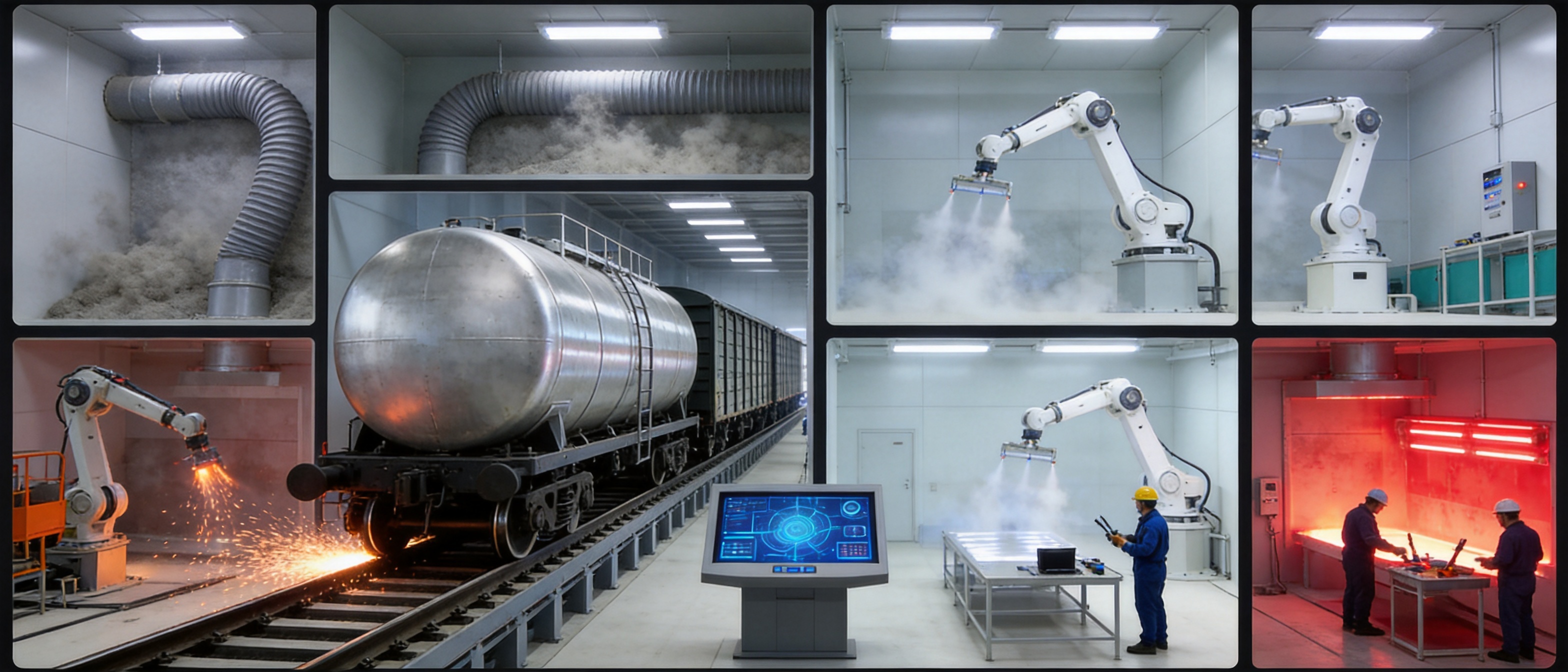
Modular design is not limited to adding individual machines. It involves dividing the complete maintenance process into functional units that can be arranged according to site dimensions, vehicle flow, production volume, and investment objectives.
| Module | Main Function | Typical Benefit |
|---|---|---|
| Vehicle positioning module | Supports alignment, movement, and stable access | Improves handling efficiency and operator access |
| Lifting and access module | Raises or positions working sections | Reduces unsafe temporary access arrangements |
| Cleaning module | Removes dirt, grease, and cargo residue | Improves surface preparation and process cleanliness |
| Blasting and derusting module | Removes old coating, rust, and contaminants | Creates a better surface profile for coating adhesion |
| Grinding and repair module | Supports local finishing, welding, and shaping | Restores structural and surface condition before painting |
| Spray booth module | Applies primer and topcoat under controlled conditions | Improves coating consistency and captures paint mist |
| Drying and curing module | Provides controlled heat or air circulation | Supports coating performance and reduces curing delays |
| Leak detection module | Checks tanker integrity and connection points | Helps identify potential safety hazards before service |
| Environmental treatment module | Filters dust, paint mist, and waste gas | Supports cleaner operation and regulatory compliance |
| Control and monitoring module | Coordinates equipment and records process status | Reduces operating errors and improves traceability |
A modular design also makes maintenance easier. If one module requires service, other areas may continue operating depending on the line layout and process dependency. Standardized components can simplify spare-parts management, troubleshooting, and future replacement.
The control system is the central coordination point of an automatic maintenance line. It can manage conveyors, lifts, fans, pumps, heating units, spray equipment, filtration devices, lighting, safety interlocks, alarms, and inspection functions.
A user-friendly interface allows operators to select a process recipe based on the vehicle category and coating specification. Parameters such as treatment time, conveying speed, heating temperature, ventilation status, and equipment sequence can be managed centrally. This helps reduce inconsistent manual decisions during repetitive operations.
Fault self-inspection can identify abnormal conditions such as fan failure, excessive temperature, blocked filters, motor overload, safety-door opening, or emergency-stop activation. Earlier fault identification can reduce downtime and help maintenance personnel locate the problem more quickly.
Process data can also support production management. A facility may record vehicle identification, maintenance date, coating system, inspection results, operator actions, and repair history. These records help operators compare fleet condition over time and plan future maintenance based on actual data rather than appearance alone.
Intelligent control does not eliminate the need for trained personnel. Instead, it reduces unnecessary manual operation and provides better visibility of the process. Personnel remain responsible for safety confirmation, material selection, abnormal-condition management, inspection, and compliance with operating procedures.
Environmental performance is a critical consideration for any facility handling abrasive blasting, industrial painting, and large-scale drying. The maintenance line can be designed with separate treatment zones, negative-pressure ventilation, multi-stage filtration, exhaust purification, and collected waste management.
Blasting areas may use dust collection systems that separate coarse abrasive particles from fine dust. Reusable abrasive media can be recovered when suitable, while contaminated waste can be handled according to local requirements. Proper airflow design protects workers and prevents dust from spreading into clean areas.
Painting areas can incorporate dry filters, wet treatment systems, activated carbon or other purification technologies, depending on the coating material and emission-control requirements. The correct equipment must be selected after evaluating paint formulation, solvent content, spray volume, exhaust concentration, and local environmental standards.
Drying and curing systems can use efficient circulation, insulation, temperature control, and heat recovery strategies. Infrared radiation drying systems may be used for selected applications where direct and rapid heating is appropriate. Energy consumption can be reduced by avoiding unnecessary heating of unused areas and by coordinating heating with the actual production cycle.
Noise control is another consideration. Enclosed blasting rooms, properly selected fans, vibration reduction, and equipment maintenance can reduce the impact of high-noise processes on workers and nearby areas.
Environmental protection is most effective when designed into the line from the beginning. Retrofitting dust and exhaust systems after installation can be more expensive and may produce less satisfactory results than an integrated design developed around the complete process.
Safety design must address both ordinary industrial hazards and the special risks associated with tankers. The line may include the following measures:
For tanker work, safety planning should begin before the vehicle enters the line. The operator should know the previous cargo, confirm the cleaning condition, verify that the tank is safe to enter if internal access is required, and follow applicable confined-space and hazardous-material procedures.
Equipment safety features are important, but they must operate together with employee training, permit systems, personal protective equipment, emergency planning, and documented procedures. A safe maintenance line is the result of both engineering and disciplined operation.
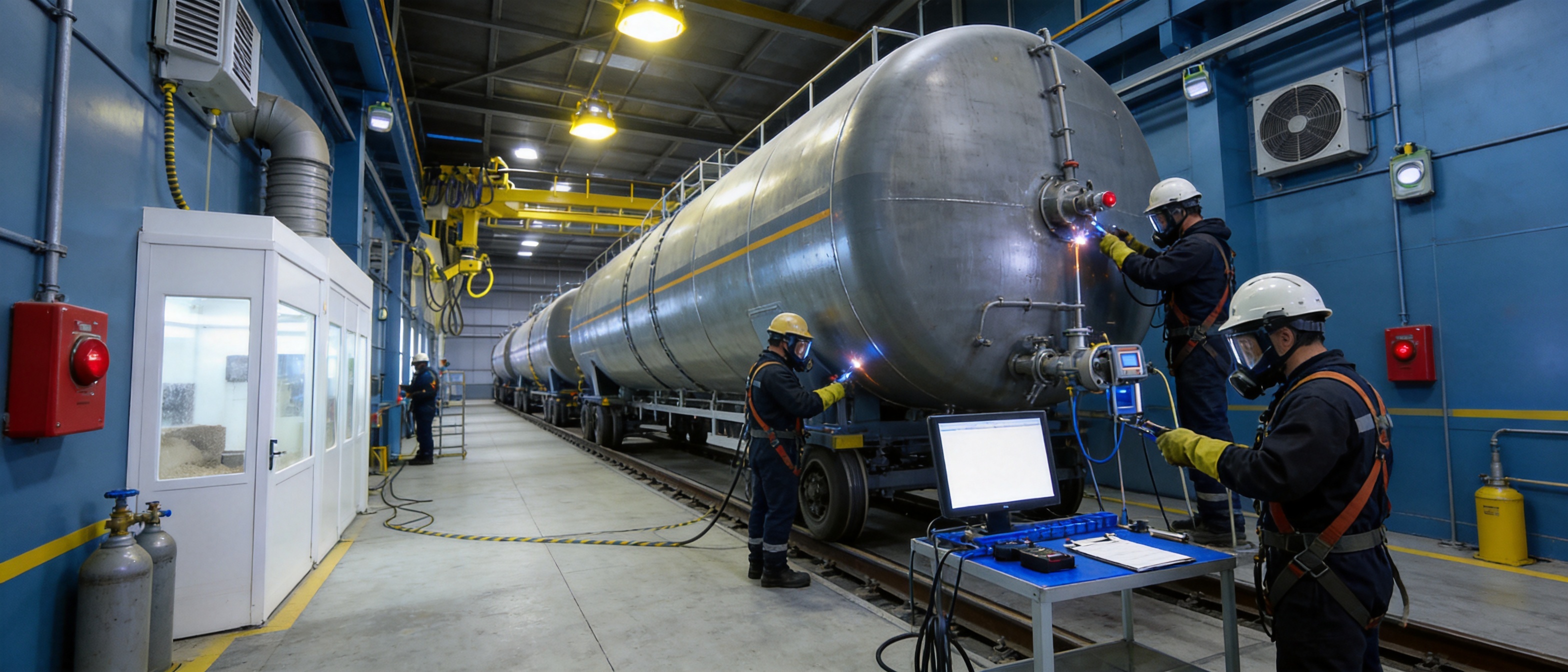
The performance of a customized maintenance line depends heavily on the manufacturer’s ability to understand the customer’s process and convert it into a reliable equipment system. A supplier that only sells individual machines may not be able to optimize the complete vehicle flow, environmental arrangement, control architecture, and safety design.
Jiangsu Yue Ze Environmental Protection Equipment Co., Ltd. provides integrated research and development, manufacturing, installation, commissioning, and customized service. Its product experience includes powder coating lines, electric vehicle assembly lines, automotive counterweight spray lines, paint and bake booths, large-part grinding rooms, waste-gas treatment equipment, infrared radiation drying systems, automated conveying systems, and intelligent coating lines.
This range of experience supports the development of carriage and tanker maintenance systems because the application requires multiple technologies to work together. Surface preparation, painting, heating, exhaust treatment, conveying, and controls cannot be designed independently without affecting the final production result.
The company’s manufacturing base covers approximately 35,000 square meters, providing space for equipment fabrication, assembly, testing, and project preparation. A larger production environment can support the construction of oversized booths, conveying frames, access systems, ducts, filtration units, and other components required for large transport equipment.
More than 40 years of industry experience also provide a foundation for handling different customer requirements. The company reports experience in drawer-type bus production lines, automotive body spray and bake paint booths, and large-sized parts grinding rooms. These projects involve large workpieces, controlled coating conditions, operator access, environmental treatment, and production-line coordination—all of which are relevant to carriage and tanker maintenance.
Rather than beginning with a standard machine list, the design process should begin with the customer’s vehicles and maintenance objectives. Key questions include vehicle dimensions, maximum weight, daily throughput, coating materials, surface condition, internal cleaning requirements, building height, available floor space, environmental targets, and expected future expansion.
Based on this information, the manufacturer can develop the line layout, equipment selection, airflow arrangement, electrical control system, safety zones, material handling method, and maintenance strategy. This process reduces the risk of purchasing equipment that performs well individually but does not fit the complete workflow.
Large transport equipment varies significantly between fleets. Tank diameter, wheelbase, body length, access position, insulation arrangement, underframe design, and service requirements may all differ. Customized manufacturing allows the lifting system, platforms, rails, booths, doors, exhaust ducts, filter capacity, and control logic to be adapted accordingly.
Customization can also address local environmental requirements and customer preferences. For example, one customer may prioritize maximum automation, while another may require a flexible line for different low-volume products. Some facilities may need additional bogie overhaul stations, while others may focus on tank inspection and coating.
Quality control should cover structural fabrication, welding, surface finishing, electrical assembly, fan and heating performance, filtration, safety interlocks, and control-system operation. Before delivery, the equipment should be inspected and prepared for installation at the customer’s site.
After installation, commissioning verifies the actual process under operating conditions. This may include airflow testing, temperature testing, conveying trials, spray tests, dust-collection evaluation, control-system checks, and safety-function verification. Operator training helps the customer use the line correctly and maintain stable performance.
The company’s one-stop project capability allows these activities to be coordinated through one engineering and service relationship. This can simplify communication and reduce responsibility gaps between separate equipment suppliers.
The company’s development of a hanging automatic painting process line for casting counterweight blocks in 2014 demonstrates the value of integrating multiple coating stages into one controlled process. That type of line covers finishing and polishing, primer application, topcoat application, conveying, and related production functions.
Although counterweight blocks and railway tankers are different products, the underlying engineering principles are related. Both require reliable handling of heavy workpieces, repeatable surface preparation, controlled coating, efficient material movement, and suitable environmental treatment. Experience with heavy components can help inform the design of lifting, conveying, support, and access systems for large transport vehicles.
Experience in automotive body spray and bake booths contributes knowledge of airflow, paint application, temperature control, filtration, and curing. Experience in large-part grinding rooms contributes understanding of dust control, operator protection, abrasive processes, and oversized workpiece access. Experience in waste-gas treatment contributes to the environmental system required by painting and cleaning operations.
These capabilities create a strong basis for producing an integrated carriage and tanker maintenance line instead of a collection of unrelated machines.
A maintenance line can reduce total operating costs in several ways. First, improved process organization reduces nonproductive vehicle movement and waiting time. A carriage or tanker spends less time being transferred between isolated work areas.
Second, automatic or assisted handling reduces the amount of manual labor required for lifting, positioning, and repetitive surface treatment. Operators can focus on inspection, quality control, repair decisions, and process supervision.
Third, more consistent blasting and painting reduces rework. Rework consumes coating materials, labor, energy, booth capacity, and production time. Preventing missed areas and adhesion failures is usually more economical than repairing defects after the vehicle has left the line.
Fourth, controlled spraying can improve coating-material utilization. Excessive overspray increases material costs and places additional demand on filtration and waste treatment. Suitable spray equipment, process parameters, and operator training help reduce these losses.
Fifth, preventive maintenance and fault self-inspection can reduce unexpected downtime. Simple equipment structures, accessible maintenance points, replaceable filters, and clear fault information support faster service intervention.
The total financial result depends on production volume, labor rates, coating material prices, energy costs, maintenance schedules, and the selected automation level. A detailed project evaluation should therefore compare the initial investment with expected throughput, labor savings, reduced rework, improved coating life, and environmental compliance costs.
A maintenance line must be designed for maintainability as well as production performance. Blasting dust, paint residue, abrasive particles, and high operating temperatures can affect filters, fans, motors, seals, sensors, and heating components. Regular cleaning and inspection are necessary to preserve performance.
Important maintenance activities may include filter replacement, dust collector inspection, duct cleaning, fan and motor lubrication, burner or heating-element inspection, spray-gun cleaning, conveyor alignment, electrical-terminal checks, grounding verification, sensor calibration, and safety-interlock testing.
The line’s fault self-inspection function can support preventive maintenance by identifying abnormal readings before a failure becomes serious. Maintenance records can be used to determine which parts require more frequent inspection and which operating conditions contribute to wear.
Spare-parts planning is also important. Filters, seals, nozzles, sensors, electrical components, and other wear parts should be available according to the line’s operating conditions. A manufacturer that provides technical documentation, training, commissioning support, and after-sales service can help customers maintain stable operation over the equipment’s service life.
The modular structure supports future repair because individual modules can be serviced or upgraded without redesigning the entire facility. This is especially useful for customers whose production volume or environmental requirements may change over time.
Customers considering a carriage and tanker maintenance line should prepare detailed technical information before requesting a final design. The following procedure can improve project accuracy.
Provide the minimum and maximum vehicle length, width, height, wheelbase, tank diameter, total weight, axle load, and body configuration. Include drawings or photographs of representative vehicles whenever possible.
Identify common contaminants, coating types, rust levels, cargo residues, structural defects, and expected repair work. Tanker projects should include information about previous cargoes and required cleaning procedures.
Estimate the number of vehicles to be processed per shift, day, month, or year. Define whether the target refers to complete maintenance cycles or individual operations. Production planning affects booth dimensions, equipment quantity, conveying speed, filtration capacity, and curing time.
Specify primer, intermediate coat, topcoat, solvent or water-based formulation, target film thickness, color requirements, curing method, and expected service environment. Coating materials directly influence spray equipment, ventilation, filtration, and heating design.
Review building dimensions, floor loading, access for oversized components, electrical capacity, gas availability, ventilation routes, fire safety conditions, drainage, wastewater handling, and space for maintenance. A line should fit the site without compromising safe access or future service.
Decide which operations should be manual, assisted, semi-automatic, or fully automatic. A staged automation plan may be suitable when the customer has limited initial volume but expects future growth.
Identify local emission limits, hazardous-area classifications, waste-disposal procedures, noise restrictions, fire regulations, confined-space rules, and occupational-health requirements. These conditions should be incorporated into the initial design rather than added later.
Define the required performance tests before manufacturing begins. Acceptance criteria may cover coating thickness, temperature uniformity, airflow, filtration efficiency, conveying stability, leak detection accuracy, alarm response, energy consumption, and line throughput.
The final quality of a carriage or tanker should be evaluated through measurable criteria rather than visual appearance alone. Typical indicators include:
Inspection tools may include visual inspection, coating-thickness gauges, adhesion testers, surface-profile comparators, temperature records, leak-testing equipment, and non-destructive testing instruments. The exact inspection plan should be established according to the vehicle type and applicable standards.
Purchasing separate blasting equipment, spray booths, curing ovens, conveyors, filters, and controls from different suppliers may appear flexible, but it can create integration difficulties. Equipment may use incompatible control systems, have different capacity ratings, or require different operating procedures. Responsibility for airflow, safety interlocks, process timing, and environmental performance may become unclear.
A customized integrated solution provides one coordinated design. The manufacturer can balance booth dimensions, fan capacity, filter area, heating power, conveying speed, access height, and control logic. This helps the complete system perform as a unified production line.
Customization is also valuable when the customer needs a combination of carriage and tanker operations. The line can separate hazardous and non-hazardous areas, assign different process routes, and include common modules where appropriate. This avoids unnecessary duplication while preserving the safety and process requirements of each product category.
For companies planning long-term fleet maintenance, modular integration can provide a better foundation than temporary workshop adaptation. It supports predictable production, standard operating procedures, clearer quality records, and future automation upgrades.
The line can be configured for railway boxcars, gondola cars, flatcars, oil tankers, fuel tankers, chemical tankers, insulated tankers, LNG and LPG tankers, viscous oil tankers, and other large transport vehicles. The actual range depends on the dimensions, weight, structure, and process requirements supplied during project design.
Yes, a modular line can be designed to process different categories when the handling system, working height, safety zones, cleaning functions, coating areas, and inspection stations are properly configured. Some tanker operations may require dedicated areas because of residue, gas, chemical, or explosion risks.
Typical stages include incoming inspection, cleaning, old coating removal, abrasive blasting, grinding, derusting, welding and shaping, primer application, topcoat application, drying, curing, leak detection, final inspection, and material handling. The customer may select only the modules required for its current operation.
Automation coordinates vehicle movement, lifting, blasting, spraying, heating, ventilation, and inspection. It reduces manual handling, shortens transfer time, improves process repeatability, and lowers the risk of operator inconsistency. The actual productivity improvement depends on line configuration and production conditions; the supplied specification indicates that efficiency can improve by more than 30 percent in suitable applications.
It can be configured with explosion-proof equipment, anti-static protection, controlled ventilation, gas detection, safety interlocks, and dedicated cleaning or inspection zones. However, the equipment configuration must be based on the tanker’s previous cargo, hazardous-area classification, local regulations, and the customer’s safety procedures.
Yes. Modular construction allows additional functions such as blasting, painting, drying, testing, conveying, environmental treatment, and automation to be added according to future needs. Expansion should be considered during the initial layout so that adequate space, utilities, and structural capacity are reserved.
The line can include dust collection, multi-stage filtration, paint-mist capture, waste-gas treatment, controlled ventilation, and related waste-management provisions. The final system should be selected according to the coating materials, blasting media, exhaust characteristics, local emission requirements, and environmental assessment conditions.
Coating quality is supported through controlled surface preparation, suitable spray equipment, stable airflow, appropriate curing conditions, process records, and final inspection. Film thickness, adhesion, appearance, curing, and missed areas can be checked using suitable inspection tools.
The company provides integrated project services covering research and development, manufacturing, installation, commissioning, customized design, and customer support. Commissioning may include equipment testing, control-system verification, airflow checks, heating tests, safety-function tests, and operator training.
The customer should provide vehicle drawings or dimensions, maximum weight, maintenance volume, coating specifications, surface condition, cleaning requirements, site dimensions, available utilities, environmental targets, desired automation level, and applicable safety standards. More complete information allows the manufacturer to prepare a more accurate layout and technical proposal.
Yes. Bogie and wheelset overhaul can be incorporated as a dedicated module or separate area within a broader carriage maintenance facility. The configuration depends on lifting requirements, component weight, inspection procedures, repair operations, and the desired production flow.
Maintenance frequency depends on operating hours, dust load, coating materials, environmental conditions, and equipment design. Filters, ducts, fans, spray components, heating systems, conveyors, sensors, grounding systems, and safety devices should be inspected according to a documented preventive-maintenance schedule.
A carriage and tanker maintenance line provides a structured way to manage the difficult requirements of large railway and industrial transport equipment. By integrating cleaning, blasting, derusting, repair, painting, curing, inspection, leak detection, environmental treatment, and intelligent control, the system can improve maintenance efficiency and quality while reducing unnecessary manual labor and process variation.
Its main advantages over conventional workshops include broad vehicle-category compatibility, adjustable handling, higher automation, better surface preparation, more consistent coating quality, improved safety, controlled emissions, energy-saving operation, and flexible future expansion.
The strength of the solution also depends on the manufacturer’s engineering capabilities. Experience in powder coating lines, spray and bake booths, large-part grinding rooms, automated conveying systems, infrared drying, waste-gas treatment, and intelligent coating equipment allows the complete line to be designed as one coordinated system. Jiangsu Yue Ze Environmental Protection Equipment Co., Ltd. combines these capabilities with customized manufacturing, installation, commissioning, and technical service.
For fleet operators, railway maintenance organizations, tanker repair contractors, and industrial transportation companies, the correct solution should be selected through a detailed evaluation of vehicle dimensions, maintenance condition, production volume, coating system, safety requirements, environmental standards, and future development plans. With suitable planning, a modular automatic maintenance line can become a long-term production platform that supports reliable fleet renewal, lower operating costs, safer work, and more sustainable industrial maintenance.
1. Jiangsu Yue Ze Environmental Protection Equipment Co., Ltd. Product information for carriage and tanker maintenance line systems.
2. Jiangsu Yue Ze Environmental Protection Equipment Co., Ltd. Technical information on powder coating lines, spray and bake booths, automated conveying systems, and environmental protection equipment.
3. General industrial guidance on abrasive blasting, corrosion removal, protective coating application, drying, curing, and coating inspection.
4. General railway vehicle maintenance practices for carriages, tankers, bogies, wheelsets, and large transport equipment.
5. General industrial safety principles for explosion-proof equipment, anti-static protection, confined-space work, ventilation, hazardous residues, and tanker inspection.
Professional maintenance line specially designed for carriages and tankers, applicable to various types of carriages and tankers (railway boxcar, gondola car, flatcar, oil tanker, chemical tanker, LNG...
See Details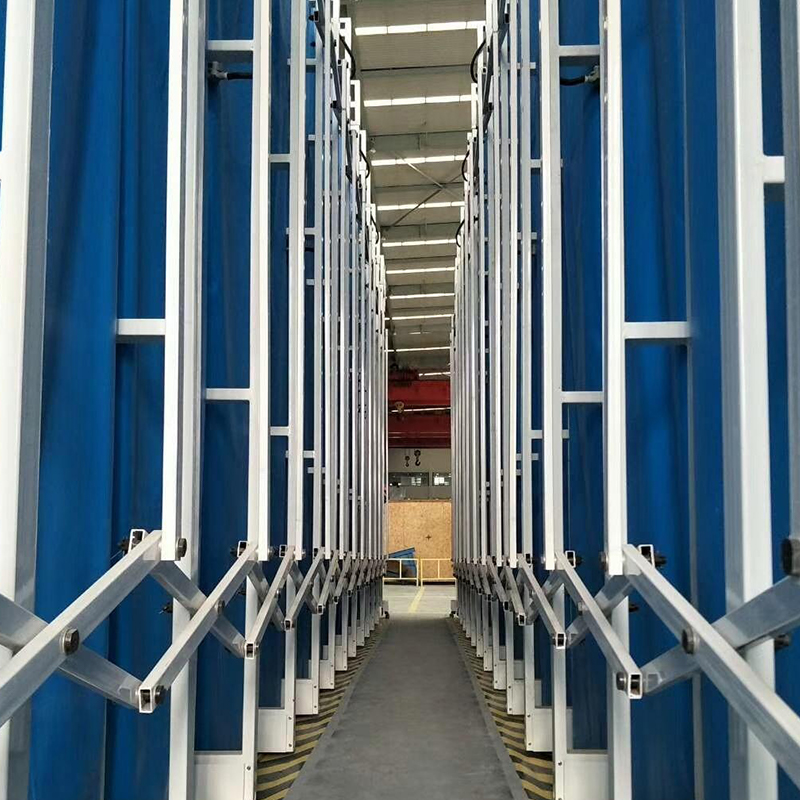
The retractable mobile spray & sanding booth is a flexible, space-saving, and multi-functional coating workstation. With a telescopic movable structure and integrated dust & paint mist filtrat...
See Details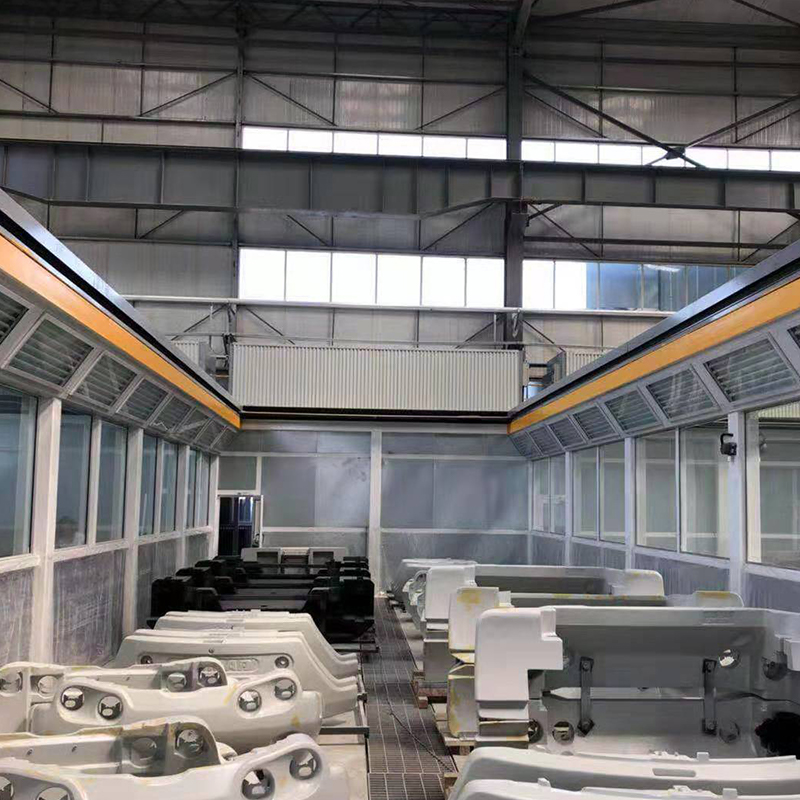
The retractable mobile spray & sanding booth is a flexible, space-saving, and multi-functional coating workstation. With a telescopic movable structure and integrated dust & paint mist filtrat...
See Details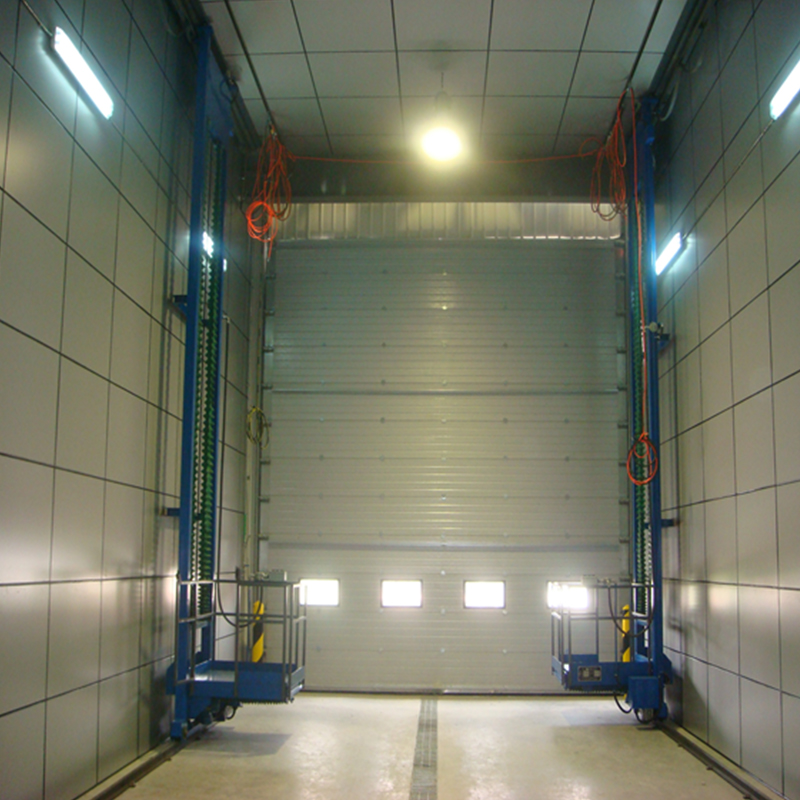
We supply high-quality blasting room and automatic shot blasting machines. The equipment adopts mature surface treatment technology, realizing rust removal, oxide layer cleaning and surface roughening...
See Details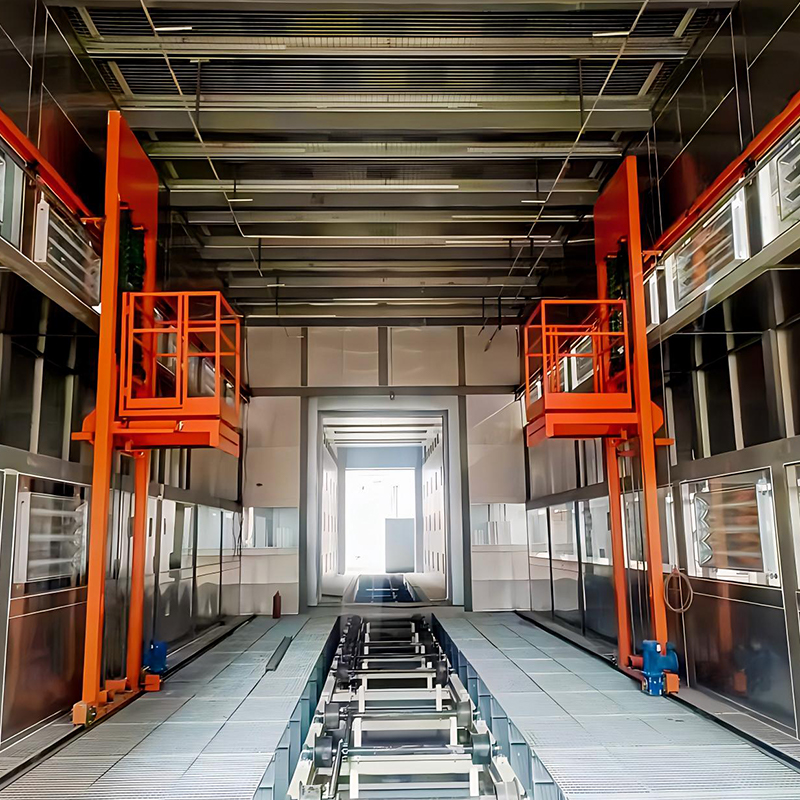
3-axis platform lifts feature three-dimensional movement of X, Y, and Z axes. Flexible positioning, stable lifting, and precise operation. Suitable for multi-angle operation and workpiece docking in i...
See Details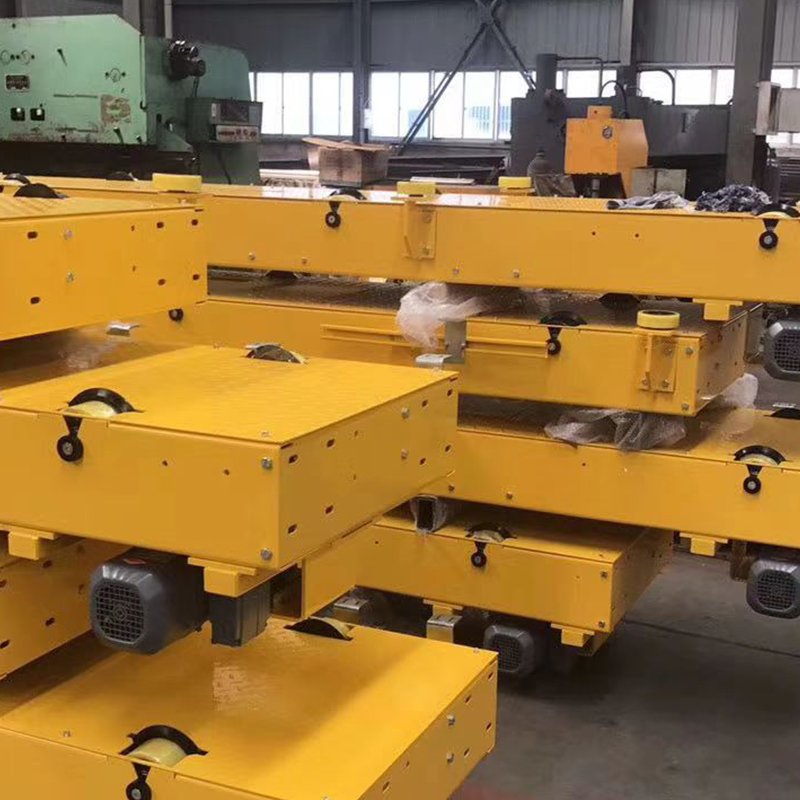
Platform Cart is a practical and efficient industrial handling equipment, widely used in factories, workshops, warehouses, logistics centers, and other places. It is composed of a sturdy load-bearing ...
See DetailsBuild Your Customized Industrial Coating System
Send us your workpiece information, production capacity, coating process, workshop layout, and environmental requirements. Yueze will help evaluate your project and develop a suitable coating, conveying, drying, and environmental treatment solution.
Main menu
Products
Contact Us
Company Address:
No. 12, Park Avenue, Shanggang Industrial Park, Jianhu, Yancheng City, Jiangsu Province
Message Us Right Now!

Follow us: