
 русский
 عربى
عربى
 Tiếng Việt

Professional spray coating line designed for engine manufacturing and maintenance, applicable to various engine types (gasoline engine, diesel engine, electric vehicle engine). Main types: engine bloc...
See Details
Yueze Environmental Protection provides one-stop compliant industrial surface treatment solutions with professional tech and fine craftsmanship.
 Get Inquiries
2026-09-02
Content
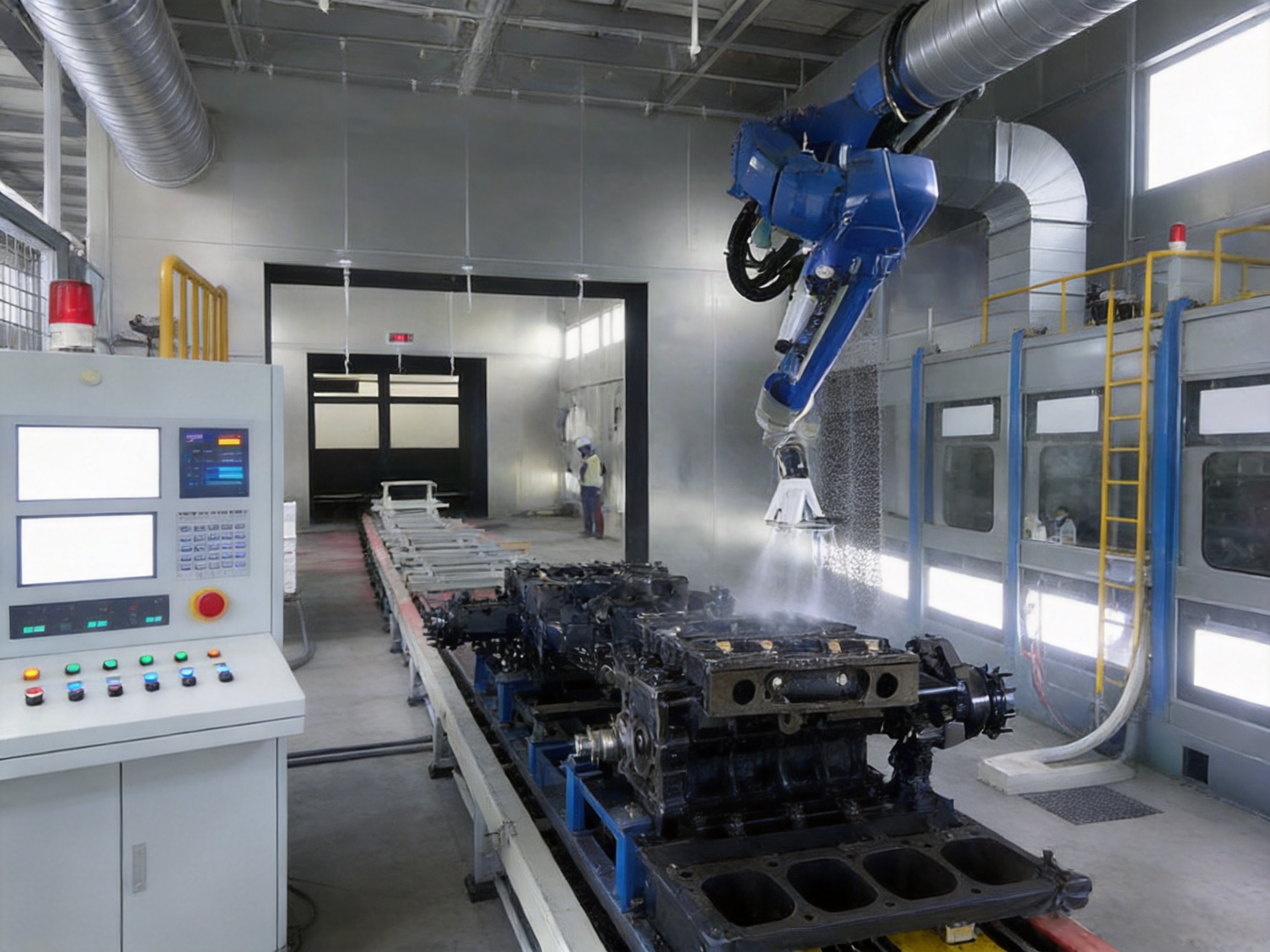
An engine spray coating line is a dedicated industrial production system for cleaning, masking, spraying, curing, conveying, and inspecting engine components. It is designed for parts such as engine blocks, cylinder heads, valve covers, intake manifolds, housings, brackets, and other powertrain products that require reliable corrosion protection, heat resistance, chemical resistance, and consistent appearance.
Compared with a general-purpose paint booth, an engine coating line is engineered around the special geometry and service conditions of engine parts. Cooling fins, deep cavities, bolt bosses, mounting flanges, machined sealing faces, threaded holes, and irregular cast surfaces all create challenges for coating application. The equipment must achieve uniform coverage without contaminating areas that must remain coating-free for later assembly or machining.
The line can be configured for gasoline engines, diesel engines, electric vehicle powertrain components, industrial engines, agricultural machinery engines, construction equipment components, and maintenance or remanufacturing operations. Depending on production requirements, it may include manual loading, semi-automatic spraying, fully automatic spray robots, pretreatment equipment, drying systems, curing ovens, automated conveyors, exhaust purification, and intelligent process controls.
For manufacturers seeking stable quality, reduced labor dependence, and improved environmental performance, an integrated engine spray coating line provides a more dependable alternative to disconnected spray booths and manual finishing stations. Its modular design also allows the system to be adapted to different component dimensions, coating materials, production volumes, and factory layouts.
Engine components operate in a demanding environment. Depending on their location and function, they may be exposed to elevated temperatures, engine oil, coolant, fuel vapors, cleaning chemicals, road moisture, salt, dust, vibration, and repeated thermal cycling. A coating that looks attractive immediately after application may still fail if it does not provide sufficient adhesion or resistance under these conditions.
The primary purpose of an engine spray coating line is to create a controlled and repeatable surface treatment process. Instead of relying on individual operators to perform every step differently, the line organizes production into defined stages. Each stage can be monitored and adjusted according to the characteristics of the workpiece and the coating specification.
A typical system performs the following functions:
The result is a coordinated production process in which part movement, spray application, temperature, humidity, airflow, curing time, and exhaust treatment can be controlled as one complete system.
Engine spray coating lines can be designed for a broad range of component types. The most suitable configuration depends on the dimensions, weight, surface complexity, coating material, and required output of each product.
Engine blocks often contain cylinders, oil passages, mounting surfaces, bolt holes, cast ribs, and other complex features. Their large mass and irregular shape can make manual coating slow and inconsistent. A dedicated conveyor and fixture system allows the block to be positioned at a suitable angle for spraying while maintaining access to external surfaces.
For cast iron blocks, the coating system may focus on corrosion protection, heat resistance, and long-term adhesion. Aluminum blocks may require more careful pretreatment and primer selection because their surfaces can contain casting residues, oxides, machining oils, or other contaminants that affect adhesion.
Cylinder heads combine complex external geometry with strict requirements for gasket faces, mounting areas, ports, and machined surfaces. The coating must reach difficult external areas without entering passages or contaminating sealing faces. Fixtures and masking tools are therefore important parts of the line design.
Automated or semi-automated spray guns can provide more consistent coverage around cooling fins, raised ribs, recesses, and curved sections than conventional hand spraying. The spray path can be adjusted to the geometry of the component and the required film thickness.
Valve covers and intake manifolds are often visible components, so appearance and color consistency can be especially important. Depending on the operating temperature and material, they may receive a decorative wet coating, powder coating, heat-resistant enamel, or another specialized finish.
The line can support color changes, product changeovers, and separate coating recipes when multiple product families are manufactured in the same facility. A controlled spray environment helps reduce dust inclusion, uneven gloss, orange peel, runs, and other common appearance defects.
Smaller engine brackets, housings, covers, supports, and accessories may be processed on the same general line or on a dedicated branch. Modular conveyor sections and interchangeable fixtures make it possible to handle multiple workpiece categories without rebuilding the entire system.
Electric vehicle motors, gear housings, structural powertrain parts, and related components may require corrosion protection, insulation-compatible coatings, or decorative finishes. Although these parts do not experience exactly the same conditions as combustion engine components, they still benefit from controlled pretreatment, precise spraying, reliable curing, and traceable quality management.
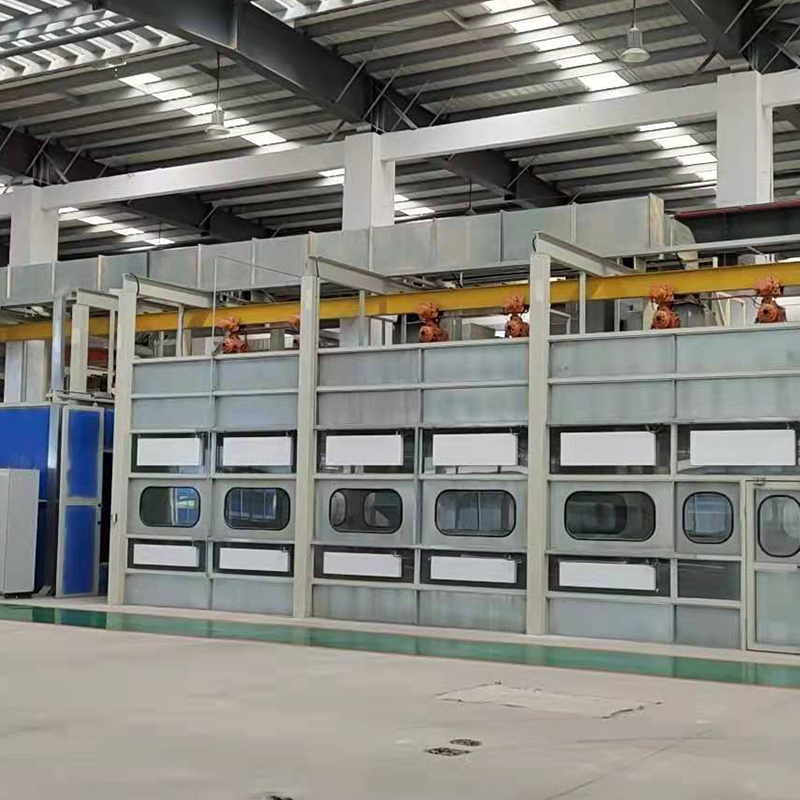
Engine Spray Coating Line
The exact process sequence is customized according to the coating material and component specification. A common engine coating process includes the following stages.
Operators or robotic systems place engine components onto dedicated fixtures. The fixture supports the component securely while exposing the surfaces that need coating. For automated production, part identification may be connected to a control system so that the appropriate spray recipe, conveyor speed, and curing parameters are selected automatically.
Correct loading is essential. Poor orientation can create shadow areas, excessive paint accumulation, or insufficient coverage around fins and cavities. A properly designed fixture improves repeatability and reduces the risk of collision with spray equipment.
Before coating, the component must be free from oil, grease, dust, casting sand, metal chips, fingerprints, and other contaminants. Cleaning may involve alkaline degreasing, solvent cleaning, high-pressure washing, brushing, air blowing, or a combination of methods.
The selected method depends on the substrate and the coating specification. Aluminum and iron castings may require different cleaning chemistry or process temperatures. The equipment can be arranged as a continuous pretreatment line or as a separate preparation station for lower-volume production.
After cleaning, rinsing removes residual chemicals and loose contamination. Some projects also include surface conditioning, phosphating, silane treatment, or another conversion process to improve corrosion resistance and coating adhesion.
Pretreatment parameters such as solution concentration, temperature, spray pressure, contact time, and bath cleanliness should be managed carefully. Inadequate pretreatment is one of the most common reasons for early coating failure, even when the spray and curing stages appear to operate correctly.
Residual water must be removed before masking and coating. Drying may be achieved through heated air, air knives, infrared radiation, or a combination of technologies. The drying system must remove moisture from cavities, recesses, threaded holes, and other areas where water can remain trapped.
For complex engine components, fixture orientation and air circulation are as important as the nominal drying temperature. A well-designed system reduces water marks, flash rust, adhesion defects, and contamination in the spray booth.
Masking protects surfaces that must remain free of coating. Typical masking targets include gasket faces, bearing seats, machined bores, threaded holes, electrical contact points, ground connections, oil passages, coolant passages, and precision mounting surfaces.
Masking materials may include reusable silicone plugs, caps, magnetic covers, high-temperature tapes, custom fixtures, and removable inserts. For high-volume production, dedicated masking tools can be developed for each component family. This improves consistency and reduces the time required for manual preparation.
Some engine components require a primer before the final coating. Primer can improve adhesion, corrosion resistance, and surface uniformity, especially on cast metal substrates. The primer type must be compatible with the base material, topcoat, curing method, and final service conditions.
Spray parameters include atomizing air pressure, material flow, gun-to-part distance, fan width, overlap, and conveyor speed. These parameters should be defined in a process recipe rather than adjusted casually from one operator to another.
The topcoat provides the required appearance and much of the final protection against heat, oil, moisture, chemicals, and wear. Automated spray guns are particularly useful for repeated engine models because they can maintain a consistent path and spray volume.
For components with cooling fins, the gun path must be arranged to reach the sides and valleys of the fins without creating excessive buildup on the edges. Some systems use multiple spray angles, rotary fixtures, reciprocating guns, or robot movement to improve coverage on complex surfaces.
Depending on the coating technology, the freshly sprayed component may pass through a flash-off zone before entering a drying or curing oven. Flash-off allows solvents or carriers to escape gradually and helps prevent defects such as bubbling, pinholes, sagging, and solvent popping.
Curing conditions must match the coating supplier’s technical specification. Important parameters include oven temperature, part temperature, heating rate, holding time, airflow, and cooling rate. Oven control should be based on the actual temperature of the workpiece rather than air temperature alone whenever the coating requires a precise cure schedule.
After curing, components should cool to a safe handling temperature before inspection, packaging, or assembly. Inspection may include visual checks, color and gloss comparison, dry film thickness measurement, adhesion testing, hardness evaluation, and examination of masked areas.
Defective parts should be identified and traced to the relevant production stage. A structured inspection process helps determine whether a problem originated in cleaning, masking, spraying, curing, conveying, or material storage.
One of the most important advantages of an engine spray coating line is its ability to automate repeated production tasks. Automated conveyors, reciprocating spray machines, robot arms, automatic fixture systems, and programmable controls reduce the amount of manual intervention required for routine operations.
Reduced manual dependence offers several benefits. Spray paths become more repeatable, production data can be recorded more accurately, operator exposure to coating materials is reduced, and labor can be allocated to higher-value tasks such as inspection, maintenance, and process improvement.
Automation does not eliminate the need for skilled workers. Instead, it changes the role of personnel from constantly performing repetitive spraying to managing equipment, verifying quality, maintaining fixtures, and responding to process information.
Uneven film thickness can lead to poor appearance, weak protection, cracking, sagging, or excessive material consumption. A dedicated line uses stable workpiece positioning, controlled spray parameters, and repeatable movement to produce a more uniform finish.
Uniformity is especially valuable on engine parts with fins and cavities. Manual operators may naturally spray more heavily on easily visible surfaces while missing recessed regions. Automated movement and carefully selected spray angles help distribute coating more evenly.
Engine manufacturers often produce several models, sizes, and configurations. A fixed-purpose line may become inefficient when product requirements change. A modular coating line can be designed with adjustable fixtures, programmable recipes, variable conveyor speeds, quick-change masking tools, and adaptable spray equipment.
This flexibility makes it possible to process different components while maintaining consistent quality. The line can also be expanded later with additional booths, curing capacity, inspection stations, or automated loading equipment.
Temperature and humidity directly affect coating viscosity, atomization, drying behavior, surface appearance, and adhesion. A controlled spray environment helps reduce seasonal variation and improves process stability.
Constant-temperature and humidity management is particularly useful for water-based coatings, high-solid coatings, heat-resistant paints, and products with narrow application windows. Stable airflow and filtration also help limit dust and airborne contamination.
Energy consumption is influenced by oven design, insulation, heating method, exhaust volume, conveyor speed, production loading, and the operating schedule. A properly engineered line can reduce unnecessary heating and ventilation through zoned control, optimized airflow, efficient burners, infrared heating, heat recovery, and automatic standby functions.
Infrared radiation drying systems may be suitable for selected workpieces and coating materials because they transfer energy directly to the surface. Conventional hot-air ovens remain useful for uniform curing of complex components. The most suitable solution depends on the required curing profile.
Spray coating generates paint mist, solvent vapors, and other exhaust gases. An integrated line can include filtration, water-wash systems, dry filtration, activated carbon adsorption, catalytic treatment, thermal oxidation, or other purification technologies selected according to the coating process.
Effective exhaust treatment protects workers, supports compliance with applicable environmental requirements, and helps maintain a cleaner production area. The system should be designed around the actual coating chemistry, airflow, emission concentration, operating hours, and local regulations.
Modular equipment allows the production line to be arranged in a straight line, U-shaped layout, L-shaped layout, or another configuration suited to the available factory space. Separate modules can be serviced without shutting down every section of the line.
Maintenance access should be considered from the beginning. Spray booths, pumps, filters, ovens, conveyors, burners, motors, sensors, and exhaust equipment require regular inspection. Accessible components reduce downtime and make preventive maintenance more practical.
A conventional spray booth can be appropriate for prototypes, repairs, low-volume work, or highly variable products. However, it may not provide the process consistency and throughput required for engine manufacturing. The following table summarizes the main differences.
| Evaluation Area | Dedicated Engine Spray Coating Line | Conventional Spray Booth |
|---|---|---|
| Workpiece movement | Controlled by conveyors, fixtures, or automated handling systems | Usually moved and positioned manually |
| Spray repeatability | Programmable paths and stable spray parameters | Highly dependent on operator technique |
| Complex geometry | Designed for fins, cavities, ribs, and irregular castings | May leave shadow areas or require repeated manual touch-up |
| Masking control | Can use dedicated reusable tools and standardized procedures | Often relies on manual preparation for each component |
| Production capacity | Suitable for continuous or high-volume production | More suitable for low or medium production volumes |
| Process integration | Can combine pretreatment, spraying, curing, conveying, and exhaust treatment | Often operates as an isolated painting station |
| Quality traceability | Supports recipes, parameter recording, and production monitoring | Limited unless additional control systems are installed |
| Labor requirement | Lower repetitive labor requirement after commissioning | Higher operator involvement throughout the process |
| Future expansion | Modular sections can be added or upgraded | Expansion may require major reconstruction |
The most significant competitive advantage is not simply the presence of automated equipment. It is the coordination of all process stages. A spray robot cannot compensate for poor cleaning, an efficient oven cannot correct improper masking, and a high-quality coating cannot perform well if the substrate is contaminated. The integrated design addresses the complete process rather than one isolated operation.
Coating selection must be based on the component’s operating temperature, exposure to oil and chemicals, desired appearance, substrate, curing method, and performance requirements. No single coating is ideal for every engine component.
High-temperature enamel may be used on cylinder blocks, cylinder heads, exhaust-related parts, and other surfaces exposed to substantial heat. The formulation should be selected according to the actual service temperature and the required resistance to thermal cycling.
Ceramic-based coatings can provide heat resistance, hardness, and specialized surface performance. They may be suitable for selected high-temperature applications, but their preparation and curing requirements must be carefully controlled.
Powder coatings can provide good appearance, corrosion resistance, and material utilization. They are suitable for certain valve covers, brackets, housings, and auxiliary components when the substrate and curing temperature are compatible with the process.
Wet coatings offer broad color selection and can be formulated for heat resistance, chemical resistance, corrosion protection, or decorative appearance. They may be used as primers, topcoats, or complete coating systems.
Some components benefit from a multi-layer system. The primer improves substrate protection and adhesion, while the topcoat provides color, gloss, heat resistance, and chemical durability. The compatibility of each layer must be confirmed before production.
Before ordering equipment, buyers should identify the coating type, viscosity range, solids content, flash-off requirement, curing temperature, required film thickness, color-change frequency, and environmental control requirements. These details affect booth dimensions, spray equipment, oven design, exhaust treatment, and conveyor speed.
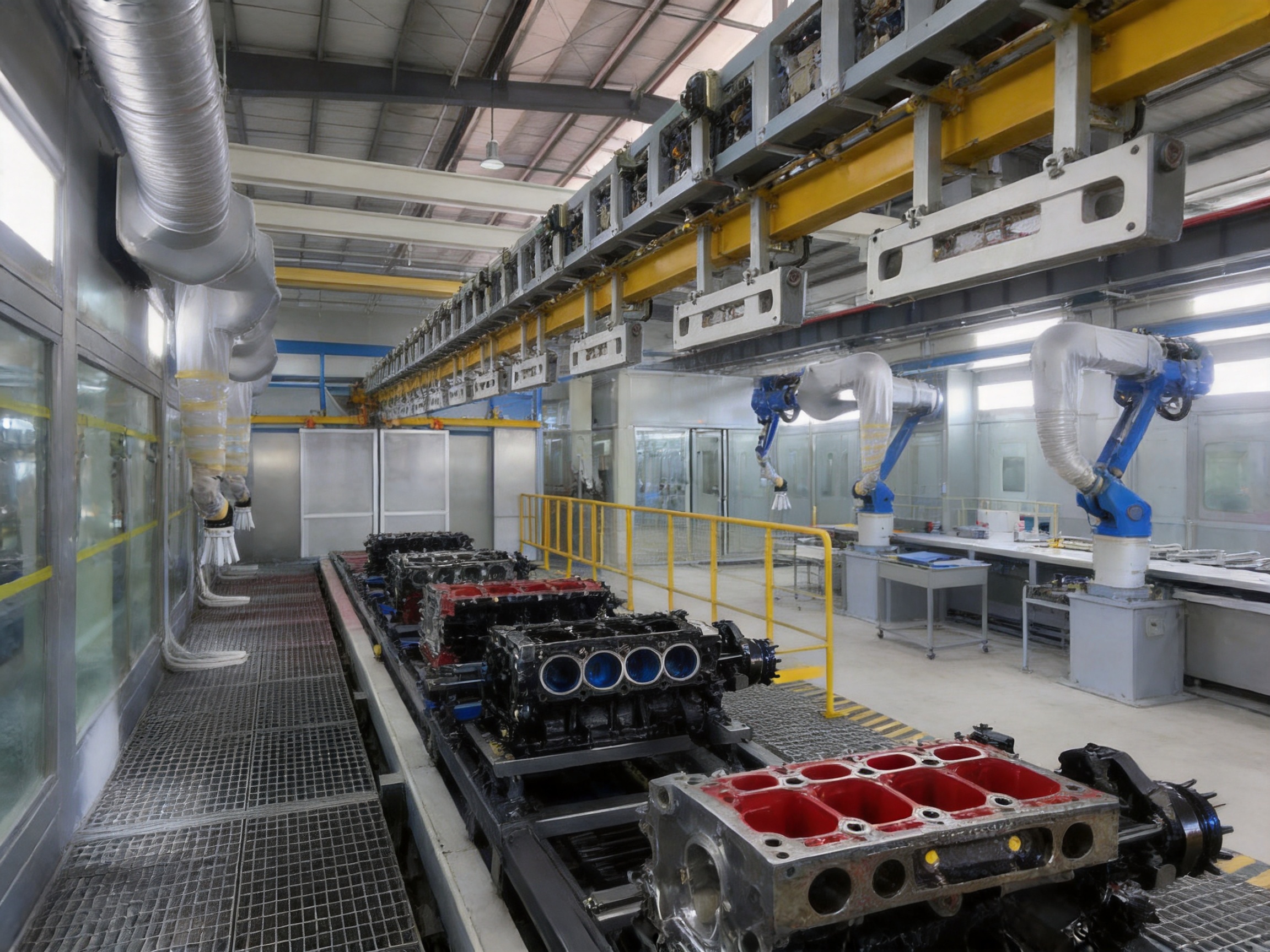
Fixtures are central to reliable engine coating. They must support the component without damaging machined surfaces and must expose the areas that require spraying. For heavy engine blocks, fixtures also need sufficient load capacity and rigidity.
Where several product types share one line, adjustable or quick-change fixtures can reduce changeover time. Fixture design should also consider drainage, cleaning, masking access, and the possibility of rotating or tilting the workpiece during spraying.
The conveyor system determines how consistently parts move through each process zone. Options may include overhead conveyors, floor conveyors, power-and-free conveyors, roller conveyors, monorail systems, or customized transfer equipment.
Power-and-free conveyors are useful when different process stages require different dwell times. Parts can accumulate, stop for loading, or move at different speeds without stopping the entire line. The appropriate design depends on component weight, cycle time, layout, and production planning.
The spray booth should provide stable airflow, effective overspray capture, suitable lighting, safe access, and sufficient working space. Booth dimensions must account for the component envelope, fixture movement, spray equipment, operator access, and maintenance requirements.
Booth filtration should be selected according to the coating material and exhaust conditions. Filters require regular replacement or cleaning to maintain airflow and prevent excessive pressure loss.
Robotic spraying is advantageous when parts are repetitive, production volume is high, and complex movement is required. A robot can follow programmed paths around curved surfaces, use multiple spray angles, and coordinate with fixture rotation.
Reciprocating spray machines may provide an economical solution for components with regular dimensions or repeated vertical and horizontal surfaces. Semi-automatic systems can combine mechanical movement with operator-controlled loading and masking.
Ovens can be heated by gas, electricity, infrared radiation, or a hybrid configuration. The selection should consider production capacity, part mass, coating chemistry, required temperature range, available energy sources, and factory conditions.
Effective insulation reduces heat loss and improves temperature stability. Air circulation should be balanced so that the component receives consistent heating without creating excessive turbulence or disturbing uncured coating.
Environmental equipment may include paint mist filters, dry filtration units, wet scrubbers, activated carbon systems, catalytic combustion equipment, or thermal oxidation systems. The correct combination depends on the chemical composition and concentration of the exhaust.
The purification system should be integrated with the spray booth and factory ventilation plan. Poorly matched exhaust capacity can cause unstable booth airflow, overspray escape, excessive energy use, or insufficient capture of emissions.
Modern coating lines can include programmable logic controllers, touch-screen interfaces, variable-frequency drives, temperature sensors, pressure sensors, humidity monitoring, alarm systems, and production data recording. These controls support stable operation and help operators identify abnormal conditions quickly.
A recipe management function can store process parameters for different engine models. When a product changes, the operator can select the corresponding recipe rather than manually resetting every parameter. Access levels can be assigned so that operators, maintenance personnel, and process engineers have appropriate control over adjustments.
Useful monitored parameters may include:
These data support preventive maintenance and process analysis. If coating defects increase, recorded information can help determine whether the cause is related to material, temperature, airflow, spray pressure, conveyor speed, or operator handling.
Quality control should begin before the workpiece enters the spray booth. Incoming castings and machined components should be checked for contamination, damage, excessive flash, burrs, and surface conditions that could affect coating performance.
A clean substrate is essential for adhesion. Inspection methods may include visual examination, water-break testing, wipe testing, or other methods defined by the coating specification.
Dry film thickness should be measured at representative locations, including flat areas and regions near fins or ribs. Excessive thickness can cause cracking, sagging, delayed curing, or dimensional problems. Insufficient thickness can reduce corrosion and heat protection.
Adhesion testing can identify weaknesses in pretreatment, primer selection, or curing. Cross-cut, pull-off, or other test methods may be selected according to the substrate and applicable standards.
Visual inspection should cover color, gloss, smoothness, runs, pinholes, craters, inclusions, orange peel, exposed substrate, and overspray on masked areas. Lighting should be consistent so that operators can make reliable comparisons.
When a coating requires baking, the actual workpiece temperature and dwell time should be verified. A high oven air temperature does not always mean that the heaviest area of an engine block has reached the required cure condition.
Jiangsu Yue Ze Environmental Protection Equipment Co., Ltd. is located in Yancheng, Jiangsu, China, and operates a manufacturing facility covering approximately 35,000 square meters. The company reports registered capital of 58 million yuan and more than 40 years of combined experience in powder coating lines, paint and bake booths, large-part grinding rooms, conveying systems, and environmental protection equipment.
The company’s strength is based on integrated project capability. Rather than supplying only an individual spray booth, it can participate in process planning, equipment design, manufacturing, installation, commissioning, and after-sales support. This approach is valuable when the coating system must coordinate with pretreatment, curing, material handling, ventilation, and exhaust purification.
Its product scope includes powder coating lines, electric vehicle assembly lines, automotive counterweight spray lines, paint and bake booths, large-sized parts grinding rooms, waste gas treatment equipment, infrared radiation drying systems, automated conveying systems, intelligent coating lines, and other industrial environmental equipment.
The company also reports experience in customized equipment development. In 2014, it pioneered a hanging automatic painting process line for casting counterweight blocks. The line covered the process from finishing and polishing through primer and topcoat application. This type of project experience demonstrates the importance of coordinating handling, surface preparation, spray application, and process control for large and irregular cast products.
For an engine coating project, customization may include the following:
Integrated research and development, fabrication, installation, and commissioning can simplify communication between the equipment supplier and the customer. It also helps ensure that individual modules operate as part of one complete production solution.
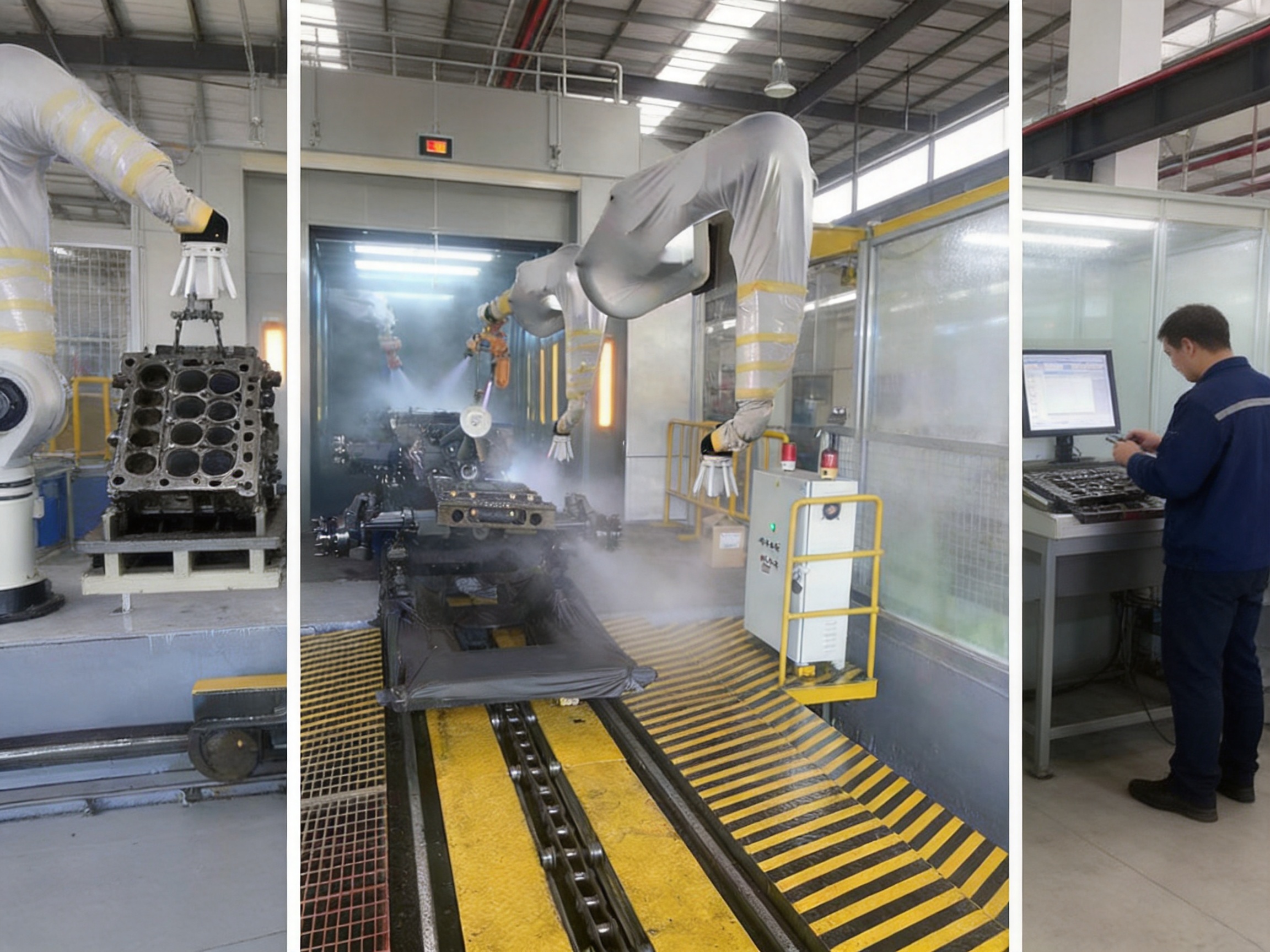
Successful installation requires more than placing equipment in the factory. The supplier and customer must confirm the foundation, building height, access routes, power supply, gas or fuel supply, compressed air, water, drainage, ventilation, fire protection, and environmental requirements.
During commissioning, the line is tested with representative workpieces and coating materials. Conveyor movement, fixture stability, spray coverage, booth airflow, oven temperature, exhaust purification, safety interlocks, and control logic are verified.
Trial production should evaluate the complete process rather than only the spraying stage. The customer should confirm that components can be loaded efficiently, masking can be completed within the target cycle time, the coating reaches difficult areas, curing is sufficient, and finished parts meet quality requirements.
Operator training normally covers equipment operation, recipe selection, safe loading, masking procedures, spray material handling, routine cleaning, filter replacement, alarm response, emergency shutdown, and basic troubleshooting. Maintenance personnel should receive additional training for conveyors, burners, fans, pumps, sensors, control cabinets, and exhaust treatment equipment.
Engine coating lines combine moving machinery, heated equipment, electrical systems, compressed air, coating chemicals, and exhaust gases. Safety must therefore be included in the design and operating procedures.
Important safety features may include emergency stop buttons, guarded moving parts, door interlocks, fire detection, temperature alarms, pressure monitoring, overload protection, grounding, ventilation monitoring, and safe access platforms.
Operators should use appropriate personal protective equipment based on the coating material and task. Safety data sheets should be available for paints, solvents, cleaning agents, powders, and other chemicals used in the process.
Regular cleaning is also a safety measure. Accumulated overspray, contaminated filters, solvent residue, and dust can increase fire risk and reduce equipment performance. Preventive maintenance schedules should define cleaning intervals, inspection points, replacement parts, and responsible personnel.
Buyers should avoid selecting equipment based solely on booth size or advertised automation level. The correct system must be matched to the actual product and production plan.
Prepare drawings, photographs, weight data, loading orientation, and critical masked areas for every component family. The largest and heaviest workpiece often determines the conveyor capacity, booth dimensions, fixture strength, and oven volume.
Required output should be expressed in components per hour, shifts per day, working days per year, and expected future growth. A line designed only for current demand may become a limitation if additional engine models or customers are introduced.
Confirm whether the system will use powder coating, wet paint, high-temperature enamel, ceramic-based coating, primer and topcoat, or a combination. Each material has different requirements for application, flash-off, drying, curing, filtration, and exhaust treatment.
Define acceptable film thickness, adhesion, appearance, gloss, color tolerance, corrosion resistance, thermal resistance, and chemical resistance. These requirements influence equipment precision and inspection methods.
Modular design is most valuable when expansion is considered in advance. Space and utility capacity can be reserved for additional spray guns, longer ovens, extra conveyor loops, automatic loading, or upgraded exhaust treatment.
The line can be configured for gasoline engine components, diesel engine components, electric vehicle motors and housings, industrial engines, agricultural machinery parts, construction equipment components, and maintenance or remanufacturing products. The fixture, spray system, and process parameters are adapted to the workpiece range.
Many body-panel coatings are not designed for sustained high temperatures, engine oil, coolant, vibration, or repeated thermal cycling. When used outside their intended conditions, they may discolor, soften, crack, lose adhesion, or degrade chemically. Engine components require coating materials selected for their actual operating environment.
Not necessarily, but any surface that must remain dimensionally accurate, electrically conductive, sealed, threaded, or free of coating should be protected. Typical examples include gasket faces, bolt holes, bearing seats, machined bores, oil passages, coolant passages, and grounding points.
Yes. Adjustable fixtures, programmable recipes, variable conveyor speeds, and suitable spray equipment allow one line to process multiple component models. The range of sizes and weights should be defined during the design stage so that the conveyor, booth, oven, and handling system are correctly sized.
Most heat-cured coatings require a dedicated curing oven or controlled baking zone. The oven provides the temperature and dwell time needed to complete the coating reaction. Drying and curing are not always the same process, so the equipment should follow the coating supplier’s technical requirements.
Yes. High-volume production can use robotic spray arms, automatic reciprocating machines, rotating fixtures, or coordinated multi-gun systems. Semi-automatic configurations are also available when product variety is high or production volume does not justify complete robotic handling.
It controls workpiece positioning, spray distance, material flow, conveyor speed, booth conditions, and curing parameters. Standardized recipes reduce variation between operators and production shifts. Automated movement is particularly helpful for cooling fins, curved sections, cavities, and repeated product models.
The answer depends on the coating chemistry, exhaust volume, solvent concentration, paint mist, operating schedule, and local environmental regulations. Possible technologies include dry filtration, wet scrubbing, activated carbon adsorption, catalytic treatment, thermal oxidation, or combinations of these methods.
Energy use can be reduced through effective oven insulation, zoned heating, variable-frequency drives, optimized exhaust airflow, heat recovery, infrared heating for suitable applications, automatic standby control, and production scheduling that avoids operating large equipment at very low loading.
Buyers should provide workpiece drawings or photographs, dimensions, weight, material, coating type, color requirements, target film thickness, curing temperature, production volume, working hours, factory layout, utility conditions, required automation level, environmental standards, and expected future expansion.
Yes. A modular or semi-automatic configuration can be adapted to lower-volume work, mixed product sizes, and variable loading. Additional preparation and inspection capacity may be useful because remanufactured components often arrive with different levels of contamination, corrosion, and previous coating damage.
Routine maintenance includes cleaning spray equipment, checking filters, inspecting pumps and hoses, verifying conveyor lubrication, checking burner and heater operation, calibrating temperature sensors, removing overspray, inspecting safety devices, and reviewing exhaust pressure. A preventive maintenance plan helps reduce unplanned downtime.
An engine spray coating line is more than a collection of painting machines. It is an integrated manufacturing system that combines surface preparation, controlled masking, precise spraying, reliable curing, automated conveying, quality inspection, and environmental protection.
Its main advantages over conventional manual spray stations include greater process consistency, improved coverage on complex engine geometry, lower repetitive labor requirements, better compatibility with multiple product models, more stable temperature and humidity conditions, improved energy management, and easier future expansion.
Jiangsu Yue Ze Environmental Protection Equipment Co., Ltd. combines customized engineering with manufacturing experience in coating lines, paint and bake booths, conveying systems, drying equipment, exhaust treatment, and other industrial environmental solutions. Its large production facility, integrated project capability, and experience with customized automated painting systems provide a foundation for developing engine coating equipment around specific customer requirements.
The most effective project begins with a clear definition of the workpiece range, coating chemistry, quality standard, production target, environmental requirement, and factory conditions. When these factors are evaluated together, the resulting line can deliver stable coating quality, efficient production, safer operation, and a practical path for long-term manufacturing development.
1. General principles of industrial spray coating system design and process integration.
2. Technical guidance for pretreatment, masking, spray application, drying, and curing of coated metal components.
3. Industrial coating manufacturer technical data sheets for high-temperature enamel, ceramic-based coatings, powder coatings, primers, and wet paint systems.
4. General manufacturing practices for automated conveyors, spray booths, curing ovens, and coating process control.
5. Occupational safety guidance for industrial painting, solvent handling, ventilation, heated equipment, and machine guarding.
6. Environmental engineering references concerning paint mist filtration, volatile organic compound treatment, exhaust ventilation, and industrial waste gas purification.
7. Product and company information supplied for the engine spray coating line and related industrial surface treatment equipment.
Professional spray coating line designed for engine manufacturing and maintenance, applicable to various engine types (gasoline engine, diesel engine, electric vehicle engine). Main types: engine bloc...
See Details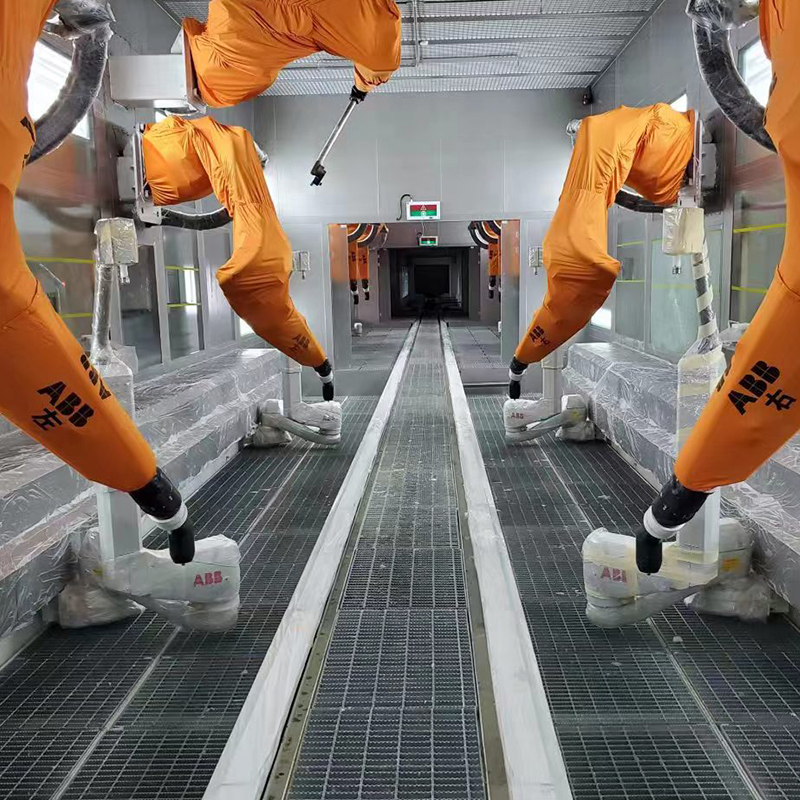
Professional spray coating line specially designed for motor casings, applicable to various motor casing types (electric vehicle motor casing, industrial motor casing, household motor casing, high-tem...
See Details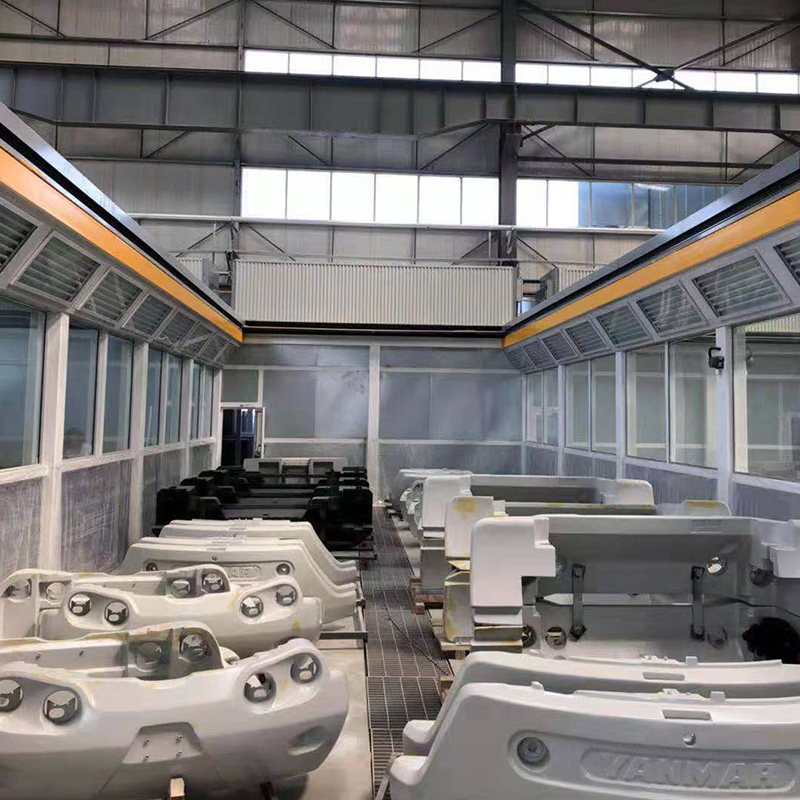
Professional spray coating line specially designed for car wheel manufacturing and refurbishment, applicable to various car wheel types (steel wheel, aluminum alloy wheel, forged wheel, cast wheel, pa...
See Details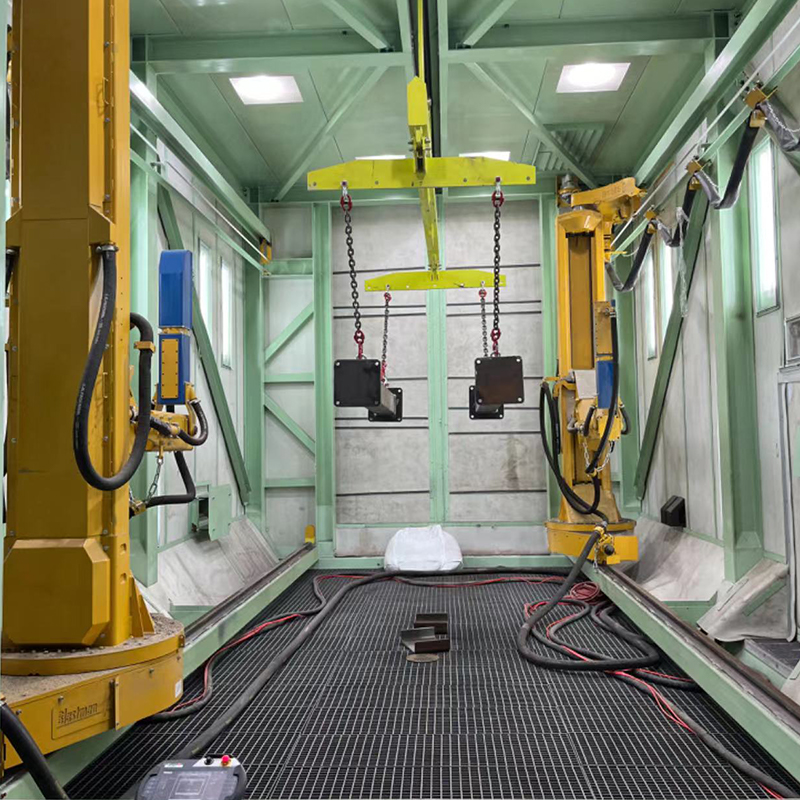
Professional coating line specially designed for large castings and heavy truck parts, applicable to various large castings (engineering castings, mining equipment castings, industrial castings) and h...
See Details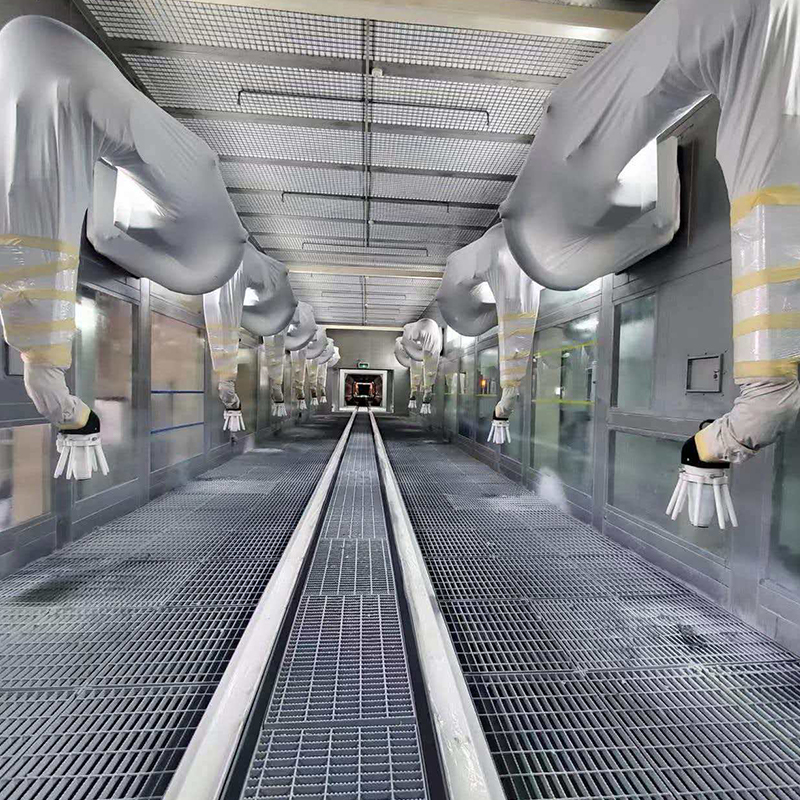
Professional spray coating line specially designed for car wheel manufacturing and refurbishment, applicable to various car wheel types (steel wheel, aluminum alloy wheel, forged wheel, cast wheel, pa...
See Details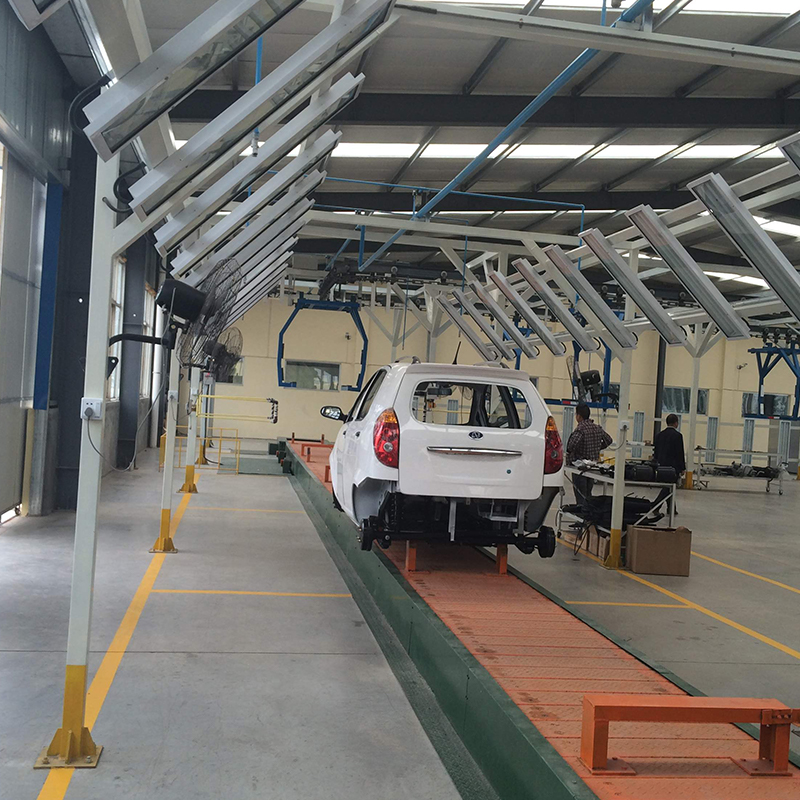
Professional electrophoresis coating line specially designed for electric vehicles (EVs), applicable to various EV types (passenger EV, commercial EV, new energy logistics vehicle) and EV components. ...
See DetailsBuild Your Customized Industrial Coating System
Send us your workpiece information, production capacity, coating process, workshop layout, and environmental requirements. Yueze will help evaluate your project and develop a suitable coating, conveying, drying, and environmental treatment solution.
Main menu
Products
Contact Us
Company Address:
No. 12, Park Avenue, Shanggang Industrial Park, Jianhu, Yancheng City, Jiangsu Province
Message Us Right Now!

Follow us: