
 русский
 عربى
 Tiếng Việt

Platform Cart is a practical and efficient industrial handling equipment, widely used in factories, workshops, warehouses, logistics centers, and other places. It is composed of a sturdy load-bearing ...
See Details
Yueze Environmental Protection provides one-stop compliant industrial surface treatment solutions with professional tech and fine craftsmanship.
 Get Inquiries
2026-10-20
Content
Industrial production depends on safe, predictable, and efficient movement of materials. Even in highly automated factories, there are always components, pallets, molds, finished products, tools, and irregularly shaped workpieces that cannot be transported economically by a fixed conveyor. A heavy-duty platform cart provides a practical solution for these handling requirements by combining a reinforced load-bearing platform, a stable frame, durable casters, and a user-oriented operating design.
Designed for factories, coating workshops, warehouses, logistics centers, assembly plants, and maintenance areas, the platform cart supports loads from approximately 500 kilograms to 5,000 kilograms. Its open platform allows users to transport goods of different shapes and sizes, while optional swivel, fixed, and brake casters provide a suitable balance between mobility and positioning stability. The platform surface, frame finish, dimensions, handrail configuration, and load rating can also be customized according to the application.
For coating and surface-treatment operations, this flexibility is especially valuable. A cart can move workpieces between pretreatment, coating, drying, inspection, packaging, and temporary storage areas without requiring every handling route to follow a permanent conveyor. It can also support oversized or irregular components that are difficult to hang or place on standard automated conveying equipment.
This article explains the construction, advantages, applications, selection criteria, customization options, manufacturing strengths, maintenance requirements, and frequently asked questions associated with industrial platform carts.
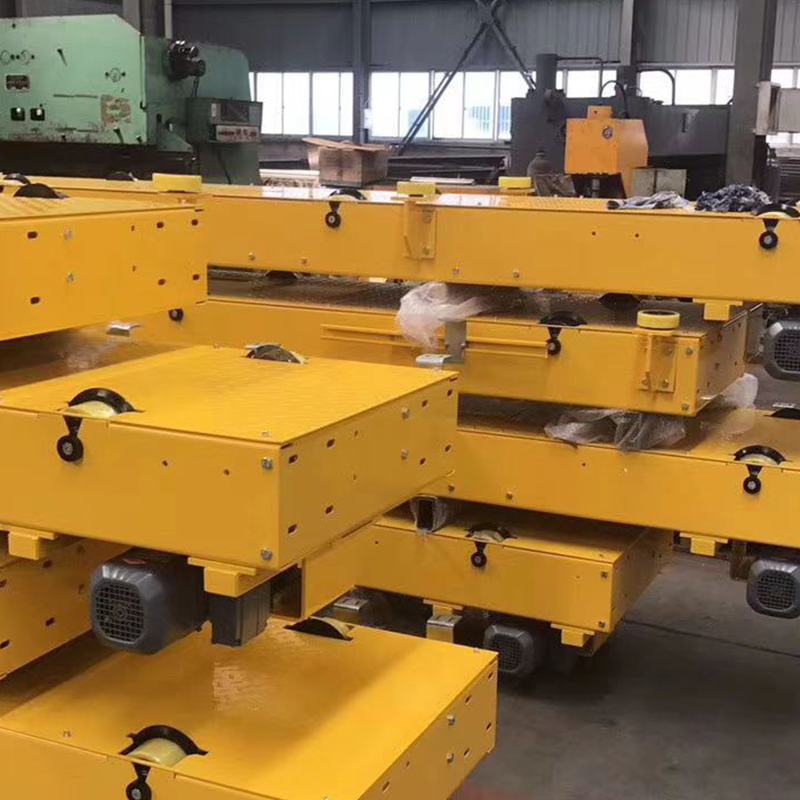
Platform Cart
An industrial platform cart is a mobile material-handling unit consisting of a flat load-bearing platform, a supporting frame, wheels or casters, and, where required, a handrail or locking mechanism. It is used to transport products and materials across a factory or warehouse floor with less manual lifting and carrying.
Unlike a simple hand trolley, a platform cart offers a broad, stable loading area. This makes it suitable for cartons, material boxes, workpieces, molds, tools, pallets, counterweight blocks, coated parts, and other items that need to remain supported during movement. The platform may be designed as a single-level, double-level, or multi-level structure, depending on the available workspace and the type of goods being transported.
The cart can be pushed manually for short-distance movement or integrated into a broader material-handling arrangement in which operators use it alongside conveyors, lifting equipment, production stations, and storage systems. It is not intended to replace every conveyor or automated vehicle. Instead, it fills the important gap between fixed-path automation and completely manual handling.
In a coating workshop, for example, a platform cart may be used to transport parts from a grinding room to a pretreatment station, from a spray booth to a drying area, or from final inspection to packaging. In a warehouse, it can move material boxes between storage locations and picking areas. In an assembly plant, it can supply components to workstations while keeping the load at a convenient working height.
The frame is the foundation of the cart. A heavy-duty design uses a thickened steel structure and integral welding to provide strength, dimensional stability, and resistance to deformation under repeated loads. The frame must distribute the load evenly across the platform and transfer the force safely to the caster mounting points.
Compared with lightly constructed utility carts, a reinforced industrial frame is better suited to heavy workpieces and demanding workshop environments. It can maintain its shape during loading, transportation, and unloading, provided that the cart is operated within its specified capacity and on a suitable floor surface.
Welded construction also reduces the number of loose joints that could require regular tightening. Critical areas, including platform supports, handle connections, and caster brackets, can be strengthened according to the expected load and operating conditions.
The platform gives the operator a flat and stable area on which to place products. A broad platform can accommodate different product dimensions without requiring a dedicated fixture for every item. This is useful when a workshop handles several product models, changes production schedules frequently, or transports irregularly shaped workpieces.
Surface treatment can be selected according to the application. A standard durable surface may be sufficient for general warehouse handling, while an anti-slip surface can improve load stability during movement. A wear-resistant platform helps withstand repeated loading and unloading, and a corrosion-resistant finish is appropriate for humid workshops or areas exposed to cleaning agents, overspray, and industrial dust.
When finished or freshly coated components are transported, the platform may be fitted or covered with a non-marring material to reduce the risk of scratches, pressure marks, and surface contamination. The selected material should be compatible with the coating system, cleaning process, and temperature conditions in the workshop.
Casters have a direct effect on the cart’s movement, turning radius, stability, and service life. The available configurations include fixed casters, swivel casters, and brake casters. A combination of fixed and swivel casters may be used to balance directional stability with maneuverability.
Swivel casters allow the cart to change direction in confined spaces and are useful where operators must move around workstations, columns, booths, or storage racks. Fixed casters guide the cart along a more predictable route and may be beneficial when straight-line movement is frequent. Brake casters allow the cart to remain stationary during loading, unloading, staging, or inspection.
Caster selection must be based on more than the total product weight. The calculation should consider the cart’s own weight, uneven loading, floor joints, ramps, thresholds, movement frequency, and the number of casters that may carry the load at a given moment. Caster diameter, wheel material, bearing construction, and mounting strength also influence the effort required to push the cart.
A heightened non-slip handrail gives the operator a secure grip and helps maintain control during pushing and pulling. Its height and shape should support a natural working posture without obstructing access to the platform.
For carts used in busy workshops, the handrail can also help define the operating area and reduce the chance of the operator’s hands contacting the load. An edge-protection or anti-collision design can protect the cart, nearby walls, equipment, and personnel when the cart is maneuvered in narrow aisles.
Movement is only one part of safe handling. The cart must also remain stable when it is stopped. Brake casters or other locking mechanisms prevent unwanted rolling during loading, unloading, inspection, or stationary processing steps.
A brake should be engaged whenever the cart is parked on a slight slope, positioned beside a machine, or used as a temporary staging platform. The operator should confirm that the brakes are fully engaged before placing heavy or unstable items on the platform.
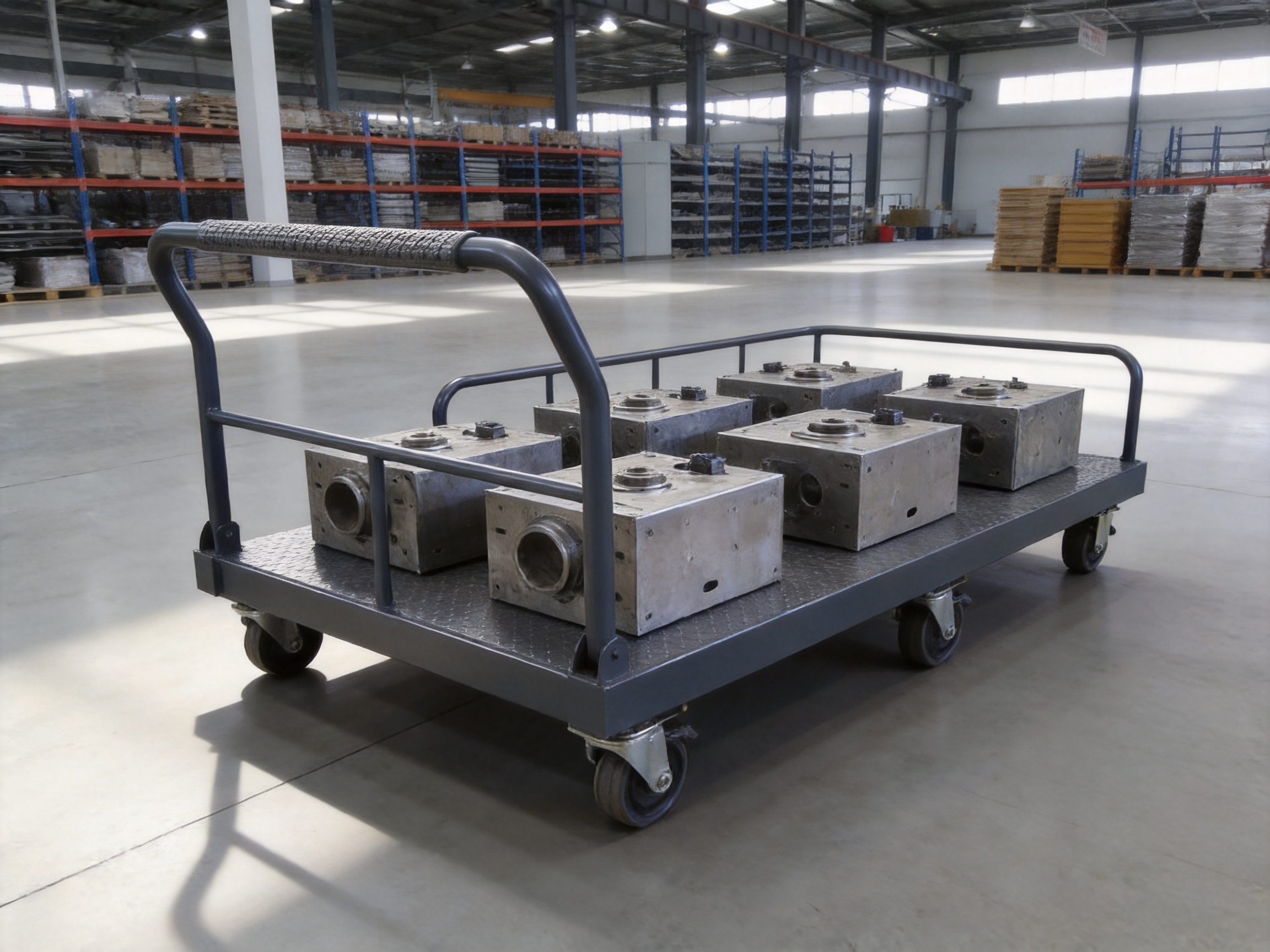
Many basic utility carts are designed for light warehouse items or office-style transport. They may not provide the frame thickness, caster rating, or platform reinforcement required for heavy industrial parts. A heavy-duty platform cart is engineered for substantially greater loads, with typical capacities ranging from 500 kilograms to 5,000 kilograms depending on the configuration.
This higher capacity allows a facility to move more material in one trip, reducing repeated handling and improving the utilization of labor. It also makes the cart suitable for molds, metal workpieces, counterweight components, pallets, and equipment parts that would be unsafe to carry manually.
A fixed conveyor provides efficient and repeatable transport along a defined path, but it may be less practical when the product mix changes or when workpieces need to move temporarily outside the main production route. Installing a new conveyor route can require structural modifications, additional controls, floor space, and production downtime.
A platform cart can be positioned where it is needed. It can support temporary staging, route changes, seasonal production adjustments, and new product introductions without modifying the permanent line infrastructure. This makes it especially useful for factories that combine automated production lines with manual or semi-automated operations.
The cart does not compete with a conveyor in every application. Instead, it complements fixed conveying equipment by handling exceptions, oversized parts, short-distance transfers, and movements between separate production areas.
Standard hanging conveyors work well when parts have suitable suspension points and consistent dimensions. However, some components are too large, too heavy, asymmetrical, or difficult to hang. A platform cart supports these products from below and provides a stable base during transport.
For coated parts, the platform may be adapted to minimize contact with critical surfaces. For parts requiring inspection, the cart can act as a mobile staging base. For products that must remain separated, optional layers, dividers, or customized supports can be incorporated into the design.
Manual lifting and carrying create risks related to excessive weight, awkward postures, dropped products, and collisions. A platform cart keeps the load supported while it is moved across the floor. The operator can push or pull the cart using the handrail rather than carrying the entire load.
Brake casters, non-slip platform options, reinforced edges, and controlled maneuverability further improve operational safety. Safe use still depends on correct loading, balanced weight distribution, suitable floor conditions, and compliance with the cart’s rated capacity.
A platform cart generally requires less permanent infrastructure than an automated conveyor or guided vehicle system. It does not need a continuous track, extensive control wiring, or a dedicated route throughout the facility. This can make it a cost-effective choice for low- to medium-volume handling, flexible production cells, maintenance areas, and facilities that are still developing their layout.
The lower infrastructure requirement can also simplify future changes. If a workstation is relocated, the cart can be moved with the operation rather than abandoned as part of a fixed route.
Coating workshops often include several process stages with different equipment requirements. Typical stages may include grinding, cleaning, pretreatment, drying, primer application, topcoat application, curing, inspection, and packaging. The dimensions and handling requirements of workpieces may vary significantly from one order to another.
A platform cart provides a flexible connection between these stages. It can move parts that do not fit the hanging system, collect products from a manual booth, support parts during inspection, or transfer finished items to a temporary storage area. This reduces the need for repeated lifting and helps keep the workshop organized.
The cart’s finish is particularly important in coating environments. Overspray, cleaning chemicals, moisture, and abrasive dust may accelerate corrosion on unprotected steel. An electrostatic spraying finish or galvanized finish can improve resistance to rust and corrosion when properly specified for the operating environment.
The platform should also be easy to clean. An integrated structure with accessible surfaces reduces the accumulation of dust, powder, and coating residue. Regular cleaning helps maintain the cart’s appearance, protects the platform surface, and reduces the possibility of transferring contamination to finished products.
When carts are used near ovens or drying systems, the operating temperature must be reviewed before use. A standard cart is not automatically suitable for direct exposure to elevated temperatures. If the cart must enter a heated process area, the frame finish, wheel material, lubricants, and platform components should be selected for that temperature range.
Automotive counterweights, machinery housings, fabricated steel parts, and other large components may be difficult to place on standard conveyors. A customized platform cart can provide the required footprint and load rating while allowing the item to be moved between preparation and coating stations.
For these applications, the design should address the center of gravity, contact points, turning clearance, and access for coating equipment. A broad platform is not enough by itself; the load must also be prevented from shifting during movement.
Production flow is not always continuous. Parts may need to wait for inspection, rework, drying, quality approval, or packaging. A cart can serve as a mobile staging platform, making it easier to identify and reposition groups of parts without placing them directly on the floor.
For inspection operations, a cart at a comfortable working height may reduce bending and repeated lifting. It can also be moved to a better-lit area or positioned near measurement equipment as required.
In a modern coating facility, platform carts may operate alongside automated conveying systems, intelligent coating lines, drying systems, paint booths, and environmental protection equipment. The cart handles flexible or exceptional movements, while the fixed line provides repeatable transport for standardized products.
This combination helps a facility avoid forcing every product through one transport method. Standard parts can follow the automated route, while non-standard parts can be handled on carts without disrupting the main line.
Different industries and workshops require different cart configurations. The main options include the platform dimensions, load rating, caster arrangement, surface finish, handle design, number of levels, and special supports.
A fixed platform cart has a permanent, rigid structure and is suitable for routine movement of heavy goods. It is generally selected when the cart is used frequently and storage space is not a major limitation.
A folding platform truck or folding platform cart can reduce the space required for storage when it is not in use. This is useful in workshops with narrow aisles, limited staging zones, or fluctuating production requirements. The folding mechanism must be robust and securely locked during operation.
Two-level or multi-level designs make better use of vertical space and can separate different products, tools, or process batches. They are suitable for smaller components, material boxes, and parts that can be stacked with adequate clearance.
Multi-layer designs must be checked for stability, especially when the upper levels are loaded with dense or heavy items. The height of the cart, the position of the center of gravity, and the route conditions should be considered before selecting this configuration.
Platform dimensions should be matched to the product footprint rather than selected solely according to available floor space. The platform should provide adequate support without becoming so large that it is difficult to maneuver through doors, aisles, booths, or production cells.
Clearance from walls, machines, columns, racks, and other carts should be considered. If the cart will turn in a confined area, its overall length, width, handle projection, and caster arrangement should be reviewed together.
Common surface requirements include anti-slip performance, wear resistance, scratch resistance, pressure resistance, corrosion resistance, and ease of cleaning. The most appropriate option depends on the load, environment, and required product protection.
Electrostatic spraying and galvanized finishes can help protect the steel structure. The selected coating should be compatible with the humidity, chemicals, abrasion, and cleaning procedures present in the facility.
| Application | Recommended Configuration | Main Selection Considerations | Typical Benefit |
|---|---|---|---|
| Small and medium components | Compact platform with standard or swivel casters | Platform size, maneuverability, and operator access | Fast movement between nearby workstations |
| Heavy workpieces | Reinforced frame with heavy-duty casters | Total weight, load distribution, and floor condition | Stable transport of high-load products |
| Oversized or irregular parts | Large customized platform with additional supports | Center of gravity, contact points, and turning clearance | Handling products unsuitable for hanging conveyors |
| Finished or freshly coated parts | Non-marring or protective platform surface | Surface compatibility, cleanliness, and scratch prevention | Reduced risk of coating damage |
| Limited storage areas | Folding or compact configuration | Folded dimensions, locking structure, and storage location | Improved use of floor space |
| Parts requiring separation | Double-layer or multi-layer platform | Vertical clearance, stability, and upper-level loading | Higher handling capacity in a smaller footprint |
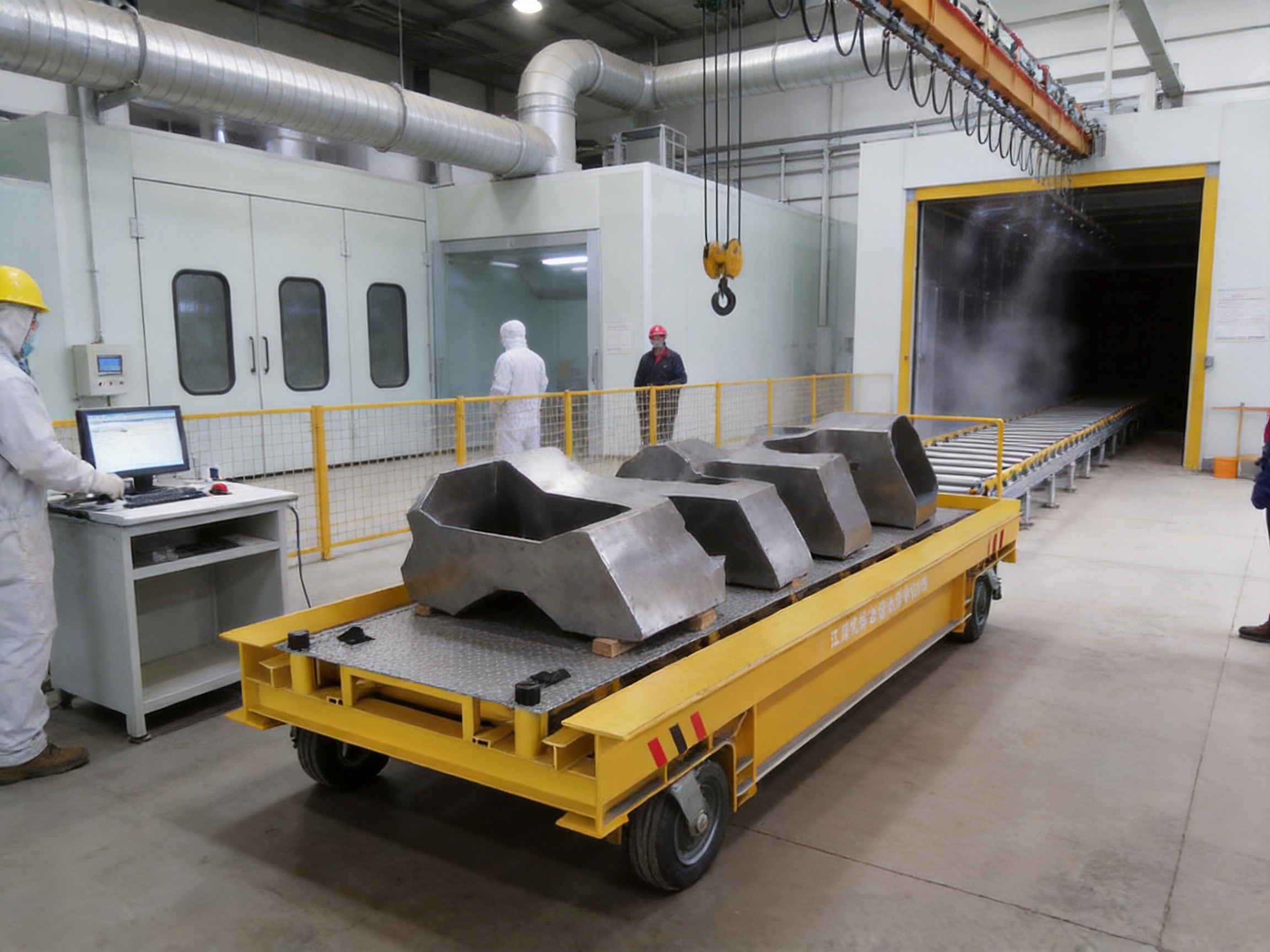
The performance of a platform cart depends on the quality of its design and manufacturing process. A cart may appear simple, but frame deformation, weak caster brackets, poor weld quality, unsuitable surface treatment, and incorrect load assumptions can reduce its service life and create safety risks.
Jiangsu Yue Ze Environmental Protection Equipment Co., Ltd. is located in Yancheng, Jiangsu, China, and covers approximately 35,000 square meters with registered capital of 58 million yuan. With more than 40 years of experience, the company provides equipment for industrial surface treatment, coating production, conveying, drying, environmental protection, and related manufacturing applications.
This broader engineering background is valuable when designing a platform cart for a coating workshop. The cart can be considered as part of the complete material flow rather than as an isolated product. Its dimensions, load capacity, surface finish, and movement pattern can be reviewed in relation to pretreatment equipment, spray booths, drying systems, inspection areas, conveyors, and waste gas treatment arrangements.
A reliable manufacturing process begins with understanding the application. Important information includes the maximum load, average load, product dimensions, center of gravity, movement frequency, floor type, aisle width, turning space, environmental conditions, and whether the cart will be used near chemicals or elevated temperatures.
For coating operations, the design review may also include the type of coating material, possible overspray exposure, cleaning methods, finished-surface protection, and compatibility with the existing production line. This application-based approach helps avoid selecting a generic cart that does not match the actual operating conditions.
Steel members are cut, formed, fitted, and welded to create the platform and support frame. Integral welding helps produce a rigid structure and reduces dependence on numerous bolted connections. Welding quality is important at load-bearing joints, caster supports, handle mounting points, and platform reinforcements.
After welding, the structure should be checked for alignment, flatness, dimensional accuracy, and visible defects. A platform that is not level or a frame that is not square can affect caster contact, pushing effort, and load stability.
Surface preparation and finishing protect the frame from rust and improve its suitability for industrial use. Depending on the specified option, the cart may receive an electrostatic sprayed finish or galvanized protection. The process should provide consistent coverage, especially around welds, corners, mounting points, and areas that may collect moisture.
A properly prepared surface also improves coating adhesion and supports easier cleaning. The finish should be inspected for uniformity, exposed steel, peeling, rough edges, and other conditions that could affect service life or operator safety.
Caster mounting requires accurate positioning and secure fastening. The caster type, wheel material, bearing arrangement, and load rating must correspond to the application. Brake casters should be tested for both engagement and release, while swivel casters should rotate smoothly without excessive looseness.
Functional inspection may include unloaded rolling, turning, braking, platform stability, and representative load testing. The cart should be examined for unusual noise, excessive resistance, frame flexing, or caster interference during movement.
The company’s experience with complete coating production lines and automated conveying systems supports customized solutions. A platform cart can be developed to operate beside existing production equipment, fit within a specific facility layout, or support a particular part family.
Customization may include special platform dimensions, increased load capacity, fixed or swivel caster combinations, brake casters, multiple layers, folding structures, special handrails, protective surfaces, edge guards, and product-specific supports. The goal is to provide an appropriate handling tool rather than a one-size-fits-all cart.
Production efficiency is affected by more than machine speed. Unnecessary lifting, repeated trips, waiting for available equipment, and disorganized staging can create hidden delays. A properly configured platform cart addresses these issues by making material movement more predictable and reducing the effort required for short-distance transfers.
When parts are grouped on a cart, operators can transport a larger batch in one movement. When the cart is positioned close to the next process, walking distance and handling time can be reduced. When several carts are assigned to different process stages, products can be separated by order, coating type, inspection status, or delivery priority.
The cart can also support leaner workshop organization. Dedicated parking locations, clear labeling, and defined traffic routes help prevent carts from obstructing aisles or equipment. A consistent cart height and platform size can make it easier to transfer parts between manual workstations.
In a flexible production environment, the cart provides a way to respond to changing demand without investing immediately in permanent infrastructure. It can be reassigned to a different product line, moved to a new workstation, or used during equipment maintenance and line modification.
Before operation, the user should confirm that the total load is within the rated capacity and that the load is distributed evenly. Heavy items should be placed near the center of the platform, with the center of gravity kept as low as practical. Loads should not extend so far beyond the platform that they create a collision or tipping risk.
The route should be checked for floor damage, oil, water, powder, obstacles, ramps, thresholds, and other conditions that may affect movement. Operators should maintain clear visibility and use a spotter when the load blocks the forward view or when the cart is moved through a congested area.
Brakes should be engaged during loading, unloading, and stationary work. The cart should not be pushed beyond the operator’s ability to control it, especially on sloped floors. Sudden starts, sharp turns, and excessive speed should be avoided.
Routine inspections should cover casters, brakes, welds, platform surfaces, handles, fasteners, edge protection, and signs of corrosion or deformation. Any cart showing structural damage, unusual movement, or brake failure should be removed from service until it has been inspected and repaired.
Regular maintenance helps preserve the cart’s mobility and load-bearing performance. Cleaning should remove dust, powder, overspray, grease, metal chips, and other residues from the platform and frame. Particular attention should be given to caster wheels and swivel assemblies, where debris can increase rolling resistance.
Fasteners and caster mounting points should be checked periodically. If the design includes lubrication points, the correct lubricant should be applied according to the operating environment. Lubricants should not be allowed to contaminate coating surfaces or attract excessive dust.
Painted or galvanized surfaces should be inspected for scratches, exposed steel, peeling, and corrosion. Minor damage should be repaired promptly to prevent the affected area from expanding. In chemically aggressive environments, the inspection frequency may need to be increased.
The platform should remain flat and free from unauthorized modifications. Drilling new holes, removing frame members, welding attachments, or increasing the load beyond the original specification can affect the structural integrity of the cart.
When comparing suppliers, buyers should evaluate more than the catalog price. The manufacturer should be able to explain the load calculation, caster selection, platform construction, surface treatment, customization process, inspection methods, and after-sales support.
Experience in related industrial equipment is an advantage because platform carts are often used as part of a wider material flow. A supplier familiar with coating lines, conveyors, booths, drying equipment, and environmental systems can better understand how the cart will interact with existing operations.
Manufacturing capability is also important for custom projects. The supplier should have the engineering and fabrication resources needed to adjust dimensions, strengthen the frame, modify the caster arrangement, create special supports, and provide the required finish. Clear communication about drawings, working conditions, delivery requirements, and installation responsibilities helps reduce project risk.
Jiangsu Yue Ze Environmental Protection Equipment Co., Ltd. provides integrated research and development, manufacturing, installation, and customized equipment services. Its product experience includes powder coating lines, electric vehicle assembly lines, automotive counterweight spray lines, paint and bake booths, large-part grinding rooms, waste gas treatment equipment, infrared radiation drying systems, automated conveying systems, intelligent coating lines, and other environmental protection equipment.
The company pioneered a hanging automatic painting process line for casting counterweight blocks in 2014. This process covered finishing and polishing through primer and topcoat application. Such experience in complete process coordination supports the development of handling equipment that is appropriate for real production environments rather than limited to standalone workshop use.
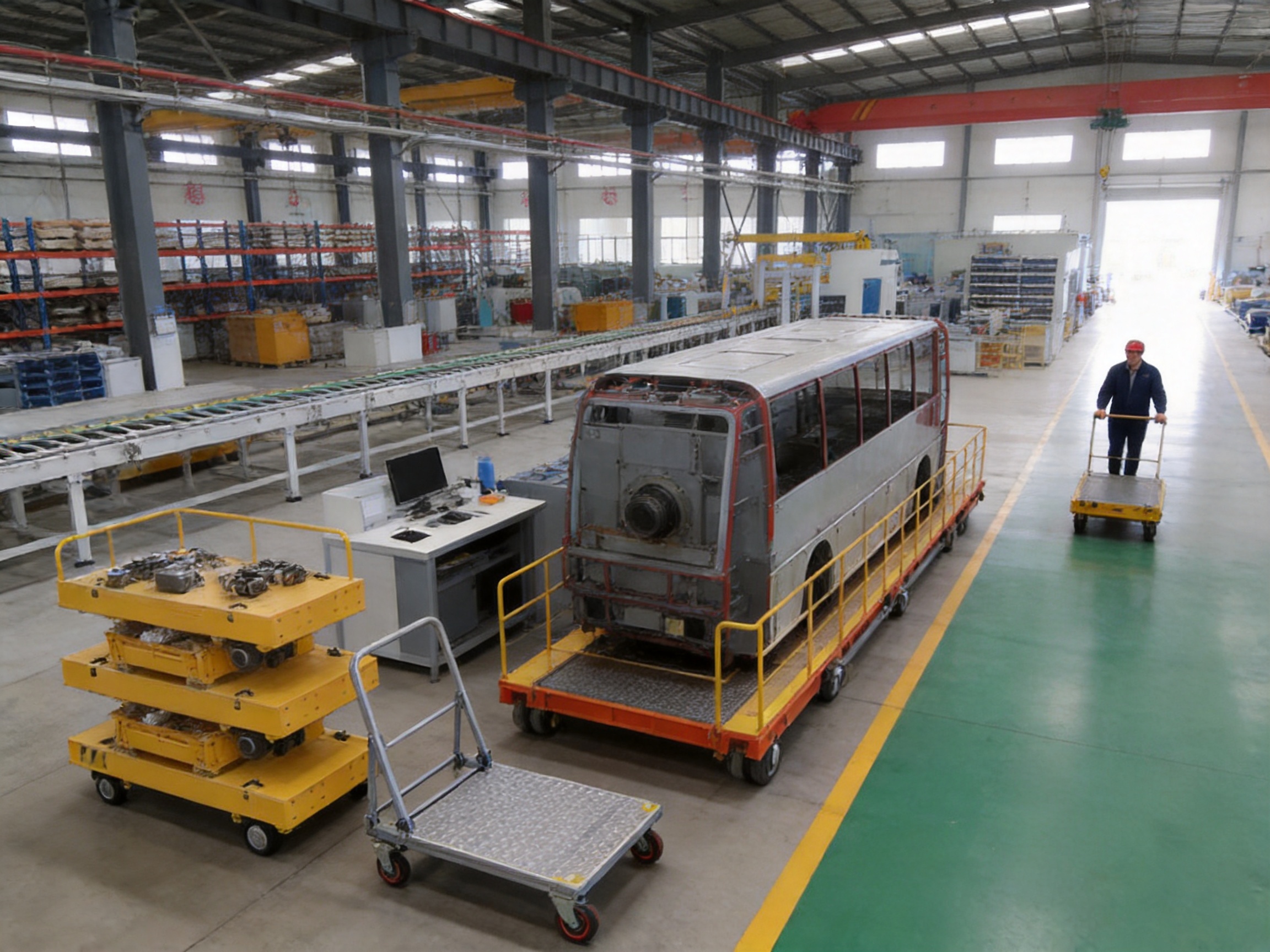
The stated load range is approximately 500 kilograms to 5,000 kilograms. The actual safe capacity depends on the frame, platform structure, caster rating, load distribution, floor conditions, and operating method. The required capacity should be confirmed for the specific application before production.
Yes. A customized platform cart can be designed for oversized or irregularly shaped components that are difficult to place on a standard hanging conveyor. The design should consider platform dimensions, the product’s center of gravity, contact points, turning clearance, and the need to prevent shifting during movement.
A platform cart is particularly useful when the route changes frequently, when temporary staging is required, when products do not fit a standard conveyor, or when the facility needs a lower-infrastructure handling solution. A conveyor is generally more suitable for high-volume, repeatable movement along a permanent route. Many facilities use both systems together.
Fixed casters, swivel casters, and brake casters are available. Fixed casters support predictable straight-line movement, swivel casters improve maneuverability, and brake casters help secure the cart during loading, unloading, and stationary operations. A mixed configuration may be selected for a balance of control and flexibility.
Yes. The platform can be specified with characteristics such as anti-slip performance, wear resistance, scratch resistance, pressure resistance, corrosion resistance, or non-marring contact. The appropriate surface depends on the load, workshop environment, coating process, and requirements for finished-part protection.
A folding cart can be suitable for heavy-duty use if the folding structure, locking mechanism, frame, and casters are designed and rated for the required load. The folded dimensions should also be checked to ensure that the storage benefit is meaningful in the available space.
Yes, provided that the frame finish, platform surface, and maintenance practices are suitable for exposure to overspray, powder, cleaning chemicals, and humidity. The cart should be cleaned regularly, and the selected finish should be reviewed for compatibility with the environment.
Use near elevated-temperature equipment requires a specific review. Standard wheels, lubricants, coatings, and platform materials may not be suitable for direct high-temperature exposure. If the cart must enter a heated area, the temperature range and component suitability should be confirmed during design.
Useful information includes the maximum and average load, product dimensions, center of gravity, platform size, required cart height, movement distance, floor condition, aisle width, caster preference, brake requirements, surface finish, number of levels, folding requirements, and environmental conditions.
The cart supports the load during transportation, reducing the need for operators to lift and carry heavy or awkward products. A stable platform, suitable casters, an ergonomic handrail, and brakes can make movement more controlled. Operators must still follow safe loading and operating procedures.
Inspection frequency depends on usage intensity and environmental conditions. High-use carts or carts exposed to chemicals, moisture, abrasive dust, or heavy loads should be checked frequently. At a minimum, operators should examine the cart before use and report damaged casters, failed brakes, deformed frames, loose fasteners, or severe corrosion.
Yes. It can operate as a complementary handling device beside an automated line. Standardized products may remain on the conveyor while oversized parts, rework items, inspection batches, and temporary storage loads are moved by cart. The cart dimensions and route should be coordinated with the line layout.
A heavy-duty platform cart is a flexible and practical solution for industrial material handling. Its reinforced frame, stable platform, durable casters, optional brakes, protective finishes, and customizable configuration make it suitable for factories, warehouses, coating workshops, logistics centers, and production lines.
Compared with basic carts, it offers greater load capacity, improved stability, better support for irregular workpieces, and stronger adaptability to demanding industrial environments. Compared with fixed conveyors, it provides route flexibility and requires less permanent infrastructure. In coating operations, it can help connect process stations, transport oversized components, protect finished parts, and create organized temporary staging areas.
The best results come from selecting the cart as part of the complete workflow. Load capacity, caster arrangement, platform surface, dimensions, braking, floor conditions, product geometry, and environmental exposure should all be reviewed before manufacture. A supplier with experience in coating lines, conveying systems, drying equipment, and environmental protection can provide a more complete engineering perspective.
With more than 40 years of experience in industrial surface-treatment and environmental equipment, Jiangsu Yue Ze Environmental Protection Equipment Co., Ltd. offers customized manufacturing, integrated engineering, installation, and equipment solutions. Its platform cart capabilities can support both standalone handling requirements and broader coating production line projects.
1. Industrial material-handling equipment design principles, including load distribution, caster selection, ergonomic movement, and workplace layout considerations.
2. General manufacturing practices for welded steel frames, platform structures, caster mounting, surface preparation, and corrosion-resistant finishing.
3. Powder coating and industrial surface-treatment process requirements related to pretreatment, spraying, drying, curing, inspection, and finished-part handling.
4. Workplace safety principles for manual pushing and pulling, load stability, brake use, route inspection, and equipment maintenance.
5. Product and company information supplied for the industrial platform cart, customized coating production line equipment, conveying systems, drying systems, and environmental protection equipment.
Platform Cart is a practical and efficient industrial handling equipment, widely used in factories, workshops, warehouses, logistics centers, and other places. It is composed of a sturdy load-bearing ...
See Details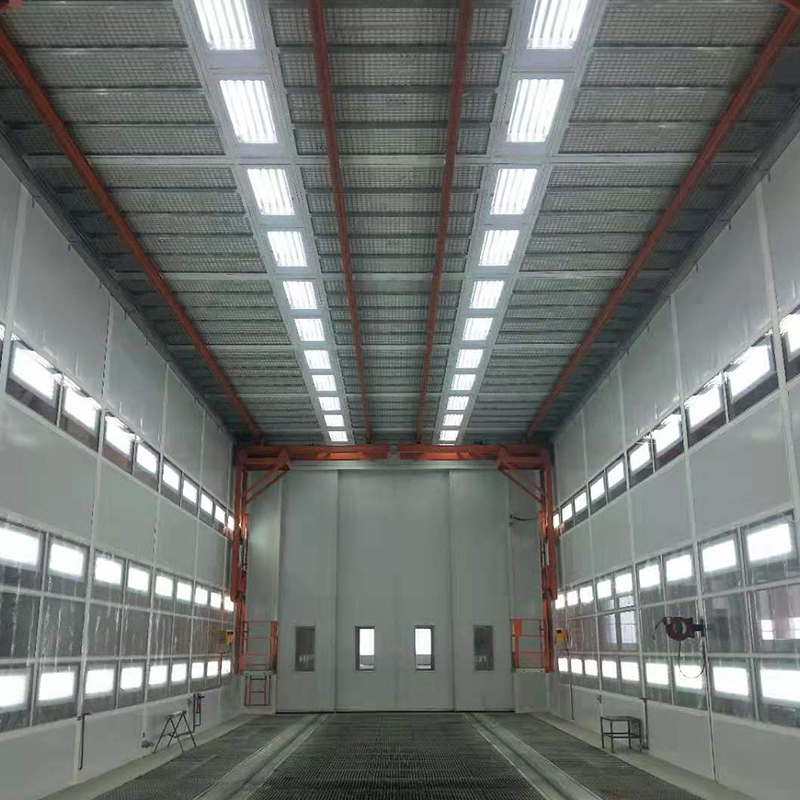
Heavy vehicle spray booth is a large-scale professional coating workshop, specially designed for oversize and heavy equipment. With powerful air circulation, heating system, and multi-stage exhaust fi...
See Details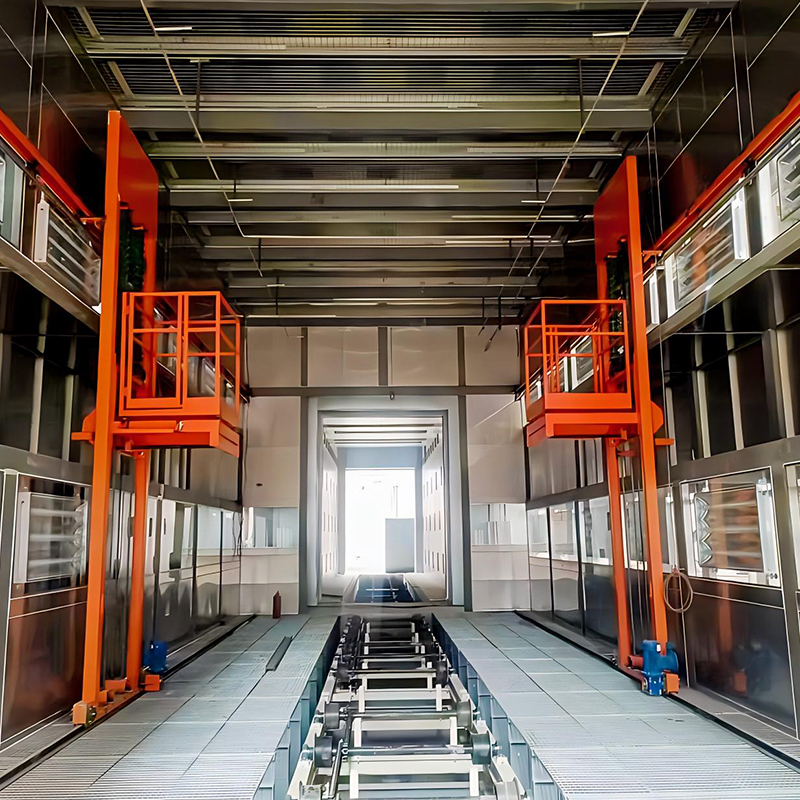
3-axis platform lifts feature three-dimensional movement of X, Y, and Z axes. Flexible positioning, stable lifting, and precise operation. Suitable for multi-angle operation and workpiece docking in i...
See Details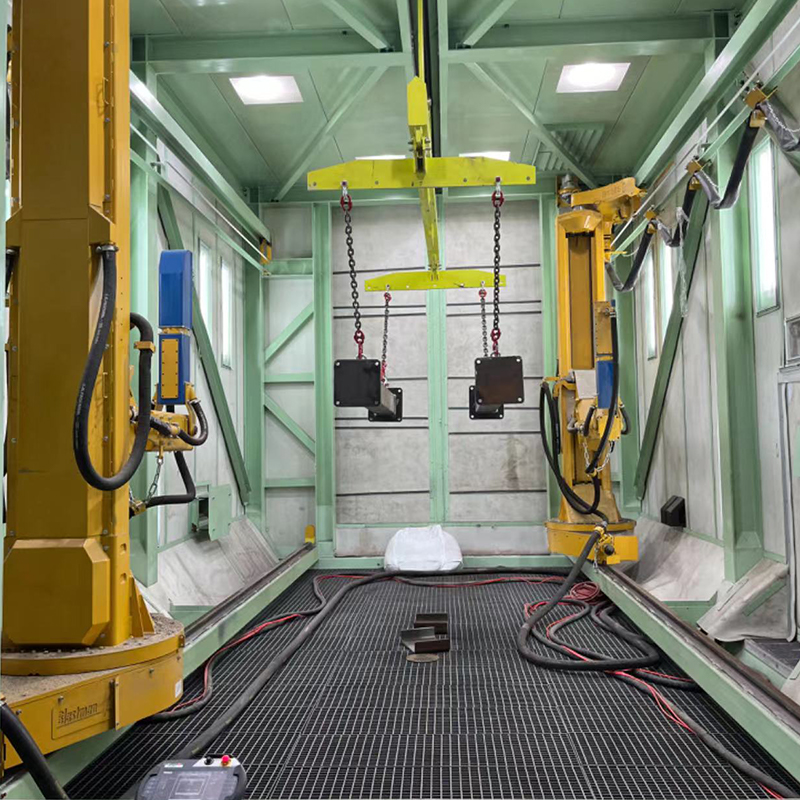
Professional coating line specially designed for large castings and heavy truck parts, applicable to various large castings (engineering castings, mining equipment castings, industrial castings) and h...
See Details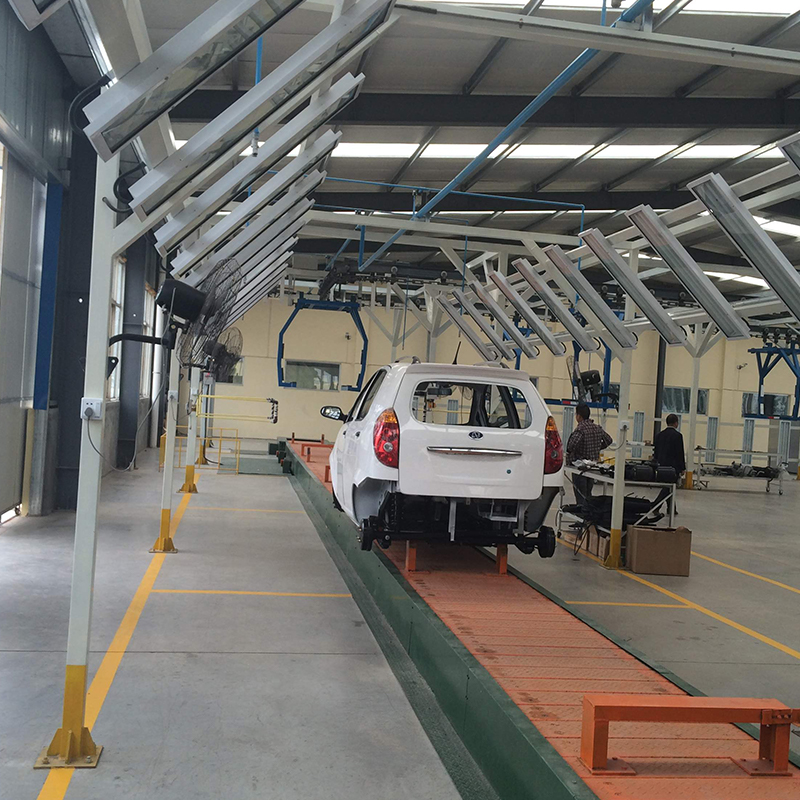
Professional electrophoresis coating line specially designed for electric vehicles (EVs), applicable to various EV types (passenger EV, commercial EV, new energy logistics vehicle) and EV components. ...
See Details
Professional electrophoresis line specially designed for truck cab manufacturing and refurbishment, applicable to various truck cab types (heavy-duty truck cab, light-duty truck cab, pickup cab, comme...
See DetailsBuild Your Customized Industrial Coating System
Send us your workpiece information, production capacity, coating process, workshop layout, and environmental requirements. Yueze will help evaluate your project and develop a suitable coating, conveying, drying, and environmental treatment solution.
Main menu
Products
Contact Us
Company Address:
No. 12, Park Avenue, Shanggang Industrial Park, Jianhu, Yancheng City, Jiangsu Province
Message Us Right Now!

Follow us: