
 русский
 عربى
عربى
 Tiếng Việt

3-axis platform lifts feature three-dimensional movement of X, Y, and Z axes. Flexible positioning, stable lifting, and precise operation. Suitable for multi-angle operation and workpiece docking in i...
See Details
Yueze Environmental Protection provides one-stop compliant industrial surface treatment solutions with professional tech and fine craftsmanship.
 Get Inquiries
2026-08-17
Content
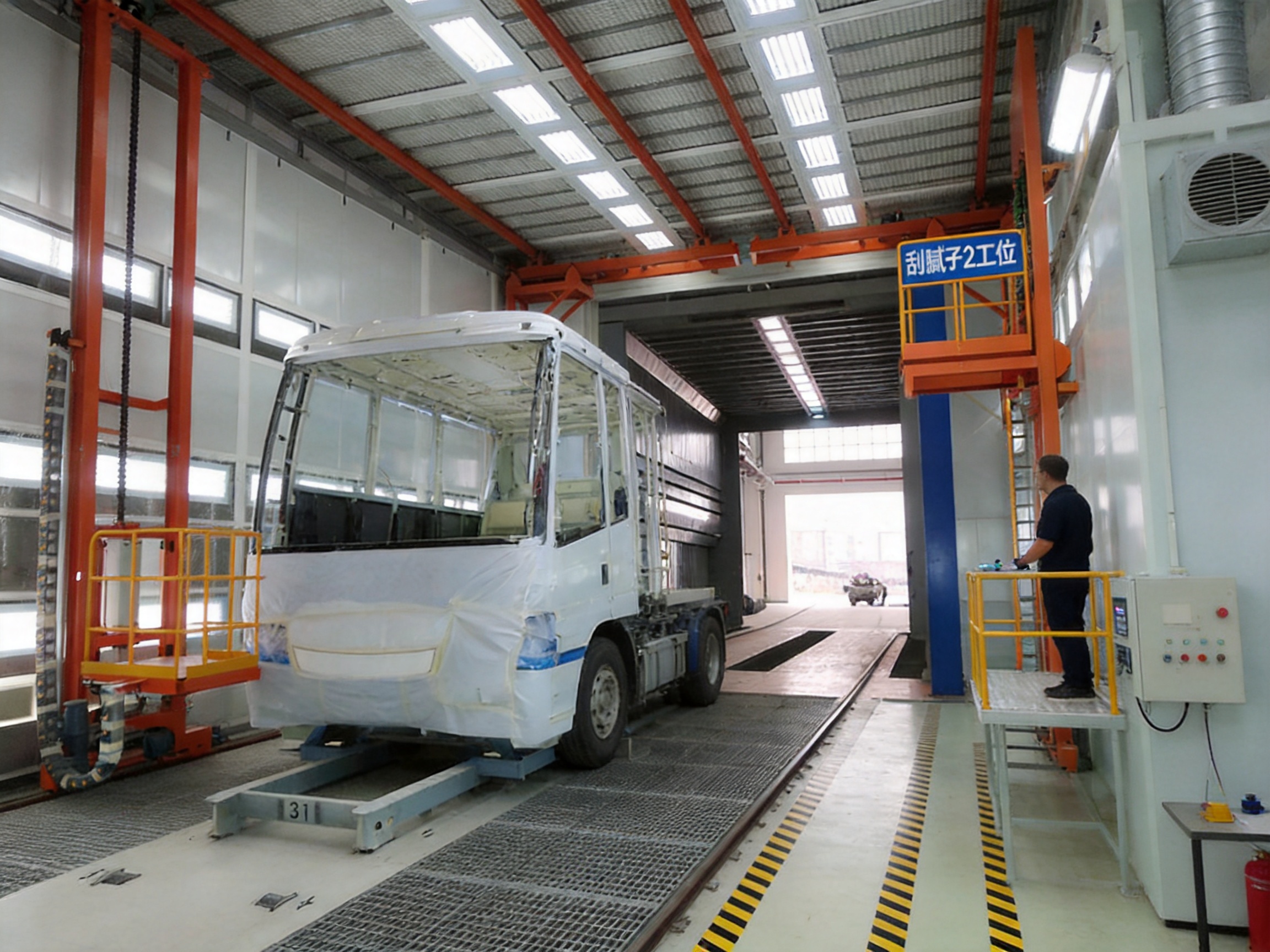
Modern industrial production increasingly depends on accurate positioning, reliable material handling, and smooth coordination between operators, machinery, and automated systems. In coating, spraying, sanding, welding, inspection, and assembly applications, the ability to move a workpiece or operator platform precisely can directly affect productivity, finish quality, workplace safety, and operating cost. A 3-axis platform lift provides this capability by combining controlled movement along the X, Y, and Z axes in one integrated handling system.
Unlike a conventional fixed lifting table, which normally provides vertical movement only, a 3-axis platform lift can raise, lower, and travel horizontally in two directions. This three-dimensional movement enables operators and production equipment to reach specific work areas without repeatedly repositioning large, heavy, or irregularly shaped components. The result is a more efficient, safer, and more consistent process for industrial facilities that require multi-angle access.
Jiangsu Yue Ze Environmental Protection Equipment Co., Ltd. supplies customized 3-axis platform lifts for coating workshops, automated production lines, paint and bake booths, grinding rooms, inspection stations, and other industrial processing environments. The company combines equipment design, manufacturing, installation, and technical service to develop platform lift systems that correspond to the dimensions, weight, movement range, production rhythm, and layout of each customer’s facility.
A 3-axis platform lift is an industrial positioning and access system that moves a platform in three coordinated directions. The vertical Z-axis raises or lowers the platform, while the X-axis and Y-axis provide horizontal travel along the length and width of the operating area. Depending on the application, the platform may carry an operator, tools, inspection equipment, workpieces, or a combination of these items.
The system can be installed as part of a production line or used as an independent workstation. It may be positioned inside or beside a paint booth, near a powder coating booth, within a large-part grinding room, alongside an assembly line, or at a dedicated inspection station. The platform’s travel range, load capacity, structure, controls, and safety equipment can be configured for the customer’s specific application.
In a coating environment, the platform can bring a spray operator to the correct height and lateral position relative to a large workpiece. In an inspection application, it can move the inspection platform around the workpiece so that all surfaces can be viewed and measured. In assembly, it can support controlled access to components installed at different heights or depths. In sanding and grinding operations, it can reduce excessive bending, stretching, and climbing by positioning the worker at a more suitable working height.
This flexibility makes the 3-axis platform lift more than a simple lifting device. It is a coordinated industrial positioning solution that improves access, supports process consistency, and helps integrate manual work with automated production equipment.
Many large industrial parts cannot be processed efficiently from a single fixed position. Vehicle bodies, casting counterweights, fabricated structures, large machinery housings, agricultural equipment components, and other oversized workpieces often have surfaces at different heights, angles, and depths. A stationary platform may allow access to only one section of the part, forcing operators to move the component repeatedly or work from uncomfortable positions.
The three-axis configuration addresses this limitation. The platform can be adjusted vertically to match the height of a target area, moved longitudinally to reach different sections, and shifted laterally to approach surfaces from the required direction. These movements may be performed manually through a control panel, semi-automatically through programmed settings, or as part of an integrated automated production sequence.
Precise three-dimensional movement is particularly valuable when a process requires consistent distance between the tool and the workpiece. During spraying, for example, an appropriate gun-to-surface distance contributes to more uniform coating thickness and appearance. During inspection, stable positioning helps the operator maintain a repeatable viewing angle. During sanding, the platform can support a controlled working posture and reduce inconsistent pressure caused by awkward access.
The system also reduces unnecessary workpiece handling. Large parts can be difficult to lift, rotate, or reposition without cranes, forklifts, or several operators. Each additional handling step increases cycle time and may create a risk of impact, scratching, deformation, or incorrect alignment. Moving the platform around the part instead of moving the part itself can therefore improve both efficiency and surface protection.
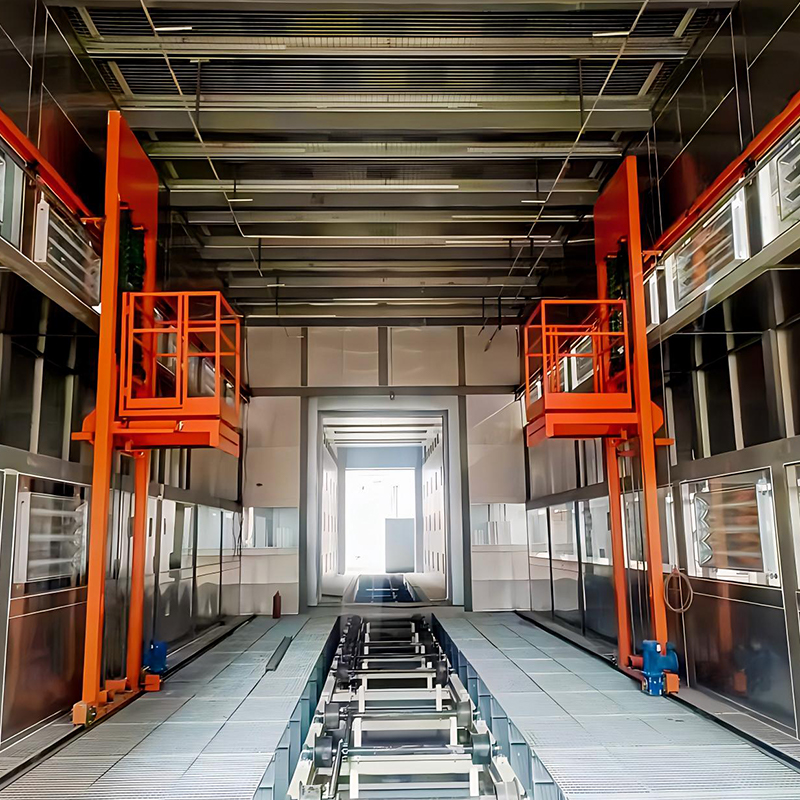
3-Axis Platform Lifts
The primary advantage of a 3-axis platform lift is its ability to position a platform accurately in three directions. Operators can adjust the elevation, horizontal travel, and lateral position to reach a desired operating point. This is especially important when working with large or complex parts that require access to multiple surfaces.
Accurate movement supports repeatability. Once a suitable position has been identified, it can often be recorded or reproduced for subsequent workpieces. Repeatable positioning helps reduce variation between operators and between production cycles. It also supports more consistent spraying, inspection, assembly, and finishing results.
Stable movement is equally important. A platform that shakes, drifts, or stops abruptly can affect coating quality, operator confidence, and equipment life. A properly engineered 3-axis system uses suitable guide structures, drive mechanisms, control components, and support frames to maintain smooth travel under the required load.
Surface treatment quality depends on several factors, including preparation, material selection, spray technique, curing conditions, and the relative position of the spray equipment and workpiece. A platform lift helps control the access component of this process.
By bringing the operator or spray equipment to a suitable location, the lift can help maintain a more consistent spray angle and working distance. This supports more uniform coverage on vertical, elevated, recessed, or difficult-to-reach surfaces. It can also reduce the need for hurried movements, excessive hose extension, or awkward body positioning.
For powder coating and liquid painting applications, a stable working position may help reduce missed areas, uneven overlap, excessive film build, and unnecessary touch-up work. Better first-pass quality can reduce material consumption and lower the amount of rework required before the part moves to curing, inspection, or final assembly.
Without a suitable positioning system, operators may need to climb ladders, move mobile platforms, wait for lifting equipment, or ask other personnel to reposition a workpiece. These interruptions reduce productive time and make the process more dependent on manual coordination.
A 3-axis platform lift gives the operator direct control over access within the designated operating range. The operator can move to the next work area without stopping the entire process to relocate the component. When programmed positions are available, repetitive tasks can be completed more quickly and with fewer adjustments.
The productivity benefit is particularly noticeable in high-volume production, where small time savings per workpiece accumulate over an entire shift. It is also valuable in customized production, where parts vary in size and shape and operators need flexible access rather than a fixed sequence of movements.
Repeated bending, reaching, stretching, climbing, and manual handling can contribute to fatigue and musculoskeletal strain. These conditions may also increase the likelihood of mistakes or accidents during long production shifts.
A 3-axis platform lift allows the working position to be adjusted to a more comfortable height and distance. The operator can approach the work area instead of forcing the body to adapt to an inconvenient position. This is useful in sanding, grinding, touch-up painting, inspection, and detailed assembly tasks.
Safety features can include lifting limits, travel limits, overload protection, emergency stop controls, anti-falling measures, anti-deviation structures, and interlocks connected with surrounding equipment. The exact safety configuration depends on the lift design and the production environment, but the objective is consistent: controlled movement, predictable stopping, and protection against abnormal operating conditions.
Handling large workpieces manually or with separate lifting equipment can be time-consuming and costly. It may require additional workers, cranes, forklifts, temporary supports, and repeated alignment checks. A 3-axis lift reduces the need for these movements by allowing access equipment to travel around a stationary part.
Reducing handling steps can protect the workpiece from impact damage. This is particularly important after surface preparation or coating, when contact with a lifting device or support may damage the treated surface. Fewer repositioning operations also make the production sequence easier to organize and monitor.
The lift can be integrated with spray booths, powder coating lines, paint and bake booths, inspection systems, grinding rooms, conveyors, and other production equipment. It may operate as an independent manual workstation or exchange signals with a larger automated line.
Integration can include programmed travel positions, synchronized movement, door or booth interlocks, conveyor coordination, inspection equipment communication, and emergency stop circuits. This makes the lift suitable for facilities that are gradually increasing automation as well as for fully coordinated production lines.
A well-designed 3-axis platform lift can provide a broad working range without requiring separate access equipment for every side of a workpiece. Its compact arrangement may help reduce floor-space requirements compared with several fixed platforms or multiple mobile handling devices.
Because the system is designed around the workshop layout, it can be configured to avoid existing columns, booths, conveyors, ventilation equipment, and operator walkways. Careful planning of the travel envelope is essential to ensure that the platform provides useful access without interfering with material flow or safety zones.
Traditional positioning methods may include fixed work platforms, ladders, mobile scaffolding, forklifts, cranes, turntables, or manual workpiece rotation. Each method has an appropriate application, but a 3-axis platform lift offers a broader combination of movement, repeatability, and operator access.
| Positioning Method | Typical Movement | Main Limitation | Advantage of a 3-Axis Platform Lift |
|---|---|---|---|
| Fixed platform | None or limited vertical adjustment | Restricted access to different work areas | Provides controlled movement in three directions |
| Ladder or mobile scaffold | Manual relocation | Frequent repositioning and higher ergonomic risk | Allows powered positioning from the operating station |
| Forklift | Vertical and short-distance travel | Not designed for precise operator access or continuous positioning | Offers more controlled and repeatable movement |
| Crane | Suspended lifting and transfer | Requires careful rigging and may not provide a stable working platform | Supports stable access and controlled platform travel |
| Turntable | Rotational movement | Does not independently change height or lateral position | Provides three-axis access and can complement rotational systems |
| Manual workpiece repositioning | Depends on available handling equipment | Time-consuming and may damage finished surfaces | Moves the platform while keeping the workpiece stationary |
The comparison does not mean that one machine replaces every other device. In many facilities, a 3-axis platform lift works together with conveyors, cranes, turntables, or fixed supports. Its distinguishing value is the combination of multi-directional movement, stable access, programmable control, and suitability for integration into a production process.
The vertical mechanism controls the Z-axis. It raises or lowers the platform to align the operator or tool with different sections of the workpiece. The mechanism must be selected according to the required lifting height, rated load, cycle frequency, available space, and environmental conditions.
Servo drives or variable-frequency drive systems may be used to achieve smooth acceleration, deceleration, and speed adjustment. Controlled movement helps minimize sudden vibration and makes it easier for the operator to stop at the desired height. Limit switches, position sensors, and mechanical stops provide additional control over the lifting range.
The X-axis and Y-axis systems provide horizontal movement. Depending on the layout, one axis may travel along the length of the booth or production line while the other moves across its width. The structure may use rails, guideways, wheels, chains, rack-and-pinion drives, screw mechanisms, or other engineered travel arrangements.
Each travel system must be designed to maintain alignment under load. Accurate guide installation, proper support spacing, suitable drive selection, and regular maintenance all influence positioning performance. The travel speed can be adjusted to suit manual finishing, automated spraying, inspection, or material handling tasks.
The control system allows an operator or automated program to command movement along each axis. A local control panel may include start, stop, direction, speed, positioning, and emergency stop functions. For repetitive operations, preset positions can reduce adjustment time and support consistent process execution.
More advanced configurations may communicate with a programmable logic controller, conveyor system, spray equipment, booth doors, lighting systems, inspection devices, or safety circuits. The control logic can prevent movement when a door is open, when an obstruction is detected, or when another machine is not in a safe condition.
Safety must be considered during the design, installation, commissioning, and daily operation of the equipment. Typical protective measures include overload protection, upper and lower lifting limits, horizontal travel limits, anti-falling devices, emergency stop buttons, electrical protection, guarded moving parts, and warning indicators.
Where the platform is used in a paint booth or other hazardous environment, the electrical and mechanical configuration must correspond to the environmental requirements. Ventilation, combustible materials, coatings, dust, cleaning chemicals, and heat sources should all be considered during system selection and installation.
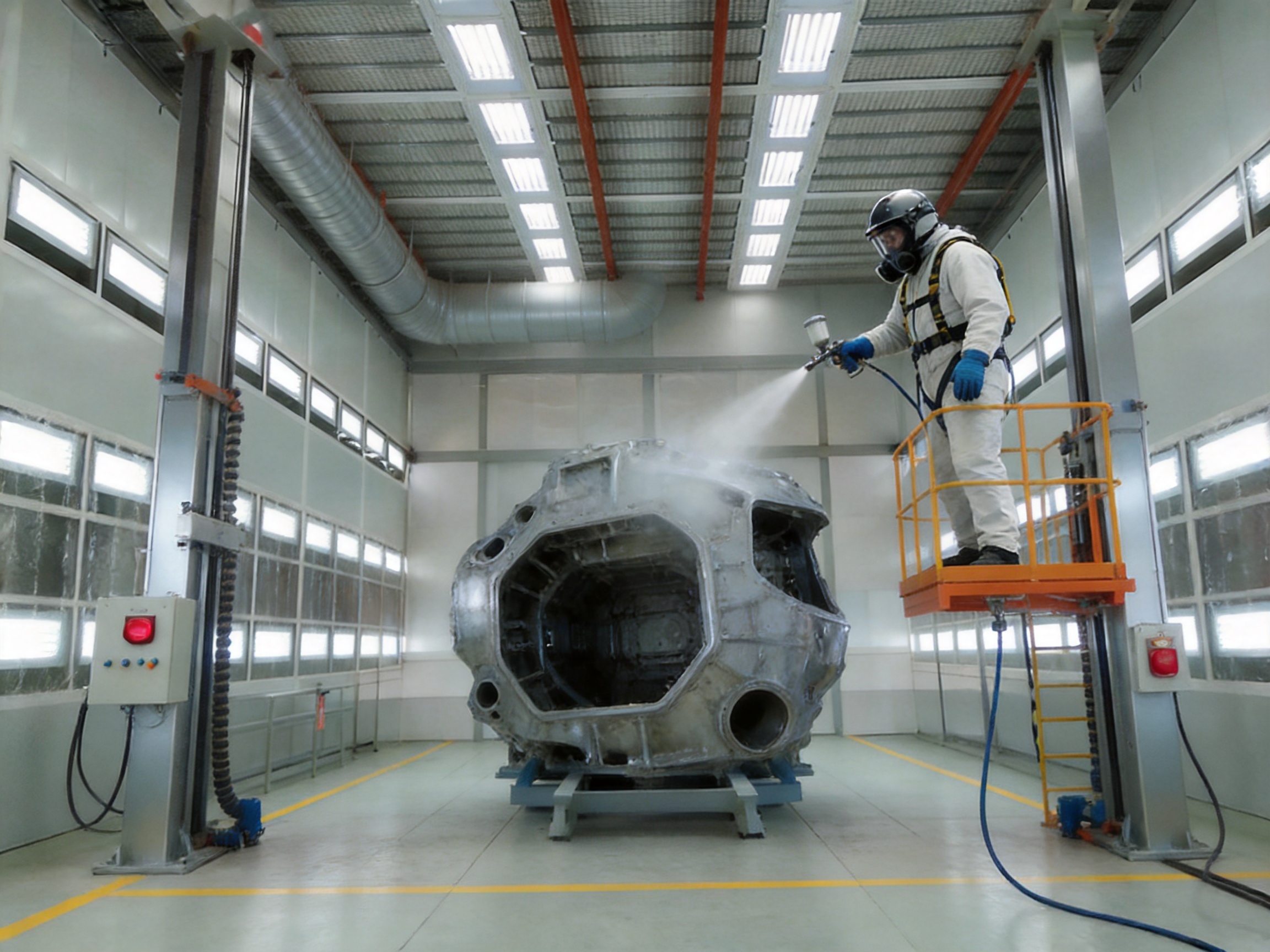
In liquid painting operations, the operator must often follow the geometry of a large part while maintaining a suitable spray angle and distance. A 3-axis platform can move the operator smoothly around the part, reducing the need to stretch or walk repeatedly around the booth.
The lift can be coordinated with spray booth dimensions, ventilation arrangements, lighting, paint supply systems, and workpiece fixtures. For large fabricated structures, machinery housings, vehicle components, and casting products, this arrangement can improve access to upper surfaces, side panels, deep sections, and lower areas.
Powder coating lines commonly include pretreatment, drying, conveying, spraying, curing, cooling, inspection, and packing stages. Although many parts move automatically on a conveyor, some large or customized components still require operator access for touch-up, inspection, masking, loading, unloading, or process adjustment.
A 3-axis platform lift can be installed near the spray area or at a finishing station to support these tasks. It can also be customized to work around hanging conveyors, booth openings, powder recovery systems, and curing oven entrances. By improving operator access, the platform can support more consistent finishing without interrupting the main conveyor sequence.
Paint and bake booths require coordinated consideration of airflow, temperature, access, and operator movement. A platform lift can be designed for use near the booth or within a suitable operating zone, depending on the process and safety requirements.
During painting, it can position the operator relative to the workpiece. During inspection or touch-up, it can provide access after the coating stage. If the lift is connected to the production control system, movement can be coordinated with booth doors, ventilation status, and other interlocks.
Grinding and sanding large castings or fabricated parts often require repeated work at different heights and angles. A fixed platform may be appropriate for only one section, while ladders or portable equipment may create additional movement and safety concerns.
A 3-axis lift enables the operator to maintain a more stable posture while reaching different portions of the workpiece. This can improve productivity during surface preparation and help create a more uniform substrate before painting or powder coating. The platform structure and electrical components should be selected to withstand dust, vibration, and the specific conditions of the grinding room.
Inspection personnel may need to check coating coverage, surface defects, dimensions, welds, assembly conditions, or finish uniformity. A 3-axis platform lift can bring the inspection position to the correct height and viewing angle, helping the inspector evaluate the full surface of a large part.
When inspection equipment is mounted on or used from the platform, repeatable positioning can support more consistent measurement. The lift may also be configured with lighting, access controls, sensor mounts, or communication systems appropriate to the inspection process.
In assembly operations, parts may need to be aligned with components located at different heights or positions. A 3-axis platform can help operators access the workpiece while keeping the assembly fixture or main component in a stable location.
The system may also serve as a controlled transfer or docking platform between production stages. Its load capacity and travel range must be calculated according to the workpiece mass, tooling weight, dynamic forces, stopping requirements, and expected operating frequency.
Industrial facilities rarely have identical workpieces, building structures, or production requirements. For this reason, a standard platform lift may not provide the most efficient solution. Customization allows the equipment to match the actual production environment rather than forcing the workshop to adapt to a generic machine.
The platform size can be selected according to the number of operators, required tools, control devices, material containers, and safety clearances. A compact platform may be appropriate for a single touch-up operator, while a larger platform may be required for inspection teams or assembly tasks.
Load capacity should include the operator or operators, tools, hoses, spray equipment, inspection devices, workpiece supports, and any material carried on the platform. The design should also account for uneven loading and movement during acceleration or stopping.
The required X, Y, and Z travel ranges depend on the workpiece dimensions and the surrounding structure. Travel speed can be selected according to the process. Manual spraying and inspection may require smooth, moderate movement, while material transfer applications may use different speed settings.
Servo control may be selected where accurate positioning and repeatable motion are important. Variable-frequency drive control can provide adjustable speed and smooth operation for many industrial applications. The appropriate choice depends on precision requirements, cycle frequency, integration needs, and project budget.
Coating and surface treatment environments can include paint mist, powder, dust, humidity, temperature changes, cleaning agents, and ventilation airflow. Equipment materials, enclosures, electrical components, protective coatings, and maintenance access should be selected for the installation environment.
The lift can be configured to match conveyor heights, booth openings, inspection areas, workpiece fixtures, and operator walkways. Integration planning should consider the complete movement envelope, not only the platform’s static dimensions. This helps prevent interference with doors, exhaust ducts, lighting, conveyors, cranes, and emergency routes.
Jiangsu Yue Ze Environmental Protection Equipment Co., Ltd. is based in Yancheng, Jiangsu, China, and occupies approximately 35,000 square meters. With registered capital of 58 million yuan and more than 40 years of industry experience, the company has developed broad capabilities in industrial surface treatment and environmental protection equipment.
The company’s product range includes powder coating lines, electric vehicle assembly lines, automotive counterweight spray lines, paint and bake booths, large-part grinding rooms, waste gas treatment equipment, infrared radiation drying systems, automated conveying systems, intelligent coating lines, and related environmental equipment.
This experience is significant for 3-axis platform lift projects because a positioning system must operate as part of a larger process. A lift installed in a coating facility may need to work alongside spray booths, conveyors, drying systems, exhaust equipment, inspection stations, and safety controls. A manufacturer familiar with the complete production environment can evaluate these relationships during the design stage.
Yueze provides integrated research and development, manufacturing, installation, and customized equipment services. This allows the project to be managed as a coordinated engineering solution rather than as an isolated lift purchase.
During the early stage, the company can review workpiece dimensions, weight, process steps, required access points, workshop layout, operating cycle, and automation objectives. These factors support the selection of platform size, guide arrangement, drive system, load rating, control mode, and safety configuration.
Integrated engineering also helps reduce compatibility problems during installation. The lift can be designed in relation to adjacent production equipment, ensuring that its movement range and control signals correspond with the rest of the line.
Large-part grinding rooms, casting counterweight coating lines, and customized painting systems require an understanding of oversized and non-standard components. Such workpieces may have complex contours, high weight, uneven surfaces, or different process requirements from one product model to another.
Experience in these applications supports more practical platform lift designs. Instead of focusing only on nominal lifting capacity, the engineering process can consider the real working posture, operator reach, clearance, hose management, access to corners, and relationship between the platform and the part.
One important advantage of a customized manufacturer is the ability to adapt the equipment to the customer’s operating conditions. The platform can be configured for different dimensions, movement ranges, load requirements, control methods, and production layouts.
Customization may be especially valuable when a facility has an existing coating line that cannot be completely rebuilt. The lift can be planned around current conveyors, booth dimensions, floor conditions, columns, ventilation systems, and operator routes. This approach can help customers improve a specific process without replacing all existing equipment.
In 2014, Yueze pioneered a hanging automatic painting process line for casting counterweight blocks. The line covered the process from finishing and polishing through primer and topcoat application. This development demonstrates the company’s experience in connecting surface preparation, coating, conveying, and production automation into a complete process.
Such process knowledge is relevant to platform lift design. A lift used in a coating workshop must support the actual sequence of production, not simply provide movement in isolation. Understanding how parts are prepared, coated, dried, inspected, and transferred helps the manufacturer create a more useful positioning solution.
Reliable industrial equipment depends on material quality, fabrication accuracy, component selection, assembly control, testing, and commissioning. Yueze emphasizes strict quality control and advanced production technology throughout its equipment manufacturing process.
For a 3-axis platform lift, quality control may include checking structural dimensions, guide alignment, weld integrity, drive installation, electrical wiring, control response, limit positions, emergency stop performance, and operation under representative load conditions. Proper inspection at each stage helps reduce problems after delivery and supports stable long-term operation.
Installation quality directly affects platform lift performance. Rails must be aligned, anchor points must be secure, electrical connections must be tested, and safety devices must be verified. Commissioning should include no-load and loaded operation, axis movement checks, stopping tests, control verification, and integration with surrounding equipment.
Yueze’s one-stop project approach includes installation support and customized technical service. This helps customers move from equipment selection to operational use with fewer coordination gaps. Training can also help operators understand normal operation, emergency procedures, daily checks, and basic maintenance requirements.
The platform structure must remain stable throughout its travel range. The design should account for rated load, eccentric loading, acceleration, deceleration, repeated cycles, and potential vibration from nearby equipment. A stable frame improves operator confidence and protects tools and workpieces.
Repeat positioning accuracy is important when the same process is performed on multiple parts. A platform that returns consistently to programmed positions can reduce operator adjustment and support uniform spraying, inspection, or assembly.
Accuracy depends on the drive system, guide arrangement, mechanical tolerances, sensor configuration, control programming, and maintenance condition. These elements should be evaluated together rather than treated as separate components.
Routine maintenance should be considered during the initial design. Drive components, guideways, electrical cabinets, sensors, lubrication points, and safety devices should be accessible for inspection and service. Easy maintenance can reduce downtime and help preserve positioning accuracy.
Operators should be able to perform basic daily checks, including visual inspection of rails, guards, cables, platform condition, emergency stop devices, and unusual noise or vibration. More detailed maintenance should follow the manufacturer’s service recommendations.
Spray guns, inspection tools, grinding equipment, and other devices may require cables, hoses, or material lines. These connections must be routed so that they do not interfere with platform travel or become damaged by sharp edges, excessive bending, heat, dust, or moving structures.
Appropriate cable carriers, protective sleeves, support points, and bend-radius allowances can improve service life. Hose and cable management should be included in the platform lift design rather than added as an afterthought.
The complete travel envelope should be marked and protected. Personnel should not enter a hazardous movement zone during operation unless the system is in a safe condition. Guards, barriers, warning signs, light curtains, interlocks, and floor markings may be used according to the layout and risk assessment.
Emergency stop devices should be located where operators can reach them quickly. Operators should also receive clear instructions for normal use, abnormal conditions, power failure, maintenance isolation, and recovery after an emergency stop.
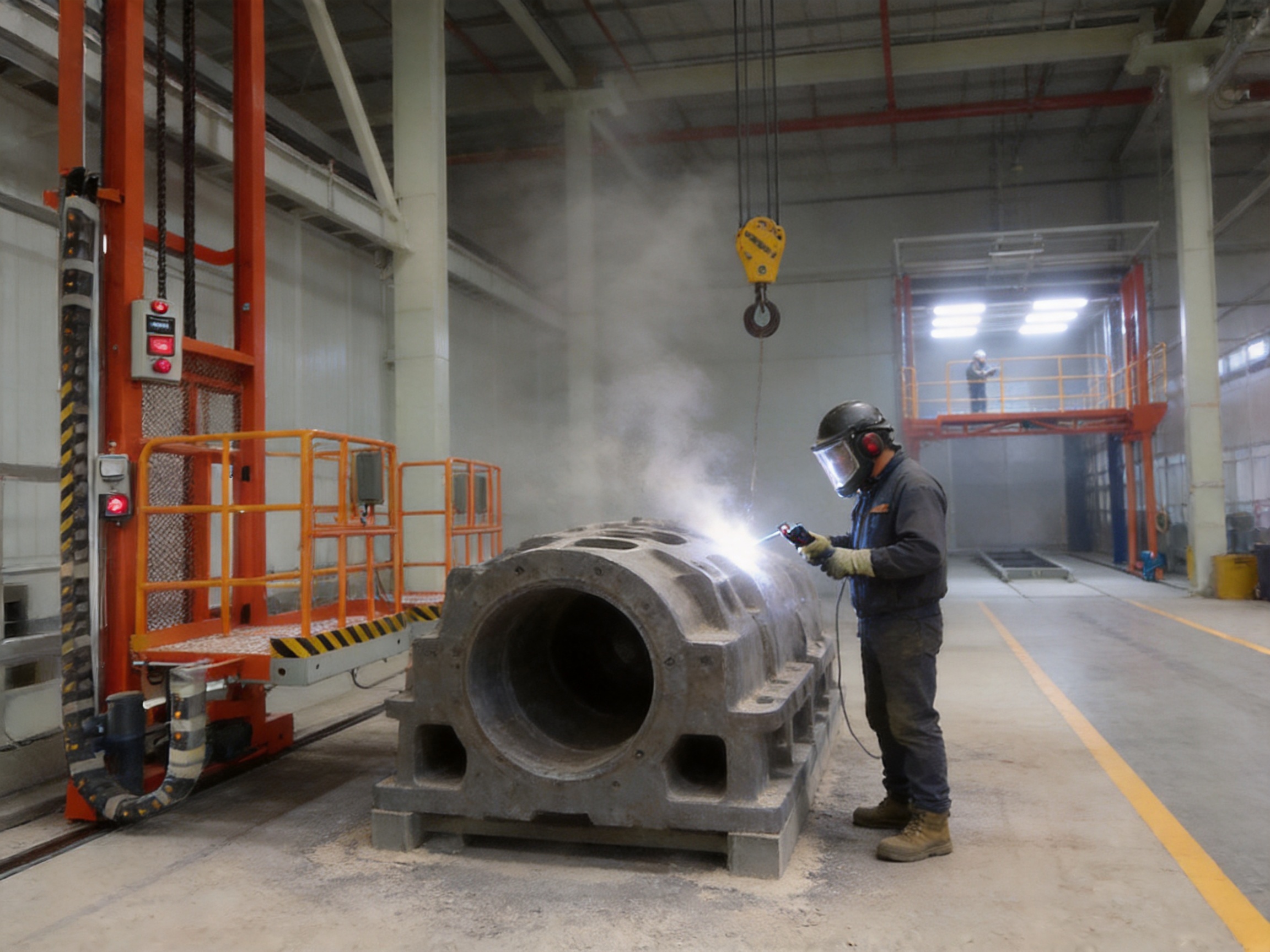
A 3-axis platform lift can support different levels of automation. In a manual configuration, the operator controls each axis directly. In a semi-automatic configuration, the operator selects preset positions while the control system manages movement and stopping. In a fully integrated configuration, the lift receives commands from a production line controller and operates in coordination with conveyors, booths, inspection systems, or robotic equipment.
Programmed positions can be useful for repetitive work. For example, a platform may move to several predefined locations corresponding to the front, side, top, and lower sections of a workpiece. The operator can select a position and focus on the coating or inspection task rather than manually estimating every movement.
Automation also supports process data collection. Position, cycle time, movement status, alarms, and maintenance information may be monitored through the line control system, depending on the selected configuration. This can help production managers identify bottlenecks and improve workflow planning.
The most effective automation level depends on product variety, production volume, process complexity, operator involvement, and investment objectives. A customized manufacturer can help determine whether manual controls, preset programs, or full line integration provide the best balance between flexibility and efficiency.
Production managers evaluate equipment not only by purchase price but also by its contribution to throughput, quality, safety, maintenance, and long-term adaptability. A 3-axis platform lift can create value in each of these areas.
Improved access can shorten cycle times by reducing workpiece repositioning and operator movement. More stable working conditions can improve first-pass quality and reduce rework. Better ergonomics can support workforce sustainability and reduce fatigue-related errors. Integration with production equipment can improve line coordination, while customized construction can allow the lift to remain useful as product requirements change.
There may also be indirect savings. Fewer handling operations can reduce the need for additional lifting equipment and labor. Reduced surface damage can lower repair costs. More consistent coating application may reduce material waste. A safer and more organized workstation can support more predictable production planning.
Record the workpiece length, width, height, weight, center of gravity, surface geometry, support points, and process requirements. If multiple product models will use the lift, include the full range of dimensions and masses.
Identify the areas that operators or tools must reach. Note the required working height, lateral access, depth, spray direction, inspection angle, and any restricted areas. This information determines the useful travel range of each axis.
Measure the available floor area and ceiling height. Identify columns, doors, conveyors, cranes, ventilation ducts, lighting, emergency exits, and adjacent machinery. The lift’s full movement envelope should be checked against these elements.
Decide whether the application requires manual control, variable-speed operation, preset positions, servo positioning, or communication with a central production control system. The control method should match the required accuracy and production rhythm.
Review operator access, moving zones, load conditions, emergency stops, interlocks, maintenance procedures, environmental hazards, and applicable industrial safety requirements. Safety features should be included in the design from the beginning.
Consider whether the lift may later be connected to conveyors, robots, inspection equipment, or additional automation. Providing suitable interfaces during the initial project can make future upgrades easier and less expensive.
Operators should confirm that the platform is clear of obstacles before movement. The rated load should never be exceeded, and loads should be distributed as evenly as possible. Personnel should remain within designated operating areas and avoid placing hands, feet, tools, or materials near moving mechanisms.
Before each shift, the operator should inspect the platform, guardrails, access gates, emergency stop buttons, visible cables, guideways, and unusual signs of damage. Any abnormal noise, vibration, movement, or control response should be reported before continued operation.
Scheduled maintenance should include inspection of drive components, fasteners, rails, wheels, sensors, electrical connections, safety devices, lubrication points, and structural welds. The frequency of maintenance depends on operating hours, environmental conditions, load, movement speed, and process dust or coating exposure.
Keeping the movement area clean is also important. Dust, powder, overspray, waste materials, and foreign objects can affect guide movement or create slipping and obstruction risks. In grinding rooms and coating workshops, cleaning procedures should be coordinated with the surrounding environmental protection system.
A two-axis system provides movement in two directions, while a 3-axis platform lift provides coordinated movement along the X, Y, and Z axes. The additional axis allows the platform to adjust its vertical height as well as two horizontal positions, providing more complete access to large or irregular workpieces.
Typical applications include industrial painting, powder coating, welding, sanding, grinding, inspection, assembly, workpiece handling, vehicle component production, casting processing, machinery manufacturing, and automated production lines. The equipment can be customized for other applications that require controlled three-dimensional positioning.
Yes. It can be installed near powder spray booths, inspection stations, loading and unloading areas, or touch-up workstations. The design should consider powder exposure, ventilation, conveyor movement, booth dimensions, electrical requirements, and safety interlocks.
The platform can be engineered for substantial loads, but the required capacity must be determined from the workpiece mass, operator weight, tooling, eccentric loading, dynamic movement, and safety margin. Customers should provide accurate load information during the design stage.
Depending on the configuration, the platform may carry an operator, tools, equipment, a workpiece, or a combination of these. In many large-part coating applications, it moves the operator and equipment around a stationary workpiece, reducing the need to reposition the part.
Both options are available. A manual system can use operator controls for flexible positioning. A semi-automatic system may include preset positions and adjustable speed. An automated system can communicate with conveyors, production controllers, inspection equipment, or other line machinery.
Yes. Platform dimensions, lifting height, horizontal travel, load capacity, drive system, control method, safety devices, and installation arrangement can be customized according to the existing workshop and production line.
It helps the operator maintain a more suitable working height, spray angle, and distance from the workpiece. Stable and repeatable positioning can reduce missed areas, uneven coverage, and variations caused by awkward access or repeated manual repositioning.
Useful information includes workpiece dimensions and weight, required access areas, platform load, lifting height, X-axis and Y-axis travel, desired speed, production cycle, workshop drawings, environmental conditions, control preferences, and whether integration with a conveyor or coating line is required.
The company provides customized equipment design, manufacturing, installation, commissioning, and technical service. Its experience in coating lines, paint and bake booths, grinding rooms, conveying systems, drying equipment, and environmental protection equipment supports integrated project development.
It can reduce climbing, stretching, repetitive bending, and manual repositioning of heavy workpieces. With suitable limit protection, overload protection, emergency stops, anti-falling devices, interlocks, and guarded movement areas, it can provide a more controlled working environment.
Yes. Its flexible travel and programmable positioning are useful where workpiece dimensions or process requirements vary. The lift can be designed with adjustable operating parameters so that different product models can be handled within the approved capacity and travel range.
A 3-axis platform lift provides a practical solution for industrial processes that require accurate access to large, heavy, or irregularly shaped workpieces. Its X, Y, and Z movement enables stable three-dimensional positioning, improves operator ergonomics, reduces unnecessary handling, and supports more consistent spraying, sanding, inspection, assembly, and finishing.
Compared with fixed platforms, ladders, manual repositioning, or general-purpose lifting equipment, the system offers a stronger combination of flexibility, repeatability, safety, and production-line integration. Its value is further increased when the equipment is designed around the customer’s workpiece, workshop layout, coating process, and automation objectives.
Jiangsu Yue Ze Environmental Protection Equipment Co., Ltd. combines more than 40 years of industry experience with integrated research and development, manufacturing, installation, and customized engineering capabilities. Its background in powder coating lines, paint and bake booths, large-part grinding rooms, automated conveying systems, drying equipment, and environmental protection systems supports the development of platform lifts that function as part of a complete industrial process.
For companies seeking a customized 3-axis platform lift, the most effective approach is to evaluate the workpiece, movement range, load, operating environment, safety requirements, and future automation plans together. A properly specified and professionally integrated system can improve production efficiency today while providing a flexible foundation for future process upgrades.
1. Industrial machinery design principles for guided lifting, positioning, and material handling systems.
2. General workplace safety practices for powered platforms, lifting equipment, and industrial access systems.
3. Surface treatment process considerations for liquid painting, powder coating, sanding, grinding, inspection, and curing operations.
4. Automation engineering principles for programmable positioning, conveyor integration, safety interlocks, and production-line control.
5. Ergonomic guidelines for reducing repetitive bending, stretching, climbing, and manual handling in industrial workplaces.
6. Jiangsu Yue Ze Environmental Protection Equipment Co., Ltd. product and company information concerning coating production lines, environmental protection equipment, automated conveying systems, and customized industrial equipment.
3-axis platform lifts feature three-dimensional movement of X, Y, and Z axes. Flexible positioning, stable lifting, and precise operation. Suitable for multi-angle operation and workpiece docking in i...
See Details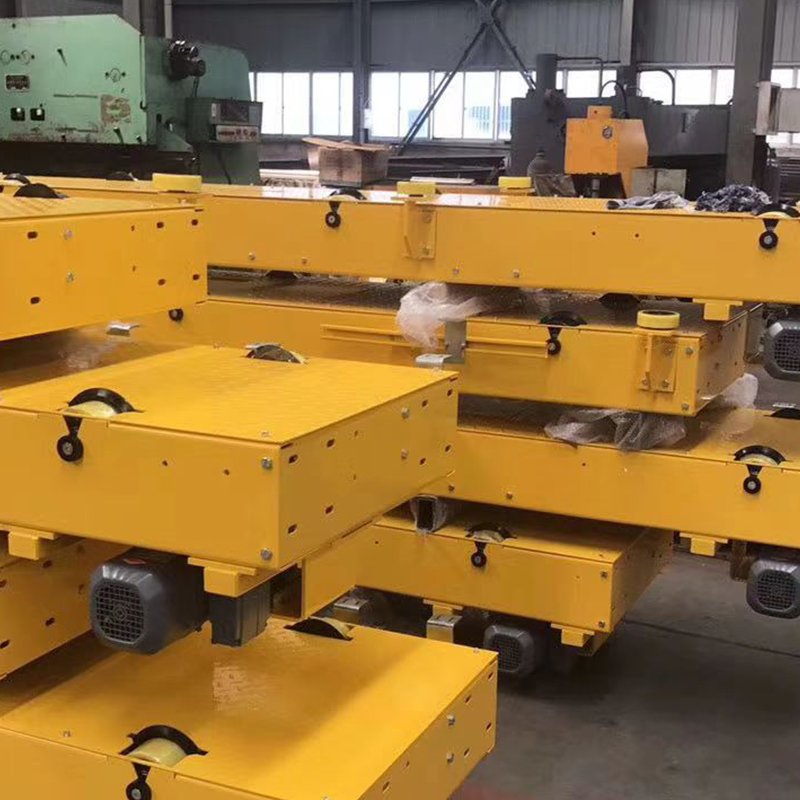
Platform Cart is a practical and efficient industrial handling equipment, widely used in factories, workshops, warehouses, logistics centers, and other places. It is composed of a sturdy load-bearing ...
See Details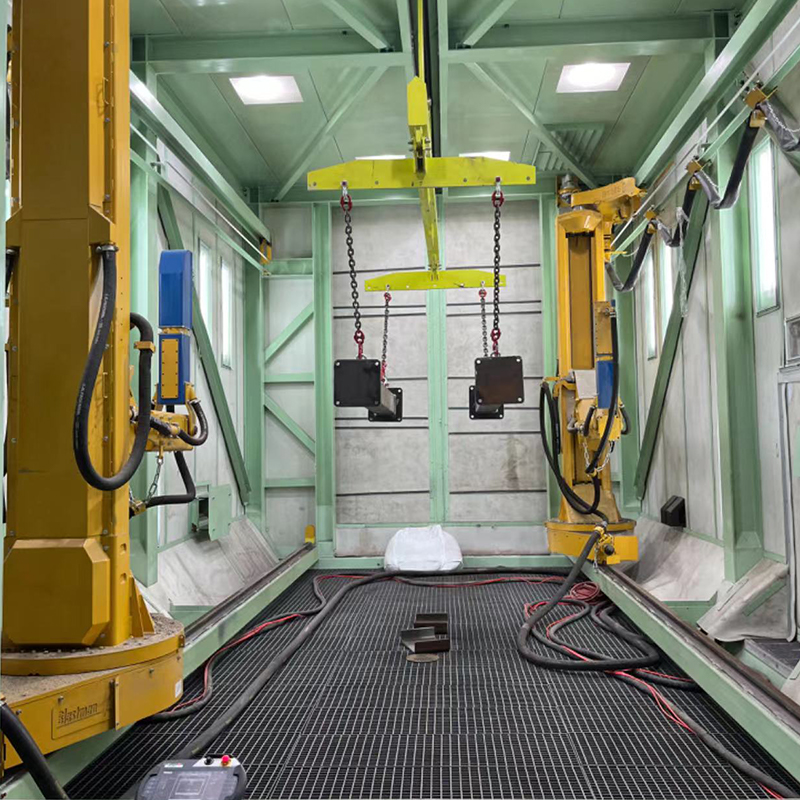
Professional coating line specially designed for large castings and heavy truck parts, applicable to various large castings (engineering castings, mining equipment castings, industrial castings) and h...
See Details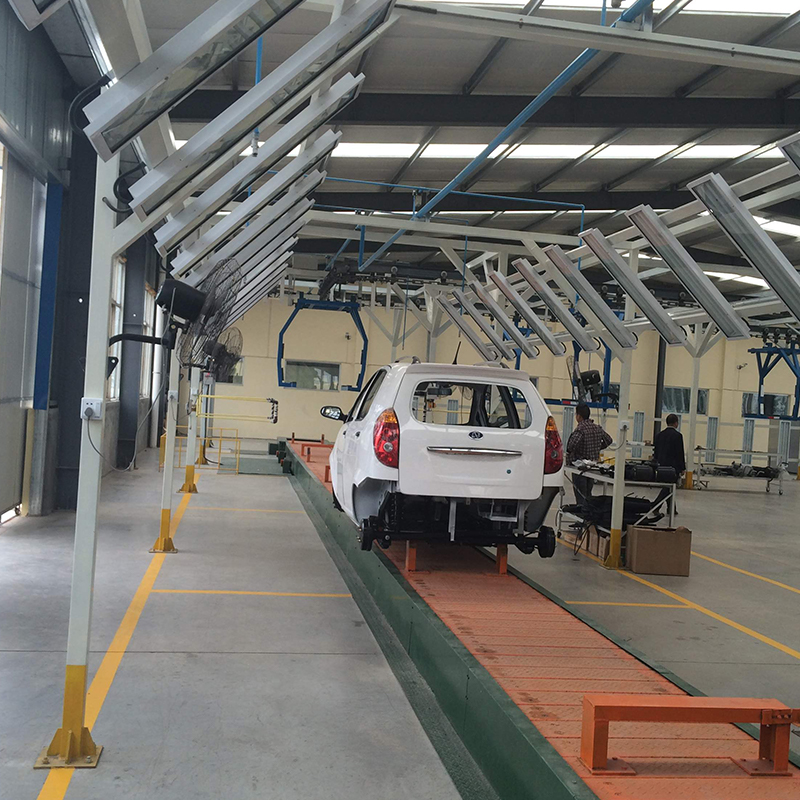
Professional electrophoresis coating line specially designed for electric vehicles (EVs), applicable to various EV types (passenger EV, commercial EV, new energy logistics vehicle) and EV components. ...
See Details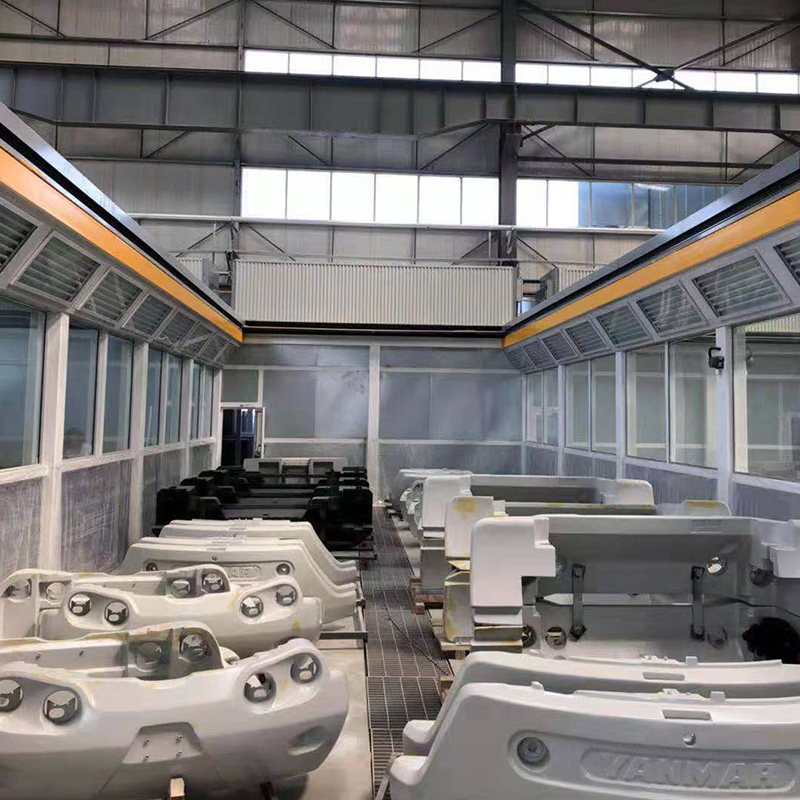
Professional spray coating line specially designed for car wheel manufacturing and refurbishment, applicable to various car wheel types (steel wheel, aluminum alloy wheel, forged wheel, cast wheel, pa...
See Details
Professional spray coating line designed for engine manufacturing and maintenance, applicable to various engine types (gasoline engine, diesel engine, electric vehicle engine). Main types: engine bloc...
See DetailsBuild Your Customized Industrial Coating System
Send us your workpiece information, production capacity, coating process, workshop layout, and environmental requirements. Yueze will help evaluate your project and develop a suitable coating, conveying, drying, and environmental treatment solution.
Main menu
Products
Contact Us
Company Address:
No. 12, Park Avenue, Shanggang Industrial Park, Jianhu, Yancheng City, Jiangsu Province
Message Us Right Now!

Follow us: