
 русский
 عربى
عربى
 Tiếng Việt

Roller table automation line, electric-driven with stable power output, mainly composed of high-quality steel rollers, drive motor, and intelligent control system. It adopts floor-mounted installation...
See Details
Yueze Environmental Protection provides one-stop compliant industrial surface treatment solutions with professional tech and fine craftsmanship.
 Get Inquiries
2026-09-12
Content
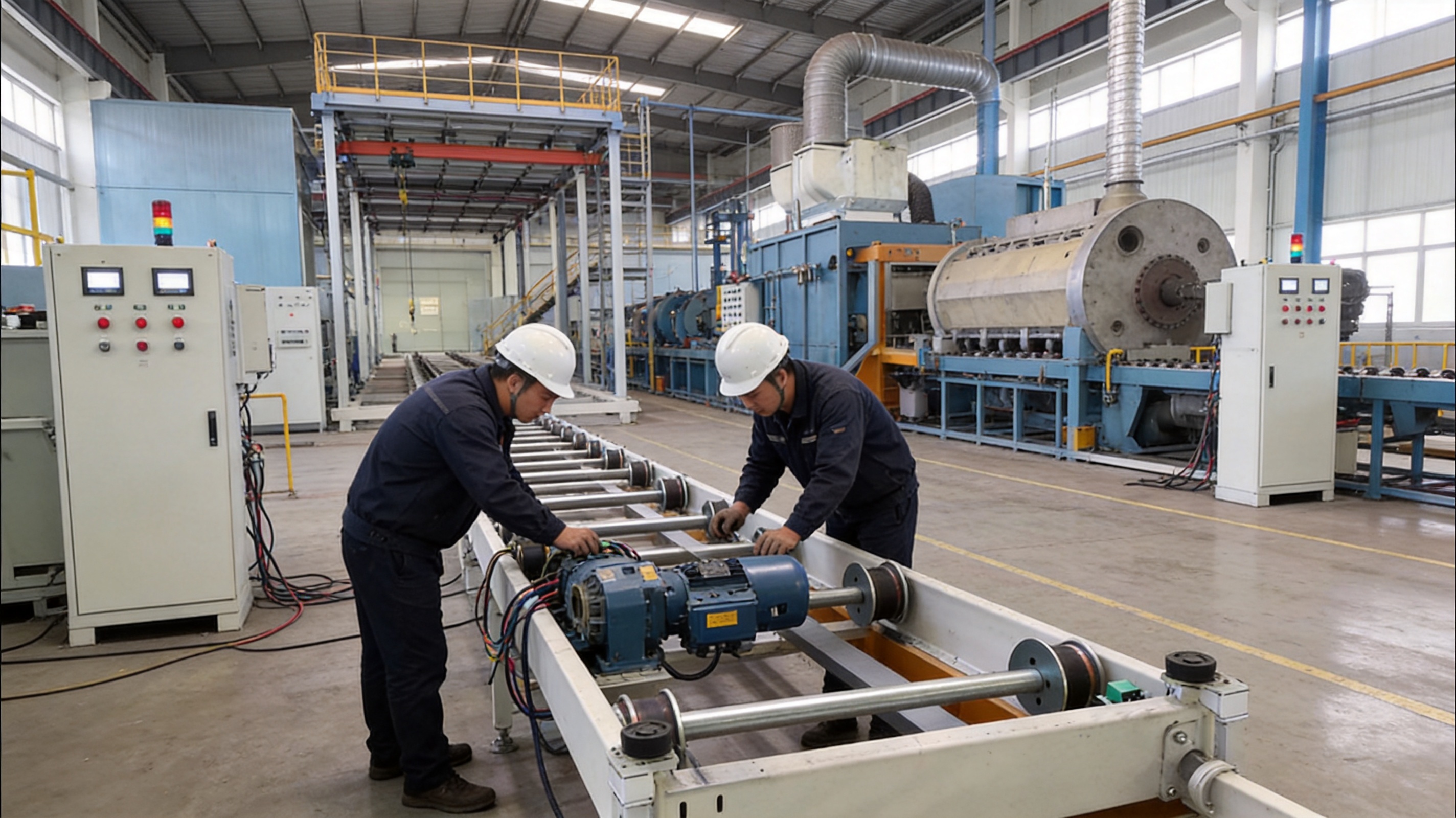
Modern manufacturing depends on the reliable movement of parts between processing stages. When materials are transferred manually, production efficiency can be affected by forklift traffic, operator availability, inconsistent handling speeds, and the risk of product damage. These challenges become more serious when the workpieces are large, heavy, irregularly shaped, or difficult to suspend from an overhead conveyor.
A roller table automation line provides a practical solution for these applications. By supporting workpieces from below and transferring them horizontally on powered rollers, the system creates a stable, controlled, and repeatable connection between production stations. It can be used for moving castings, counterweight blocks, machined housings, packages, assemblies, and other materials through grinding, coating, drying, inspection, assembly, packaging, and storage operations.
The roller table automation line supplied by Jiangsu Yue Ze Environmental Protection Equipment Co., Ltd. is designed for continuous conveying, high load capacity, flexible integration, and dependable operation. Its main structure consists of steel rollers, drive motors, transmission components, frames, sensors, electrical controls, and safety devices. The system can be designed around the required workpiece dimensions, production rhythm, conveying distance, load rating, and available workshop space.
Compared with basic manual transfer solutions or conveyor systems designed only for light products, a properly engineered roller table offers greater stability, better process coordination, and stronger adaptability for heavy industrial production. Its floor-mounted design also makes it easier to connect with existing facilities and to arrange the conveying route according to the workshop layout.
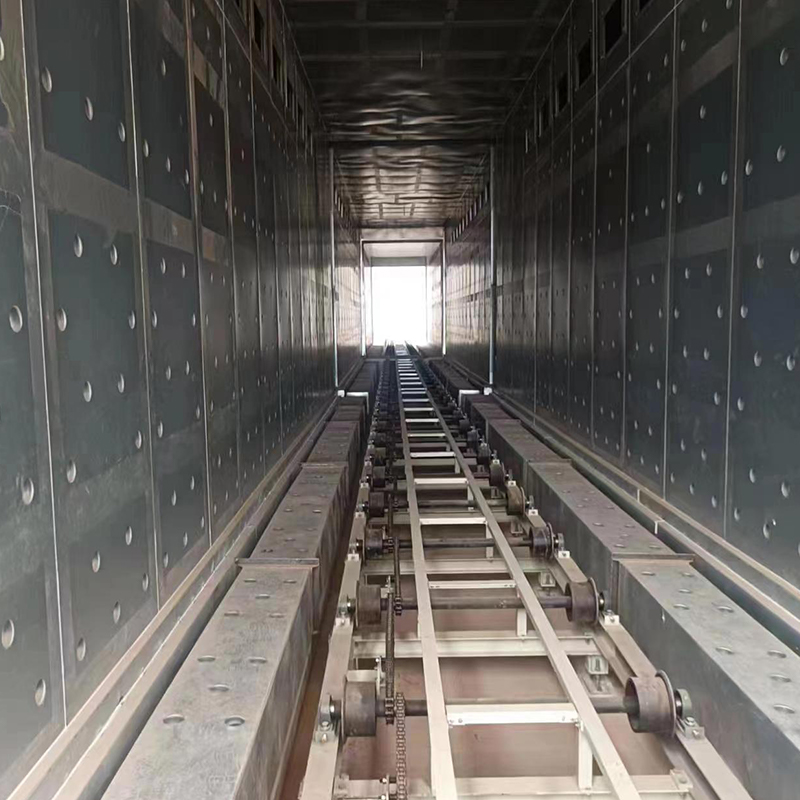
Roller Table Automation Line
A roller table automation line is a powered conveyor system that transports materials or workpieces along a series of rotating rollers. The rollers are arranged in a rigid frame and driven by electric motors through a suitable transmission system. Depending on the production requirements, the rollers may operate continuously, in sections, or according to signals from sensors and the central control system.
The workpiece rests directly on the roller surface rather than hanging from a hook or fixture. This configuration is especially suitable for heavy, wide, long, or irregular products that require stable support during movement. The conveying surface can be configured with different roller diameters, spacing, materials, and load ratings to accommodate specific workpiece characteristics.
In a typical production line, the roller table receives a part from an upstream process, transports it at a controlled speed, and delivers it to the next station. Sensors can detect the presence and position of the part, while the control system can start, stop, accelerate, or slow down individual conveying sections. This allows the line to coordinate the movement of parts with painting, baking, grinding, assembly, inspection, packaging, or storage operations.
Unlike a simple non-powered roller conveyor, an automated roller table does not rely on operators to push the workpiece. The electric drive system provides controlled movement and stable power output. Unlike an overhead conveyor, the roller table carries the load from below, making it more suitable for parts that are too heavy, too top-heavy, or too difficult to fixture safely for overhead transportation.
A complete roller table automation line may include the following components:
The final configuration depends on the product, process, and facility. A short straight roller table may be sufficient for a simple transfer. A larger project may require several independently controlled zones, automatic positioning, multiple branches, inspection stops, or links to other conveying equipment.
Many heavy industrial parts are not ideal for belt conveyors or overhead conveying systems. A casting may have an uneven base, a high center of gravity, or a shape that makes hanging it from a hook inconvenient. A machined housing may require stable support to prevent rotation or impact during movement. A counterweight block may be too heavy for manual handling and too large for a conventional light-duty conveyor.
A roller table addresses these requirements by distributing the load across multiple rollers. When the roller spacing, frame strength, and drive capacity are correctly selected, the system can transport large workpieces with limited deformation, reduced vibration, and stable movement. Supporting the workpiece directly from below also reduces the need for complex hanging fixtures.
The horizontal conveying method can improve safety in areas where suspended loads would create additional risks. Operators can work beside the line without placing themselves beneath hanging parts. The floor-mounted arrangement also simplifies loading and unloading from cranes, lifting devices, production platforms, or adjacent workstations.
For coating and finishing applications, the roller table can connect preparation, painting, curing, inspection, and packaging areas. It can be designed to withstand the operating environment of a workshop, including dust, overspray, temperature changes, and regular cleaning requirements, provided that the materials and protective measures are selected appropriately.
The primary advantage of the system is its ability to provide continuous automatic conveying. Once a workpiece is loaded onto the line, it can move between process stages without repeated manual pushing or forklift handling. This reduces unnecessary handling time and helps create a more consistent material flow.
Continuous conveying is valuable in mass production because small delays can accumulate throughout the working day. A controlled roller table helps maintain the required production rhythm and allows upstream and downstream stations to operate with fewer interruptions.
The line can be engineered for both light and heavy workpieces. Load-bearing performance depends on the roller diameter, wall thickness, spacing, shaft design, frame structure, motor capacity, and support arrangement. These elements can be selected according to the maximum product weight and the expected distribution of the load.
This flexibility gives a roller table an advantage over general-purpose conveyors that are designed only for standardized packages or relatively light components. For industrial users, the correct load rating is essential because an under-specified conveyor may suffer from deformation, unstable movement, excessive wear, or premature component failure.
Powered rollers create controlled contact with the workpiece and can provide smooth movement when the system is correctly designed and installed. Stable movement reduces sudden impact at transfer points and helps protect both the product and the equipment.
Smooth operation is particularly important for painted or coated parts. Excessive vibration, abrupt stopping, or uncontrolled contact may damage the surface finish. A controlled roller table can reduce these risks by coordinating the conveying speed and stopping position.
The conveying speed can be adjusted to match the requirements of the production process. A high-speed setting may be appropriate for simple transfer operations, while a slower setting may be required for positioning, inspection, loading, or connection with a paint booth or curing oven.
Variable speed control allows the line to adapt to different workpiece sizes and process cycles. It also helps coordinate the roller table with other equipment, preventing congestion at the receiving station and reducing idle time at the sending station.
Accumulation zones allow workpieces to wait temporarily when the next production stage is occupied or not ready. Without buffering, a delay at one station may force the entire line to stop. With independently controlled zones, parts can remain safely positioned on the roller table until the downstream process becomes available.
This function is especially useful when different production stages have different cycle times. For example, coating, curing, inspection, and assembly may not process each workpiece at exactly the same speed. Accumulation provides a practical buffer that improves overall line utilization.
The floor-mounted structure can be arranged according to the available workshop space. Straight sections, extended lines, process-connected sections, and customized layouts can be designed around existing buildings and equipment. Compared with an overhead system, a floor-mounted conveyor may require less structural modification to the workshop roof and support system.
Its relatively accessible structure also makes inspection and maintenance more convenient. Technicians can reach many components from the floor rather than requiring special elevated platforms or access equipment.
A well-designed roller table operates with controlled mechanical movement and can reduce the noise associated with forklift traffic, dragging, impact, and manual pushing. Lower noise contributes to a more orderly working environment and can make communication between operators easier.
Reducing manual handling also decreases the physical burden on employees. Operators can focus on process control, inspection, loading, and quality work instead of repeatedly moving heavy parts between stations.
The roller table can be connected with painting lines, powder coating lines, spray booths, baking systems, grinding rooms, assembly lines, inspection stations, packaging equipment, and storage areas. The control system can exchange signals with connected equipment to coordinate material transfer.
This integration capability allows the roller table to function as part of a complete production solution rather than as an isolated conveyor. The line can be designed to accept parts from an existing station and discharge them to the next stage with the required spacing, speed, and positioning accuracy.
Safety devices can include emergency stop buttons, protective guards, limit switches, overload protection, sensor monitoring, and safe stopping logic. The exact arrangement should be determined through a project-specific risk assessment and applicable industrial safety requirements.
Safety protection is important at loading points, transfer areas, drive sections, and locations where operators may work close to moving rollers. Clear operating procedures, visible warning signs, and appropriate training should be used together with the mechanical and electrical safety systems.
Heavy-duty steel structures and wear-resistant components can provide long service life when the system is correctly matched to the application. Routine maintenance generally includes checking roller rotation, drive components, fasteners, sensors, electrical connections, lubrication points, and protective devices.
Because the system is composed of modular sections, maintenance personnel can often inspect or replace individual components without dismantling the entire line. This helps reduce production downtime and makes future expansion or modification more practical.
| Evaluation Item | Manual Handling | Forklift Transfer | Overhead Conveyor | Roller Table Automation Line |
|---|---|---|---|---|
| Suitability for heavy workpieces | Limited by operator capability | Good, but dependent on traffic and operator availability | Good when parts can be safely suspended | Very good for parts supported from below |
| Continuous automatic movement | Low | Low to moderate | High | High |
| Adaptability to irregular parts | Moderate | Good | Dependent on fixtures | Good when roller spacing and supports are customized |
| Workshop floor accessibility | High | Reduced by traffic requirements | High below the conveyor | Moderate, based on line layout |
| Positioning control | Inconsistent | Dependent on operator skill | Good with suitable controls | Precise when sensors and positioning functions are included |
| Integration with process equipment | Low | Low | Good | Very good for floor-level production stations |
A roller table automation line normally operates through coordinated mechanical, electrical, and control functions. The drive motor supplies power to the roller sections. The transmission system distributes movement to the rollers, while sensors monitor the location and status of the workpiece. The control system uses this information to determine when a section should run, stop, or wait.
This sequence can be simplified for a basic transfer line or expanded for a complex automated production system. For example, the line may include automatic stop positioning, part identification, weighing, inspection, branching, turning, lifting, or communication with a manufacturing execution system.
The drive arrangement must be selected according to the total load, number of rollers, conveying distance, required speed, starting frequency, and floor conditions. A suitable motor provides enough torque to start the workpiece smoothly and maintain movement under normal operating conditions.
Transmission components may connect multiple rollers so that the load is distributed across the conveying surface. The design should prevent excessive slipping and should maintain consistent roller rotation. For heavy or sensitive parts, the drive system may be divided into independent zones so that the line can start and stop sections without applying unnecessary force to the workpiece.
Intelligent control improves the coordination of the entire line. Sensors can identify whether a roller section is occupied, whether a workpiece has reached a stop position, and whether the downstream station is available. The control cabinet can process these signals and send commands to the motors and related equipment.
Sensor-based control reduces the need for manual intervention and helps prevent collisions between workpieces. It can also improve production records by making it possible to monitor operating status, cycle times, stoppages, and alarm conditions.
Large castings and fabricated parts often need grinding, polishing, deburring, or surface preparation before coating. A roller table can move the workpiece from a grinding room to the next processing area without requiring repeated crane or forklift operations.
The system can be arranged with inspection stops so that an operator can examine the prepared surface before the part enters painting or coating. If the part requires several preparation operations, multiple roller sections can be connected to form a continuous route.
In liquid painting and powder coating applications, the roller table can transfer parts into and out of spray booths, flash-off areas, drying chambers, or inspection zones. The conveying speed can be adjusted according to the coating process and the size of the part.
For large components that cannot be conveniently hung, the roller table provides stable floor-level support. The line may use suitable protective measures and material selections to accommodate coating environments. The design should also consider overspray control, cleaning access, drainage, and the required distance between the conveyor and spray equipment.
After painting or coating, parts may require heating, drying, or curing. A roller table can feed workpieces to an infrared drying system, hot-air oven, or other thermal process. The control system can coordinate the transfer rate with the residence time required by the drying or curing equipment.
For heated applications, roller materials, bearings, seals, lubrication, and motor placement must be selected for the operating temperature. These details should be confirmed during technical design rather than treated as standard assumptions.
Counterweight blocks and similar cast components are often heavy and may have large, uneven surfaces. A floor-mounted roller table is well suited to moving these products between finishing, coating, inspection, and storage operations.
The company has experience with automated conveying solutions for counterweight block production and related coating processes. This practical background helps support the design of conveying routes that account for heavy loads, irregular shapes, surface treatment requirements, and connections between multiple production stages.
In an assembly line, the roller table can position a heavy housing, frame, or component at the appropriate workstation. Operators can perform assembly or inspection while the part remains supported at a convenient working height. Stops and positioning devices can help ensure repeatable placement.
After assembly, the product can move to functional testing, final inspection, packaging, or storage. Accumulation zones are useful when inspection or assembly times vary between units.
Completed products can be transported from the production line to a packaging area or temporary storage zone. The roller table can reduce forklift movements inside the workshop and provide a more predictable route for finished products.
Where different product types share the same conveying route, the system can be designed with adjustable controls, suitable roller spacing, and programmable operating sequences. The allowable product range should be confirmed before ordering.
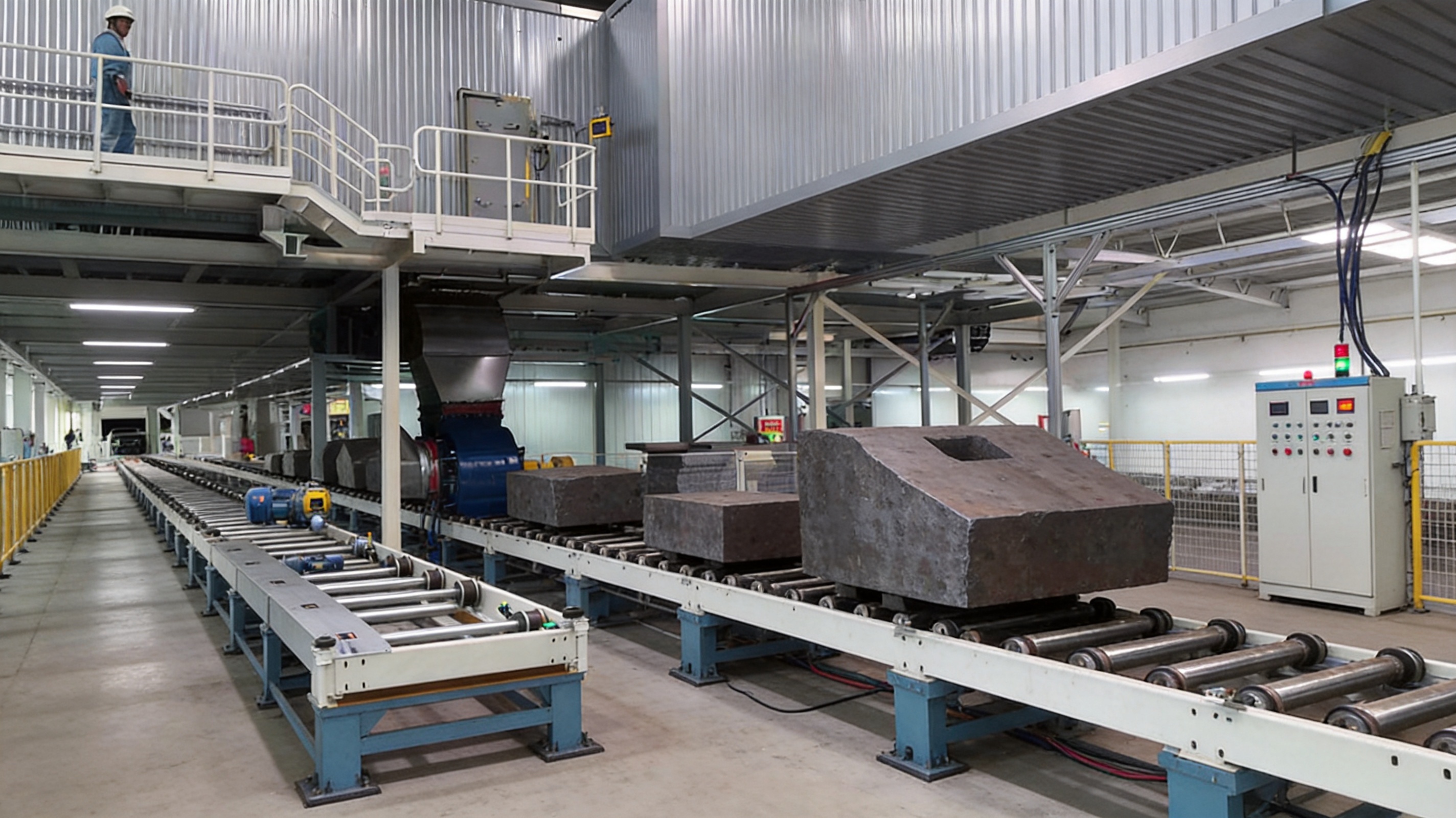
Many conveyor systems are available for industrial use, but not every system is suitable for heavy and irregular workpieces. A roller table automation line offers several competitive advantages when the application requires floor-level support and controlled movement.
Manual transfer may appear inexpensive at the beginning, but it consumes labor and creates inconsistent production times. Heavy lifting and pushing may also increase the risk of injury, product damage, and workplace congestion. The roller table provides repeatable movement and reduces the number of manual transfer tasks.
Forklifts are flexible, but they require trained operators and clear travel routes. Frequent forklift traffic may create safety concerns and can interrupt other production activities. Forklift handling also involves repeated loading and unloading, which may increase the risk of impact or positioning errors.
A roller table creates a defined and predictable transfer path. Once installed, it can move parts continuously without depending on forklift availability. Forklifts may still be used for loading or exceptional movements, but the routine transfer workload can be reduced.
Belt conveyors are effective for many products, especially packages and smaller components. However, heavy castings, sharp edges, high-temperature products, or parts with uneven bases may place excessive stress on a belt. Roller tables provide direct support through multiple load-bearing rollers and can be customized for heavier applications.
Overhead conveyors are useful when products can be attached securely to hooks or fixtures. They are less suitable when the workpiece is top-heavy, difficult to hang, or requires stable floor-level support. A roller table eliminates the need for overhead suspension and can simplify loading for large components.
A fixed-speed conveyor may not match the different cycle times of connected stations. The adjustable-speed and zone-control functions of an automated roller table provide greater flexibility. The line can slow down for positioning, stop at inspection points, or accumulate parts when a downstream process is temporarily occupied.
Non-standard customization is an important feature of industrial conveying equipment. Production environments differ in workpiece sizes, load requirements, building dimensions, process sequences, and environmental conditions. A standard catalogue configuration may not provide the correct solution for every factory.
The overall line length, roller width, section length, conveying height, and route direction can be designed around the workshop. The layout may include straight sections, changes in direction, parallel lines, loading areas, unloading areas, bypasses, and process connection points.
Available floor space, columns, doors, ventilation equipment, booths, ovens, cranes, walkways, and maintenance access should all be considered. A practical layout must provide enough clearance for operators and service personnel while maintaining the required product path.
Roller spacing should be selected according to the minimum workpiece length and the shape of the contact surface. A part should be supported by enough rollers at all times to prevent tipping or unstable movement. The maximum load should include not only the product weight but also any fixtures, pallets, trays, or temporary supports.
Roller diameter, shaft size, bearing arrangement, frame strength, and drive capacity must be considered together. Increasing only one component without reviewing the complete system may not provide the desired load-bearing performance.
The customer can specify the required conveying speed, acceleration characteristics, stopping accuracy, and operating mode. Depending on the project, the system may use manual, semi-automatic, or fully automatic control.
Multiple speed settings may be useful when the same line serves different products or process stages. Zone-based control can reduce unnecessary energy consumption because only the required sections operate when the line is not fully occupied.
Some processes require the workpiece to stop at a defined location. Positioning can be supported by sensors, end stops, side guides, centering devices, lifting mechanisms, or other components. The correct method depends on the shape, weight, surface, and handling sensitivity of the product.
Positioning functions are useful for spraying, inspection, assembly, marking, weighing, scanning, and robotic operations. If a robot or automatic processing unit is connected to the roller table, the positioning repeatability should be confirmed during the design stage.
Different production areas create different operating conditions. A coating workshop may involve paint mist or powder particles. A grinding area may contain dust and vibration. A drying or curing area may involve elevated temperatures. Outdoor or semi-outdoor locations may require additional protection from moisture and corrosion.
The selection of roller materials, surface treatment, bearings, seals, electrical enclosures, and motor protection should reflect the environment. Proper ventilation, cleaning access, and maintenance planning are also important for long-term reliability.
Jiangsu Yue Ze Environmental Protection Equipment Co., Ltd. is located in Yancheng, Jiangsu Province, China. The company operates a facility covering approximately 35,000 square meters and has a registered capital of 58 million yuan. With more than 40 years of combined experience in relevant equipment fields, the company provides integrated solutions for industrial surface treatment, conveying, production automation, and environmental protection.
The company’s product scope includes powder coating lines, intelligent coating lines, paint and bake booths, large-part grinding rooms, automated conveying systems, infrared radiation drying systems, waste gas treatment equipment, electric vehicle assembly lines, automotive counterweight spray lines, and other industrial equipment.
Integrated research, development, and manufacturing allow the company to consider the complete production process rather than only one conveyor section. A roller table can be designed together with the paint booth, drying equipment, grinding room, inspection station, and other connected systems.
This integrated approach can reduce interface problems between different equipment suppliers. Dimensions, control signals, transfer heights, operating speeds, and safety functions can be coordinated during the project design stage.
Industrial conveying requirements are often non-standard. The company evaluates product weight, product footprint, conveying distance, process rhythm, loading method, workshop structure, and environmental conditions before proposing a configuration.
Custom design may include the selection of roller specifications, motor capacity, frame structure, control logic, sensor arrangement, accumulation zones, and safety equipment. The purpose is to ensure that the final line is practical for the actual production environment rather than merely conforming to a generic specification.
The company’s experience in large-sized parts grinding rooms, counterweight block coating lines, and automated conveying systems is relevant to applications involving heavy or awkward workpieces. Such projects require more than simply moving a product from one point to another. The equipment must consider stable support, surface protection, process timing, operator access, and coordination with other production systems.
Experience with these conditions can help identify design details that may be overlooked in a light-duty conveyor project. Examples include the need for additional support at loading points, suitable stopping methods, allowance for irregular product geometry, and sufficient maintenance access around drive components.
Reliable conveying equipment depends on the quality of both the design and the manufacturing process. Structural frames must be accurately fabricated, rotating components must be properly aligned, and electrical controls must be assembled and tested systematically.
Quality control should cover material preparation, cutting, welding, machining, surface treatment, component installation, electrical wiring, sensor adjustment, and trial operation. A systematic inspection process can reduce the risk of alignment problems, abnormal vibration, loose connections, and inaccurate stopping.
Advanced production technology, experienced technicians, and project-based inspection support the development of equipment that can operate continuously in demanding industrial environments. The final acceptance process should include checks of load movement, speed adjustment, emergency stopping, sensor response, and integration with connected equipment.
A successful automation project includes more than equipment manufacturing. Installation, commissioning, operator training, maintenance guidance, and technical communication are also important. The company provides one-stop equipment solutions that include engineering, manufacturing, installation, and customized service.
During commissioning, the line should be tested with representative workpieces. This helps confirm that the rollers, stops, sensors, drives, and controls perform correctly under actual operating conditions. Operators should also understand normal operation, alarm handling, emergency stopping, cleaning, inspection, and routine maintenance.
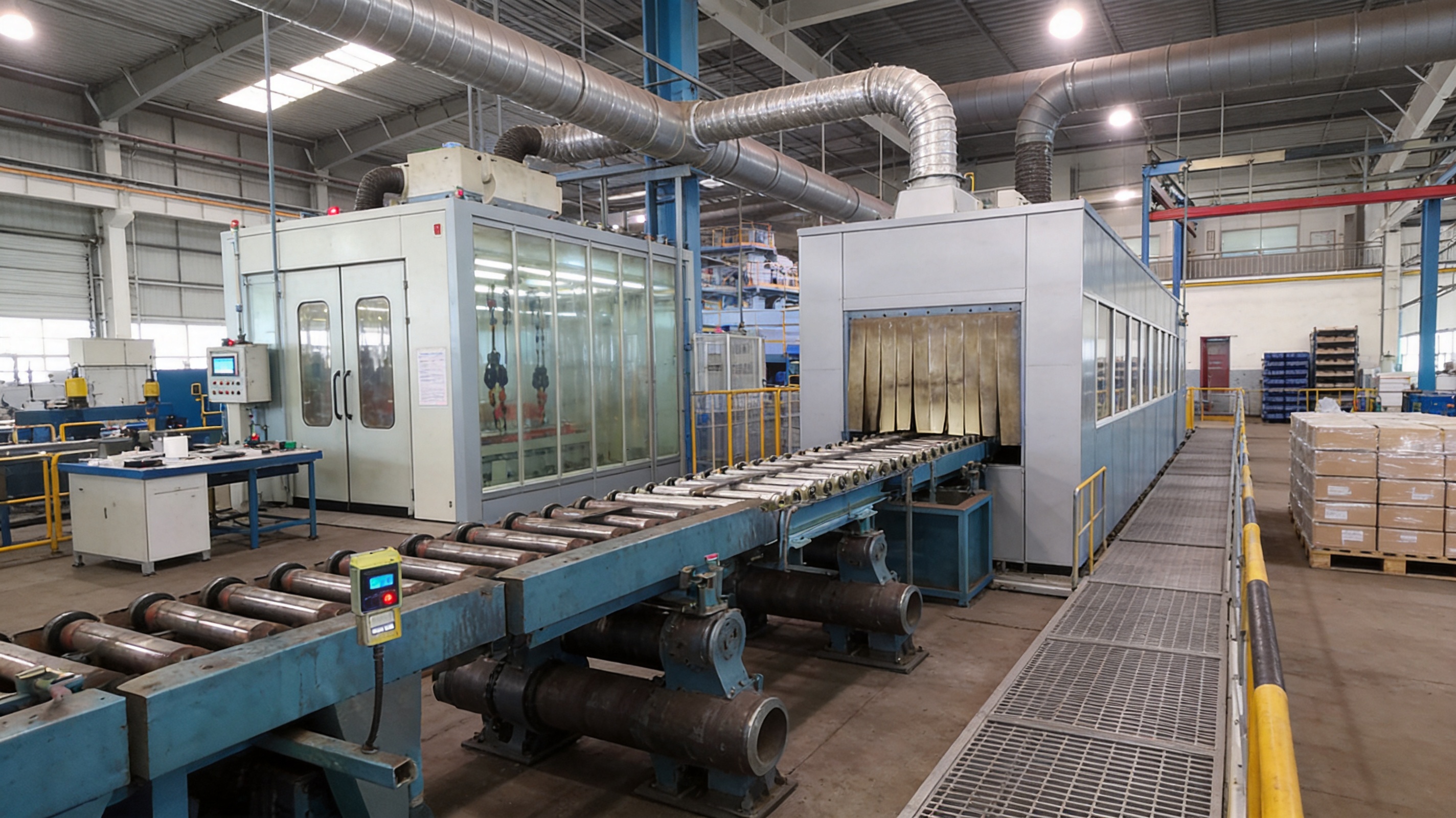
Customers should prepare accurate technical information before requesting a quotation. The more complete the input data, the easier it is to select suitable components and avoid later changes.
Important workpiece information includes maximum and minimum weight, length, width, height, center of gravity, bottom surface shape, material, temperature, and surface condition. If several product types will share the line, the full product range should be provided rather than only the average size.
Products with narrow feet, uneven bases, sharp edges, flexible sections, or unstable centers of gravity may require special roller spacing, guides, pallets, fixtures, or positioning components.
The customer should identify the required output, takt time, number of workpieces per hour, operating shifts, and expected future capacity. These factors influence the conveying speed, accumulation capacity, motor duty, and number of controlled zones.
A line designed only for current demand may become a bottleneck if production expands. Where practical, the design can reserve space or control capacity for future sections and equipment additions.
The positions of upstream and downstream equipment should be clearly defined. Relevant information includes the discharge height of the previous machine, receiving height of the next station, transfer direction, required stop location, and available clearance.
If the roller table connects to a paint booth, drying chamber, or automated machine, the control interface and operating sequence should be discussed in advance. This helps ensure that the conveyor does not release a workpiece before the receiving equipment is ready.
Floor flatness, foundation strength, drainage, power supply, ventilation, temperature, humidity, dust, and access routes can affect installation and operation. Existing columns, walls, doors, cranes, pipelines, and fire-protection facilities should be shown on the layout drawing.
Maintenance access must be considered from the beginning. A conveyor that fits physically but cannot be safely serviced may create unnecessary downtime and operating difficulty.
The customer and equipment supplier should identify applicable safety standards and site requirements. The design may need to include guards, emergency stop circuits, warning lights, audible alarms, access doors, interlocks, overload protection, and safe isolation procedures.
Safety features should be selected according to the actual risk profile of the line. Operators should never bypass safety devices or enter restricted areas while the conveyor is energized or moving.
Installation generally begins with checking the foundation and confirming the equipment position. Frame sections are placed and aligned, followed by the installation of rollers, drive units, sensors, guards, control cabinets, and connecting cables. The complete line should be checked for level, alignment, clearance, and mechanical interference.
Accurate alignment is important because an incorrectly aligned roller section may cause uneven movement, increased bearing load, product drift, or abnormal wear. The drive and transmission components should be installed according to the technical drawings and adjusted before operation.
Before loading workpieces, the line should be operated without load. This test confirms motor rotation, roller direction, sensor response, emergency stopping, alarm functions, and communication between control sections.
Technicians should listen for abnormal noise, observe vibration, check the movement of every roller, and verify that the control system responds correctly to start, stop, and reset commands.
Load testing should use representative workpieces whenever possible. The test should confirm starting performance, conveying stability, stopping accuracy, accumulation behavior, and transfer to connected equipment.
If multiple product sizes are used, each important product type should be tested. The results may indicate the need for minor adjustments to sensor positions, speed settings, guide arrangements, or stop timing.
Routine maintenance helps protect the service life of the equipment. Operators should keep the roller surfaces and surrounding areas clean, especially in grinding and coating environments. Accumulated dust, powder, paint residue, or foreign objects can affect rotation and sensor operation.
Maintenance personnel should inspect bearings, chains, couplings, gearboxes, motors, fasteners, electrical terminals, protective devices, and emergency stop components. Lubrication should follow the equipment instructions and should be suitable for the operating temperature and environment.
Any unusual vibration, slipping, overheating, noise, or inaccurate stopping should be investigated promptly. Early correction is generally less costly than continuing to operate with a developing mechanical or electrical fault.
Automation does not only improve material movement; it can also support more efficient production management. When the roller table is divided into controlled zones, unnecessary operation can be reduced. Sections may run only when a workpiece is present or when a downstream station is ready.
Variable speed control can help match the conveyor to the process instead of forcing all products to move at one fixed speed. This can reduce unnecessary acceleration and deceleration while improving synchronization with connected equipment.
Automatic conveying also creates a more measurable production flow. Operating data such as cycle time, waiting time, stoppage frequency, and accumulation duration can support production analysis. Managers can use this information to identify bottlenecks and improve the balance between process stations.
Consider a production route for large cast components. The workpiece first leaves a grinding room after flash removal, polishing, and surface preparation. It is loaded onto the first roller section, where a sensor confirms its presence. The line then transfers it toward the coating area at a controlled speed.
If the paint booth is occupied, the workpiece remains in an accumulation zone rather than requiring a forklift to remove it from the route. When the booth is ready, the control system releases the part. The roller table positions the workpiece at the required location for spraying or other coating operations.
After coating, the part moves toward a drying or curing process. The conveying speed and waiting time can be coordinated with the required process conditions. Once the surface treatment is complete, the part proceeds to inspection, assembly, packaging, or storage.
This arrangement reduces repeated handling and creates a clear connection between heavy-part processing stages. It also allows the production line to absorb short delays without stopping every station simultaneously.
A roller table can convey parts, packages, castings, counterweight blocks, machined housings, assemblies, and other materials when their dimensions and weight are within the designed operating range. It is particularly suitable for heavy, bulky, or irregular workpieces that require support from below.
Yes, provided that the roller diameter, spacing, shafts, bearings, frames, drive system, and foundation are designed for the actual load. The maximum product weight and load distribution must be confirmed before manufacturing.
The line can include accumulation zones. When the next station is not ready, the workpiece waits in a controlled section until a ready signal is received. This prevents a temporary delay from immediately stopping the entire conveying route.
Yes. The conveying speed can be configured according to the production rhythm, workpiece characteristics, and connected process equipment. Variable speed control is useful for transfer, positioning, inspection, coating, and curing applications.
Yes, if the roller spacing, load rating, guide arrangement, sensor position, and control program are suitable for the complete product range. The smallest and largest products should be reviewed during the design stage.
Neither system is universally better. An overhead conveyor is useful when products can be safely suspended and need to pass through an elevated route. A roller table is generally more suitable for heavy, irregular, top-heavy, or floor-level workpieces that require stable support from below.
Yes. It can be designed to connect grinding, preparation, coating, drying, inspection, assembly, and packaging stations. The line layout, surface protection, conveying speed, transfer height, and control interface should be coordinated with the powder coating equipment.
Customers should provide workpiece dimensions, maximum and minimum weight, required conveying distance, production capacity, conveying speed, loading and unloading methods, workshop drawings, process connections, environmental conditions, power requirements, and desired automation functions.
Routine inspection and maintenance are necessary, as with any industrial conveying system. Typical tasks include cleaning, checking bearings and transmission components, inspecting fasteners and electrical connections, verifying sensors, and testing safety devices. Proper maintenance helps reduce unexpected downtime.
Expansion depends on the original layout, control architecture, motor capacity, and reserved installation space. If future growth is expected, this requirement should be included in the initial engineering plan so that additional sections or stations can be integrated more easily.
Yes. Sensors, stops, guides, centering devices, and programmable controls can be used to position workpieces for inspection, spraying, assembly, weighing, scanning, or robotic operations. The required positioning accuracy should be defined according to the process.
A customized system is designed around the actual product, workshop, process sequence, load, speed, and safety requirements. This can improve conveying stability, reduce interface problems, increase production efficiency, and avoid paying for features that do not match the application.
A roller table is only one part of many modern production lines. Selecting a manufacturer with experience in conveying, coating, drying, grinding, environmental protection, and automation can simplify the overall project. The supplier can evaluate the relationship between the conveyor and the surrounding equipment instead of designing the transfer system in isolation.
Jiangsu Yue Ze Environmental Protection Equipment Co., Ltd. provides integrated R&D, manufacturing, installation, and customized equipment services. Its broader product portfolio includes industrial coating lines, paint and bake booths, powder coating systems, grinding rooms, waste gas treatment equipment, infrared drying systems, assembly lines, and automated conveying equipment.
The company’s experience includes a hanging automatic painting process line for casting counterweight blocks developed in 2014. This background in full-process surface treatment demonstrates an understanding of the connection between finishing, coating, drying, conveying, and environmental control.
For customers purchasing a roller table automation line, this integrated capability can be valuable when the conveyor must connect to an existing or new production system. The company can consider process flow, workshop arrangement, environmental conditions, operator access, control coordination, and future customization during the planning stage.
With a manufacturing facility in Yancheng, Jiangsu, a large equipment production area, experienced technical personnel, and project experience across domestic and export markets, the company is positioned to provide customized industrial equipment for different production environments.
A roller table automation line is an effective solution for moving heavy, bulky, and irregular workpieces through industrial production processes. Its powered rollers provide continuous movement, strong load-bearing capacity, adjustable speed, stable support, and smooth operation. Accumulation zones and intelligent controls help coordinate different production stages, while floor-mounted installation allows the line to fit many workshop layouts.
Compared with manual handling, forklift transfer, fixed-speed conveyors, and unsuitable overhead systems, a customized roller table can reduce handling effort, improve production consistency, support safer material flow, and connect multiple process stations. It is suitable for grinding, coating, drying, inspection, assembly, packaging, storage, and other manufacturing applications.
The most important factor is correct engineering. Workpiece weight, size, shape, bottom surface, conveying speed, process cycle, environmental conditions, and safety requirements must all be considered. When these factors are matched with the correct rollers, drive system, frame structure, sensors, controls, and protection devices, the result can be a reliable and efficient production transfer system.
Jiangsu Yue Ze Environmental Protection Equipment Co., Ltd. combines customized conveying design with experience in coating lines, grinding rooms, drying equipment, environmental systems, and industrial automation. Its integrated manufacturing and service capabilities make it a suitable partner for customers seeking a roller table automation line that is designed for real production conditions rather than a generic standard application.
1. Industrial Conveyor Design Principles, material handling and conveyor engineering reference.
2. Powered Roller Conveyor Applications, guidance on load distribution, drive selection, and accumulation control.
3. Industrial Machinery Safety Practices, reference material for guarding, emergency stops, interlocks, and operator protection.
4. Surface Treatment Production Line Engineering, reference on conveying integration with grinding, coating, drying, inspection, and packaging processes.
5. Automated Material Handling System Planning, reference on sensors, zone control, production buffering, and line synchronization.
6. Manufacturer-provided technical information for customized roller table automation lines, industrial conveying systems, coating equipment, and environmental protection equipment.
Roller table automation line, electric-driven with stable power output, mainly composed of high-quality steel rollers, drive motor, and intelligent control system. It adopts floor-mounted installation...
See Details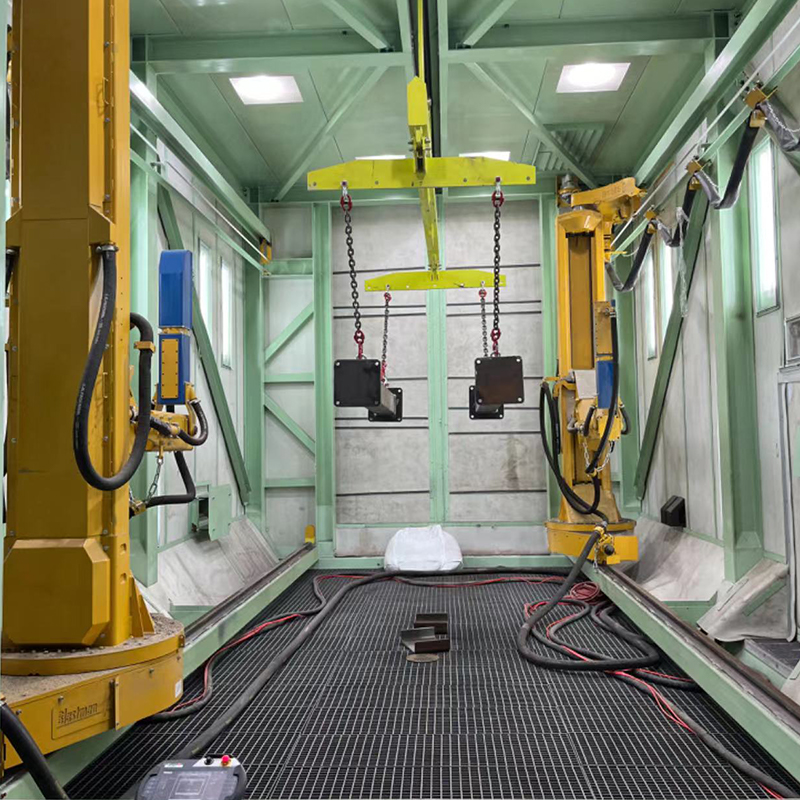
Professional coating line specially designed for large castings and heavy truck parts, applicable to various large castings (engineering castings, mining equipment castings, industrial castings) and h...
See Details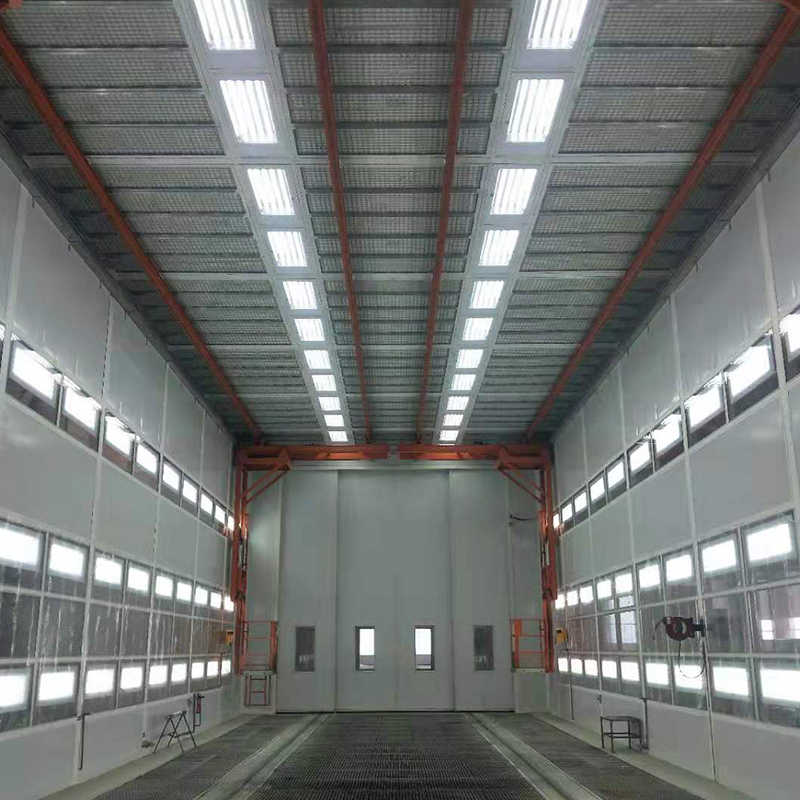
Heavy vehicle spray booth is a large-scale professional coating workshop, specially designed for oversize and heavy equipment. With powerful air circulation, heating system, and multi-stage exhaust fi...
See Details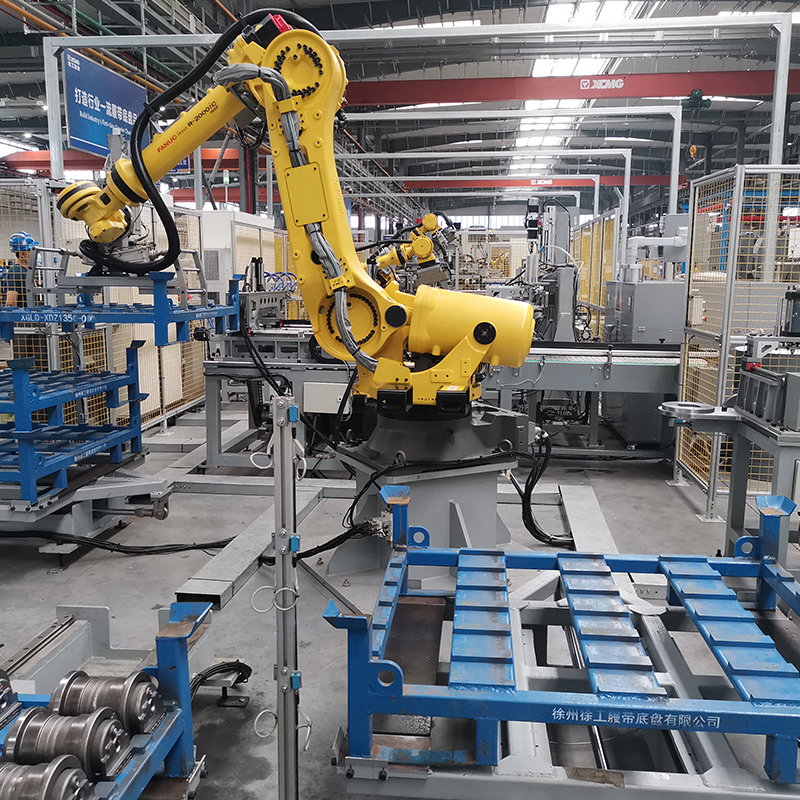
Professional production line specially designed for decorative manhole covers, applicable to various decorative manhole cover types (cast iron decorative manhole cover, stainless steel decorative manh...
See Details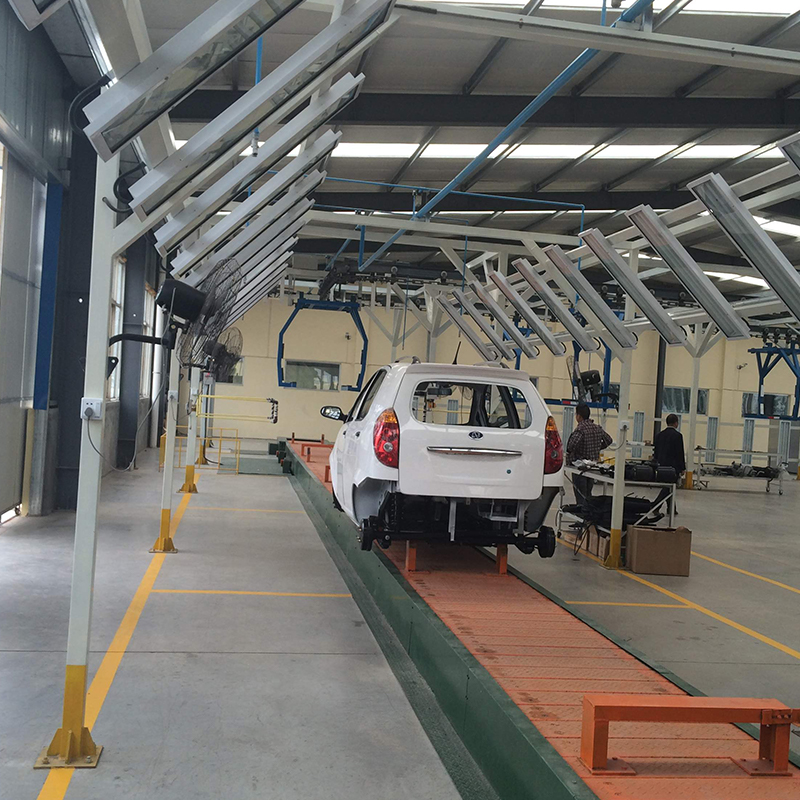
Professional electrophoresis coating line specially designed for electric vehicles (EVs), applicable to various EV types (passenger EV, commercial EV, new energy logistics vehicle) and EV components. ...
See Details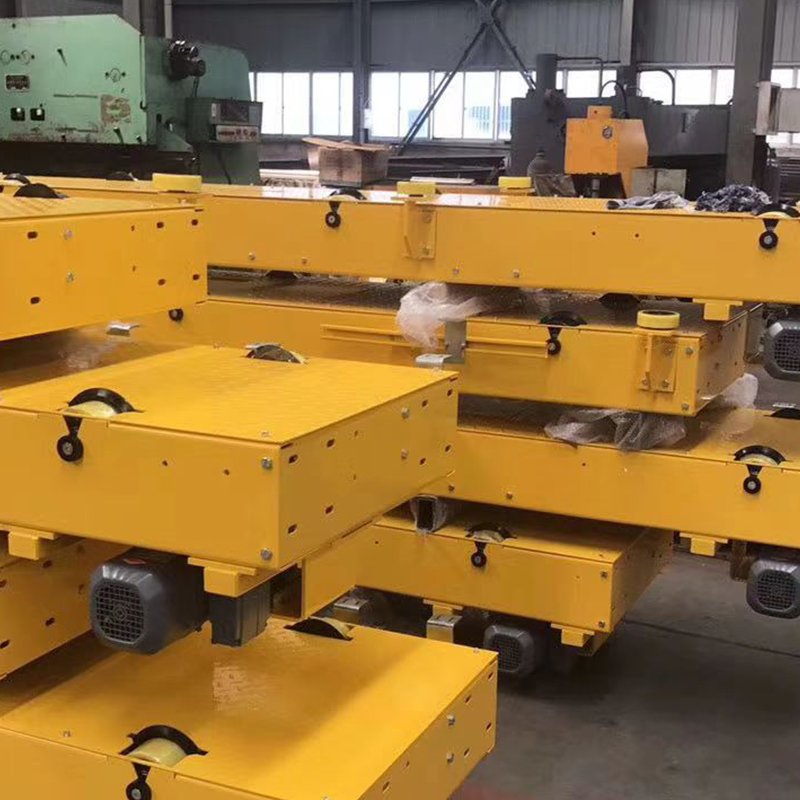
Platform Cart is a practical and efficient industrial handling equipment, widely used in factories, workshops, warehouses, logistics centers, and other places. It is composed of a sturdy load-bearing ...
See DetailsBuild Your Customized Industrial Coating System
Send us your workpiece information, production capacity, coating process, workshop layout, and environmental requirements. Yueze will help evaluate your project and develop a suitable coating, conveying, drying, and environmental treatment solution.
Main menu
Products
Contact Us
Company Address:
No. 12, Park Avenue, Shanggang Industrial Park, Jianhu, Yancheng City, Jiangsu Province
Message Us Right Now!

Follow us: