
 русский
 عربى
عربى
 Tiếng Việt

Waste Gas Treatment Equipment, electric-driven with stable power output, mainly composed of a gas collection hood, purification filter, fan, control system, and waste gas discharge device. It adopts o...
See Details
Yueze Environmental Protection provides one-stop compliant industrial surface treatment solutions with professional tech and fine craftsmanship.
 Get Inquiries
2026-09-04
Content
Industrial production is closely connected with economic development, technological progress, and the creation of essential products. At the same time, many manufacturing processes generate exhaust gas containing dust, odors, volatile substances, fine particles, and other pollutants. If these emissions are not collected and treated correctly, they may affect workplace conditions, increase environmental risks, and make it more difficult for a factory to meet applicable emission requirements. Waste Gas Treatment Equipment provides an integrated solution for collecting, purifying, and discharging industrial exhaust gas in a controlled and efficient way.
Modern waste gas treatment systems are no longer limited to a simple exhaust fan or an isolated filter. A well-designed system combines a gas collection hood, ventilation network, purification filter, fan, control system, discharge device, and supporting structural components. These parts work together to capture pollutants close to their source, guide them through suitable treatment stages, and discharge the treated gas in a controlled manner. The result is a cleaner production environment, improved process management, and a more sustainable industrial operation.
Jiangsu Yue Ze Environmental Protection Equipment Co., Ltd. develops and manufactures customized environmental protection equipment for industrial customers. Its waste gas treatment systems are designed for applications including casting, machining, coating, painting, drying, curing, and other surface treatment processes. The equipment can be installed in overhead or floor-mounted configurations according to site conditions. It can also be integrated with powder coating lines, paint booths, sanding booths, automatic conveyor systems, drying systems, and complete production lines.
The key value of this equipment is flexibility. Different factories produce different types and concentrations of exhaust gas. Their production capacities, workshop layouts, operating schedules, and environmental management objectives also vary. Instead of applying one standard machine to every project, a customized waste gas treatment solution considers the emission source, required air volume, pollutant characteristics, installation space, maintenance requirements, and future production plans.
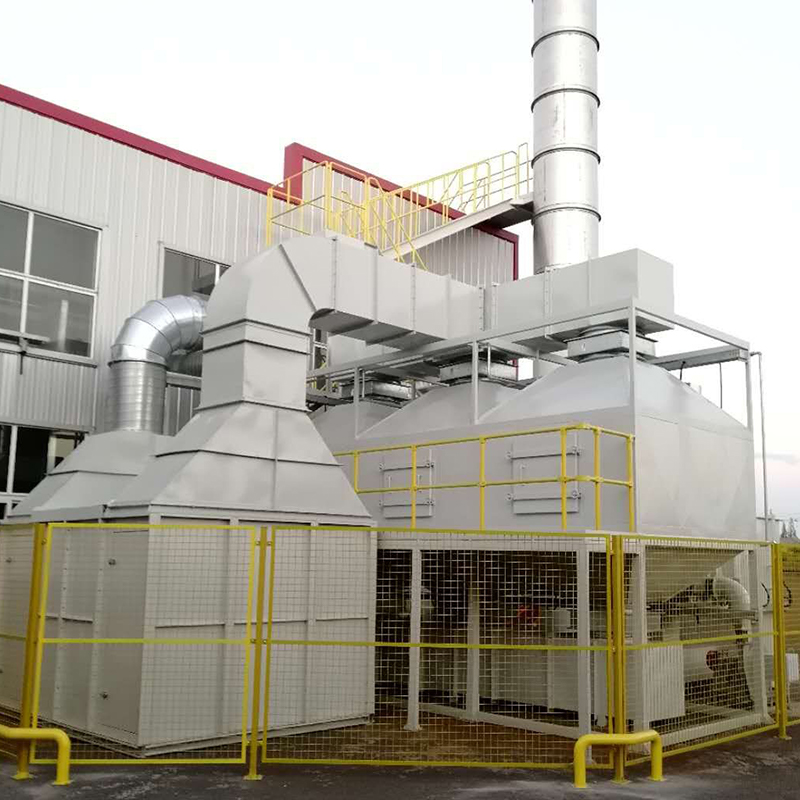
Waste Gas Treatment Equipment
Waste Gas Treatment Equipment is an industrial environmental protection system used to collect, purify, and discharge exhaust gas generated during production. It is commonly installed near coating areas, painting booths, drying ovens, curing zones, grinding rooms, chemical processing areas, casting operations, and other locations where airborne pollutants may be released.
The system normally consists of several functional modules. A gas collection hood or enclosed collection structure captures exhaust gas at the emission source. Ductwork transports the gas to the purification unit. Filters, adsorption components, or other treatment devices remove pollutants from the air stream. An electric-driven fan provides stable airflow and helps maintain the required negative pressure. A control system manages operation, monitoring, adjustment, and safety functions. Finally, a waste gas discharge device releases the treated gas according to the design requirements of the project.
The exact configuration depends on the production process. For example, a painting workshop may require strong collection around spray areas, while a drying process may produce warm exhaust gas with different chemical characteristics. A sanding room may require effective particulate capture, whereas a coating line may require a combination of particle filtration and treatment for odors or volatile components. A customized design allows the treatment method to match the actual emission profile instead of relying on an unsuitable general-purpose arrangement.
Waste gas treatment is therefore both an environmental function and a production-support function. It helps protect the surrounding environment, but it also contributes to better workshop organization. When fumes, odors, and dust are effectively controlled, employees can work in a cleaner environment, equipment surfaces may remain cleaner, and production areas can be easier to manage.
The collection hood is the first point of contact between the production process and the waste gas treatment system. Its purpose is to capture exhaust gas before it spreads through the workshop. Depending on the application, the collection structure may be an open hood, side-draft hood, enclosed booth, canopy, or specially shaped extraction unit.
Correct hood design is important because insufficient capture velocity may allow pollutants to escape, while excessive airflow may increase energy consumption and disturb the production process. Yueze designs the collection arrangement according to the location of the emission source, the size of the workpiece, operator movement, process temperature, and required airflow volume.
The purification section removes pollutants from the collected gas. The filter configuration may be selected according to the type and concentration of particles, odors, vapors, or other components present in the exhaust. In some applications, filtration is the principal treatment method. In others, filtration may be combined with adsorption or additional purification stages.
A properly selected purification unit should provide reliable treatment efficiency while maintaining manageable pressure loss. Filter materials and consumable components should also be accessible for inspection and replacement. The system is designed with maintenance in mind so that routine service can be completed without unnecessary production interruption.
The fan is responsible for moving air through the collection and purification system. The equipment uses an electric-driven configuration with stable power output. Stable airflow supports consistent collection performance and helps the system maintain the required operating condition during continuous production.
Fan selection considers the required air volume, duct resistance, filter pressure loss, operating schedule, and installation environment. An appropriately selected fan can provide effective ventilation without excessive energy consumption or unnecessary noise. The equipment is also designed to support adjustable processing air volume, allowing the system to respond to different production conditions.
The control system provides centralized management of the fan, purification equipment, operating sequence, and safety functions. Depending on the project, the control arrangement may include start and stop controls, operating indicators, alarm functions, interlocking with production equipment, and adjustment of airflow or treatment parameters.
Automatic operation reduces the need for frequent manual intervention. The system can be coordinated with a coating line, spray booth, drying oven, or conveyor system so that waste gas treatment operates in harmony with the production process. This improves convenience and can reduce labor-related operating costs.
After treatment, the gas is discharged through a properly designed outlet, stack, or discharge device. The discharge arrangement is selected according to the workshop structure, building height, local conditions, and project requirements. The complete system is planned as an integrated airflow path from collection to final discharge.
The working principle of Waste Gas Treatment Equipment is based on controlled collection, air transportation, pollutant removal, and organized discharge. Although the specific purification method may vary, the general operating sequence remains similar.
Waste gas is generated during a production operation such as spraying, painting, drying, grinding, casting, curing, or surface treatment.
The collection hood, booth, or enclosed extraction structure captures the exhaust gas near the source.
The electric-driven fan creates the airflow required to move the gas through the ductwork.
The gas enters the purification section, where particles, odors, and other harmful components are removed or reduced according to the selected treatment process.
The treated gas passes through the discharge device and is released in accordance with the project design and applicable environmental requirements.
The control system monitors and manages the equipment to support stable, safe, and efficient operation.
The efficiency of the complete system depends on every stage. Even a highly effective filter cannot perform properly if the collection hood is poorly designed or the airflow is unstable. Likewise, a powerful fan does not guarantee good environmental performance if the purification section is not matched to the pollutants. This is why system engineering and process-specific design are more important than simply purchasing an individual treatment component.
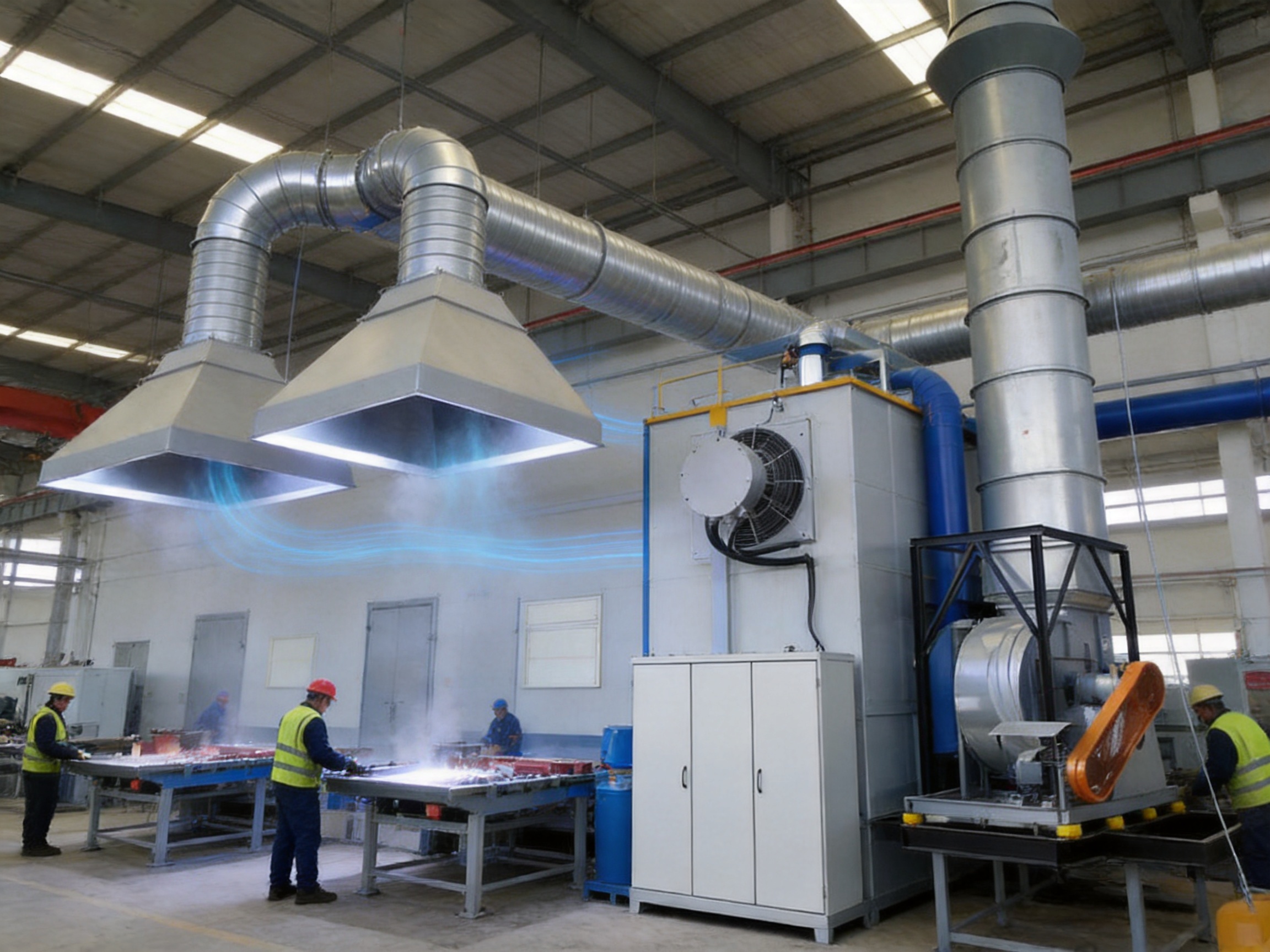
Painting and coating processes may generate spray mist, solvent-related odors, fine particles, and exhaust gas from curing or drying. Waste Gas Treatment Equipment can be connected to paint booths, powder coating lines, liquid painting systems, drying areas, and curing zones. The collection system helps keep airborne contaminants within the intended treatment path instead of allowing them to spread across the workshop.
For coating production lines, the treatment system can be planned together with conveyors, spray booths, ovens, and material handling equipment. This integrated approach helps coordinate airflow, production movement, and environmental control. It also allows the customer to reserve suitable space for ducts, filters, fans, and maintenance access during the early design stage.
Drying and curing equipment may release warm air, odors, moisture, or process-related vapors. A properly designed exhaust arrangement removes unwanted air from the drying area and helps maintain suitable process conditions. The design may consider exhaust temperature, continuous operation, heat management, and the need to prevent pollutants from returning to the workshop.
When waste gas treatment is integrated with a drying or curing system, the airflow balance must be carefully considered. Excessive extraction could affect heating efficiency, while insufficient extraction could lead to poor ventilation. Yueze’s engineering approach addresses the relationship between production equipment and environmental equipment rather than treating them as completely separate systems.
Grinding and sanding operations can produce dust and fine particulate matter. Large-part grinding rooms and sanding booths require strong and carefully directed collection. The collection hood or room structure should be designed to reduce dust escape and guide particles toward the filtration system.
Compared with a basic workshop exhaust fan, a dedicated sanding or grinding treatment system provides more controlled extraction. It can help concentrate dust collection at the source, reduce the spread of particles, and simplify filter maintenance. The arrangement may be adapted to workpiece dimensions, operator access, abrasive equipment, and the movement of materials.
Casting and machining processes may generate dust, smoke, odors, and airborne particles. Waste Gas Treatment Equipment can be designed for localized collection at furnaces, processing stations, polishing areas, or other emission points. The system can use multiple collection branches connected to a central purification unit or separate treatment modules for different process areas.
For workshops with changing production schedules, adjustable airflow can be valuable. Operators may use different extraction branches according to the active production area, helping avoid unnecessary energy consumption when some equipment is not running. The control arrangement can also be designed to coordinate with machinery operation where appropriate.
Surface treatment operations may include cleaning, preparation, spraying, heating, curing, and finishing. Each stage can produce different emissions. A customized waste gas treatment system allows the customer to separate or combine treatment streams based on gas composition and process conditions.
The system is also suitable for other industrial environments that require organized exhaust collection and purification. The final design should be based on a technical assessment of the process, including emission sources, airflow requirements, pollutant characteristics, operating time, and installation conditions.
The equipment is designed to quickly collect and treat various forms of industrial exhaust gas. By positioning collection structures close to the emission source and selecting a suitable purification configuration, the system can reduce the concentration of odors, particles, and harmful components before discharge.
Treatment efficiency is not determined by one component alone. It is affected by the collection velocity, duct layout, fan performance, filter selection, gas residence time, maintenance condition, and operating procedure. Yueze’s complete-system approach focuses on coordinating these elements for dependable performance.
Many competing products are designed for a narrow process or a fixed workshop arrangement. Yueze’s equipment is suitable for multiple industries, including painting, coating, casting, machining, surface treatment, drying, and chemical-related production environments. The modular nature of the system allows the configuration to be adapted to different gas sources and factory layouts.
This adaptability is particularly useful for manufacturers that operate several production processes in one facility. Instead of installing unrelated equipment for each area, the project can be evaluated as a complete environmental management system with appropriately separated or connected treatment streams.
Different pollutants require different control strategies. Fine particles, unpleasant odors, vapors, and other harmful components may not be effectively addressed by an unsuitable single-stage system. The equipment can be configured with treatment stages selected according to the waste gas characteristics and the customer’s environmental objectives.
High purification precision also depends on proper sizing. An undersized unit may be overloaded, while an oversized unit could increase initial investment and operating costs without providing proportional benefits. Through customized engineering, the treatment capacity can be matched to actual and anticipated production demand.
Industrial environmental equipment must operate reliably for long periods. Unexpected failures can interrupt production, increase maintenance costs, and create environmental management risks. The equipment uses stable electric drive, durable structural materials, practical control arrangements, and accessible consumable components to support dependable operation.
Reliability is also supported by appropriate operating margins. The fan, filter, ductwork, and control system should be selected according to the actual process rather than a nominal value that does not reflect real production conditions. This engineering discipline helps the system maintain performance during continuous operation.
Automatic operation reduces the need for constant manual adjustment. Once the system is commissioned, operators can manage the primary functions through the control system. The treatment equipment can be connected to production equipment or scheduled according to operating requirements.
Automation helps reduce labor intervention and makes operating procedures more consistent. It can also support safety management by providing alarms, interlocking functions, and abnormal-condition indications when included in the project design.
Not every process generates the same amount of waste gas at all times. Production speed, workpiece size, booth operation, and the number of active stations may change during the working day. Adjustable air volume enables the system to respond to these variations.
Airflow adjustment can improve operating flexibility and may reduce energy consumption during lower-load periods. It also helps the customer manage different process areas without requiring the entire system to operate continuously at maximum capacity.
Energy consumption is an important part of the total operating cost of any ventilation and purification system. The equipment is designed with attention to fan selection, airflow resistance, system layout, operating control, and maintenance accessibility. These factors help reduce avoidable energy losses.
Environmental responsibility also means preventing secondary pollution. Consumables, collected dust, and replaced filter elements should be handled according to applicable industrial waste management procedures. The equipment supports cleaner manufacturing by controlling emissions while providing a practical structure for maintenance and waste handling.
Many factories have limited floor space or complicated existing layouts. Waste Gas Treatment Equipment can be installed overhead or on the floor according to the site. A compact arrangement helps preserve production space and makes it easier to integrate the equipment into an existing workshop.
Overhead installation can be suitable when floor space is needed for conveyors, workpieces, vehicles, or operators. Floor-mounted installation may be preferred when maintenance access, structural loading, or building conditions make ground-level equipment more convenient. The final arrangement is selected after reviewing the site.
Industrial waste gas may contain moisture, particles, corrosive substances, or chemically active components. Equipment materials and protective measures should therefore be selected according to the working environment. Yueze considers the gas composition, temperature, humidity, and expected service conditions when developing the equipment configuration.
Corrosion-resistant and anti-aging construction can help extend service life and reduce the likelihood of premature deterioration. Appropriate material selection is especially important for ducts, filter housings, collection structures, fasteners, and other components exposed to the exhaust stream.
Maintenance is an essential part of long-term treatment performance. Filters and other consumables must be inspected and replaced at suitable intervals. The equipment is designed to provide practical access to key components, helping maintenance personnel complete routine work efficiently.
Easy maintenance can reduce downtime, support stable treatment efficiency, and lower operating costs. It also allows problems such as abnormal pressure loss, damaged filter media, fan vibration, or blocked ducts to be identified before they become major failures.
A conventional exhaust arrangement may consist of a fan connected to a simple duct or roof outlet. Such a system can remove air from a workshop, but it does not necessarily provide effective purification. If pollutants are simply moved outside without adequate treatment, the environmental problem may not be solved.
Waste Gas Treatment Equipment offers a more complete approach by combining source capture, controlled transportation, purification, and organized discharge. This is a key advantage over basic ventilation equipment. It treats the exhaust stream as a complete process rather than focusing only on air movement.
| Item | Integrated Waste Gas Treatment Equipment | Basic Exhaust System |
|---|---|---|
| Collection method | Designed around specific emission sources and process areas | Often relies on general workshop ventilation |
| Purification | Includes filters or other selected treatment stages | May provide little or no pollutant removal |
| Airflow management | Adjustable according to process and capacity | Usually fixed or manually controlled |
| Automation | Can include controls, alarms, and production interlocking | Often requires separate manual operation |
| System integration | Can connect with booths, ovens, conveyors, and production lines | Usually operates as an independent ventilation device |
| Customization | Designed according to gas composition and site conditions | Often based on standard dimensions |
| Maintenance | Provides planned access to filters and key components | Maintenance convenience may not be considered in the initial layout |
Compared with a one-size-fits-all treatment machine, a customized system also offers advantages in capacity matching and layout efficiency. The customer does not need to force an unsuitable standard unit into a restricted workshop. Instead, the system can be developed around the actual process and available installation space.
Compared with fragmented equipment purchased from multiple suppliers, a complete solution can simplify project coordination. One engineering team can consider collection hoods, ducts, fans, filters, controls, discharge devices, and production-line connections as one system. This can help reduce compatibility problems during installation and commissioning.
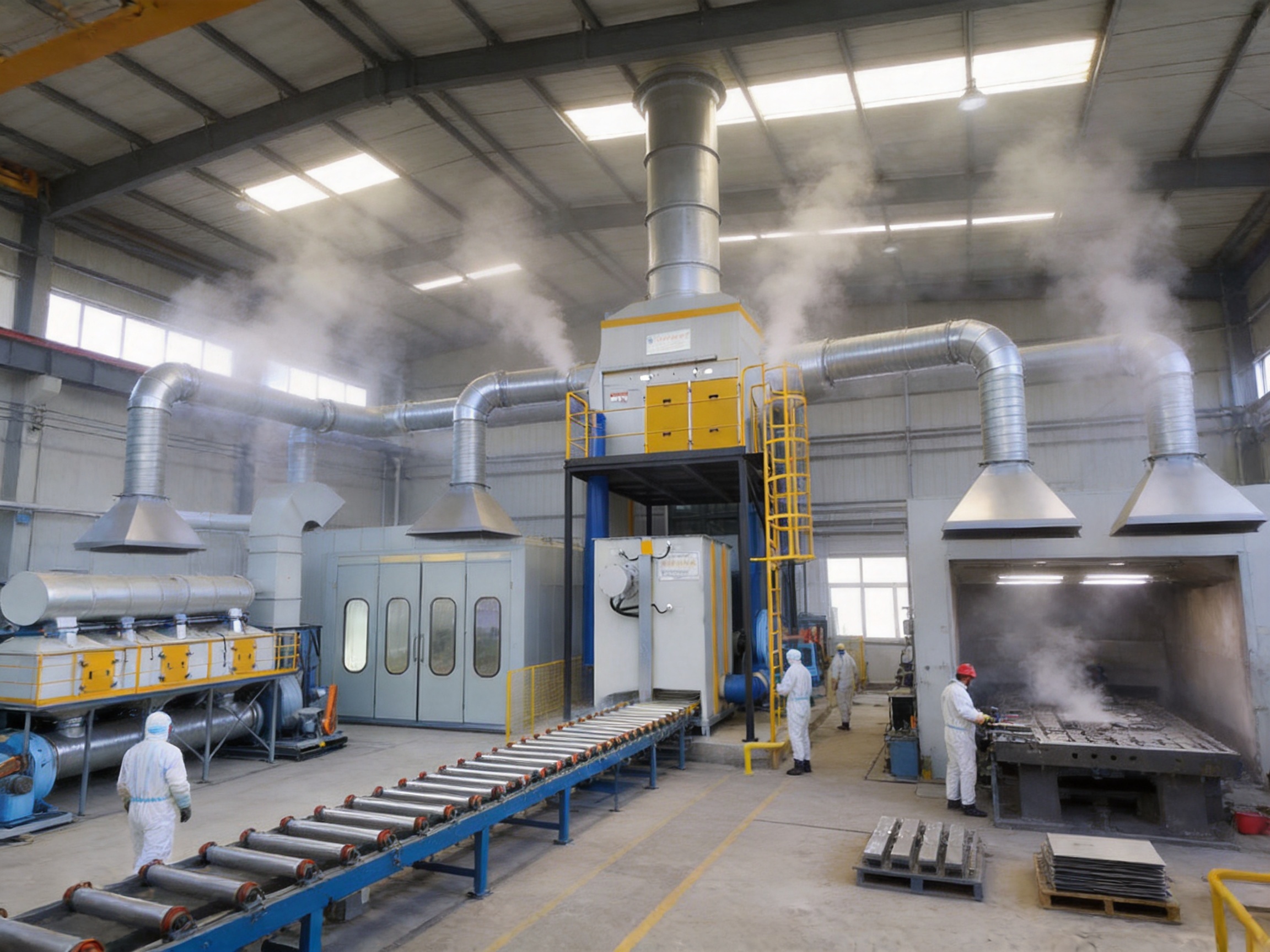
The first step is to understand how the customer’s production process generates waste gas. Engineers review the number of emission points, operating temperature, production materials, workpiece dimensions, operating hours, and the expected pollutant types. The assessment may cover spraying, drying, curing, grinding, casting, machining, or multiple processes.
This information helps determine whether the exhaust streams should be treated separately or combined. It also helps identify the most appropriate location for collection hoods, duct branches, inspection points, fans, and purification units.
The system capacity is determined by the required processing air volume. Engineers consider the dimensions of booths or work areas, the number of active stations, collection velocity, duct resistance, filter pressure loss, and possible future production expansion.
Correct capacity calculation is important for both environmental performance and energy efficiency. A system with inadequate airflow may fail to capture pollutants effectively. A system with excessive airflow may consume more energy and interfere with production. The goal is to establish a balanced design based on actual operating conditions.
After the process and airflow requirements are identified, the equipment configuration is selected. This may include the collection hood, duct system, purification filter, fan, control cabinet, discharge device, supporting frame, access doors, and consumables.
The selection also considers the gas temperature, moisture level, corrosiveness, particle size, odor characteristics, and required maintenance frequency. Components are chosen to provide a practical balance between treatment performance, service life, energy consumption, and total project cost.
The equipment can be planned for overhead or floor-mounted installation. Engineers review building height, available floor area, existing machinery, material flow, operator routes, fire and safety considerations, maintenance clearance, and structural support conditions.
A well-planned layout should not obstruct production or create unnecessary long duct runs. Shorter and more direct airflow paths may reduce pressure loss and improve system efficiency. At the same time, sufficient space must be reserved for filter replacement, inspection, cleaning, and repair.
After design approval, the equipment enters manufacturing. Structural parts, duct sections, filter housings, support frames, control components, and other modules are fabricated according to the project drawings and technical requirements. Production quality is managed through material inspection, dimensional checks, welding inspection, surface treatment, assembly verification, and functional testing.
Quality control is important because small deviations in duct connections, housing dimensions, fan alignment, or support structures can affect installation and performance. A systematic inspection process helps ensure that the delivered equipment is consistent with the approved design.
Installation includes positioning the treatment unit, connecting ducts, assembling collection structures, wiring the control system, installing the fan, and connecting the discharge device. Commissioning verifies airflow direction, fan operation, control functions, interlocking, abnormal-condition alarms, and the operation of purification components.
Where the equipment is integrated with a production line, commissioning also considers the coordination between the environmental system and production equipment. The goal is to create a stable operating sequence that supports both production efficiency and emission control.
Jiangsu Yue Ze Environmental Protection Equipment Co., Ltd. is located in Yancheng, Jiangsu, China, and operates from a facility covering approximately 35,000 square meters. With more than 40 years of experience, the company has developed capabilities in industrial surface treatment systems, environmental protection equipment, automated production lines, and customized manufacturing solutions.
The company’s manufacturing strength is supported by integrated research and development, fabrication, assembly, installation, and service capabilities. This integrated structure allows engineering teams to consider the relationship between production equipment and environmental systems from the beginning of a project.
Yueze’s product range includes powder coating lines, electric vehicle assembly lines, automotive counterweight spray lines, paint and bake booths, large-part grinding rooms, waste gas treatment equipment, infrared radiation drying systems, automated conveying systems, intelligent coating lines, and related environmental protection equipment.
This broad product experience is valuable when a waste gas treatment system must be connected to a complete industrial line. The company understands the operating characteristics of spray booths, coating systems, conveyors, ovens, grinding rooms, and other production equipment. As a result, the environmental system can be designed with greater attention to production flow, access, synchronization, and long-term operation.
In 2014, the company pioneered a hanging automatic painting process line for casting counterweight blocks. The line covered the full process from finishing and polishing to primer and topcoat application. This experience demonstrates the company’s ability to develop complete process solutions rather than isolated machines. It also provides practical knowledge for designing exhaust collection and purification systems around complex automated production processes.
Advanced manufacturing is not limited to modern machinery. It also includes disciplined engineering procedures, skilled fabrication, process control, accurate installation, commissioning capability, and continuous improvement. Yueze combines these elements with customer-focused project management and customized design.
Waste gas treatment projects often involve non-standard conditions. Research and development capability enables the manufacturer to modify equipment dimensions, airflow arrangements, control functions, support structures, and treatment configurations according to the customer’s requirements.
Engineers can work from process drawings, factory layouts, production capacity information, or on-site measurements. This makes it possible to develop a system that is more suitable than a standard catalog product for complicated industrial environments.
Accurate fabrication supports smooth installation and reliable operation. Ducts, filter housings, access panels, brackets, platforms, and support structures must be manufactured to the required dimensions. Proper assembly also helps maintain airtight connections and reduce unwanted leakage.
Before shipment, major modules can be checked for fit, appearance, connection points, and operating condition. Modular production and pre-assembly may simplify transportation and reduce the amount of field adjustment required at the customer’s facility.
A supplier that understands complete production lines can design waste gas treatment equipment with better awareness of process interactions. For example, the extraction system must not interfere with conveyor movement, booth operation, oven temperature control, or operator access. The treatment system should support the production line instead of becoming an obstacle.
Yueze’s experience in coating and environmental equipment allows it to provide coordinated solutions for customers who need both production-line equipment and emission-control equipment. This can reduce communication complexity and support more efficient project implementation.
Equipment performance depends on correct installation, commissioning, and maintenance. Yueze provides technical support for equipment installation and system adjustment. The company can assist customers with operating guidance, consumable replacement recommendations, troubleshooting, and maintenance planning according to the project arrangement.
Long-term service is particularly important for environmental equipment because filters and other consumables have a direct effect on treatment efficiency. A customer should receive not only a machine but also a practical understanding of how to operate and maintain the system.
Consumables are a normal part of waste gas treatment operation. Filter elements, filter materials, adsorption media, sealing components, and other replaceable parts may gradually become loaded or worn during use. Their service life depends on gas concentration, dust loading, operating hours, humidity, temperature, and maintenance practices.
Routine inspection should include checking filter pressure loss, fan noise, vibration, airflow condition, duct cleanliness, control indicators, and the condition of collection hoods. If pressure loss increases significantly, the filter may require cleaning or replacement. If airflow decreases, the cause could be a blocked filter, damaged duct, loose connection, or fan problem.
Maintenance personnel should follow the equipment operating instructions and applicable safety procedures. Power should be isolated before inspection or replacement work. Collected dust and used consumables should be handled in accordance with the characteristics of the material and local waste management requirements.
A preventive maintenance plan can help reduce unplanned downtime. It may include daily visual inspections, weekly operating checks, monthly duct and fan inspections, and periodic replacement of consumables. The actual schedule should be adjusted to the production workload and pollutant concentration.
| Maintenance area | Inspection focus | Potential benefit |
|---|---|---|
| Collection hood | Damage, blockage, position, and visible leakage | Maintains effective source capture |
| Ductwork | Connections, dust accumulation, corrosion, and airtightness | Reduces airflow loss and supports stable transport |
| Purification filter | Pressure loss, loading, damage, and replacement condition | Maintains purification performance |
| Electric fan | Noise, vibration, motor temperature, and rotation | Supports reliable airflow and equipment life |
| Control system | Indicators, alarms, switches, and interlocking | Improves operating safety and convenience |
| Discharge device | Structural condition, connection, and outlet status | Supports organized final discharge |
The first selection question is where the waste gas comes from. A spray booth, drying oven, grinding room, casting furnace, and chemical process may require different collection and treatment arrangements. The system should be selected according to the actual source rather than only the workshop area.
Customers should provide information about dust, odors, vapors, temperature, humidity, corrosiveness, and other known characteristics. If the pollutant composition varies during production, the treatment system should account for the full operating range.
Air volume is affected by the size of the emission source, the number of operating stations, the required capture velocity, and the production schedule. Future expansion should also be considered. Designing only for the current minimum load may limit the system when production capacity increases.
The available space may determine whether the purification unit is installed overhead, on the floor, indoors, outdoors, or in a separate equipment area. The customer should consider the equipment footprint, duct route, maintenance clearance, structural loading, access for replacement parts, and transport path for installation.
If the system will connect to a painting line, powder coating line, conveyor, drying oven, or automatic control system, the interface requirements should be identified in advance. Proper integration helps coordinate operating sequences and prevents conflicts between environmental control and production operation.
Initial purchase price is only one part of the total cost. Customers should also consider energy consumption, consumable replacement, maintenance time, spare parts, downtime, installation, and service support. A low-cost machine with poor airflow performance or difficult maintenance may become more expensive over its service life.
Waste Gas Treatment Equipment can be used as an independent environmental system, but its value is often greater when integrated with a complete production line. In a powder coating or painting line, exhaust gas may be generated at spray booths, flash-off areas, drying ovens, curing ovens, and material handling points. Each area may have different airflow and treatment requirements.
An integrated project begins by mapping the complete production flow. Workpieces may move through loading, pretreatment, drying, spraying, curing, cooling, inspection, and unloading. The waste gas treatment system must be positioned so that ducts do not interfere with conveyor paths or access points. Control signals may be coordinated with the line so that extraction operates when the relevant process equipment is active.
For large workpieces, the system may require oversized collection hoods, long duct branches, or specially designed grinding and painting rooms. For automated lines, the equipment may require interlocking and centralized control. For facilities with limited space, overhead installation can preserve valuable floor area.
Jiangsu Yue Ze Environmental Protection Equipment Co., Ltd. provides one-stop industrial surface treatment solutions. This allows customers to discuss production equipment, environmental control, conveying, drying, and booth requirements with one experienced supplier. Such coordination may simplify technical communication and help create a more coherent factory layout.
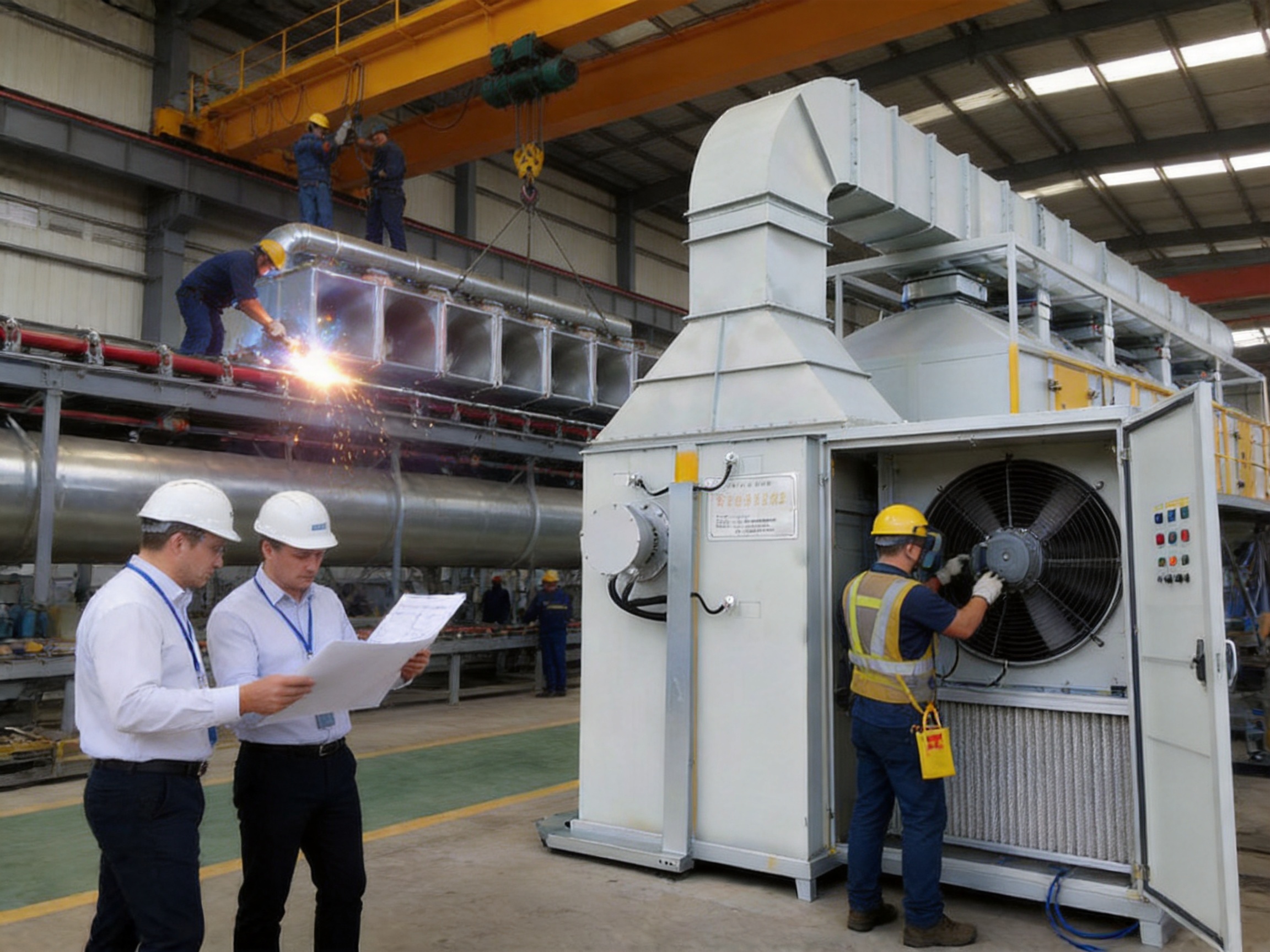
The primary benefit of waste gas treatment is controlled emission management. By capturing pollutants at the source and processing them before discharge, the system helps reduce the uncontrolled release of industrial exhaust gas. This supports more responsible production and helps factories work toward applicable environmental objectives.
The equipment can also improve workplace conditions. Odors, dust, smoke, and visible airborne contaminants may make a workshop uncomfortable and difficult to maintain. Effective extraction reduces the spread of these substances and helps keep production areas cleaner.
Cleaner workshops can support better equipment management as well. Excessive dust or sticky contaminants may settle on machinery, electrical cabinets, floors, and finished products. Source capture and purification can help reduce this accumulation, although the final result depends on the process, treatment method, operating condition, and maintenance program.
Energy efficiency is another important consideration. An appropriately sized fan, low-resistance duct layout, adjustable airflow, and regular filter maintenance can help limit unnecessary energy use. The system should be operated according to actual production demand instead of running at maximum capacity at all times when full capacity is not required.
Waste gas treatment also supports corporate environmental responsibility. Cleaner production systems can contribute to improved internal management, more consistent operating procedures, and stronger confidence among employees, customers, and business partners.
Waste gas treatment equipment should be designed and operated with attention to industrial safety. The safety requirements depend on the exhaust composition, temperature, dust concentration, flammability, corrosiveness, and the surrounding production process.
Collection hoods and ducts should be inspected to prevent excessive accumulation of dust or other materials. Fans, motors, electrical components, and control cabinets should be selected and installed according to the operating environment. Access doors and inspection openings should be positioned so that maintenance can be completed safely.
Operators should receive training on normal startup and shutdown procedures, alarm response, filter replacement, cleaning, and emergency isolation. Where the system is integrated with production equipment, interlocking functions may help prevent production from operating without the required extraction or treatment system.
Safety design must be confirmed during the engineering stage. Customers should provide accurate process information so that the manufacturer can evaluate special conditions and recommend an appropriate configuration. The final system should be used and maintained according to the manufacturer’s instructions and applicable regulations.
Industrial exhaust conditions are rarely identical from one factory to another. A customized manufacturer can analyze the process and develop a system that fits the customer’s actual needs. This is especially important for factories with irregular workpieces, multiple production areas, limited installation space, or automated equipment.
Customization may include the size and shape of collection hoods, the number of extraction branches, duct diameter and routing, purification capacity, fan selection, control functions, support structure, installation method, discharge height, and consumable arrangement. These details affect system performance and user convenience.
A manufacturer with experience in both production-line equipment and environmental protection can also understand the practical relationship between emissions and manufacturing. This can result in better coordination of equipment positioning, airflow, material movement, operator access, and production scheduling.
Jiangsu Yue Ze Environmental Protection Equipment Co., Ltd. focuses on customized equipment solutions and provides integrated R&D, manufacturing, installation, and service. Its more than four decades of industry experience supports the development of non-standard systems for different industrial environments.
Waste Gas Treatment Equipment is used to collect and purify industrial exhaust gas generated during painting, coating, drying, curing, grinding, casting, machining, and other manufacturing processes. It helps reduce the uncontrolled release of odors, particles, and harmful components.
A typical system includes a gas collection hood, ductwork, purification filter, electric-driven fan, control system, and waste gas discharge device. Additional structures, platforms, access doors, monitoring functions, or treatment stages may be added according to the project requirements.
Yes. The equipment can be designed for existing workshops. Engineers review the available floor area, building height, machinery arrangement, production flow, structural conditions, and duct route. The system may use overhead or floor-mounted installation according to the site.
Yes. The system can be configured with adjustable processing air volume to accommodate different emission rates, active production areas, or operating schedules. The exact adjustment method depends on the fan, control system, duct arrangement, and project design.
Yes. The equipment can be integrated with painting lines, powder coating lines, paint booths, drying ovens, curing systems, and automated conveyors. The final purification configuration should be selected according to the actual waste gas characteristics and process requirements.
Replacement frequency depends on pollutant concentration, dust loading, operating hours, humidity, temperature, and the type of consumable. Regular inspection of pressure loss, airflow, appearance, and treatment performance is recommended to determine the correct maintenance interval.
The equipment supports automatic operation, reducing the need for frequent manual intervention. Operators still need to complete routine inspections, respond to alarms, and perform maintenance according to the operating instructions.
A simple exhaust fan primarily moves air and may not remove pollutants. Waste Gas Treatment Equipment combines source capture, controlled airflow, purification, and organized discharge. It is therefore a more complete solution for industrial emission management.
In some projects, several emission sources can be connected to one central purification system. In other projects, separate treatment units may be more appropriate because the gas characteristics differ. Engineers evaluate the emissions, airflow, operating schedules, and safety conditions before selecting a centralized or distributed arrangement.
Useful information includes the production process, emission sources, gas characteristics, airflow requirements, operating hours, workshop drawings, available installation space, desired treatment objectives, existing equipment, and expected future expansion. Photographs, layout drawings, and process data can also support preliminary design.
Yes. Jiangsu Yue Ze Environmental Protection Equipment Co., Ltd. provides customized industrial surface treatment and environmental protection solutions. Its products include powder coating lines, paint and bake booths, grinding rooms, drying systems, automated conveyors, intelligent coating lines, and waste gas treatment equipment.
Customers can contact Jiangsu Yue Ze Environmental Protection Equipment Co., Ltd. for project consultation, equipment configuration, customized design, installation coordination, and service information. The company can evaluate the specific production process and factory conditions before recommending a solution.
Waste Gas Treatment Equipment is an important part of modern industrial environmental management. Its function extends beyond general ventilation because it collects exhaust gas at the source, purifies pollutants through suitable treatment stages, and discharges the treated gas in a controlled manner. When properly designed, the system can improve workplace conditions, support cleaner production, reduce emission risks, and provide stable long-term operation.
The main advantages of the equipment include high treatment efficiency, broad industrial applicability, high purification precision, stable electric-driven operation, automatic control, adjustable air volume, compact installation, corrosion resistance, energy-conscious design, and convenient maintenance. These advantages are strengthened when the equipment is customized according to the waste gas source, factory layout, production capacity, and future development plans.
Jiangsu Yue Ze Environmental Protection Equipment Co., Ltd. combines more than 40 years of manufacturing experience with integrated research and development, fabrication, installation, and service capabilities. Its experience with coating lines, painting equipment, grinding rooms, drying systems, conveyors, and environmental protection systems enables the company to develop complete solutions for industrial customers.
For manufacturers seeking reliable emission control, the correct approach is to evaluate the entire process rather than select an isolated fan or filter. A professional system supplier can coordinate collection, purification, airflow, controls, layout, installation, and maintenance. Through this comprehensive approach, Waste Gas Treatment Equipment can become an effective and practical part of a cleaner, safer, and more efficient production facility.
1. Industrial Ventilation: A Manual of Recommended Practice for Design, American Conference of Governmental Industrial Hygienists.
2. Air Pollution Control Engineering, industrial emission collection and treatment principles.
3. Handbook of Environmental Engineering, industrial air pollution control technologies.
4. General technical principles for industrial exhaust collection, filtration, ventilation, and emission management.
5. Manufacturer-provided product information for customized Waste Gas Treatment Equipment and industrial surface treatment systems.
6. Manufacturer-provided company information regarding research and development, fabrication, installation, quality control, and customized environmental protection solutions.
Waste Gas Treatment Equipment, electric-driven with stable power output, mainly composed of a gas collection hood, purification filter, fan, control system, and waste gas discharge device. It adopts o...
See Details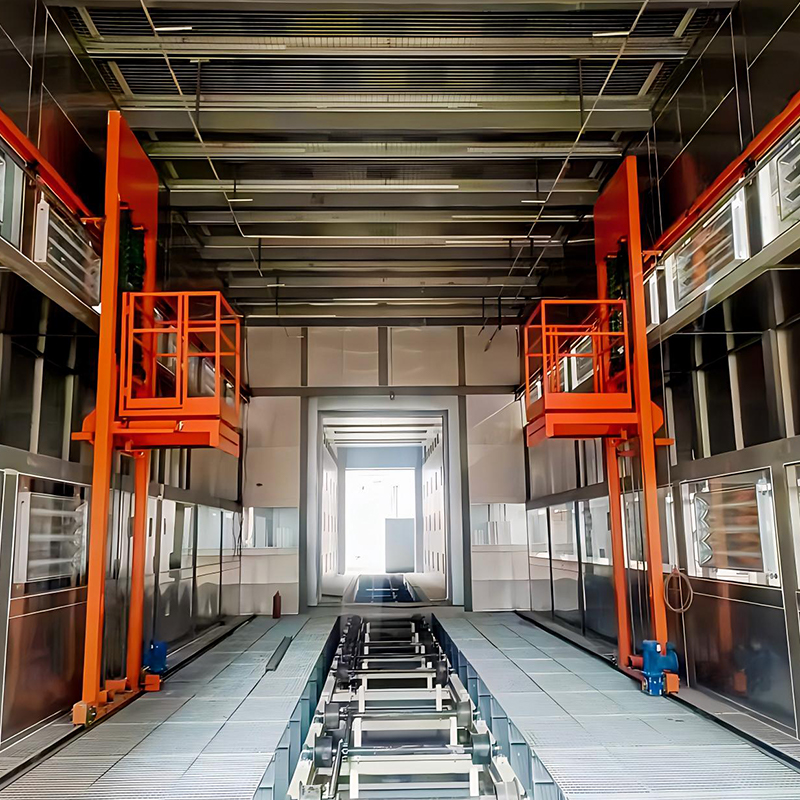
3-axis platform lifts feature three-dimensional movement of X, Y, and Z axes. Flexible positioning, stable lifting, and precise operation. Suitable for multi-angle operation and workpiece docking in i...
See Details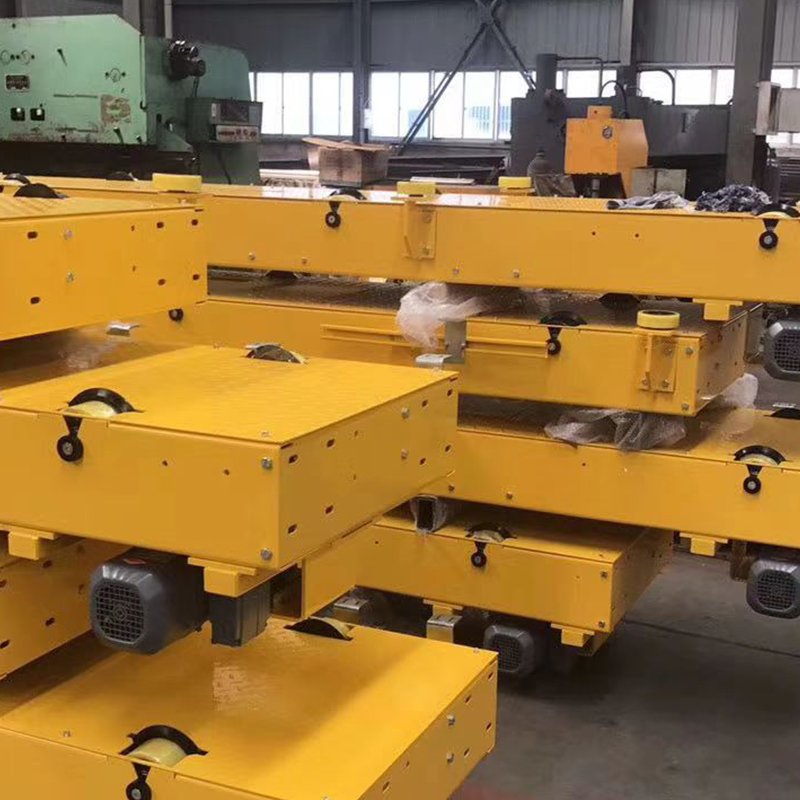
Platform Cart is a practical and efficient industrial handling equipment, widely used in factories, workshops, warehouses, logistics centers, and other places. It is composed of a sturdy load-bearing ...
See Details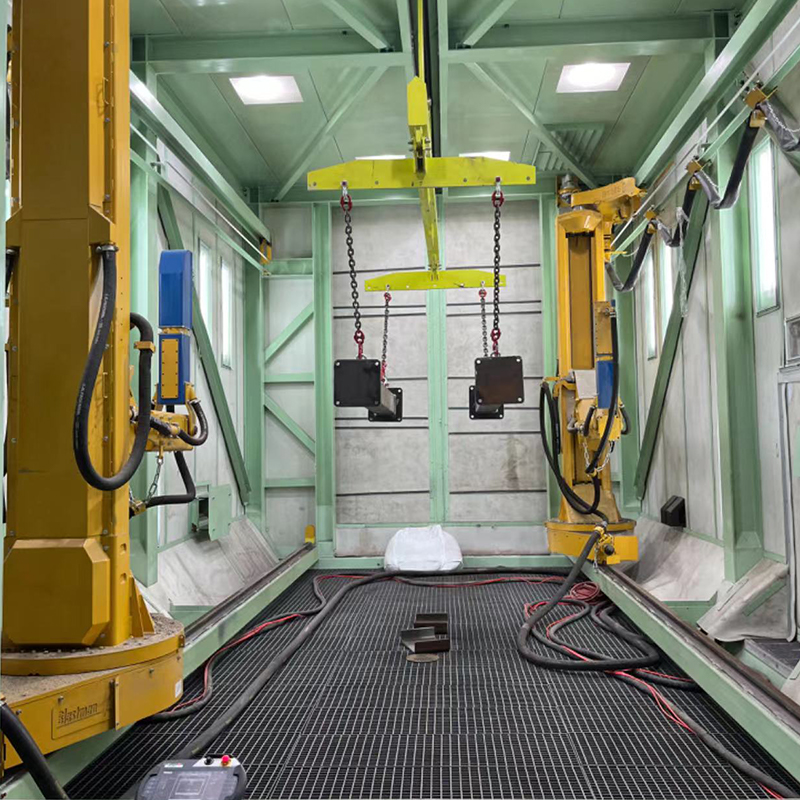
Professional coating line specially designed for large castings and heavy truck parts, applicable to various large castings (engineering castings, mining equipment castings, industrial castings) and h...
See Details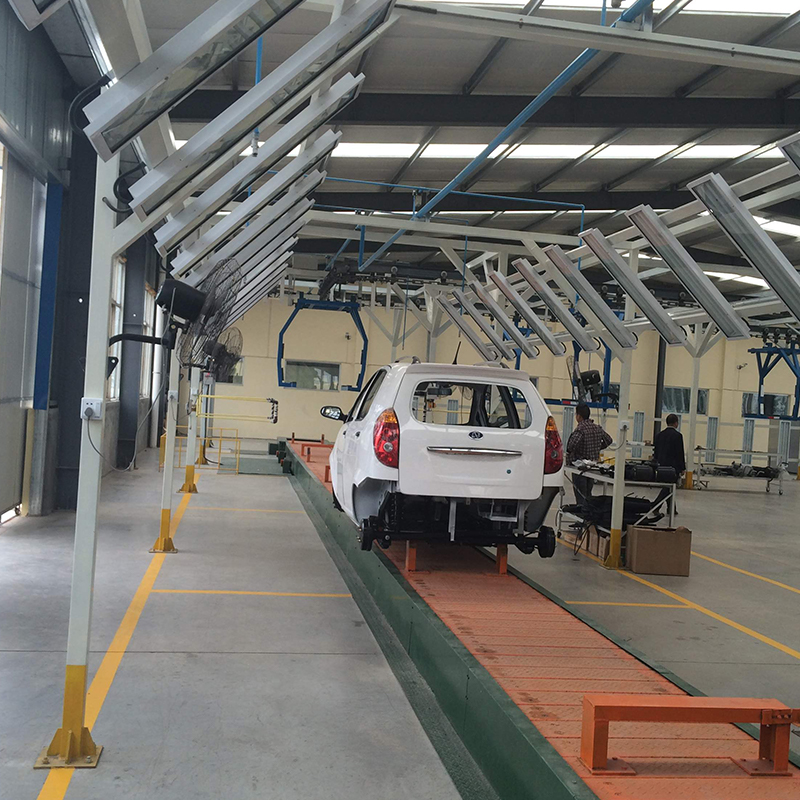
Professional electrophoresis coating line specially designed for electric vehicles (EVs), applicable to various EV types (passenger EV, commercial EV, new energy logistics vehicle) and EV components. ...
See Details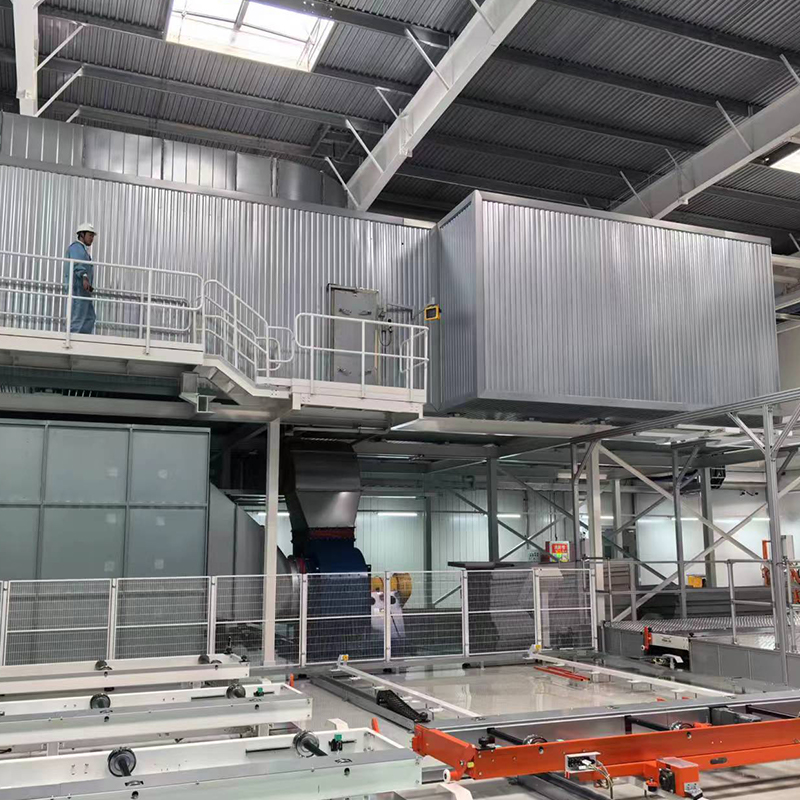
Professional electrophoresis line specially designed for truck cab manufacturing and refurbishment, applicable to various truck cab types (heavy-duty truck cab, light-duty truck cab, pickup cab, comme...
See DetailsBuild Your Customized Industrial Coating System
Send us your workpiece information, production capacity, coating process, workshop layout, and environmental requirements. Yueze will help evaluate your project and develop a suitable coating, conveying, drying, and environmental treatment solution.
Main menu
Products
Contact Us
Company Address:
No. 12, Park Avenue, Shanggang Industrial Park, Jianhu, Yancheng City, Jiangsu Province
Message Us Right Now!

Follow us: