
 русский
 عربى
عربى
 Tiếng Việt

Platform Cart is a practical and efficient industrial handling equipment, widely used in factories, workshops, warehouses, logistics centers, and other places. It is composed of a sturdy load-bearing ...
See Details
Yueze Environmental Protection provides one-stop compliant industrial surface treatment solutions with professional tech and fine craftsmanship.
 Get Inquiries
2026-08-23
Content
Industrial production environments require dependable material-handling equipment that can move heavy, irregular, finished, and semi-finished components safely between workstations. In coating workshops, surface-treatment facilities, warehouses, manufacturing plants, and logistics areas, a platform cart provides a practical alternative or complement to fixed conveyor systems. It supports loads on a stable platform, enables flexible movement across the workshop floor, and can be configured for different capacities, caster arrangements, platform surfaces, and operating conditions.
The Platform Cart described in this article is designed for demanding industrial applications. Its structure combines a reinforced load-bearing platform, a stable welded frame, high-quality casters, optional brakes, and a configurable surface finish. Depending on the selected design, the cart can handle loads from approximately 500 kg to 5,000 kg. This broad capacity range allows the equipment to serve small and medium component handling requirements as well as heavy-duty industrial transport tasks.
Unlike basic utility trolleys intended for light warehouse use, a heavy-duty platform cart must maintain structural stability under repeated loading, directional changes, stopping, and movement across industrial floors. It must also protect the transported workpieces, remain manageable for operators, and resist the wear caused by dust, overspray, moisture, cleaning chemicals, and general workshop activity. For these reasons, platform-cart design involves more than simply attaching wheels to a steel plate. Frame engineering, load distribution, caster selection, surface treatment, ergonomics, safety, and manufacturing quality all influence the final performance.
Jiangsu Yue Ze Environmental Protection Equipment Co., Ltd. manufactures customized material-handling equipment as part of its wider portfolio of coating production lines, automated conveying systems, paint and bake booths, grinding rooms, waste gas treatment equipment, infrared drying systems, and environmental protection solutions. With a production site covering approximately 35,000 square meters, registered capital of 58 million yuan, and more than 40 years of industry experience, the company can design platform carts to work within complete coating and finishing workflows rather than treating the cart as an isolated product.
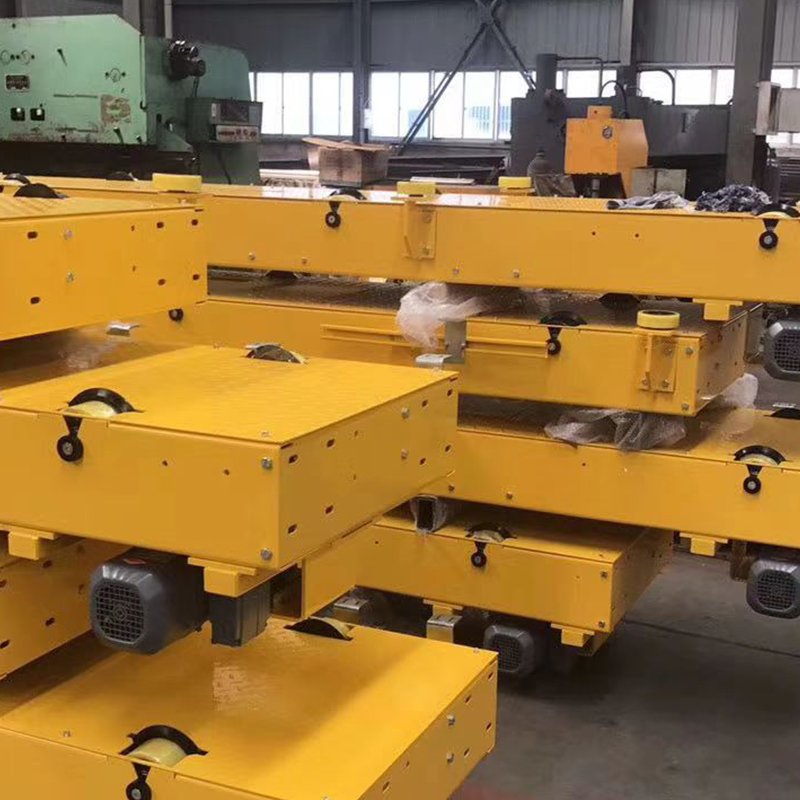
Platform Cart
An industrial platform cart is a mobile flatbed handling device used to transport materials, parts, tools, fixtures, workpieces, pallets, or finished products. The basic structure consists of a horizontal platform, a supporting frame, casters or wheels, and, where required, a push handle or handrail. Depending on the application, the cart may be fixed, foldable, single-layer, double-layer, or multi-layer.
The platform provides a broad support area for loads that may not be suitable for hanging systems, hooks, racks, or standard pallets. This is especially useful for large, heavy, wide, irregularly shaped, or delicate items. A cart can also serve as a temporary staging platform when products need to wait between processes or when the production schedule changes during the day.
In a coating facility, a cart may move parts from pretreatment to spraying, from spraying to drying, from drying to inspection, or from inspection to packing. It can also transport components to a repair area, temporary storage area, or auxiliary workstation outside the main conveyor path. Because the cart is not permanently fixed to a track, it provides a level of flexibility that is difficult to achieve with a fully fixed conveying arrangement.
A platform cart should not be viewed as a replacement for every conveyor system. Fixed conveyors remain highly effective for repetitive, high-volume production with stable product routes. Instead, the platform cart is most valuable where product variety, irregular dimensions, occasional heavy loads, temporary staging, or layout flexibility are important. In many factories, the best solution is a combination of automated conveyors for predictable routes and mobile carts for exceptional, oversized, or variable handling tasks.
The central component of the cart is its load-bearing platform. It may be manufactured from steel or another material selected according to the required load, surface protection, cleanliness, and environmental conditions. The platform must remain sufficiently rigid when a load is concentrated in one area, distributed unevenly, or placed near an edge. A properly engineered platform reduces deflection and helps maintain stable contact between the load and the cart.
Under the platform, the frame transfers the load toward the casters. Integral welding and reinforced steel sections can improve overall stiffness and help prevent deformation during repeated use. The frame must also accommodate the expected dynamic forces created when operators start, stop, turn, or push the cart across the floor. Static load capacity alone is not enough to determine practical performance; the frame, caster mounting points, wheel configuration, and floor conditions must work together.
Casters provide the connection between the cart and the workshop floor. Fixed casters generally support straight movement, while swivel casters allow the cart to change direction. Brake casters help keep the cart in position during loading, unloading, inspection, or stationary processing. Some configurations combine fixed and swivel casters to balance directional stability with maneuverability.
A handrail or push handle improves control by giving the operator a defined position for pushing and steering. A heightened non-slip handrail can make movement more comfortable and reduce the likelihood of hands slipping during operation. Edge protection or anti-collision features can help reduce damage to walls, equipment, and the cart itself when the cart is used in a busy workshop.
When the cart is properly configured, the operator does not need to lift the entire load. The load remains supported by the platform while the cart is pushed or pulled to the next location. This can reduce manual handling strain and improve the consistency of internal transportation, particularly when heavy or awkward parts must travel across a large facility.
Many general-purpose carts are designed for light loads, smooth retail floors, or occasional warehouse use. They may offer limited capacity, thin platform materials, small casters, or non-adjustable configurations. Such products can be unsuitable for coating workshops and industrial production environments where loads are heavier, floor conditions are less uniform, and the equipment may be exposed to chemicals, dust, moisture, and continuous operation.
The heavy-duty Platform Cart offers several important advantages over basic competing products. First, its reinforced welded frame is intended for higher load capacity and improved resistance to deformation. A rigid frame helps the cart maintain its geometry under demanding service conditions and provides a stronger foundation for caster mounting.
Second, the load range can be configured to match the application. A cart intended for 500 kg of components does not require the same structure as a cart transporting 5,000 kg of heavy parts. Matching the design to the actual load avoids both under-engineering and unnecessary oversizing. The customer can discuss platform dimensions, frame construction, caster ratings, and other design elements according to the material-handling requirement.
Third, the platform surface can be customized. A non-slip surface can help maintain load stability, while a wear-resistant or non-marring surface can help protect finished components. Corrosion-resistant treatments may be selected for environments where the cart is exposed to moisture, cleaning agents, coating materials, or industrial contaminants.
Fourth, the cart provides configuration flexibility. Fixed, foldable, double-layer, and multi-layer versions can be considered according to the available storage space and handling process. A foldable version can reduce the space required when the cart is not in use. A multi-layer version can support smaller parts, tools, or containers while increasing the use of vertical space.
Fifth, the cart can be integrated into a broader production-line concept. Because the manufacturer also designs coating lines and conveying systems, the platform cart can be considered alongside pretreatment, spraying, drying, inspection, and logistics requirements. This broader engineering perspective can be valuable when the cart must coexist with conveyors, booths, ovens, work platforms, or environmental protection systems.
Finally, the cart is intended for practical industrial use rather than appearance alone. Its value is measured by load stability, handling efficiency, service life, maintainability, operator control, and compatibility with the facility. These factors distinguish a purpose-designed industrial cart from a basic flatbed trolley.
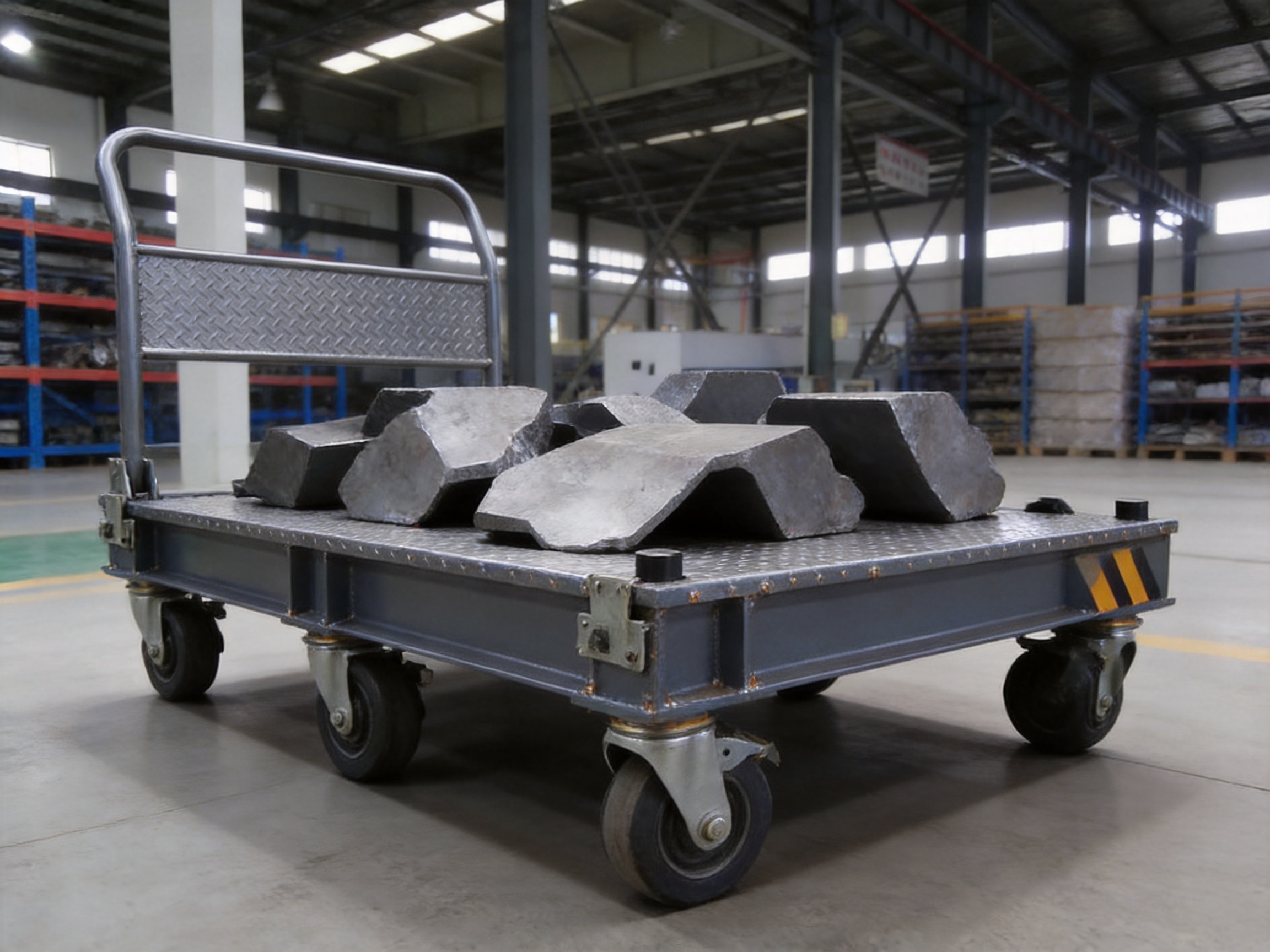
Structural stability is one of the most important performance characteristics of a platform cart. A heavy load creates vertical forces, while movement introduces additional forces at the frame, caster brackets, and push handle. If the structure is too flexible, the platform may deflect, the load may shift, and the cart may become more difficult to steer. Repeated overloading or uneven loading can also lead to premature deformation.
The Platform Cart uses a thickened steel frame with integral welding to create a stable load-bearing structure. Welding the frame as an integrated assembly can reduce movement between individual members and provide consistent support for the platform. The specific steel sections, plate thickness, reinforcement layout, and welding method should be selected according to the required capacity and dimensions.
Even force distribution is another important design principle. A well-designed cart transfers load from the platform through the frame and into the casters in a balanced manner. This is particularly important when transporting pallets, molds, counterweight blocks, fabricated components, or large parts whose center of gravity may not be perfectly centered.
Customers should identify both the maximum total load and the typical load distribution. A cart that carries a uniformly distributed load may require a different platform design from one that carries a concentrated mold or a large component resting on only a few support points. The expected center of gravity, loading method, travel distance, floor condition, and frequency of use should also be considered during specification.
The stated capacity range of approximately 500 kg to 5,000 kg allows the product family to cover a wide range of industrial requirements. However, the correct capacity should always be confirmed for the actual configuration. Caster rating, frame design, platform dimensions, handle structure, and operating conditions all contribute to safe working performance.
The platform surface is the direct contact area between the cart and the transported material. Its design influences load stability, product protection, cleaning requirements, and resistance to industrial exposure. A plain steel surface may be appropriate for certain heavy-duty applications, but other workpieces may require additional treatment or protective materials.
A non-slip surface can help prevent unwanted movement when the cart starts, stops, or travels over minor floor irregularities. This is particularly useful for boxes, containers, fixtures, and parts that do not have built-in locating features. For components with a sensitive finished coating, the contact surface should be selected to minimize scratching, marking, or contamination.
Wear resistance is important when materials are repeatedly loaded, dragged, or repositioned on the platform. A surface that quickly develops sharp edges, deep scratches, or loose material can affect both safety and product quality. The selected finish should match the type of handling activity rather than being chosen only for initial cost.
Corrosion resistance is also relevant in coating workshops. Pretreatment chemicals, cleaning fluids, humidity, and overspray can accelerate corrosion on unprotected steel. Electrostatic spraying or galvanizing may be used to improve resistance, depending on the intended environment. Surface treatment does not eliminate the need for maintenance, but it can extend service life and reduce the frequency of repairs.
The platform may also be designed with edges, locating features, removable supports, or other customization elements when the load requires additional restraint. These features should be carefully planned so that they secure the material without interfering with loading, unloading, cleaning, or access to the part.
Caster selection has a direct effect on handling effort, directional control, floor protection, noise, and load capacity. The correct caster must support the expected load while remaining compatible with the floor surface and operating environment. Selecting a caster only by diameter or price can result in poor performance if the wheel material, bearing arrangement, swivel mechanism, or load rating is unsuitable.
Fixed casters support controlled movement along a generally straight route. They can be useful when the cart travels between defined stations or when directional stability is more important than tight turning. Swivel casters provide greater flexibility in confined spaces and allow the operator to reposition the cart around equipment, workstations, or stored materials.
Brake casters are valuable when the cart must remain stationary. During loading, unloading, inspection, or stationary processing, the brakes help prevent unwanted movement. A brake does not replace appropriate operating procedures or floor assessment, but it adds an important positioning function to the cart.
High-quality silent swivel casters can reduce operating noise and make steering smoother. Lower noise may be beneficial in workshops where multiple carts, conveyors, fans, booths, and production machines operate simultaneously. Smooth movement also reduces the effort required from operators and can improve control of fragile or unstable loads.
The number and arrangement of casters should be matched to the platform size and load distribution. Larger carts may require additional support points or reinforced caster mounting locations. Caster placement should help prevent excessive rocking, tipping, or uneven loading. The floor must also be assessed for expansion joints, slopes, cracks, debris, and other conditions that may affect movement.
For high-capacity carts, the total rated capacity of the caster system should not be treated as the only criterion. A practical design should include an appropriate safety margin and account for dynamic loading, uneven distribution, turning, and local floor conditions. The manufacturer can help determine a suitable configuration based on the application details provided by the customer.
Industrial handling equipment should support safe and repeatable operation. A cart that is technically strong but difficult to control can increase fatigue and handling risk. The Platform Cart can be equipped with a heightened non-slip handrail that gives operators a stable grip and a more comfortable pushing position.
The height, shape, and location of the handrail should be considered in relation to the operator, load height, travel direction, and surrounding equipment. A well-positioned handle allows force to be applied more efficiently and reduces the need for awkward bending or reaching. It also helps operators maintain a safer distance from the load during movement.
Anti-collision edge design can help protect the cart, walls, workstations, and operators from minor impacts. In a busy factory, carts may pass close to booths, racks, columns, doors, and other equipment. Protective edges or bumpers can reduce damage during routine positioning, although operators should still use controlled speeds and maintain clear travel paths.
Load stability should be considered before movement begins. Materials should be placed evenly, and tall or irregular components may need supports, restraints, or dedicated fixtures. The operator should confirm that the load does not obstruct visibility, exceed the platform boundary, or create an unstable center of gravity.
Brake casters or other locking devices should be used whenever the cart is stationary and the process requires a stable position. Maintenance personnel should periodically inspect the brakes, caster brackets, wheels, frame welds, platform surface, and handrail. Early identification of wear can prevent more serious failures and help maintain dependable operation.
The cart should be operated within its specified capacity and in accordance with the facility’s internal safety procedures. It is not intended to replace lifting equipment where the load must be raised vertically, and it should not be moved at a speed that could cause the load to shift or the cart to become difficult to control.
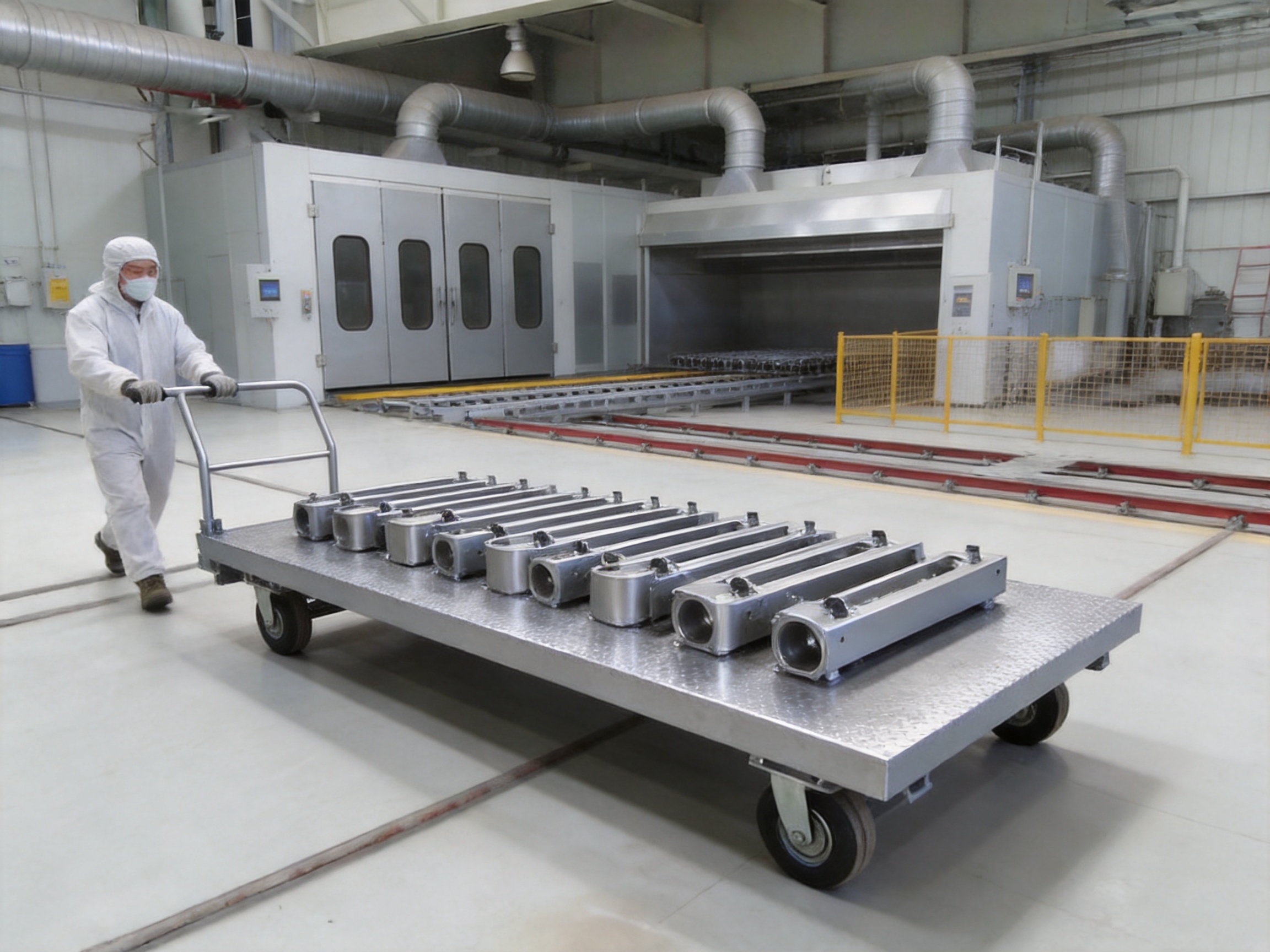
Coating workshops often handle products through several stages, including pretreatment, drying, spraying, curing, inspection, repair, and packing. Fixed conveying systems are highly useful for consistent routes, but not every product can be suspended or moved through a standard overhead system. A platform cart provides an alternative support method for components that are large, heavy, irregular, or unsuitable for hanging.
During pretreatment, the cart may carry parts from a preparation area to a cleaning or surface-conditioning station. The platform must be compatible with the expected moisture and chemical exposure, and the load should be positioned to permit safe access and drainage where necessary.
Between spraying and drying, a cart can support components that require temporary staging or special positioning. This may be useful for products with unusual geometries, large surface areas, or configurations that cannot be easily attached to conventional hooks. A suitable non-slip or protective surface can help reduce movement and contact damage.
After drying or curing, the cart can transport finished parts to inspection, repair, packing, or temporary storage. Finished coatings may be vulnerable to scratches and impact, so the platform surface and loading method should be selected with product protection in mind. Smooth movement and controlled parking are particularly important at this stage.
Platform carts are also useful for moving auxiliary items such as molds, material boxes, fixtures, tools, packaging components, and work-in-process containers. A double-layer or multi-layer configuration may improve organization for smaller materials, while a large flat platform may be more suitable for oversized workpieces.
In facilities with changing product types, the cart can make it easier to reorganize the workflow without changing permanent conveyor tracks. Seasonal demand, new product introductions, batch production, and special orders may all require temporary adjustments. A mobile cart can support these changes with less infrastructure modification than a fully fixed system.
A platform cart and an automated conveyor system serve different operational purposes. Conveyors are effective where products follow a repeatable route and consistent takt time is important. Platform carts are effective where the route changes, the product varies, or additional staging is needed. Combining both systems can produce a more adaptable material flow.
For example, an automated conveyor may transport standard components through pretreatment, spraying, and drying, while a platform cart handles oversized components that cannot be suspended. The cart can also connect a main line with a repair station, inspection area, warehouse, or packing zone. This arrangement allows the fixed line to remain productive without forcing every product into the same handling format.
When integrating a cart into a production line, the facility should assess aisle width, turning radius, station height, floor loading, traffic flow, and the relationship between manual and automated movement. Cart routes should be clearly defined to reduce interference with forklifts, personnel, conveyors, and emergency access areas.
The manufacturer’s experience in complete coating production line equipment supports a system-level approach. Jiangsu Yue Ze Environmental Protection Equipment Co., Ltd. has developed coating-related equipment including automated conveying systems, intelligent coating lines, automotive counterweight spray lines, and a hanging automatic painting process line for casting counterweight blocks. This background helps the company understand how a mobile cart may fit into a wider sequence of production activities.
Integration does not necessarily mean that the cart must be electronically controlled. In many applications, a manually operated cart with reliable brakes, appropriate casters, and a well-planned route is the most economical and flexible choice. In other applications, the cart may be specified as part of a more customized logistics concept. The correct solution depends on production volume, product dimensions, labor requirements, and the desired level of automation.
Customization is one of the main advantages of purchasing an industrial platform cart from an equipment manufacturer rather than selecting a standard light-duty model. The dimensions can be adjusted to match the workpiece, aisle, workstation, or storage location. A longer platform may be needed for large components, while a compact platform may improve maneuverability in narrow areas.
Load capacity can be specified according to the heaviest expected load and the required safety margin. The frame, platform, caster system, and handle must be designed together so that the complete cart performs as a balanced unit. Increasing only the platform thickness, for example, does not automatically create a suitable high-capacity cart if the caster brackets or frame are not reinforced accordingly.
Caster types can be selected according to the desired balance between straight-line stability and turning flexibility. Fixed, swivel, and brake casters may be combined in different arrangements. Wheel materials and surface characteristics can also be reviewed according to the floor and environmental conditions.
The platform surface may be plain, non-slip, wear-resistant, corrosion-resistant, or non-marring. The choice should reflect the materials handled and the need to protect finished products. Special supports, side edges, locating devices, or removable fixtures may be considered for parts with unusual shapes.
Handrail style is another configurable feature. A fixed handrail may suit regular operation, while a folding design can save storage space. Double-layer and multi-layer configurations may be selected when the cart is used for smaller components, containers, or tools. The correct configuration should maintain adequate access, visibility, stability, and ease of cleaning.
Surface treatment can include electrostatic spraying or galvanizing, depending on corrosion exposure and appearance requirements. The finish should be compatible with the intended operating environment and maintenance program. In areas with frequent chemical exposure, the customer should provide details about the chemicals, concentration, temperature, and cleaning method so that the appropriate treatment can be evaluated.
The performance of a heavy-duty platform cart depends not only on its design but also on the quality of its manufacturing. Accurate cutting, proper assembly, consistent welding, suitable surface treatment, and careful inspection all contribute to service life. A cart that appears strong but has inconsistent joints, poor caster alignment, or inadequate finishing may not provide reliable long-term performance.
Jiangsu Yue Ze Environmental Protection Equipment Co., Ltd. combines equipment design, manufacturing, installation, and customized engineering services. Its broader experience in coating production lines provides an understanding of industrial environments where mechanical equipment must operate alongside spraying systems, drying systems, conveying equipment, booths, environmental controls, and production personnel.
The company’s facility in Yancheng, Jiangsu, covers approximately 35,000 square meters. This scale supports the production of complete industrial equipment and customized assemblies. Platform carts can be developed within the same engineering environment as larger material-handling and surface-treatment systems, allowing the design to be reviewed according to the customer’s workflow rather than only according to a catalog specification.
More than 40 years of experience in coating and environmental protection equipment also provides practical knowledge of industrial operating conditions. Coating plants may involve dust, humidity, overspray, chemical cleaning, elevated temperatures near drying equipment, and frequent movement of heavy components. Equipment intended for these environments must be designed with material selection, surface treatment, accessibility, and maintenance in mind.
The company’s reported product and service strengths include integrated research and development, manufacturing, installation, and customized equipment solutions. This integrated capability can simplify communication for customers who need more than a standalone cart. For example, a project may require a platform cart together with a powder coating line, automated conveyor, paint booth, drying system, or waste gas treatment solution.
Quality control should cover the entire manufacturing process. The frame should be checked for dimensional accuracy and welding integrity. The platform should be reviewed for flatness, edge condition, and surface finish. Casters should be correctly installed and aligned. Brakes and swivel mechanisms should be tested. The completed cart should be inspected for movement, stability, and general workmanship before delivery.
For customized projects, documentation should clearly identify dimensions, rated capacity, caster arrangement, surface treatment, operating limits, and any special accessories. Clear specifications help operators use the equipment correctly and help maintenance teams identify the correct replacement components when required.
The manufacturing process begins with application analysis. The customer’s part dimensions, weight, center of gravity, handling frequency, route length, floor condition, storage arrangement, and environmental exposure should be reviewed. The equipment designer may also need to understand whether the cart will operate near spray booths, drying ovens, pretreatment tanks, conveyors, forklifts, or pedestrian routes.
After the requirements are confirmed, the platform and frame can be engineered. The design should establish the overall dimensions, load-bearing structure, caster positions, handle geometry, surface finish, and any special supports. If the cart is part of a larger production line, the design should also consider station heights, transfer points, aisle clearance, and the movement of other equipment.
Steel sections and plates are then prepared according to the approved design. Accurate preparation is important because dimensional errors can affect platform flatness, frame alignment, caster installation, and final maneuverability. Reinforcement components should be positioned to support areas where loads are concentrated or where the frame experiences higher stress.
The frame and platform are assembled and welded. Integral welding creates a unified structure, but the welding sequence should be controlled to reduce distortion. After welding, the assembly may be checked for dimensions, alignment, flatness, and visible defects. Areas that require correction should be addressed before surface treatment.
Caster brackets and handrail components are installed after the main structure has been prepared. Correct alignment is essential for smooth movement. Swivel casters should rotate freely, fixed casters should maintain the intended direction, and brake mechanisms should engage and release properly.
Surface preparation and finishing follow the mechanical assembly stage. Depending on the application, electrostatic spraying or galvanizing may be selected. The treatment should cover exposed areas consistently and provide the requested resistance to rust, corrosion, wear, or workshop contamination.
Final inspection includes checking the platform, frame, welds, caster operation, brakes, handrail, surface condition, and overall stability. Where practical, the cart can be evaluated under a representative load or operational simulation. This helps confirm that the equipment is suitable for the intended handling conditions before shipment and installation.
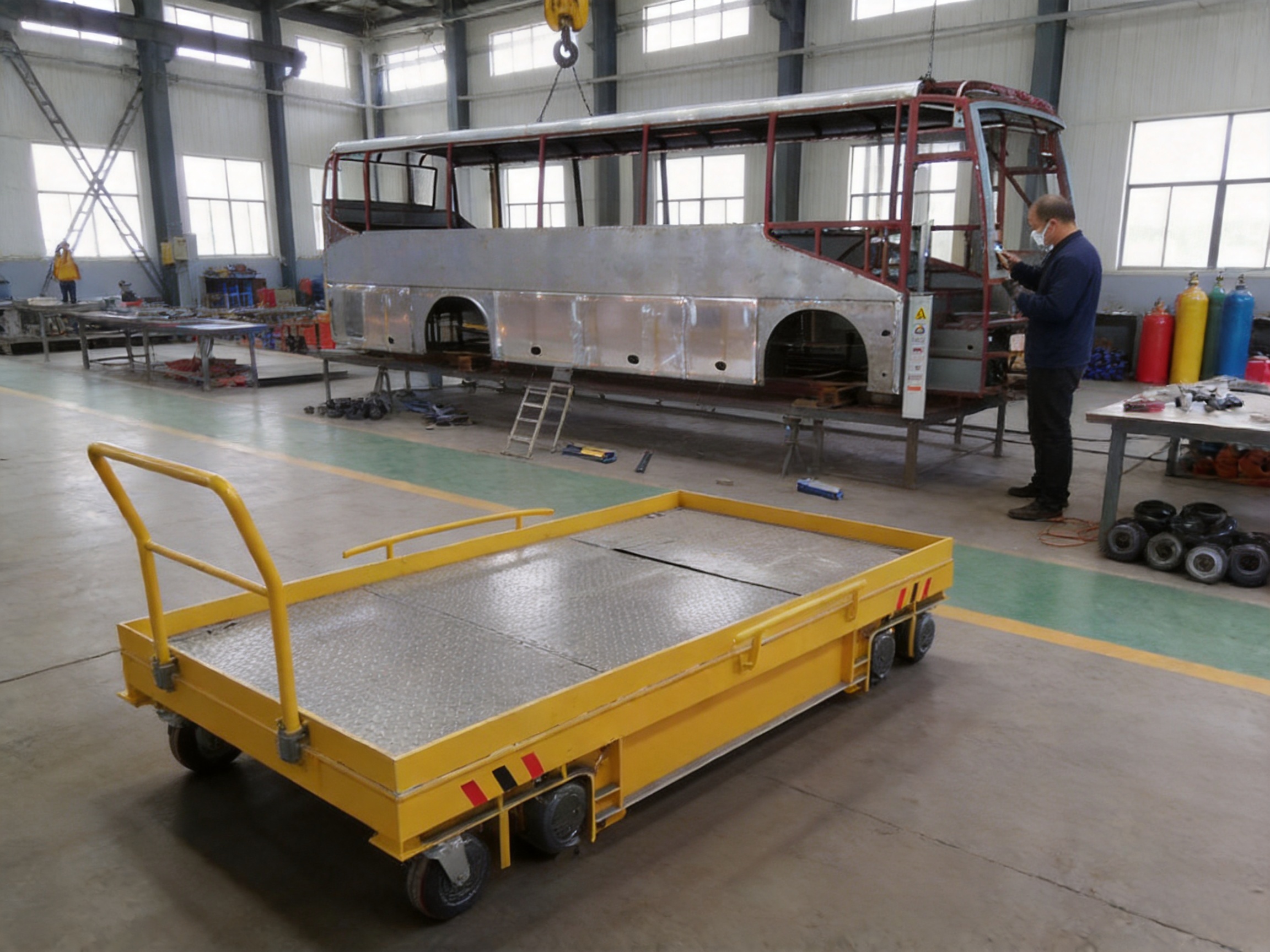
Choosing the correct platform cart begins with identifying the material to be transported. Small and medium components may require a compact platform and highly maneuverable swivel casters. Heavy or oversized parts may require a reinforced frame, larger support area, stronger caster system, and additional controls for positioning.
| Part Type | Recommended Cart Features | Primary Handling Purpose |
|---|---|---|
| Small to medium components | Compact platform and standard swivel casters | Flexible movement between nearby workstations |
| Heavy or oversized parts | Reinforced frame and heavy-duty casters | Stable transport of high-load items |
| Coated or finished parts | Non-marring or protective platform surface | Reducing scratches and contact damage |
| Parts requiring temporary staging | Brake casters and stable platform | Safe positioning between production stages |
| Small boxes, tools, or containers | Double-layer or multi-layer configuration | Improving vertical storage and organization |
| Variable production items | Custom dimensions and adaptable caster arrangement | Supporting changing product routes |
The maximum load should be based on the heaviest expected operating condition rather than the average load. If the cart will sometimes transport concentrated loads, this should be communicated during design. The platform dimensions should allow the load to sit securely without excessive overhang.
Travel distance and route complexity also affect the selection. A cart used for short movements in a spacious area may require a different caster arrangement from one that must navigate narrow aisles, frequent turns, doorways, or crowded workstations. The floor surface should be checked for roughness, slopes, joints, debris, and possible chemical exposure.
Storage requirements should be considered before selecting the configuration. A fixed cart may be suitable where it remains in continuous use, while a foldable cart may be better for facilities where equipment must be stored after each batch. Multi-layer designs can reduce the number of carts required for smaller items but should not compromise access or load stability.
Customers should also consider how the cart will be loaded. Manual loading, crane loading, forklift loading, and transfer from a conveyor create different requirements. If a forklift will approach the cart, the platform and frame should be designed to prevent accidental contact or damage. If operators will load heavy parts manually, the platform height and edge design should support safe working practices.
A heavy-duty platform cart can improve internal logistics by reducing the number of separate lifting actions required during production. Instead of carrying a component by hand or repeatedly lifting it between temporary supports, operators can place it on the cart and move it while supported. This can simplify the route and reduce unnecessary handling.
The cart can also improve workflow flexibility. A fixed conveyor generally establishes a predetermined path, while a cart can be directed to different workstations according to the production schedule. This is useful for facilities that manufacture several product models or process components in different batches.
Temporary staging is another important benefit. Workpieces may need to wait for an available spray booth, drying cycle, inspection operator, repair decision, or packing space. A cart provides a defined mobile platform for this waiting period and can help keep the workshop more organized than placing parts directly on the floor.
In warehouses, the cart can be used for order preparation, component distribution, line-side supply, or movement between storage zones. Its flat platform accommodates cartons, molds, material boxes, workpieces, and other items. The design can be adapted to the size and weight of the products handled.
In production environments, carts can support leaner movement patterns by positioning materials closer to the point of use. When combined with clear routes and defined parking locations, they can help reduce unnecessary walking, lifting, and searching. The exact benefit depends on the facility layout and operating discipline, but the basic principle is straightforward: keep the load supported and move it with controlled effort.
Routine maintenance is necessary to preserve the performance of any industrial handling device. The platform should be kept free from accumulated coating material, metal fragments, dust, oil, and other contaminants. Cleaning methods should be compatible with the surface treatment and the materials used on the platform.
Casters should be inspected for uneven wear, damaged wheels, loose fasteners, restricted swivel movement, and abnormal noise. Brake casters should be checked to confirm that they lock securely and release completely. If a caster becomes difficult to rotate or steer, it should be evaluated before the cart is returned to heavy-duty service.
The frame and welds should be reviewed periodically for cracks, distortion, corrosion, or impact damage. Particular attention should be paid to caster mounting points, platform edges, handle joints, and areas where concentrated loads are placed. Any structural change should be investigated rather than ignored.
Operators should report unusual vibration, steering resistance, platform deflection, or instability. These symptoms may indicate uneven loading, floor problems, caster damage, or overloading. Prompt correction can help prevent damage to the cart and reduce the risk of load movement.
When the cart is not being used, it should be parked in a designated area that does not obstruct emergency routes, doors, conveyors, or pedestrian paths. Brake casters should be engaged where appropriate. Foldable carts should be stored in a way that prevents accidental opening or collapse.
Replacement parts should match the original specification. Caster capacity, mounting dimensions, wheel material, brake type, and swivel geometry should be confirmed before replacement. For customized carts, keeping the original technical documentation can simplify future maintenance and spare-parts procurement.
Standard carts are useful when the load, route, and environment are simple. Industrial coating applications are often more complex. Parts may vary in size, surfaces may require protection, routes may pass between different process stations, and the cart may need to work alongside automated equipment. Manufacturer customization makes it possible to address these factors during design rather than trying to modify an unsuitable cart after delivery.
A customized cart can be designed around the actual dimensions of the parts and the available floor area. This can improve maneuverability and reduce unnecessary platform size. The frame can be reinforced where the load is concentrated, while the caster system can be selected according to the route and floor.
Customization also helps align the cart with the overall production process. If the customer is installing a complete powder coating line or upgrading an existing workshop, the cart can be considered together with conveyors, booths, drying systems, inspection areas, and storage zones. This reduces the risk of receiving a cart that is technically adequate but inconvenient to use within the facility.
Jiangsu Yue Ze Environmental Protection Equipment Co., Ltd. provides customized equipment solutions based on its experience in coating line engineering and environmental protection equipment. Its capabilities include research and development, manufacturing, installation, and project-oriented service. This combination is particularly relevant for customers who require coordinated equipment rather than an isolated standard product.
Modern coating production requires coordination between process equipment, material handling, operator access, environmental control, and production scheduling. A platform cart contributes to the logistics side of this system by providing a mobile support base for parts and materials that do not follow the main automated route.
A complete facility may include pretreatment equipment, powder or liquid spraying booths, drying or curing systems, conveyors, inspection stations, grinding rooms, and waste gas purification equipment. The platform cart can connect these areas where manual flexibility is necessary. Its value increases when its dimensions, surface treatment, and load capacity are selected with the surrounding equipment in mind.
The company’s product portfolio includes powder coating lines, electric vehicle assembly lines, automotive counterweight spray lines, paint and bake booths, large-part grinding rooms, waste gas treatment equipment, infrared radiation drying systems, automated conveying systems, and intelligent coating lines. This range demonstrates an ability to address mechanical handling, coating process, and environmental protection requirements within an industrial project.
The company also reports that it pioneered a hanging automatic painting process line for casting counterweight blocks in 2014, covering finishing and polishing through primer and topcoat application. Experience with heavy counterweight components is relevant to the design of material-handling equipment because such applications require attention to load weight, surface preparation, route planning, and process coordination.
For customers, a coordinated equipment source can simplify technical discussions, layout planning, installation scheduling, and after-sales communication. The platform cart remains a relatively simple product, but its correct use within a large production system depends on practical understanding of the facility.
The purchase price is only one part of the value calculation for an industrial platform cart. A low-cost cart may appear attractive initially but can create additional expenses if it requires frequent caster replacement, platform repair, repainting, or manual rehandling of loads. An appropriately engineered cart may provide better value through longer service life and more reliable operation.
Load capacity should be matched to actual needs. Purchasing a cart that is too small can create overloading and safety concerns, while purchasing an unnecessarily oversized cart can increase cost and reduce maneuverability. A customized design helps balance capacity, dimensions, material selection, and operating requirements.
Surface durability can also affect total cost. A corrosion-resistant finish may reduce maintenance in humid or chemically active environments. A protective platform surface may reduce damage to finished products. Durable casters may lower downtime and reduce the frequency of replacement.
Productivity improvements should be considered as well. If the cart reduces manual carrying, shortens staging time, improves workstation supply, or allows a more flexible production layout, it may deliver operational benefits beyond its direct handling function. These benefits are especially relevant in factories where product variety and changing production schedules make fixed-path logistics less efficient for every item.
A heavy-duty platform cart is used to transport heavy, oversized, irregular, or finished materials across factories, coating workshops, warehouses, and logistics areas. It provides a stable flat support surface and allows loads to be moved without carrying or repeatedly lifting them.
A platform cart is particularly useful when products do not fit standard hanging conveyors, when temporary staging is required, when routes change frequently, or when the facility handles variable product sizes. Fixed conveyors remain effective for high-volume production with stable, repetitive routes, so the two systems can also be used together.
The product can be configured for industrial loads ranging approximately from 500 kg to 5,000 kg. The final rated capacity should be confirmed according to the platform dimensions, frame construction, caster arrangement, load distribution, floor conditions, and operating method.
Fixed casters support more controlled straight-line movement, swivel casters provide better maneuverability, and brake casters help hold the cart stationary. The selection should consider load weight, route length, turning space, floor condition, and the need for stationary processing or loading.
Yes. Platform surfaces may be configured with non-slip, wear-resistant, corrosion-resistant, or non-marring characteristics according to the handled materials and workshop environment. The surface should be selected to balance load stability, product protection, cleaning, and service life.
Foldable configurations can be considered where storage space is limited or the cart must be stored when not in use. Fixed, double-layer, and multi-layer configurations may also be selected according to the handling process and available workspace.
Yes. A suitable protective or non-marring platform surface can help reduce scratches and contact damage. Operators should also use appropriate loading methods, avoid dragging finished parts unnecessarily, and keep the platform clean.
Useful information includes the maximum and typical load, part dimensions, center of gravity, platform size, handling frequency, travel route, floor condition, required turning radius, environmental exposure, caster preference, storage limitations, and any special supports or surface-protection requirements.
Because it can be moved to different stations, the cart allows parts to be routed around changing production needs without modifying permanent conveyor infrastructure. It can support oversized components, temporary storage, inspection, repair, packing, and other activities outside the main automated line.
Jiangsu Yue Ze Environmental Protection Equipment Co., Ltd. integrates research and development, manufacturing, installation, and customized industrial equipment services. Its experience with coating lines, conveying systems, drying equipment, environmental protection systems, and heavy-part painting applications supports the development of platform carts for complete production environments.
The cart should be operated within its rated capacity, loaded evenly, cleaned regularly, and inspected for caster wear, brake performance, corrosion, loose fasteners, frame damage, and weld defects. Damaged components should be repaired or replaced with parts matching the original specification.
Yes. The cart can be evaluated alongside powder coating lines, automated conveying systems, paint and bake booths, drying systems, inspection zones, and environmental equipment. This approach helps ensure that the dimensions and movement characteristics fit the complete workshop layout.
A heavy-duty Platform Cart is a flexible and practical solution for industrial material handling. Its reinforced steel frame, stable platform, high-quality casters, optional brakes, protective surface treatments, and customizable dimensions enable it to handle a wide range of factory, warehouse, logistics, and coating-workshop applications.
The product offers clear advantages over basic light-duty carts through stronger construction, broader load capacity, improved movement control, corrosion-resistant finishing options, ergonomic features, and adaptability to different workflow requirements. It can transport items that are too heavy, irregular, oversized, or sensitive for standard hanging conveyor systems, while also providing temporary staging and layout flexibility.
For coating facilities, the cart can work alongside automated conveying systems, pretreatment equipment, spraying booths, drying systems, inspection areas, and packing stations. Its mobile design allows the workshop to respond to changing products and production schedules without relying solely on permanent infrastructure.
Jiangsu Yue Ze Environmental Protection Equipment Co., Ltd. strengthens this product offering with more than 40 years of coating and environmental equipment experience, a 35,000-square-meter facility, integrated R&D and manufacturing capabilities, installation support, and customized engineering services. Customers seeking a platform cart for a standalone handling task or as part of a complete coating production solution can work with the manufacturer to define the appropriate capacity, dimensions, caster system, platform finish, and configuration.
When correctly selected, manufactured, and maintained, the Platform Cart can improve internal logistics, reduce unnecessary lifting, protect workpieces, support flexible production, and contribute to a more organized and efficient industrial workplace.
1. Industrial material-handling equipment design principles, including load distribution, caster selection, platform stability, and operator control.
2. General manufacturing practices for welded steel frames, industrial surface treatment, corrosion resistance, and equipment inspection.
3. Practical coating-workshop workflow requirements covering pretreatment, spraying, drying, curing, inspection, repair, staging, and packing.
4. Manufacturer-provided product information for the Platform Cart, including capacity range, caster options, platform customization, foldable configurations, and surface-treatment alternatives.
5. Manufacturer-provided company information concerning coating production lines, automated conveying systems, environmental protection equipment, industrial installation, and customized engineering services.
Platform Cart is a practical and efficient industrial handling equipment, widely used in factories, workshops, warehouses, logistics centers, and other places. It is composed of a sturdy load-bearing ...
See Details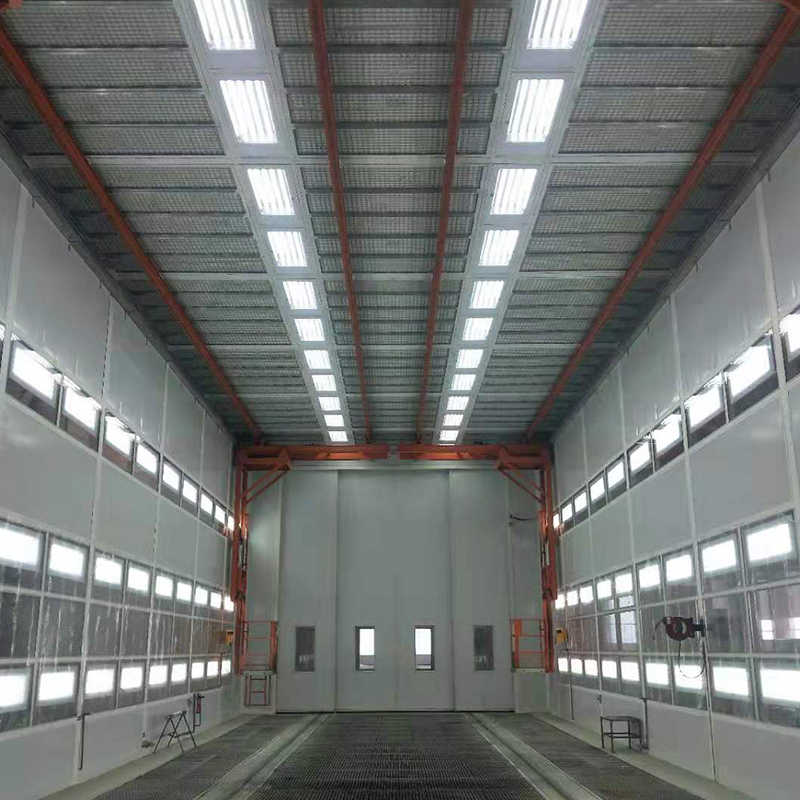
Heavy vehicle spray booth is a large-scale professional coating workshop, specially designed for oversize and heavy equipment. With powerful air circulation, heating system, and multi-stage exhaust fi...
See Details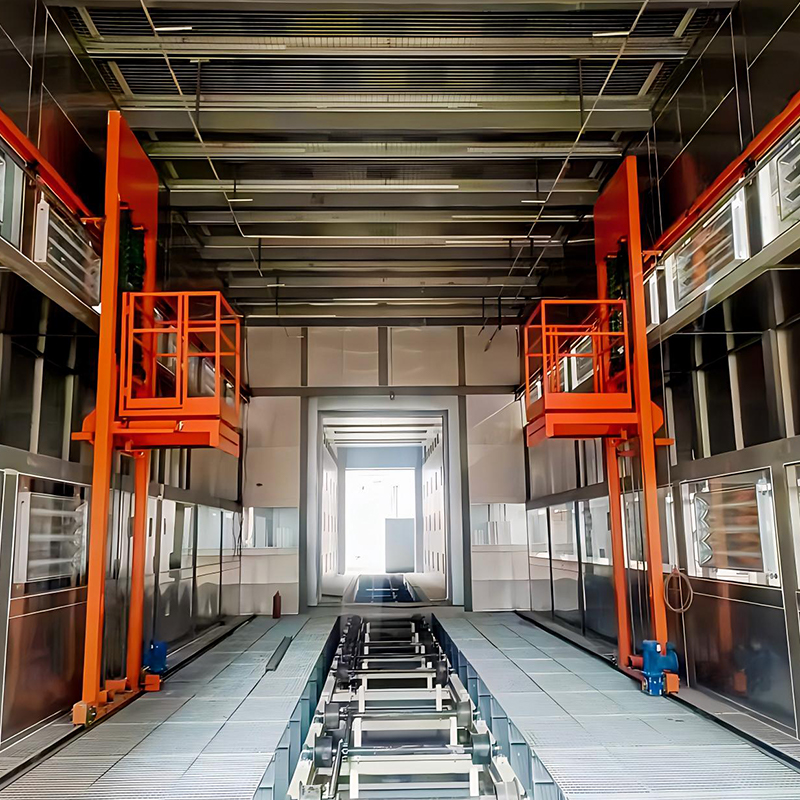
3-axis platform lifts feature three-dimensional movement of X, Y, and Z axes. Flexible positioning, stable lifting, and precise operation. Suitable for multi-angle operation and workpiece docking in i...
See Details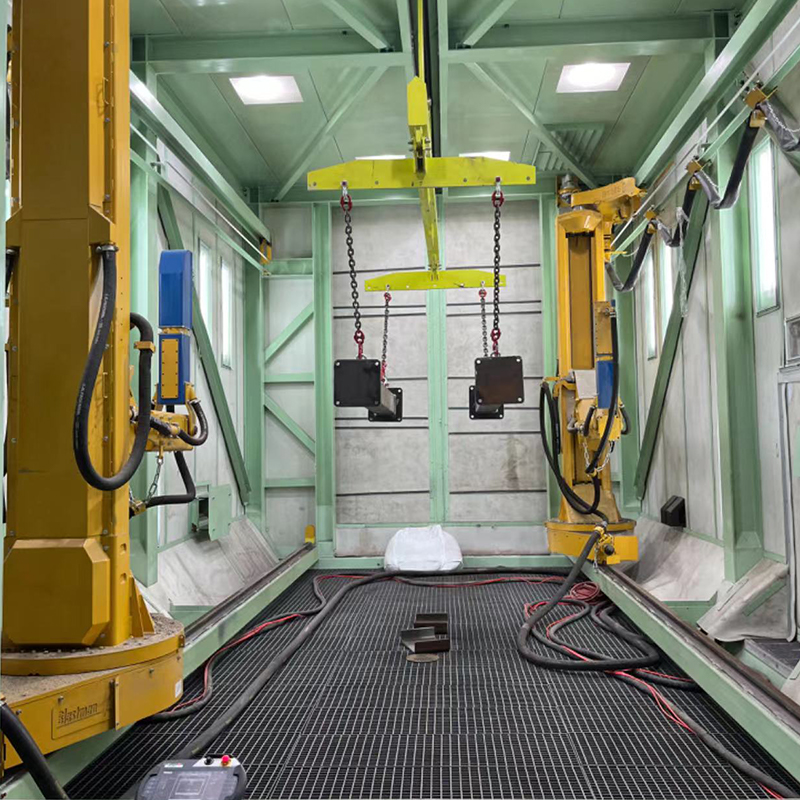
Professional coating line specially designed for large castings and heavy truck parts, applicable to various large castings (engineering castings, mining equipment castings, industrial castings) and h...
See Details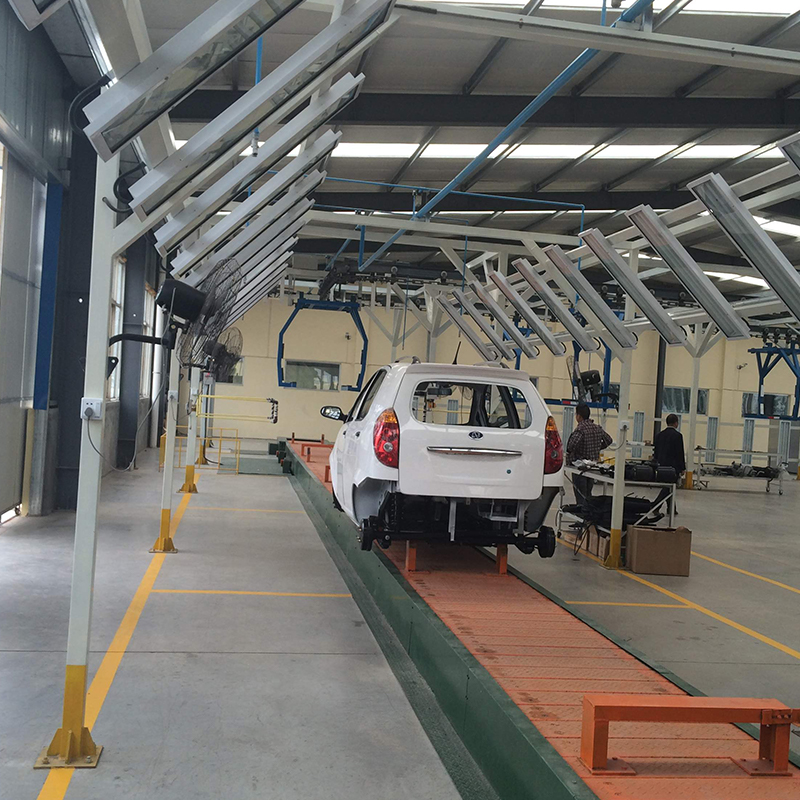
Professional electrophoresis coating line specially designed for electric vehicles (EVs), applicable to various EV types (passenger EV, commercial EV, new energy logistics vehicle) and EV components. ...
See Details
Professional electrophoresis line specially designed for truck cab manufacturing and refurbishment, applicable to various truck cab types (heavy-duty truck cab, light-duty truck cab, pickup cab, comme...
See DetailsBuild Your Customized Industrial Coating System
Send us your workpiece information, production capacity, coating process, workshop layout, and environmental requirements. Yueze will help evaluate your project and develop a suitable coating, conveying, drying, and environmental treatment solution.
Main menu
Products
Contact Us
Company Address:
No. 12, Park Avenue, Shanggang Industrial Park, Jianhu, Yancheng City, Jiangsu Province
Message Us Right Now!

Follow us: