
 русский
 عربى
عربى
 Tiếng Việt

Platform Cart is a practical and efficient industrial handling equipment, widely used in factories, workshops, warehouses, logistics centers, and other places. It is composed of a sturdy load-bearing ...
See Details
Yueze Environmental Protection provides one-stop compliant industrial surface treatment solutions with professional tech and fine craftsmanship.
 Get Inquiries
2026-08-29
Content
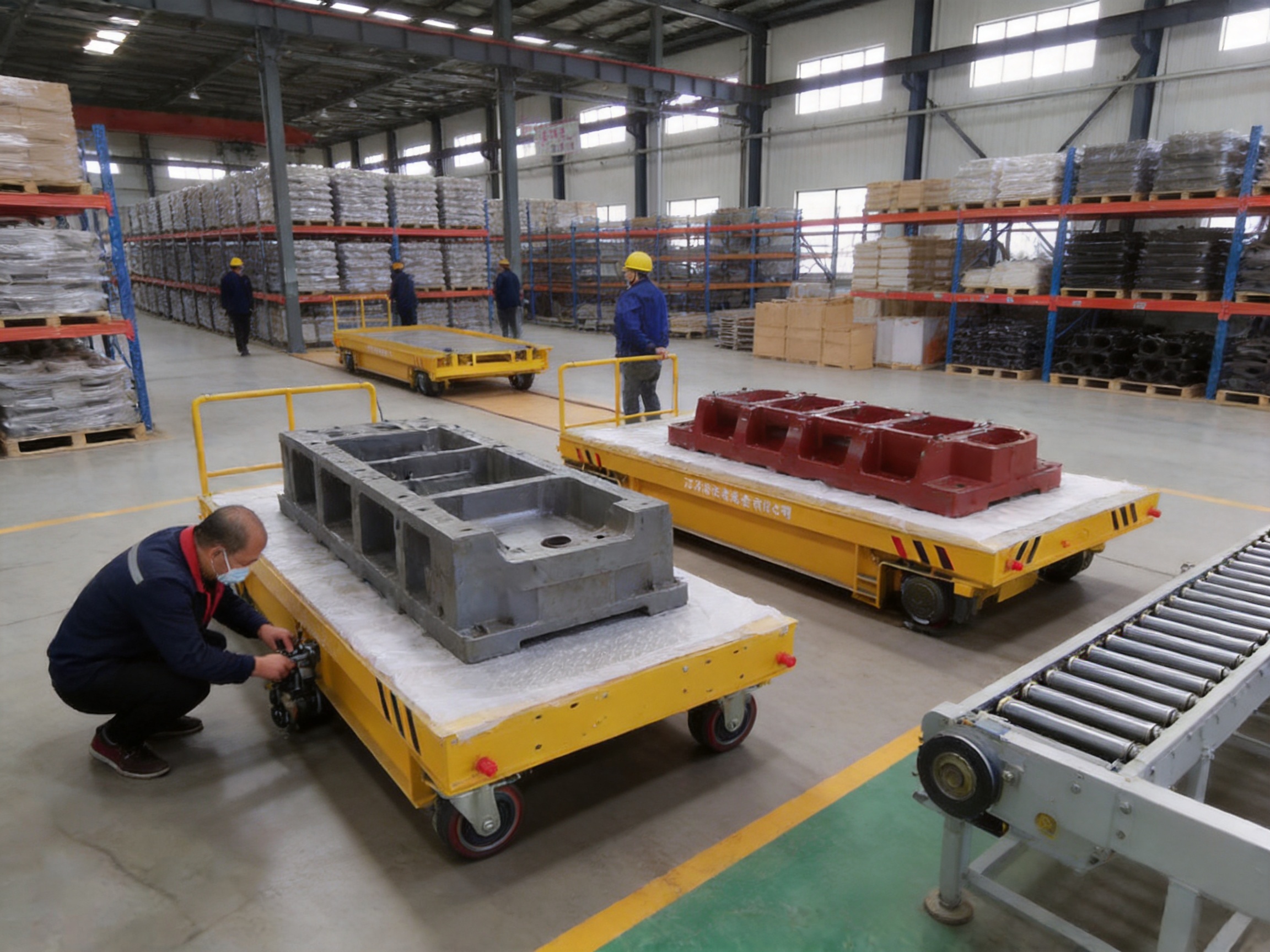
Industrial production depends on the safe, timely, and economical movement of materials. In coating workshops, manufacturing plants, warehouses, logistics centers, and assembly facilities, products must often travel between preparation, processing, inspection, storage, and dispatch areas. Although fixed conveyor systems are highly effective for repetitive and predictable routes, they are not always suitable for oversized workpieces, irregularly shaped components, temporary staging areas, or changing production layouts. A platform cart provides a practical solution for these handling requirements by combining a strong load-bearing platform, a stable frame, and durable casters in a compact mobile unit.
A platform cart is designed to support and transport materials while reducing manual lifting and carrying. Depending on the configuration, it can handle loads ranging from approximately 500 kg to 5,000 kg. The equipment can be supplied with fixed casters, swivel casters, brake casters, or a combination of different caster types. The platform surface, frame construction, handrail design, load capacity, and number of layers can also be customized to meet the requirements of a particular production environment.
For coating and finishing operations, flexibility is especially important. Workpieces may vary significantly in size, shape, weight, and surface condition. Some parts may be suitable for overhead hanging conveyors, while others may be too large, too heavy, or too irregular for a standard conveyor hanger. A platform cart creates an additional handling option that works alongside fixed conveying equipment. It can move products between stations, support temporary storage, and help production teams reorganize material flow without rebuilding permanent infrastructure.
Jiangsu Yue Ze Environmental Protection Equipment Co., Ltd. develops and manufactures industrial material handling equipment as part of its broader coating production line and environmental protection equipment capabilities. With more than 40 years of experience, a manufacturing site covering 35,000 square meters, and integrated capabilities in research and development, fabrication, installation, and customized engineering, the company can design platform carts for individual production conditions rather than offering only standard off-the-shelf specifications.
An industrial platform cart is a wheeled handling device consisting primarily of a flat load-bearing platform mounted on a reinforced frame. Depending on the application, it may include a pushing handle, protective edge, brake system, side rails, positioning fixtures, or multiple platform levels. Operators can push or pull the cart manually, or the cart can be integrated into a broader material handling process where appropriate.
The basic purpose of the equipment is simple: keep the load supported and stable while it is moved across a workshop, warehouse, or production floor. This differs from manual carrying, where workers must directly support or lift the material. It also differs from a fixed conveyor, which usually follows a predetermined route. A platform cart combines mobility with a relatively simple structure, making it useful in environments where production routes change frequently or where a fully automated conveyor is not practical.
The platform may be manufactured from steel or another suitable material according to the load and operating conditions. Its surface can be configured as a standard flat platform, an anti-slip surface, a corrosion-resistant surface, or a non-marring surface for finished products. Additional supports or fixtures may be incorporated when the transported parts require controlled positioning.
Casters are a critical part of the design. Fixed casters help the cart travel in a straight direction, swivel casters provide improved steering flexibility, and brake casters help prevent unintended movement during loading, unloading, or stationary work. A carefully selected combination of caster types can make the cart easier to control while maintaining stability under load.
Coating production typically involves several stages, including surface preparation, cleaning, pretreatment, drying, masking, spraying, curing, inspection, repair, and packaging. A product may need to move through some or all of these areas. Fixed conveyors are useful for standardized parts and high-volume production, but they may not provide the necessary flexibility for every workpiece.
Large counterweights, fabricated frames, machinery housings, metal structures, and irregular components may not hang safely from a conventional conveyor. Some parts may also require horizontal support to prevent deformation, coating damage, or unstable movement. A platform cart can carry these workpieces on a stable base and transport them to the next operation without requiring a complete change to the main conveyor system.
The cart can also be used when the production sequence includes temporary inspection or rework. If a part must be removed from the main line for quality checking, the cart can move it to an inspection area and later return it to production. Similarly, completed products can be placed on carts for short-term staging before packing or shipment. This reduces the need to leave products directly on the workshop floor and helps maintain a more organized material flow.
Another advantage is layout flexibility. Production demand may change according to customer orders, seasonal requirements, or the introduction of new product models. A fixed conveyor route is difficult and costly to modify once installed. Platform carts, by comparison, can be redirected or repositioned as work areas change. This makes them useful for facilities that require adaptable manufacturing space.
In addition to improving logistics, a cart can reduce physical strain on operators. Heavy or awkward parts do not need to be carried manually over long distances. The load remains supported by the platform, while operators control the direction and movement of the cart. Properly designed cart dimensions, handles, caster performance, and braking systems can improve handling safety and reduce the risk of accidental drops or uncontrolled movement.
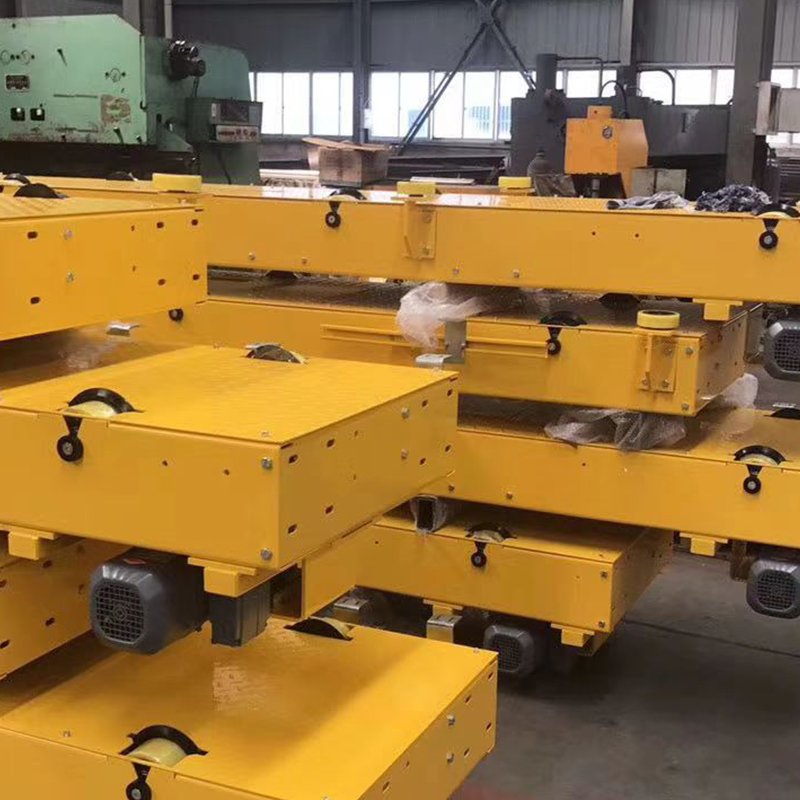
Platform Cart
The frame is the structural foundation of a heavy-duty platform cart. A reinforced steel frame with integral welding can provide high strength and resistance to deformation. The frame must distribute the load across the platform and transfer the weight safely to the casters. This is particularly important when the load is concentrated in one area or when large workpieces extend toward the edges of the platform.
For heavy industrial applications, frame dimensions, plate thickness, welding quality, and support placement must be selected according to the expected working load. A frame designed only for light warehouse use may not be suitable for large metal parts or production tooling. A purpose-designed industrial cart can be reinforced in the areas that experience the greatest stress, improving service life and operating stability.
The flat platform provides a stable area for cartons, molds, workpieces, pallets, material boxes, and finished products. Its open design allows different types of loads to be handled without requiring a specialized attachment for every product. For parts with unusual shapes, the platform can be combined with blocks, supports, clamps, or positioning fixtures.
The platform surface may be customized according to the operating environment. An anti-slip surface can improve load stability during movement. A wear-resistant surface can withstand repeated loading and unloading. A corrosion-resistant finish can help protect the cart from humid environments, cleaning agents, and coating-related exposure. For finished or painted parts, a non-marring surface may be selected to reduce the possibility of scratches, pressure marks, or contact damage.
Casters determine how easily the cart moves and how reliably it carries its rated load. Each caster must be selected according to the total weight of the cart and its load, as well as the condition of the workshop floor. Undersized casters may create excessive rolling resistance, accelerate wear, or compromise stability.
Swivel casters are useful where the cart must turn in narrow aisles or move between nearby workstations. Fixed casters provide directional stability and may be preferred when the cart travels along a relatively straight route. Brake casters allow operators to secure the cart in place during loading, unloading, inspection, or stationary processing. Different caster arrangements can be developed for specific handling conditions.
Quiet-running casters are valuable in workshops where noise control is important. Smooth rolling also reduces the force needed to push or pull the cart. The final selection should consider floor levelness, thresholds, ramps, surface contamination, and the frequency of movement. A cart intended for occasional short-distance transport may have different caster requirements from one used continuously across a large facility.
A heightened, non-slip handrail can provide a comfortable and secure grip. The handrail should be positioned so that the operator can maintain control without leaning excessively or placing hands near pinch points. Its shape and height may be customized according to the typical pushing or pulling direction and the physical requirements of the operators.
Protective edges and anti-collision structures can help protect the cart, nearby equipment, walls, and personnel. These features are useful in busy workshops where multiple carts, forklifts, and operators share the same space. A brake or locking mechanism should be easy to operate and clearly identifiable, helping prevent accidental movement during stationary operations.
Industrial carts may be exposed to dust, moisture, oil, cleaning chemicals, coating overspray, and temperature changes. Surface treatment is therefore important for durability and maintenance. Electrostatic powder spraying or galvanizing can improve resistance to rust and corrosion when appropriately matched to the operating environment.
A properly finished surface is also easier to clean. An integrated frame with fewer unnecessary recesses can reduce the accumulation of dust and coating residue. Regular cleaning and inspection should still be part of the maintenance routine, especially in coating areas where overspray may gradually build up on the platform, wheels, or brake mechanisms.
Not all platform carts are designed for the same working conditions. Basic light-duty carts may be sufficient for small boxes or occasional internal transport, but they can be unsuitable for heavy workpieces, production tooling, or coating workshop environments. A heavy-duty industrial platform cart offers several advantages over simpler alternatives.
A reinforced welded frame generally provides greater structural integrity than a light frame assembled only from thin sections or loosely connected components. Integral welding can help create a rigid structure that resists loosening and deformation under repeated loads. The frame can also be designed to distribute weight more evenly, reducing stress on individual joints and casters.
A large, flat, and properly finished platform provides more stable support than narrow shelves or small utility-cart surfaces. This is important when transporting molds, metal parts, finished panels, or other items that may shift during movement. Optional anti-slip materials, edge protection, and customized fixtures can further improve stability.
High-quality swivel casters can allow a heavy cart to turn more smoothly than low-grade wheels. When the caster arrangement is matched to the load and floor conditions, operators can move the cart with less effort and better control. Braking casters also improve parking stability, which is often missing from basic utility carts.
A standard light-duty cart may be designed for one general warehouse task. An industrial platform cart can be configured for different product dimensions, load levels, surface requirements, and production stages. Foldable, fixed, double-layer, and multi-layer versions can be considered where appropriate. These options allow the cart to serve as a transport unit, staging rack, inspection platform, or temporary storage device.
Durable steel construction, appropriate surface treatment, replaceable casters, and a maintainable design can extend the useful service life of the equipment. Long service potential is especially valuable for factories that operate multiple shifts or move heavy products every day. The total cost of ownership is influenced not only by the initial purchase price but also by maintenance frequency, downtime, replacement requirements, and operator productivity.
Fixed conveyors remain an important solution for continuous and repetitive production. They are particularly suitable when products follow the same route at a predictable speed and when the product dimensions are standardized. However, platform carts provide advantages in situations where a fixed route would be too restrictive.
A platform cart can be moved to different stations without modifying rails, chains, tracks, or support structures. This allows production teams to respond to changes in product type, order quantity, or workshop organization. A cart is also useful when a workpiece needs to bypass a station, return to a previous operation, or move to an area outside the main line.
Some workpieces cannot be safely suspended or may not fit within the dimensions of a standard conveyor system. A platform offers horizontal support for long, wide, heavy, or unevenly shaped items. The platform can be built with customized dimensions and reinforced areas to suit the part geometry.
A fixed conveyor may require structural supports, drive systems, control cabinets, safety guarding, and installation space. A platform cart has a simpler mechanical structure and can be introduced without major changes to the building or production line. This can be beneficial for smaller workshops, pilot production areas, or facilities that are still developing their final layout.
A cart does not need to replace a conveyor system. It can supplement one. For example, a conveyor may transport standard components through the main coating process, while platform carts handle oversized parts, rework products, inspection samples, packaging activities, or finished goods. This combined approach allows each handling method to be used where it is most effective.
It is important to recognize that a cart is not automatically superior to a conveyor in every application. High-volume repetitive production may benefit more from automated conveying. The strength of the platform cart is its adaptability, simple operation, and ability to support handling tasks that fixed systems cannot efficiently accommodate.
The performance of a platform cart depends heavily on how it is engineered and manufactured. A reliable product is not simply a platform fitted with four wheels. The frame, welds, casters, surface treatment, dimensions, and load distribution must work together as a complete system.
The manufacturing process begins with an understanding of the customer’s handling requirements. Relevant factors include the maximum load, typical load distribution, part dimensions, movement frequency, route length, floor conditions, turning radius, storage requirements, and exposure to chemicals or moisture.
For coating workshops, engineers may also consider whether the cart will enter pretreatment areas, spray zones, drying areas, inspection rooms, or clean storage spaces. The required platform surface may differ between these locations. A cart used for raw metal parts may require a different protective surface from one used for finished painted parts.
Based on the application, engineers can determine platform length and width, frame structure, caster quantity and rating, handle configuration, brake requirements, edge protection, and surface treatment. This approach helps prevent the common problem of selecting a cart only by nominal load capacity without considering the actual working conditions.
Steel sections, plates, tubes, caster supports, handles, and other components are prepared according to the engineering drawings. Material selection is influenced by required strength, corrosion exposure, fabrication method, and surface finish. Correct preparation helps ensure that components fit accurately during assembly and that the finished structure remains square and stable.
Accurate cutting and forming are important for maintaining consistent platform dimensions and frame alignment. Poorly prepared components can create uneven load distribution, caster misalignment, or unnecessary stress in welded joints. Controlled fabrication processes improve repeatability across different cart sizes and customized orders.
The platform frame is assembled and welded to create a rigid load-bearing structure. Welding quality affects the cart’s ability to withstand repeated loading, movement, vibration, and accidental impact. Critical joints should be inspected for continuity, alignment, visible defects, and proper penetration according to the applicable production requirements.
Integral welding can help reduce the risk of loosened connections that may occur in heavily used equipment. At the same time, the welding sequence must be controlled to limit distortion. A distorted frame may place uneven pressure on the casters and cause the cart to roll poorly. Careful fixturing, alignment checks, and post-weld inspection are therefore valuable parts of the manufacturing process.
After the main frame is completed, the platform surface is installed or treated according to the selected design. Anti-slip materials should be applied evenly and securely. Corrosion-resistant surfaces should be continuous and free from areas that could quickly become exposed during normal use. Where finished parts are transported, protective materials should be selected to avoid scratching, staining, or transferring unwanted residue.
Casters are installed after confirming the frame dimensions and mounting points. Correct alignment is essential for smooth movement. The caster arrangement should support the intended steering characteristics and ensure that the load is not concentrated on only one or two wheels.
Brake casters and locking systems are checked for reliable engagement and release. Operators should be able to apply the brake without excessive force, while the locked cart should remain stable under normal loading and unloading conditions. Caster mounting hardware must also be tightened and inspected as part of quality control.
The cart may undergo cleaning, preparation, electrostatic spraying, galvanizing, or another suitable finishing process. Surface preparation is important because dirt, oil, scale, and moisture can reduce coating adhesion. A consistent finish improves corrosion resistance and gives the cart a professional appearance suitable for demanding industrial environments.
Before delivery, the cart should be inspected for overall dimensions, frame stability, weld condition, platform flatness, caster movement, brake operation, surface quality, and customization requirements. Load-related checks may be conducted according to the specified design and customer requirements. The purpose of final inspection is to confirm that the cart is suitable for its intended application and that the manufactured product corresponds with the approved specifications.
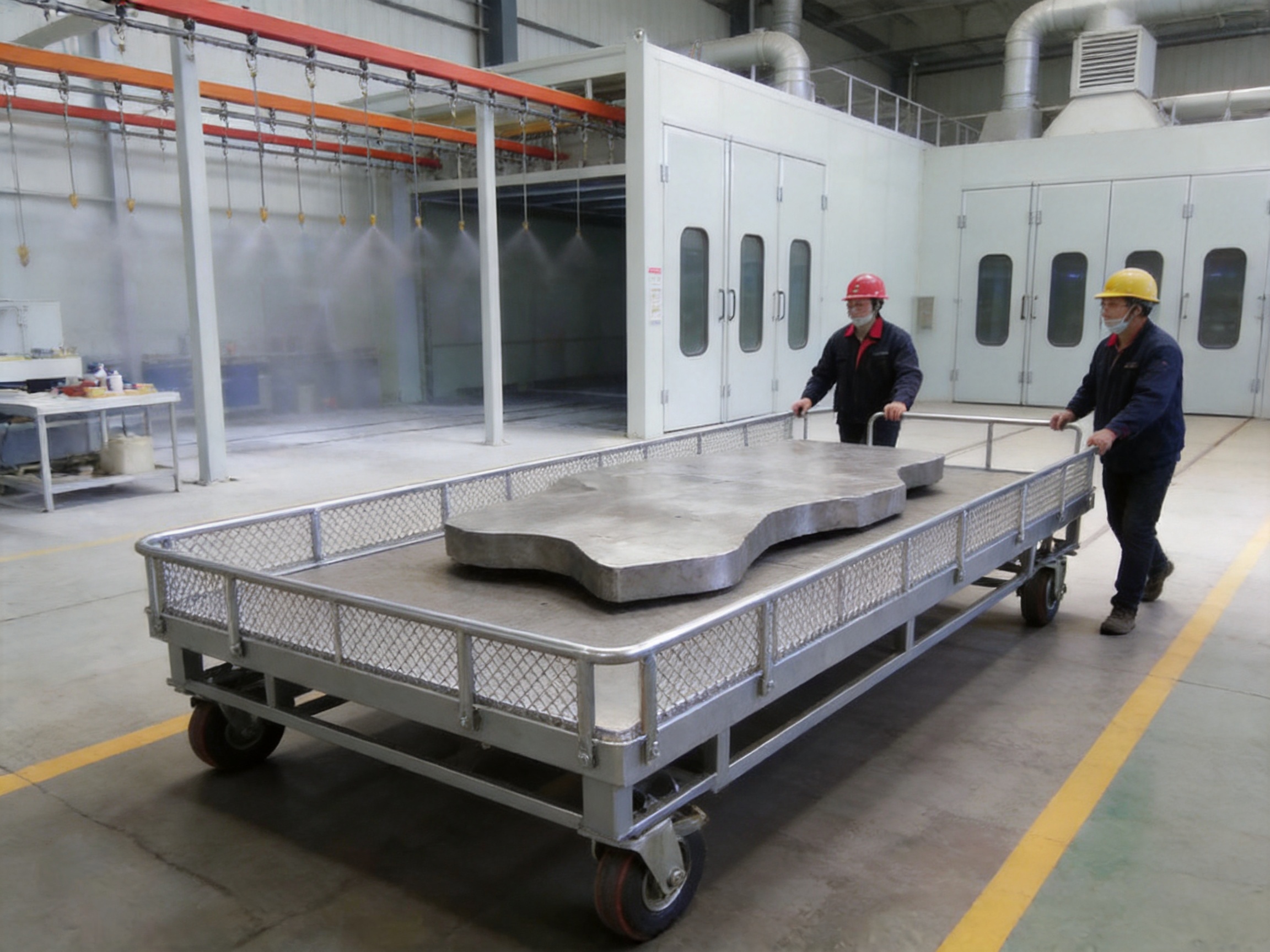
One of the key strengths of an industrial platform cart is its ability to be adapted. A production facility may require a cart for small components, large counterweight blocks, fabricated structures, molds, pallets, or completed products. The same standard design cannot provide the best performance for all of these uses.
Platform length and width should provide enough support for the load without making the cart unnecessarily difficult to maneuver. An undersized platform may allow the load to overhang dangerously, while an oversized platform may reduce access in narrow aisles. Dimensions can be selected according to the largest parts, normal load arrangement, doorway widths, turning areas, and storage positions.
Load capacity should be based on the heaviest expected load, not the average load. It is also important to consider whether the weight will be evenly distributed. A concentrated load may require additional reinforcement even when the total weight is within the nominal rating. Capacity selection should include the cart structure, platform, casters, brake system, and operating environment as a complete assembly.
A foldable configuration can help save storage space when the cart is not in use. This may be useful for facilities with limited floor area or for operations that need to keep spare carts available without blocking aisles. The folding mechanism must be designed for safe locking in both the operating and storage positions.
A fixed platform is suitable for heavy or bulky products that require a low center of gravity. Double-layer and multi-layer versions can increase storage or handling capacity for smaller components, cartons, tools, or material boxes. The vertical spacing between layers should be selected according to product height and operator access requirements.
Side rails, end stops, corner guards, and removable supports may be used to prevent products from sliding during movement. For irregular parts, custom supports can help maintain a repeatable position. However, protective features should not obstruct loading or create additional pinch points. The design should balance retention, accessibility, and operator safety.
Different production areas may require different platform materials or finishes. Non-slip surfaces can support unstable loads, while non-marring surfaces can protect finished coatings. Corrosion-resistant surfaces are beneficial in humid areas or where cleaning chemicals are used. If the cart enters a spray or curing area, the surface treatment must be compatible with the temperature and coating process.
The following table provides a general guide for matching cart features with common industrial handling needs. Final specifications should be confirmed through an application review.
| Application | Recommended Features | Primary Benefit |
|---|---|---|
| Small to medium components | Compact platform, swivel casters, standard handrail | Easy movement between nearby workstations |
| Heavy molds or tooling | Reinforced frame, high-capacity casters, brake system | Stable transport and secure parking |
| Oversized or irregular parts | Extended platform, edge protection, customized supports | Horizontal support for non-standard workpieces |
| Finished painted products | Non-marring platform surface, protective padding, smooth casters | Reduced risk of surface damage |
| Humid or chemically exposed areas | Corrosion-resistant construction and surface treatment | Improved durability and easier maintenance |
| Limited storage space | Foldable frame or nesting-compatible design | Reduced space requirement when not in use |
| Multi-product workshops | Custom dimensions, adjustable supports, flexible caster arrangement | Adaptation to changing production needs |
Platform carts and automated conveyor systems should not always be viewed as competing solutions. In many factories, the most effective material handling arrangement combines both. Automated conveyors can provide a repeatable route for standardized parts, while carts handle exceptions and flexible movements.
For example, a powder coating line may use an overhead conveyor for small and medium components. Large fabricated structures may be placed on platform carts and moved manually between preparation and spraying areas. Finished products can then remain on the carts during inspection or temporary storage. This division of work allows the automated line to maintain efficiency without forcing every product into the same handling format.
Carts can also support line balancing. If one station becomes temporarily congested, workpieces can be moved to a designated staging area rather than blocking the main route. During maintenance or equipment adjustment, carts may provide an alternative transport method that helps keep production moving.
Because Jiangsu Yue Ze Environmental Protection Equipment Co., Ltd. designs complete coating production line equipment, its platform cart solutions can be considered in relation to conveyors, paint and bake booths, drying systems, grinding rooms, waste gas treatment equipment, and other line components. This broader engineering perspective is useful when the customer needs material handling equipment that fits into an existing production process rather than a standalone cart with no consideration of surrounding operations.
Jiangsu Yue Ze Environmental Protection Equipment Co., Ltd. is located in Yancheng, Jiangsu, China. The company covers approximately 35,000 square meters and has registered capital of 58 million yuan. With more than four decades of industry experience, the company provides one-stop industrial surface treatment and environmental protection solutions.
Its product and engineering capabilities include powder coating lines, electric vehicle assembly lines, automotive counterweight spray lines, paint and bake booths, large-part grinding rooms, waste gas treatment systems, infrared radiation drying systems, automated conveying systems, intelligent coating lines, and related environmental protection equipment. This range of experience gives the company an understanding of how material handling equipment operates within an entire production system.
The company’s experience includes the development of a hanging automatic painting process line for casting counterweight blocks in 2014. The line covered processes from finishing and polishing through primer and topcoat application. Experience with heavy counterweight components and complete coating processes is relevant to the development of handling equipment for large, heavy, and irregular workpieces.
Integrated research and development allows equipment concepts to be adapted to actual customer conditions. Rather than relying solely on fixed catalog models, engineers can study the production route, load characteristics, space limitations, and environmental requirements. This supports the development of platform carts with suitable dimensions, load ratings, caster arrangements, and surface treatments.
A company experienced in coating line fabrication understands the importance of dimensional accuracy, structural stability, surface treatment, and equipment coordination. Platform carts can be manufactured as part of a customized equipment project, allowing the design to match other production line components and customer standards.
For customers purchasing complete systems or customized handling equipment, installation and commissioning support can help ensure that the cart functions correctly within the workshop. The team can consider movement routes, working clearances, staging areas, and coordination with conveyors or processing equipment.
Industrial production environments differ considerably. A customer may need a cart that fits a particular doorway, supports a special workpiece, remains stable on a specific floor, or uses a surface compatible with a coating process. Customized engineering helps address these factors and can reduce the need for customers to modify their facility after delivery.
Strict quality control, advanced production technology, customer-focused service, integrity, green manufacturing, and global cooperation are central elements of the company’s stated approach. For industrial equipment buyers, these factors are important because product reliability depends on more than the visible frame. Documentation, communication, production consistency, after-sales support, and the ability to respond to application questions all influence the long-term value of the purchase.
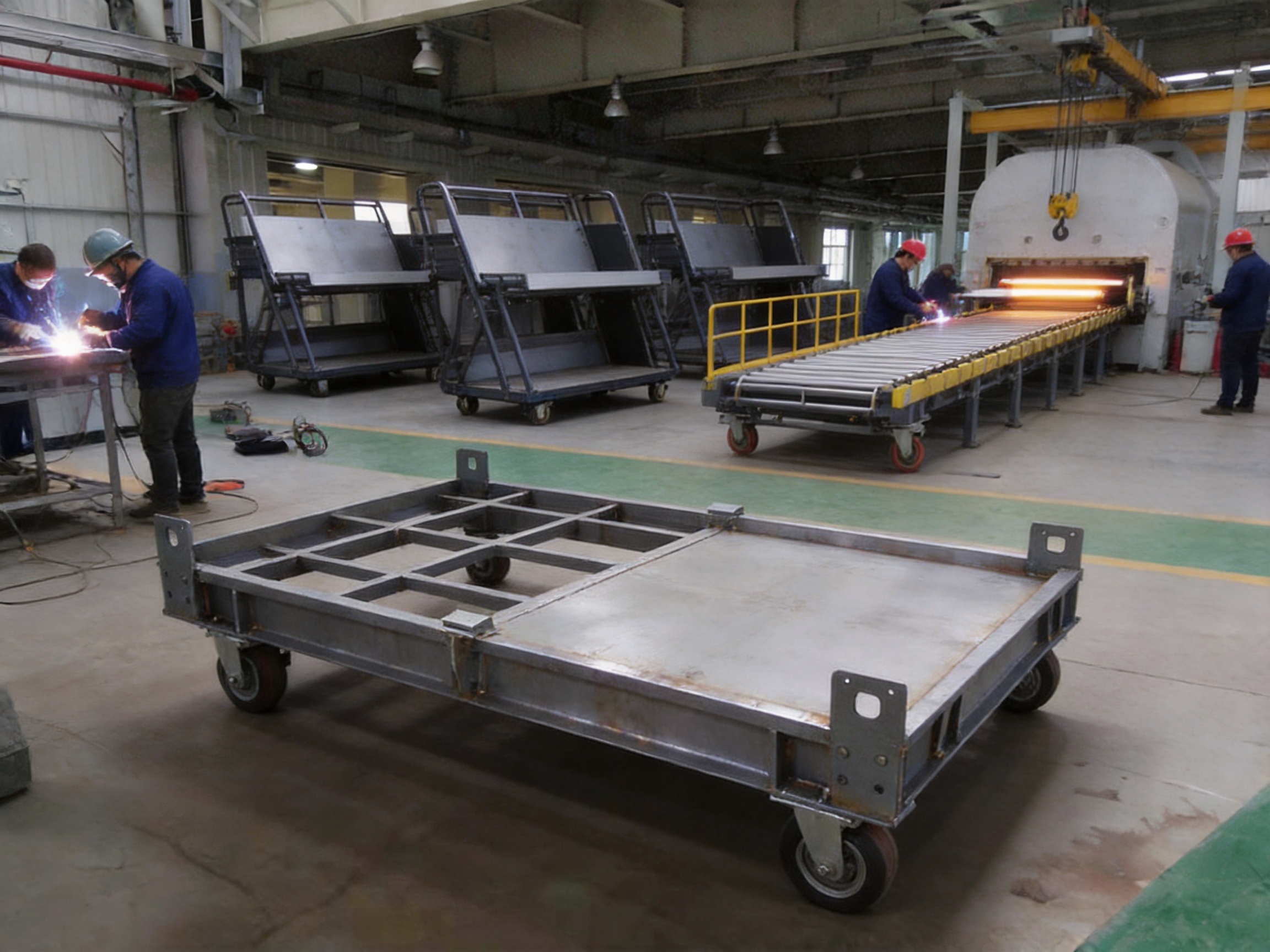
When products remain supported on a platform, workers do not need to carry the full load between stations. This can reduce physical effort and help improve material handling safety. The cart is particularly valuable for loads that are too heavy, large, or awkward for one person to carry safely.
Designated carts can be used to separate raw materials, work-in-process products, inspected parts, and finished goods. This supports clearer workflow organization and may reduce the risk of mixing products from different orders or process stages.
A cart can be placed near a workstation and loaded as needed. Unlike a fixed handling system, it does not require a dedicated route for every movement. This can simplify handling in low-volume, high-mix production environments.
When floor space is limited, a cart can serve as mobile storage for materials waiting for the next process. Foldable or multi-layer designs may provide additional storage efficiency. Brakes and stable platforms help keep stored products in a controlled location.
Production layouts frequently evolve. New equipment may be installed, product dimensions may change, or a workshop may need to add a new inspection step. Mobile carts can be reassigned or relocated without extensive construction work, supporting a more adaptable production system.
Correct equipment selection is only one part of safe operation. The cart should be used within its specified load capacity, and loads should be distributed as evenly as practical. Heavy products should be placed low and centered on the platform to help maintain a stable center of gravity.
Operators should check that the route is clear before moving the cart. Floor debris, oil, water, thresholds, ramps, and uneven surfaces can affect rolling performance. If the cart is used near forklifts, conveyors, or other mobile equipment, traffic rules and designated pedestrian paths should be established.
Brakes should be engaged whenever the cart is parked for loading, unloading, inspection, or stationary processing. Operators should not rely only on the weight of the load to prevent movement. The brake mechanism, caster mounting points, handrails, and platform surface should be inspected regularly.
Loads should not extend beyond the platform in a way that creates a collision hazard or affects steering. If overhang is unavoidable, the operating procedure should account for the additional dimensions. Long or unstable items may require side supports, straps, blocks, or custom fixtures.
Training should cover pushing and pulling methods, safe turning, use of brakes, load limits, route awareness, and reporting of abnormal noise or wheel resistance. Proper maintenance and operator training work together to protect both personnel and equipment.
Routine maintenance helps preserve cart performance and reduce unexpected downtime. The inspection frequency should reflect the operating intensity and environmental conditions.
Operators should look for visible damage, loose components, excessive coating buildup, wheel obstruction, platform contamination, and brake malfunction. Any unusual steering resistance, vibration, noise, or instability should be reported before the cart is used with a heavy load.
Casters should be checked for tread wear, damaged housings, loose mounting hardware, and restricted swivel movement. Wheels that no longer roll smoothly can increase pushing force and create directional control problems. Worn or damaged casters should be replaced with components of suitable capacity and specification.
The platform and frame should be inspected for bending, cracks, corrosion, or damaged welds. If the cart has been overloaded or involved in a collision, a more thorough inspection is recommended before returning it to service.
Coating residue, dust, oil, and chemical deposits should be removed using cleaning methods compatible with the platform finish. Accumulated residue may affect load stability, caster movement, or corrosion resistance. A clean platform also helps reduce the risk of contaminating finished products.
Brake components should engage firmly and release completely. Handrails should remain secure and free from sharp edges or excessive wear. Fasteners should be tightened when required, while replacement parts should match the original design requirements.
The first step is to identify the heaviest and largest product that the cart will carry. The buyer should record not only the total weight but also the shape, center of gravity, contact points, and possibility of uneven loading. This information helps determine the platform size, frame reinforcement, and caster capacity.
The second step is to evaluate the route. Important details include aisle width, turning radius, floor condition, slopes, thresholds, doorways, loading areas, and the distance between stations. A cart that performs well in a spacious warehouse may be difficult to control in a narrow coating workshop.
The third step is to determine the required surface condition. Raw components, wet or recently coated parts, finished products, and chemically exposed materials may require different platform treatments. The surface should provide adequate grip without damaging or contaminating the load.
The fourth step is to determine how the cart will be stored when not in use. If space is limited, a foldable or nesting-compatible design may be suitable. If the cart will be used as a stationary rack, a fixed or multi-layer structure may provide greater value.
The fifth step is to consider how the cart will interact with other equipment. The platform height may need to align with a workbench, loading platform, conveyor transfer point, or inspection station. Adequate clearance should be maintained around spray booths, drying systems, doors, and emergency access routes.
Finally, customers should discuss customization and service requirements with the manufacturer. A supplier with experience in complete coating production lines can often provide more practical advice about integrating the cart into the wider process.
| Evaluation Factor | Basic Utility Cart | Heavy-Duty Platform Cart | Fixed Conveyor System |
|---|---|---|---|
| Typical mobility | High for light loads | High for heavy and irregular loads | Limited to installed route |
| Load flexibility | Suitable for small materials | Suitable for customized industrial loads | Best for standardized products |
| Layout modification | Minimal | Minimal | May require engineering and construction |
| Oversized part handling | Often limited | Can be customized | May require specialized carriers |
| Temporary staging | Possible for light products | Well suited to heavy products | Usually not the primary function |
| Automation level | Manual | Manual or integrated into a broader system | Suitable for continuous automated movement |
| Initial infrastructure requirement | Low | Low to moderate | Moderate to high |
This comparison shows why a platform cart occupies an important position between a basic utility cart and a fixed automated conveyor. It provides greater capacity and durability than a light cart while requiring less permanent infrastructure than a conveyor. It may therefore be especially appropriate for mixed production, large-part coating, flexible workshops, and supplemental material handling.
Platform carts can be designed for different load levels. The product information supports capacity ranges from approximately 500 kg to 5,000 kg, although the suitable rating depends on the frame, platform, caster configuration, load distribution, and operating environment. The heaviest expected load should be used when selecting the capacity.
Yes. The platform dimensions, frame reinforcement, caster arrangement, edge protection, and positioning supports can be customized for large or irregularly shaped parts. The load should remain stable and should not interfere with steering, braking, doorways, or surrounding equipment.
Yes. It can transport workpieces between pretreatment, spraying, drying, inspection, storage, and packaging areas. Corrosion-resistant finishes, non-slip surfaces, brake casters, and protective platform materials can be selected according to the workshop conditions.
A platform cart is useful when products are oversized, irregular, frequently changed, or required to move to temporary areas outside the main conveyor route. It is also suitable when a facility needs flexible handling without making major changes to permanent infrastructure. A fixed conveyor may be more appropriate for standardized, high-volume, repetitive production.
Yes. A cart can supplement an automated conveyor by handling products that do not fit the conveyor, moving parts to inspection or rework areas, providing temporary staging, or supporting finished-product storage. The platform height and route should be coordinated with the surrounding equipment.
Fixed, swivel, and brake casters can be selected. Fixed casters help maintain straight movement, swivel casters improve maneuverability, and brake casters help secure the cart during stationary operations. The correct combination depends on the route, load, floor condition, and steering requirements.
Yes. Options may include anti-slip, wear-resistant, corrosion-resistant, or non-marring surfaces. The appropriate surface depends on whether the cart will carry raw materials, heavy tooling, coated parts, or products exposed to chemicals and moisture.
Foldable designs can be provided where storage space is limited. Fixed, double-layer, and multi-layer designs may also be considered. The folding structure should include a secure locking arrangement and should be selected according to the load and frequency of use.
Useful information includes the maximum load, product dimensions, load distribution, transport distance, floor condition, aisle width, turning requirements, platform height, surface requirements, caster preferences, storage limitations, and any need for brakes, rails, supports, or folding functions.
Experience with complete coating lines helps the manufacturer understand how carts interact with pretreatment equipment, spray booths, drying systems, conveyors, inspection areas, and environmental protection equipment. This broader process knowledge can support a cart design that fits the customer’s complete workflow instead of functioning only as an isolated handling unit.
They reduce the need to manually carry heavy or awkward loads. Stable platforms, suitable casters, handrails, brake systems, and protective edges can help improve control during transport. Safe operation still requires load compliance, route management, regular maintenance, and operator training.
Service life depends on load frequency, floor conditions, environmental exposure, maintenance, and correct operation. A reinforced structure with suitable surface treatment and properly rated casters can provide long-term service, while routine inspection helps identify wear before it causes a failure.
A platform cart is a flexible and efficient handling solution for factories, coating workshops, warehouses, logistics centers, and assembly facilities. Its reinforced frame, stable platform, heavy-duty casters, optional brakes, protective features, and customizable surface make it suitable for a wide range of industrial applications. With load capacities that can be configured from approximately 500 kg to 5,000 kg, the equipment can support both ordinary material movement and demanding heavy-part handling.
Compared with basic utility carts, a heavy-duty platform cart offers greater structural reliability, load stability, durability, and customization. Compared with fixed conveyor systems, it provides greater routing flexibility, lower infrastructure requirements, and better suitability for oversized or irregular workpieces. In many production environments, the best approach is to use platform carts and automated conveyors together, allowing each system to perform the tasks for which it is best suited.
The value of the cart is further increased when it is designed as part of a complete production process. Jiangsu Yue Ze Environmental Protection Equipment Co., Ltd. combines extensive coating line experience with research and development, equipment fabrication, installation, customized engineering, and environmental protection capabilities. Its knowledge of powder coating lines, conveying systems, drying equipment, spray booths, grinding rooms, and waste gas treatment supports a broader understanding of industrial workflow requirements.
For customers seeking a customized heavy-duty platform truck, folding platform truck, industrial platform cart, or heavy-duty flatbed cart, the selection process should begin with the actual workpiece and production route. When platform dimensions, frame strength, caster performance, surface treatment, braking, and storage needs are correctly matched, the cart can improve material flow, reduce manual handling, support flexible production, and contribute to a safer and more organized industrial workplace.
1. Jiangsu Yue Ze Environmental Protection Equipment Co., Ltd. Product information for industrial platform carts and customized material handling equipment.
2. Jiangsu Yue Ze Environmental Protection Equipment Co., Ltd. Company information and technical overview of powder coating lines, conveying systems, drying systems, and environmental protection equipment.
3. General principles of industrial material handling, load distribution, caster selection, and workplace transport safety.
4. General engineering practices for welded steel frames, industrial surface treatment, corrosion protection, and equipment maintenance.
5. General design considerations for powder coating workshops, automated production lines, temporary staging, and large-part handling.
6. General workplace safety practices for manual pushing and pulling equipment, mobile platforms, brakes, load control, and route management.
Platform Cart is a practical and efficient industrial handling equipment, widely used in factories, workshops, warehouses, logistics centers, and other places. It is composed of a sturdy load-bearing ...
See Details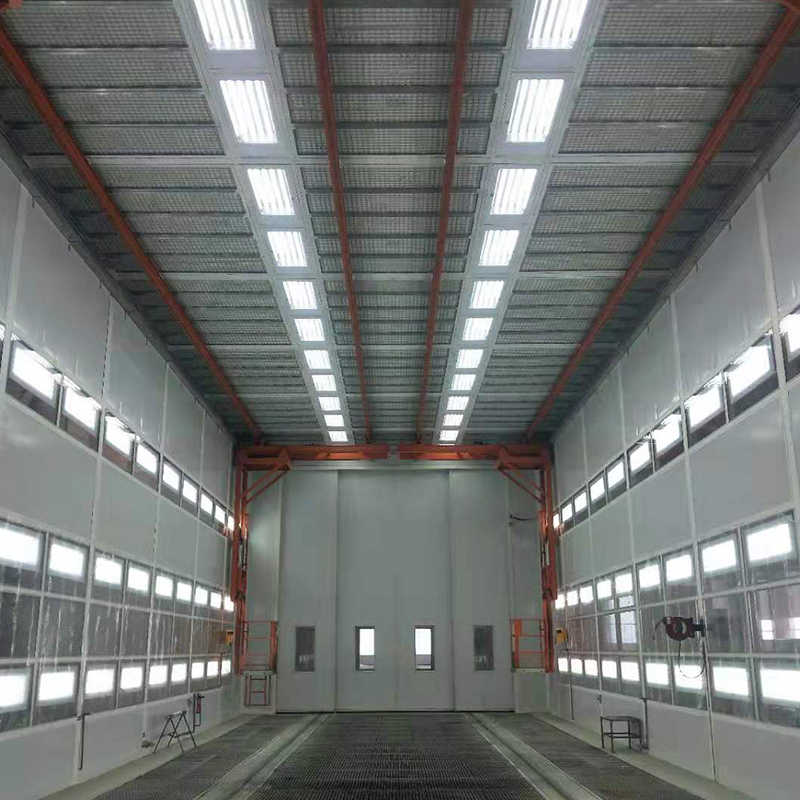
Heavy vehicle spray booth is a large-scale professional coating workshop, specially designed for oversize and heavy equipment. With powerful air circulation, heating system, and multi-stage exhaust fi...
See Details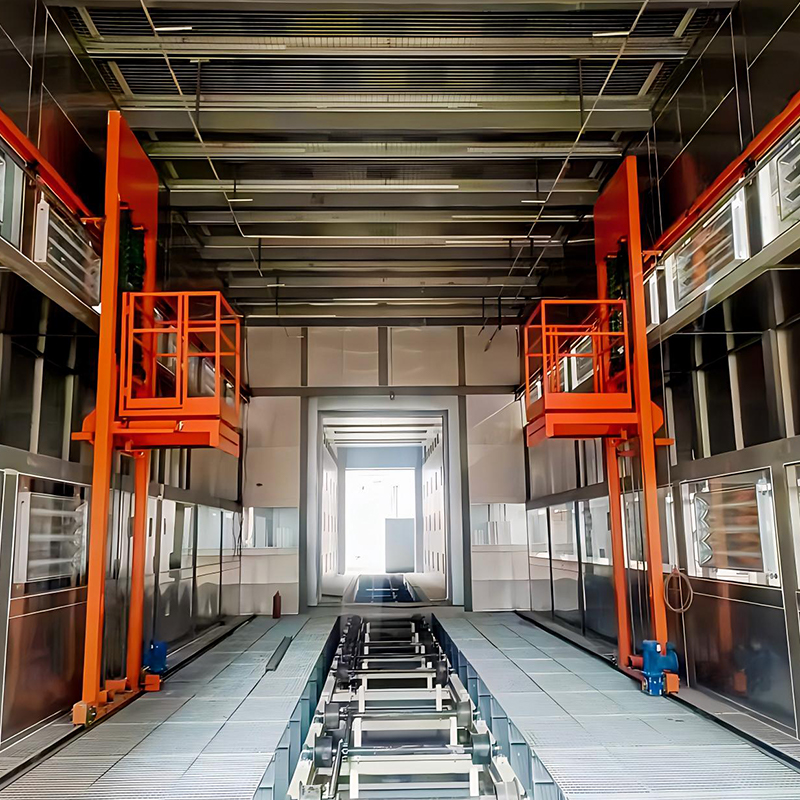
3-axis platform lifts feature three-dimensional movement of X, Y, and Z axes. Flexible positioning, stable lifting, and precise operation. Suitable for multi-angle operation and workpiece docking in i...
See Details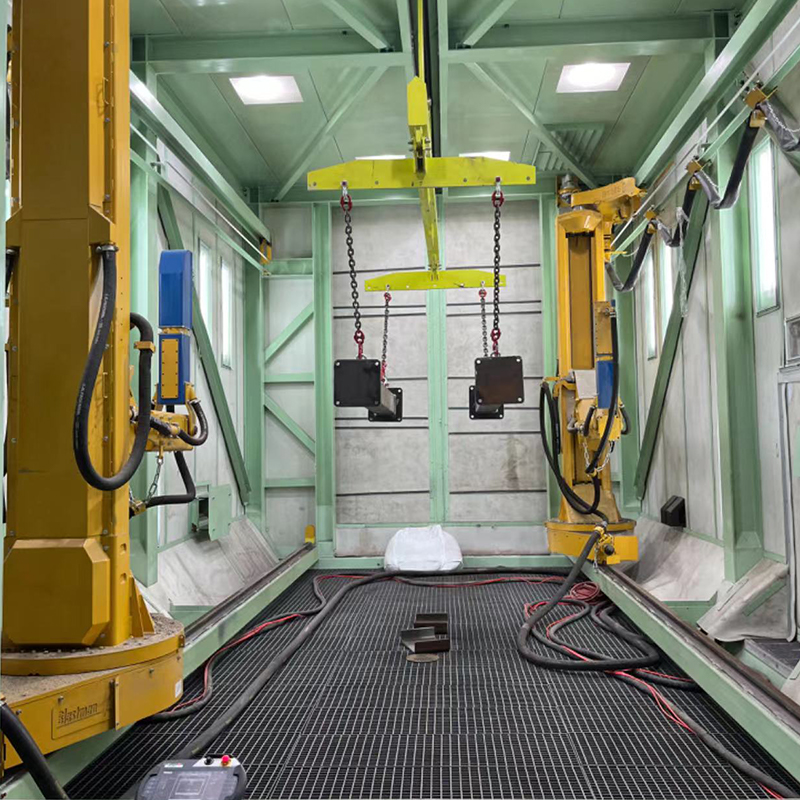
Professional coating line specially designed for large castings and heavy truck parts, applicable to various large castings (engineering castings, mining equipment castings, industrial castings) and h...
See Details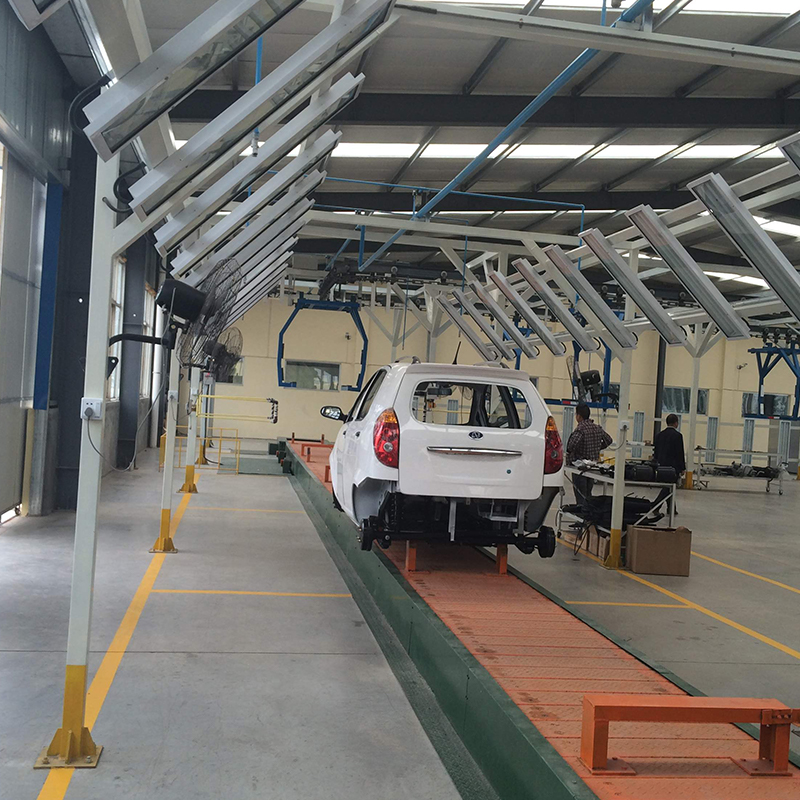
Professional electrophoresis coating line specially designed for electric vehicles (EVs), applicable to various EV types (passenger EV, commercial EV, new energy logistics vehicle) and EV components. ...
See Details
Professional electrophoresis line specially designed for truck cab manufacturing and refurbishment, applicable to various truck cab types (heavy-duty truck cab, light-duty truck cab, pickup cab, comme...
See DetailsBuild Your Customized Industrial Coating System
Send us your workpiece information, production capacity, coating process, workshop layout, and environmental requirements. Yueze will help evaluate your project and develop a suitable coating, conveying, drying, and environmental treatment solution.
Main menu
Products
Contact Us
Company Address:
No. 12, Park Avenue, Shanggang Industrial Park, Jianhu, Yancheng City, Jiangsu Province
Message Us Right Now!

Follow us: